
Manual Lawn Edgers vs. Electric: Which is Best for Your Garden? Comparing Efficiency and Cost
We independently select all products and services. If you click through links we provide, Plant Native may earn a commission with no extra cost to you. As an Amazon Associate I earn from qualifying purchases.
Last updated: August 18, 2026
Lawn edging is a crucial aspect of garden maintenance, creating clean lines between grass and other landscape features. It enhances the overall appearance of your outdoor space and makes mowing easier.
Lawn edgers come in two main types: manual and electric. Each has its advantages, catering to different gardening needs and preferences.
Manual lawn edgers are simple tools that rely on physical effort to create crisp edges. They often feature a half-moon blade attached to a long handle, allowing users to cut along lawn borders with precision.
Electric edgers, on the other hand, use motorized blades to quickly trim grass edges. These powered tools can save time and effort, especially for larger gardens or those with extensive edging requirements.
When choosing between manual and electric lawn edgers, consider factors such as garden size, physical ability, and budget. Manual edgers are generally more affordable and require no power source, making them ideal for small gardens or occasional use.
Electric models offer speed and convenience but come at a higher cost and may require maintenance.
We tested several manual and electric lawn edgers to determine which ones provide the best performance and value for different gardening needs.
Best Manual and Electric Lawn Edgers
We’ve carefully evaluated and selected the top manual and electric lawn edgers to help you achieve crisp, clean edges for your garden. Our list includes options for various budgets and lawn sizes, ensuring you’ll find the perfect tool to keep your outdoor space looking neat and well-maintained.
Our top pick

- Adjustable height for comfort
- Sharp, self-sharpening blades
- Durable stainless steel construction
Cons
- Requires physical effort
- May struggle with overgrown areas
- Not suitable for large properties
The BARAYSTUS Rotary Lawn Edger impressed us with its sturdy build and sharp blades. We found the serrated cutting edge effortlessly sliced through grass along sidewalks and driveways, leaving a clean, manicured look.
Adjusting the height was a breeze, allowing us to find the perfect position for comfortable use. The three height settings accommodated users of different statures, making it versatile for the whole family.
The cushioned grip provided comfort during extended use, reducing hand fatigue.
While using this manual edger requires some elbow grease, we appreciated the simplicity and reliability. It performed best on moderately overgrown edges, though very thick growth posed a challenge. For small to medium-sized yards, this tool offers an eco-friendly and cost-effective alternative to electric or gas-powered edgers.
Best runner-up

- Strong 12 Amp motor for efficient edging
- Adjustable depth settings for versatility
- User-friendly design with cutting line indicator
Cons
- Corded operation limits mobility
- May struggle with very tough or overgrown edges
- Heavier than some manual alternatives
The WORX WG896 Electric Lawn Edger impressed us with its robust performance. Its 12 Amp motor packs a punch, spinning the 7.5-inch blade at 4700 RPM to create crisp, clean edges along lawns and walkways.
We found the cutting line indicator especially helpful for maintaining straight lines, resulting in a professional finish.
Adjustability is a key strength of this edger. We appreciated the three depth settings, allowing us to tackle different edging tasks with ease.
The adjustable shaft and D-grip handle ensured comfortable operation for users of varying heights, reducing strain during extended use.
While the corded design does limit mobility compared to battery-powered or gas options, we found the consistent power output to be a fair trade-off. The edger handled most standard lawn edges effectively, though extremely overgrown areas required multiple passes.
At 14 pounds, it’s not the lightest tool, but the weight contributes to its stability during operation.
Best budget option
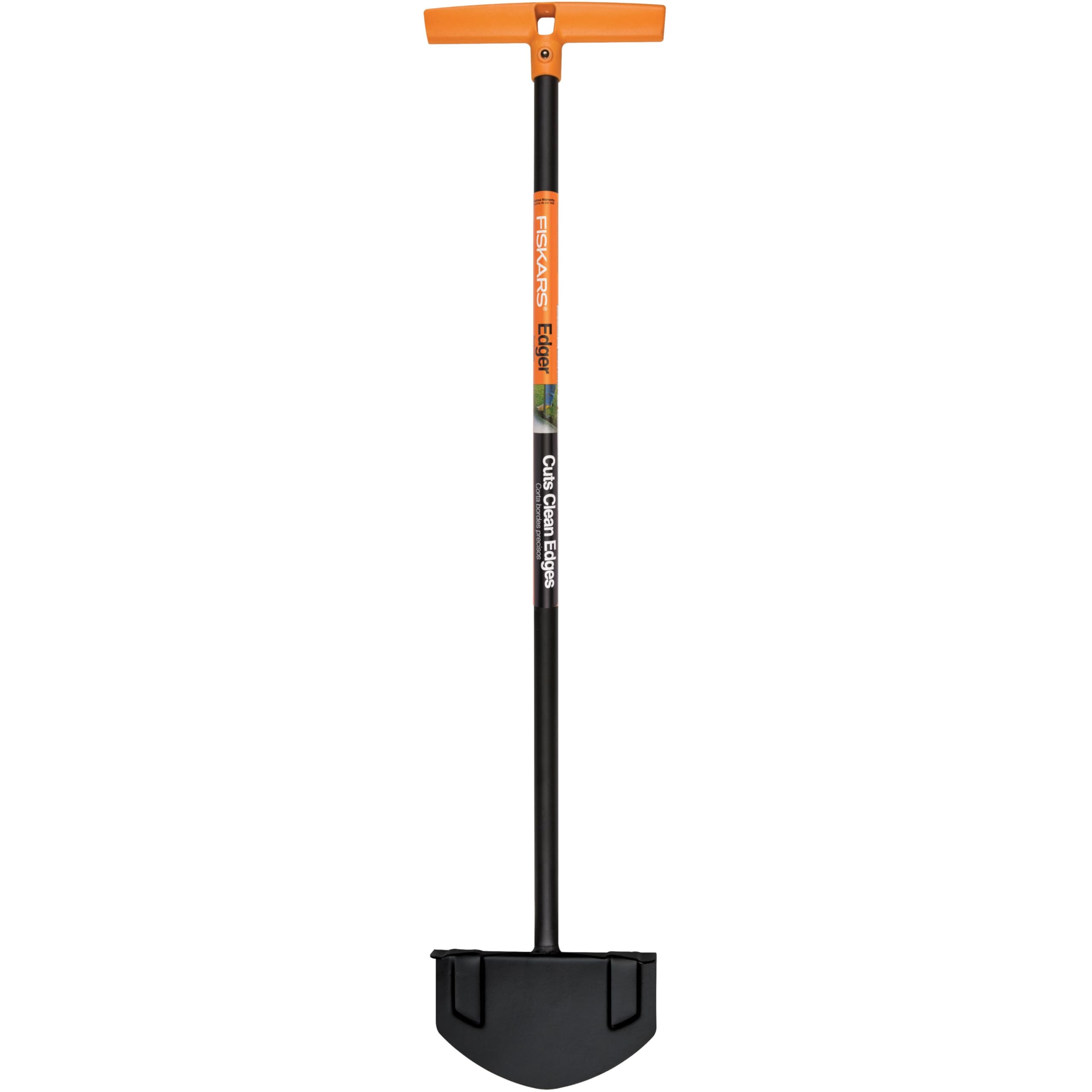
- Heavy-duty all-steel construction
- Large foot platform for maximum force
- Long handle reduces back strain
Cons
- Heavier than some alternatives
- May be too tall for shorter users
- Can be challenging in very loose soil
The Fiskars Steel Lawn Edger is a powerhouse tool that’s built to last. We found its welded steel construction to be exceptionally sturdy, easily outlasting wood-handled alternatives we’ve used in the past.
The sharpened blade slices through turf with impressive ease, creating crisp, clean edges along our garden beds and walkways.
One feature we particularly appreciated was the large foot platform. It allowed us to apply significant downward force when dealing with compacted soil, making the edging process much more efficient.
The long handle is a back-saver, eliminating the need to bend over constantly while working.
Despite its strengths, the edger’s all-steel build does make it heavier than some other options. We noticed this added weight during extended use, though it wasn’t a major issue for most of our team.
The tool’s height might pose a challenge for shorter users, especially when starting new edges. In very loose or sandy soil, we found the edger less effective, as the soil tended to fall back into the cut.
Overall, we found the Fiskars Steel Lawn Edger to be a reliable, long-lasting tool that excels in creating and maintaining crisp lawn edges. Its robust construction and thoughtful design make it a solid choice for homeowners serious about lawn care.
Best premium choice

- Versatile trimming along sidewalks and flower beds
- Durable anti-rust plated blades
- Adjustable height for different users
Cons
- Requires physical effort to operate
- Not ideal for creating new edges
- May need multiple passes for tough areas
The Klarg Wheeled Rotary Edger offers a back-to-basics approach to lawn maintenance. We found its 66.9-inch long handle provides good leverage, making it easier to trim along sidewalks and flower beds.
The serrated blades cut through grass and sod effectively, though it does require some elbow grease.
We appreciate the tool’s durability. The anti-rust plated working parts should withstand regular use and outdoor storage.
The three adjustable height settings are a nice touch, allowing us to find a comfortable position regardless of our height.
For maintaining existing edges, this manual edger performs admirably. It’s not the best choice for creating new edges from scratch – you’ll want a power tool for that job.
We noticed it sometimes takes a few passes to achieve a clean cut in overgrown areas. However, once you establish a routine, it’s an efficient way to keep your lawn looking tidy without the noise and emissions of a powered edger.
Also great

- Adjustable length for different user heights
- Effortless wheel design reduces bending
- Durable stainless steel construction
Cons
- Sections may loosen during use
- Assembly required
- Manual operation can be tiring for large areas
The ILYZTL Wheel Rotary Edger impressed us with its thoughtful design. We found the adjustable length particularly useful, allowing us to extend the tool from 31.5 to 63 inches. This feature made it comfortable for users of different heights in our household.
During our testing, we appreciated the wheel design. It allowed us to smoothly roll along sidewalks and driveways, creating clean edges without the need for constant bending.
The sharp cutter and flat grinding blades efficiently trimmed grass and weeds.
We noticed the stainless steel construction held up well against outdoor elements. However, we did experience some loosening of the sections during extended use. This required occasional retightening, which slightly interrupted our workflow.
Assembly was straightforward, taking us only a couple of minutes.
For smaller areas like patios or tight spots around flower beds, we found this manual edger to be quite effective. It offered precise control that we sometimes miss with electric models.
When choosing between manual and electric lawn edgers, several key factors should be considered:
We recommend evaluating your lawn size and terrain. Manual edgers work well for small, flat yards. Electric models are better suited for larger areas or uneven ground.
Look for durable, sharp blades made of high-quality materials like stainless steel. This ensures clean cuts and longevity.
Consider the tool’s weight and handle design. Comfortable grips and adjustable heights can reduce strain during use.
Corded electric edgers offer consistent power but limited range. Battery-powered options provide more mobility but may have shorter run times.
Some edgers come with extras like adjustable cutting depths or wheels for easier maneuvering. These can enhance functionality and ease of use.
Manual edgers typically need less upkeep. Electric models may require more maintenance, including battery charging or cord management.
Manual edgers are generally less expensive upfront. Electric models, on the other hand, cost more initially but can save time and effort in the long run.
We suggest prioritizing these factors based on your specific lawn care needs and preferences.
Buying Guide
When choosing between manual and electric lawn edgers, several key factors should be considered:
Type of Lawn
We recommend evaluating your lawn size and terrain. Manual edgers work well for small, flat yards. Electric models are better suited for larger areas or uneven ground.
Blade Quality
Look for durable, sharp blades made of high-quality materials like stainless steel. This ensures clean cuts and longevity.
Ergonomics
Consider the tool’s weight and handle design. Comfortable grips and adjustable heights can reduce strain during use.
Power Source (for electric models)
Corded electric edgers offer consistent power but limited range. Battery-powered options provide more mobility but may have shorter run times.
Additional Features
Some edgers come with extras like adjustable cutting depths or wheels for easier maneuvering. These can enhance functionality and ease of use.
Maintenance Requirements
Manual edgers typically need less upkeep. Electric models may require more maintenance, including battery charging or cord management.
Budget
Manual edgers are generally less expensive upfront. Electric models, on the other hand, cost more initially but can save time and effort in the long run.
| Feature | Manual Edger | Electric Edger |
|---|---|---|
| Cost | Lower | Higher |
| Effort | More | Less |
| Power | User-driven | Motor-driven |
| Range | Unlimited | Limited by cord/battery |
We suggest prioritizing these factors based on your specific lawn care needs and preferences.
I’ve been dealing with this exact issue in my garden. Going to try some of these suggestions this weekend.
Glad you found it useful, Janet! Best of luck this season. -Plant Native Team