
5 Best Cultivator for Large-Scale Farming (Amazon) Reviewed and Compared
We independently select all products and services. If you click through links we provide, Plant Native may earn a commission with no extra cost to you.
Last updated: November 20, 2026
Cultivators play a crucial role in large-scale farming. They break up and aerate soil before planting, making the ground more workable.
These machines help manage weeds and mix in soil amendments. A fine seedbed leads to better crop growth and higher yields.
For big fields, a dependable cultivator saves labor and boosts efficiency. Most large-scale cultivators attach to tractors, and they come in different types—tine, disc, rotary.
Each design fits specific soil conditions and farming goals. Some are better for light weed control, others tackle deep soil turnover.
Picking the right cultivator depends on your soil, crops, and what your tractor can handle. Working width, durability, how easily you can attach it, and how much maintenance it needs all matter.
Build quality really matters out in rough fields. We dug through Amazon listings to find cultivators that offer real value and solid performance for big farming jobs.
Best Cultivators for Large-Scale Farming
We picked cultivators that can handle the demands of large-scale farming without flinching. Durability, power, and real-world performance topped our list.
Our top pick
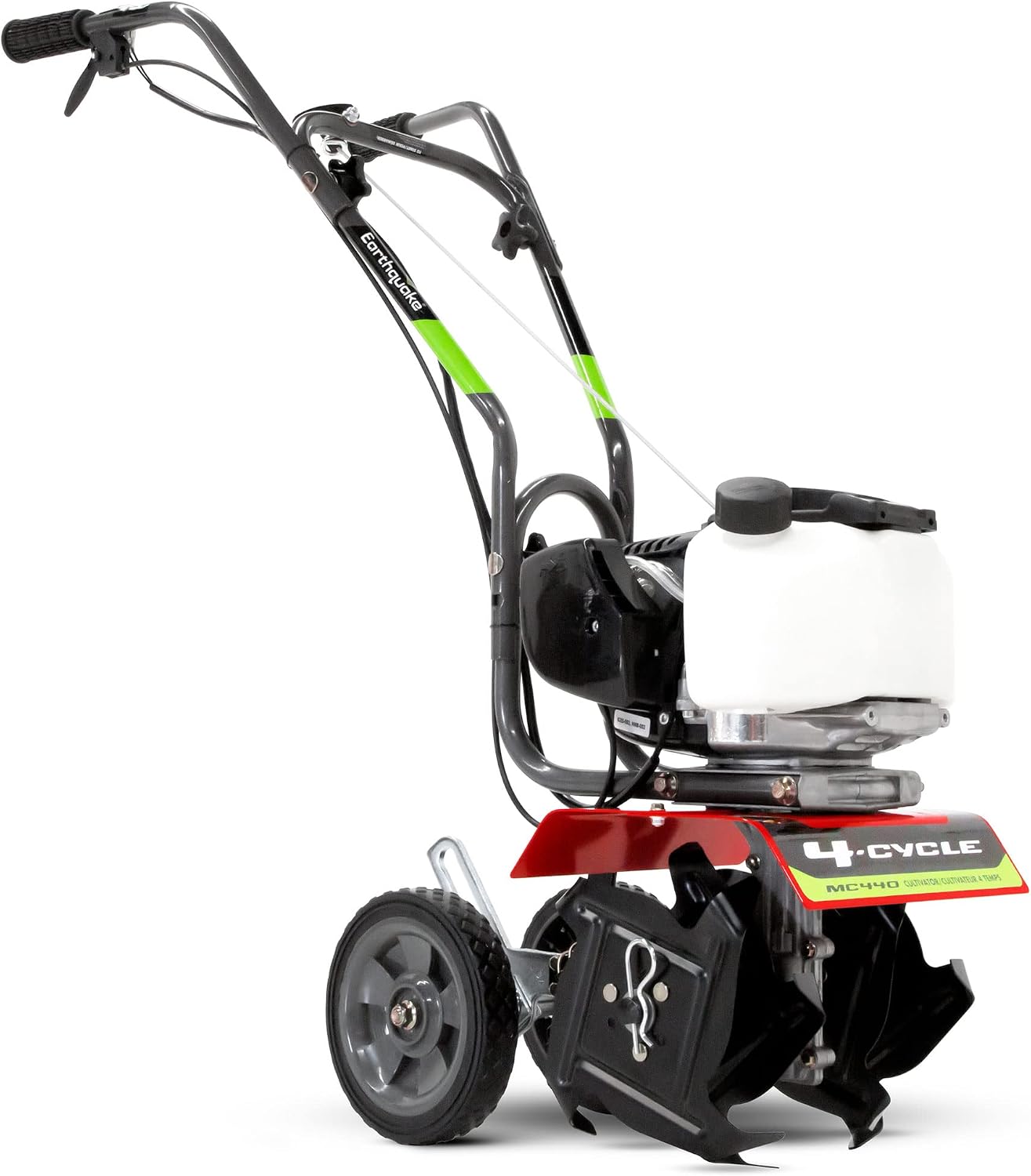
- 4-cycle engine needs no fuel mixing and runs quieter than 2-cycle models
- Stand-up starting from behind the handlebars
- 5-year limited warranty
Cons
- Too small to work whole fields on its own
- Struggles in very dense or rocky soil
- Edger and dethatcher kits are sold separately
The MC440 is light enough to move through tight rows and between beds, and its 40cc 4-cycle engine runs on straight gas. Stand-up starting and a 5-year warranty round out a practical everyday cultivator.
Most durable option

- 7HP engine chews through compacted and rocky soil
- Adjustable tilling width and depth fit lots of soil prep needs
- Instant reverse helps you out of tight spots
Cons
- Heavier than some, so it’s not the easiest to steer
- Assembly takes some time and some tools
- Engine gets noisy after a while
This tiller is built for breaking new ground on bigger plots. The 212cc 7HP engine and heavy-duty steel tines are aimed at hard soil, and the 22-inch adjustable width plus instant reverse help in tight spots. It is a newer listing with only a handful of ratings so far.
Best for large gardens

- 13.5-amp motor powers through compacted soil
- Rust-proof steel tines last a long time
- Folding handle makes storage effortless
Cons
- Cord limits your range unless you grab an extension
- Works best for medium to smaller large-scale plots
- Needs a little assembly out of the box
The Sun Joe’s six rust-proof steel tines are made for compacted soil, and the 3-position wheels let you set depth and control. You’ll need an extension cord to cover more ground, but overall, it’s a sturdy, practical pick for efficient tilling without the hassle of fuel.
Best large option
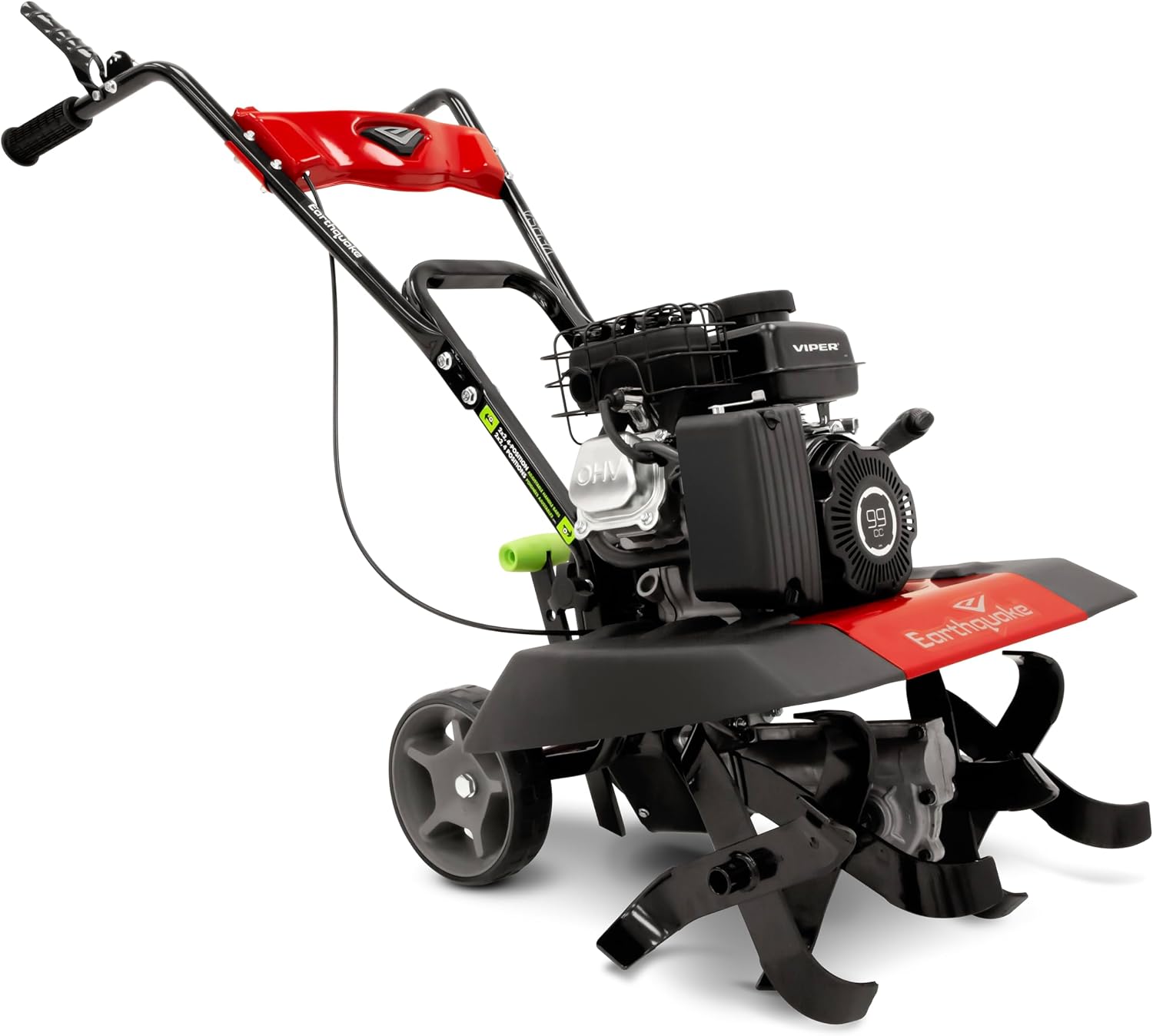
- Tool-less removal of side shields and outer tines adjusts width from 11 to 21 inches
- Tills up to 11 inches deep
- Adjustable handlebar height and onboard transport wheels
Cons
- Assembly takes a while
- Heavier than mini cultivators, so you’ll need some muscle
- Front-tine design is less suited to breaking very hard new ground than rear-tine tillers
The Versa’s 99cc 4-cycle Viper engine and removable outer tines let one machine till wide beds or cultivate narrow rows. With tilling depth up to 11 inches and width from 11 to 21 inches, it covers bigger plots than a mini cultivator.
Best heavy-duty option

- Cast iron gearbox stands up to hard work
- Adjustable skids let you control depth
- Vented side gearbox runs in an oil bath
Cons
- Nearly 700 pounds—moving it by hand isn’t happening
- PTO shaft might need a little modification
- Takes time to get the hang of it
It mixes soil thoroughly, which is great for big planting areas or cover crops. Think about whether your tractor’s horsepower matches up, or if the cultivator runs on its own engine— here’s a quick compatibility guide . It’s built to take a beating and keep performing season after season.
Buying Guide
When you’re picking out a cultivator for large-scale farming, durability and performance really matter. The machine’s got to handle heavy, constant use and still prep the soil the way you want.
Power source comes into play too. Think about whether your tractor’s horsepower matches up, or if the cultivator runs on its own engine—here’s a quick compatibility guide. That way, you won’t end up with gear that just doesn’t fit your setup.
Check out the working width and depth adjustment features. A wider working width means you cover more ground in less time, which is a game-changer. Depth control is handy for dialing in the right cultivation for whatever soil or crop you’re dealing with.
Maintenance is another thing you don’t want to overlook. Machines with parts that are easy to swap out and service points you can actually reach will save you a lot of headaches during those hectic months.
Here’s a quick look at the features worth weighing:
| Feature | Importance | What to Look For |
|---|---|---|
| Durability | High | Solid frame, quality materials |
| Power Compatibility | Medium to High | Fits tractor power range or has engine |
| Working Width | High | Wide enough for efficient coverage |
| Depth Adjustment | High | Adjustable for different soil/crops |
| Maintenance | Medium | Easy access parts, availability |
Weight and how easy it is to move the thing can make a difference, especially if you’re bouncing between fields. Heavier cultivators might be a pain to maneuver, but they do stay put better in rough ground.
if you keep these features in mind, you’ll probably end up with a cultivator that actually keeps up with the demands of big farming.
We independently select all products and services. If you click through links we provide, Plant Native may earn a commission with no extra cost to you. As an Amazon Associate I earn from qualifying purchases.

I’ve heard you need to be careful about spacing. How far apart should I plant these?
We just moved to Michigan and I’m trying to figure out what to put in the yard. This helps a lot.
Thank you for reading, Gary! Happy planting! -Plant Native Team
How long did it take you all to see results? I planted some back in March and nothing yet.
Patience is key! Sometimes it takes a full season to really see results. Make sure the soil conditions are right and give it time. -Plant Native Team
Solid article.
Thanks Cynthia! Let us know how it goes. -Plant Native Team
We just moved to New York and I’m trying to figure out what to put in the yard. This helps a lot.
We appreciate that, Jeff! Happy gardening! 🌿 -Plant Native Team