Arizona Cypress (Cupressus arizonica)
Cupressus arizonica, the Arizona Cypress, is a striking and stately evergreen tree native to the sky island mountain ranges and canyon systems of the American Southwest. With its tall, pyramidal silhouette, aromatic silver-blue foliage, and distinctive cinnamon-red to ash-gray bark, Arizona Cypress has long been one of the most recognizable native conifers of the Sonoran and Chihuahuan desert borderlands. Growing naturally in the rugged terrain of Arizona, New Mexico, and western Texas — often at elevations between 3,500 and 8,000 feet — this tree is uniquely adapted to thrive in a landscape of extremes: searing summer heat, occasional hard freezes, and highly variable precipitation.
At maturity, Arizona Cypress can reach 40 to 70 feet tall, forming a dense, narrow crown of scale-like, blue-green to silvery-gray foliage on ascending branches. The bark of young trees is smooth and reddish-brown, developing into a deeply furrowed, stringy, ash-gray texture with age. One of the plant’s most notable features is its resilience: established specimens are remarkably drought-tolerant, wind-resistant, and long-lived, with some individuals persisting for over 500 years in undisturbed canyon refugia. The species is also fire-adapted — its thick, insulating bark and elevated crown allow mature trees to survive moderate ground fires that kill competing vegetation.
Arizona Cypress has attracted growing attention as an outstanding landscape tree for the arid and semi-arid Southwest, prized for its low water requirements once established, its year-round screening and windbreak value, and its exceptional wildlife utility. The dense foliage provides thermal cover and nesting sites for raptors and songbirds alike, while its small, rounded cones produce seeds eaten by finches and small mammals. For gardeners and restoration practitioners working in Arizona’s high desert country, this native cypress offers an incomparable combination of beauty, resilience, and ecological value.
Identification
Arizona Cypress is a medium to large evergreen conifer with a strongly pyramidal to columnar crown that becomes more rounded and irregular with age. It can be distinguished from other Southwest conifers by its characteristic scale-like foliage, globose woody cones, and resinous, aromatic scent. The species shows considerable variation across its range — some populations have blue-gray foliage while others tend toward green — and several distinct varieties have been described.
Bark & Trunk
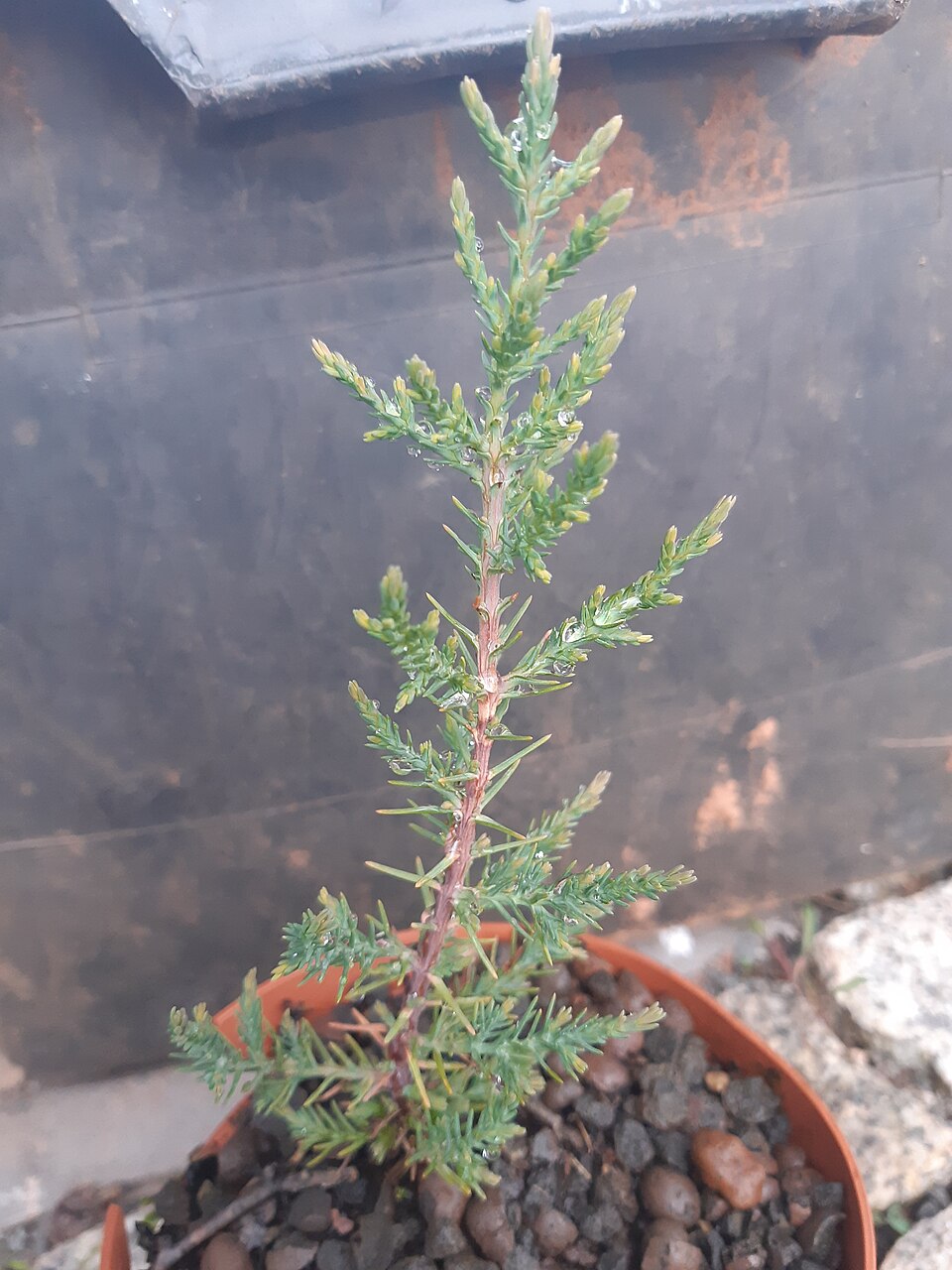
On young trees (up to about 30 years old), the bark is smooth, thin, and attractive — reddish-brown to cinnamon-red, peeling in thin fibrous strips to reveal fresh reddish-orange beneath. With age, the bark becomes increasingly thick, rough, and grayish-brown with deep longitudinal furrows and interlocking ridges that break into scaly plates. The trunk is straight and strongly tapered. The wood is lightweight, aromatic, and naturally rot-resistant, historically valued for fence posts and other outdoor applications.
Foliage
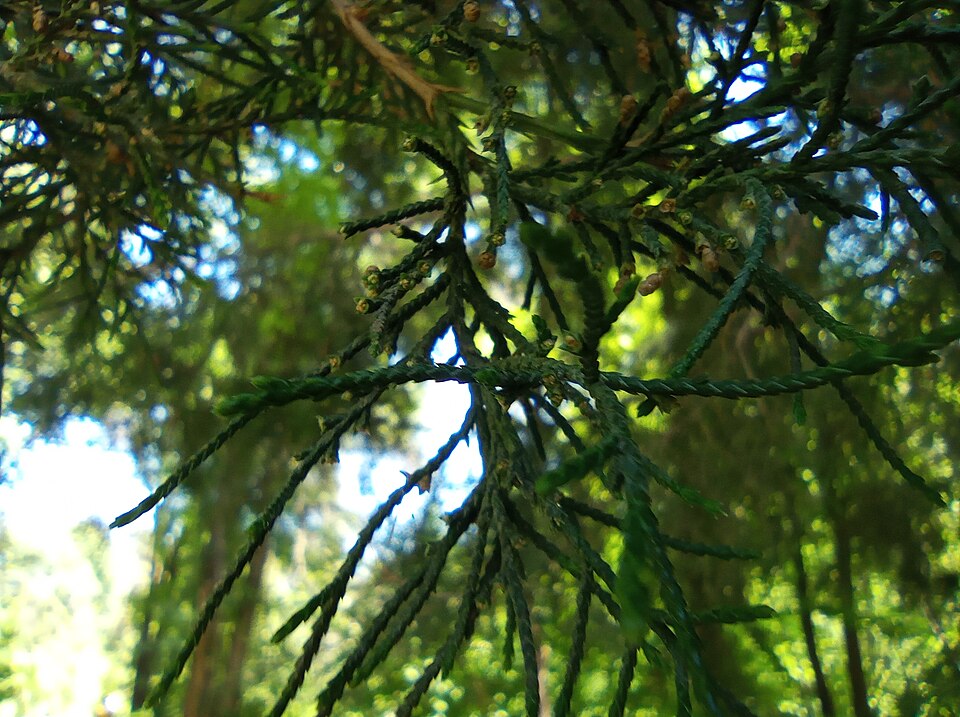
The foliage consists of tiny overlapping scale-like leaves — just 1–2 mm long — that are tightly pressed against the small, rounded branchlets, giving the foliage a dense, rope-like texture. Leaf color ranges from blue-gray to silver-green to grayish-green depending on the individual tree and its environmental conditions; many selections cultivated for the landscape trade have been chosen for their especially silvery-blue foliage. The leaves are dotted with small white resin glands and release a pleasant, spicy-resinous fragrance when crushed. The foliage remains on the tree year-round, making Arizona Cypress a valuable evergreen screening plant through all seasons.
Cones & Seeds
Arizona Cypress is monoecious — both male (pollen) and female (seed) cones are produced on the same tree. Male pollen cones are small, oval, and yellowish-green, appearing in late winter to early spring at the tips of small branchlets; they release clouds of yellow pollen that can be conspicuous on still days. Seed cones are woody, globose to slightly elongated, ¾ to 1 inch (2–2.5 cm) in diameter, with 6 to 8 shield-shaped scales. Cones begin green, maturing to reddish-brown or gray, and may persist on the tree for many years — sometimes remaining closed until triggered to open by fire heat (serotiny), a notable fire-adaptation strategy. Inside each cone are 6–20 small, tan to brown winged seeds that are dispersed by wind and small animals.
Quick Facts
| Scientific Name | Cupressus arizonica |
| Family | Cupressaceae (Cypress) |
| Plant Type | Evergreen Tree |
| Mature Height | 70 ft |
| Sun Exposure | Full Sun |
| Water Needs | Moderate |
| Bloom Time | February – March (inconspicuous cones) |
| Flower Color | Yellow-green (pollen cones); gray-green (seed cones) |
| USDA Hardiness Zones | 7–11 |
Native Range
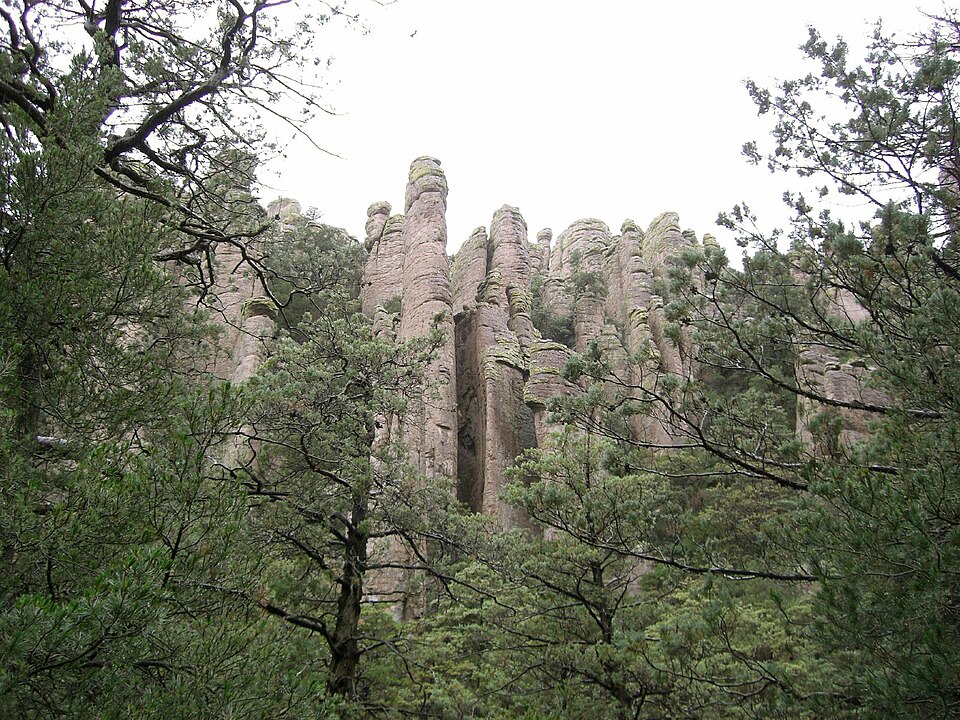
Arizona Cypress is native to the “sky island” mountain ranges of southeastern Arizona, southwestern New Mexico, and the Big Bend region of western Texas, with disjunct populations extending south into the Sierra Madre Occidental of northern Mexico. In the United States, it occurs in isolated mountain ranges such as the Chiricahua, Dragoon, Santa Rita, Rincon, Huachuca, and Catalina Mountains of Arizona, and corresponding ranges across the Arizona-New Mexico border. These mountainous islands of habitat rise dramatically from the surrounding Sonoran and Chihuahuan desert lowlands, creating unique microclimates that have allowed this and other relict species to survive ice age climate shifts.
Within these sky island ranges, Arizona Cypress is most often found in canyon bottoms and on rocky canyon slopes between 3,500 and 8,000 feet elevation, where it grows on thin, rocky, well-drained soils derived from limestone, granite, or volcanic rock. It commonly associates with Emory Oak (Quercus emoryi), Arizona Pine (Pinus arizonica), Alligator Juniper (Juniperus deppeana), Mexican Pinyon Pine (Pinus cembroides), and Velvet Ash (Fraxinus velutina). In favorable canyon bottom locations, individual trees can achieve impressive stature, and old-growth stands of Arizona Cypress represent some of the most ecologically significant forest communities in the American Southwest.
The species’ specialized habitat requirements — rocky, well-drained soils in canyon refugia at intermediate elevations — mean that its natural occurrences are scattered and sometimes quite small. Climate change poses a significant long-term threat to these populations, as increasing temperatures and more severe droughts may reduce the viability of lower-elevation occurrences. However, Arizona Cypress is also one of the most widely planted native trees in the southwestern landscape industry, and cultivated specimens are now common across a broad range of elevations and soil types far beyond the natural distribution.
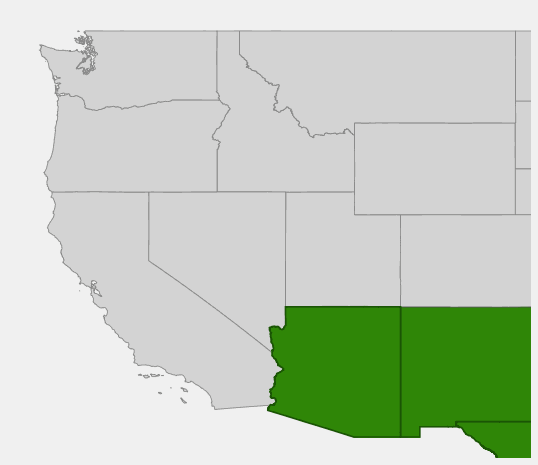
📋 Regional plant lists featuring Arizona Cypress: Arizona
Growing & Care Guide
Arizona Cypress is one of the most rewarding landscape trees for the arid Southwest. Once established — typically after 2 to 3 seasons of supplemental irrigation — it is remarkably drought tolerant, wind resistant, and essentially pest-free. Its year-round screening value and rapid initial growth make it a top choice for privacy hedges, windbreaks, and accent trees in dry climates from Arizona to Texas and into Southern California.
Light
Arizona Cypress demands full sun for best form and health. In partial shade, the crown becomes open and irregular, and the tree is more susceptible to branch dieback. Plant in an open, sunny location with at least 6 to 8 hours of direct sunlight per day. Avoid planting too close to buildings or large trees that would cast shade on developing plants. The species is perfectly suited to the intense sun conditions of the Sonoran and Chihuahuan desert borderlands, including south- and west-facing exposures that would be too harsh for most other conifers.
Soil & Water
Plant Arizona Cypress in well-drained soil — it will not tolerate standing water or clay soils that remain saturated after rain. Rocky, sandy, or gravelly soils are ideal. It thrives in a wide pH range from 6.0 to 8.0. Once established, Arizona Cypress is moderately drought tolerant and requires very little supplemental irrigation in most of its hardiness range. During the first 2 to 3 growing seasons, water deeply but infrequently (every 1–2 weeks in summer, less in winter) to encourage deep root development. After establishment, occasional deep watering during extended droughts will keep the tree vigorous and fast-growing, but many established specimens in the Southwest survive on rainfall alone.
Planting Tips
Plant in fall or early spring to minimize transplant stress. Choose container stock carefully — look for straight, well-formed leaders and avoid plants with girdling roots. Plant at or slightly above grade to ensure excellent drainage. Space trees 15 to 20 feet apart for a formal screen or windbreak; 20 to 30 feet apart for individual specimens. Arizona Cypress grows 2 to 3 feet per year under good conditions, so a screen or windbreak will establish itself within 5 to 7 years. Stake young trees if planting in a windy location, but remove stakes after the first growing season to promote trunk strength. The tree is somewhat wind-resistant due to its flexible, fibrous root system, but young trees in exposed locations may need temporary support.
Pruning & Maintenance
Arizona Cypress generally requires minimal pruning. Remove dead, diseased, or crossing branches in late winter. Avoid cutting back into old wood beyond green foliage — like most conifers, Arizona Cypress will not regenerate from bare wood. A natural, pyramidal form is best; heavy shearing destroys the tree’s character and stimulates dense interior growth that can harbor moisture and disease. One maintenance concern is cypress canker (Seiridium spp.) — a fungal disease that can cause branch dieback and, in severe cases, tree death. Ensure good air circulation, avoid overhead irrigation, and prune out infected branches well below the canker to manage this problem. With good care and site selection, however, many Arizona Cypress specimens grow for decades without significant disease problems.
Landscape Uses
Arizona Cypress is exceptionally versatile in the southwestern landscape:
- Privacy screen & windbreak — one of the fastest-growing and most effective native screening trees for the Southwest
- Specimen or accent tree — the silvery-blue foliage and pyramidal form are striking focal points in any landscape
- Xeriscape & water-wise gardens — ideal for low-water landscapes after establishment
- Erosion control on slopes and disturbed sites
- Wildlife habitat plantings — excellent cover and food for birds throughout the year
- Christmas tree production — widely grown commercially in Arizona for holiday trees
- Restoration plantings in canyon habitats and sky island communities
Wildlife & Ecological Value
Arizona Cypress provides significant ecological services across multiple seasons, serving as one of the most important native conifers for wildlife in the sky island landscape.
For Birds
The dense, year-round foliage of Arizona Cypress offers outstanding thermal cover, roosting habitat, and nesting sites for a wide range of birds. Cooper’s Hawks and Barn Owls frequently nest in mature specimens, and the dense interior branches are favored by House Finches, American Robins, Bewick’s Wrens, Mourning Doves, and various other cavity and platform nesters. The small, winged seeds inside the woody cones are consumed by finches (including Pine Siskins and Lesser Goldfinches) and other seed-eating birds. In winter, dense cypress groves serve as critical thermal refugia where birds can shelter from wind, cold, and precipitation.
For Mammals
Small mammals including deer mice, squirrels, and chipmunks collect and cache Arizona Cypress seeds. Mule Deer and White-tailed Deer occasionally browse young foliage but generally avoid established trees with tough, mature growth. The dense crown and sturdy branching structure provide excellent climbing habitat for Gray Fox. In canyon settings, Arizona Cypress groves often form part of a diverse forest community that supports a full suite of larger mammals including Coatimundi, Black Bear, and Mountain Lion.
For Pollinators
Like most conifers, Arizona Cypress is wind-pollinated rather than insect-pollinated, so it does not directly benefit bees or butterflies through nectar provision. However, the tree indirectly supports pollinators by providing habitat structure, windbreak protection for adjacent flowering plants, and by harboring beneficial insects including predatory wasps and parasitic flies that help control pest populations in nearby gardens and natural areas.
Ecosystem Role
In the sky island mountain ranges of the Southwest, Arizona Cypress plays a critical role in canyon ecosystem structure. Its dense, closed canopy moderates soil temperatures, reduces evaporative moisture loss, and creates a unique microclimate that supports shade-tolerant understory species and diverse invertebrate communities. Dead cypress wood provides habitat for cavity-nesting birds and wood-boring beetles, which in turn support insectivorous woodpeckers and other wildlife. The resinous litter creates a soil environment favorable to specific mycorrhizal fungi that enhance nutrient cycling in these rocky, nutrient-poor canyon soils.
Cultural & Historical Uses
Arizona Cypress has been an important resource for Indigenous peoples of the Southwest for thousands of years. The Chiricahua Apache, who lived among the mountain ranges where Arizona Cypress grew most abundantly, used the aromatic wood for fuel, the bark for tinder in fire-making, and the resin as a waterproofing and adhesive agent. The dense boughs were used for temporary shelter construction, and the fragrant foliage was sometimes burned ceremonially. Specific medicinal applications — including the use of bark infusions for treating respiratory conditions — have been documented across multiple cultural groups of the region.
Spanish colonizers in the 17th and 18th centuries recognized the value of Arizona Cypress wood for construction and fuel in the arid borderlands. Early Spanish missions in the region often planted cypress trees as windbreaks and landscape features, continuing a tradition of cypress cultivation that stretches back to ancient Mediterranean civilizations — though the Arizona native species is distinct from the Italian or Mediterranean cypress (Cupressus sempervirens) that was the focus of that Old World cultural tradition. Early American settlers in the region harvested Arizona Cypress extensively for fence posts, mine timbers, and firewood, and commercial logging in some sky island canyon stands significantly reduced old-growth populations by the early 20th century.
Today, Arizona Cypress is celebrated as one of the premier native trees for southwestern landscapes. It is commercially important as a Christmas tree species — widely grown on tree farms in Arizona and New Mexico — and is a mainstay of the native plant nursery trade throughout the region. Multiple cultivars have been selected for superior foliage color, particularly the intensely blue-silver foliage of selections like ‘Carolina Sapphire’ and ‘Blue Ice’ (though these are actually derived from the closely related Cupressus arizonica var. glabra, sometimes treated as a separate species). Conservation efforts have focused on protecting remaining old-growth canyon stands, which represent irreplaceable genetic reservoirs and ecosystem anchors in a changing climate.
Arizona Cypress holds a special place in the popular culture of the Southwest as a symbol of the dramatic sky island landscape — the towering green spires of cypress visible against rocky canyon walls have become iconic in the imagery of southern Arizona’s borderlands. The species is featured in numerous landscape and restoration programs aimed at rebuilding native forest communities in degraded canyon habitats and establishing wildlife corridors between isolated sky island ranges.
Frequently Asked Questions
How fast does Arizona Cypress grow?
Arizona Cypress is a moderately fast grower, typically adding 2 to 3 feet per year under good conditions — full sun, well-drained soil, and occasional deep watering. In ideal conditions, trees can reach 30 to 40 feet within 15 to 20 years. Growth slows somewhat as the tree matures and in sites with very limited water.
Is Arizona Cypress drought tolerant?
Yes, once established (after 2 to 3 seasons of regular watering to support root development), Arizona Cypress is quite drought tolerant. Established trees in the wild often survive on 12 to 20 inches of annual rainfall. In landscaped settings, occasional deep watering during extended dry periods will keep the tree vigorous, but many established specimens thrive with minimal supplemental irrigation.
Does Arizona Cypress get cypress canker?
Arizona Cypress can be susceptible to cypress canker caused by fungi in the genus Seiridium. This disease is most problematic during periods of stress (drought, poor drainage, root damage). Selecting disease-resistant cultivars, ensuring excellent drainage, and pruning out infected branches promptly can help manage the problem. Healthy, well-sited trees are generally far more resistant.
Can Arizona Cypress be used as a privacy screen?
Absolutely — Arizona Cypress is one of the best native trees for privacy screens and windbreaks in the arid Southwest. Its dense, year-round foliage and relatively fast growth create effective screening within 5 to 7 years. For a continuous screen, space trees 10 to 15 feet apart.
What is the difference between Arizona Cypress and Italian Cypress?
Though they look superficially similar, Arizona Cypress (Cupressus arizonica) and Italian Cypress (Cupressus sempervirens) are distinct species from different continents. Arizona Cypress typically has blue-gray to silver foliage, rougher bark, and is better adapted to the dry, hot conditions of the American Southwest. Italian Cypress has darker green foliage and is less cold-hardy in most of Arizona’s mountain country. Native Arizona Cypress is the ecologically appropriate choice for wildlife-supportive plantings in the region.

Looking for a nursery that carries Arizona Cypress?
Browse our native plant nursery directory: Arizona