Arizona Lupine (Lupinus arizonicus)
⚠️ Toxicity note: Arizona Lupine contains quinolizidine alkaloids throughout the plant, concentrated most heavily in the seeds and pods. It is toxic to livestock, pets, and people if eaten, and sheep and cattle grazing lupine-heavy range during pod formation are the classic poisoning scenario. Enjoy its spring color, but do not treat any part of it as food.
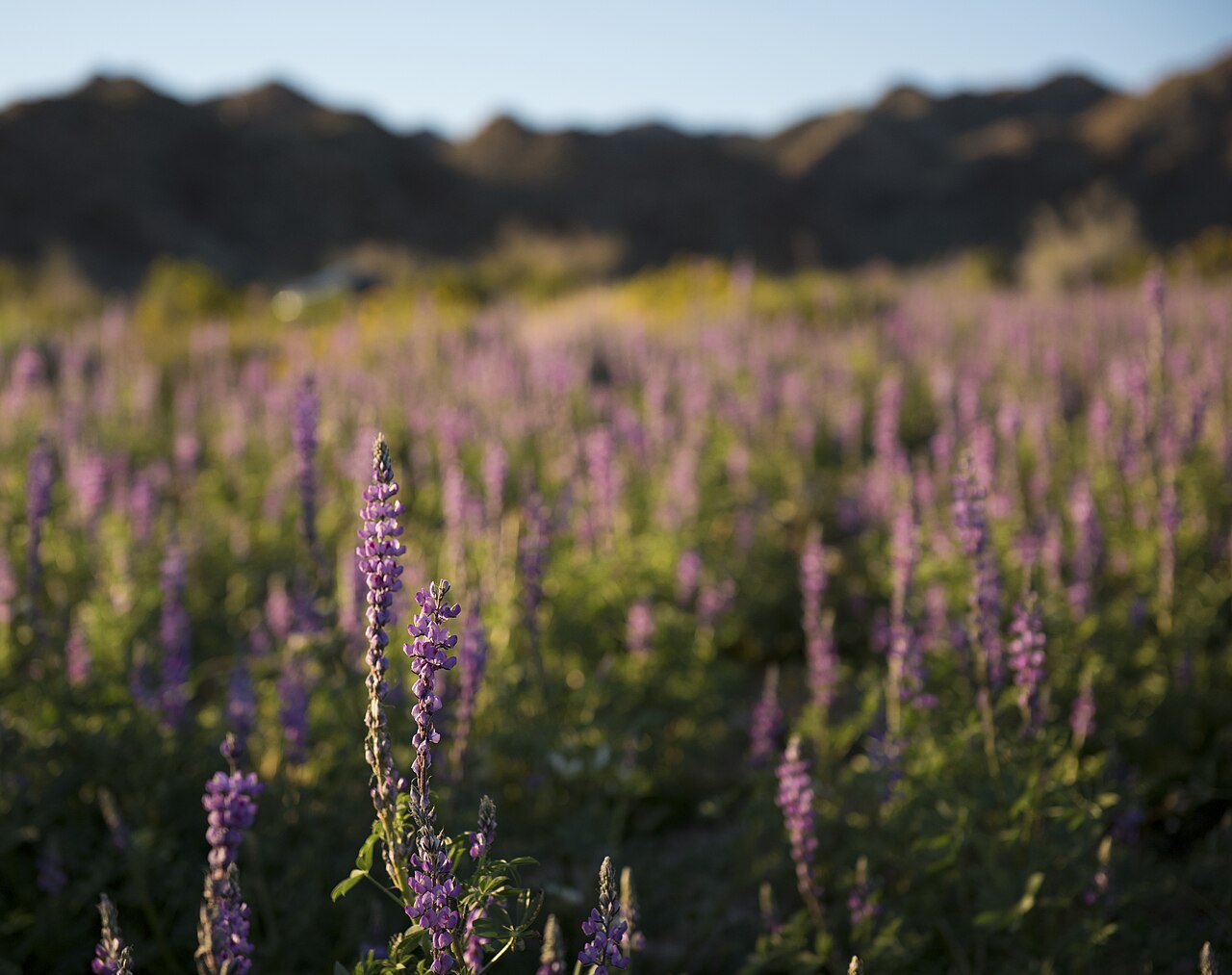
Lupinus arizonicus (S. Watson) S. Watson, known as Arizona Lupine, is a winter annual wildflower of the Mojave, Sonoran, and Colorado Desert region. Where winter and spring rains are generous, it is one of the signature species of the desert “superbloom,” carpeting sandy washes and open flats with dense spikes of fragrant, reddish-purple to magenta flowers from late winter into spring.
As an annual, Arizona Lupine completes its entire life cycle — germination, growth, bloom, seed set, and death — within a single cool season, surviving the dry months as dormant seed in the soil until the next rains trigger germination. This boom-and-bust strategy is typical of desert annual wildflowers and explains why Arizona Lupine can seem absent for years, then suddenly appear in spectacular numbers after a wet winter.
In the home landscape, Arizona Lupine is grown as a reseeding wildflower in desert gardens, naturalized washes, and wildflower meadows across its native range, where it adds early-season color and nectar for native bees before the heat of summer arrives.
Identification
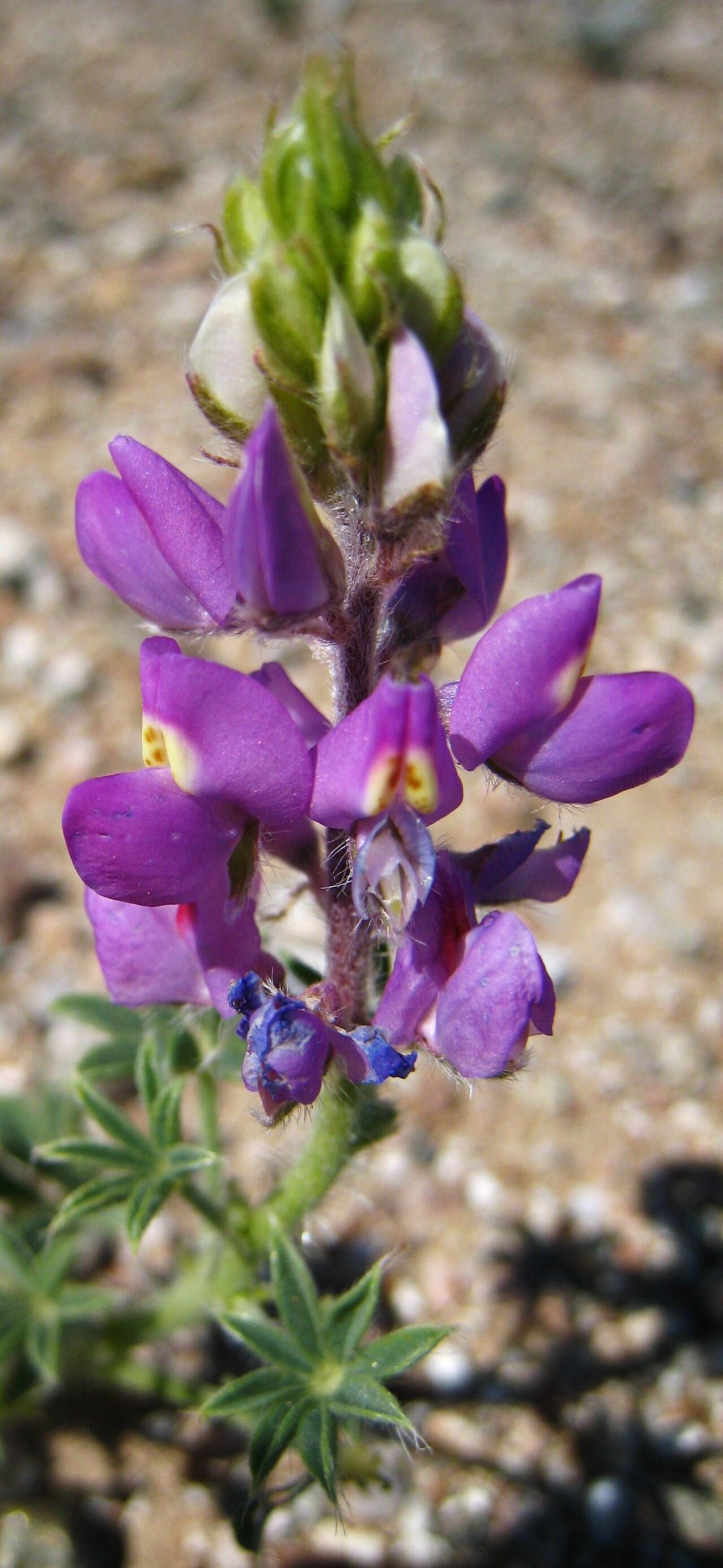
Arizona Lupine is an annual forb typically reaching 8 to 24 inches (20–60 cm) tall, with multiple stems rising from a single base and a coating of fine silvery hairs over the whole plant.
Leaves
Leaves are palmately compound with 5 to 9 narrow, gray-green leaflets up to 1.6 inches (4 cm) long, each covered in silky hairs that give the foliage a soft, silvery sheen and help reflect intense desert sun.
Flowers
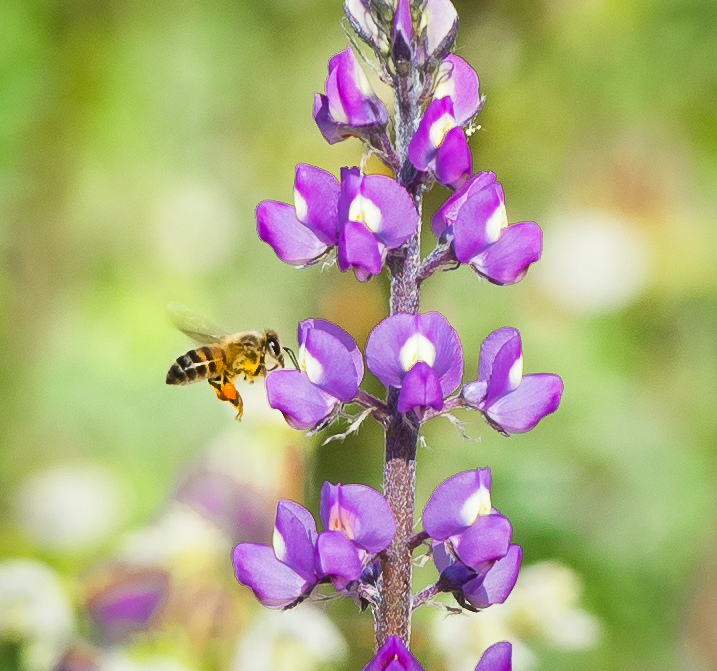
Flowers are carried in showy, elongated racemes at the stem tips, each bearing numerous reddish-purple to magenta pea-shaped blossoms, typically with a pale yellow-to-white spot on the banner petal that often fades or turns reddish with age — a common lupine signal that tells pollinators a flower has already been visited. The flowers have a sweet, distinctive fragrance. Bloom runs from February through May depending on elevation and winter rainfall.
Fruit & Seeds
The fruit is a hairy, flattened legume pod roughly 1 to 1.5 inches (2.5–4 cm) long that dries and splits open to release several mottled seeds. Seed set typically finishes before the onset of summer heat, after which the entire plant dries and dies.
Quick Facts
| Scientific Name | Lupinus arizonicus (S. Watson) S. Watson |
| Family | Fabaceae (Pea/Legume) |
| Plant Type | Winter Annual Forb/Wildflower |
| Mature Height | 8–24 in (20–60 cm) |
| Mature Spread | 8–12 in (20–30 cm) |
| Growth Rate | Fast (completes life cycle in one season) |
| Sun Exposure | Full Sun |
| Water Needs | Low (relies on winter/spring rain) |
| Soil Type | Sandy, gravelly, well-drained desert soils |
| Soil pH | 6.5–8.0 (neutral to alkaline) |
| Bloom Time | February – May |
| Flower Color | Reddish-purple to magenta |
| Fall Color | Not applicable — plant dies after seed set |
| Fruit | Hairy legume pods, 1–1.5 in |
| Deer Resistant | Yes — foliage contains bitter alkaloids |
| USDA Hardiness Zones | 8–10 (grown as a self-seeding annual) |
Native Range
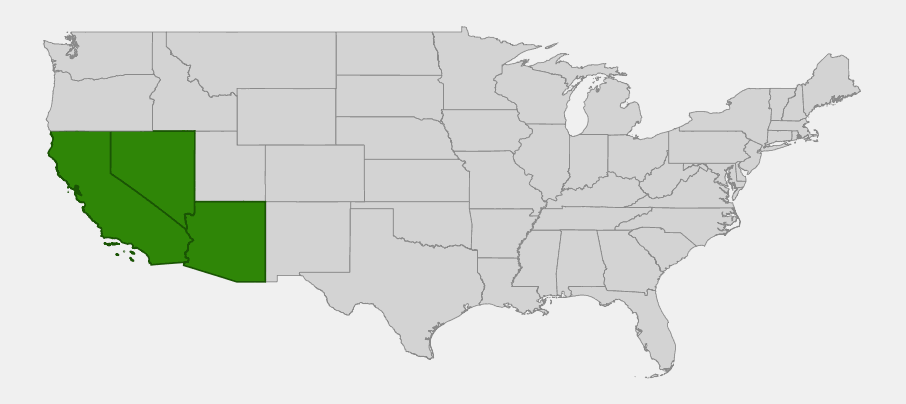
Arizona Lupine is native to the low desert of southeastern California, southern Nevada, and Arizona, where it occurs across the Mojave, Colorado, and Sonoran Desert regions. Well-known concentrations occur in Joshua Tree National Park and Anza-Borrego Desert State Park in California, and in the low desert basins of central and western Arizona.
Despite the common name, Arizona Lupine is not confined to Arizona — its range centers on the lower Colorado River basin and extends well into California’s deserts and the southern tip of Nevada. It grows at relatively low elevations, generally below about 3,000 feet, on sandy flats, desert washes, and the lower bajadas below rocky slopes, where runoff concentrates enough moisture to support a dense annual bloom in favorable years.
Arizona Lupine is strictly a Lower Sonoran and Mojave Desert species; it is not native to higher, cooler desert grassland or woodland zones, and gardeners outside its warm, arid native range should not expect it to naturalize reliably.
📋 Regional plant lists featuring Arizona Lupine: Arizona & New Mexico
Growing & Care Guide
Arizona Lupine is grown the way most desert winter annuals are: sown in fall, allowed to establish through the cool season, and left to flower, set seed, and die back naturally before summer. It is not a plant to baby with regular irrigation outside its natural cycle.
Light
Full sun is essential — this is an open-desert species adapted to intense, unfiltered winter and spring light, and it will be weak and sparse-flowering in shade.
Soil & Water
Plant in sandy or gravelly, fast-draining soil; heavy clay or constantly moist soil encourages rot rather than the deep, brief root run this species expects. Established seedlings need little supplemental water beyond normal winter rainfall in their native range, though an occasional deep soak during an unusually dry winter can improve bloom density. Avoid summer irrigation, which the dormant seed bank does not need.
Planting Tips
Sow seed directly in fall, ideally after the first substantial rain, since Arizona Lupine resents transplanting. Seed benefits from light scarification to break the hard seed coat and speed germination. Once established in a garden, it will self-seed in years with adequate winter moisture, so little replanting is needed beyond the first season.
Pruning & Maintenance
None needed — let the plants complete their natural cycle and dry down after seed set, then remove the dead stems or leave them as mulch and seed source for the following year.
Propagation
Collect seed from dry, just-splitting pods in late spring and store it cool and dry until fall sowing. Direct seeding is far more successful than attempting to start plants in containers for transplant.
Landscape Uses
Arizona Lupine is a classic component of low-desert wildflower displays:
- Desert wildflower meadows sown with poppies, phacelia, and other winter annuals
- Naturalized washes and arroyos that mimic its native habitat
- Pollinator gardens for early-season nectar before summer heat arrives
- Reseeding color in low-water desert landscapes
- Restoration seeding on disturbed low-desert sites
Wildlife & Ecological Value
In years of good winter rain, Arizona Lupine is a cornerstone of the desert spring bloom, providing an early, concentrated nectar and pollen source when few other plants are flowering.
For Pollinators
Native bees, including digger bees and bumblebees, along with honeybees, are regular visitors, drawn to the fragrant flowers and triggering the lupine’s spring-loaded pollination mechanism as they land. The pale nectar-guide spot on each banner petal helps direct pollinators to unvisited flowers and fades after pollination, making foraging more efficient for both plant and pollinator.
For Mammals & Birds
Desert rodents and some granivorous birds consume fallen seed, though the alkaloid content limits heavy browsing of the living foliage by most mammals. Dense bloom years also support a pulse of insect activity that benefits insect-eating birds passing through on spring migration.
Ecosystem Role
As a nitrogen-fixing annual legume, Arizona Lupine enriches thin desert soils each time it germinates, grows, and decomposes, contributing to the fertility that supports the diverse annual wildflower community of a healthy desert wash. Its boom-and-bust population cycle, tracking winter rainfall, is itself an important feature of desert ecology, since the resulting biomass pulses ripple up through seed-eating and insect-eating wildlife.
Cultural & Historical Uses
Arizona Lupine is best known today as one of the signature wildflowers of the Southwest’s celebrated desert “superblooms,” years of exceptional winter rain that trigger mass germination of the dormant seed bank across the Mojave, Colorado, and Sonoran Deserts. These events draw visitors to places like Anza-Borrego Desert State Park and Joshua Tree National Park and have made the species a familiar sight in desert wildflower photography and tourism.
Documented traditional uses by Indigenous peoples of the Southwest specific to this species are not well recorded in the available literature. As with lupines generally, no part of the plant was used as a food source, given its alkaloid content; the species’ historical significance lies primarily in its role as a reliable, visually striking indicator of a good desert rain year.
Frequently Asked Questions
Is Arizona Lupine poisonous?
Yes. All parts of the plant, especially the seeds and pods, contain quinolizidine alkaloids that are toxic to livestock, pets, and people if eaten. It should never be treated as an edible plant, and care should be taken where small children or grazing animals have access to it.
Is Arizona Lupine only found in Arizona?
No. Despite the common name, it is native across the low deserts of southeastern California and southern Nevada as well as Arizona, centered on the lower Colorado River basin rather than confined to any one state.
Why didn’t Arizona Lupine come up in my desert garden this year?
As a winter annual, its germination depends heavily on adequate fall and winter rainfall. In dry years, seed simply stays dormant in the soil, sometimes for several seasons, until conditions are right — this is normal for the species, not a sign of a failed planting.
Can Arizona Lupine be grown outside the desert Southwest?
It is adapted specifically to a hot, dry, low-elevation desert climate with cool, wet winters and can be difficult to establish reliably outside USDA zones 8–10 or in climates with summer rainfall, which disrupts its natural dry dormancy.
Does Arizona Lupine come back every year?
Individual plants are annuals and die after setting seed, but a healthy population persists year to year through its seed bank, reappearing in varying density depending on rainfall — sparse in dry years, spectacular in wet ones.

Looking for a nursery that carries Arizona Lupine?
Browse our native plant nursery directory: California · Nevada · Arizona