Black Chokeberry (Aronia melanocarpa)
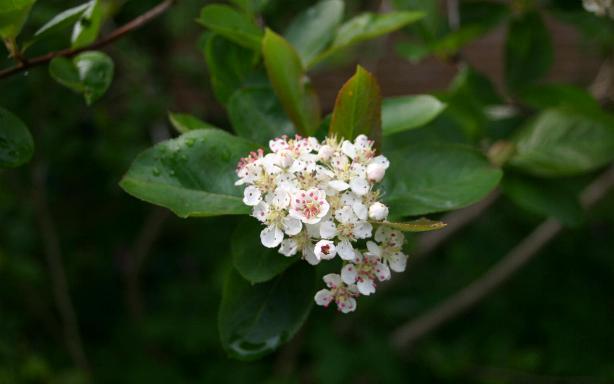
Aronia melanocarpa, commonly known as Black Chokeberry, is a remarkably adaptable native shrub that brings four-season beauty and exceptional wildlife value to landscapes throughout eastern North America. This member of the Rosaceae (rose) family is renowned for its striking white spring flowers, glossy dark berries, and spectacular wine-red fall foliage that ranks among the most brilliant of any native plant. Despite its somewhat intimidating common name, Black Chokeberry is an outstanding choice for both ornamental and ecological landscaping.
Native to wetlands, swamps, and moist woodlands from New England south to the Carolinas, Black Chokeberry has gained recognition as one of the most versatile native shrubs available, tolerating everything from periodically flooded soils to drought conditions once established. The berries, while astringent when raw (hence “chokeberry”), are rich in antioxidants and increasingly valued for their nutritional properties, leading to growing commercial cultivation for juice and supplement production.
Growing 6 feet tall and wide at maturity, Black Chokeberry forms attractive, dense colonies through root suckers, making it excellent for naturalized areas, rain gardens, and wildlife habitat restoration. Its adaptability to various soil conditions, tolerance of both wet and dry sites, and spectacular wine-red fall color make it a cornerstone species for sustainable landscaping throughout its range and beyond.
Identification
Black Chokeberry is a deciduous shrub that typically grows 3 to 6 feet tall and equally wide, though it can occasionally reach up to 10 feet in optimal conditions. The plant forms dense, multi-stemmed colonies through underground root suckers, creating attractive natural groups over time.
Stems & Growth Habit
The stems are slender and upright when young, becoming more arching with age. Young twigs are reddish-brown and smooth, while older stems develop gray-brown bark. The overall growth habit is dense and somewhat rounded, with multiple stems arising from the base. The root system produces suckers that gradually expand the colony, though not aggressively.
Leaves
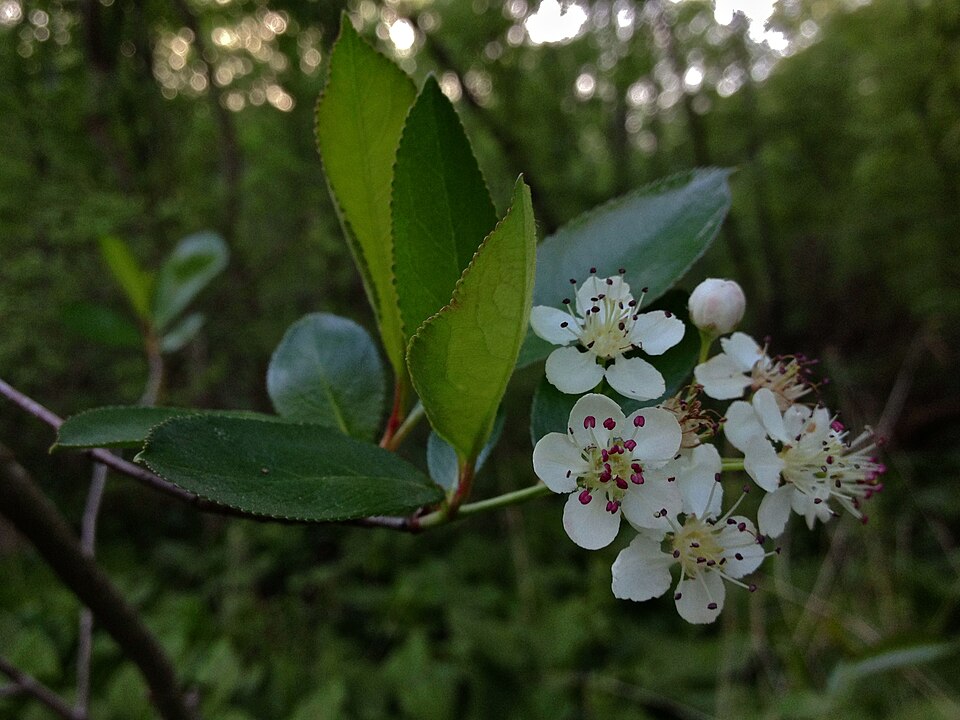
The leaves are alternate, simple, and oval to oblong in shape, 1 to 3 inches long with finely serrated margins. They are glossy dark green above and paler beneath, with prominent midribs and visible veining. One of Black Chokeberry’s most distinctive features is its spectacular fall color — the leaves turn brilliant shades of orange, red, and wine-red, often with purple undertones, creating one of the most intense fall displays of any native shrub.
Flowers
In late spring (typically May), Black Chokeberry produces showy clusters of white flowers in flat-topped corymbs 1 to 2 inches across. Each individual flower is about ½ inch in diameter with five white petals surrounding numerous pink-tipped stamens, giving the flower clusters a subtly pinkish cast. The flowers have a pleasant, mild fragrance and are highly attractive to pollinators.
Fruit
The berries that give Black Chokeberry its name are its most notable feature. They ripen in late summer to early fall, transitioning from red to deep purple-black. Each berry is about ¼ to ⅜ inch in diameter, containing 3 to 5 small seeds. The berries persist well into winter if not consumed by wildlife, providing an important late-season food source. While edible, they are quite astringent and tart when eaten fresh, though they make excellent jams, jellies, and juices when properly prepared.
Quick Facts
| Scientific Name | Aronia melanocarpa |
| Family | Rosaceae (Rose) |
| Plant Type | Deciduous Shrub |
| Mature Height | 6 ft |
| Sun Exposure | Full Sun to Part Shade |
| Water Needs | Moderate to High |
| Bloom Time | May – June |
| Flower Color | White with pink stamens |
| USDA Hardiness Zones | 3–8 |
Native Range
Black Chokeberry has an extensive native range across eastern North America, extending from Nova Scotia and New Brunswick south to South Carolina and Georgia, and west to Minnesota and Arkansas. This broad distribution reflects the species’ remarkable adaptability to various climate and soil conditions, from northern boreal edges to southeastern coastal plains.
Throughout its range, Black Chokeberry typically inhabits wetlands, swamps, stream banks, and moist woodland edges, though it also occurs in drier upland sites where soil moisture is adequate. It thrives in acidic soils and is commonly found in association with other wetland and edge species such as Red Maple, Sweet Pepperbush, and various sedges and ferns.
The species shows considerable variation across its range, with northern populations typically being more cold-hardy and compact, while southern forms may grow larger and tolerate more heat. This natural variation has contributed to Black Chokeberry’s success as a landscaping plant well beyond its native range, as different ecotypes can be selected for specific growing conditions.
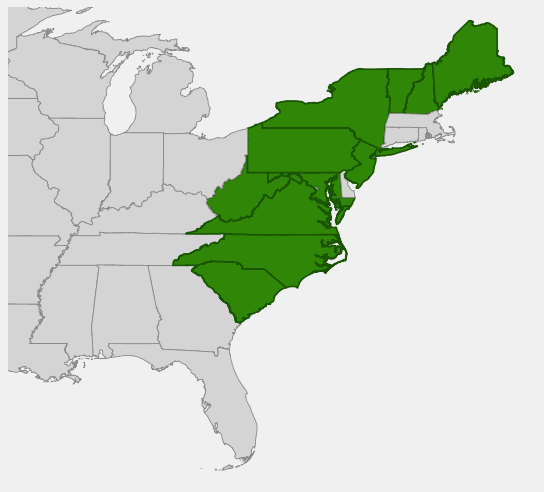
📋 Regional plant lists featuring Black Chokeberry: North Carolina & South Carolina
Growing & Care Guide
Black Chokeberry is one of the most adaptable and low-maintenance native shrubs available, thriving in conditions from wet to moderately dry and tolerating a wide range of soil types and pH levels.
Light
Black Chokeberry performs well in full sun to partial shade, though it produces the most flowers, berries, and intense fall color in full sun locations. It can tolerate quite a bit of shade and is often found naturally at woodland edges where it receives filtered light throughout the day. In very shady locations, the plant may become more open and produce fewer flowers.
Soil & Water
This species is remarkably adaptable to different soil conditions, tolerating everything from seasonally flooded wetland soils to well-drained upland sites. It prefers acidic soils (pH 4.5–6.5) but can adapt to neutral conditions. Black Chokeberry can handle periodic flooding as well as drought conditions once established, making it ideal for rain gardens and areas with variable moisture. It thrives in organic-rich soils but will grow in clay, sand, or rocky soils as well.
Planting Tips
Plant Black Chokeberry in spring or fall, spacing individual plants 4 to 6 feet apart if creating a hedge or screen. For naturalistic plantings, allow for the plant’s tendency to spread through root suckers. Choose locations where the plant can receive morning sun for best flowering and fall color. Black Chokeberry transplants easily and establishes quickly with minimal care.
Pruning & Maintenance
Black Chokeberry requires minimal pruning. Remove dead, damaged, or crossing branches in late winter. If you want to control the plant’s spread, remove unwanted root suckers annually. For rejuvenation of older plantings, you can cut the entire shrub back to 6 inches from the ground in late winter — it will quickly regenerate from the roots. This practice can be done every 10–15 years to maintain vigor.
Landscape Uses
Black Chokeberry’s adaptability makes it valuable in many landscape situations:
- Rain gardens — excellent for areas that periodically flood
- Naturalized areas — perfect for woodland edges and meadow borders
- Wildlife gardens — essential for birds and pollinators
- Erosion control — effective on slopes and stream banks
- Screening and hedges — creates dense, attractive barriers
- Edible landscaping — berries can be harvested for jam and juice
- Four-season interest — flowers, berries, and spectacular fall color
Wildlife & Ecological Value
Black Chokeberry is considered one of the most ecologically valuable native shrubs, supporting wildlife throughout the year and serving as a keystone species in many wetland and edge habitats.
For Birds
The berries of Black Chokeberry are consumed by over 40 species of birds, including American Robins, Cedar Waxwings, Northern Cardinals, various thrushes, woodpeckers, and gamebirds like Ruffed Grouse and Wild Turkey. The berries ripen in late summer and persist into winter, providing crucial food during migration and the challenging winter months. The dense, thicket-forming growth habit also provides excellent nesting habitat and cover for many songbird species.
For Mammals
Black bears, raccoons, chipmunks, and various rodents consume the berries, while deer occasionally browse the foliage and young stems. The dense stands that Black Chokeberry creates provide important cover and travel corridors for small mammals, particularly in edge habitats where forests meet more open areas.
For Pollinators
The abundant white flowers provide nectar and pollen for a wide variety of native bees, including bumblebees, sweat bees, and mason bees, as well as beneficial flies, beetles, and butterflies. The relatively late spring bloom period (May-June) makes Black Chokeberry particularly valuable for pollinators that are active after many early spring flowers have finished.
Ecosystem Role
As a native member of wetland and edge communities, Black Chokeberry plays important ecological roles in soil stabilization, water filtration, and habitat creation. Its ability to tolerate flooding makes it valuable in riparian buffers, where it helps filter runoff and prevent erosion. The plant also serves as a host for various native moths and butterflies, contributing to the complex food webs that support healthy ecosystems.
Cultural & Historical Uses
Black Chokeberry has a rich history of use by Indigenous peoples throughout eastern North America. Various tribes, including the Ojibwe, Potawatomi, and Cherokee, harvested the berries for food and medicine. Despite their astringent taste when fresh, the berries were often dried, cooked into sauces, or mixed with other ingredients to make them more palatable. The high tannin content that makes them “choke” the throat also gave them medicinal properties — they were used to treat stomach ailments, colds, and as a general tonic.
Early European settlers learned of these uses and incorporated Black Chokeberry into their own folk medicine practices. The bark and roots were sometimes used in tanning leather due to their high tannin content. However, the plant remained relatively obscure in European-American culture until recent decades.
In modern times, Black Chokeberry has experienced a remarkable renaissance due to scientific discovery of its exceptional antioxidant properties. The berries contain some of the highest levels of anthocyanins and other beneficial compounds found in any North American fruit. This has led to commercial cultivation for juice, supplements, and functional foods, with the crop now grown commercially in several states and internationally.
Today, Black Chokeberry represents the perfect marriage of traditional ecological knowledge and modern nutritional science, while simultaneously serving as an outstanding ornamental and wildlife plant for sustainable landscaping.
Frequently Asked Questions
Are Black Chokeberry fruits safe to eat?
Yes, Black Chokeberry fruits are completely safe and highly nutritious, though they are very astringent when eaten fresh. They’re excellent for making jams, jellies, juices, and baked goods. The astringent taste mellows considerably when cooked or processed.
Will Black Chokeberry spread aggressively?
Black Chokeberry spreads moderately through root suckers but is not considered invasive. The spread is gradual and can be easily controlled by removing unwanted suckers. This spreading habit is actually beneficial for erosion control and wildlife habitat creation.
How do I distinguish Black Chokeberry from other similar shrubs?
Black Chokeberry can be identified by its distinctive black berries with persistent calyx (small crown) at the bottom, glossy serrated leaves, and spectacular wine-red fall color. The berries are also notably astringent compared to similar-looking fruits.
Does Black Chokeberry need cross-pollination to produce fruit?
No, Black Chokeberry is self-fertile and a single plant can produce abundant fruit. However, having multiple plants nearby may increase fruit production through cross-pollination by visiting insects.
Can I grow Black Chokeberry in containers?
While possible, Black Chokeberry is better suited for in-ground planting due to its spreading habit and preference for consistent moisture. If growing in containers, choose large pots and be prepared for more intensive watering and maintenance.

Looking for a nursery that carries Black Chokeberry?
Browse our native plant nursery directory: North Carolina · South Carolina