Black Gum (Nyssa sylvatica)
Nyssa sylvatica, commonly known as Black Gum, Black Tupelo, Sour Gum, or Pepperidge, is one of North America’s most spectacular native deciduous trees, renowned for its brilliant scarlet-red autumn display that often begins weeks before other trees have even started to change color. This member of the Nyssaceae (Tupelo) family is a distinctive and valuable tree that bridges multiple ecosystems, thriving equally in wet bottomlands and dry upland sites across much of eastern North America.
Black Gum is perhaps most famous for its extraordinary fall color, which can range from bright yellow through orange to deep burgundy and scarlet, often with all colors present on a single tree simultaneously. This early and dramatic color change makes Black Gum one of the most reliable and striking autumn performers in the eastern forest. The tree’s distinctive horizontal branching pattern, dark deeply-ridged bark, and glossy summer foliage create year-round visual interest that few native trees can match.
Beyond its ornamental value, Black Gum serves as a keystone species in many ecosystems, supporting over 200 species of moths and butterflies and providing critical food resources for wildlife. The tree’s adaptability to both wet and dry conditions, combined with its exceptional wildlife value and stunning seasonal display, makes it an outstanding choice for naturalistic landscapes, wildlife gardens, and restoration projects throughout its extensive native range.
Identification
Black Gum is a medium to large deciduous tree that typically reaches 30 to 60 feet in height with a trunk diameter of 1 to 3 feet, though exceptional specimens can exceed 100 feet. The tree develops a distinctive silhouette with a straight trunk and horizontal branches that create a layered, pagoda-like appearance, especially noticeable in winter.
Bark
The bark is one of Black Gum’s most distinctive features. On mature trees, it develops deep, blocky furrows that create a distinctive “alligator hide” pattern. The bark is dark gray to nearly black, with the deep ridges separated by narrow valleys. Young trees have smoother, lighter gray bark that gradually develops the characteristic furrowed pattern as the tree matures. This distinctive bark pattern makes Black Gum easily identifiable even in winter.
Leaves
The leaves are simple, alternate, and oval to obovate in shape, typically 3 to 6 inches long and 1½ to 3 inches wide. They have a distinctive glossy, waxy appearance on the upper surface, with a duller green underside. The leaf margins are typically entire (smooth) but may occasionally have a few small teeth near the tip. The leaves taper to a pointed tip and have a wedge-shaped base with a short petiole.
What makes Black Gum leaves particularly notable is their tendency to cluster near the ends of branches, creating distinctive tufts of foliage. The leaves turn color earlier than almost any other tree, beginning their transformation in late August or early September with brilliant reds, oranges, and yellows that create one of autumn’s most spectacular displays.
Flowers
Black Gum is polygamodioecious, meaning trees can be male, female, or have both types of flowers. The flowers are small, greenish-white, and appear in late spring (May to June) as the leaves are fully expanding. Male flowers are borne in dense, rounded clusters, while female flowers appear in smaller groups of 2 to 4 on long stalks. The flowers are not particularly showy but are important to early-season pollinators.
Fruit
Female trees produce dark blue to purple-black drupes (berries) that are about ½ inch long and oval in shape. The fruits ripen in early fall and are borne on distinctive long, red stalks that often persist after the fruit has been consumed, adding to the tree’s ornamental value. Each fruit contains a single hard seed with distinctive ridges and grooves.
Quick Facts
| Scientific Name | Nyssa sylvatica |
| Family | Nyssaceae (Tupelo) |
| Plant Type | Deciduous Tree |
| Mature Height | 30–60 ft |
| Sun Exposure | Full Sun |
| Water Needs | Low to Moderate |
| Bloom Time | May – June |
| Flower Color | Greenish-white |
| USDA Hardiness Zones | 4 – 9 |
Native Range
Black Gum has one of the largest native ranges of any eastern North American tree, extending from southern Maine and southern Ontario west to southern Illinois and southeastern Kansas, and south to central Florida and eastern Texas. This extensive range reflects the species’ remarkable adaptability to diverse climatic and soil conditions. The tree reaches its greatest size and abundance in the southeastern United States, where it can be found in both wetland and upland habitats.
Throughout its range, Black Gum occupies diverse habitats from sea level swamps and bottomland hardwood forests to dry upland ridges and rocky slopes. In the northern portions of its range, it is typically found in moist woods and swamp margins, while in the South it occurs in both wet and dry sites. The species shows remarkable ecological flexibility, able to thrive in everything from permanently wet soils to well-drained uplands.
Black Gum is a long-lived tree that can survive for several centuries, making it a stable component of mature forest ecosystems throughout its range. The species has maintained stable populations across most of its range, though urban development and forest fragmentation have reduced numbers in some areas. Its ability to colonize both disturbed and pristine sites makes it valuable for both restoration projects and natural forest succession.
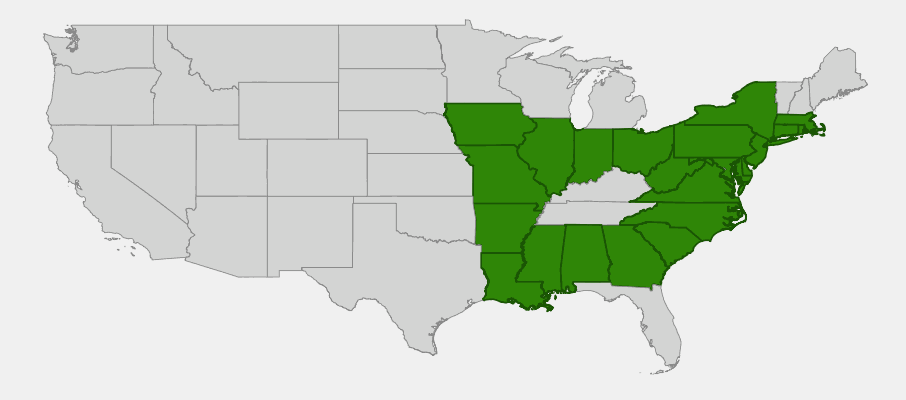
📋 Regional plant lists featuring Black Gum: North Carolina & South Carolina
Growing & Care Guide
Black Gum is generally considered one of the easier native trees to grow, though it has some specific requirements and characteristics that gardeners should understand for best results.
Light
Black Gum performs best in full sun, where it develops its most compact form and most brilliant fall color. The tree can tolerate partial shade, especially when young, but full sun exposure is crucial for optimal growth and autumn display. In shaded conditions, the tree may become leggy and have less intense fall coloration.
Soil & Water
One of Black Gum’s greatest assets is its adaptability to a wide range of soil conditions. The tree grows well in both constantly moist and periodically dry soils, making it suitable for rain gardens, low-lying areas, and well-drained upland sites. It prefers slightly acidic soils (pH 5.0-6.5) but tolerates neutral conditions. The tree is notably tolerant of clay soils and periodic flooding, as well as seasonal drought once established.
Newly planted trees benefit from consistent moisture for the first growing season, but mature Black Gums are quite drought tolerant. The tree’s deep taproot helps it access moisture during dry periods, making it an excellent choice for sites with variable moisture conditions.
Planting Tips
Plant Black Gum in early spring or fall when temperatures are moderate. Choose container-grown or balled-and-burlapped specimens, as Black Gum has a deep taproot that makes bare-root transplanting difficult. Plant at the same depth the tree was growing in the nursery, and water thoroughly after planting. The tree is slow to establish but becomes increasingly vigorous with age.
Black Gum benefits from a 2-3 inch layer of organic mulch around the base, keeping mulch several inches away from the trunk. This helps retain moisture and suppress weeds while the tree establishes its root system.
Pruning & Maintenance
Black Gum requires minimal pruning and naturally develops an attractive shape. Remove any dead, diseased, or damaged branches as needed, preferably during the dormant season. Young trees may benefit from light pruning to establish a strong central leader and remove competing stems. Avoid heavy pruning, as the tree is slow to recover from major cuts.
Landscape Uses
Black Gum’s versatility makes it suitable for many landscape applications:
- Specimen tree — showcase the distinctive form and spectacular fall color
- Naturalized areas — excellent for woodland edges and meadow transitions
- Wildlife habitat — provides food and shelter for numerous species
- Rain gardens — tolerates both wet and dry conditions
- Street tree — in suitable locations with adequate space
- Restoration projects — valuable for wetland and upland forest restoration
- Fall display gardens — among the earliest and most reliable autumn performers
Wildlife & Ecological Value
Black Gum is considered one of the most ecologically valuable native trees in North America, supporting an exceptional diversity of wildlife and playing crucial roles in forest ecosystems.
For Birds
The dark blue fruits of Black Gum are among the most important wildlife foods in eastern forests, consumed by over 35 species of birds including Wood Ducks, Wild Turkeys, Scarlet Tanagers, American Robins, Hermit Thrushes, and various woodpeckers. The fruits are particularly valuable because they ripen early in fall when birds are preparing for migration or winter survival. The tree’s horizontal branching structure provides excellent nesting sites for songbirds, while its trunk cavities often serve as nest sites for woodpeckers.
For Mammals
Black Bears are major consumers of Black Gum fruit, often climbing large trees to access the berries. Gray and Fox Squirrels eat the fruits and occasionally gnaw the bark, while White-tailed Deer browse young seedlings and saplings. Raccoons, Opossums, and various small mammals also consume the fallen fruits.
For Pollinators
Black Gum flowers, though small, are important early-season nectar sources for native bees, honey bees, and beneficial insects. The tree is particularly valuable for bumblebees and solitary bees that are active during the late spring flowering period. Black Gum honey is prized by beekeepers for its distinctive flavor and light color.
For Lepidoptera
Black Gum serves as a host plant for the larvae of over 200 species of moths and butterflies, making it one of the most lepidoptera-friendly trees in North America. Notable species include the Tupelo Leafminer moth and various sphinx moths. This exceptional diversity of associated insects makes Black Gum a crucial component of food webs that support insectivorous birds and other wildlife.
Ecosystem Role
As a long-lived canopy species, Black Gum provides structural diversity in forest ecosystems and serves as a nurse tree for many understory species. Its leaf litter decomposes at a moderate rate, contributing organic matter to forest soils. The tree’s ability to thrive in both wet and dry conditions makes it a stabilizing presence in transitional habitats and areas with variable hydrology.
Cultural & Historical Uses
Black Gum has a rich history of human use dating back to Native American peoples across its range. Various tribes used different parts of the tree for medicinal and practical purposes. The Cherokee used the bark to treat fever and digestive ailments, while the inner bark was sometimes used to treat dysentery. The Houma people of Louisiana used Black Gum bark tea as a remedy for toothaches and mouth sores.
European colonists quickly discovered the unique properties of Black Gum wood, which is extremely difficult to split due to its interlocked grain pattern. This characteristic made it ideal for specialized applications including mauls, chopping blocks, wheel hubs, and other items requiring wood that wouldn’t split under stress. The wood was also used for bowls, trays, and other household items that needed to withstand hard use.
In the 19th and early 20th centuries, Black Gum wood was highly valued for industrial applications. Its resistance to splitting made it ideal for railroad ties, while its shock-absorbing qualities led to its use in dock bumpers and other marine applications. The wood was also used for shuttle blocks in textile mills, where its ability to withstand repeated impact was crucial.
The sour-tasting leaves and fruits led to the common names “Sour Gum” and “Pepperidge,” though the fruits are not typically eaten by humans due to their astringent taste. However, the fruits were sometimes used to make preserves and the leaves were occasionally used as a potherb when young and tender.
Today, Black Gum is primarily valued for its ornamental qualities and ecological benefits. Its spectacular fall color has made it a favorite of landscape architects and gardeners, while its wildlife value has increased its importance in habitat restoration and sustainable landscaping practices.
Frequently Asked Questions
Why is my Black Gum growing so slowly?
Black Gum is naturally a slow to moderate grower, especially when young. Growth typically accelerates after the tree becomes established (3-5 years), but it will never be as fast-growing as trees like Red Maple or Tulip Poplar. Ensure the tree has adequate water during establishment and full sun for best growth rates.
When does Black Gum change color in fall?
Black Gum is typically one of the first trees to change color in autumn, often beginning its transformation in late August or early September, weeks before most other trees. The exact timing varies with location and weather conditions, but Black Gum’s early color change is one of its most distinctive characteristics.
Can Black Gum handle wet soil?
Yes, Black Gum is remarkably tolerant of wet soils and can even handle periodic flooding. It’s equally adaptable to well-drained soils, making it one of the most versatile native trees for sites with variable moisture conditions. This flexibility makes it excellent for rain gardens and areas with seasonal wetness.
Do I need both male and female trees for fruit?
Black Gum can have male, female, or perfect (both) flowers, and the sex expression can vary from year to year on the same tree. Many trees will produce at least some fruit without requiring a separate pollinator, though having multiple trees may increase fruit production.
Is Black Gum messy?
Black Gum is relatively clean compared to many native trees. The fruits are consumed quickly by wildlife, and leaf drop occurs over a relatively short period in fall. The main “mess” would be the early leaf drop, but this is brief and the leaves decompose readily.

Looking for a nursery that carries Black Gum?
Browse our native plant nursery directory: North Carolina · South Carolina