
Blue Cohosh (Caulophyllum thalictroides)
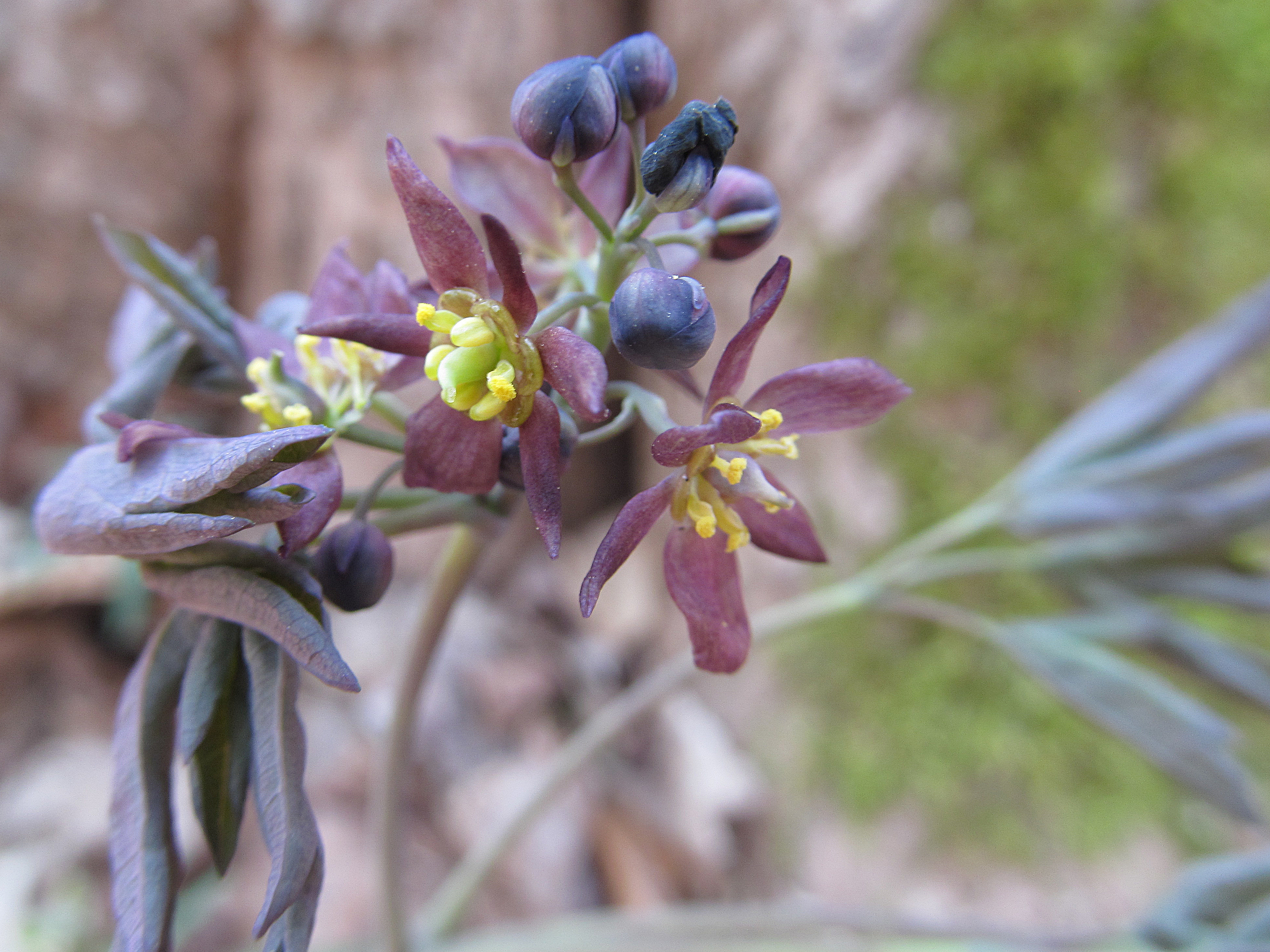
Caulophyllum thalictroides, commonly known as Blue Cohosh, Papoose Root, or Squaw Root, is a distinctive native perennial herb of eastern North American forests that has captured the attention of botanists and herbalists for centuries. This member of the Barberry family (Berberidaceae) is unmistakable in the spring woodland understory, emerging as a single smooth stem topped with deeply divided, bluish-green compound leaves that give it an almost tropical appearance among the typical forest flora.
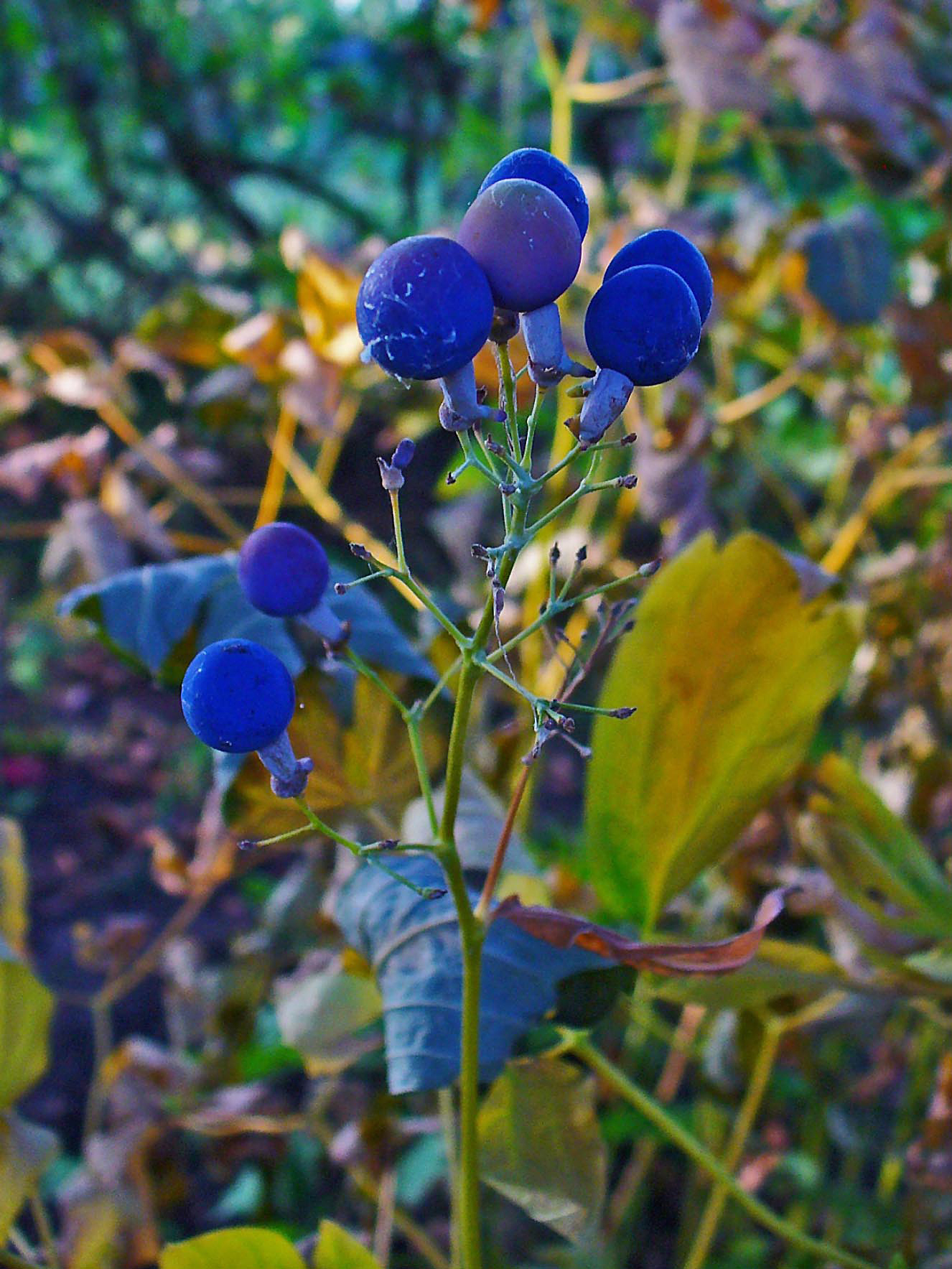
The plant’s common name comes from its most striking feature — bright blue berries that develop in late summer, sitting exposed on the plant like tiny blue marbles arranged in grape-like clusters. These unusual fruits, technically seeds with fleshy coats rather than true berries, are among the most distinctive of any native wildflower. The small yellowish-green flowers that precede them appear in early spring before the leaves are fully expanded, creating delicate clusters that attract early-season pollinators when few other woodland plants are blooming.
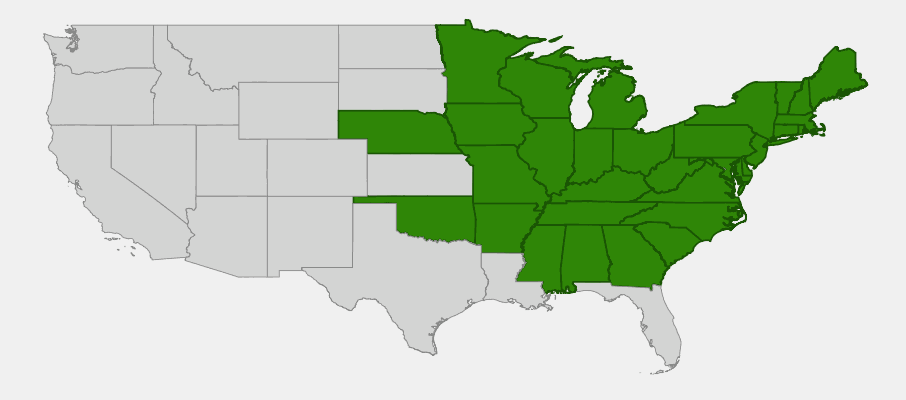
Blue Cohosh inhabits rich, moist deciduous and mixed forests throughout much of eastern North America, from southeastern Canada south to South Carolina and west to Minnesota and Oklahoma. It thrives in the dappled light of mature forest understories, often forming small colonies in particularly suitable sites. The plant has a long history of medicinal use by Indigenous peoples, particularly related to women’s health, though modern use requires extreme caution due to potentially toxic compounds throughout the plant.
Identification
Blue Cohosh is a herbaceous perennial that grows 1 to 3 feet tall, typically reaching its mature height of 1–2 feet in most garden conditions. The plant emerges from a thick, knotted rhizome as a single, smooth, purplish-green stem that may branch near the top. The entire plant has a distinctive blue-green or grayish-green cast that makes it stand out among typical forest vegetation.
Leaves
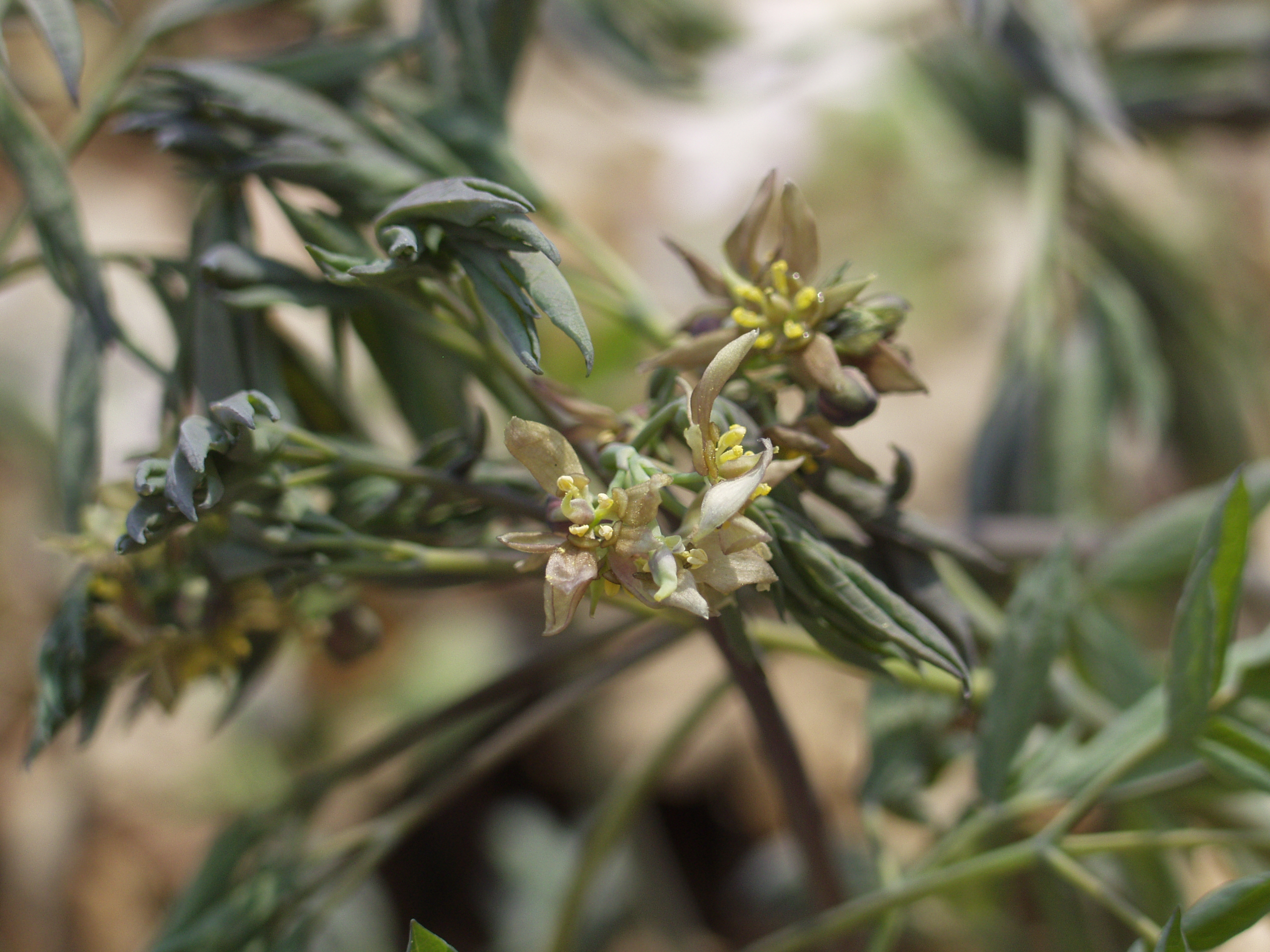
The foliage is the plant’s most distinctive vegetative feature. Blue Cohosh produces large, compound leaves that are typically divided into three main sections (ternately compound), with each section further divided into smaller leaflets. The overall leaf structure creates a lacy, delicate appearance despite the substantial size — individual leaves can span 6 to 12 inches across. The leaflets are oval to obovate, 2 to 4 inches long, with smooth margins and a distinctive blue-green coloration. The leaves emerge with a purplish tint in spring, gradually developing their characteristic blue-green color as they mature.
Flowers
The small flowers appear in early to mid-spring, typically April through May, emerging before the leaves reach full size. Individual flowers are tiny, just ⅓ to ½ inch across, with 6 yellowish-green to greenish-purple sepals and 6 small, hooded petals that may appear almost white. The flowers are arranged in loose, branched clusters (panicles) at the top of the stem. While individually inconspicuous, the clustered arrangement creates a delicate display that attracts small flies, gnats, and early-season native bees.
Fruit
The fruits are the plant’s most memorable feature — bright blue, berry-like structures about ¼ to ⅜ inch in diameter that ripen in late summer (August to September). These are technically not berries but rather seeds with fleshy, blue outer coats. They sit exposed on the branching stalks, creating grape-like clusters of brilliant blue “berries” that persist into early fall. The seeds inside are dark and hard, surrounded by the blue, somewhat bitter flesh. Birds and small mammals consume the fruits, though they are considered toxic to humans.
Quick Facts
| Scientific Name | Caulophyllum thalictroides |
| Family | Berberidaceae (Barberry) |
| Plant Type | Herbaceous Perennial |
| Mature Height | 1–2 ft |
| Sun Exposure | Part Shade to Full Shade |
| Water Needs | Moderate |
| Bloom Time | April – May |
| Flower Color | Yellowish-green to greenish-purple |
| USDA Hardiness Zones | 3–8 |
Native Range
Blue Cohosh is native to a broad swath of eastern North America, extending from southeastern Canada (Ontario, Quebec, New Brunswick, and Nova Scotia) south through the eastern United States to northern Georgia and South Carolina, and westward to Minnesota, Iowa, Oklahoma, and eastern parts of the Dakotas. This extensive range makes it one of the most widely distributed woodland wildflowers in North America, though it is uncommon to rare in many southern portions of its range.
Throughout its range, Blue Cohosh is typically found in rich, moist deciduous and mixed forests, particularly those dominated by maple, beech, birch, and oak. It shows a strong preference for well-drained but consistently moist soils with high organic content — the kind of deep, humus-rich earth found in mature forest understories. The plant often occurs alongside other spring woodland wildflowers like Trilliums, Wild Ginger, Mayapple, and Bloodroot, forming part of the diverse herbaceous layer that characterizes eastern North American temperate forests.
Elevational distribution varies significantly across the range, from near sea level in northern portions to moderate mountain elevations in the Appalachians. In the southern parts of its range, Blue Cohosh is increasingly restricted to higher, cooler elevations and north-facing slopes, reflecting its preference for the cooler, more mesic conditions typical of northern forests.
📋 Regional plant lists featuring Blue Cohosh: North Carolina & South Carolina
Growing & Care Guide
Blue Cohosh is a rewarding but somewhat challenging native wildflower that requires specific conditions to thrive. Success comes from understanding and replicating the rich, stable woodland environment where it naturally occurs. Once established in suitable conditions, it can form attractive colonies and provide years of spring interest and late-summer fruit display.
Light
This woodland species performs best in part shade to full shade conditions, thriving under the dappled light of mature tree canopies. In its native habitat, Blue Cohosh receives bright indirect light in early spring before the tree canopy fully leafs out, followed by filtered shade through the growing season. It can tolerate deeper shade than many woodland wildflowers, making it valuable for challenging shady garden spots. Avoid full sun locations, which will stress the plant and may cause leaf scorch.
Soil & Water
The key to growing Blue Cohosh successfully is providing the rich, consistently moist but well-drained soil it requires. The plant thrives in deep, humus-rich soils with a pH between 6.0 and 7.0 — slightly acidic to neutral conditions typical of mature forest floors. Incorporate plenty of organic matter such as leaf mold, compost, or well-aged manure into planting areas. The soil should never dry out completely but must not become waterlogged. Mulching with 2–3 inches of organic material helps maintain consistent moisture and soil temperature.
Planting Tips
Blue Cohosh is typically propagated from seed, though it requires patience — seeds need a complex dormancy-breaking process involving warm stratification followed by cold stratification, and seedlings may take 2–3 years to reach flowering size. Purchase plants from reputable native plant nurseries when possible. Plant in spring after the last frost, spacing 12–18 inches apart to allow for natural colony formation. The plant spreads slowly via rhizomes and may take several years to fully establish.
Pruning & Maintenance
Blue Cohosh requires minimal maintenance once established. Allow the foliage to die back naturally in fall to feed the rhizome for the following year’s growth. The blue fruits can be removed after they lose their ornamental value, though leaving them provides food for wildlife. Divide overly large colonies every 4–5 years in early spring or fall if desired, though the plant generally prefers to be left undisturbed.
Landscape Uses
Blue Cohosh excels in several specialized garden situations:
- Woodland gardens — perfect for naturalistic native plant gardens under trees
- Shade borders — adds texture and seasonal interest to difficult shady areas
- Native plant collections — a distinctive addition for wildflower enthusiasts
- Spring ephemeral gardens — pairs well with other early woodland bloomers
- Wildlife gardens — provides food and habitat for specialized forest wildlife
- Naturalized areas — excellent for woodland restoration projects
Wildlife & Ecological Value
Blue Cohosh plays an important but specialized role in woodland ecosystems, supporting wildlife that has coevolved with eastern North American forests over millennia.
For Birds
The bright blue fruits are consumed by several bird species, including Wood Thrushes, Hermit Thrushes, and various woodland songbirds. The berries ripen in late summer and early fall, providing food during the critical period when birds are building fat reserves for migration or winter survival. The seeds pass through birds undigested, allowing for dispersal throughout suitable woodland habitat. Game birds such as Ruffed Grouse also consume the fruits when available.
For Mammals
Small mammals including chipmunks, mice, and voles eat the fruits, though the somewhat bitter taste may limit consumption. White-tailed Deer occasionally browse the foliage, particularly in areas with high deer populations, though the plant’s bitter compounds provide some deterrent effect. The thick rhizomes may provide food for small burrowing mammals during times of scarcity.
For Pollinators
The small spring flowers attract a variety of early-season pollinators, including small native bees, syrphid flies, and gnats. While the flowers are not particularly showy, they bloom at a time when few other woodland plants are flowering, making them valuable for insects emerging from winter dormancy. The flowers produce both nectar and pollen, supporting the complete life cycle needs of their pollinators.
Ecosystem Role
As part of the herbaceous understory layer, Blue Cohosh contributes to the structural complexity that makes eastern deciduous forests so biodiverse. Its extensive rhizome system helps stabilize forest soil and contributes organic matter as older parts decompose. The plant serves as a host for several specialized insects, including certain aphids and plant bugs that have coevolved with the Berberidaceae family. Its presence often indicates high-quality, undisturbed woodland habitat.
Cultural & Historical Uses
Blue Cohosh holds a significant place in the traditional medicine of numerous Indigenous peoples throughout eastern North America, with documented use by the Ojibwe, Menominee, Potawatomi, Cherokee, and many other nations. The common names “Papoose Root” and “Squaw Root,” while now considered culturally insensitive, reflect the plant’s historical association with women’s health and childbirth assistance. Indigenous midwives and herbalists used preparations from the roots and rhizomes for various reproductive health purposes, earning it great respect as a powerful medicinal plant.
The plant’s medicinal use was adopted by early European settlers, and Blue Cohosh became an important component of 19th-century American folk medicine and the emerging field of “eclectic” herbal medicine. It was officially recognized in the United States Pharmacopoeia from 1882 to 1905 and continued to be used by herbalists, midwives, and some physicians well into the 20th century. The active compounds include alkaloids such as methylcytisine and saponins that affect smooth muscle tissue.
Modern scientific research has identified potentially serious risks associated with Blue Cohosh use, including cardiovascular toxicity and potential harm to developing fetuses. Several cases of serious adverse effects, including heart problems in newborns, have been linked to its use during pregnancy. As a result, major medical organizations now recommend against its use, particularly during pregnancy and lactation. The plant remains of interest to researchers studying its bioactive compounds, but it is no longer considered safe for therapeutic use without professional medical supervision.
Beyond its medicinal history, Blue Cohosh has played a role in the broader cultural understanding of North American flora. Early botanical explorers like Andre Michaux and Frederick Pursh documented the species, contributing to the scientific understanding of eastern forest ecology. Today, it remains an important species for ethnobotanical research and serves as a symbol of the complex relationship between human cultures and forest ecosystems.
Frequently Asked Questions
Is Blue Cohosh safe to use medicinally?
No. Modern research has identified serious safety concerns with Blue Cohosh, including cardiovascular toxicity and risks to pregnant women and developing fetuses. Several cases of adverse effects have been documented. Medical authorities recommend against its use, and it should never be used during pregnancy.
Can you eat Blue Cohosh berries?
The bright blue berries should not be consumed by humans. While they’re eaten by birds and wildlife, they contain compounds that can be toxic to people. The entire plant, including roots, leaves, and berries, is considered potentially poisonous to humans.
How long does Blue Cohosh take to establish from seed?
Blue Cohosh grown from seed typically takes 2–3 years to reach flowering size and may require 4–5 years to develop mature clumps. The seeds have complex dormancy requirements and benefit from stratification. Purchasing established plants from nurseries is often more practical for home gardeners.
Does Blue Cohosh spread aggressively?
No, Blue Cohosh spreads slowly via rhizomes and is not considered aggressive. It may form small colonies over time but does so gradually and rarely becomes problematic. The slow spread makes it suitable for naturalistic woodland gardens where gradual expansion is desirable.
What’s the difference between Blue Cohosh and Black Cohosh?
Despite similar names, these are completely different plants in different families. Blue Cohosh (Caulophyllum thalictroides) has bright blue berries and compound leaves, while Black Cohosh (Actaea racemosa) has white flowers in tall spikes and different leaf structure. They have different habitats, growth requirements, and traditional uses.

Looking for a nursery that carries Blue Cohosh?
Browse our native plant nursery directory: North Carolina · South Carolina