
Blue Vervain (Verbena hastata)
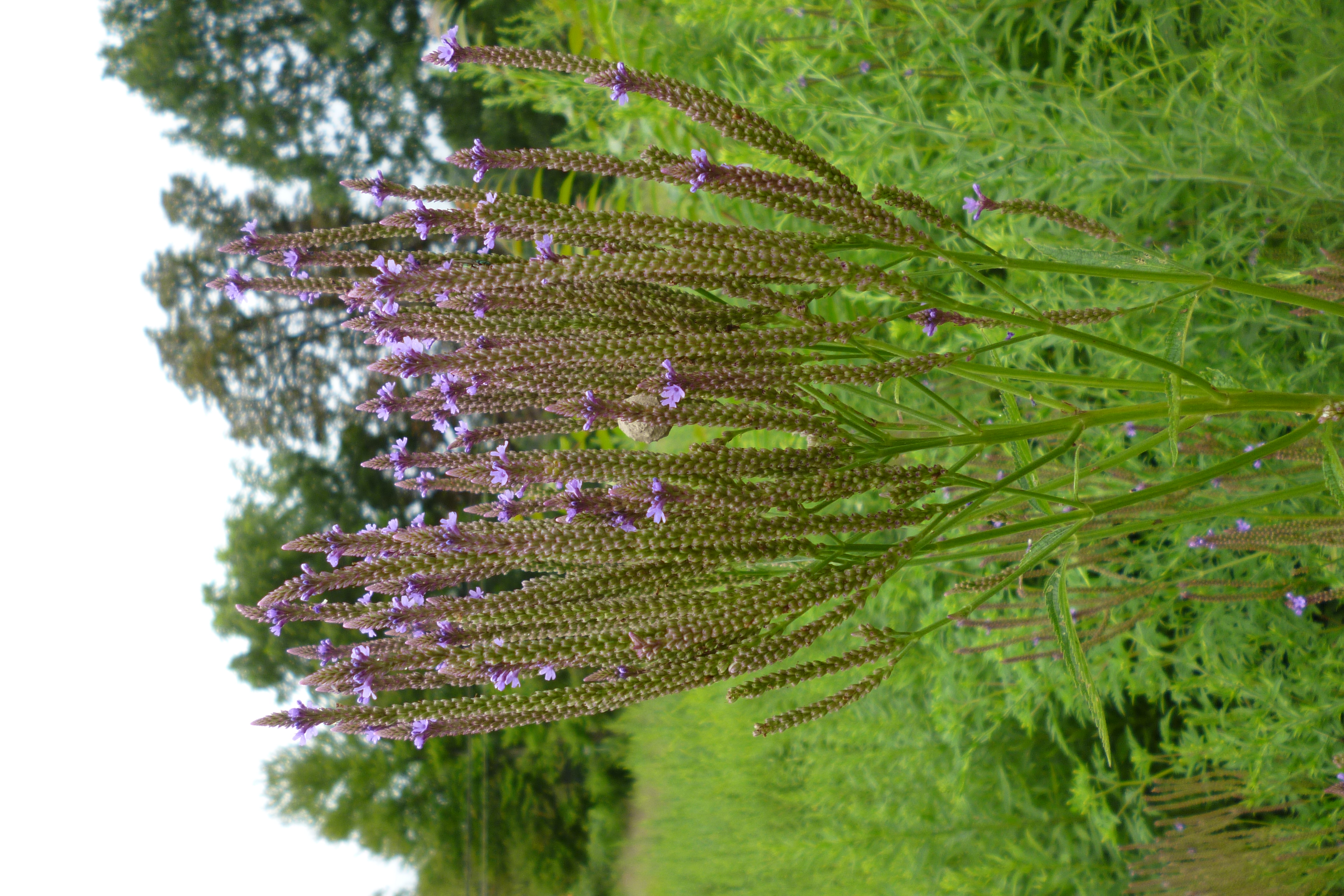
Verbena hastata, commonly known as Blue Vervain, American Blue Vervain, or Swamp Verbena, is a striking native perennial wildflower that brings vertical elegance and valuable wildlife habitat to gardens across North America. This member of the Verbenaceae (vervain) family is easily recognized by its distinctive candelabra-like flower spikes that rise 3 to 6 feet tall, adorned with small but numerous purple-blue flowers that bloom from bottom to top over an extended summer season. Despite its common name suggesting an association with wetlands, Blue Vervain is remarkably adaptable and thrives in a wide range of conditions from moist prairies to garden borders.
Growing naturally in wet meadows, prairie swales, streamside areas, and disturbed soils throughout eastern and central North America, Blue Vervain is a robust perennial that forms a strong taproot and spreads gradually by self-seeding. Its upright, angular stems and prominently toothed opposite leaves create an architectural presence in the garden, while the long-blooming flower spikes provide nectar for butterflies, bees, and other pollinators from midsummer through early fall. The flowers are followed by small nutlets that provide food for songbirds well into winter.
This adaptable native plant is particularly valued in pollinator gardens, prairie restorations, and naturalistic plantings where its extended bloom period and wildlife value make it indispensable. Blue Vervain’s tolerance of both wet and moderately dry conditions, combined with its ability to thrive in full sun and its resistance to deer browsing, makes it an excellent choice for low-maintenance sustainable gardens. Whether planted in formal perennial borders or allowed to naturalize in wildflower meadows, Blue Vervain provides reliable color and ecological function throughout the growing season.
Identification
Blue Vervain typically grows 3 to 6 feet (1–2 m) tall and 1 to 2 feet (30–60 cm) wide, forming a clump-like habit with multiple upright stems arising from a central crown. The plant has a distinctly architectural form, with rigid, square or angular stems that branch near the top to form the characteristic candelabra-like flower arrangement. The entire plant has a somewhat coarse but elegant appearance.
Stems
The stems are square to rectangular in cross-section, rigid and upright, and typically branched in the upper portions where the flower spikes arise. They are green to reddish-purple in color, often with fine ridges or grooves running lengthwise. The stems are usually smooth or slightly rough to the touch, and they maintain their structural integrity well into winter, providing architectural interest in the dormant season.
Leaves
The leaves are opposite, simple, and lance-shaped to narrowly oval, measuring 2 to 6 inches (5–15 cm) long and ¾ to 2 inches (2–5 cm) wide. They are prominently and sharply toothed along the margins, with the teeth often quite pronounced and giving the leaves a somewhat serrated appearance. The upper surface is dark green and somewhat rough, while the underside is paler and may have fine hairs along the veins. The leaves have a wrinkled or textured appearance and attach directly to the stem with little to no petiole.
Flowers
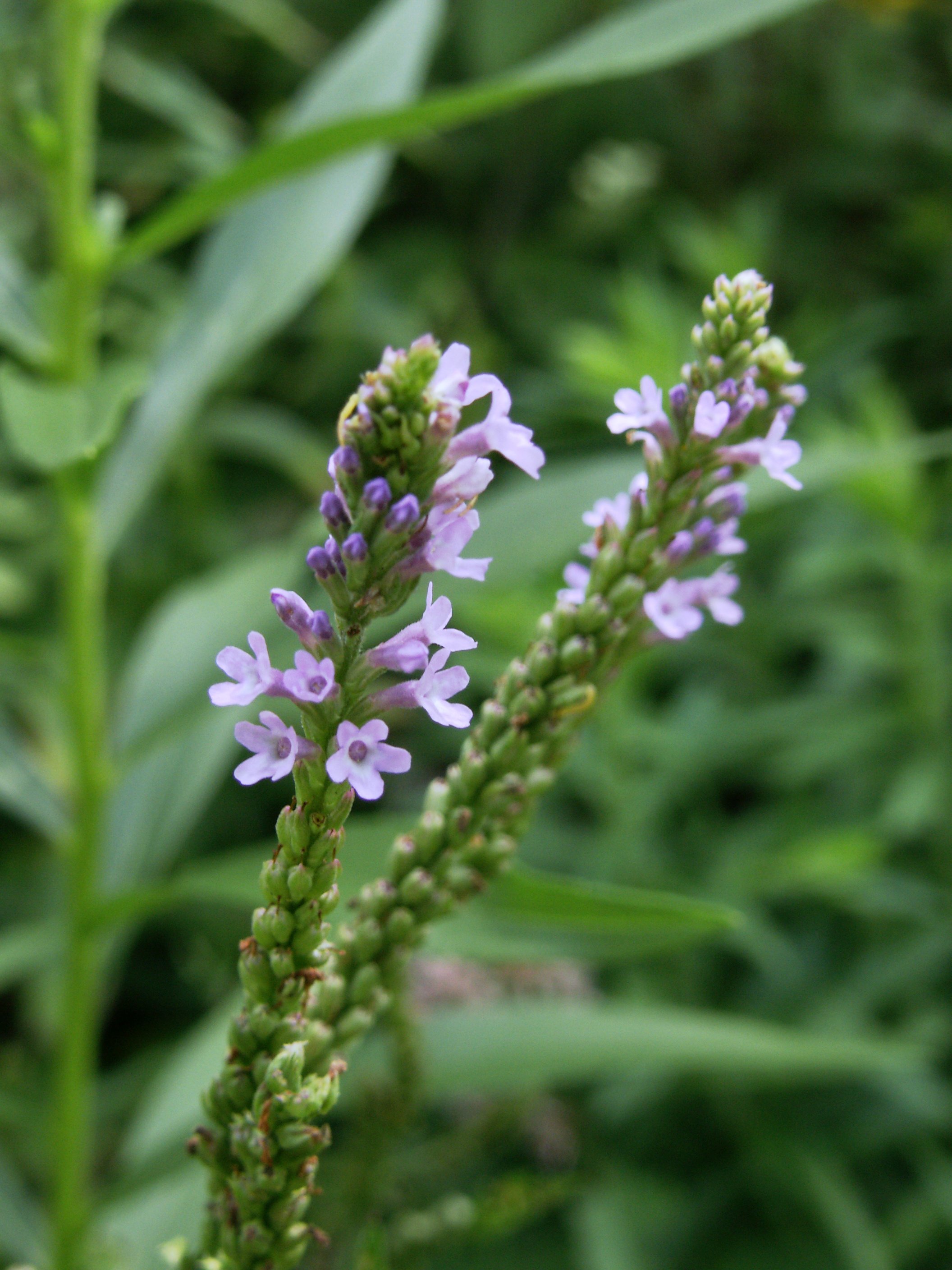
The flowers are the plant’s most distinctive feature, arranged in dense, slender spikes 2 to 6 inches (5–15 cm) long at the ends of the branched stems. Each individual flower is small, about ¼ inch (6 mm) across, with five petals that are typically purple-blue to lavender, though occasionally pink or rarely white. The flowers have a tubular base and are arranged in tight spirals around the spike. Blooming progresses from the bottom of each spike upward over a period of several weeks, creating a distinctive pattern where the bottom portion may already be setting seed while the top is still in fresh flower.
Fruit
The fruit consists of four small, brown nutlets (seeds) that develop where each flower was located. These seeds are very small but numerous, and they provide important food for songbirds, particularly sparrows and finches. The seeds mature in late summer and fall, and the spent flower spikes often persist through winter, continuing to provide seeds for wildlife.
Quick Facts
| Scientific Name | Verbena hastata |
| Family | Verbenaceae (Vervain) |
| Plant Type | Herbaceous Perennial |
| Mature Height | 3–6 ft |
| Sun Exposure | Full Sun |
| Water Needs | Moderate to High |
| Bloom Time | July – September |
| Flower Color | Purple-blue, lavender |
| USDA Hardiness Zones | 3–9 |
Native Range
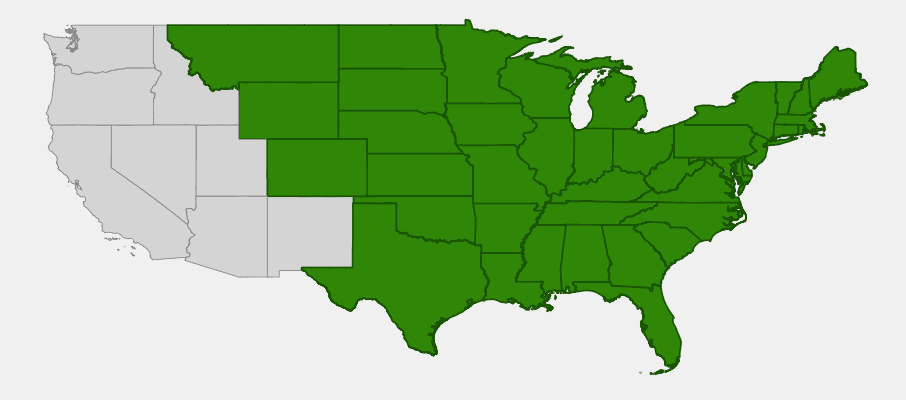
Blue Vervain has one of the most extensive native ranges of any North American wildflower, stretching from southeastern Canada south to Florida and the Gulf Coast, and west to the Great Plains. This wide distribution reflects the species’ remarkable adaptability to different climates and growing conditions, from the cool summers of Minnesota and Maine to the hot, humid conditions of the southeastern United States.
The species is found throughout the eastern deciduous forests, tallgrass prairies, and transitional zones between these major ecosystems. In its natural habitat, Blue Vervain typically grows in areas with seasonal moisture fluctuations — wet in spring and early summer, but often drying out by late summer and fall. Common habitats include wet prairies, meadows, marshland edges, streambanks, pond margins, ditches, and disturbed areas such as old fields and roadsides.
Blue Vervain shows considerable ecological flexibility within its range, growing in everything from rich, organic wetland soils to clay-heavy disturbed sites. It’s particularly common in areas that experience some degree of seasonal flooding or waterlogging, but it also colonizes drier sites once established. This adaptability has made it a valuable plant for restoration projects throughout its range.
📋 Regional plant lists featuring Blue Vervain: North Dakota, South Dakota & Western Minnesota
Growing & Care Guide
Blue Vervain is one of the most reliable and low-maintenance native wildflowers for North American gardens. Its adaptability to varying moisture levels, tolerance of different soil types, and ability to self-seed make it an excellent choice for both beginning and experienced native plant gardeners.
Light
Blue Vervain performs best in full sun, where it develops the strongest stems, most abundant flowering, and best overall form. While it can tolerate light shade, plants in shadier locations tend to be taller and more prone to flopping, with fewer and less vibrant flowers. In full sun, the plants remain more compact and upright, and the flower color is typically more intense.
Soil & Water
This adaptable plant thrives in consistently moist to wet soils but, once established, tolerates periodic drought surprisingly well. Blue Vervain grows best in rich, loamy soils but adapts to clay, sandy, or even somewhat poor soils. It prefers neutral to slightly alkaline pH (6.5–7.5) but tolerates a fairly wide range. The plant is excellent for rain gardens, bioswales, and other areas with occasional standing water, but it also succeeds in average garden conditions with supplemental watering during dry periods.
Planting Tips
Blue Vervain can be started from seed or transplants. Seeds require cold stratification and should be sown in fall or early spring after stratifying in the refrigerator for 30–60 days. Direct sow seeds on the soil surface, as they need light to germinate. Transplants should be planted in spring after the last frost. Space plants 18–24 inches apart to allow for their mature spread. The plant develops a deep taproot, so it doesn’t transplant well once established.
Pruning & Maintenance
Blue Vervain requires minimal maintenance once established. Deadheading spent flower spikes will encourage additional blooming and prevent excessive self-seeding, though many gardeners prefer to leave the seed heads for wildlife food and winter interest. The plant can self-seed aggressively in ideal conditions, so remove unwanted seedlings in spring. Cut the plant back to ground level in late fall or early spring. Division is rarely necessary, as the plant maintains its vigor through self-seeding.
Landscape Uses
Blue Vervain’s vertical form and extended bloom period make it valuable in many garden applications:
- Pollinator gardens — excellent nectar source for butterflies and native bees
- Prairie and meadow plantings — adds vertical structure and color
- Rain gardens and bioswales — tolerates both wet and dry conditions
- Wildlife gardens — seeds feed songbirds through winter
- Cottage gardens and informal borders — provides architectural height
- Cut flower gardens — long-lasting in arrangements
- Naturalized areas — colonizes and stabilizes disturbed soils
- Erosion control — deep taproot and spreading habit stabilize banks
Wildlife & Ecological Value
Blue Vervain is exceptionally valuable to wildlife, supporting a diverse array of species throughout its long growing season and into winter. Its abundant flowers provide nectar for numerous pollinators, while its seeds feed birds and small mammals well into the cold months.
For Birds
The small seeds of Blue Vervain are consumed by many bird species, particularly sparrows, finches, and other seed-eating songbirds. American Goldfinches are especially fond of the seeds and will often perch on the sturdy stems to feed directly from the dried flower heads. Other species that regularly consume Blue Vervain seeds include Song Sparrows, White-throated Sparrows, Tree Sparrows, and various junco species. The persistent seed heads provide valuable food through fall and winter when other resources become scarce.
For Mammals
Small mammals including mice, voles, and chipmunks collect and cache Blue Vervain seeds. The plant is generally not palatable to deer and rabbits, making it useful in areas where browsing pressure is high. The deep taproot and spreading growth habit create microhabitats that shelter small ground-dwelling creatures and provide cover for beneficial insects.
For Pollinators
Blue Vervain is outstanding for supporting pollinators, with its long blooming season providing nectar from midsummer through early fall. The plant attracts numerous butterfly species, including skippers, fritillaries, and swallowtails. Native bee species are frequent visitors, including sweat bees, leaf-cutter bees, and bumble bees. The flower structure is also well-suited to beneficial wasps and hover flies. The extended bloom period makes Blue Vervain particularly valuable for late-season pollinators when fewer flowers are available.
Ecosystem Role
Blue Vervain serves as a nurse plant in disturbed habitats, helping to stabilize soil and create conditions for other native plants to establish. Its ability to thrive in both wet and periodically dry conditions makes it valuable for sites with fluctuating moisture levels. The plant’s presence often indicates healthy soil conditions and good water infiltration. In prairie ecosystems, Blue Vervain helps create the vertical structure that supports diverse wildlife communities and contributes to the complex plant interactions that characterize healthy grassland systems.
Cultural & Historical Uses
Blue Vervain has a rich history of use among Indigenous peoples of North America, who valued it both as a medicine and for spiritual purposes. Many tribes, including the Cherokee, Iroquois, and Lakota, used various parts of the plant to treat a wide range of ailments. The roots and leaves were commonly prepared as teas or poultices to treat headaches, fever, respiratory conditions, and digestive issues. Some tribes used Blue Vervain preparations for women’s health concerns and as a general tonic to promote overall well-being.
The plant held special significance in many Indigenous spiritual traditions and was sometimes used in purification ceremonies and as a protective charm. The Lakota and other Plains tribes incorporated Blue Vervain into sacred bundles and used it in various ritual contexts. The plant’s tall, upright growth habit and prominent flower spikes were often seen as symbolic of spiritual connection between earth and sky.
European settlers quickly adopted many of the Indigenous uses for Blue Vervain, and the plant became a common remedy in early American folk medicine. It was particularly valued as a “fever herb” and was used to treat malaria and other conditions that caused high temperatures. The plant was also used to treat nervous conditions, headaches, and insomnia, and it gained a reputation as a natural sedative and pain reliever.
In the 19th and early 20th centuries, Blue Vervain was listed in official pharmacopeias and was commercially harvested for the drug trade. However, as synthetic medicines became available, interest in Blue Vervain as a medicinal plant declined. Modern herbalists still use the plant, though scientific research on its therapeutic properties remains limited. Today, Blue Vervain is primarily valued for its ecological benefits and ornamental qualities, though it continues to be used in traditional and alternative medicine practices.
Frequently Asked Questions
Is Blue Vervain the same as European Vervain?
No, while they’re related, Blue Vervain (Verbena hastata) is a North American native, while European Vervain (Verbena officinalis) is a different species from Europe. Blue Vervain is taller, has blue-purple flowers in spikes, and is much more robust than its European cousin, which has smaller white or pale purple flowers.
Will Blue Vervain take over my garden?
Blue Vervain can self-seed readily under ideal conditions, but it’s generally not considered invasive in most garden settings. The seedlings are easy to remove if unwanted, and the plant spreads slowly by seed rather than aggressive underground runners. Deadheading spent flowers will prevent excessive self-seeding while prolonging the bloom period.
Does Blue Vervain need wet soil to grow?
While Blue Vervain thrives in consistently moist soil and can tolerate wet conditions, it’s quite adaptable and will grow in average garden soil once established. The key is providing adequate moisture during the establishment period and during particularly dry spells. It’s more drought-tolerant than its common name “Swamp Verbena” might suggest.
When should I plant Blue Vervain seeds?
Blue Vervain seeds need cold stratification to germinate reliably. Sow seeds in fall for natural winter stratification, or stratify seeds in the refrigerator for 30–60 days before sowing in spring. Seeds need light to germinate, so scatter them on the soil surface and barely cover with fine soil or compost.
Can Blue Vervain be grown in containers?
While possible, Blue Vervain is not ideal for container growing due to its deep taproot and height. If grown in containers, use very large, deep pots (at least 20 gallons) and provide consistent moisture. The plant is much better suited to in-ground planting where its root system can develop fully and support the tall stems.

Looking for a nursery that carries Blue Vervain?
Browse our native plant nursery directory: North Dakota · South Dakota · Minnesota