Border Pinyon (Pinus discolor)
Pinus discolor, commonly known as Border Pinyon or border piñon, is a small, slow-growing pine of the Madrean sky-island mountain ranges along the Arizona–New Mexico borderlands. It was only formally separated from Mexican Pinyon (Pinus cembroides) in 1979, when botanists D.K. Bailey and T.F. Hawksworth recognized it as a distinct species based on chromosome counts, resin chemistry, and the sharply two-toned (discolorous) needles that give the tree its name: bright green on the upper surface and strikingly whitish or glaucous underneath.
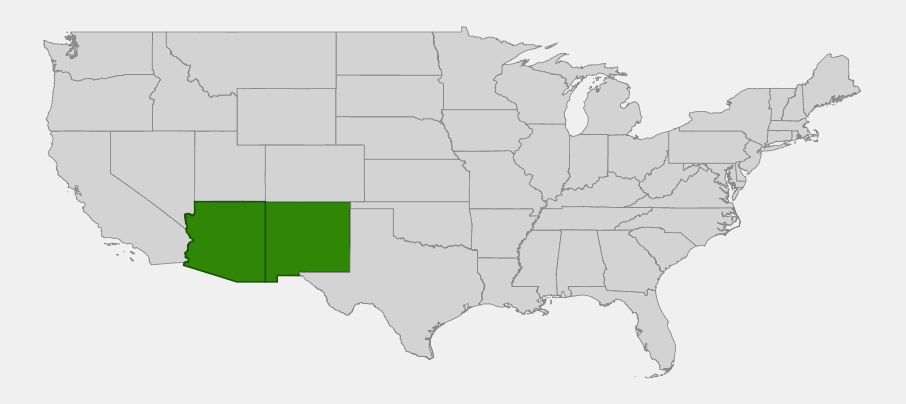
Border Pinyon is a true borderlands specialist, found only in a scatter of sky-island ranges in extreme southeastern Arizona and southwestern New Mexico before its range continues south through the Sierra Madre Occidental and Sierra Madre Oriental of Mexico. In the United States it grows at the lower, drier edge of pinyon-juniper and oak woodland, often rooted directly in bedrock or thin, rocky soil where almost nothing else can get a foothold. Its edible seeds have fed people and wildlife in these mountains for thousands of years, and the tree remains an important, if easily overlooked, part of Madrean woodland ecology.
Because it grows so slowly and occupies such a narrow, specialized range, Border Pinyon is rarely offered in the nursery trade and is essentially never appropriate for removal from the wild. It is, however, an excellent candidate for a long-term xeriscape planting in southern Arizona and New Mexico gardens that can offer it the lean, rocky, fast-draining conditions it needs.
Identification
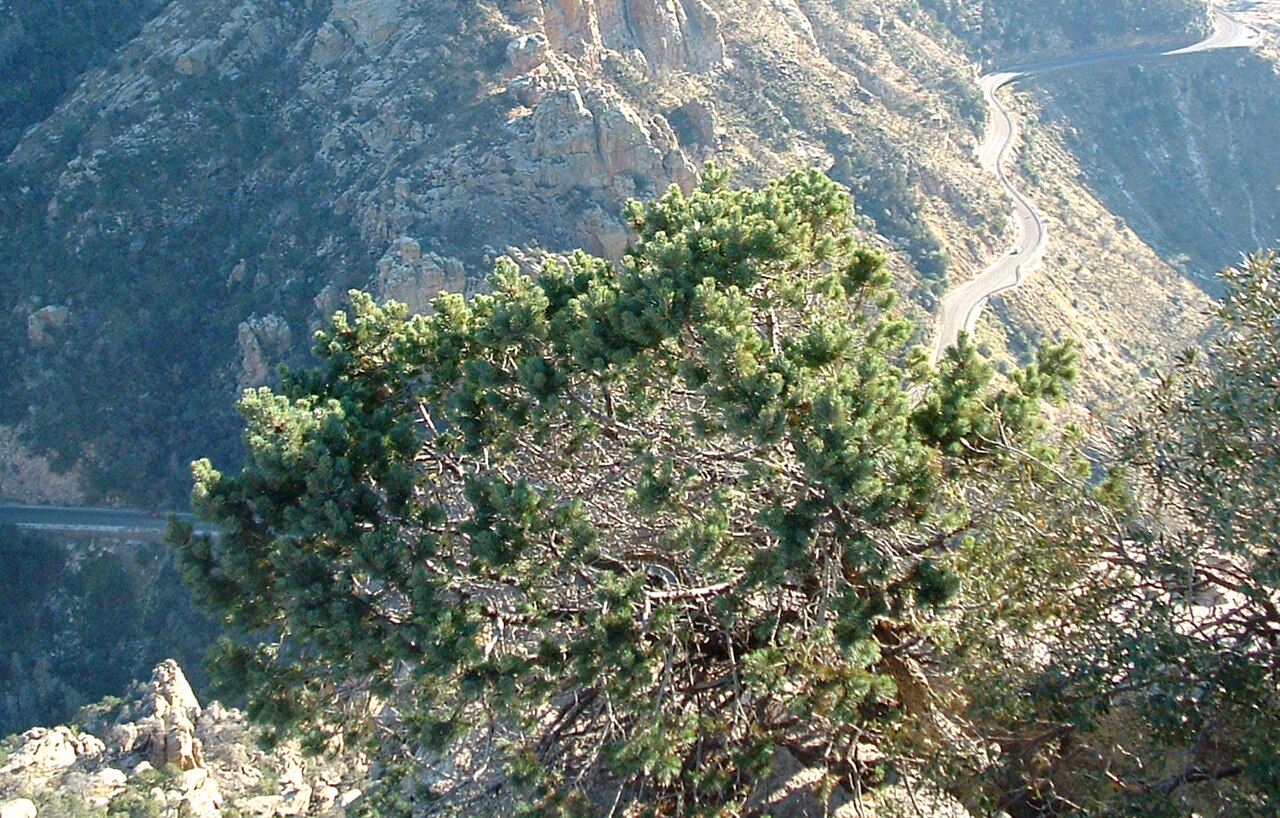
Border Pinyon is typically a small, often multi-trunked tree or large shrub, usually 15 to 26 feet (5–8 m) tall, though old individuals in favorable rocky sites can reach 30 to 40 feet. The crown is rounded to irregular, shaped by wind and the slow accumulation of growth over decades. Young trees are more conical; with age the form opens up into a broad, flat-topped or wind-sculpted crown typical of exposed canyon-rim pines.
Needles
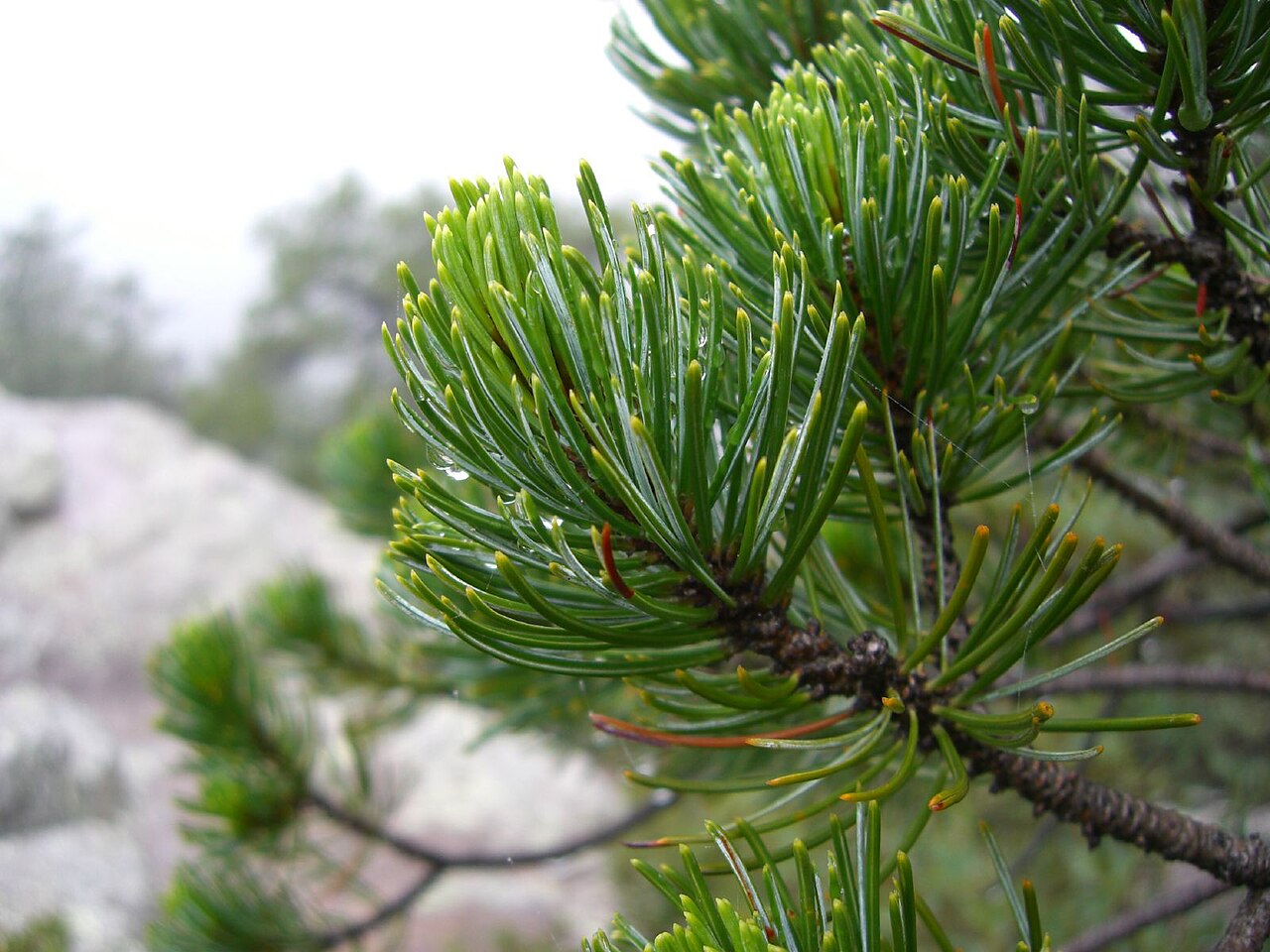
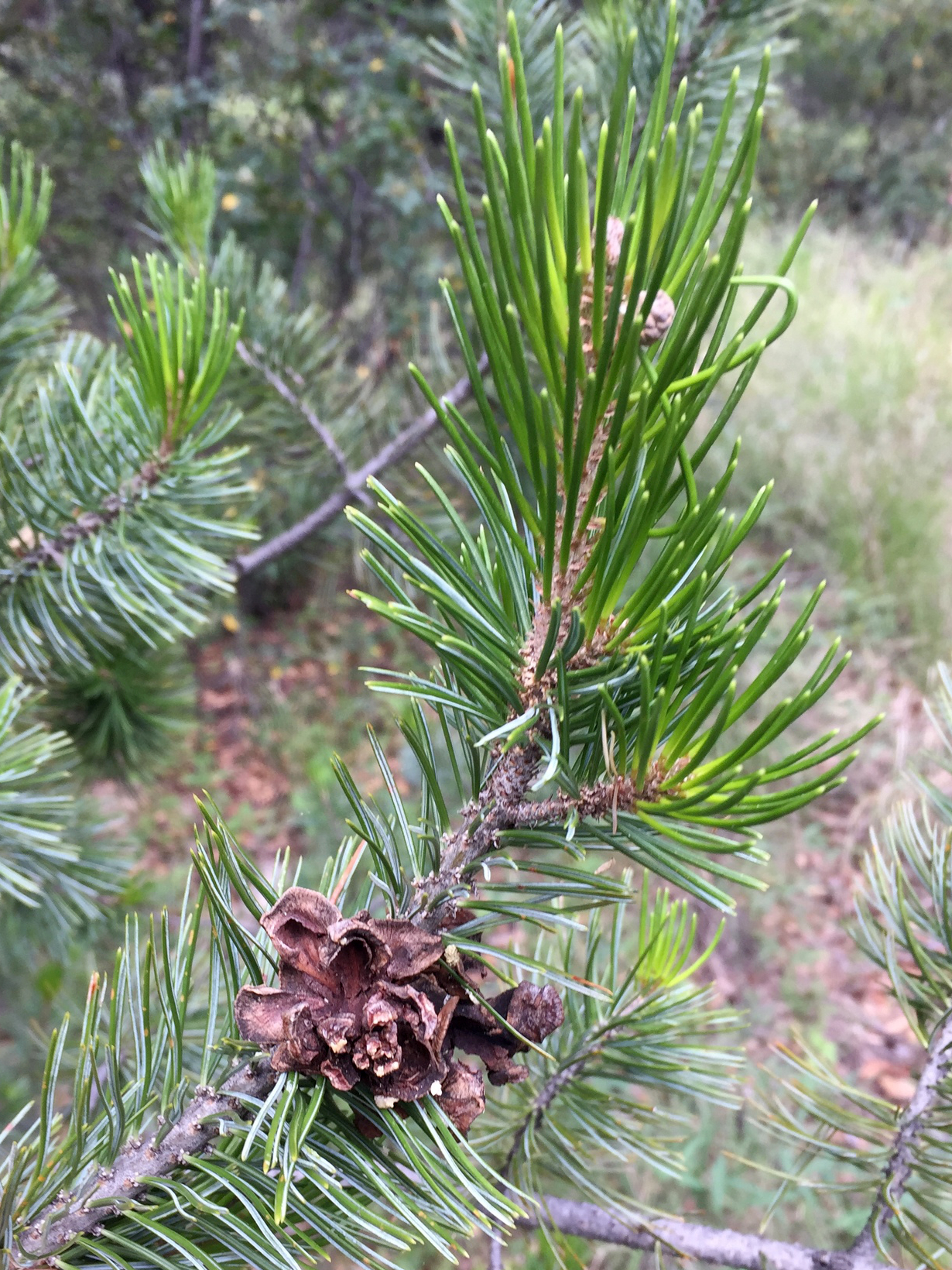
The most reliable identification feature is in the needles themselves. They are borne in fascicles (bundles) of three, occasionally two, and are stout, 1 to 2 inches (2.5–5 cm) long. Each needle is strongly bicolored: shiny dark green on the outer (dorsal) surface and pale, whitish to glaucous-blue on the inner (ventral) surfaces, where lines of stomata are concentrated. This contrast is visible at a glance and is the trait behind both the scientific epithet discolor and the species’ separation from the more uniformly green-needled Mexican Pinyon.
Bark & Form
Bark on young stems is smooth and gray; with age it becomes gray-brown, furrowed, and broken into small irregular plates. Branching is often low and spreading, and trees growing from cliff faces or exposed ridgelines are frequently gnarled and picturesque rather than upright.
Cones & Seeds
Cones are small and nearly globose, about 1 to 2 inches (2.5–5 cm) across, maturing over two growing seasons from yellowish-green to light brown. Each cone scale bears one or two large, wingless, edible seeds — true pinyon nuts — that are an important late-summer and fall food source for wildlife and have long been gathered by people in the region.
Quick Facts
| Scientific Name | Pinus discolor |
| Family | Pinaceae (Pine) |
| Plant Type | Evergreen Conifer / Small Tree |
| Mature Height | 15–26 ft (5–8 m), occasionally to 40 ft |
| Growth Rate | Very slow |
| Sun Exposure | Full Sun |
| Water Needs | Low (drought tolerant once established) |
| Soil Type | Rocky, gravelly, caliche or thin mountain soils; excellent drainage essential |
| Soil pH | 6.5–8.0 (neutral to alkaline) |
| Needles | In 3s, bicolored: green above, whitish beneath |
| Cones/Seeds | Small, rounded cones; large edible wingless seeds |
| Wildlife Value | Seeds eaten by jays, woodpeckers, squirrels, rodents |
| USDA Hardiness Zones | 7–9 |
Native Range
Border Pinyon occupies a narrow strip of borderland sky-island ranges in extreme southeastern Arizona and southwestern New Mexico, including mountains such as the Santa Catalinas, Rincons, Chiricahuas, Huachucas, and Peloncillos. From there its range continues south, well outside the United States, down the Sierra Madre Occidental and into the Sierra Madre Oriental of Mexico, reaching as far south as Zacatecas and San Luis Potosí. Within the U.S. it typically grows between roughly 4,500 and 6,500 feet elevation, at the dry, rocky lower edge of pinyon-juniper and Madrean evergreen (oak) woodland, often alongside Mexican Pinyon, Arizona White Oak, Emory Oak, and various junipers.
Because Border Pinyon was only separated from Mexican Pinyon in 1979, older floras and herbarium records sometimes lump the two together, and the two species can grow side by side in the same canyons. Border Pinyon tends to favor slightly lower, hotter, and drier sites than true Colorado Pinyon (Pinus edulis), which generally keeps to higher, cooler woodlands farther north and west in Arizona and New Mexico.
📋 Regional plant lists featuring Border Pinyon: Arizona & New Mexico
Growing & Care Guide
Border Pinyon is not a tree for impatient gardeners, but for a well-drained, sun-baked xeriscape site in southern Arizona or New Mexico, it offers decades of low-maintenance structure and genuine regional authenticity that few other conifers can match.
Light
Give Border Pinyon full sun. In its native canyons it grows on exposed, rocky, south- and west-facing slopes with intense light and heat, and it does not perform well with significant shade.
Soil & Water
Excellent drainage is non-negotiable. In the wild, Border Pinyon roots into fractured bedrock, gravel, and thin, rocky mountain soils, and it has very little tolerance for heavy clay or any soil that stays wet. Once established, it needs little supplemental irrigation beyond the region’s natural rainfall pattern; occasional deep watering during extended drought in the first several years after planting will help it establish, but overwatering — especially in poorly drained soil — is the most common cause of failure. A neutral to alkaline soil pH suits it well.
Planting Tips
Plant in fall or early spring from container stock, choosing the leanest, rockiest, best-drained spot available — raised beds, slopes, or decomposed-granite plantings are ideal. Because growth is extremely slow, start with the largest container-grown specimen you can find and be patient; a Border Pinyon may add only a few inches of height per year. Avoid any site with summer irrigation runoff or standing water.
Pruning & Maintenance
Little pruning is needed beyond removing dead or damaged branches. The tree’s naturally irregular, wind-sculpted form is part of its character and should generally be left alone rather than shaped. Border Pinyon is well adapted to heat, reflected sun, and poor soils, and established trees need minimal ongoing care.
Landscape Uses
Border Pinyon’s niche is specific but valuable:
- Xeriscape and desert-foothill gardens in southern Arizona and New Mexico
- Rock gardens and decomposed-granite plantings with sharp drainage
- Accent or specimen tree for a regionally authentic Madrean-woodland look
- Wildlife plantings where seed-eating birds and small mammals are welcome
- Slow-growing screen or windbreak on dry, rocky slopes
Because it is slow-growing and only occasionally available from specialty native-plant nurseries, Border Pinyon is best sourced as nursery-propagated stock. Wild populations are limited to a handful of borderland mountain ranges, and seedlings or cones should never be collected from the wild.
Wildlife & Ecological Value
Like other pinyons, Border Pinyon plays an outsized ecological role relative to its small stature, anchoring a food web built around its large, nutritious, wingless seeds.
For Birds
Pinyon Jays, Mexican Jays, Acorn Woodpeckers, and various other woodland birds feed heavily on pinyon seeds, caching them in bark crevices and soil for later use — a behavior that also helps disperse and plant new seedlings. The dense, low crown offers useful cover and nesting sites in otherwise exposed, rocky terrain.
For Mammals
Rock squirrels, chipmunks, and other rodents harvest and cache pinyon seeds, and in doing so help the species regenerate across the rocky, broken terrain it favors. Larger mammals browse foliage and shelter beneath the tree’s low branches during the heat of the day.
Ecosystem Role
Border Pinyon is a foundational tree of Madrean sky-island woodland, one of the most biologically distinctive habitat types in the United States, where temperate and subtropical plant and animal communities meet at the northern edge of the Sierra Madre. Its presence, alongside Mexican Pinyon and evergreen oaks, defines the structure of these woodlands and supports a sky-island fauna found almost nowhere else north of the Mexican border.
Cultural & Historical Uses
Pinyon seeds of all species, including Border Pinyon, have been a traditional food source for Indigenous peoples of the Southwest and northern Mexico for millennia, gathered in fall when cones open and seeds drop. The seeds are nutritious, rich in fats and protein, and were historically eaten raw, roasted, or ground into meal. Pinyon wood and pitch have also seen local use for fuel and as a traditional adhesive or waterproofing agent.
Because Border Pinyon was not recognized as distinct from Mexican Pinyon until 1979, most historical references to “pinyon nuts” from the Arizona-New Mexico borderlands do not distinguish between the two closely related species, which were — and in many areas still are — harvested interchangeably.
Frequently Asked Questions
How is Border Pinyon different from Mexican Pinyon?
Border Pinyon was separated from Mexican Pinyon (Pinus cembroides) in 1979 based on chromosome number, resin chemistry, and its strongly bicolored needles — green above, whitish beneath. The two species can grow in the same canyons and were historically treated as one.
Is Border Pinyon endangered?
It is not federally listed as threatened or endangered, but its U.S. range is naturally narrow, limited to a handful of sky-island mountain ranges in southeastern Arizona and southwestern New Mexico. Because it grows so slowly, wild populations should never be disturbed, and seed or seedling collection from the wild is discouraged.
Can I grow Border Pinyon outside of Arizona and New Mexico?
It is best suited to the hot, dry, alkaline, well-drained conditions of its native borderlands. It may struggle in climates with heavy clay soil, high humidity, or regular summer rainfall, and is not a reliable choice outside USDA zones roughly 7–9 with sharp drainage.
How long does it take for Border Pinyon to produce seeds?
Like most pinyons, it is slow to mature and may take two to three decades before producing significant cone crops, with good seed years occurring irregularly, sometimes several years apart.
Are Border Pinyon seeds edible?
Yes. Like other pinyon pines, Border Pinyon produces large, wingless seeds that are edible and nutritious, traditionally gathered and eaten much like the seeds of Colorado Pinyon and Mexican Pinyon.

Looking for a nursery that carries Border Pinyon?
Browse our native plant nursery directory: Alabama, Alaska, Arizona & Arkansas · Nebraska, Nevada, New Hampshire, New Jersey, New Mexico, New York, North Carolina, North Dakota, Ohio & Oklahoma
For other borderland pines and oaks, see our pages on Mexican Pinyon, Colorado Pinyon, and Arizona Oak. For more on choosing conifers for the region, see our guide to the best pine trees for Arizona and our overview of drought-tolerant plants for Arizona landscapes.