Buckbrush (Ceanothus cuneatus)
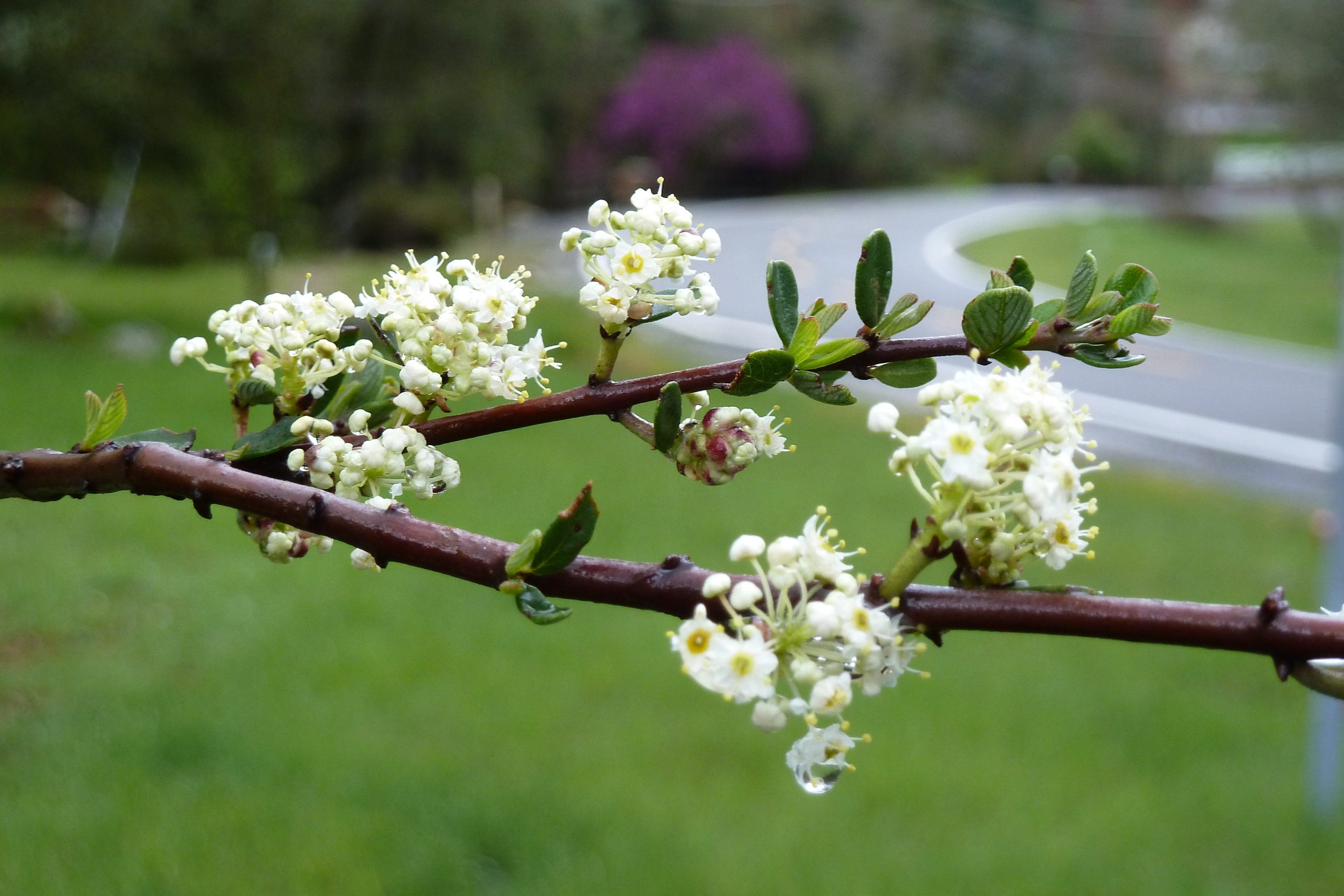
Ceanothus cuneatus, commonly called buckbrush or wedgeleaf ceanothus, is one of the most widespread and tenacious evergreen shrubs of California’s chaparral, found from sea-level coastal bluffs to dry foothill slopes throughout the state and into southwestern Oregon. Its common name “wedgeleaf” refers to the small, stiff, wedge-shaped leaves that narrow toward the base — a reliable field mark that separates it from the more rounded, three-veined leaves of many other Ceanothus species.
Buckbrush is a true survivor of California’s dry-summer climate, holding its ground on thin, rocky, and nutrient-poor soils where few other shrubs persist. Each spring it produces a profusion of small, rounded flower clusters in white through pale blue, covering the rigid, often spine-tipped branches in a display that is less showy individually than some Ceanothus but no less valuable ecologically, given how widely and reliably it blooms across its vast range.
For gardeners, buckbrush is the quintessential tough, drought-proof native shrub — ideal for the driest, leanest spots in a California or southwestern Oregon garden where almost nothing else will thrive without irrigation. Its dense, twiggy structure, nitrogen-fixing roots, and long bloom season make it a valuable addition to a wildlife or low-water landscape, provided gardeners respect its intolerance of summer water and rich soil.
Identification
Buckbrush is a dense, evergreen shrub typically 2 to 8 feet tall, with a rigid, often rounded or mounding form. Growth habit varies considerably across its range and among its several recognized varieties, from low and spreading to upright and more tree-like.
Stems
Branches are stiff, gray to grayish-brown, and frequently terminate in sharp, spine-like tips, especially on older growth — a useful identification trait and a practical consideration when siting the plant near paths. The rigid branching pattern gives mature plants a dense, twiggy structure.
Leaves
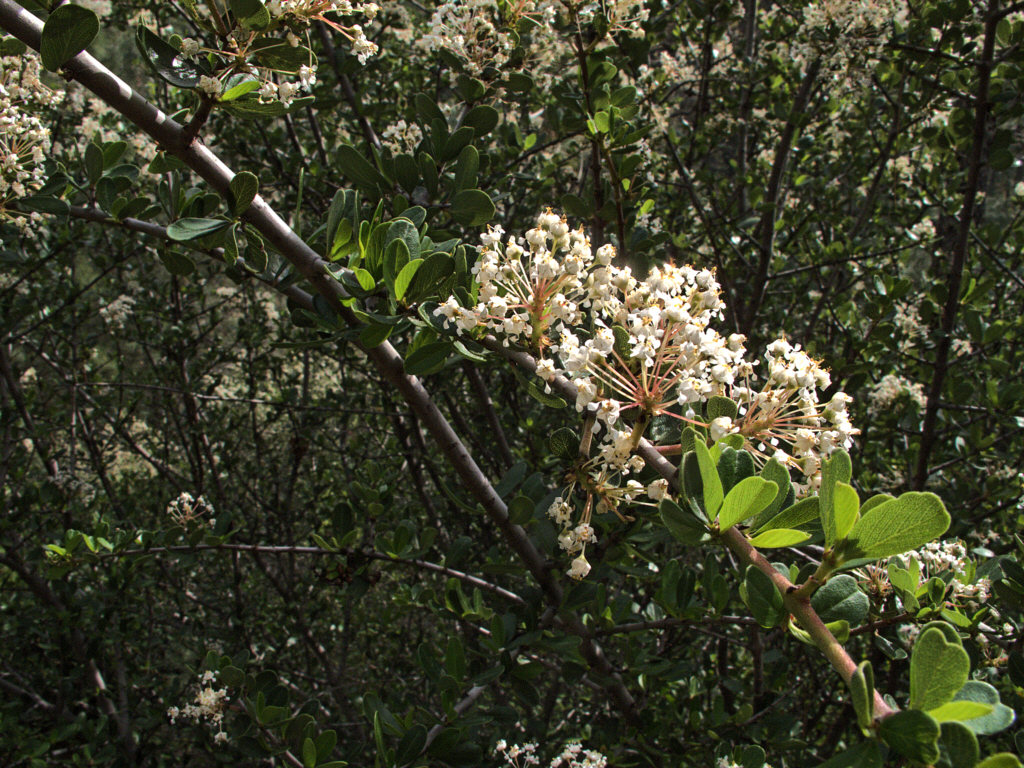
The evergreen leaves are small, typically ½ to 1 inch long, oval to distinctly wedge-shaped (cuneate) with the narrow end at the leaf base, giving the species its common name. Leaves are opposite or sub-opposite, leathery, gray-green to dull green above, often somewhat paler and finely hairy beneath, with smooth to minutely toothed margins. Unlike many Ceanothus, the leaves of buckbrush typically show a single central vein rather than three prominent veins from the base.
Flowers
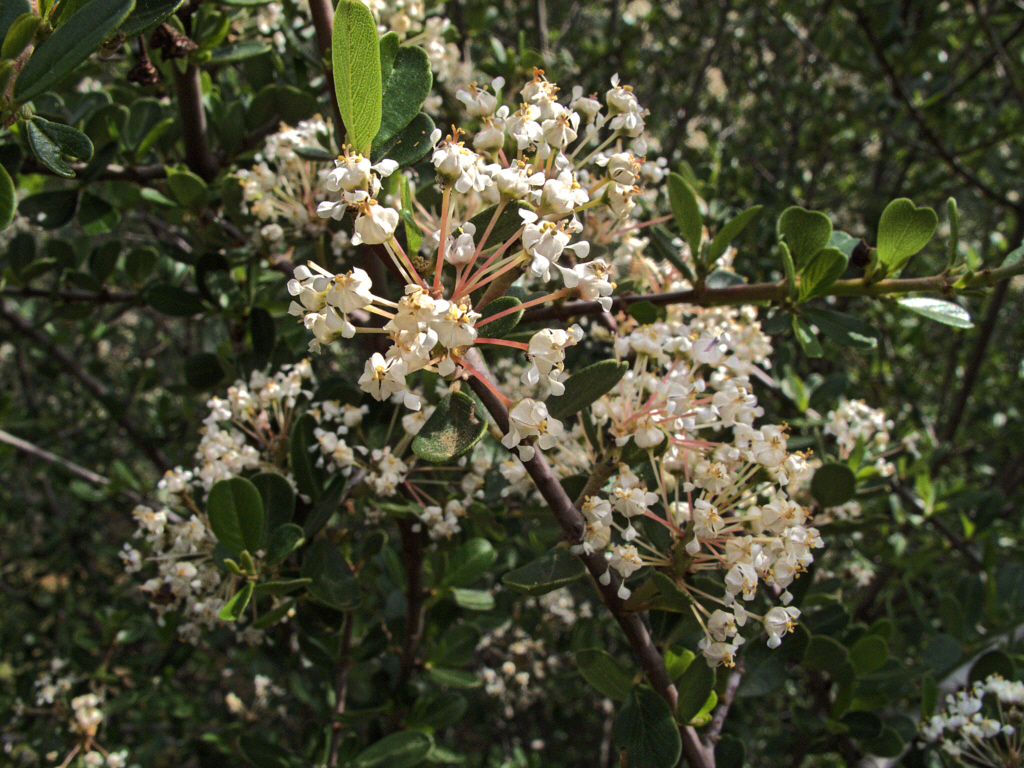
Small, rounded flower clusters (umbels) ½ to 1 inch across appear at branch tips and along the stems, ranging in color from white to pale blue or lavender depending on the population and variety. Bloom is heaviest from February through April, varying by elevation and latitude, and the flowers carry a mild, sweet fragrance that draws abundant pollinator activity.
Fruit & Seeds
Following bloom, buckbrush produces small, three-lobed seed capsules about ¼ inch across, sometimes with small projections or horns depending on the variety. Capsules dry and split open explosively to disperse seed a short distance, and the hard seed coat allows seeds to persist in the soil seed bank for many years, germinating heavily after fire.
Quick Facts
| Scientific Name | Ceanothus cuneatus |
| Family | Rhamnaceae (Buckthorn) |
| Plant Type | Evergreen Shrub |
| Mature Height | 2–8 ft |
| Mature Spread | 4–8 ft |
| Growth Rate | Slow to moderate |
| Sun Exposure | Full Sun |
| Water Needs | Very low once established |
| Soil Type | Lean, rocky or gravelly, well-drained |
| Soil pH | 6.0–7.5 |
| Bloom Time | February – April |
| Flower Color | White to pale blue or lavender |
| Fall Color | Evergreen, gray-green year-round |
| Fruit | Small three-lobed seed capsules |
| Deer Resistant | Moderate (some browsing, especially new growth) |
| USDA Hardiness Zones | 8–10 |
Native Range
Buckbrush is native to California and southwestern Oregon, where it ranges from the Oregon border south through the Coast Ranges, Sierra Nevada foothills, and Transverse and Peninsular Ranges to northern Baja California in Mexico. It is one of the most common and widely distributed native shrubs in California, occupying a vast elevational and climatic range from near sea level to over 5,000 feet.
Throughout this range, buckbrush is a defining member of chaparral plant communities, growing alongside chamise, manzanita, and scrub oak on dry, often rocky or gravelly slopes that bake under the summer sun. It also appears in open woodland and on serpentine soils where few other shrubs can establish, a testament to its tolerance of poor, mineral-stressed ground.
Buckbrush is not native to Nevada; the species’ range stops at the Sierra Nevada crest, and any buckbrush found growing in Nevada gardens has been planted rather than occurring naturally.
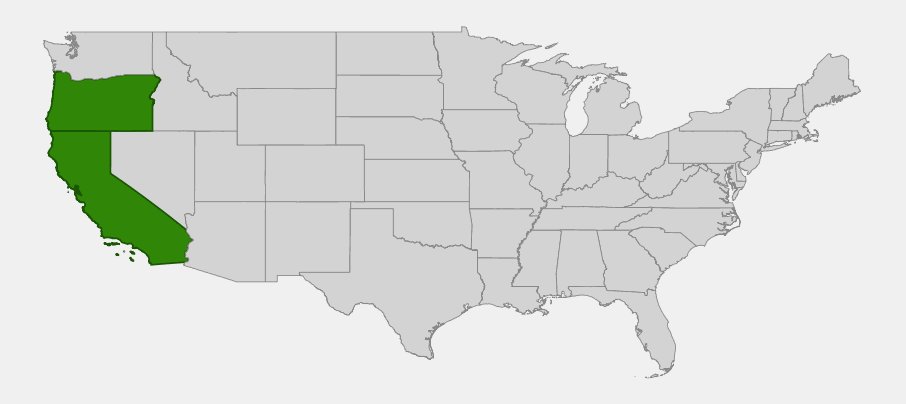
📋 Regional plant lists featuring buckbrush: California & Nevada · Western Oregon & Western Washington
Growing & Care Guide
Buckbrush is among the toughest and most drought-proof of all California native shrubs, but that toughness comes with a strict requirement: lean soil and no summer water.
Light
Full sun is essential for healthy, compact growth and the best bloom. In shade, buckbrush becomes sparse and leggy and flowers poorly, so reserve it for the sunniest, most exposed spots in the garden.
Soil & Water
This species thrives in lean, rocky, or gravelly soils with excellent drainage and is notably tolerant of serpentine and other mineral-poor soils that stress many other plants. It is extremely sensitive to summer irrigation and root rot; established plants should receive no supplemental water during the dry season, especially in heavier soils. Water only during the first year to establish roots, then stop almost entirely — buckbrush is a plant that thrives on neglect once settled in.
Planting Tips
Plant small container stock in fall to take advantage of winter rains for establishment; larger container sizes transplant less successfully in this genus. Choose the driest, sunniest, best-drained spot available — a slope, rock garden, or parking strip are ideal settings. Keep irrigated lawn and thirstier plantings well away from buckbrush’s root zone.
Pruning & Maintenance
Buckbrush needs minimal pruning. Remove dead wood as needed, and avoid cutting into bare old wood since regrowth from hard pruning is unreliable. Light tip pruning after bloom can help maintain a denser form if desired. Avoid disturbing the root zone once established, as buckbrush resents transplanting and heavy digging nearby.
Landscape Uses
- Driest, sunniest spots in a low-water garden
- Chaparral or wildlife garden restoration plantings
- Slope stabilization on dry, rocky banks
- Informal screening or boundary hedge
- Serpentine and poor-soil landscaping where little else grows
Wildlife & Ecological Value
As one of California’s most widespread chaparral shrubs, buckbrush supports an outsized share of the state’s chaparral wildlife community through its flowers, structure, and nitrogen-enriched soil.
For Pollinators
The abundant late-winter and spring flowers are an important early-season nectar and pollen source for native bees and other pollinators, flowering at a time when few other chaparral plants are in bloom. Butterflies, including several native species, also nectar at the flowers.
For Birds
The dense, twiggy, often spiny branch structure of buckbrush offers excellent nesting cover and protection from predators for small chaparral birds, including California Quail and various sparrows, which also forage among the branches for insects.
For Mammals
Deer browse buckbrush foliage and new growth to a moderate degree, and small mammals use the dense thickets for cover and concealment. Buckbrush seed, though small, is consumed by some rodent species that also assist in dispersing it.
Ecosystem Role
Like other Ceanothus, buckbrush fixes atmospheric nitrogen through root nodule bacteria, enriching California’s often nutrient-poor chaparral soils. Its persistent, long-lived seed bank and fire-stimulated germination make it a key early colonizer after chaparral fires, stabilizing soil and providing structure while the broader shrub community recovers.
Cultural & Historical Uses
Indigenous peoples throughout California made varied use of buckbrush and related Ceanothus species. The flexible young branches were sometimes gathered for use in construction of small implements, while the saponin-rich flowers, like those of several other Ceanothus, could be crushed and worked with water to produce a mild natural lather, used informally as a soap substitute by some communities — a practice recorded widely enough across California Ceanothus species that several carry the common name “soap bush” regionally.
Buckbrush’s extraordinary tolerance of poor, rocky soils and its role as a dominant chaparral shrub made it ecologically significant to the fire-adapted landscapes that Indigenous land management practices helped maintain across much of California for thousands of years before European contact.
In more recent history, buckbrush has drawn attention from range and fire ecologists studying chaparral recovery after wildfire, given how reliably its long-lived soil seed bank germinates following burns, and it remains a subject of ongoing fire ecology and watershed research in California’s foothill regions.
Frequently Asked Questions
Why is it called wedgeleaf ceanothus?
Its small, leathery leaves narrow distinctly toward the base in a wedge shape, a reliable identification feature that distinguishes it from Ceanothus species with more rounded, three-veined leaves.
Can buckbrush handle any garden watering at all?
Very little. It is one of the most drought-adapted California native shrubs and is highly prone to root rot with regular summer irrigation; water only during establishment, then stop almost entirely.
Is buckbrush native to Nevada?
No. Its native range is limited to California and southwestern Oregon, stopping at the Sierra Nevada crest; it does not occur naturally in Nevada.
Does buckbrush have thorns?
Its older branches are often tipped with stiff, spine-like points, which is useful for identification but worth considering when planting it near paths or play areas.
How long does buckbrush live?
It is longer-lived than many Ceanothus, often persisting for several decades in undisturbed chaparral, though individual plants are eventually replaced through the fire cycle that shapes its habitat.

Looking for a nursery that carries Buckbrush?
Browse our native plant nursery directory: California · Oregon