California Cholla (Cylindropuntia californica)
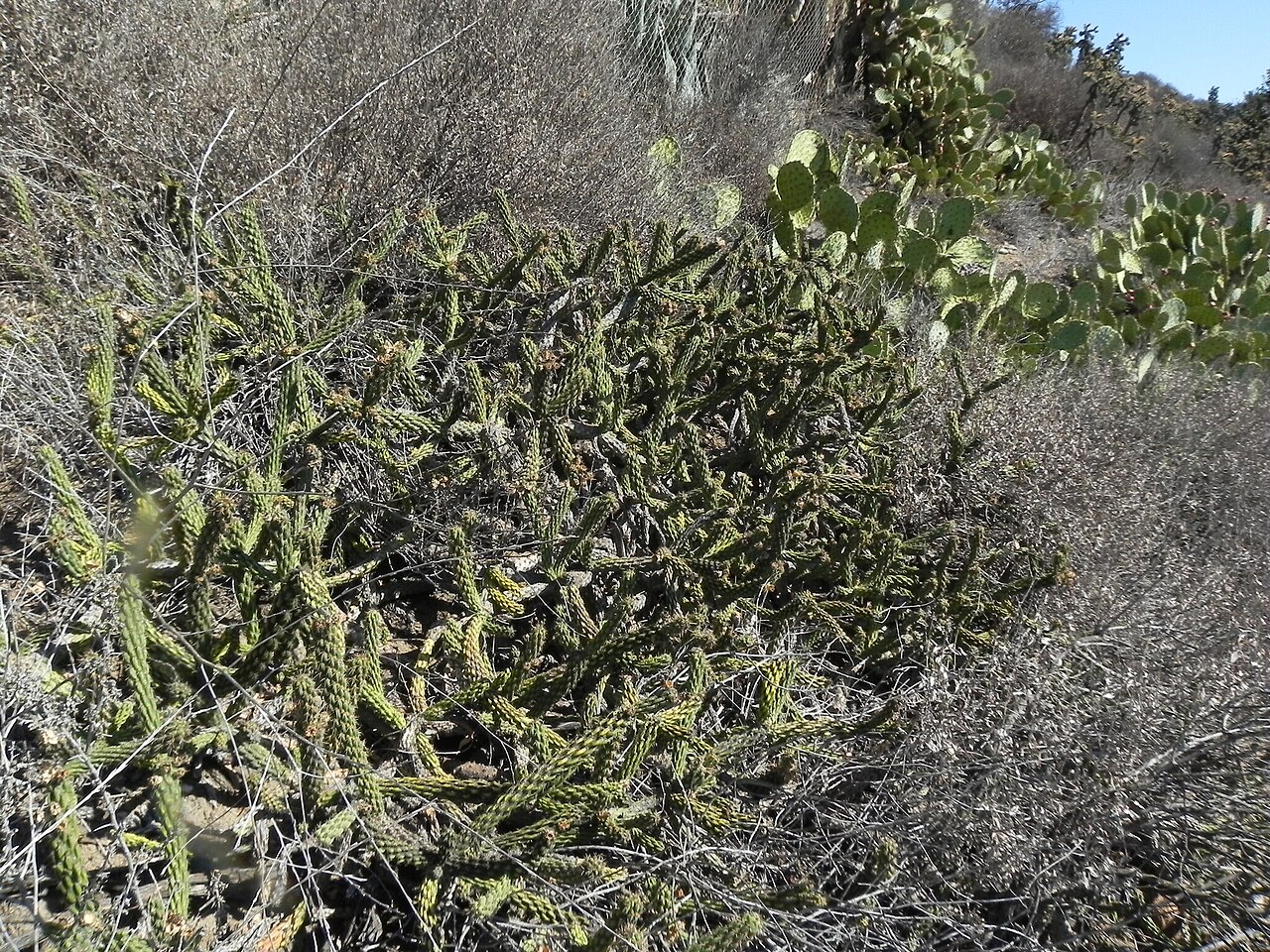
Cylindropuntia californica, commonly known as California cholla or snake cholla, is a low, sprawling, mat-forming cactus found almost nowhere else in the United States but the coastal hills of San Diego County, California. Unlike the upright, tree-like chollas of the Sonoran Desert, this species hugs the ground, its slender, segmented stems weaving and tangling into dense low mounds rarely more than knee-high — a growth habit that gives it the “snake cholla” nickname.
California cholla grows in coastal sage scrub and chaparral on dry, rocky or sandy slopes near the coast, usually within a few miles of the ocean’s moderating influence, and continues south into similar habitat in Baja California, Mexico. In the United States it is genuinely uncommon: the typical variety, C. californica var. californica, is tracked by the California Native Plant Society as a rare and threatened plant (Rare Plant Rank 1B.1) because of its small number of occurrences and ongoing habitat loss to coastal development.
This is a specialty plant for coastal Southern California native gardens rather than a widely available nursery staple. Where it is grown, it works best as a low, spreading groundcover-like accent in a dry, sunny bed, planted well back from paths given its barbed, easily detached spines. Because wild populations are limited and declining, any garden specimen should come from nursery propagation, never from wild collection.
Identification
California cholla forms a low, sprawling, often mounding or semi-prostrate plant typically 1 to 2 feet tall but spreading 3 feet or more wide, with stems that snake along or just above the ground before turning upward at the tips. Older plants develop a woody, often blackened base from which the younger green, spiny joints radiate.
Stems & Joints
The cylindrical stem segments are slender — about ½ inch thick — and relatively short, giving the plant a jointed, almost beaded “snake” appearance that is distinct from the stouter joints of desert chollas. Each areole bears a modest number of slender spines, fewer and less densely packed than in desert species such as teddy bear cholla, but still sharp, barbed, and capable of detaching readily at the lightest touch.
Flowers
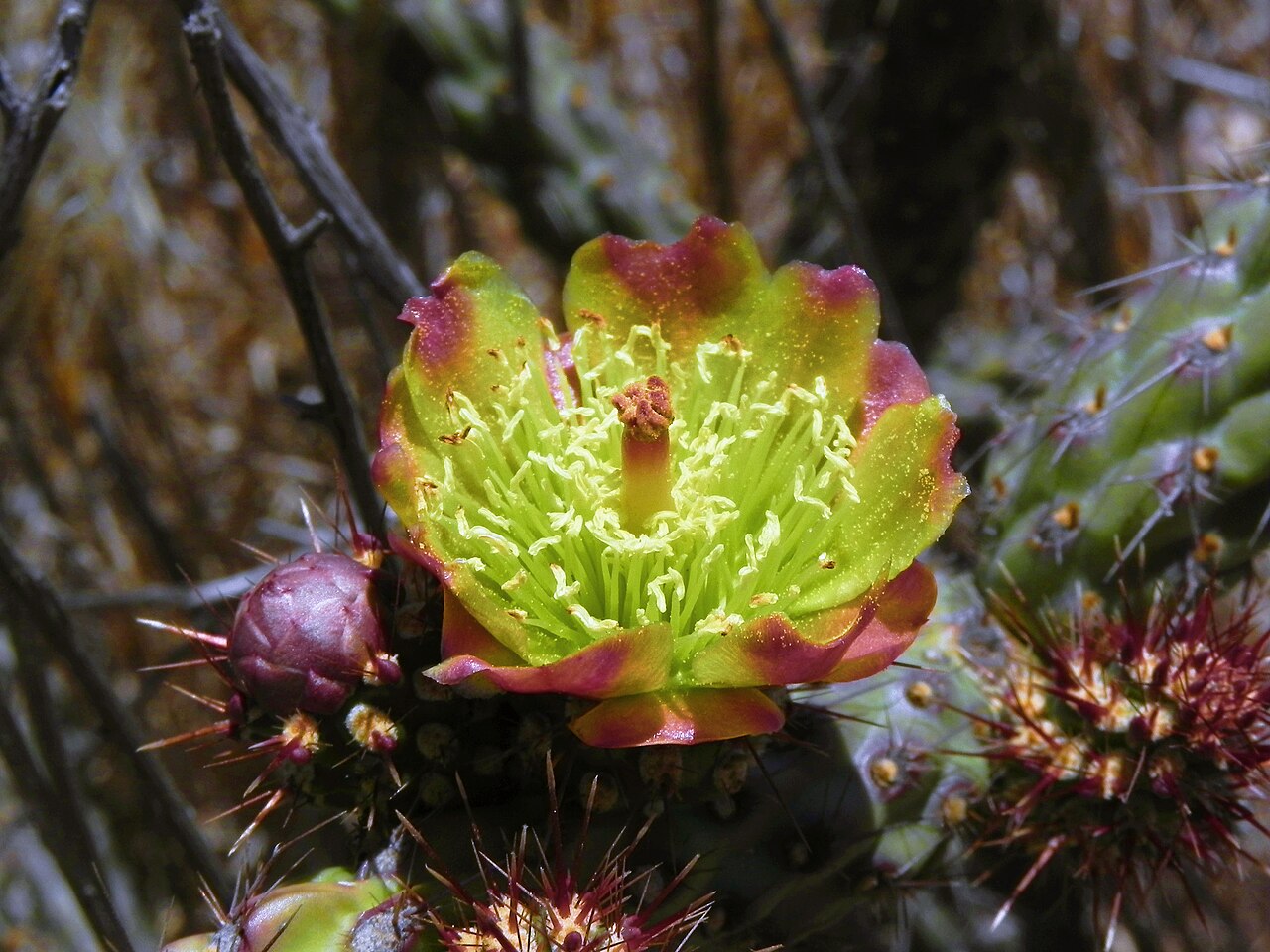
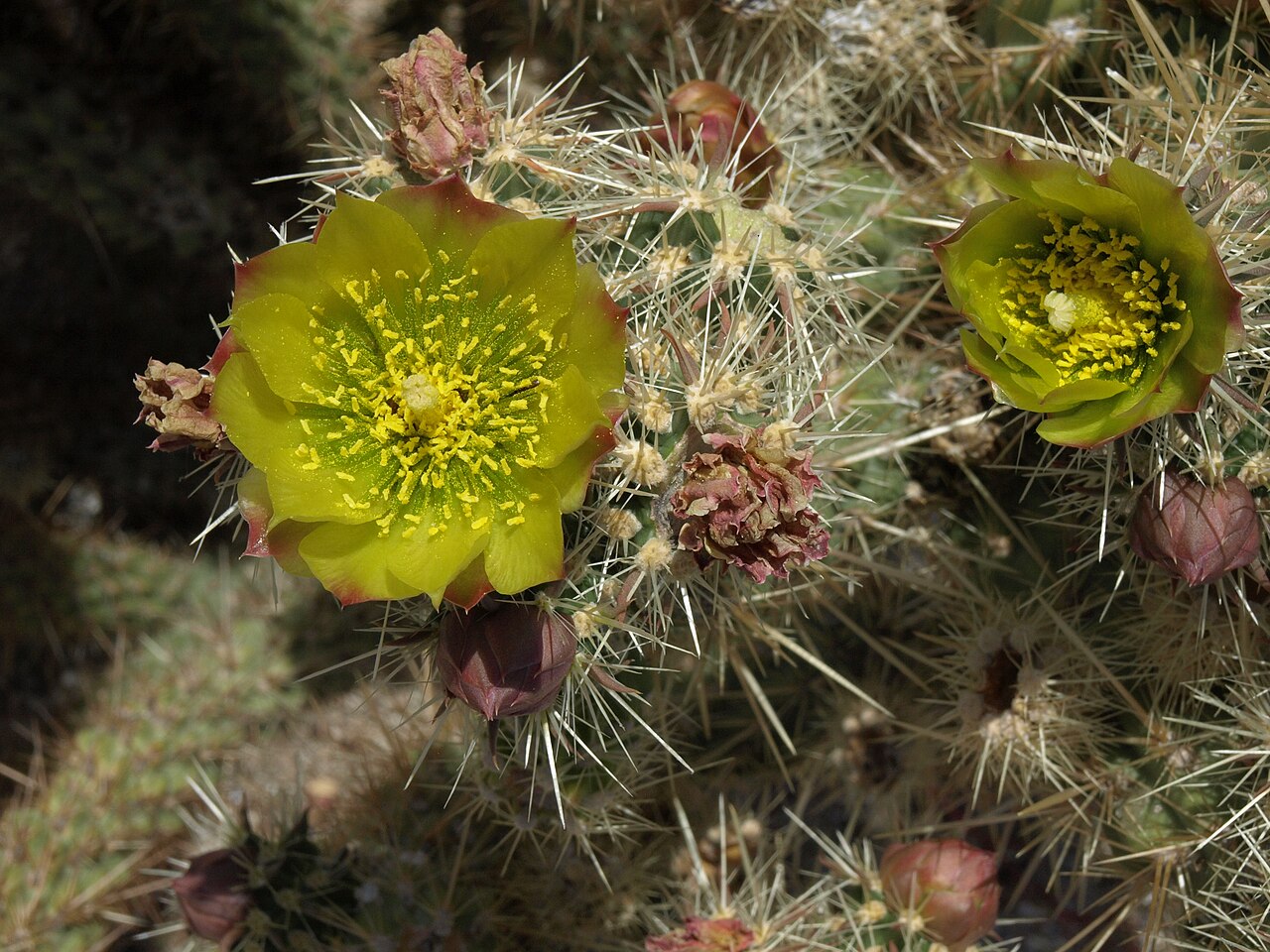
Flowers open in spring, roughly 1.5 to 2 inches across, with waxy, yellow-green to olive petals often edged in maroon or bronze and a center packed with bright yellow stamens. They are showy for a cholla and open fully in sun, closing by late afternoon.
Fruit & Seeds
The fruit is a spiny to nearly spineless, tuberculate pod that rarely matures viable seed in most populations; like many cholla species, California cholla spreads mainly by rooting detached joints rather than by seed, which is part of why isolated populations can be slow to recover once disturbed.
Quick Facts
| Scientific Name | Cylindropuntia californica |
| Family | Cactaceae (Cactus) |
| Plant Type | Stem succulent / low, sprawling cactus |
| Mature Height | 1–2 ft |
| Mature Spread | 3–5 ft, sprawling |
| Growth Rate | Slow |
| Sun Exposure | Full sun |
| Water Needs | Very low; excellent drought tolerance |
| Soil Type | Dry, rocky, or sandy; sharply drained |
| Soil pH | 6.5–8.0 (neutral to alkaline) |
| Bloom Time | March – May |
| Flower Color | Yellow-green with maroon or bronze edges |
| Fall Color | None (evergreen stem succulent) |
| Fruit | Tuberculate pod, rarely producing viable seed |
| Deer Resistant | Yes (spines deter browsing) |
| USDA Hardiness Zones | 9–11 |
Native Range
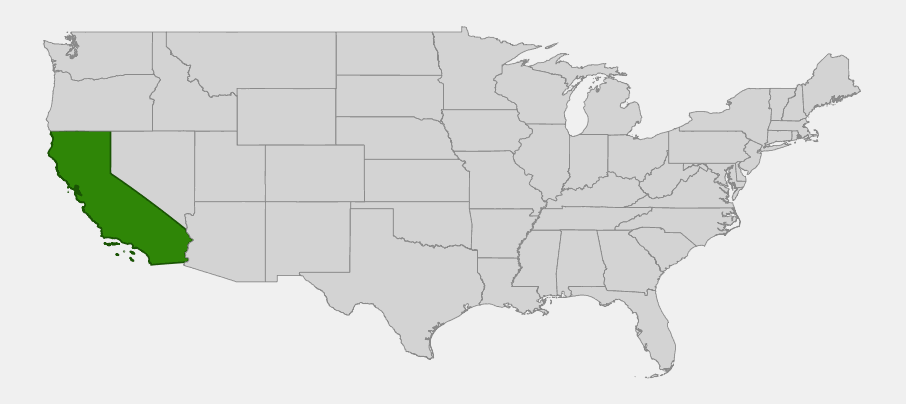
In the United States, California cholla is native only to the coastal hills and mesas of San Diego County, California, typically within a few miles of the Pacific coast where fog and marine air moderate summer heat. It grows in coastal sage scrub and chaparral communities on dry, well-drained, often rocky or clay-loam slopes, frequently alongside prickly pear cactus, laurel sumac, and California buckwheat.
South of the border, California cholla continues into similar coastal sage scrub and chaparral habitat in northern Baja California, Mexico, where it is more widespread. The U.S. population is the northern, geographically isolated edge of this range, which is part of why it occurs in so few California counties and why its U.S. occurrences are watched closely for habitat loss.
California cholla is not native anywhere outside this narrow coastal strip — it does not occur naturally in the California deserts, in Arizona, or anywhere else in the country, despite sharing a genus with the much more widespread desert chollas. Gardeners outside coastal Southern California should not expect it to perform like a desert cactus; it is adapted to a mild, fog-influenced coastal climate rather than to Sonoran or Mojave desert extremes.
📋 Regional plant lists featuring California Cholla: no Plant Native regional list currently covers coastal San Diego County.
Growing & Care Guide
California cholla asks for the same things most coastal chaparral natives want: full sun, sharp drainage, and a hands-off approach once established. It is not a plant for regular watering or rich garden soil.
Light
Plant in full sun. In its native coastal hills it grows in fully exposed, unshaded positions and will stretch and weaken with any significant shade.
Soil & Water
Give it dry, rocky, sandy, or lean clay-loam soil with excellent drainage — heavy, moisture-retentive soil is the fastest way to lose this plant to root rot. Once established it needs no irrigation beyond the region’s natural winter rainfall and benefits from a completely dry summer, matching its native Mediterranean-type climate. Newly planted specimens can take an occasional deep watering their first season to root in, then should be left alone.
Planting Tips
Site California cholla well away from paths, patios, and anywhere people or pets brush past regularly; its spines detach easily and are painful to remove. Handle plants with tongs or heavy gloves, never bare hands. Because wild populations are rare and protected habitat, always source nursery-propagated plants rather than attempting to collect from the wild. Plant in fall through early spring to take advantage of winter rains for establishment.
Pruning & Maintenance
This cholla needs essentially no pruning. If a joint needs to be removed, lift it with long tongs directly into a sealed container for trash disposal — do not compost or discard it where it could root in a wild area. Wear thick gloves and watch footing closely when working anywhere near established plants, since low-growing joints are easy to step on by accident.
Landscape Uses
- Coastal native garden accent in dry, sunny beds
- Low, sprawling groundcover-style planting on slopes and banks, set back from traffic
- Chaparral and coastal sage scrub restoration projects within its native San Diego County range
- Rock garden specimen paired with other coastal sage scrub natives
Wildlife & Ecological Value
Like other chollas, California cholla offers dense, spine-protected cover that larger, less-armored shrubs cannot match, making it a valuable if small-scale habitat feature within coastal sage scrub.
For Birds
Small songbirds such as wrentits and California towhees use dense cholla patches for predator-safe cover and occasional nesting sites, taking advantage of the barbed spines that keep snakes and ground predators at bay.
For Mammals
Small mammals including woodrats shelter within and around established clumps, and the low, tangled growth form provides hiding cover for lizards and other small wildlife moving through open coastal sage scrub.
For Pollinators
The spring flowers attract native bees, which forage on the abundant pollen-rich stamens during a relatively short bloom window each year.
Ecosystem Role
As a specialist of a naturally limited, increasingly fragmented coastal habitat type, California cholla is one of the indicator species that reflects the health of remaining coastal sage scrub in San Diego County — its presence or decline in a given parcel is often tracked alongside other sensitive species during habitat conservation planning.
Cultural & Historical Uses
Indigenous peoples of coastal San Diego County, including Kumeyaay communities, historically made use of various cholla species found in the region, including the careful harvesting and preparation of flower buds as a seasonal food after burning or brushing away the spines — a specialized practice requiring tools and knowledge well beyond simply picking the plant, and described here as history rather than a home foraging guide.
Because California cholla populations are naturally small and the habitat they depend on has been heavily reduced by coastal urban development, the species (particularly the typical variety) is tracked by state conservation agencies and should never be collected from the wild. Any interest in growing it should be satisfied through specialty native plant nurseries that propagate stock responsibly.
Today the plant’s main documented use is horticultural and ecological — a distinctive, low cactus for coastal native gardens and a component of San Diego County’s increasingly scarce coastal sage scrub restoration plantings.
Frequently Asked Questions
Is California cholla the same as the desert chollas found in Arizona?
No. California cholla is a separate species restricted to coastal San Diego County and northern Baja California, with a low, sprawling growth habit adapted to a mild coastal climate — quite different from the taller, upright desert chollas of the Sonoran and Mojave Deserts.
Is California cholla rare?
Yes, in the United States. It occurs in a narrow band of coastal San Diego County and the typical variety is tracked by the California Native Plant Society as rare (Rare Plant Rank 1B.1) due to a limited number of occurrences and ongoing loss of coastal sage scrub habitat to development.
Can I dig one up if I find it growing wild?
No. Given how limited and sensitive its populations are, wild California cholla should never be collected. Source plants only from nurseries that propagate native cacti responsibly.
Is it dangerous to pets or children?
Yes — like other chollas, its spines are barbed and the joints detach easily on contact, which can injure paws, hands, or bare skin. Plant it away from paths and play areas, and remove any embedded spines with tongs or a comb rather than bare fingers.
Will California cholla grow well outside San Diego County?
It can succeed in other mild, dry-summer coastal California climates with similar fog influence and winter-wet, summer-dry rainfall, but it is poorly suited to inland desert heat, hard freezes, or areas with summer irrigation and humidity.

Looking for a nursery that carries California Cholla?
Browse our native plant nursery directory: California