Piute Cypress (Cupressus nevadensis)
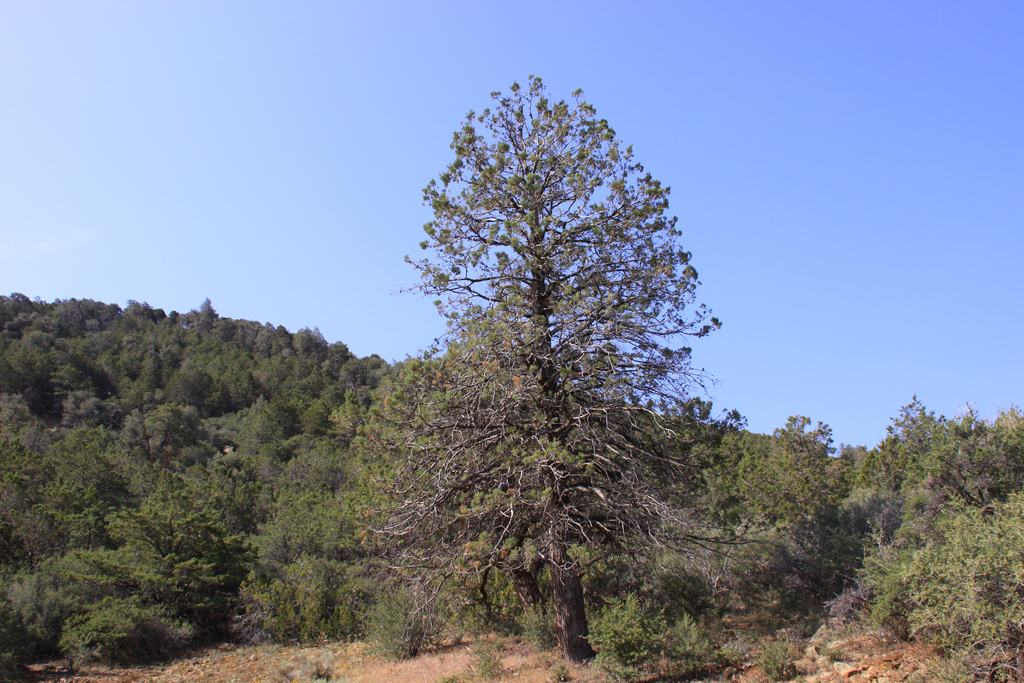
Hesperocyparis nevadensis (long known as Cupressus nevadensis), the Piute cypress — also spelled Paiute cypress — is a rare, drought-adapted conifer found only in a small corner of the southern Sierra Nevada in California. It grows as a medium-sized tree with a narrow, conic to pyramidal crown, gray-green resinous foliage, and reddish, peeling bark on older trunks. Named for the Piute Mountains near Lake Isabella, where its largest grove grows, it is a true California endemic found nowhere else in the wild.
Piute cypress is adapted to some of the hottest, driest conditions tolerated by any western cypress, rooting in shallow, nutrient-poor granitic soil on exposed slopes and ridgelines of the southern Sierra foothills. The California Native Plant Society ranks it 1B.2, meaning it is rare and threatened even within its limited native range, and the IUCN lists it as vulnerable. Only a handful of groves are known, the largest near Bodfish in the Lake Isabella area, with several much smaller, scattered stands elsewhere in the southern Sierra.
For California gardeners in hot, dry inland climates, Piute cypress can be a striking, low-water conifer, but it is slow-growing and uncommon in the nursery trade. As with other rare California cypresses, plant only nursery-propagated stock, never material collected from its small wild populations.
Identification
Piute cypress is a medium-sized evergreen tree, typically growing 30 to 50 feet tall with a straight trunk and a narrow, deep conic to pyramidal crown, though some references note exceptional old trees growing taller. It is similar in general form to its close relative, Arizona cypress, which it resembles closely enough that the two are sometimes confused where their ranges might be compared.
Bark & Stems
Bark on young trees is smooth and gray to reddish-brown, becoming furrowed and fibrous with age; on older trunks it often weathers to a rich cherry-red to reddish-brown color that is one of the tree’s more attractive features. Branches are relatively slender and ascending, building the narrow, pointed crown typical of the species.
Leaves
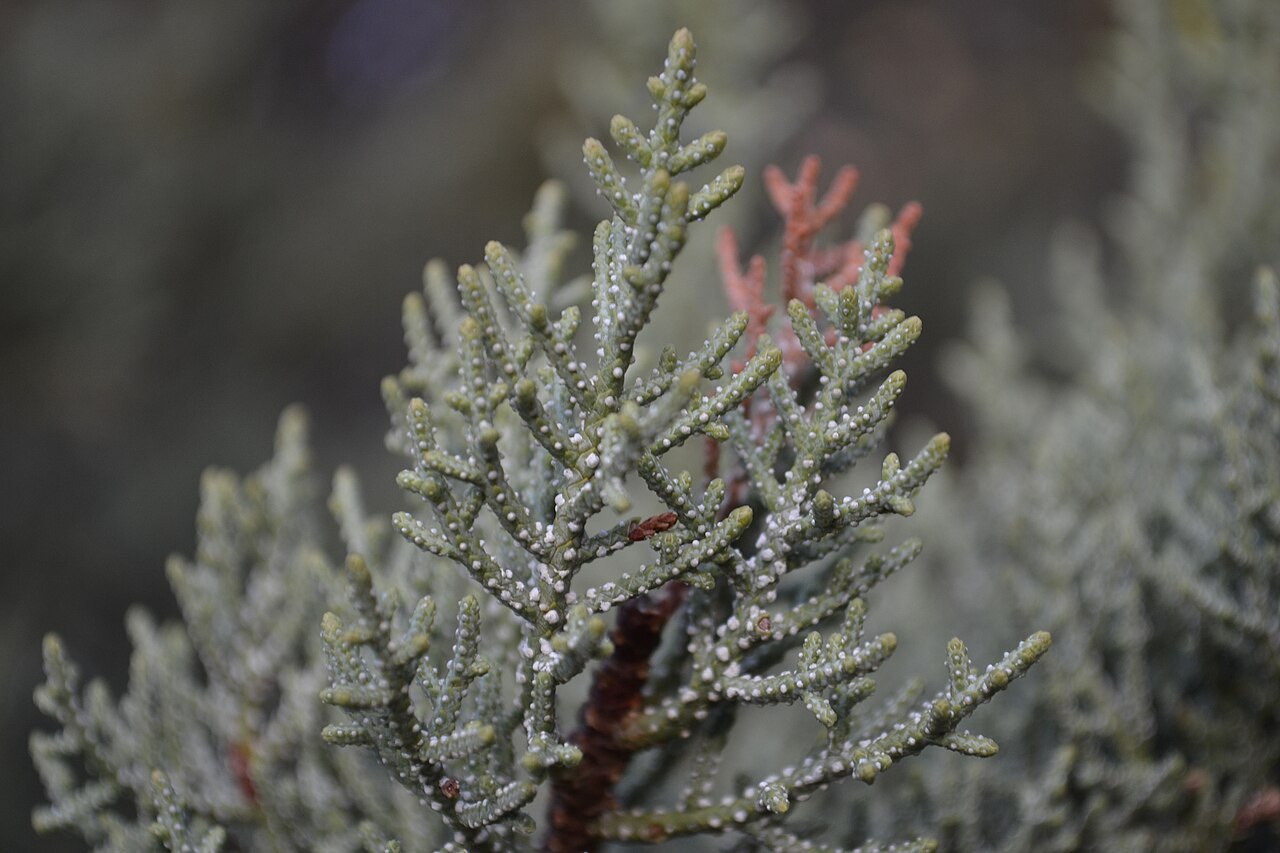
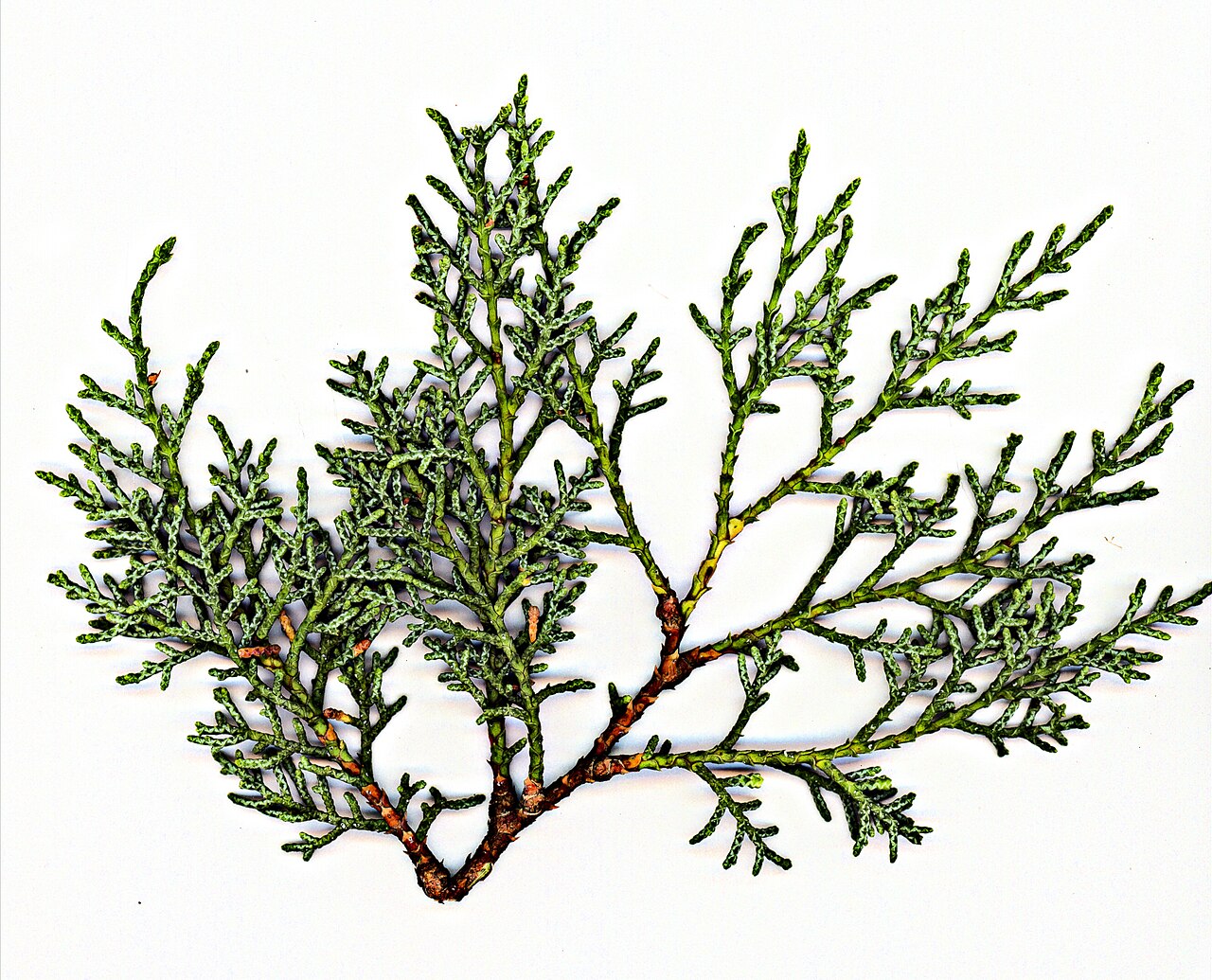
The foliage is scale-like and tightly pressed to slender, rounded branchlets, in a distinctive pale, grayish blue-green to gray-green color that helps distinguish it from the darker greens of Monterey or Gowen cypress. The foliage is noticeably resinous, dotted with small glands that exude a sticky, aromatic resin, especially visible on fresh growth in warm weather.
Flowers & Fruit
As with all cypresses, there are no true flowers — small pollen cones form in late winter, and separate woody seed cones mature on the same tree over one to two seasons. The seed cones are roughly globe-shaped, about ½ to ¾ inch across, with a pebbled surface of pointed, woody scales, maturing from green to grayish brown and often persisting closed on the branches for a year or more before opening.
Quick Facts
| Scientific Name | Hesperocyparis nevadensis (syn. Cupressus nevadensis) |
| Family | Cupressaceae (Cypress) |
| Plant Type | Evergreen conifer tree |
| Mature Height | 30–50 ft (exceptional trees taller) |
| Mature Spread | 15–25 ft, narrow conic crown |
| Growth Rate | Slow |
| Sun Exposure | Full Sun |
| Water Needs | Low; highly drought tolerant once established |
| Soil Type | Shallow, rocky, granitic; excellent drainage required |
| Soil pH | Slightly acidic, adapted to granitic soils |
| Bloom Time | Pollen cones in winter; no showy flowers |
| Flower Color | Not applicable (conifer) |
| Fall Color | None (evergreen) |
| Fruit | Small woody seed cones, ½–¾ in, often closed for a year or more |
| Deer Resistant | Yes |
| USDA Hardiness Zones | 8–10 |
Native Range
Piute cypress is native only to California, and within California only to a small part of the southern Sierra Nevada in Kern and Tulare counties, in the area around the Piute Mountains and the Lake Isabella/Bodfish region. It is not native to any other state.
The species grows on dry, rocky, granitic slopes and ridgelines at roughly 3,000 to 6,000 feet elevation, typically within pinyon-juniper woodland, oak-pine woodland, chaparral, and closed-cone cypress forest. The largest and most continuous grove lies south of Bodfish near Lake Isabella; around eight smaller, more scattered stands occur elsewhere in the southern Sierra, including the Piute Mountains and nearby ranges. Because the total population and range are so small, and because the species occurs nowhere else, local populations are considered important for the long-term conservation of the species.
Piute cypress should not be confused with the similar-looking, more widespread Arizona cypress (Hesperocyparis arizonica), which some botanists have treated as a close relative or even included it within; Piute cypress, as treated here, is restricted to its small southern Sierra Nevada range in California.
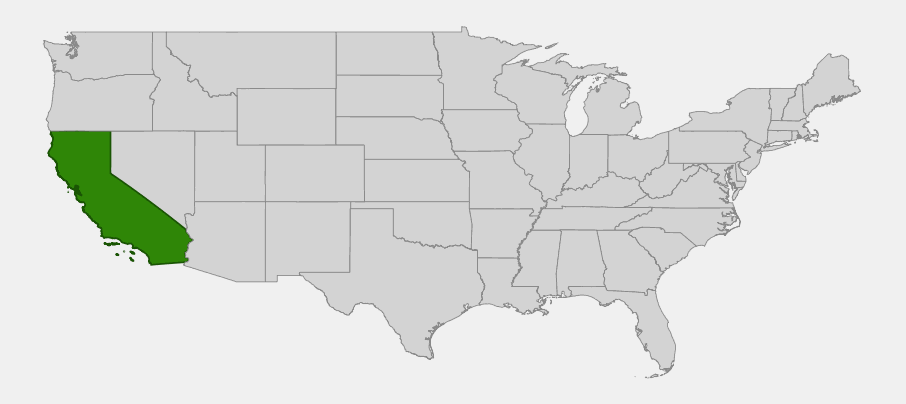
📋 Piute Cypress’s native range is limited to the California coast, which is not yet covered by one of our regional plant lists.
Growing & Care Guide
Piute cypress is an uncommon nursery plant, better known to California native-plant collectors than to general gardeners, but it can be a distinctive, drought-proof conifer in hot, dry inland gardens where few other trees thrive without irrigation. Because its wild populations are small and limited, choose nursery-propagated plants rather than wild material.
Light
Give it full sun. In the wild it grows on open, rocky slopes with intense sun exposure, and it will not thrive in shaded garden conditions.
Soil & Water
Piute cypress wants fast-draining, rocky or sandy, somewhat acidic soil similar to the decomposed granite of its native range, and it strongly dislikes heavy, poorly drained ground, which encourages root disease. Once established it is highly drought tolerant and should be watered sparingly; overwatering is a more common problem than underwatering for this species in cultivation.
Planting Tips
Plant from containers in fall so winter rain supports root establishment ahead of the dry season. Choose an open, sunny site with excellent drainage, ideally on a slope or raised area, and avoid locations that collect runoff. Because it is slow-growing and uncommon, source plants only from reputable native plant nurseries propagating from legally collected, cultivated seed.
Pruning & Maintenance
Little pruning is required beyond removing dead branches; the tree’s narrow, conic form generally needs no shaping. Avoid heavy irrigation and fertilization, both of which run counter to the lean, dry conditions the species is adapted to and can promote disease in cultivation.
Propagation
Piute cypress is propagated from seed collected from mature, closed cones; as with other California closed-cone cypresses, some growers use mild heat treatment to encourage seed release from otherwise slow-opening cones. Seed should come from cultivated parent trees rather than the small wild groves.
Landscape Uses
- Hot, dry inland gardens in the southern Sierra foothills and similar climates, as a true no-irrigation conifer
- California native plant collections, valued for its rarity and distinctive gray-green, resinous foliage
- Habitat restoration within its native Kern and Tulare county range, using locally sourced stock
- Rock garden and slope plantings that mimic its natural granitic habitat
Wildlife & Ecological Value
Piute cypress is a minor but ecologically distinctive component of the dry woodlands of the southern Sierra Nevada, where it adds a conifer element to habitats otherwise dominated by pinyon pine, juniper, and chaparral shrubs.
For Pollinators
As a wind-pollinated conifer, Piute cypress contributes little direct floral resource, but its presence adds structural diversity to dry woodland that supports a range of native insects associated with pinyon-juniper and oak woodland habitats.
For Birds
The dense, evergreen crown offers nesting and roosting cover in an otherwise relatively open, dry woodland landscape, and its seed, once released, is part of the broader seed resources available to seed-eating birds in the pinyon-juniper community.
For Mammals
Small mammals use Piute cypress stands for shade and shelter in an exposed, hot environment, and the trees contribute to the structural cover that supports a range of foothill wildlife alongside pinyon pine and juniper.
Ecosystem Role
As one of the rarest conifers in California, Piute cypress is of particular conservation interest for maintaining genetic and ecological diversity in the southern Sierra Nevada. Its closed, long-persistent cones link its regeneration to periodic disturbance, and its scattered, isolated groves make each population significant to the species’ overall survival.
Cultural & Historical Uses
Piute cypress has little recorded history of traditional use, reflecting both its limited distribution and the relatively dry, marginal habitat where it grows. The common name honors the Piute (Paiute) people associated with the broader region of the southern Sierra Nevada and Great Basin, and both “Piute” and “Paiute” spellings are used for the mountain range, the town of Piute, and the cypress itself.
Its main significance today is as a botanical and conservation curiosity: a true California endemic conifer, restricted to a handful of groves in Kern and Tulare counties, that illustrates how isolated mountain ranges in California can harbor highly localized plant species found nowhere else on Earth.
Frequently Asked Questions
Is Piute cypress the same as Paiute cypress?
Yes. Both spellings refer to the same species, Hesperocyparis nevadensis. “Paiute” is the spelling used by the USDA and many botanical sources, while “Piute” is the traditional local spelling used for the mountain range and the town near its largest grove.
How rare is Piute cypress?
It is quite rare. The California Native Plant Society ranks it 1B.2, and the IUCN lists it as vulnerable. Its entire known range consists of one larger grove near Bodfish in the Lake Isabella area and roughly eight smaller, scattered stands elsewhere in the southern Sierra Nevada.
Can Piute cypress be grown outside California?
It is native only to a small part of California’s southern Sierra Nevada, and we do not recommend planting it outside the state. Within California, it suits hot, dry inland gardens with excellent drainage, similar to its native granitic slopes.
How is Piute cypress different from Arizona cypress?
The two are closely related and similar in general appearance, with some botanists treating them as very close relatives. Piute cypress, as covered here, is restricted to its small southern Sierra Nevada range in Kern and Tulare counties, California, while Arizona cypress is more widespread across the desert Southwest.
Why does Piute cypress foliage feel sticky?
The scale-like leaves carry numerous small resin glands that exude an aromatic, sticky resin, especially on fresh growth in warm weather. This resin is a normal feature of the species and is shared, to varying degrees, with other western cypresses.

Looking for a nursery that carries Piute Cypress?
Browse our native plant nursery directory: California