California Wild Grape (Vitis californica)
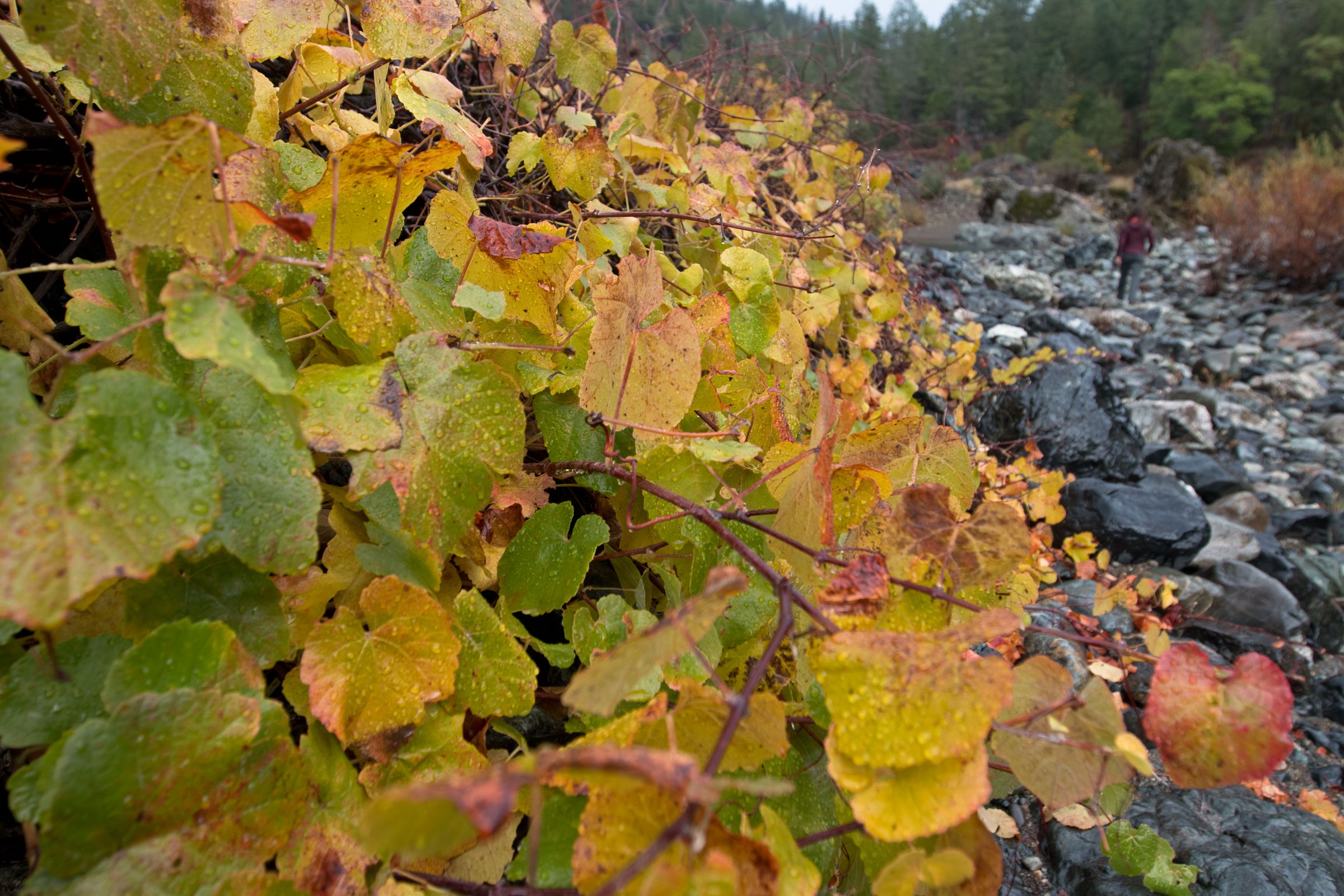
Vitis californica, commonly called California wild grape, is a vigorous deciduous vine of the grape family (Vitaceae) and one of only two grape species native to California — the other being the desert-adapted Vitis girdiana of the southern deserts. You’ll find it threading through willows and cottonwoods along nearly every low-elevation stream in the Coast Ranges, the Central Valley margins, and the Sierra Nevada foothills, where its tendrils haul the vine thirty feet or more into the canopy. Few California natives put on the kind of autumn show this plant does; its broad leaves turn gold, orange and wine-red in October and November, a trait so distinctive that even casual hikers learn to recognize it along the state’s riparian corridors.
In the garden, California wild grape is prized for exactly the qualities that make it successful in the wild: fast growth, a strong root system that holds streambanks together, and a tangle of woody stems that gives birds and small mammals somewhere to hide. It is the wild parent behind ‘Roger’s Red’, a popular ornamental hybrid with Vitis vinifera, but the straight species deserves more attention on its own — it is tougher, better for wildlife, and just as handsome once the fall color turns.
This is not a plant for a small trellis by the back door unless you’re prepared to prune hard every year. Left alone, California wild grape will climb into mature trees, cover fences, or spread as a thicket-forming groundcover on a slope. That untamed habit is exactly why it belongs along creeks, on erosion-prone banks, and in wildlife gardens with room to let a vine be a vine.
Identification
California wild grape is a woody, deciduous, tendril-climbing vine. Mature plants develop thick, twisted trunks with shredding, fibrous bark, and individual vines can live for decades, eventually reaching diameters of a foot or more at the base where old specimens scramble up large trees.
Bark & Stems
Young stems are green to reddish-brown and somewhat angled, becoming gray-brown and furrowed with age. The bark on older trunks and main stems peels in long, loose, shaggy strips — a classic grapevine trait that distinguishes it at a glance even in winter, when the leaves are gone. Branched, coiling tendrils opposite the leaves let the vine grip onto shrubs, tree limbs, fences and rock faces as it climbs.
Leaves
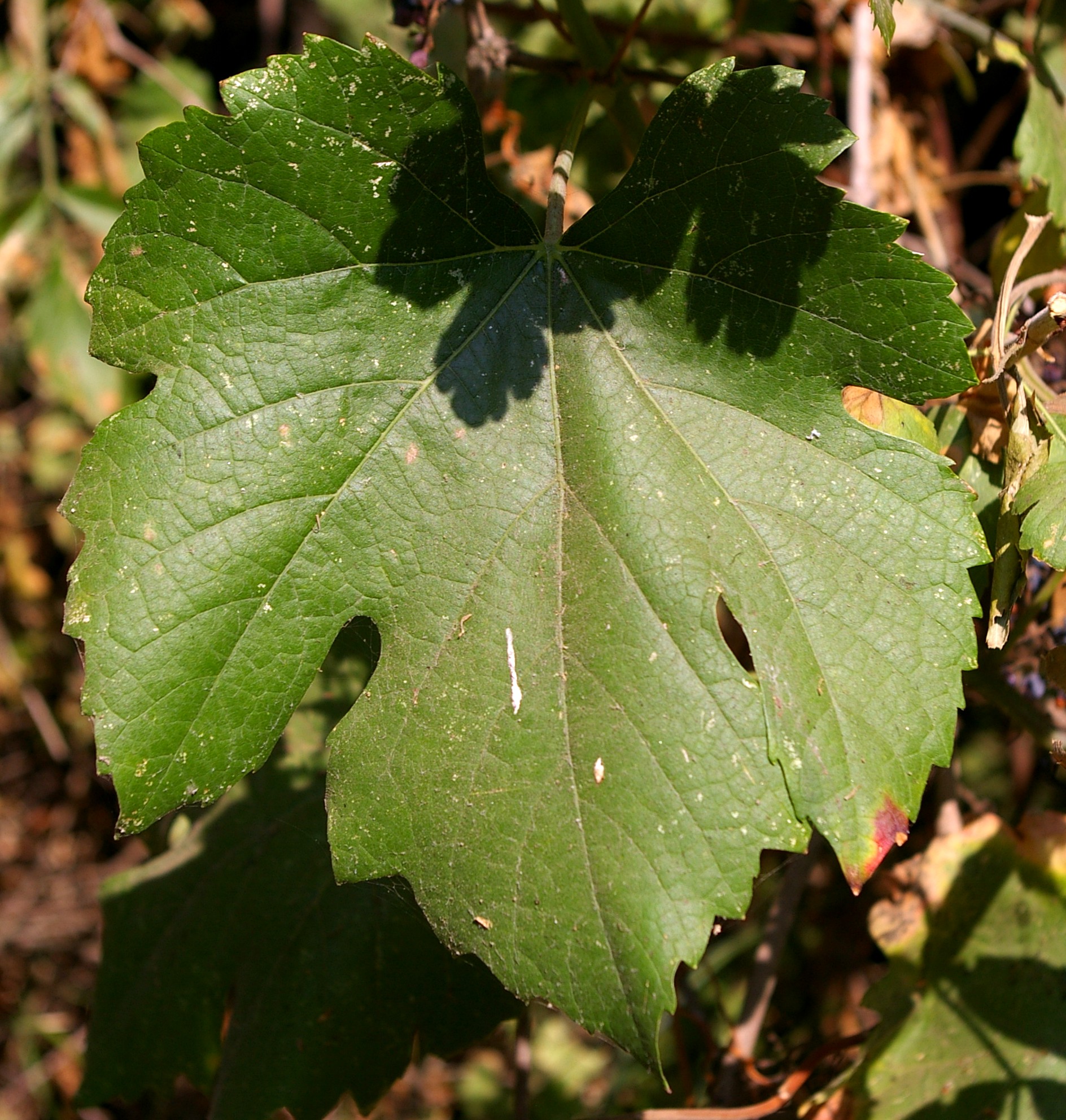
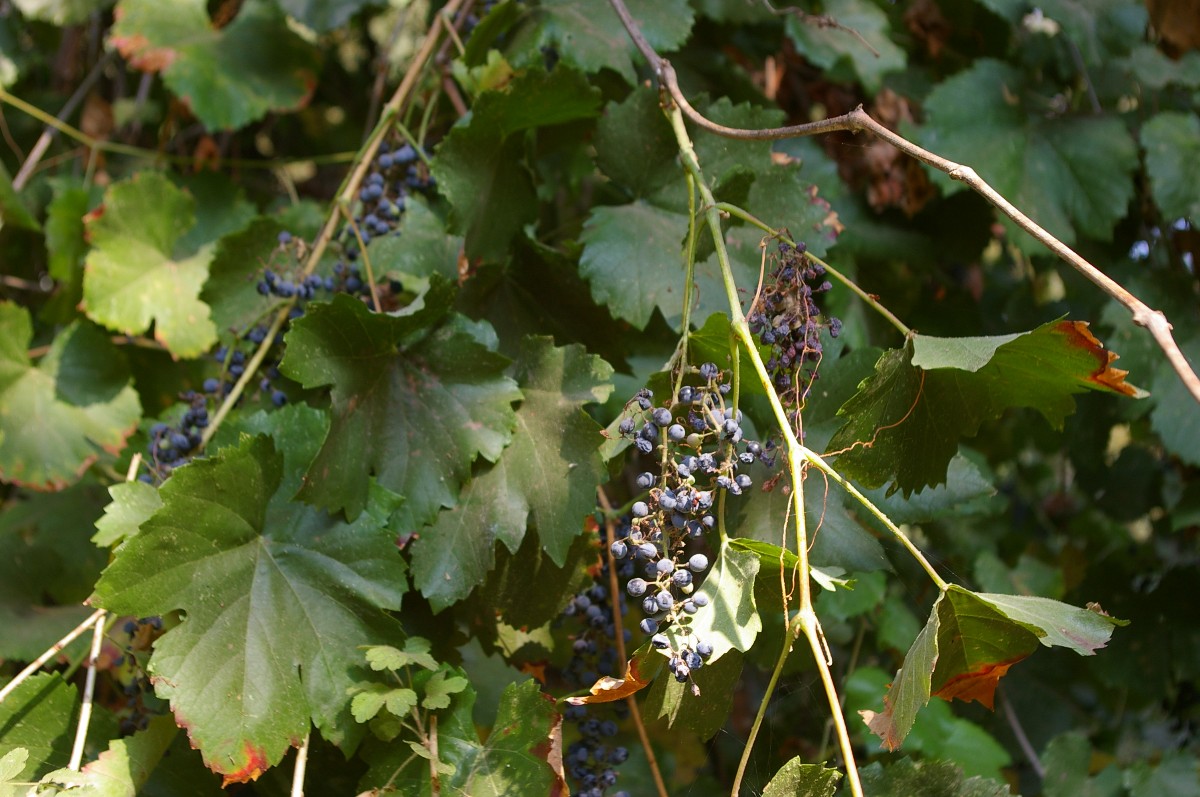
Leaves are alternate, simple, and roughly heart-shaped to shallowly three- or five-lobed, 2 to 6 inches across, with coarsely toothed margins. New spring growth often has a light, cobwebby down on the underside that mostly wears off by summer, leaving a bright to dull green upper surface and a paler green underside. The real identification highlight comes in fall: leaves color unevenly through yellow, orange, and deep red before dropping, making this one of the very few California natives with reliable autumn foliage color.
Flowers
Small, fragrant, yellow-green flowers open in drooping, branched clusters (panicles) in late spring. Vitis californica is functionally dioecious — most individual vines produce either mostly male or mostly female flowers — so a healthy wild population needs both to set fruit. The flowers are easy to overlook, but their sweet scent carries on a warm spring evening and draws in native bees and other small pollinators.
Fruit & Seeds
Fruit is a small, round grape, roughly 1/4 to 1/3 inch across, ripening from green to deep purple-black with a waxy, dusty bloom on the skin. The grapes hang in loose clusters and ripen from late summer into fall. They are edible but notably tart and seedy — good for jelly or wine with enough sugar added, and avidly eaten fresh by birds and mammals that do the work of spreading the seeds downstream and into new habitat.
Quick Facts
| Scientific Name | Vitis californica |
| Family | Vitaceae (Grape) |
| Plant Type | Deciduous woody vine |
| Mature Height | Climbs 30–100 ft given support; 1–3 ft as unsupported groundcover |
| Mature Spread | 10–20+ ft, more if left to ramble |
| Growth Rate | Fast |
| Sun Exposure | Full Sun to Part Shade |
| Water Needs | Moderate; drought tolerant once established near a water table |
| Soil Type | Deep, well-drained alluvial soils preferred; adaptable |
| Soil pH | 6.0–7.5 |
| Bloom Time | April – June |
| Flower Color | Yellow-green |
| Fall Color | Gold, orange, red |
| Fruit | Small purple-black grapes, tart, edible |
| Deer Resistant | No (foliage is browsed) |
| USDA Hardiness Zones | 6–10 |
Native Range
California wild grape is endemic to California and southwestern Oregon. Within California it ranges through the Coast Ranges from the Oregon border south to San Luis Obispo and Santa Barbara counties, through the Central Valley and its bordering foothills, and up into the Sierra Nevada foothills generally below about 3,200 feet elevation. In Oregon, it is restricted to the Rogue and Umpqua River drainages in the southwestern part of the state — Curry, Coos, Douglas and Jackson counties — where it reaches the northern edge of its range.
It is a classic riparian species, growing along permanent and seasonal streams, in canyon bottoms, around springs and seeps, and on floodplain terraces where its roots can reach a reliable water source even through California’s dry summers. It is frequently the dominant vine in streamside thickets, climbing into willows, cottonwoods, sycamores, and alders, and it is an indicator species for riparian corridors throughout its range.
Despite being native to the state, California wild grape is sometimes confused with ornamental or escaped table and wine grapes (Vitis vinifera) growing wild near old vineyards and homesteads; those plants are not native and typically have larger, less deeply toothed leaves. The widely sold cultivar ‘Roger’s Red’ is a hybrid between California wild grape and V. vinifera and, while attractive, is not the pure native species described here.
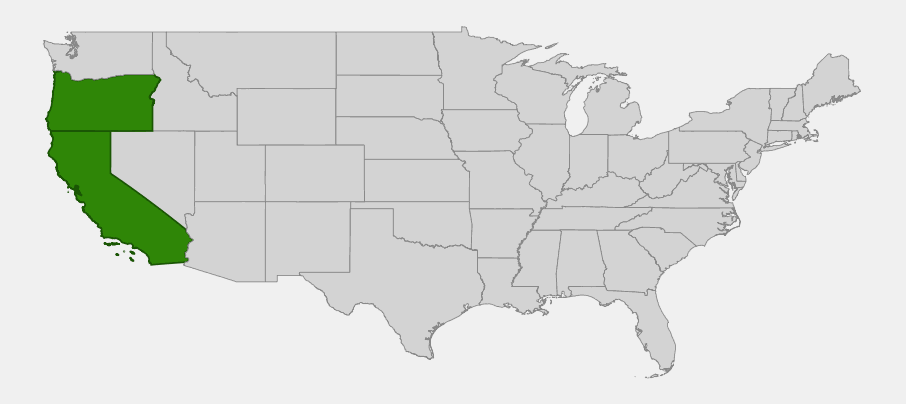
📋 Regional plant lists featuring California wild grape: California & Nevada · Western Oregon & Western Washington
Growing & Care Guide
California wild grape is one of the easiest native vines to grow given one thing: enough room. It rewards a hands-off approach near a creek or pond, but needs annual attention wherever space is limited.
Light
Full sun produces the heaviest flowering and fruiting and the best fall color, but the vine also tolerates part shade, especially in hot inland valleys where some afternoon shade reduces leaf scorch. In shadier sites it grows more slowly and climbs toward available light.
Soil & Water
In the wild this vine’s roots reach down to a permanent or seasonal water table, so garden plants perform best with occasional deep watering through the dry season, especially for the first two or three years while roots establish. Once established on a site with some underground moisture, it is quite drought tolerant. It is not fussy about soil texture, growing in sandy alluvium as readily as heavier loam, but it does best with good drainage at the root crown.
Planting Tips
Plant container stock in fall or winter to take advantage of winter rains. Give it a sturdy support — a fence, arbor, or mature tree — since a happy vine quickly outgrows a small trellis. If you want a groundcover effect on a slope instead, plant without vertical support and let it sprawl; it will root loosely where stems touch moist soil.
Pruning & Maintenance
Prune in winter while the vine is dormant and leafless, when the structure is easy to see. Thin out crowded stems and shorten long runners to keep the vine within bounds; it tolerates hard pruning and resprouts vigorously from old wood. On a trellis or arbor, expect to prune at least once a year to prevent the vine from engulfing structures or smothering companion shrubs.
Propagation
California wild grape is easiest to propagate from hardwood cuttings taken during winter dormancy, or from layering where a trailing stem is buried and allowed to root before being severed from the parent vine. Seed propagation is possible but slow and requires cold stratification, and since the species is functionally dioecious, seedlings are not guaranteed to fruit.
Landscape Uses
- Streambank and erosion control plantings, where its root mass helps stabilize soil
- Wildlife and habitat gardens, providing fruit, cover, and nesting structure
- Arbor and pergola cover for fast, deciduous summer shade
- Screening along fences where a dense tangle is welcome
- Naturalized groundcover on slopes too steep to mow
- Riparian restoration projects re-establishing streamside vegetation
Wildlife & Ecological Value
California wild grape is a backbone species of healthy riparian habitat, valuable across every season of the year.
For Pollinators
The small, fragrant spring flowers attract native bees and other small pollinating insects at a time when few other riparian plants are blooming. Because the species is functionally dioecious, a stand with both male and female vines supports more consistent pollination and fruit set than an isolated plant.
For Birds
Ripening grapes in late summer and fall are eaten by a wide range of birds, including American robins, cedar waxwings, California towhees, and various thrushes and finches, which disperse the seeds along waterways as they move. The dense vine tangle itself is prime nesting cover for species such as yellow warblers and song sparrows that favor thick riparian understory.
For Mammals
Raccoons, gray foxes, and other small mammals forage on the fruit, while deer browse the foliage and young shoots — one reason the species is not considered deer resistant in a garden setting. The vine’s structure also provides daytime cover for small mammals moving along stream corridors.
Ecosystem Role
As a dominant vine of California’s riparian zones, this species helps bind streambank soils, buffers water temperature by shading the understory, and adds structural complexity to streamside vegetation that benefits everything from insects to larger wildlife moving along these corridors. The caterpillars of several native moths, including sphinx moths in the genus Eumorpha, feed on the foliage, linking the vine into the broader riparian food web.
Cultural & Historical Uses
California wild grape has long been part of the human history of the state’s river corridors. Indigenous peoples throughout California’s Coast Ranges and Central Valley gathered the tart fruit in late summer and fall, eating it fresh, drying it for storage, or mashing it for juice; because the fruit is quite sour and seedy compared with cultivated grapes, it was typically used in smaller quantities or combined with other foods rather than eaten as a staple.
The flexible, fibrous vines themselves had practical value as cordage for binding and construction, and the extensive tangles created along streambanks were recognized as important wildlife habitat long before the ecological language of “riparian corridor” existed. Nineteenth-century botanists collecting in California noted the abundance of wild grapevines along nearly every low-elevation watercourse they surveyed.
In more recent horticultural history, California wild grape gained a second life as rootstock and breeding material: its natural resistance to phylloxera, an aphid-like pest that devastated European wine grapes in the 1800s, made American and California native Vitis species valuable for grafting, and hybrids such as ‘Roger’s Red’ brought the species’ fall color into mainstream garden use.
Frequently Asked Questions
Can you eat California wild grape?
Yes — the fruit is edible, though noticeably tart and seedy compared with cultivated table grapes. It is better suited to jelly, juice, or wine with added sugar than to eating fresh out of hand, and much of the crop is left for birds and other wildlife.
Is California wild grape the same as the vine used for ‘Roger’s Red’?
No, not exactly. ‘Roger’s Red’ is a hybrid between California wild grape and the European wine grape Vitis vinifera. It shares the wild species’ excellent fall color but is a cultivated hybrid, not the pure native plant.
How big of a space does this vine need?
Give it plenty of room. Left unpruned, California wild grape can climb 30 to 100 feet into a mature tree or spread widely as a groundcover. It is best suited to a large arbor, fence line, or naturalized slope rather than a small trellis, unless you plan to prune it hard every winter.
Does California wild grape need a lot of water?
In the wild it grows where roots can reach a water table, so garden plants do best with occasional deep irrigation during the dry season, especially while young. Established vines near some underground moisture become quite drought tolerant.
Is California wild grape good for erosion control?
Yes. Its extensive root system is one reason it dominates California’s streambanks, and it is commonly included in riparian restoration plantings specifically to help stabilize soil along waterways.

Looking for a nursery that carries California Wild Grape?
Browse our native plant nursery directory: California · Oregon