Carolina Silverbell (Halesia carolina)
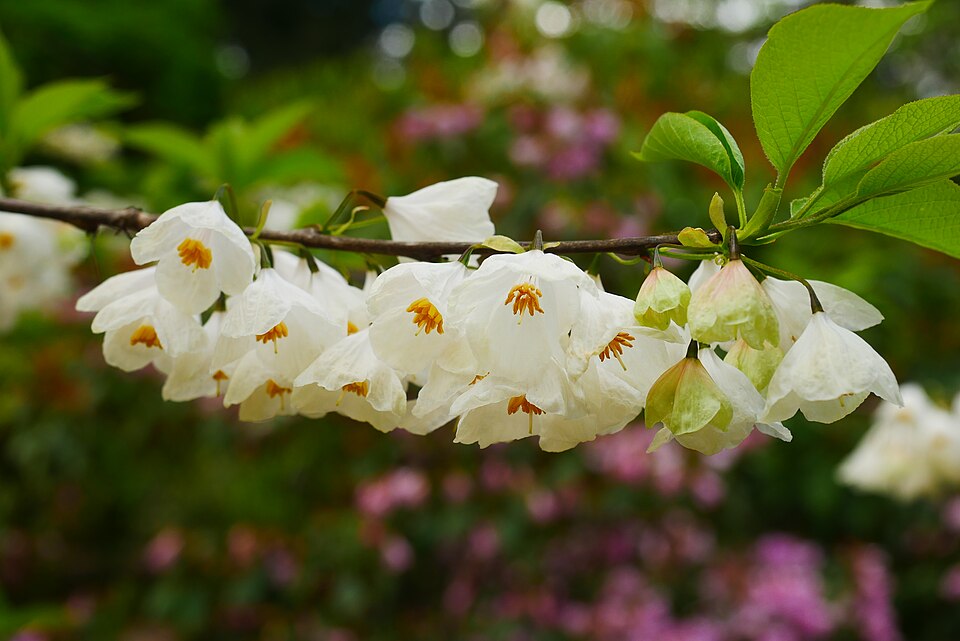
Halesia carolina, commonly known as Carolina Silverbell or Two-winged Silverbell, is one of the most elegant native flowering trees of the southeastern United States, renowned for its spectacular early spring display of drooping white bell-shaped flowers. This member of the Styracaceae (storax) family derives its common name from the silvery-white flowers that hang like delicate bells from the branches before the leaves fully emerge, creating one of the most enchanting sights in the spring forest.
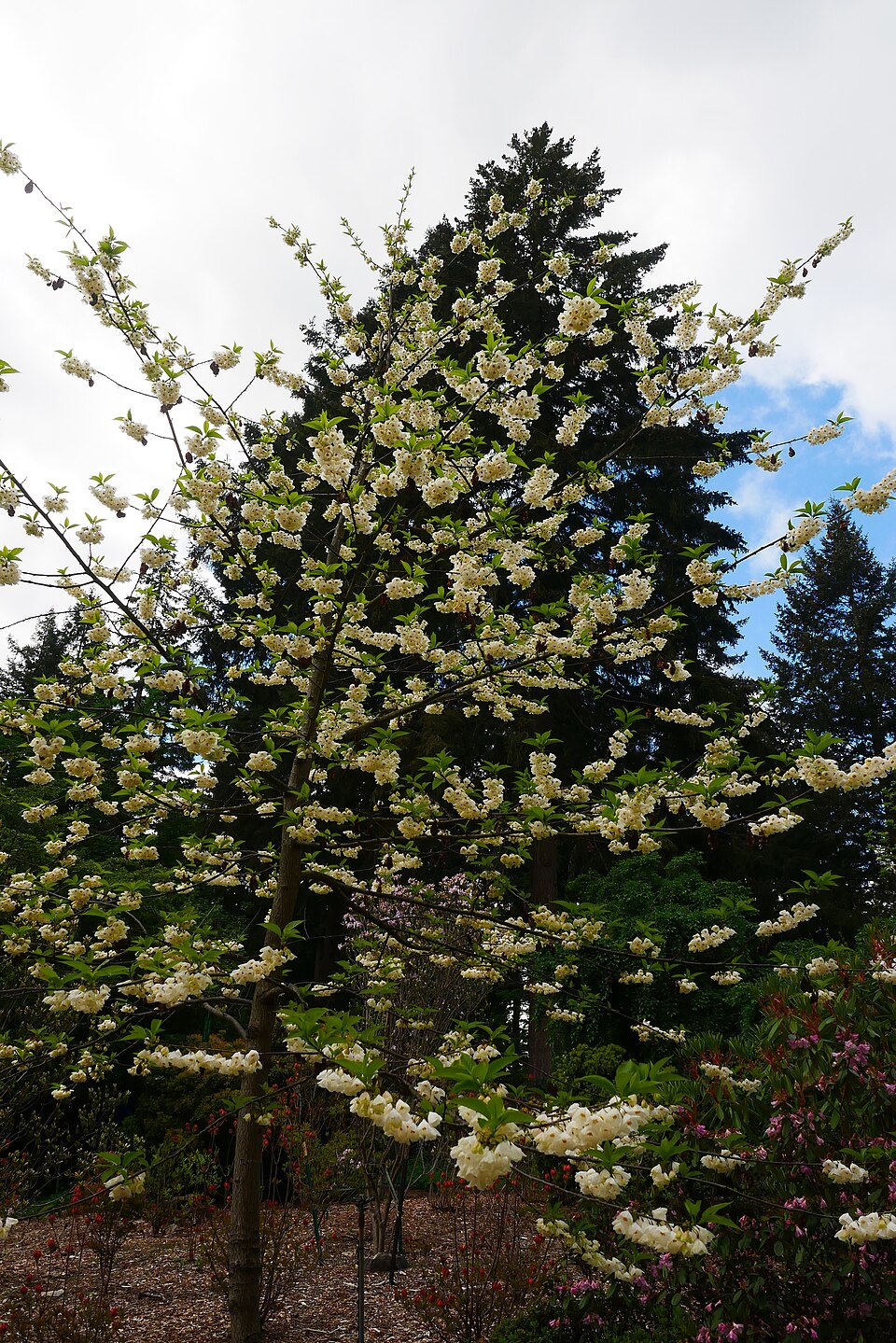
Native to the rich, moist forests of the Appalachian Mountains and surrounding regions from Virginia to Georgia, Carolina Silverbell typically grows as a graceful understory tree reaching about 30 feet tall, though it can occasionally reach 60 feet in ideal conditions. Its natural habitat includes stream valleys, coves, and mountain slopes where deep, fertile, well-drained soils and consistent moisture create perfect growing conditions.
Beyond its stunning floral display, Carolina Silverbell offers year-round ornamental interest with attractive summer foliage that turns clear yellow in fall, interesting four-winged fruits that persist into winter, and smooth, light gray bark that adds winter appeal. Its relatively modest size and shade tolerance make it an excellent choice for smaller landscapes and naturalistic gardens where a touch of woodland elegance is desired.
Identification
Carolina Silverbell grows as a small to medium-sized deciduous tree, typically reaching 20 to 30 feet tall with a rounded, often multi-trunked crown. In optimal forest conditions, it may reach 40-60 feet tall with a more upright form. The tree often develops multiple trunks from the base, creating an attractive, somewhat informal appearance.
Bark
The bark is smooth and light gray to brownish-gray on young trees, becoming slightly furrowed with age but never developing the deep ridges of many forest trees. The smooth bark and often multi-stemmed growth habit give the tree an elegant, refined appearance even when dormant. Older specimens may develop shallow furrows and a slightly scaly texture, but the overall impression remains relatively smooth and attractive.
Leaves
The leaves are simple, alternate, and oval to elliptic, typically 3 to 6 inches long and 2 to 4 inches wide. They’re bright green and somewhat thin-textured with prominent veining, finely serrated margins, and pointed tips. The upper surface is medium to dark green and slightly glossy, while the underside is paler and may have fine hairs along the veins. In fall, the foliage turns an attractive clear yellow before dropping.
Flowers & Fruit
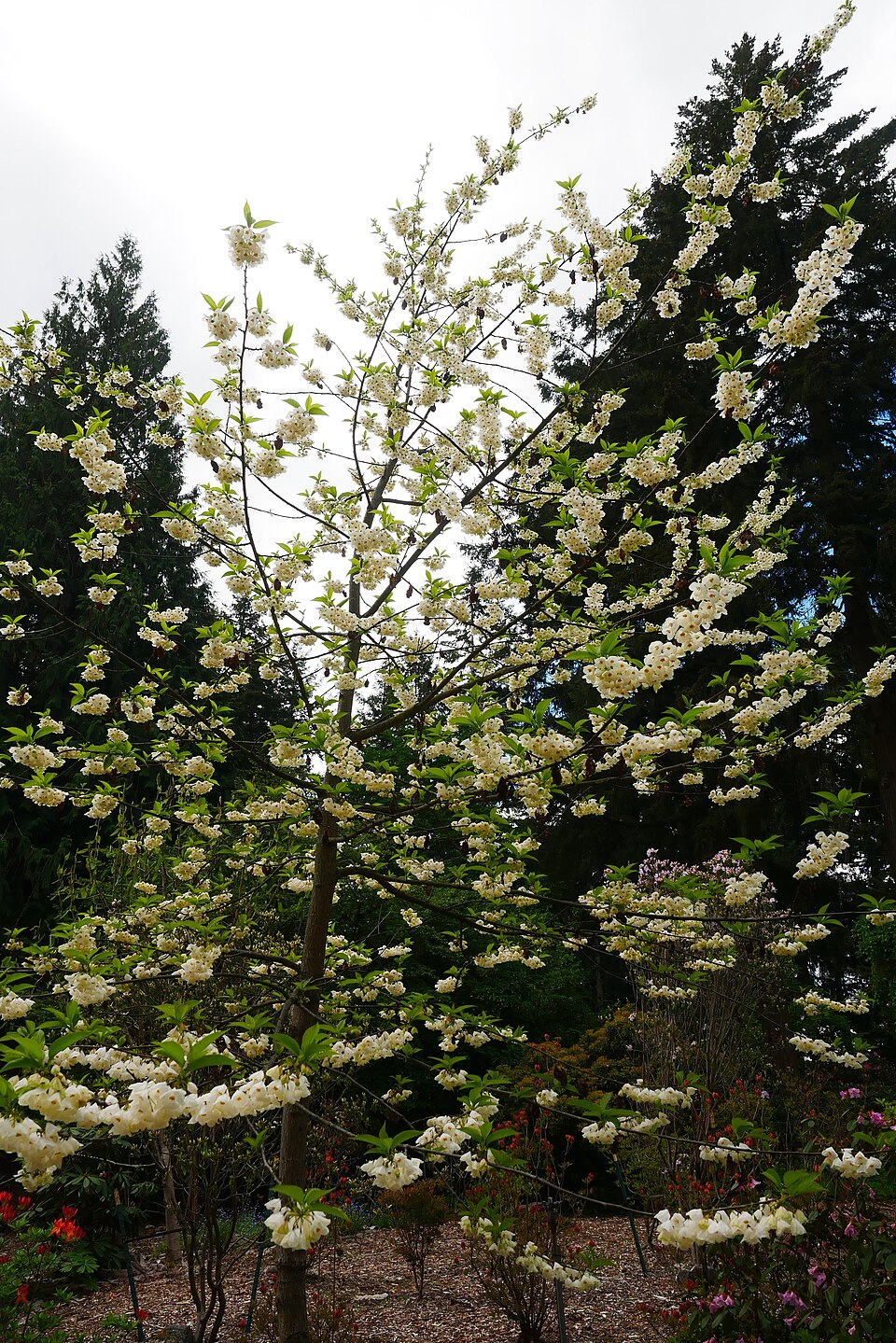
The flowers are Carolina Silverbell’s defining feature — clusters of 2 to 5 pendulous, bell-shaped white flowers that hang gracefully from the branches in early spring, typically appearing before or with emerging leaves. Each flower is about ¾ to 1 inch long, pure white (occasionally pink-tinged), with four petals fused into a distinctive bell shape. The flowers are mildly fragrant and create a spectacular display against the bare branches or emerging foliage.
The fruit is distinctive: a four-winged, oval-shaped drupe about 1 to 1½ inches long, initially green turning tan to brown at maturity. The four prominent wings make the fruit easily recognizable and provide the basis for one of the tree’s alternate common names, “Four-winged Silverbell.” The fruits often persist on the tree well into winter, adding ornamental interest.
Quick Facts
| Scientific Name | Halesia carolina |
| Family | Styracaceae (Storax) |
| Plant Type | Deciduous Tree |
| Mature Height | 30 ft |
| Sun Exposure | Full Sun to Full Shade |
| Water Needs | Moderate |
| Bloom Time | April – May |
| Flower Color | White |
| USDA Hardiness Zones | 4–8 |
Native Range
Carolina Silverbell is native to the southeastern United States, with its primary distribution centered in the Appalachian Mountains and surrounding regions. The species occurs naturally from southwestern Virginia south through western North Carolina and northwestern South Carolina, west through eastern Tennessee and extreme northeastern Georgia, and into northern Alabama. Small, disjunct populations also occur in southern Illinois, southeastern Missouri, and eastern Oklahoma.
In its native habitat, Carolina Silverbell typically grows in rich, moist deciduous forests, particularly in mountain coves, stream valleys, and north-facing slopes where soils are deep, fertile, and consistently moist but well-drained. It’s often found in association with other moisture-loving trees such as Eastern Hemlock, White Basswood, Yellow Buckeye, and various maple species in the cooler, moister microsites within its range.
The species demonstrates a preference for protected sites with some shelter from extreme weather conditions, often growing in the understory or as a small canopy tree in mixed hardwood forests. Its limited range reflects specific habitat requirements for rich, moist soils and the relatively stable climate conditions found in mountain valleys and protected forest sites.
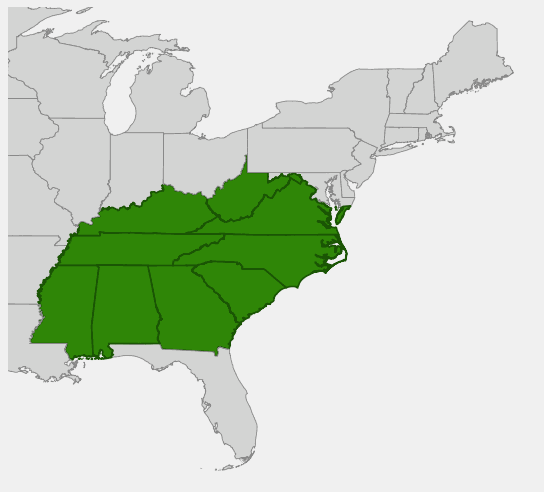
📋 Regional plant lists featuring Carolina Silverbell: North Carolina & South Carolina
Growing & Care Guide
Carolina Silverbell is a relatively easy native tree to grow successfully when its basic requirements for rich, moist, well-drained soil are met. Its adaptability to various light conditions makes it suitable for many landscape situations.
Light
This versatile tree grows well in full sun to full shade, though flowering is typically most abundant in partial shade to full sun. In deep shade, the tree may become more open and produce fewer flowers, but it remains healthy and attractive. The species’ shade tolerance makes it excellent for woodland gardens and understory plantings beneath larger trees.
Soil & Water
Carolina Silverbell prefers rich, fertile, consistently moist but well-drained soil — conditions similar to those found in its native mountain cove habitats. It thrives in deep, organic-rich loamy soils with good drainage but struggles in waterlogged or constantly dry conditions. The tree prefers slightly acidic to neutral pH (5.5-7.0). Consistent moisture is important, especially during establishment and dry periods.
Planting Tips
Plant in spring or fall when temperatures are moderate. Choose a protected site with morning sun and afternoon shade for best results, or place in a woodland setting where it can receive filtered light. Space trees 15-20 feet apart if planting multiple specimens. Incorporate organic matter like compost into the planting area to improve soil fertility and moisture retention.
Pruning & Maintenance
Carolina Silverbell requires minimal pruning. Remove dead, damaged, or crossing branches in late winter while dormant. The tree naturally develops an attractive form and rarely needs structural pruning. If a more tree-like form is desired over the natural multi-stemmed habit, gradually remove lower branches and select a single leader when the tree is young.
Landscape Uses
- Woodland gardens — perfect for naturalistic forest-edge plantings
- Specimen tree — beautiful focal point for smaller landscapes
- Understory planting — thrives beneath larger canopy trees
- Spring interest — exceptional early-season flowering display
- Shade gardens — one of few flowering trees that blooms well in shade
- Stream-side plantings — natural choice for moist, protected sites
- Mixed native borders — combines well with other woodland plants
Wildlife & Ecological Value
While not as extensively used by wildlife as some native trees, Carolina Silverbell provides valuable resources for forest ecosystems and supports several species of animals throughout its range.
For Birds
The four-winged fruits are consumed by various songbirds, though they’re not considered a preferred food source. More importantly, the tree provides nesting sites and cover for forest birds, particularly those that prefer the understory environment. Insectivorous birds benefit from the insects attracted to the spring flowers and those that feed on the foliage throughout the growing season.
For Mammals
Squirrels and chipmunks occasionally consume the seeds within the winged fruits, while deer may browse young shoots and foliage. The tree’s modest size and understory habitat make it more important for providing cover and contributing to forest structure than as a major food source for large mammals.
For Pollinators
The spring flowers attract various native bees, including bumble bees and solitary bees, along with butterflies and beneficial insects. The early bloom time makes the flowers particularly valuable for pollinators emerging from winter when few other nectar sources may be available in forest environments. The flowers also attract small beetles and flies that aid in pollination.
Ecosystem Role
Carolina Silverbell contributes to forest diversity and structure as an understory species, helping create the layered canopy that characterizes mature deciduous forests. Its leaf litter decomposes to enrich forest soils, and its relatively small size allows it to fill niche habitats where larger trees cannot establish or thrive.
Cultural & Historical Uses
Carolina Silverbell, while not as extensively utilized as some native trees, holds modest cultural significance within its limited range in the southeastern Appalachians. Indigenous peoples of the region, including the Cherokee, were familiar with the tree and occasionally used various parts for traditional purposes, though it was never a major resource compared to more abundant and useful species like oak, hickory, or American chestnut.
Some historical accounts suggest that Cherokee craftspeople occasionally used the fine-grained wood for small tools and decorative items, appreciating its workability and attractive appearance when polished. The distinctive four-winged fruits were sometimes incorporated into children’s toys and games, and the tree’s early spring flowers held symbolic significance in some seasonal ceremonies marking the renewal of the forest.
European settlers in the Appalachians noted the tree’s beauty but found limited practical uses for it, as its relatively small size and scattered distribution made it less valuable than other forest species for timber or fuel. However, the wood was occasionally used for specialty items like tool handles, turned bowls, and small woodworking projects where its fine grain and light color were appreciated.
In modern times, Carolina Silverbell has gained recognition primarily as an ornamental tree, valued for its elegant spring flower display and suitability for woodland gardens. It has become popular among native plant enthusiasts and is increasingly planted in restoration projects and naturalistic landscapes throughout its range and beyond. The tree’s relative rarity in the wild has also made it a species of interest for conservation efforts aimed at preserving Appalachian forest diversity.
Frequently Asked Questions
Will Carolina Silverbell grow outside its native range?
Yes, Carolina Silverbell can be successfully grown beyond its native range in areas with similar climate conditions. It’s hardy in USDA zones 4-8 and has been successfully cultivated in parts of the Midwest, Mid-Atlantic, and other regions with adequate moisture and protection from extreme conditions.
How long does it take for Carolina Silverbell to begin flowering?
Young trees typically begin producing flowers in their 3rd to 5th year after planting, depending on growing conditions and the size of the original plant. Trees grown from seed may take longer to reach flowering maturity than nursery-grown specimens.
Can I grow Carolina Silverbell in a container?
While possible when young, Carolina Silverbell is best suited for in-ground planting where it can develop its natural root system and reach its full potential. Container growing may limit its size and flowering, though it can work for several years in very large containers with consistent care.
Does Carolina Silverbell have any pest or disease problems?
This native tree is generally quite healthy and pest-resistant when grown in suitable conditions. Occasionally it may be affected by leaf spots or minor insect issues during particularly wet seasons, but serious problems are uncommon when the tree is properly sited.
Will the four-winged fruits make a mess?
The fruits are relatively large but not produced in overwhelming quantities, and they typically drop gradually over several weeks in fall. Most gardeners find them more interesting than problematic, and they can be easily raked up if desired for a tidier appearance.

Looking for a nursery that carries Carolina Silverbell?
Browse our native plant nursery directory: North Carolina · South Carolina