Chaparral Clematis (Clematis lasiantha)
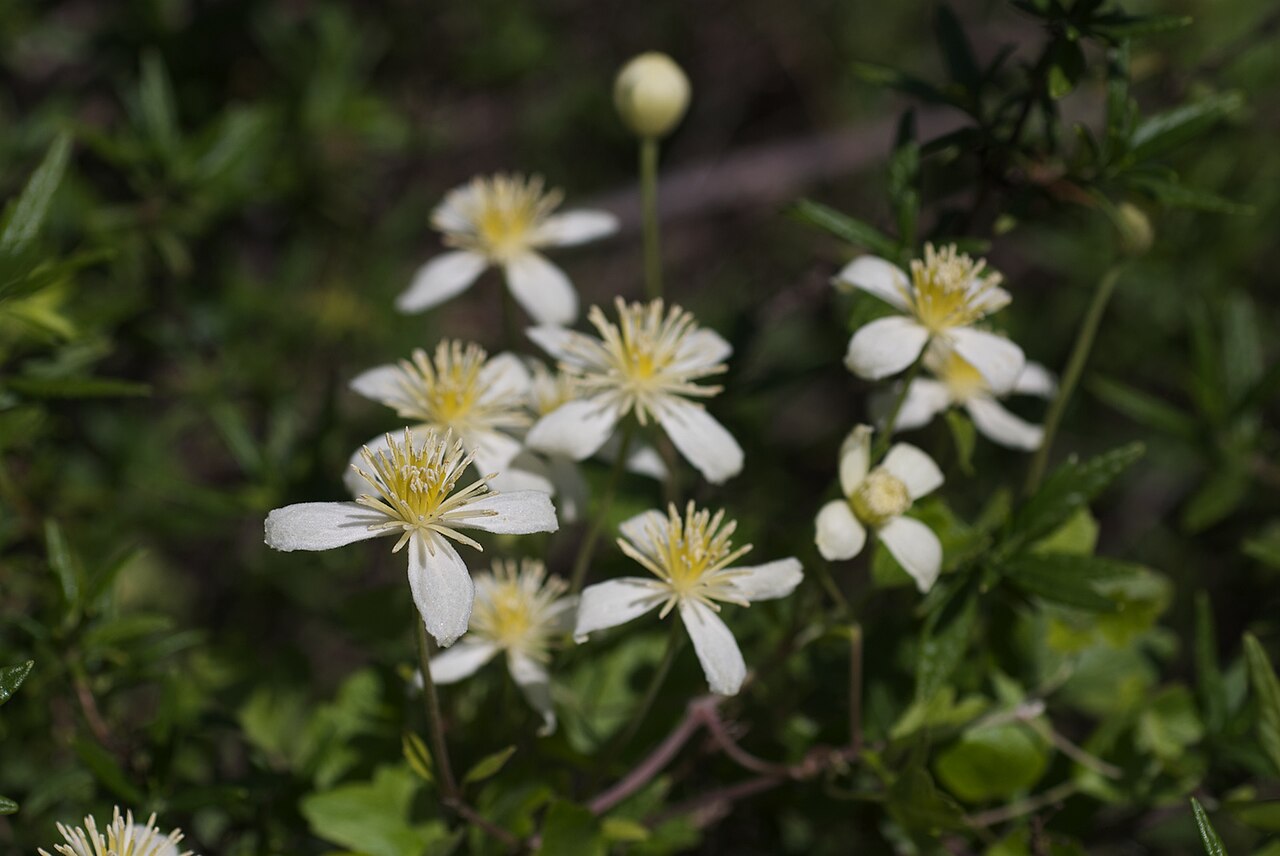
Clematis lasiantha, known as Chaparral Clematis or Pipestem Clematis, is a vigorous, woody-stemmed native vine that scrambles and climbs over shrubs and small trees throughout California’s chaparral and foothill woodlands. Each spring it drapes its hosts in a haze of creamy white, star-shaped flowers with prominent yellow stamens, followed in summer and fall by equally showy, silvery-plumed seed heads that can be just as eye-catching as the bloom itself.
As a member of the buttercup family (Ranunculaceae), chaparral clematis is a true liana — it has no tendrils or twining stems of its own, but instead climbs by wrapping its long, flexible leaf stalks (petioles) around any available support, hooking itself over branches as it grows. Left alone, it forms sprawling curtains over chaparral shrubs; trained on a fence or arbor, it becomes a striking, low-water flowering vine for the California native garden.
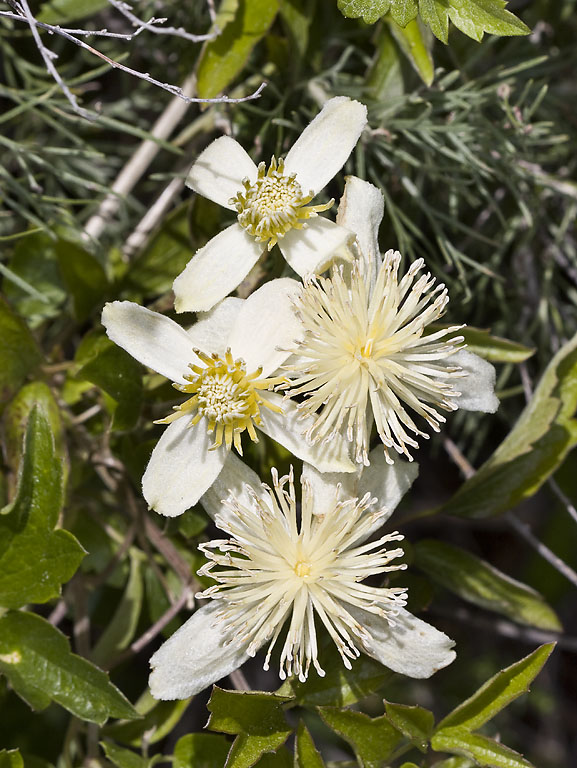
Chaparral clematis is dioecious, meaning individual plants bear either male or female flowers but not both, so a planting intended to produce the showy plumed seed heads needs at least one of each sex nearby. It is widely sold by California native plant nurseries and valued for exactly the two features that define it in the wild: an abundant, fragrant spring bloom, followed by a long season of decorative, wind-dispersed seed plumes.
Identification
Chaparral clematis is a deciduous, woody-based climbing vine that can reach 8 to 20 feet (2.5–6 m) in length, scrambling through shrubs and small trees rather than growing upright on its own. It typically dies back to a woody framework each winter in colder sites and resprouts vigorously each spring.
Stems
Stems are slender, somewhat angled, and woody at the base, becoming more herbaceous toward the growing tips. New growth is covered in fine, soft hairs. The vine climbs entirely by means of its twisting leaf stalks, which coil around twigs and branches for support rather than true tendrils.
Leaves
Leaves are opposite and pinnately compound, typically divided into three to five coarsely toothed leaflets, each 1 to 2½ inches (2.5–6 cm) long, with a somewhat leathery texture and a dull to slightly glossy green color. The long petioles that give the vine its climbing ability are a key identifying feature up close.
Flowers
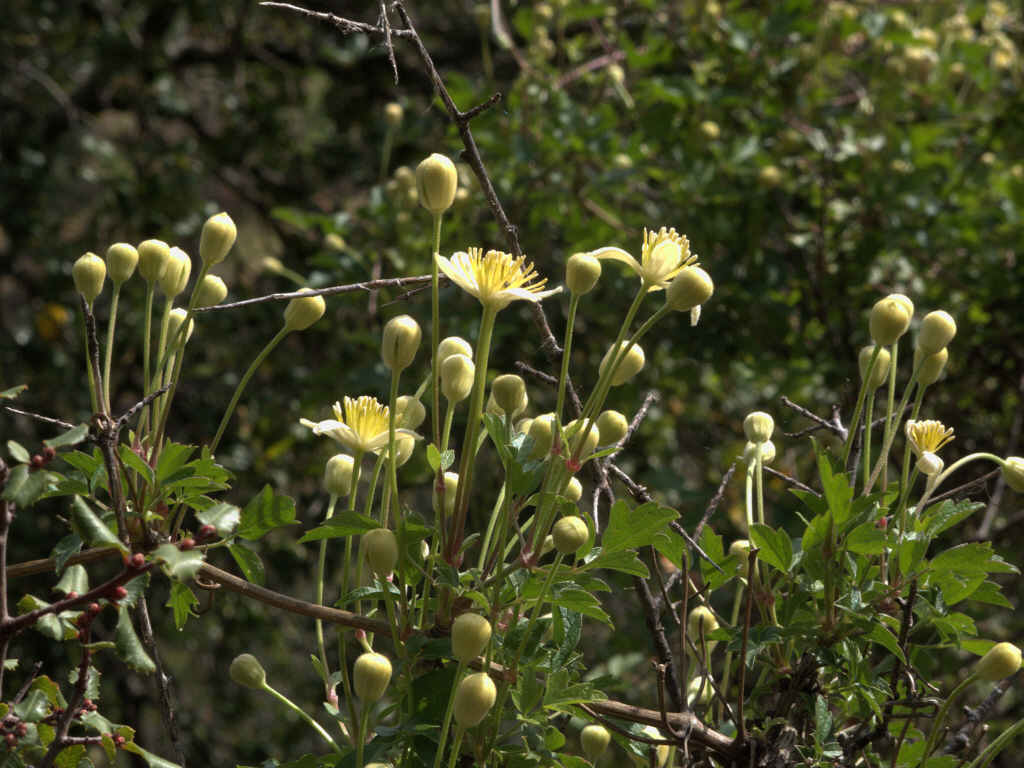
Flowers appear in late winter through spring (typically February to May, earlier at low elevation), borne singly or in small clusters in the leaf axils. Each flower lacks true petals; instead, four (occasionally five) creamy white, petal-like sepals, densely hairy on the outer surface, spread into a star shape 1 to 1½ inches (2.5–4 cm) across, surrounding a prominent central tuft of pale yellow stamens. Male flowers have showier, more numerous stamens; female flowers are generally smaller and less conspicuous.
Fruit & Seeds
Following successful pollination of female flowers, chaparral clematis produces clusters of achenes (single-seeded dry fruits), each tipped with a long, feathery, silvery-tan plume. These plumed seed heads persist and expand through summer, creating a soft, shaggy silver mass that is often as ornamentally valuable as the spring flowers and remains on the vine for weeks before the seeds disperse on the wind.
Quick Facts
| Scientific Name | Clematis lasiantha |
| Family | Ranunculaceae (Buttercup) |
| Plant Type | Deciduous Woody Vine |
| Mature Length | 8–20 ft (2.5–6 m) |
| Growth Rate | Fast once established |
| Sun Exposure | Full Sun to Part Shade |
| Water Needs | Low once established |
| Soil Type | Well-drained; tolerates rocky or clay soils |
| Soil pH | 6.0–7.5 (slightly acidic to neutral) |
| Bloom Time | February – May |
| Flower Color | Creamy white |
| Fall Color | Deciduous; foliage drops without notable color change |
| Fruit | Clusters of achenes with long silvery-tan plumes |
| Deer Resistant | Yes |
| USDA Hardiness Zones | 8–10 |
Native Range
Chaparral clematis is native to California, where it occurs widely through the Coast Ranges, the western foothills of the Sierra Nevada, and the mountains of Southern California, ranging from the San Francisco Bay Area south into Baja California, Mexico. It is not native to any other U.S. state.
Within this range, the vine grows in chaparral, foothill woodland, canyon bottoms, and streamside thickets, typically scrambling over ceanothus, manzanita, scrub oak, and other shrubs rather than standing on its own. It is most often found from near sea level up to about 5,000 feet (1,500 m) in elevation, favoring the partial shade and support that neighboring shrubs provide along canyon slopes and drainages.
Chaparral clematis is not considered rare within California and remains a common, easily observed vine through much of the state’s foothill chaparral; it is popular enough in cultivation that it is sometimes seen in gardens well beyond the specific canyons and slopes where it grows wild, but it is not documented as naturally occurring outside California and Baja California.
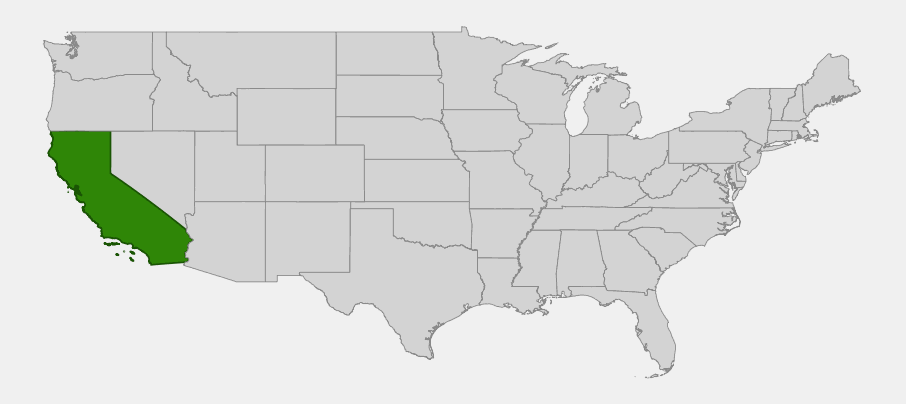
📋 Regional plant lists featuring Chaparral Clematis: Chaparral Clematis is native only to California; Plant Native does not currently maintain a California-specific regional plant list.
Growing & Care Guide
Chaparral clematis is an easygoing, drought-tolerant vine for California gardens, especially valuable for gardeners who want vertical interest without the heavy watering many non-native clematis demand.
Light
Plant in full sun to part shade. In hot inland gardens, roots benefit from being shaded by a nearby shrub or mulch — the classic “cool roots, warm top” clematis strategy — while the upper vine reaches for the sun.
Soil & Water
This species thrives in lean, fast-draining soil and needs only occasional deep watering during its first one to two years to establish a deep root system. Once established, it is genuinely drought tolerant and should be watered sparingly; soggy or constantly irrigated soil encourages root rot far more than it encourages healthy growth.
Planting Tips
Give chaparral clematis something to climb from the start — a fence, trellis, arbor, or an existing shrub — since it has no way to support itself. Plant in fall or winter to take advantage of the rainy season for root establishment. Because the species is dioecious, gardeners hoping for the ornamental plumed seed heads should plant more than one vine where possible to improve the odds of having both sexes present.
Pruning & Maintenance
Chaparral clematis dies back naturally in late summer or fall in many gardens and can be cut back hard to the woody base in winter dormancy to tidy the plant before the next season’s growth. It requires little other maintenance and tolerates occasional hard pruning well, resprouting readily from its woody crown.
Propagation
Propagate from seed collected from the plumed achenes once they have dried and begun to loosen, or from semi-hardwood cuttings taken in summer. Seed can be slow and somewhat erratic to germinate; cuttings from a known male or female plant are the more reliable way to guarantee a particular sex.
Landscape Uses
Chaparral clematis fills several useful roles in a California native landscape:
- Fence and arbor cover for a fast, low-water flowering vine
- Chaparral restoration plantings alongside its natural shrub associates
- Screening over unattractive structures or chain-link fencing
- Wildlife gardens, for both its spring nectar and its later seed crop
- Erosion control on dry slopes when allowed to sprawl over the ground
Wildlife & Ecological Value
Chaparral clematis contributes both food and structural habitat to the chaparral community it grows within, across two distinct seasons of the year.
For Pollinators
The abundant, fragrant late-winter and spring flowers attract native bees and other small pollinating insects at a time when relatively few other chaparral plants are in bloom, making the vine a valuable early-season nectar and pollen source in its native plant community.
For Birds
Small birds use the dense tangle of vine and host-shrub branches for cover and nesting sites, and some birds make use of the fluffy seed plumes as soft nesting material once the achenes mature in summer.
Ecosystem Role
By climbing over and knitting together the branches of ceanothus, manzanita, and scrub oak, chaparral clematis adds structural complexity to chaparral stands, creating additional cover and microhabitat within the shrub canopy. Its wind-dispersed, plumed seeds allow it to recolonize burned or disturbed chaparral following fire, a disturbance regime chaparral plant communities are naturally adapted to.
Cultural & Historical Uses
The genus name Clematis comes from the Greek word for a climbing or vine-like plant, while the species name lasiantha means “woolly flower,” a reference to the dense fine hairs covering the outer surface of the sepals. The common name “pipestem clematis” is thought to refer to the vine’s long, slender, hollow-feeling stems.
Historical records of specific traditional uses of Clematis lasiantha by California’s Indigenous peoples are limited compared to many other native plants, though other California Clematis species have documented historical uses in cordage and basket-making material from the fibrous stems. As with many vines in the buttercup family, the foliage and sap of Clematis species can be irritating to skin and are not used as food.
Today, chaparral clematis is grown almost exclusively as an ornamental native vine, valued by California native-plant gardeners for its low water needs, spring bloom, and the long-lasting silvery seed display that follows.
Frequently Asked Questions
Is Chaparral Clematis the same as Virgin’s Bower?
No. “Virgin’s bower” more commonly refers to other Clematis species, such as the widespread western Clematis ligusticifolia or the eastern Clematis virginiana. Chaparral clematis (Clematis lasiantha) is a separate, California-endemic species, generally distinguished by its earlier bloom time and hairier flowers.
Does Chaparral Clematis need a trellis to grow?
It needs some kind of support — a fence, arbor, trellis, or a sturdy shrub — since it climbs by wrapping its leaf stalks around whatever is nearby rather than growing as a free-standing plant.
Why didn’t my Chaparral Clematis produce the fluffy seed heads?
The species is dioecious, with separate male and female plants. If you only have one vine and it turns out to be male, it will flower reliably but never set the showy plumed seed heads, which only form on pollinated female flowers.
Is Chaparral Clematis poisonous?
Like many members of the buttercup family, the sap and foliage can be mildly irritating to skin and are not intended for consumption. It is not grown or used as a food or medicinal plant.
How much water does Chaparral Clematis need once established?
Very little. After its first one to two seasons of establishment, it is genuinely drought tolerant and generally does best with infrequent deep watering rather than regular irrigation, which can promote root rot.

Looking for a nursery that carries Chaparral Clematis?
Browse our native plant nursery directory: California