
Christmasberry (Crossopetalum ilicifolium)
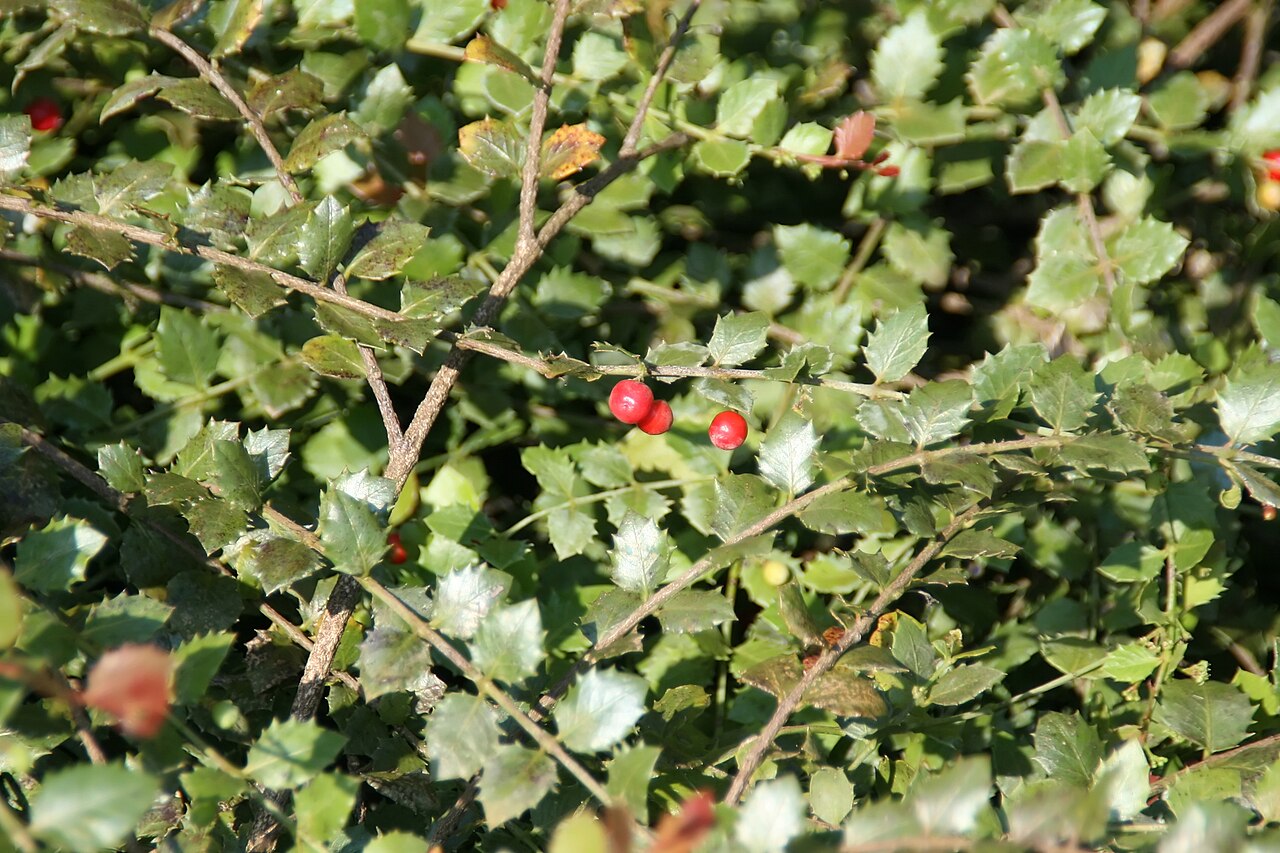
Crossopetalum ilicifolium, known as Christmasberry or quailberry, is a small, slow-growing evergreen groundcover of the pine rocklands of south Florida and the Florida Keys. It forms low, woody mats usually 6 to 12 inches tall, clothed in small, stiff, spiny-edged leaves that look like miniature holly leaves, which is what the species name ilicifolium (“holly-leaved”) means. Glossy, bright red berries appear through much of the year and are often prominent around the winter holidays, which gave the plant its common name. It belongs to the staff-tree family (Celastraceae).
Christmasberry is listed as Threatened by the State of Florida (FDACS Regulated Plant Index). In the United States it grows wild only in a handful of places: the remaining pine rocklands of Miami-Dade County, nearby Collier County, North Key Largo, and the pine rocklands of Big Pine Key and No Name Key in the lower Keys. Most of its original habitat in the Miami area has been cleared for development. Gardeners should buy only nursery-propagated plants, which are commonly available from native nurseries in south and central Florida, and never dig or collect plants or seed from the wild.
Don’t confuse this plant with the other “Christmasberry” of Florida, Lycium carolinianum (Carolina desert-thorn), a salt-marsh shrub in the nightshade family with narrow fleshy leaves, lavender flowers and red berries. The two share a name and a berry color but almost nothing else. This guide covers how to identify Crossopetalum ilicifolium, where it grows, and how to grow it as a groundcover in sunny, limestone-based south Florida gardens.
Identification
Christmasberry is distinctive once you know it: a ground-hugging woody plant with tiny holly-like leaves and scattered red berries, usually growing among rocks and grasses in open pinelands.
Growth Habit
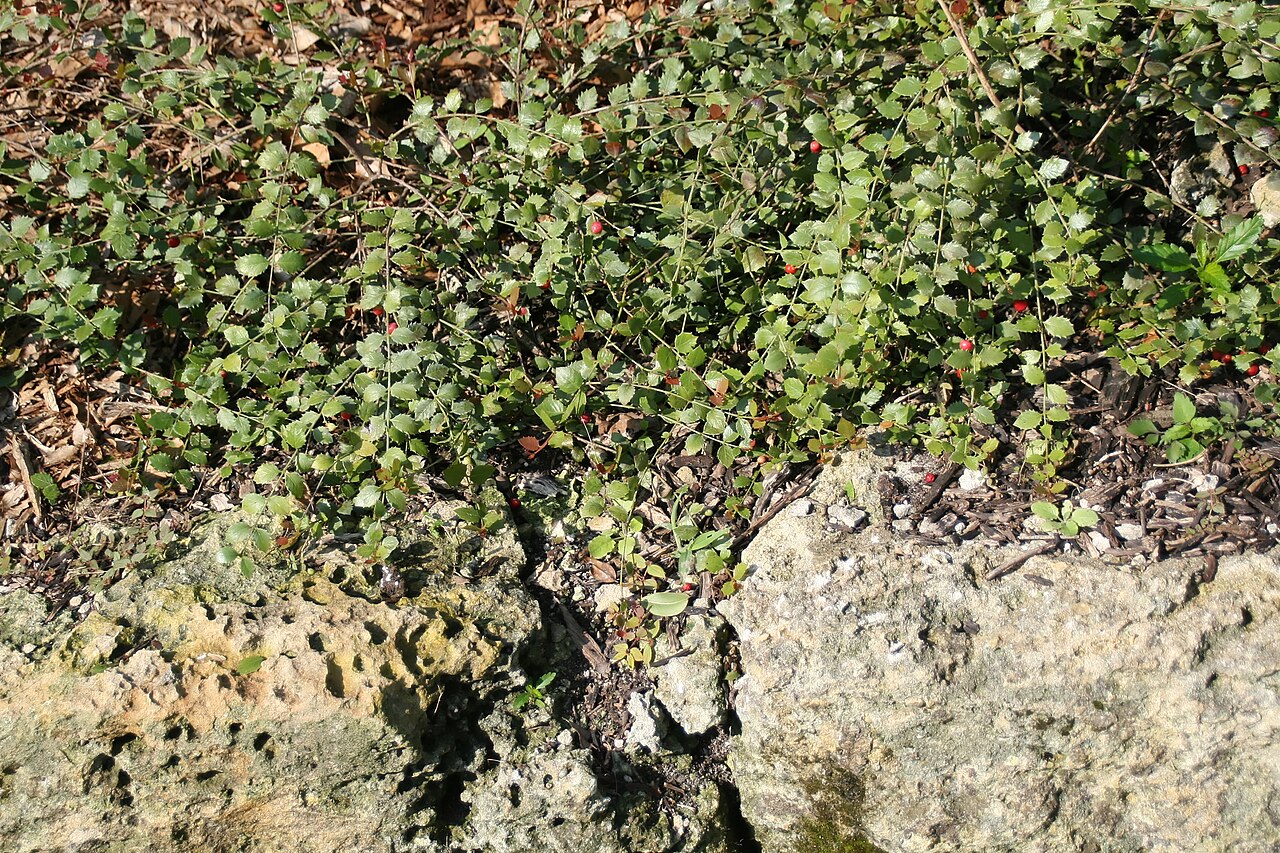
Christmasberry is a low, much-branched shrublet with woody stems that spread outward along the ground, forming a mat that becomes much wider than tall. Typical plants are 6 to 12 inches high and 2 to 3 feet across, and occasionally reach about 20 inches. On limestone outcrops the stems may hang down the sides of rocks like a small curtain. Growth is moderate to slow.
Leaves
The leaves are evergreen, leathery and small, generally under an inch long, and usually held in opposite pairs along the stems. They are oval to nearly round, dark glossy green, with a few sharp, spine-tipped teeth along the edges, closely resembling tiny holly leaves. New growth is sometimes tinged red.
Flowers
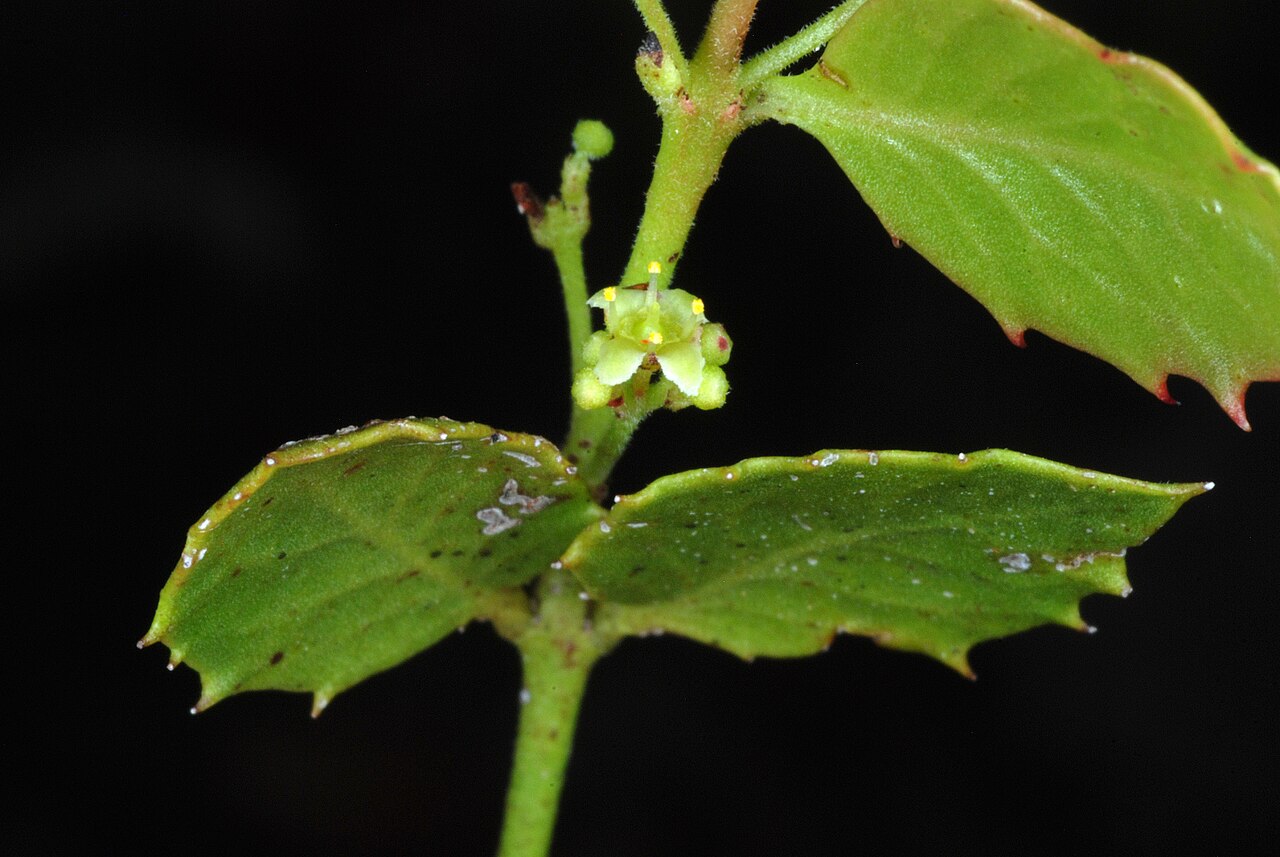
The flowers are tiny, roughly an eighth of an inch across, with four petals, and range from greenish to reddish. They are produced in small clusters in the leaf axils on short stalks and appear sporadically through the year. They are not showy and most people never notice them.
Fruit
The fruit is the main ornamental feature: a round, glossy, bright red drupe about a quarter inch across, each containing a single seed. Fruits ripen at intervals through the year, so plants often carry both flowers and berries at once. They stand out vividly against the dark leaves.
Similar Species
Its close relative, maidenberry or rhacoma (Crossopetalum rhacoma), also grows in south Florida but is an upright shrub or small tree several feet tall with untoothed or only finely toothed leaves. Carolina desert-thorn (Lycium carolinianum), the other plant called Christmasberry, grows in coastal salt marshes and has narrow, succulent, untoothed leaves and lavender, five-lobed flowers. Young American holly seedlings may look similar at a glance but do not occur in pine rocklands and soon grow upright.
Quick Facts
| Scientific Name | Crossopetalum ilicifolium (syn. Myginda ilicifolia, Rhacoma ilicifolia, Crossopetalum floridanum) |
| Family | Celastraceae (staff-tree family) |
| Plant Type | Evergreen woody groundcover (low shrublet) |
| Mature Height | 6–12 in (occasionally to about 20 in) |
| Mature Spread | 2–3 ft, sometimes wider |
| Growth Rate | Moderate to slow |
| Sun Exposure | Full sun to light shade |
| Water Needs | Low once established; drought tolerant |
| Soil Type | Well-drained limestone (oolite) or sandy soil over rock; low in nutrients |
| Soil pH | About 7.0–8.5 (neutral to alkaline) |
| Bloom Time | Year-round, sporadically |
| Flower Color | Greenish to reddish; tiny and inconspicuous |
| Fall Color | None; evergreen |
| Fruit | Glossy bright red drupe about ¼ in, much of the year |
| Deer Resistant | Not well documented; low and spiny, rarely reported as browsed |
| USDA Hardiness Zones | 10b–11 |
Native Range
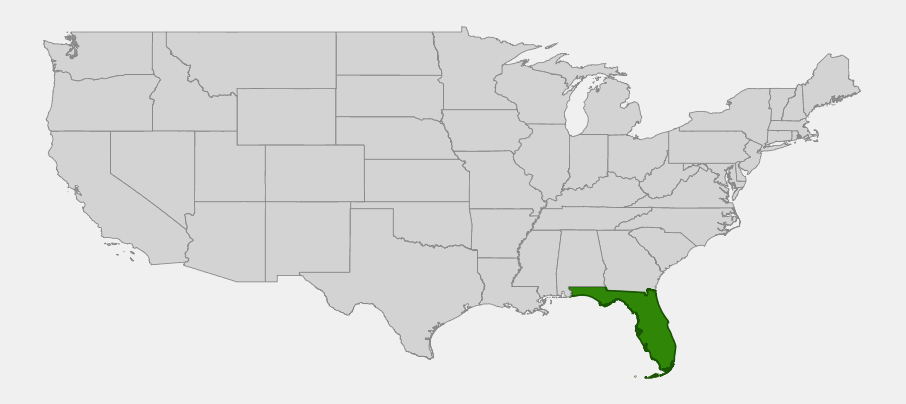
Christmasberry is a West Indian species that reaches its northern limit in south Florida. Outside the United States it grows in the Bahamas, Cuba and Hispaniola. In Florida, the Atlas of Florida Plants and the Institute for Regional Conservation record it from Miami-Dade, Collier and Monroe counties. In the Keys it is known from North Key Largo and then, after a long gap, from the pine rocklands of Big Pine Key and No Name Key. USDA PLANTS also lists a North Carolina record, which is far outside the climate this tropical plant can survive and does not match any wild population described in regional floras; the map here shows Florida only.
Its main habitat is pine rockland, a fire-maintained community of south Florida slash pine over exposed oolitic limestone, with a diverse layer of grasses, palms and small shrubs. Christmasberry grows in pockets of thin soil among the rocks and at the sunny edges of rockland hammocks. Most of the pine rockland that once covered the Miami Rock Ridge has been cleared, and much of the remainder is in small, fragmented parcels, which is the main reason the species is state-listed.
Remaining populations are protected in places such as Everglades National Park, county preserves in Miami-Dade, and the National Key Deer Refuge on Big Pine Key. Prescribed fire is used in these areas to keep the rocklands open; without it, hardwoods shade out low plants like Christmasberry.
📋 Regional plant lists featuring Christmasberry: North & South Florida
Growing & Care Guide
Christmasberry is one of the most attractive woody groundcovers for sunny, alkaline gardens in south Florida, and it is not hard to grow if you match its pine rockland origins: sun, sharp drainage, little fertilizer and protection from frost. Because it is state-listed as Threatened, buy only nursery-propagated plants from native nurseries. Never take plants, cuttings or berries from preserves or other wild sites.
Light
Full sun gives the densest growth and the most berries. It tolerates light shade, such as the filtered light under pines, but in deep shade it becomes thin and sparse.
Soil & Water
Plant it in well-drained soil, ideally limestone rock or sandy soil over rock, which are typical of coastal south Florida. It does not need rich soil and prefers neutral to alkaline conditions. Water regularly for the first few months after planting; after that it is highly drought tolerant and should not need irrigation except in prolonged drought. It does not tolerate flooding, standing water or salt spray, so keep it away from the immediate beachfront.
Planting Tips
Plant from containers at any time of year in frost-free areas, 18 to 24 inches apart for a groundcover. It shows off best in rock gardens, along the edge of a path, or cascading over a low limestone boulder or wall. Keep taller plants and mulch from smothering it: a light gravel or pine-needle mulch is better than thick wood chips. It is suited to Zones 10b and 11 and can be damaged by frost, so in central Florida grow it in a sheltered spot or a container.
Pruning & Maintenance
Very little pruning is needed. Trim stray stems to keep the mat tidy, and pull out weeds and grasses that grow up through it, especially while it is young. Avoid heavy fertilizer, which encourages leggy growth. In larger pine rockland restorations, it benefits from periodic prescribed fire like other rockland understory plants.
Propagation
Nurseries usually grow Christmasberry from seed. Remove the pulp from ripe red fruits and sow the seed promptly, just covered with potting mix, because the seeds do not store well. Germination can be slow and uneven. Collect seed only from your own nursery-grown plants, never from wild populations.
Landscape Uses
- Groundcover for sunny, dry sites: a slow but tidy evergreen mat for alkaline soils in south Florida
- Rock gardens: looks natural spilling over limestone boulders and low walls
- Pine rockland restoration: one of many understory plants used in rockland plantings within its native range, using propagated stock
- Wildlife gardens: berries are eaten by ground-feeding birds
- Containers: a good choice for a shallow pot or rock planter, where it can be protected from frost farther north
Wildlife & Ecological Value
Christmasberry is small, but in the pine rocklands it is one of many low plants that together provide food and cover for wildlife near the ground.
For Pollinators
The tiny flowers are visited by small insects such as flies, small bees and wasps. Because they are produced over a long season, they provide a modest but steady source of nectar and pollen.
For Birds
The red berries are eaten by birds, and the name quailberry reflects the observation that quail feed on them. Ground-feeding birds such as northern bobwhite and doves are the most likely to find fruits on such a low plant, and mockingbirds and catbirds also take small red fruits like these.
For Mammals
Small mammals may eat fallen fruits. On Big Pine Key, Christmasberry grows within the range of the endangered Key deer, though it is not known as an important food plant.
Ecosystem Role
Christmasberry is part of the diverse ground layer of pine rocklands, a globally imperiled ecosystem found only in south Florida, the Keys and the Bahamas. Like other rockland understory plants, it depends on periodic fire to keep the canopy open and to clear competing hardwoods. Fire also recycles nutrients and opens bare patches of rock where seedlings can establish.
Cultural & Historical Uses
The plant was first described as Myginda ilicifolia by the French botanist Jean Louis Marie Poiret, and the German botanist Otto Kuntze later moved it to Crossopetalum. It has also been placed in Rhacoma, and older Florida references sometimes call it Rhacoma ilicifolia or Crossopetalum floridanum. The genus name comes from the Greek krossoi, fringe, and petalon, petal.
There is little documented traditional use of Christmasberry. Its cultural value today lies mainly in landscaping: south Florida native plant enthusiasts and nurseries have championed it for decades as a native alternative to exotic groundcovers in limestone soils.
The common name reflects the bright red fruit that is often present in December. Together with its holly-shaped leaves, this makes it a natural choice for a small “native holiday” planting in south Florida gardens.
Frequently Asked Questions
Is Christmasberry a protected plant?
Yes. Crossopetalum ilicifolium is listed as Threatened by the State of Florida (FDACS Regulated Plant Index). Buy nursery-propagated plants, which are commonly available at native nurseries in south and central Florida, and never collect plants, cuttings or seeds from the wild.
Is this the same as the Christmasberry that grows in salt marshes?
No. The salt-marsh plant is Lycium carolinianum, Carolina desert-thorn, a nightshade-family shrub with narrow fleshy leaves and lavender flowers. Crossopetalum ilicifolium is a low pine rockland groundcover with spiny holly-like leaves. Use the scientific name when buying plants.
Can I grow Christmasberry in central or north Florida?
It is a tropical plant suited to Zones 10b and 11. In central Florida it may survive in a sheltered, frost-free spot or in a container that can be moved in cold weather. It is not suitable for north Florida gardens.
Are the berries edible?
They are not a recognized human food, and their edibility is not well documented. Treat the berries as ornamental and food for birds, and keep them away from small children and pets.
Does Christmasberry need watering?
Only while it is getting established. After the first few months it is highly drought tolerant in well-drained soil. Overwatering and poorly drained soil are more likely to harm it than drought.

Looking for a nursery that carries Christmasberry?
Browse our native plant nursery directory: Florida