
Doll’s Eyes (Actaea pachypoda)
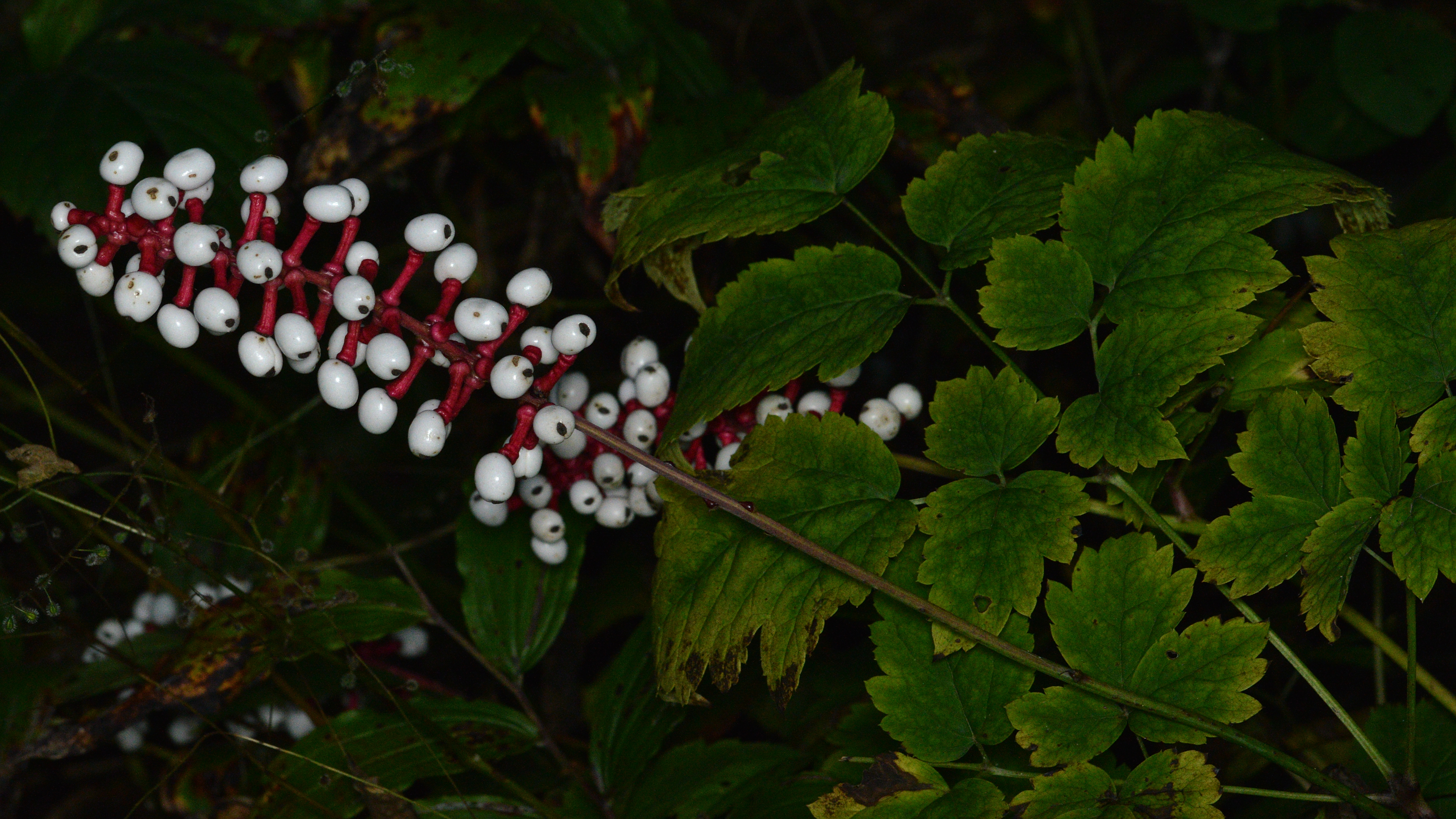
Actaea pachypoda, commonly known as Doll’s Eyes, White Baneberry, or White Cohosh, is one of North America’s most distinctive native woodland perennials. This member of the buttercup family (Ranunculaceae) earned its memorable common name from its extraordinary fruit — bright white berries adorned with a single black dot that creates an uncanny resemblance to the porcelain eyes of old-fashioned dolls. Found throughout the eastern deciduous forests from Maine to Georgia, this shade-loving perennial has captivated botanists and nature enthusiasts alike for centuries.
Growing 1 to 3 feet tall in the dappled light of mature forests, Doll’s Eyes is both beautiful and mysterious. In late spring, it produces delicate clusters of small white flowers that give way to its famous berries by late summer. The plant’s compound leaves create an elegant backdrop for both the subtle blooms and the dramatic fruit display. Despite its striking appearance, every part of this plant contains potent toxins that have historically made it both feared and respected by Indigenous peoples and early settlers.
For modern native plant gardeners, Doll’s Eyes represents the perfect woodland specimen — requiring minimal care once established, thriving in deep shade where few other flowering plants succeed, and providing season-long interest from spring flowers through fall fruit. Its presence signals a healthy, mature forest ecosystem and makes it an excellent choice for restoration projects and naturalized shade gardens throughout the eastern United States.
Identification
Doll’s Eyes is a distinctive herbaceous perennial that typically grows 1 to 3 feet tall and spreads slowly via underground rhizomes to form small colonies. The plant emerges in early spring with characteristic compound leaves that immediately distinguish it from other woodland plants.
Leaves
The leaves are large, compound, and deeply divided, typically measuring 8 to 16 inches across. Each leaf is bipinnately compound, meaning it’s divided twice — first into major leaflets, then into smaller sub-leaflets. The leaflets are ovate with sharply toothed margins and prominent venation. The foliage has a rich green color that provides an elegant backdrop for the flowers and fruit. In autumn, the leaves turn a soft yellow before dying back to the ground.
Flowers
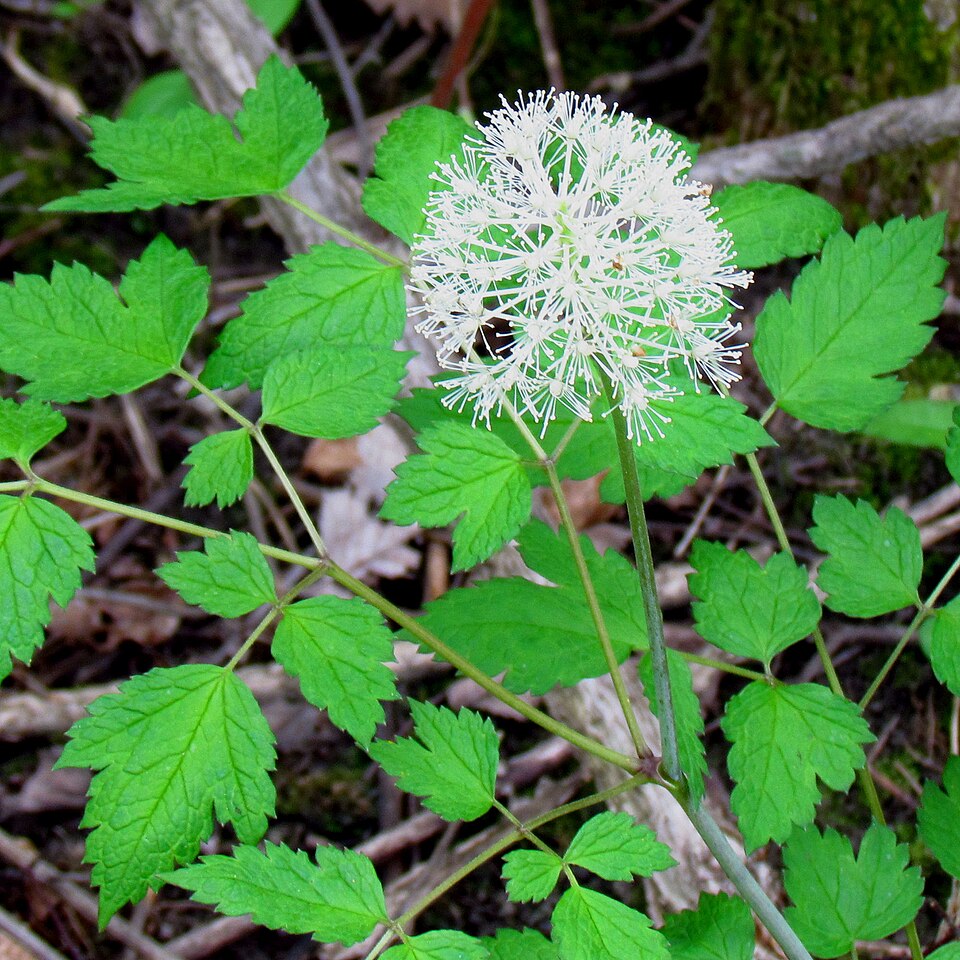
The flowers appear in late spring to early summer (May to June), forming in dense, fluffy clusters called racemes at the tips of thick, reddish stalks. Individual flowers are small, about ¼ inch across, with 3 to 5 white petals that fall away quickly, leaving behind numerous white stamens that give the cluster its fluffy, bottlebrush appearance. The flowers are fragrant and attract various small pollinators including native bees, flies, and beetles.
Fruit
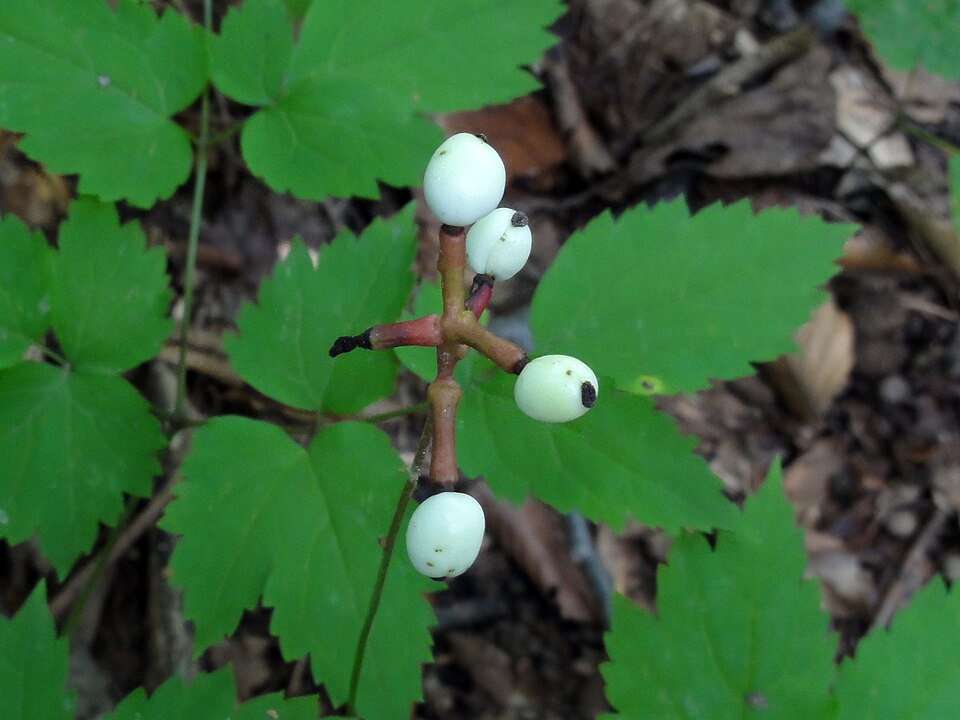
The fruit is undoubtedly Doll’s Eyes’ most remarkable feature. By late summer, the flower clusters transform into striking displays of white berries, each about ¼ to ½ inch across. The berries are held on thick, bright red stalks (called pedicels) that become more pronounced as the fruit matures. Each white berry bears a single, prominent black dot where the style was attached, creating the distinctive “doll’s eye” appearance. The berries persist well into fall, often remaining after the leaves have dropped.
Quick Facts
| Scientific Name | Actaea pachypoda |
| Family | Ranunculaceae (Buttercup) |
| Plant Type | Herbaceous Perennial |
| Mature Height | 1–2.5 ft |
| Sun Exposure | Part Shade to Full Shade |
| Water Needs | Moderate |
| Bloom Time | May – June |
| Flower Color | White |
| USDA Hardiness Zones | 3–8 |
Native Range
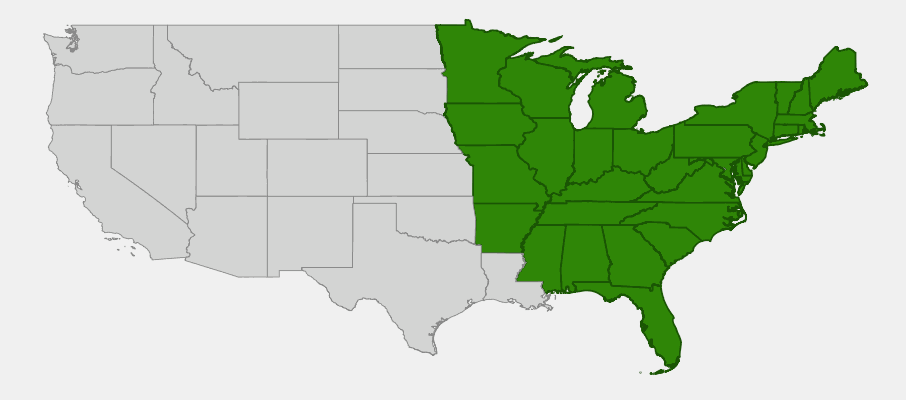
Doll’s Eyes is native to the rich deciduous and mixed forests of eastern North America, ranging from southeastern Canada south to Georgia and Alabama, and west to Minnesota, Iowa, and eastern Kansas. The species is most abundant in the temperate deciduous forests of the Appalachian region, Great Lakes states, and northeastern United States, where it thrives in the deep, moist soils and dappled shade of mature forest understories.
In its natural habitat, Doll’s Eyes is typically found in mesic (moderately moist) to rich mesic forests, often growing alongside other spring ephemeral wildflowers and shade-tolerant perennials. It favors north-facing slopes, ravines, and stream valleys where the soil remains consistently moist but well-drained. The plant is particularly associated with mature hardwood forests dominated by sugar maple, American beech, basswood, and various oak species.
The species shows a strong preference for calcareous soils (those with higher pH and calcium content) and is often found in areas where the underlying bedrock is limestone or where glacial deposits have left calcium-rich soils. This soil preference partially explains its abundance in regions like the Great Lakes states and parts of the Appalachian foothills.
📋 Regional plant lists featuring Doll’s Eyes: North Carolina & South Carolina
Growing & Care Guide
Doll’s Eyes is an exceptional choice for shade gardens and woodland settings, offering unique beauty with minimal maintenance requirements. Once established in suitable conditions, it’s remarkably low-maintenance and long-lived.
Light
This plant thrives in partial to full shade and actually performs best in deep shade conditions that would challenge most flowering plants. In its natural habitat, Doll’s Eyes grows beneath a complete forest canopy, receiving only dappled sunlight. While it can tolerate some morning sun, particularly in northern climates, too much direct sunlight will stress the plant and may cause leaf scorch. Full shade beneath tall trees or on the north side of buildings provides ideal conditions.
Soil & Water
Doll’s Eyes prefers rich, moist, well-drained soil with a neutral to slightly alkaline pH (6.5-7.5). The soil should be consistently moist but never waterlogged. A deep, humus-rich woodland soil amended with compost or leaf mold provides ideal conditions. Good drainage is essential — the plant will not tolerate standing water or soggy conditions. Mulching with 2-3 inches of shredded leaves or bark helps retain moisture and mimics natural forest floor conditions.
Planting Tips
Plant in early spring or fall when temperatures are cool and rainfall is typically more reliable. Choose a sheltered location with consistent moisture and deep shade. Space plants 18-24 inches apart if creating a naturalized planting. Doll’s Eyes can be grown from seed (requires cold stratification) or purchased as nursery plants. When planting, work plenty of organic matter into the soil and maintain consistent moisture during the first growing season.
Pruning & Maintenance
This plant requires virtually no pruning or maintenance once established. Allow the foliage to die back naturally in fall — it will return reliably each spring. The dead stems can be removed in late fall or early spring. Avoid disturbing the root system unnecessarily, as the plant grows slowly and doesn’t like to be moved once established. Dividing is rarely necessary but can be done carefully in early spring if desired.
Landscape Uses
Doll’s Eyes is perfect for:
- Woodland gardens — creates naturalistic plantings under trees
- Shade borders — provides structure and seasonal interest in deep shade
- Native plant gardens — excellent for restoring native woodland ecosystems
- Wildlife gardens — though toxic to humans, some wildlife can safely consume the berries
- Specimen plantings — the unique berries make striking conversation pieces
- Rain gardens — tolerates periodic moisture but requires good drainage
Wildlife & Ecological Value
Despite its toxicity to humans and most mammals, Doll’s Eyes plays an important ecological role in forest ecosystems and supports various forms of wildlife in different ways.
For Birds
Several bird species can safely consume Doll’s Eyes berries, including some thrushes and other woodland birds that have evolved tolerance to the plant’s toxins. The berries provide late-season food when other sources may be scarce. Birds also serve as the primary seed dispersal agents, carrying the seeds to new locations throughout the forest.
For Mammals
Most mammals avoid Doll’s Eyes due to its toxicity, which actually serves as an evolutionary advantage for the plant. However, some small mammals may occasionally consume the berries without apparent ill effects, likely due to their smaller body size and different metabolism. The plant’s toxicity helps protect it from browsing pressure from deer and other herbivores.
For Pollinators
The spring flowers attract various small pollinators including native bees, flies, beetles, and other beneficial insects. While the flowers are small individually, the dense clusters provide a concentrated nectar and pollen source during the critical early season period when many insects are most active. The timing of bloom coincides perfectly with the emergence of many native bee species.
Ecosystem Role
As a native understory perennial, Doll’s Eyes helps stabilize forest soil and contributes to the complex web of plant relationships in mature forest ecosystems. Its presence often indicates healthy, undisturbed woodland conditions. The plant’s slow growth and specific habitat requirements make it a good indicator species for high-quality forest habitats. Its deep root system helps prevent soil erosion on slopes and in ravines.
Cultural & Historical Uses
Doll’s Eyes has a rich history of both reverence and caution among Indigenous peoples and early European settlers in North America. The plant’s striking appearance and potent toxicity have made it a subject of folklore, traditional medicine, and botanical fascination for centuries.
Various Indigenous nations throughout the plant’s range recognized the extreme toxicity of Doll’s Eyes and generally avoided its use, though some groups used minute amounts of the root in carefully prepared remedies for specific ailments. The Cherokee and other southeastern tribes reportedly used very small amounts to treat certain conditions, but always with great caution due to the plant’s dangerous nature. The knowledge of its toxicity was passed down through generations as a critical survival skill.
Early European settlers quickly learned to fear the plant, giving it ominous common names like “Death-of-man” and “White Cohosh” (distinguishing it from the safer Black Cohosh). The distinctive berries became a source of both fascination and concern, as they could easily attract curious children with their doll-like appearance. Many pioneer families taught children to recognize and avoid the plant as one of their first lessons in wilderness safety.
In the 19th and early 20th centuries, some herbalists and physicians experimented with Doll’s Eyes as a potential medicine, but its unpredictable and dangerous effects led to its abandonment in formal medical practice. Today, the plant is studied primarily for its toxic compounds, which include several types of saponins and other alkaloids that affect the cardiovascular and nervous systems. Modern researchers continue to investigate these compounds for potential pharmaceutical applications, though the plant remains far too dangerous for any home use.
In contemporary culture, Doll’s Eyes has found new appreciation as a remarkable example of nature’s artistry. The plant frequently appears in botanical photography, nature documentaries, and educational materials as an example of both beauty and danger in the natural world. It has become a favorite among native plant enthusiasts who appreciate its unique aesthetic and ecological value, while respecting its toxic nature.
Frequently Asked Questions
Are Doll’s Eyes berries poisonous to humans?
Yes, extremely poisonous. All parts of the plant contain toxic compounds that can cause severe illness or death if ingested. The berries are particularly dangerous because their attractive appearance may tempt children. Symptoms of poisoning include nausea, vomiting, dizziness, hallucinations, and potentially fatal cardiac and respiratory effects.
Can I safely grow Doll’s Eyes in my garden if I have children or pets?
This requires careful consideration. While the plant can be safely grown with proper precautions, families with small children should consider whether the risk is worth it. If you do choose to grow it, plant it in an area away from play spaces, teach children to recognize and never touch the plant, and consider removing berry clusters before they fully mature. Most pets instinctively avoid the plant.
How long does it take for Doll’s Eyes to produce berries?
Plants grown from seed typically take 3-4 years to mature enough to produce flowers and berries. Nursery plants may flower in their second year after planting if they’re already mature. The plant is slow-growing overall, but once established, it will reliably produce berries each year.
Does Doll’s Eyes spread aggressively?
No, it spreads very slowly through underground rhizomes, typically expanding by only a few inches each year. It forms small, well-behaved colonies that won’t overwhelm other plants. This slow spread makes it excellent for naturalized plantings where you want gradual expansion over time.
Can Doll’s Eyes survive in urban environments?
Yes, if given appropriate growing conditions. The plant can adapt to urban shade gardens as long as it has rich, moist soil and protection from pollution and harsh winds. It’s actually quite tolerant of urban air pollution once established, making it suitable for city woodland gardens and parks.

Looking for a nursery that carries Doll’s Eyes?
Browse our native plant nursery directory: North Carolina · South Carolina