
Great Blue Lobelia (Lobelia siphilitica)
Lobelia siphilitica, commonly known as Great Blue Lobelia, Blue Cardinal Flower, or Great Lobelia, is one of North America’s most striking native wildflowers, producing magnificent spikes of brilliant blue flowers that tower above moist meadows, streambanks, and woodland edges from late summer through early fall. This member of the Campanulaceae (bellflower) family creates dramatic vertical accents in the landscape with its tall, unbranched stems crowned by dense racemes of tubular blue flowers that can stretch for 12 inches or more. The intense blue coloration — ranging from deep sapphire to lighter sky blue — makes Great Blue Lobelia one of the most sought-after native plants for adding true blue color to gardens.
Growing naturally throughout much of eastern and central North America, Great Blue Lobelia thrives in consistently moist to wet soils along streams, in swales, wet meadows, and the margins of ponds and marshes. This herbaceous perennial typically reaches 2 to 3 feet tall, though exceptional specimens in ideal conditions may grow to 4 feet or more. The species is closely related to the famous Cardinal Flower (Lobelia cardinalis), sharing similar habitat preferences and growth habits, but distinguished by its stunning blue flowers that provide a perfect complement to Cardinal Flower’s brilliant red blooms.
Beyond its spectacular ornamental value, Great Blue Lobelia serves as a crucial late-season nectar source for butterflies, hummingbirds, and native bees when many other wildflowers have finished blooming. The tubular flowers are specifically adapted for pollination by long-tongued insects and hummingbirds, while the plant’s preference for moist soils makes it invaluable for rain gardens, bioswales, and naturalistic water garden edges. Despite containing alkaloids that make it unpalatable to most herbivores, Great Blue Lobelia has a rich history of medicinal use by Indigenous peoples and early European settlers.
Identification
Great Blue Lobelia is easily identified by its distinctive combination of tall, unbranched stems, lance-shaped leaves, and dramatic spikes of brilliant blue tubular flowers. The plant grows from a basal rosette of leaves, sending up one to several flowering stems that dominate the late summer and early fall landscape in moist areas.
Stems & Leaves
The stems are erect, stout, and unbranched, typically reaching 2 to 3 feet tall with a somewhat hollow, grooved structure. Stems are light green and may have a slightly reddish tinge, especially toward the base. The leaves are alternate, simple, and lanceolate to ovate, measuring 2 to 6 inches long and ½ to 2 inches wide. Lower leaves are larger and may be slightly toothed along the margins, while upper leaves become progressively smaller and more narrow as they approach the flower spike. The leaf surface is smooth to slightly rough, with prominent parallel veins, and the color ranges from bright green to blue-green.
Flowers
The flowers are Great Blue Lobelia’s most distinctive feature: tubular, two-lipped blossoms about ¾ to 1 inch long arranged in a dense, elongated raceme that can extend 6 to 12 inches or more along the upper portion of the stem. Each individual flower is brilliant blue, occasionally with white or pale blue forms occurring rarely. The flower structure is distinctive: the upper lip is split into two narrow lobes, while the lower lip is divided into three broader lobes that form a landing platform for pollinators. Five prominent stamens are fused into a tube that extends beyond the flower, giving each bloom a distinctive bristled appearance.
The flowering period typically extends from August through September, with occasional blooms continuing into October in southern regions. The flowers open progressively from bottom to top along the spike, creating a prolonged blooming period for each plant. After pollination, small capsules develop containing numerous tiny brown seeds.
Habitat & Growth Pattern
Great Blue Lobelia grows from a perennial rootstock and typically forms small colonies through short rhizomes and self-seeding. The plant requires consistently moist to wet soil and is commonly found growing in association with other wetland plants such as cardinal flower, swamp milkweed, blue flag iris, and various sedges and rushes. In its native habitat, it often appears in large drifts that create stunning blue clouds of color along waterways.
Quick Facts
| Scientific Name | Lobelia siphilitica |
| Family | Campanulaceae (Bellflower) |
| Plant Type | Herbaceous Perennial |
| Mature Height | 2–3 ft |
| Sun Exposure | Part Shade |
| Water Needs | Moderate to High |
| Bloom Time | August – October |
| Flower Color | Brilliant blue |
| USDA Hardiness Zones | 4–8 |
Native Range
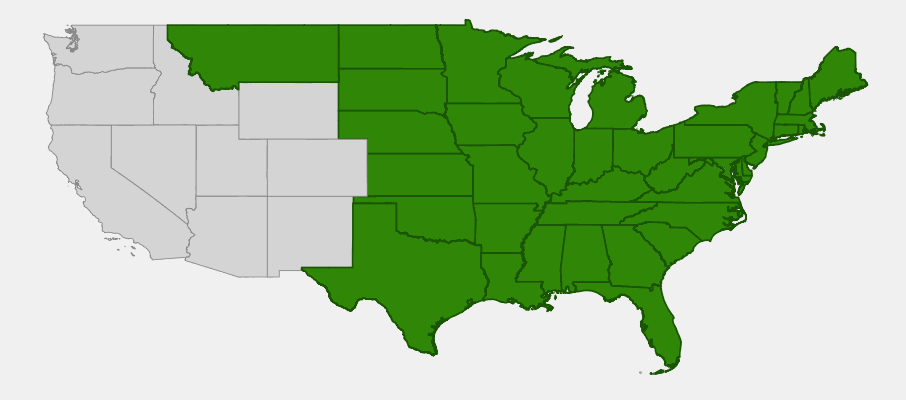
Great Blue Lobelia has an extensive native range across eastern and central North America, extending from southeastern Canada south to northern Florida and Georgia, and west to the Great Plains. The species reaches its greatest abundance in the Great Lakes region and the northeastern United States, where it is a characteristic component of wet meadows, marshes, and riparian areas. It occurs naturally from near sea level to elevations of approximately 3,000 feet in mountainous regions.
Throughout this vast range, Great Blue Lobelia shows a strong preference for consistently moist to wet soils with high organic matter content. It is commonly found along streams and rivers, in wet meadows and prairies, around the margins of ponds and lakes, and in swales and other areas where water collects. The species often grows in partial shade along woodland streams but also thrives in full sun in open wetlands, provided moisture levels remain adequate. In the western portions of its range, it becomes increasingly restricted to riparian corridors and other permanently moist sites.
Climate change and habitat loss have affected some populations of Great Blue Lobelia, particularly in areas where wetlands have been drained or where stream flows have been altered. However, the species remains relatively common throughout most of its range and is considered stable. Its adaptability to cultivation and value in rain gardens and restored wetlands have made it an important species for conservation plantings and habitat restoration projects.
📋 Regional plant lists featuring Great Blue Lobelia: North Carolina & South Carolina
Growing & Care Guide
Great Blue Lobelia is an excellent choice for gardeners looking to add stunning late-season blue color to moist areas of their landscape. While it has specific moisture requirements, the plant is generally easy to grow and maintain once its needs are understood and met.
Light
Great Blue Lobelia performs best in partial shade, particularly in areas that receive morning sun and afternoon shade. It can tolerate full sun conditions if adequate moisture is consistently maintained, but may struggle in hot, sunny locations during summer heat waves. In too much shade, the plant tends to become leggy and may produce fewer flowers. The ideal situation is bright, filtered light or 4-6 hours of morning sun followed by afternoon protection.
Soil & Water
Consistent moisture is absolutely critical for Great Blue Lobelia. The plant thrives in constantly moist to wet soil and cannot tolerate drought conditions. Ideal soil is rich, organic, and well-draining but never drying out — similar to conditions found along natural streambanks. Heavy clay soils that stay wet are acceptable, but the plant also grows well in loamy soils amended with compost. A slightly acidic to neutral pH (6.0-7.0) is preferred, though the plant is somewhat adaptable to varying pH levels. Mulching helps retain soil moisture and suppress competition from weeds.
Planting Tips
Plant Great Blue Lobelia in spring after the last frost date, or in early fall at least 6-8 weeks before the first expected hard freeze. Choose the moistest available location in your garden — low areas, near downspouts, or adjacent to water features are ideal. Space plants 12-18 inches apart to allow for natural spread. The plant establishes best when soil is kept consistently moist throughout the first growing season. Great Blue Lobelia can be grown from seed, but seeds require cold stratification and are very tiny, making transplant easier for most gardeners.
Pruning & Maintenance
Great Blue Lobelia requires minimal maintenance. Deadhead spent flower spikes to encourage additional blooming and prevent unwanted self-seeding, though many gardeners prefer to leave some seed heads for winter interest and to allow natural reseeding. Cut plants back to basal growth in late fall or early spring. The plant typically dies back completely in winter and re-emerges from the crown in spring. Divide clumps every 3-4 years in early spring if they become overcrowded or to increase planting stock.
Landscape Uses
Great Blue Lobelia excels in several garden applications:
- Rain gardens — Excellent for bioswales and stormwater management areas
- Water garden edges — Perfect around ponds, streams, and water features
- Wet meadow plantings — Creates stunning late-season displays in naturalized areas
- Butterfly gardens — Important late-season nectar source
- Native plant gardens — Pairs beautifully with cardinal flower and other wetland natives
- Cut flower gardens — Dramatic spikes excellent for arrangements
- Erosion control — Helps stabilize banks and slopes near water
Wildlife & Ecological Value
Great Blue Lobelia provides exceptional wildlife value, serving as a crucial late-season nectar source when many other flowering plants have finished blooming. Its timing and flower structure make it particularly important for supporting pollinators during their fall migration and preparation for winter.
For Birds
Ruby-throated Hummingbirds are among the most important pollinators of Great Blue Lobelia, with the long tubular flowers specifically adapted for hummingbird pollination. The birds’ long bills and tongues can easily access nectar deep within the flower tubes, and they often become covered with pollen during their visits, ensuring effective cross-pollination. During fall migration, hummingbirds rely heavily on Great Blue Lobelia and other late-blooming native plants for fuel. The small seeds are occasionally eaten by goldfinches and other small songbirds, though this is not a primary food source.
For Mammals
Due to the alkaloids present in all parts of the plant, Great Blue Lobelia is generally avoided by mammals. Deer, rabbits, and other herbivores typically do not browse the foliage, making it an excellent choice for areas with heavy browsing pressure. This chemical defense allows Great Blue Lobelia to persist in areas where other wildflowers might be eliminated by herbivory.
For Pollinators
Great Blue Lobelia supports a diverse array of pollinators throughout its long blooming period. Long-tongued bees, including bumblebees and leaf-cutter bees, are important pollinators, along with butterflies such as swallowtails, monarchs, and skippers. The plant blooms during peak butterfly migration periods, providing crucial nectar for butterflies building fat reserves for winter survival or long-distance migration. Moths, including hummingbird moths, also visit the flowers, particularly in evening hours.
Ecosystem Role
As a wetland specialist, Great Blue Lobelia plays an important role in riparian and wetland ecosystem function. Its presence often indicates healthy, high-quality wetland habitat with good water quality and natural hydrology. The plant helps stabilize soil along waterways and provides habitat structure for various invertebrates. Its late-season flowering extends the pollinator season in wetland areas, supporting the complex web of insects that form the base of aquatic and semi-aquatic food chains. The plant’s preference for high-quality water conditions also makes it a useful indicator species for wetland health monitoring.
Cultural & Historical Uses
Great Blue Lobelia has a rich history of medicinal use among Indigenous peoples of North America, who recognized the plant’s potent properties and used it carefully for treating various respiratory ailments. The Cherokee, Iroquois, and other tribes used preparations from the leaves and roots to treat asthma, bronchitis, and other breathing difficulties. The plant was also used externally for treating sores, rheumatism, and various skin conditions. However, all parts of Great Blue Lobelia contain alkaloids, particularly lobeline, that can be toxic in significant quantities, so traditional use required extensive knowledge and careful preparation.
European settlers learned of Great Blue Lobelia’s medicinal properties from Indigenous peoples and incorporated it into their own folk medicine practices. The plant gained particular attention during the 18th and 19th centuries for treating respiratory conditions, earning common names like “puke weed” due to its emetic properties when used in larger doses. However, the narrow margin between therapeutic and toxic doses made it a dangerous medicine, and its medicinal use has largely been abandoned in favor of safer alternatives.
The species name “siphilitica” reflects an early belief that the plant could treat syphilis, though this use was never validated and likely arose from confusion with other plants or misapplication of the “doctrine of signatures” — the belief that plants resembling human ailments could treat those conditions. Despite its historical medicinal reputation, Great Blue Lobelia should not be consumed or used medicinally without proper training and supervision, as the alkaloids it contains can cause serious health problems including respiratory depression and cardiac issues.
In modern times, Great Blue Lobelia has found renewed appreciation as a stunning ornamental plant and valuable component of sustainable landscaping. Its role in rain gardens, bioswales, and wetland restoration projects has made it an important species for green infrastructure and environmental stewardship. The plant’s dramatic late-season display and exceptional wildlife value have made it increasingly popular among native plant enthusiasts and conservation-minded gardeners who appreciate both its beauty and ecological contributions.
Frequently Asked Questions
Is Great Blue Lobelia the same as Cardinal Flower?
No, though they are closely related species. Great Blue Lobelia has blue flowers and typically blooms later in the season, while Cardinal Flower (Lobelia cardinalis) has bright red flowers and usually blooms in mid to late summer. Both require similar growing conditions and are often found growing together in nature.
Can Great Blue Lobelia survive in regular garden soil?
Great Blue Lobelia requires consistently moist soil and will struggle in typical garden conditions unless supplemental watering is provided. It’s best suited for naturally wet areas, rain gardens, or locations where you can maintain constant moisture. The plant cannot tolerate drought conditions.
Is Great Blue Lobelia toxic to pets or children?
Yes, all parts of Great Blue Lobelia contain alkaloids that can be toxic if ingested in significant quantities. Keep children and pets away from the plant, and teach them not to eat any wild or garden plants. While the bitter taste usually prevents accidental ingestion, it’s better to be cautious.
How do I start Great Blue Lobelia from seed?
Seeds require cold stratification for 2-3 months in the refrigerator before planting. Sow the tiny seeds on the soil surface in late winter or early spring, as they need light to germinate. Keep soil consistently moist and provide bright, indirect light. Germination can be slow and uneven, often taking several weeks.
Will Great Blue Lobelia spread and become invasive?
Great Blue Lobelia spreads slowly through short rhizomes and self-seeding but is not considered invasive. In suitable moist conditions, it may form small colonies over time, but it remains well-behaved and is easily controlled if necessary. The plant’s specific moisture requirements limit its ability to spread into drier areas.

Looking for a nursery that carries Great Blue Lobelia?
Browse our native plant nursery directory: North Carolina · South Carolina