Great Hedgenettle (Stachys chamissonis)
Stachys chamissonis, known as Great Hedgenettle or Coastal Hedgenettle, is one of the showiest native members of the mint family on the West Coast. It grows in moist coastal habitats from Alaska south to central California, forming bold, upright clumps that can reach well over 3 feet tall — considerably larger and more dramatic than many of its inland Stachys relatives. Gardeners who come across it while researching Stachys byzantina lamb’s ear and its alternatives are often surprised that a native cousin in the same genus can be this showy.
The plant forms dense colonies by rhizome along stream edges, coastal bluffs, moist meadows and the margins of salt marshes, where its deep rose-purple flower spikes, backed by maroon-tinged, hairy bracts, bloom through much of the summer. The square stems and opposite, toothed leaves mark it unmistakably as a mint, while the sheer size of the plant — sometimes reaching 6 feet in favorable sites — sets it apart from the smaller, more delicate hedgenettles found elsewhere in North America.
Northern populations from British Columbia through Washington and into Oregon are often treated as the variety Stachys chamissonis var. cooleyae (sometimes elevated to the full species Stachys cooleyae, Cooley’s hedgenettle), distinguished by generally larger flowers and leaves, while the typical variety is centered on the California coast. Taxonomic treatments differ on whether to keep these as one variable species or split them, but the two forms share the same garden uses and wildlife value, and this page covers both under the broader species concept.
Identification
Great hedgenettle is a robust, clump-forming herbaceous perennial that dies back each winter and resprouts from spreading rhizomes, often forming large colonies in favorable wet sites.
Stems & Leaves
Stems are square, erect, and typically 2 to 4 feet tall, occasionally reaching 6 feet in rich, wet soil. They are covered in soft hairs, giving the whole plant a slightly fuzzy texture distinct from the smoother-stemmed smooth hedgenettle of the eastern U.S. Leaves are opposite, broadly lance- to heart-shaped, 2 to 6 inches long, coarsely toothed, and often noticeably hairy on both surfaces.
Flowers
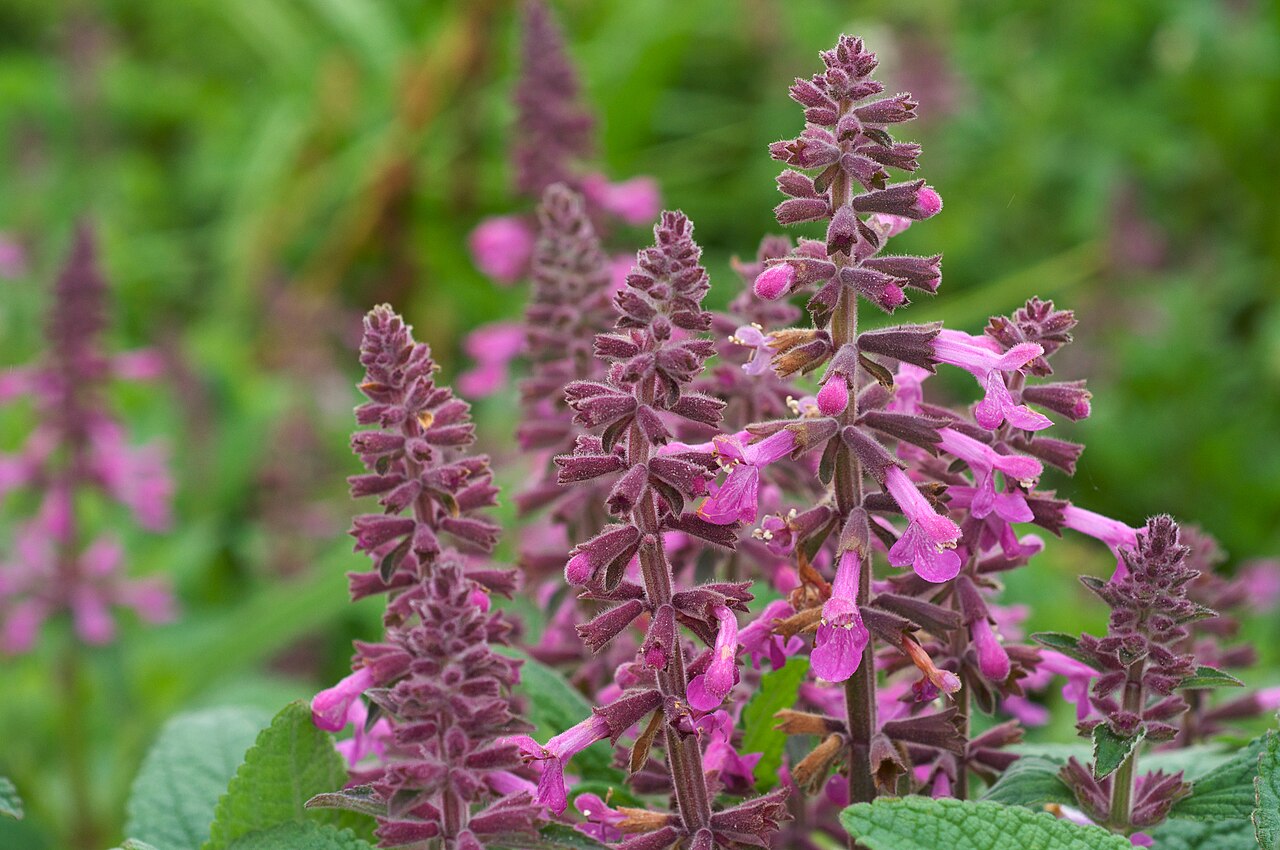
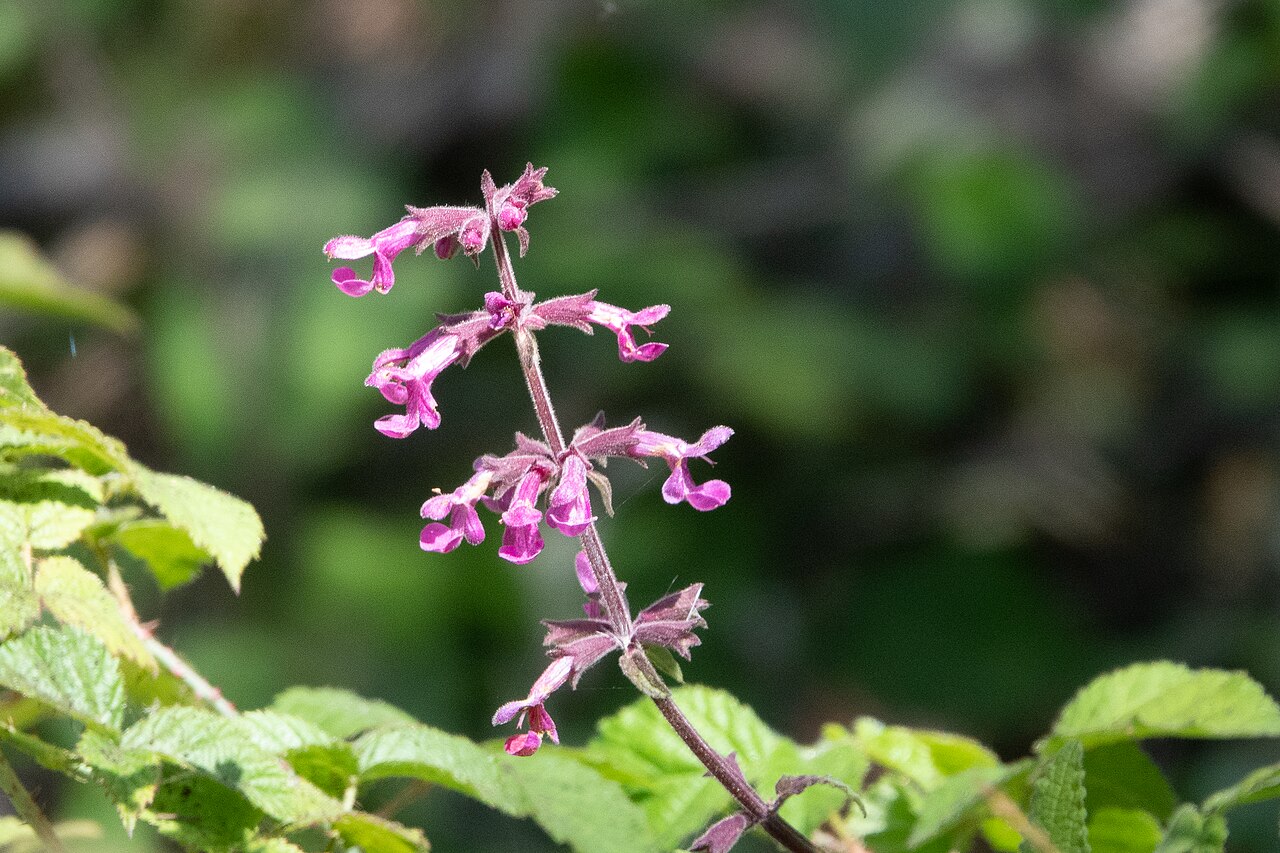
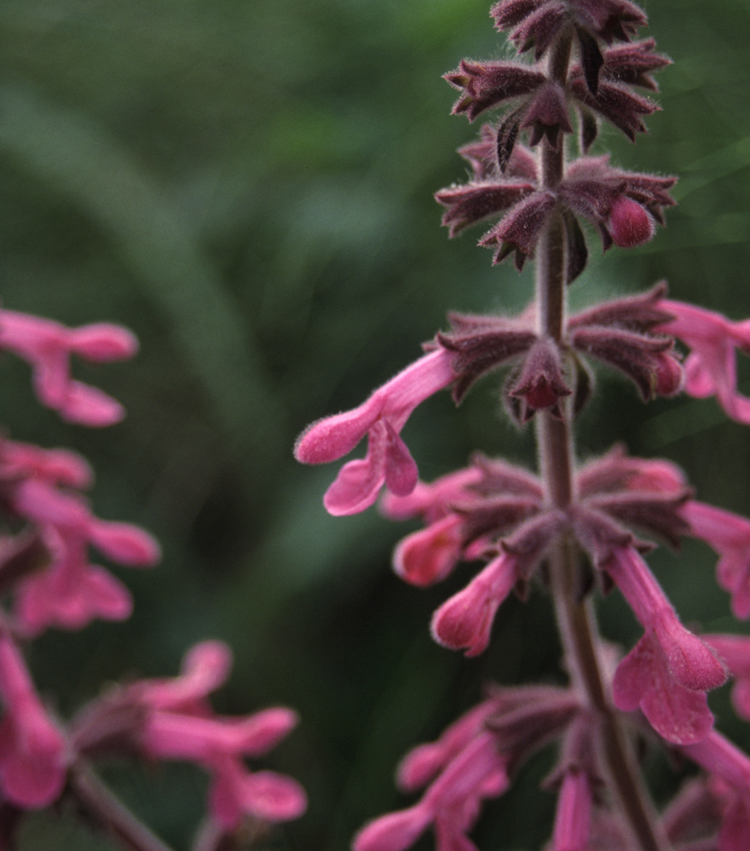
Flowers bloom from roughly June through August (later in cooler coastal sites) in dense, whorled spikes at the stem tips. Each flower is tubular and two-lipped, deep rose-purple to reddish-pink, about ¾ to 1 inch long — notably larger than those of most other native Stachys — and subtended by hairy, often maroon-tinged bracts that add to the plant’s striking appearance.
Fruit & Seeds
Each flower produces four small nutlets held within the persistent, hairy calyx. As with other native hedgenettles, rhizome spread accounts for most colony expansion, with seedling establishment playing a smaller role.
Quick Facts
| Scientific Name | Stachys chamissonis (incl. var. cooleyae) |
| Family | Lamiaceae (Mint) |
| Plant Type | Herbaceous rhizomatous perennial |
| Mature Height | 2–4 ft (to 6 ft in rich, wet soil) |
| Mature Spread | 2–3 ft clumps, spreading by rhizome |
| Growth Rate | Moderate to fast in moist sites |
| Sun Exposure | Part Shade to Full Sun with moisture |
| Water Needs | Average to wet; not drought tolerant |
| Soil Type | Moist loam or sand; tolerates seasonal saturation |
| Soil pH | Neutral, adaptable |
| Bloom Time | June – August |
| Flower Color | Deep rose-purple to reddish-pink |
| Fall Color | None notable; foliage dies back |
| Fruit | Four small nutlets in a hairy calyx |
| Deer Resistant | Moderate (aromatic mint foliage is usually avoided) |
| USDA Hardiness Zones | 6–9 |
Native Range
Great hedgenettle is native to the Pacific coast of North America, from south-coastal and southeastern Alaska south through coastal British Columbia, western Washington and western Oregon, to the central California coast. It is a strictly coastal and near-coastal species, rarely found far from marine influence or the moist microclimates that influence brings.
Typical habitat includes stream banks, wet meadows, seeps, the edges of coastal forests, bluffs and the upper margins of salt and brackish marshes, generally within a few miles of the ocean or major coastal waterways. It often grows alongside salmonberry, red alder, slough sedge and other moisture-loving coastal species, and tolerates the cool, foggy summers typical of the Pacific coast better than hotter, drier inland conditions.
Northern forms (var. cooleyae, from British Columbia to Oregon) tend toward larger flowers and leaves than the typical California coastal form, but both share the same moist, coastal habitat preference and are managed the same way in cultivation.
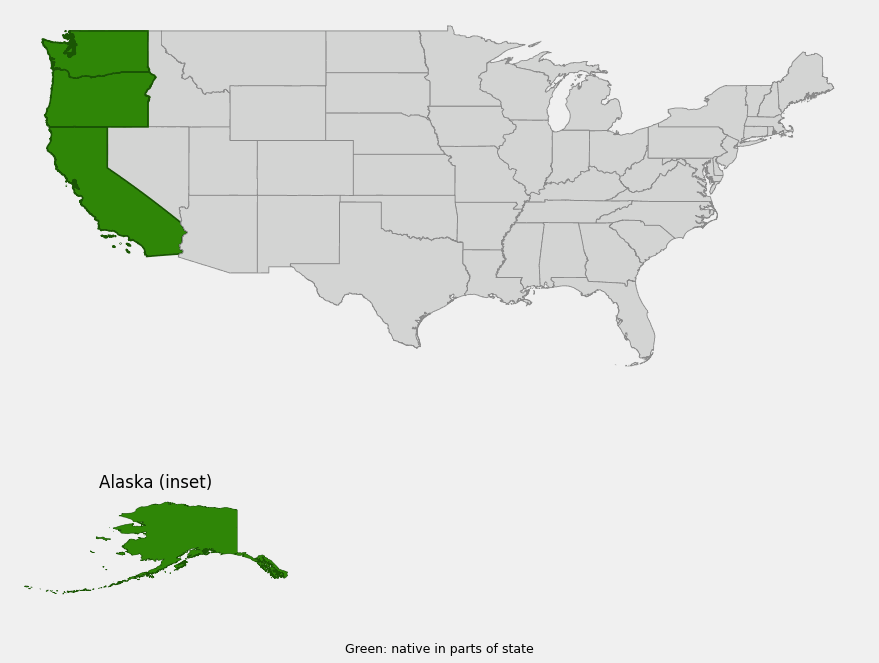
📋 Regional plant lists featuring Great Hedgenettle: Alaska · Western Oregon & Western Washington · California & Nevada
Growing & Care Guide
Great hedgenettle brings bold color and texture to the damp corners of a Pacific coast garden, and it is forgiving once it has the moisture it wants.
Light
It grows well from part shade into full sun along the foggy, mild coast, where sun exposure rarely means extreme heat. Inland or in warmer gardens, give it more shade and consistent moisture to avoid wilting during hot afternoons.
Soil & Water
This species wants reliably moist to wet soil — think stream edges, seeps and low spots that stay damp through summer. It tolerates brief flooding and brackish influence near tidal marsh margins, but it is a poor fit for dry, well-drained upland beds. Pair it with rain gardens, pond edges and streamside plantings rather than a typical dry perennial border.
Planting Tips
Set out container plants in fall or spring and water generously until established. Space plants 18 to 24 inches apart to allow for its larger mature size and rhizome spread. It establishes readily from nursery stock and transplants well in cool, moist weather.
Pruning & Maintenance
Cut dead stems back in late winter before new growth emerges. Because of its vigorous rhizome spread in consistently wet soil, it can outcompete smaller neighbors in a small garden bed; dividing the clump every few years keeps it in check where space is limited.
Propagation
Division of rhizomes in early spring or fall is the most reliable method. Seed can be collected from dried calyxes in late summer and sown outdoors in fall, but division produces flowering-size plants much faster.
Landscape Uses
- Rain gardens and bioswales along the mild Pacific coast
- Streamside and pond-margin plantings with salmonberry and sedges
- Coastal meadow restoration in wet or seasonally saturated ground
- Bold native alternative to ornamental Stachys species for coastal gardeners; see our guide to plants that look like lamb’s ear
- Pollinator plantings for late-summer color in moist beds
Wildlife & Ecological Value
Great hedgenettle’s large, nectar-rich flowers make it one of the more valuable late-summer bloomers for pollinators in its coastal range.
For Pollinators
The long, tubular flowers are a favorite of bumblebees and other long-tongued native bees, and hummingbirds are frequent visitors drawn to the deep rose-purple color and tubular shape. The extended summer bloom period makes it valuable for pollinators when fewer other wet-meadow natives are in flower.
For Birds
Dense colonies provide ground-level cover for sparrows and other small birds foraging along coastal stream banks and meadow edges. Hummingbirds visit the flowers directly for nectar.
For Mammals
Like other hedgenettles, the aromatic, hairy foliage is generally avoided by deer, making this a useful choice in wet areas where browse pressure is a concern. Dense stands offer ground cover for small mammals.
Ecosystem Role
By forming dense rhizomatous colonies, great hedgenettle helps stabilize moist streambanks and coastal meadow soils, and its summer bloom bridges the gap between spring wildflowers and fall-blooming coastal asters.
Cultural & Historical Uses
Documented traditional uses of great hedgenettle are limited compared with more widely used coastal plants, though as a conspicuous, showy member of moist coastal meadows it would have been a familiar plant to Indigenous peoples throughout its range along the Northwest Coast and California coast.
Its larger-flowered northern form, often called Cooley’s hedgenettle, has become more established in horticulture than the species as a whole, prized in Pacific Northwest native plant gardens for its bold color and reliable bloom. Taxonomists have debated for decades whether this form merits status as a full species or stands as a variety of Stachys chamissonis; gardeners can treat both forms interchangeably for landscape purposes.
As with its native relatives, great hedgenettle offers a pollinator-friendly, regionally appropriate alternative to the non-native ornamental lamb’s ear often sold for its foliage.
Frequently Asked Questions
Is great hedgenettle the same plant as Cooley’s hedgenettle?
They are very closely related. Cooley’s hedgenettle (the northern form, from British Columbia to Oregon) is treated by some botanists as Stachys chamissonis var. cooleyae and by others as the separate species Stachys cooleyae. Both share the same coastal habitat and garden needs.
Does great hedgenettle sting?
No. Despite “nettle” in the name, it has no stinging hairs. The soft hairs on the stems and leaves are not irritating.
Can great hedgenettle grow away from the coast?
It can, but it performs best with the cool, moist conditions typical of the Pacific coast. Inland in hotter climates it needs more shade and more consistent watering to thrive.
Is great hedgenettle good for hummingbirds?
Yes. Its tubular, deep rose-purple flowers are well suited to hummingbird pollination, and the extended summer bloom period makes it a reliable nectar source.
How big does great hedgenettle get?
Typically 2 to 4 feet tall, though plants in especially moist, rich sites can reach 6 feet, making it one of the larger native hedgenettles.

Looking for a nursery that carries Great Hedgenettle?
Browse our native plant nursery directory: Alaska · Washington · Oregon · California