Green Rabbitbrush (Chrysothamnus viscidiflorus)
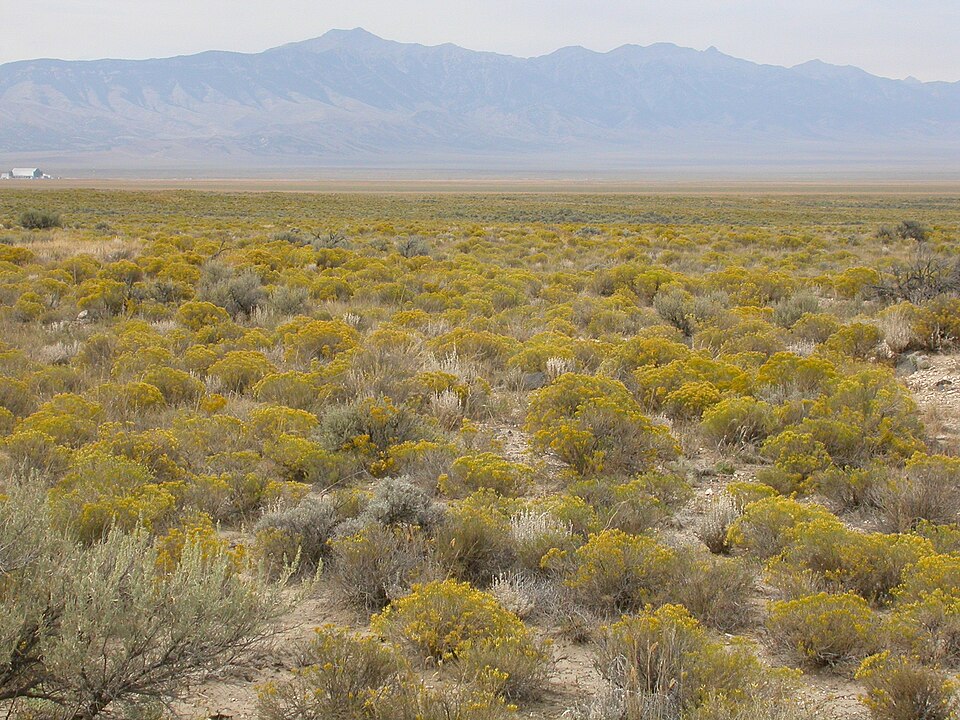
Chrysothamnus viscidiflorus, commonly known as Green Rabbitbrush or Yellow Rabbitbrush, is a compact, resilient native shrub of the western sagebrush steppe and high desert. Unlike its close relative Rubber Rabbitbrush (Ericameria nauseosa), which has gray-green foliage covered in whitish hairs, Green Rabbitbrush — as its name suggests — bears distinctly bright green, shiny, and sticky (viscidiflorus = sticky-flowered) leaves that remain fresh-looking throughout the growing season. This visual distinction makes it easy to separate the two common rabbitbrush species in the field without specialist knowledge.
Green Rabbitbrush is one of the most common shrubs of the Intermountain West, occurring across an enormous range from the Columbia Plateau of Washington and Oregon south through the Great Basin to the Colorado Plateau. It is a characteristic associate of Big Sagebrush communities, growing in the open spaces between sagebrush shrubs and along disturbed roadsides, dry creek beds, and areas recovering from overgrazing. Like all rabbitbrushes, it is remarkably tolerant of difficult conditions — alkaline soils, summer drought, winter cold, and disturbance — making it one of the most resilient shrubs in the western flora and a foundational species for ecological restoration.
For late-season wildlife value, few native shrubs can match the rabbitbrushes. Green Rabbitbrush blooms from August through October, producing masses of small yellow flowers just as many other native plants are finishing their flowering season. This late-season bloom is critically important for native bees and butterflies building reserves for winter. In the native plant garden, Green Rabbitbrush provides spectacular fall color and supports pollinators precisely when they need late-season resources most urgently.
Identification
Green Rabbitbrush is a compact, rounded shrub typically growing 1 to 3 feet tall, occasionally reaching 4 feet in favorable conditions. It is noticeably smaller than Rubber Rabbitbrush and distinguished primarily by its green (not gray) foliage. Multiple stems arise from a woody base, giving the plant a dense, mounded form that is pleasing in the landscape from spring through fall.
Leaves
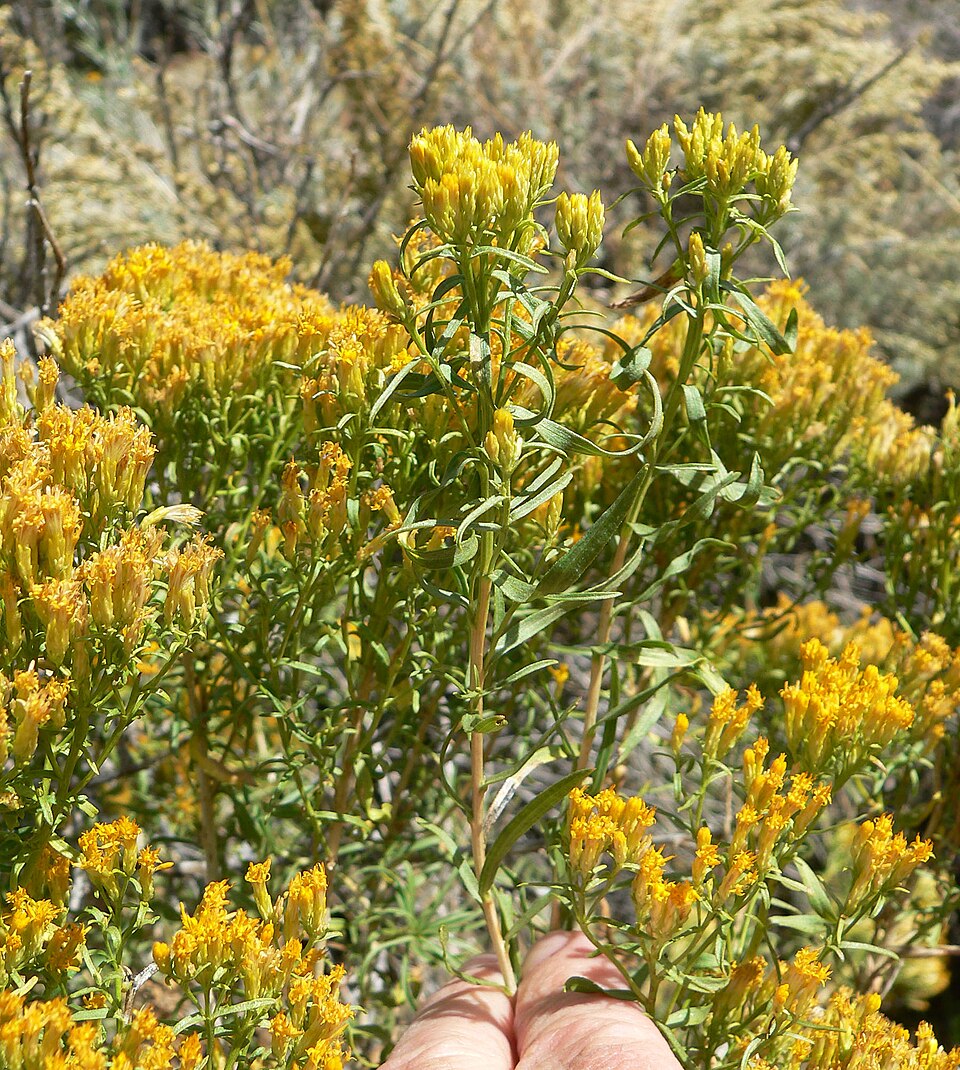
The leaves are narrow, linear, and 1 to 2 inches long, bright green and shiny. The key identification character is the sticky, resinous surface — both leaves and young stems feel tacky to the touch, leaving a slight residue on the fingers when handled. This stickiness, produced by glandular hairs and resin glands, gives both the common name “viscid” and the species name viscidiflorus. The leaves may have slightly twisted or revolute (rolled-under) margins. The aromatic quality is present but less pungent than in some other rabbitbrush species, and has a sharper, more resinous character than the soft camphor of sagebrush.
Flowers & Seeds
The flowers are typical of the genus: small, tubular, and bright yellow, borne in dense, flat-topped clusters (corymbs) at the tips of the branches. Bloom occurs late in the season — August through October — when the massed yellow flowers create a spectacular display that is one of the highlights of the autumn sagebrush landscape. The flowers are exclusively disk flowers (no ray flowers), giving the floral heads a tight, button-like appearance. Seeds are small achenes with a feathery pappus that facilitates wind dispersal over considerable distances from the parent plant.
Quick Facts
| Scientific Name | Chrysothamnus viscidiflorus |
| Family | Asteraceae (Daisy) |
| Plant Type | Deciduous Shrub |
| Mature Height | 3 ft |
| Sun Exposure | Full Sun |
| Water Needs | Low to Moderate |
| Bloom Time | August – October |
| Flower Color | Yellow |
| USDA Hardiness Zones | 3–8 |
Native Range
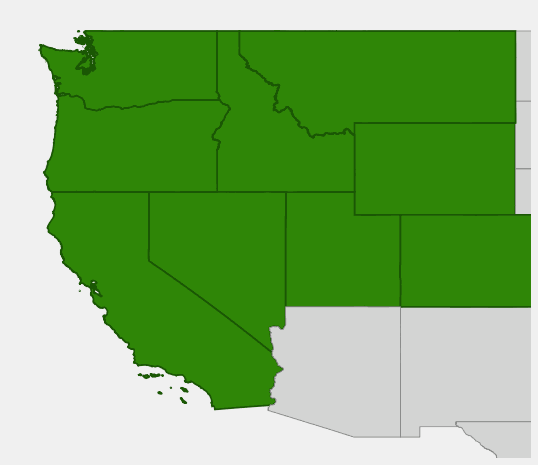
Green Rabbitbrush is native across the Intermountain West and portions of the Pacific Northwest, with a range extending from Washington and Oregon east through Idaho, Montana, Wyoming, Colorado, Utah, Nevada, and California. It occupies many of the same habitats as Big Sagebrush, growing as a subdominant component of sagebrush-steppe communities, but also occurring in disturbed areas, roadsides, dry washes, and gravelly flats where Big Sagebrush is absent or in reduced abundance.
Like Big Sagebrush, Green Rabbitbrush occurs across a wide elevation gradient — from valley floors in the Columbia Basin at roughly 1,000 feet to subalpine rocky slopes above 9,000 feet in the Rocky Mountains. It is highly tolerant of alkaline soils (pH 7.0–9.0+) and is among the first native shrubs to recolonize disturbed or degraded land, making it an important indicator of early successional vegetation recovery. Multiple subspecies are recognized, varying in leaf width, stem pubescence, and ecological associations across the broad range.
Green Rabbitbrush is considered a weedy or early-successional species in some range management contexts because it increases in abundance following overgrazing or soil disturbance. However, from an ecological perspective, its ability to quickly establish and provide cover, pollen, and seed for wildlife on disturbed ground is genuinely valuable. It provides essential bridging habitat function in recovering landscapes, helping to build soil, reduce erosion, and support wildlife while slower-establishing native plants become reestablished.
📋 Regional plant lists featuring Green Rabbitbrush: Intermountain West
Growing & Care Guide
Green Rabbitbrush is one of the easiest native shrubs to grow in the Intermountain West. Its tolerance of challenging soils, drought, and temperature extremes make it ideal for low-maintenance, water-wise landscapes and habitat gardens throughout the region.
Light
Full sun is required. Green Rabbitbrush grows in open, exposed sites in nature and does not tolerate shade. Give it the sunniest spot available in your garden for best growth and maximum flowering performance in autumn. It is especially striking when planted where the late-season sun backlights the yellow flower clusters in the afternoon.
Soil & Water
Extremely adaptable in terms of soil — Green Rabbitbrush tolerates sandy, rocky, gravelly, silty, and even moderately heavy soils, as long as drainage is adequate. It is notably tolerant of alkaline soils (pH 7.5–9.0+), making it valuable for gardens on limestone substrates or in areas with naturally high soil pH common throughout the Great Basin. Once established, it is very drought tolerant, requiring little or no supplemental irrigation in most western climates. Water deeply during the first growing season to encourage deep root development, then reduce irrigation to minimal or none during subsequent years.
Planting Tips
Container-grown stock is increasingly available from native plant nurseries. Plant in fall or early spring. No soil amendment or fertilizer is needed — Green Rabbitbrush thrives in low-nutrient conditions. It establishes quickly and reliably. Space plants 3–4 feet apart for a mass planting or informal hedge, or use as individual accent plants with native grasses and wildflowers. It can also be direct-seeded into prepared ground in fall for spring germination with good success rates.
Pruning & Maintenance
Light pruning in late winter can maintain compact form and encourage vigorous new growth that produces the best floral display each season. Remove dead branches as needed. Green Rabbitbrush is generally quite resilient to moderate browsing and can tolerate occasional hard pruning when needed for size control, though annual light shearing is preferred to maintain shape. It is virtually maintenance-free once established and rarely troubled by pests or disease in appropriate growing conditions.
Landscape Uses
- Xeriscape and water-wise landscapes — thrives with minimal to no irrigation after establishment
- Fall pollinator gardens — exceptional late-season bloom for bees and butterflies
- Disturbed site revegetation — one of the best plants for restoring degraded alkaline soils
- Low hedges and informal screens using its dense, mounded form
- Companion to Big Sagebrush in authentic sagebrush steppe restoration plantings
- Roadsides and slopes with poor, rocky soils and minimal maintenance budgets
Wildlife & Ecological Value
Green Rabbitbrush provides important wildlife value, particularly as a late-season food source for pollinators when few other native plants are still in flower. Its role in the sagebrush ecosystem is complementary to — though different from — that of the larger Rubber Rabbitbrush.
For Birds
Like other rabbitbrushes, Green Rabbitbrush provides dense shrub cover that small birds use for nesting and shelter from predators and weather. The seeds are eaten by various sparrows, finches, and other seed-eating birds. The large insect community attracted to the late-season flowers — including bees, flies, beetles, and butterflies — supports insectivorous birds during fall migration and late-season breeding activities, providing essential protein sources.
For Mammals
Pronghorn, mule deer, and domestic sheep browse rabbitbrush foliage, especially in late summer and fall when the plants are in bloom. Jackrabbits and cottontails eat the stems and foliage in winter. The dense, low growth provides cover for small rodents, ground-nesting birds, and reptiles. Like other rabbitbrushes, Green Rabbitbrush is an important structural component of Pygmy Rabbit habitat in the Great Basin, providing the dense shrub canopy these specialized rabbits require for shelter.
For Pollinators
The late-season bloom of Green Rabbitbrush is critically important for native pollinators as they complete their seasonal cycles. Numerous bee species, including specialist oligolectic bees that collect pollen only from composites in the tribe Astereae, are attracted to rabbitbrush flowers in large numbers. Monarch butterflies use rabbitbrush nectar during their fall migration through the Great Basin. Various bee flies, parasitic wasps, and syrphid flies also visit the flowers abundantly during the September-October bloom period.
Ecosystem Role
As one of the most resilient and widely distributed shrubs in the Intermountain West, Green Rabbitbrush plays an essential role in ecosystem recovery after disturbance. On degraded soils, it establishes rapidly and begins accumulating organic matter, modifying the microclimate and soil conditions to allow more sensitive native species to establish over time. Its role as a “nurse plant” — creating favorable microsites beneath its canopy for other native plants — is an underappreciated but important aspect of sagebrush steppe restoration ecology.
Cultural & Historical Uses
Green Rabbitbrush was used by Indigenous peoples throughout the Great Basin and Columbia Plateau region, though its uses are less extensively documented than those of the more abundant Rubber Rabbitbrush. The Shoshone and Paiute peoples used rabbitbrush stems and branches as building material for shelters and as fuel for fires. The pliable young stems were used in basketry and other weaving traditions. A yellow to greenish dye could be extracted from the flowers and used to color basketry materials and other plant fibers in a range of earth tones.
The plant’s common name — Rabbitbrush — comes from the fact that jackrabbits and cottontails commonly shelter beneath the dense, low-growing shrubs and browse the foliage during winter months when food is scarce. For hunters and people who relied on rabbit meat as a significant food source throughout the Great Basin, knowing the distribution of rabbitbrush meant knowing where to find rabbits. This made rabbitbrush an important ecological marker in the landscape knowledge system of Great Basin peoples, whose survival depended on intimate familiarity with the distribution and seasonal behavior of every plant and animal in their territory.
Modern interest in rabbitbrush has included investigation of the latex-like compounds found in some species as potential rubber sources — related research was conducted extensively on Rubber Rabbitbrush during World War II as a domestic rubber source to replace unavailable Asian rubber. Green Rabbitbrush contains similar compounds but in lower concentrations. Today the genus is valued primarily as ornamental, wildlife, and restoration plants, with growing recognition of the ecological importance of native shrublands for biodiversity conservation in the rapidly changing landscapes of the American West.
Frequently Asked Questions
How do I tell Green Rabbitbrush from Rubber Rabbitbrush?
The easiest way is foliage color and texture. Green Rabbitbrush has bright green, shiny, sticky leaves. Rubber Rabbitbrush has gray-green, hairy, non-sticky leaves. Green Rabbitbrush is also noticeably smaller overall. When in doubt, rub a leaf between your fingers — Green Rabbitbrush will feel tacky; Rubber Rabbitbrush will not.
Is Green Rabbitbrush a good substitute for Rubber Rabbitbrush?
They serve similar ecological functions but occupy slightly different niches. Green Rabbitbrush is more compact, better for smaller spaces, and somewhat more tolerant of alkaline soils. Rubber Rabbitbrush grows larger and is more widely available in nurseries. Both are excellent native plants and can be planted together for complementary bloom timing, structural variety, and increased overall wildlife value.
Can Green Rabbitbrush be grown in a container?
Yes, especially smaller plants. Its compact size makes it more container-friendly than Rubber Rabbitbrush. Use a well-draining cactus or succulent mix, provide full sun, and water sparingly. Containers will need watering more frequently than in-ground plants, but always allow the soil to dry between waterings to avoid root rot.
Does Green Rabbitbrush spread aggressively?
No. It spreads slowly from seed and does not have aggressive rhizomes. It increases in disturbed areas because it is a successful early colonizer of bare soil, but in an established garden it behaves as a well-mannered, predictable shrub that stays where you plant it.
Is Green Rabbitbrush deer resistant?
Moderately so — deer will browse it but typically do not heavily damage established plants. The aromatic foliage is not a highly preferred food by deer when alternatives are available. However, in areas with high deer pressure, some protection for very young plants during establishment is advisable until the woody base is well developed.