Hercules’ Club (Aralia spinosa)
Aralia spinosa, commonly known as Hercules' Club, Devil's Walking Stick, or Prickly Elder, is one of the most dramatically bold and architecturally striking native shrubs in eastern North America. A member of the Araliaceae (ginseng) family, this deciduous shrub or small tree commands attention in any landscape with its extraordinary bipinnately compound leaves — the largest leaves of any native woody plant in the eastern United States — and its fiercely armed stems and branches covered in stout, sharp spines. The common name “Hercules' Club” aptly describes the stout, club-like stems that bristle with prickles from base to crown.
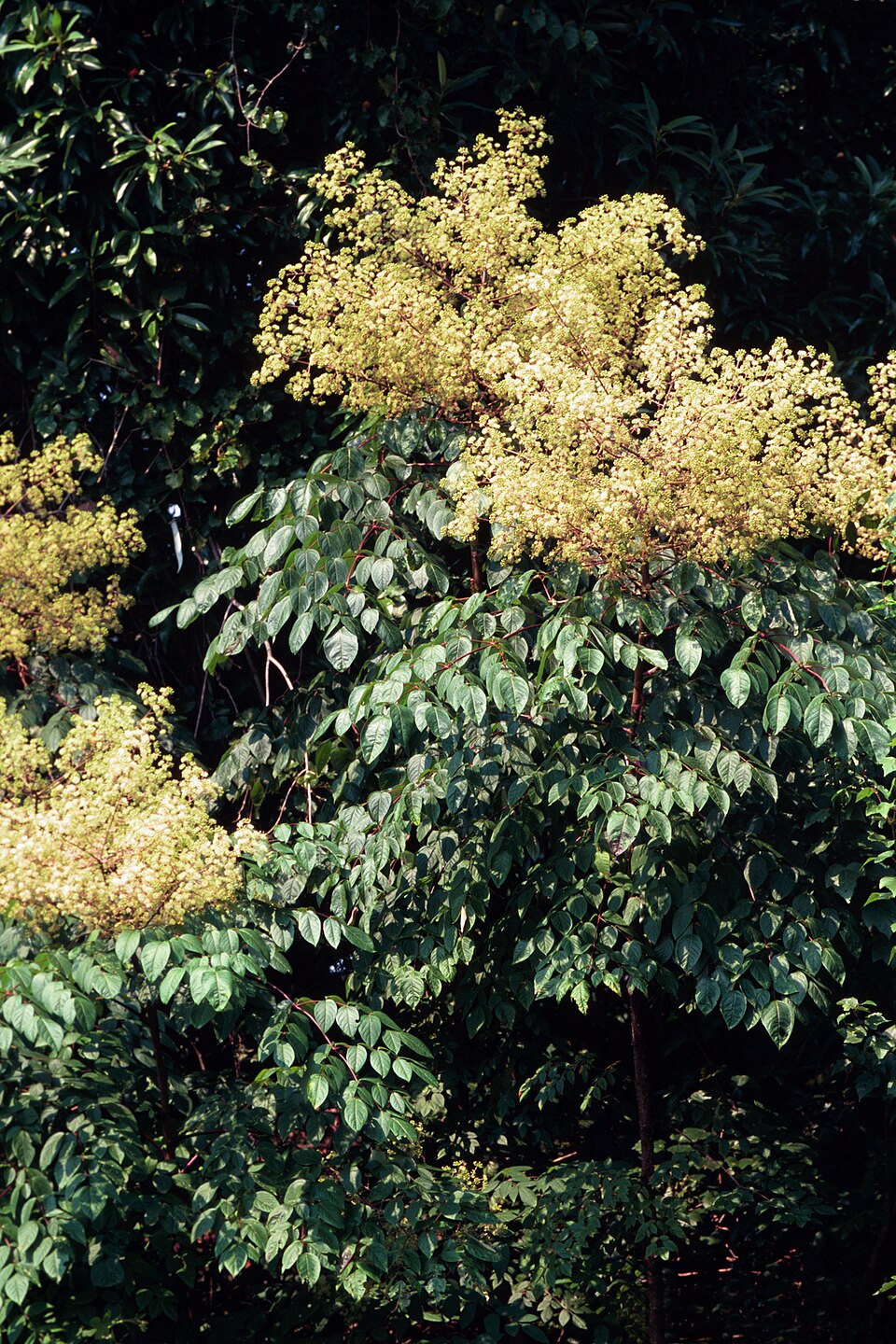
Growing 10 to 20 feet tall, Aralia spinosa typically forms an open, multi-stemmed colony by spreading via root sprouts, creating a bold thicket of upright, unbranched or sparingly branched canes. The leaves can reach 3 to 4 feet in length and nearly as wide, creating a lush, tropical appearance that is utterly unlike any other woody plant of the eastern forest. In late summer, massive terminal clusters of tiny creamy-white flowers — sometimes 3 feet across — erupt from the crown, attracting an extraordinary diversity of pollinators. These are followed by dark purple-black berries that provide essential high-fat food for migrating birds in fall.
Despite its fearsome reputation for spines and suckering habit, Hercules' Club is increasingly valued by native plant gardeners and restoration ecologists for its unparalleled ecological function. It supports more than 100 species of butterflies and moths, provides critical fall fruit for Neotropical migratory birds, and offers dense, impenetrable cover for wildlife. Its bold tropical texture makes it a standout in woodland gardens, riparian plantings, and naturalized areas where its tendency to colonize space can be an asset rather than a liability.
Identification
Hercules' Club is instantly recognizable at any season by its combination of stout spines, unbranched or sparsely branched stems, and enormous compound leaves. The plant typically grows as a colony of upright canes reaching 10 to 20 feet tall, rarely exceeding 40 feet as a true tree. The overall silhouette is distinctive — sparse, open, and palm-like from a distance, with all foliage and flowers concentrated at the tops of bare, spiny canes.
Bark & Stems
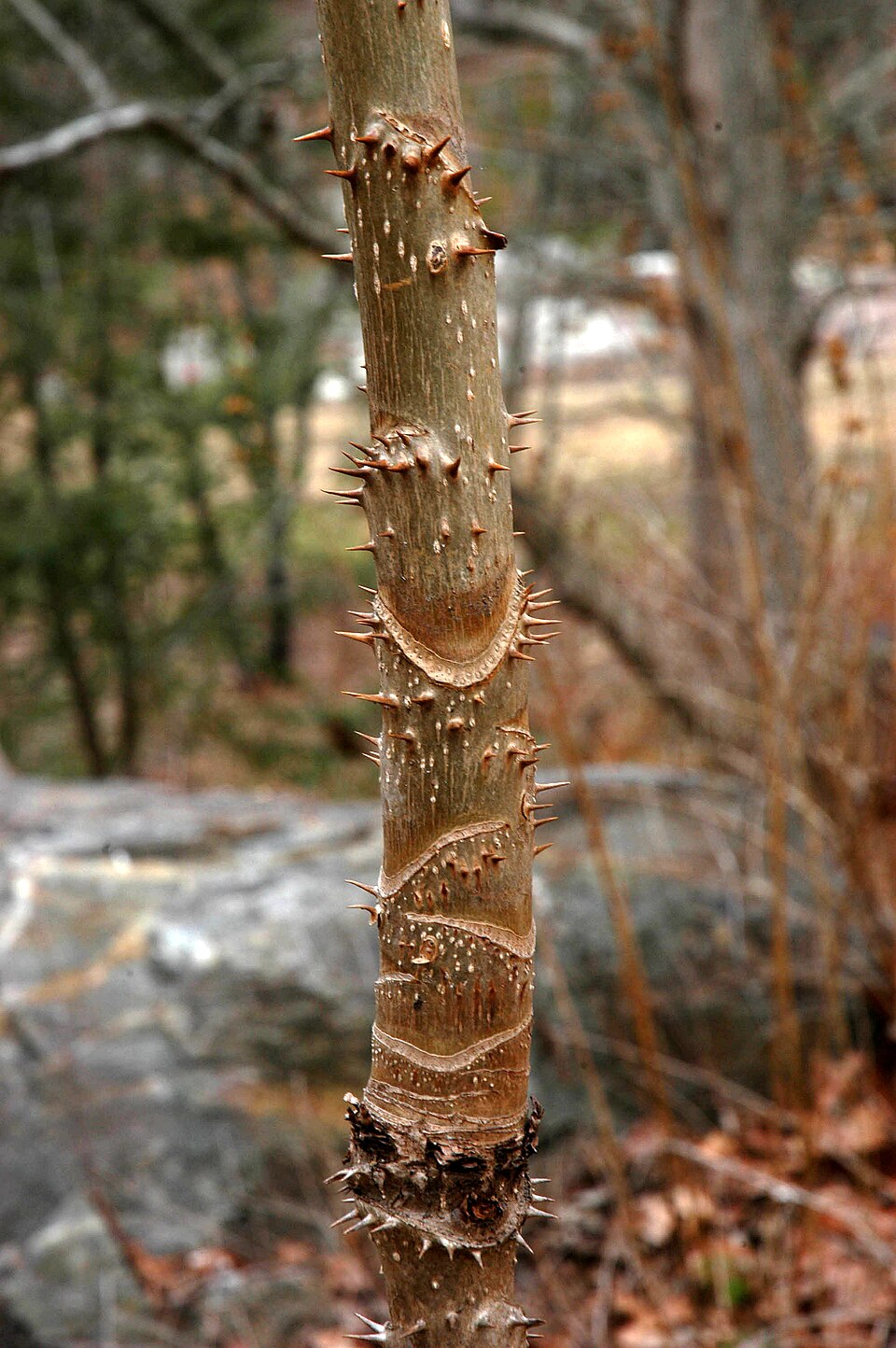
The bark is gray-brown to light brown and covered with stout, flat-based, triangular spines up to ¾ inch (2 cm) long, arranged in a spiral pattern along the stem. These spines are also present on the leaf rachises and even the leaflet midribs. Young stems are greenish-gray and particularly densely armed. Older stems become more corky and the spines may become less prominent but remain sharp. The wood is soft and pithy. The roots spread aggressively, sending up new shoots from root sprouts that can emerge 10 or more feet from the parent plant, creating distinctive colonies over time.
Leaves
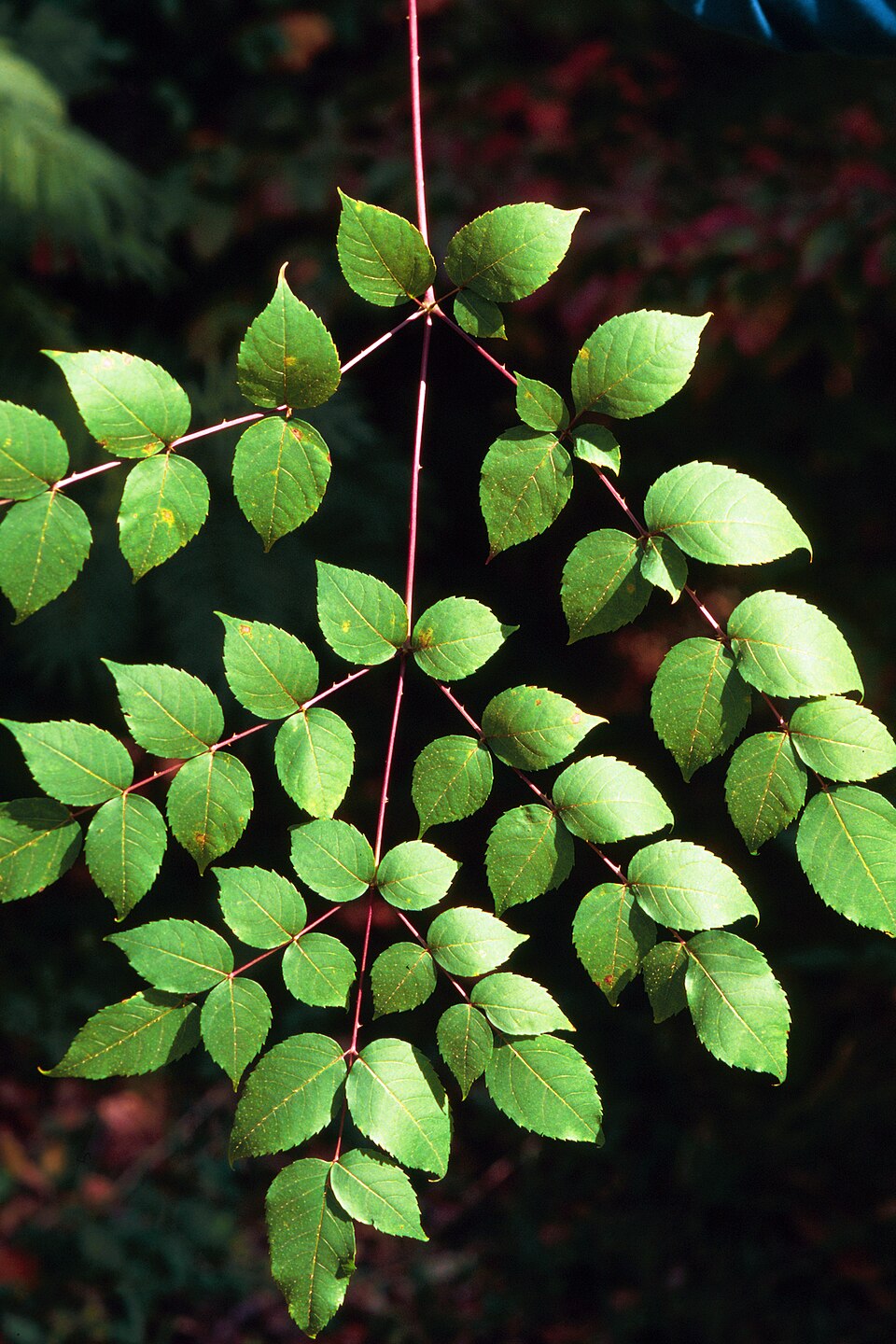
The leaves are the plant's most spectacular feature — enormously large, bipinnately compound, and alternate on the stems. Each leaf may reach 2 to 4 feet long and 2 to 3 feet wide, containing 50 to 100 or more leaflets arranged on multiple paired side branches (pinnae). Individual leaflets are 1 to 3 inches long, ovate to elliptic, with serrated margins and a pointed tip. The upper surface is dark green and slightly glossy; the undersurface is pale green, often pubescent. Leaf rachis and petioles are armed with scattered prickles. In autumn, foliage turns attractive shades of yellow, orange, and red.
Flowers & Fruit
The flowers are individually tiny — each only about ⅛ inch (3 mm) across with 5 white petals — but produced in enormous terminal panicles (compound umbels) that can reach 2 to 4 feet across, making the plant highly conspicuous when in bloom from July through September. These massive flower clusters are a magnet for pollinators including native bees, honeybees, wasps, flies, beetles, and butterflies.
The fruit is a small drupe about ¼ inch (6 mm) in diameter, ripening from green to dark purple-black in fall. Each tiny fruit contains 2 to 5 hard seeds surrounded by soft, dark purple-black pulp with a high fat content — extremely valuable to migrating birds. Fruits ripen August through October and are quickly consumed by thrushes, vireos, kingbirds, flickers, and dozens of other species.
Quick Facts
| Scientific Name | Aralia spinosa |
| Family | Araliaceae (Ginseng) |
| Plant Type | Deciduous Shrub / Small Tree |
| Mature Height | 10–20 ft |
| Sun Exposure | Full Sun to Full Shade |
| Water Needs | Moderate to Low (Drought Tolerant) |
| Bloom Time | July – September |
| Flower Color | Creamy white |
| USDA Hardiness Zones | 4–9 |
Native Range
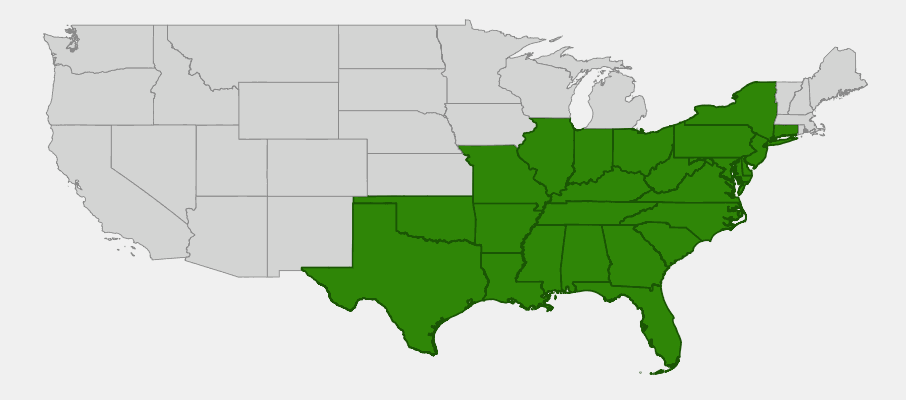
Aralia spinosa is native to the eastern United States, with a range extending from southern New England south through the Appalachian region to Florida, west through the Gulf Coast states, and north through the Mississippi and Ohio valleys to Illinois, Indiana, and Ohio. The species reaches its greatest abundance in the rich, moist forests of the Appalachian Mountains, the Ozark Plateau, and the lower Mississippi Valley, where it forms dense colonies along streams and woodland edges.
In Iowa, Illinois, and Missouri — the core rpl-iailmo region — Hercules' Club is found primarily in the southern portions of these states, becoming more common moving south. In Missouri it is widespread in the Ozarks and river bottom forests; in Illinois it occurs in the southern third of the state in ravines, stream banks, and disturbed forest edges. In Iowa it is present in scattered locations in the southern tier of counties. The species readily colonizes disturbed habitats: forest edges, riverbanks, roadsides, and rocky slopes.
Hercules' Club has high ecological flexibility, tolerating everything from full sun to deep shade, dry upland sites to moist bottomland forests. This adaptability allows it to persist as an understory plant beneath closed-canopy forest while also thriving in full sun at forest edges and roadsides. It is most commonly encountered along stream corridors, where its suckering root system helps stabilize banks.
📋 Regional plant lists featuring Hercules’ Club: Iowa, Illinois & Missouri
Growing & Care Guide
Hercules' Club is a tough, adaptable native that requires little care once established. Its primary cultural considerations involve managing its suckering habit and respecting its formidable spines during planting and maintenance.
Light
One of Hercules' Club's greatest assets is its extraordinary adaptability to light conditions. It grows successfully in full sun to full shade — from open meadows and roadsides to the dense understory beneath mature forest canopy. In full sun, it develops its most lush form with the largest leaves and most abundant flower clusters. In deep shade, it grows more openly but remains healthy. This flexibility makes it valuable for difficult shaded sites where few other large-leafed plants will thrive.
Soil & Water
Aralia spinosa tolerates a remarkably wide range of soil conditions — from dry, rocky upland soils to moist bottomland clay. It performs best in moderately moist, well-drained soils with organic matter but established plants are quite drought tolerant. It is pH adaptable, growing in both acidic and neutral soils. The plant is also tolerant of poor, compacted, and disturbed soils. Avoid standing water, which can cause root rot.
Planting Tips
Plant in fall or early spring for best establishment. Choose a location where the plant has room to spread via root suckers — at least 10 to 15 feet in all directions if you want to allow a natural colony to develop. Wear heavy-duty gloves and long sleeves when handling — the spines are sharp and can cause significant skin irritation. If you want to limit spreading, plant in areas with mowing boundaries, hard surfaces, or regular root pruning around the perimeter.
Pruning & Maintenance
Hercules' Club requires minimal pruning. Remove dead or damaged canes in late winter. If the colony is spreading beyond desired limits, cut new root suckers at ground level — the suckers will not resprout from cut roots if severed cleanly. The plant regenerates vigorously from root disturbance, so avoid rototilling near established plants. The dried flower stalks are attractive through winter and can be left for structure and bird habitat. Always wear puncture-resistant gloves and thick clothing during maintenance.
Landscape Uses
Hercules' Club excels in several specific landscape contexts:
- Woodland edge planting — bold foliage creates dramatic transitions between open and forested areas
- Naturalized areas & restoration plantings — suckering habit makes it excellent for stabilizing slopes and stream banks
- Wildlife gardens — unparalleled for attracting pollinators and fall-migrating birds
- Difficult shaded sites — one of few large-leafed plants that thrives in deep shade
- Barrier plantings — formidable spines create deer-resistant, impenetrable hedges
- Rain gardens & bioswales — tolerates periodic flooding and wet areas
- Erosion control — spreading root system stabilizes slopes and streambanks
Wildlife & Ecological Value
Hercules' Club is one of the most ecologically productive native shrubs of the eastern United States. Its enormous flower clusters, high-fat fall berries, and structural complexity make it a cornerstone species for wildlife.
For Birds
The dark purple-black berries of Aralia spinosa are among the most important fall foods for Neotropical migratory birds. Thrushes (Hermit, Swainson's, Wood, Veery), vireos, Gray Catbirds, Brown Thrashers, Eastern Kingbirds, Northern Flickers, Cedar Waxwings, Rose-breasted Grosbeaks, American Robins, and dozens of other species eagerly consume the high-fat berries during fall migration. The timing is perfect — fruit ripens August through October, coinciding with peak fall migration. Dense, spiny thickets also provide excellent nesting cover.
For Mammals
Deer generally avoid Aralia spinosa due to its formidable spines, making it genuinely deer resistant. Small mammals including White-footed Mice, Raccoons, and Eastern Chipmunks consume the berries. The dense, spiny thickets provide excellent escape cover and nesting habitat for cottontail rabbits and other small mammals.
For Pollinators
The massive late-summer flower clusters are among the most important nectar sources for pollinators in the eastern forest understory. The blooms support an exceptional diversity of visitors including dozens of native bee species, honeybees, paper wasps, various flies, beetles, and an extraordinary diversity of butterflies and moths. Research has documented Aralia spinosa supporting over 100 species of Lepidoptera. It is especially valuable as a late-season pollen and nectar source.
Ecosystem Role
Aralia spinosa plays a significant ecological role in forest succession and disturbance ecology. It thrives in forest gaps, disturbed areas, and woodland edges created by windthrow, logging, or natural disturbance. By rapidly colonizing these gaps, it provides quick cover and food resources that benefit wildlife while slowing erosion and preventing invasive species establishment.
Cultural & Historical Uses
Hercules' Club has a rich history of use by Indigenous peoples throughout its range. The Cherokee used a root decoction to treat toothache, rheumatism, and as a general tonic. The Rappahannock used it as a treatment for skin diseases and sores. The roots contain saponins, alkaloids, and other bioactive compounds that give the plant its medicinal properties, though many preparations carry toxicity risks and should not be used without expert guidance.
In 19th-century botanical medicine, Aralia spinosa was recognized under various names including “Toothache Tree,” reflecting its use for relieving dental pain. The stimulating, tingling sensation caused by chewing the fresh bark was interpreted as an analgesic effect. Eclectic physicians of the 1800s used preparations of the root bark for treating rheumatism, syphilis, and skin conditions. The plant appeared in the U.S. Pharmacopeia in the late 1800s under the name “Angelica Tree.”
The immature shoots and young leaves have reportedly been eaten as a cooked vegetable similar to asparagus after boiling to remove bitter compounds — a practice documented among some Appalachian communities. However, this use requires specific preparation and should not be attempted without expert knowledge, as raw plant parts can cause gastrointestinal distress. Today, Hercules' Club is primarily valued in the landscape for its ornamental appeal, ecological function, and role in native plant restoration.
Frequently Asked Questions
Is Hercules' Club invasive?
While it spreads vigorously via root suckers, Aralia spinosa is native to the eastern United States and is not considered invasive. Its spreading habit can be managed by removing suckers and mowing around the perimeter. Do not confuse it with Japanese Angelica Tree (Aralia elata), which is an invasive species that looks nearly identical.
Are Hercules' Club berries edible?
The berries are not recommended for human consumption. While birds eat them avidly, the berries, roots, and bark of Aralia spinosa contain compounds that cause gastrointestinal irritation and other adverse effects in humans. Always wash your hands after handling any plant part.
How do I tell Hercules' Club apart from Japanese Angelica Tree?
This is critically important, as Japanese Angelica Tree (Aralia elata) is an invasive species that looks nearly identical. Key differences: native Aralia spinosa has leaflets that are hairless to slightly hairy on the underside with flat-based spines, while Aralia elata tends to have more densely hairy leaflets and narrower spines. Always purchase from a reputable native plant nursery to confirm you're getting the native species.
Does Hercules' Club hurt deer?
The spines are a strong deterrent for deer and most livestock, making it genuinely deer resistant. The spines are rigid, sharp, and present throughout the stems. This makes it excellent for creating deer-proof barrier plantings around gardens.
When is the best time to plant Hercules' Club?
Fall (September–November) or early spring (before new growth begins) are the ideal planting times for container-grown stock. Always wear heavy gloves and protective clothing when planting and handling.