Ozark Witch-hazel (Hamamelis vernalis)
Hamamelis vernalis, commonly known as Ozark Witch-hazel or Vernal Witch-hazel, is one of the most remarkable and beloved native shrubs of the central United States. As its species name suggests — vernalis meaning “of spring” — this deciduous shrub blooms in the heart of winter, from January through April, filling the cold air with richly fragrant, spidery flowers in shades of yellow, orange, and deep red. No other native woody plant in the Midwest blooms in the dead of winter, making Ozark Witch-hazel a uniquely precious addition to any native landscape.
Native primarily to the Ozark Plateau of Missouri, Arkansas, and adjacent states, this member of the Hamamelidaceae (witch-hazel) family grows as a multi-stemmed deciduous shrub typically reaching 6 to 10 feet tall and equally wide. The flowers are extraordinary for their timing — they appear on bare branches during the coldest months of the year, and individual flowers can withstand temperatures well below freezing, curling inward during extreme cold and reopening when temperatures rise. This remarkable adaptation allows extended bloom periods that can stretch for weeks or even months.
Beyond its extraordinary winter bloom, Ozark Witch-hazel offers excellent fall color in shades of orange, red, and yellow, attractive foliage throughout the growing season, and good wildlife value. It is an excellent three-season shrub — stunning in winter bloom, attractive in summer, and colorful in fall — making it one of the most versatile and rewarding native shrubs for Midwestern gardens.
Identification
Ozark Witch-hazel is a medium-sized, multi-stemmed deciduous shrub, typically growing 6 to 10 feet tall and wide. It is most readily identified in winter and early spring by its distinctive ribbon-like flowers on bare stems. The overall form is rounded to broadly spreading with numerous arching stems that create a graceful, layered appearance.
Bark & Stems
The bark is gray-brown, smooth on young stems, developing a slightly rougher texture with age. Young twigs are light grayish-tan to yellowish-brown with a slightly zigzag growth pattern. The buds are distinctive — naked (without bud scales), covered in soft, tan-gray pubescence, giving them a fuzzy appearance. These fuzzy naked buds persist through winter and are a good identification feature even when the plant is not in bloom.
Leaves
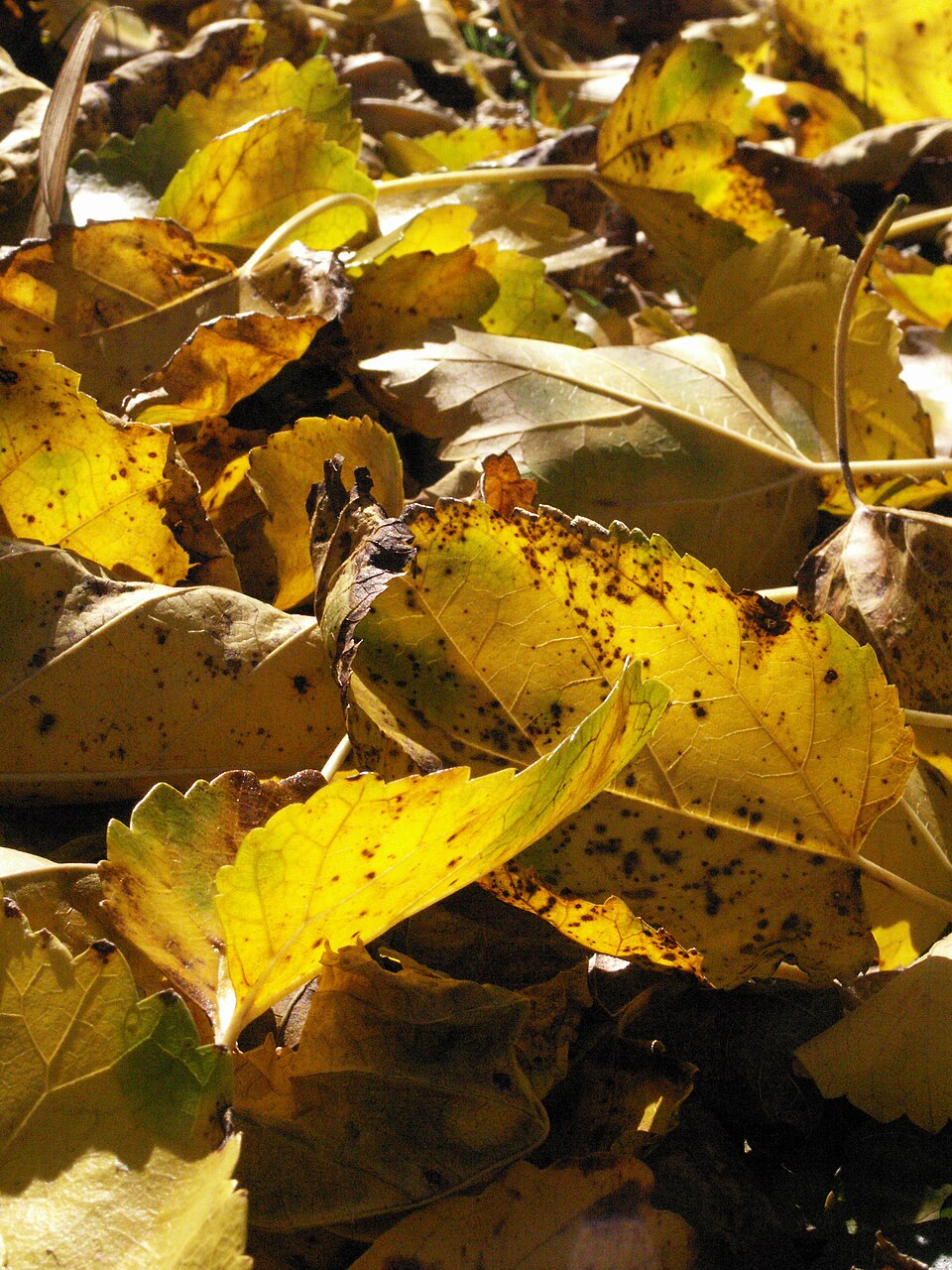
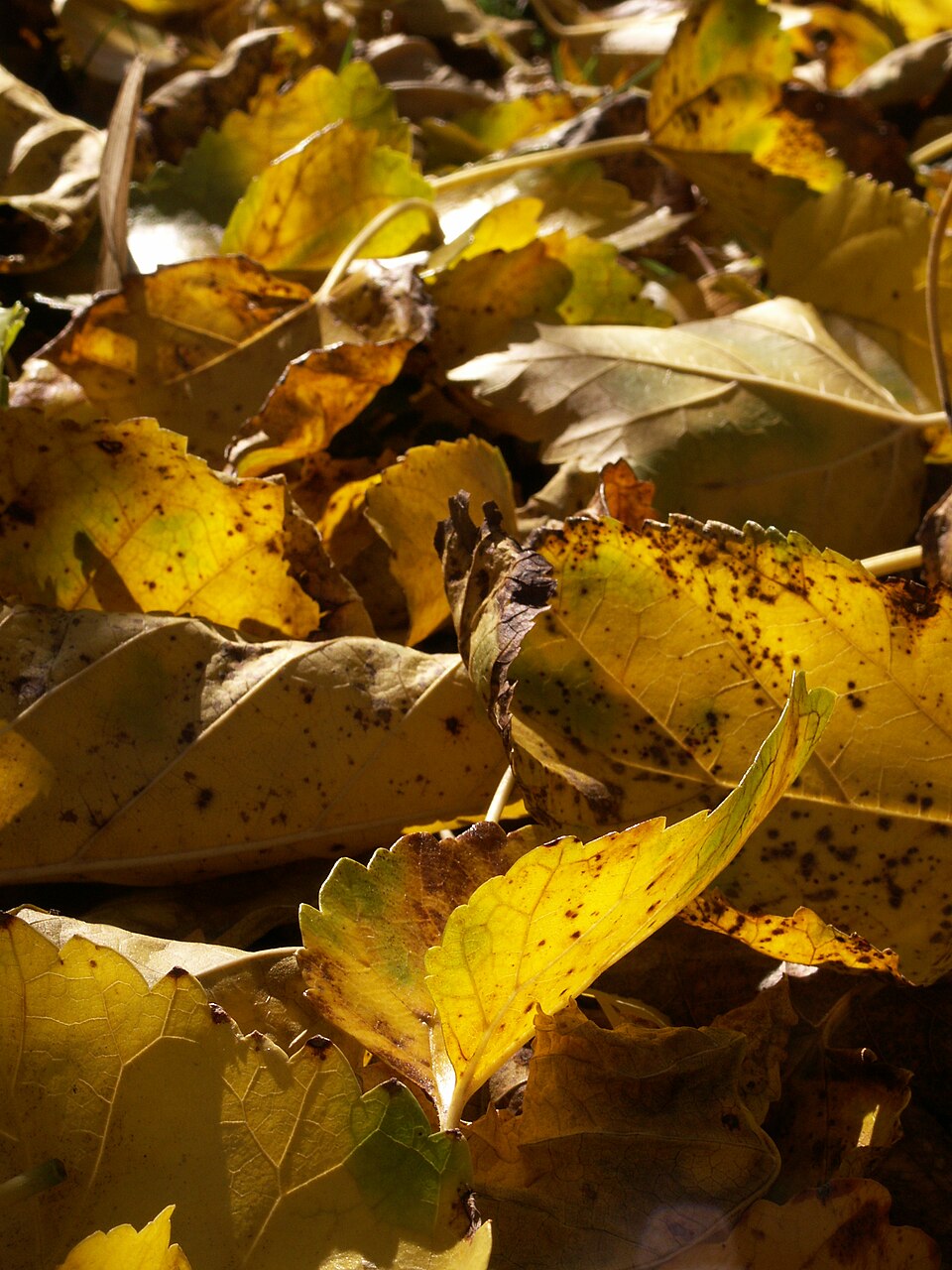
The leaves are simple, alternate, and obovate to elliptic, typically 2 to 5 inches long and 1 to 3 inches wide. The margins are wavy to scalloped (crenate to coarsely toothed), somewhat reminiscent of elm leaves. The upper surface is dark green, smooth to slightly hairy; the undersurface is paler and somewhat hairy. Leaf bases are typically asymmetrical. In autumn, the foliage turns attractive shades of yellow, orange, and occasionally red.
Flowers & Fruit
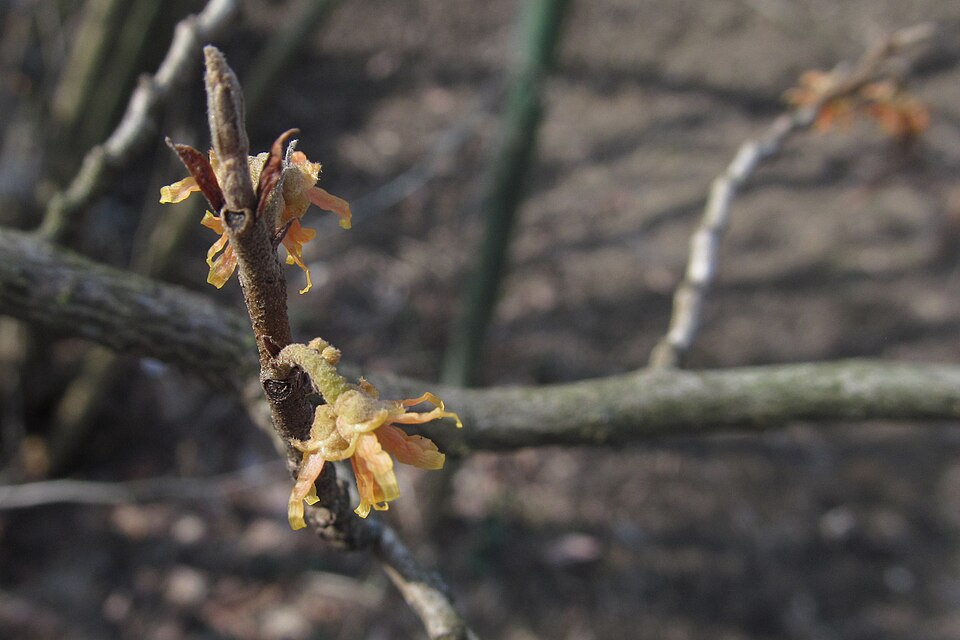
The flowers have 4 narrow, ribbon-like petals about ½ to ¾ inch (12–18 mm) long that twist and curl in cold weather and unfurl as temperatures rise. The petals range from pale yellow to deep orange and brick red — a variability extensively exploited in horticulture. The flowers emerge in clusters of 2 to 4 from leafless winter stems with a strong, sweet, spicy fragrance detectable from several feet away. Bloom begins as early as January in southern Missouri and continues through April.
The fruit is a two-valved woody capsule about ½ inch (12 mm) long that matures in fall — nearly a full year after pollination. When ripe, the capsule opens explosively, forcibly ejecting the two hard, shiny black seeds up to 30 feet away. This ballistic seed dispersal is characteristic of all witch-hazels.
Quick Facts
| Scientific Name | Hamamelis vernalis |
| Family | Hamamelidaceae (Witch-hazel) |
| Plant Type | Deciduous Shrub |
| Mature Height | 6–10 ft |
| Sun Exposure | Full Sun to Part Shade |
| Water Needs | Moderate to Low (Drought Tolerant) |
| Bloom Time | January – April |
| Flower Color | Yellow, orange, or red |
| USDA Hardiness Zones | 4–8 |
Native Range
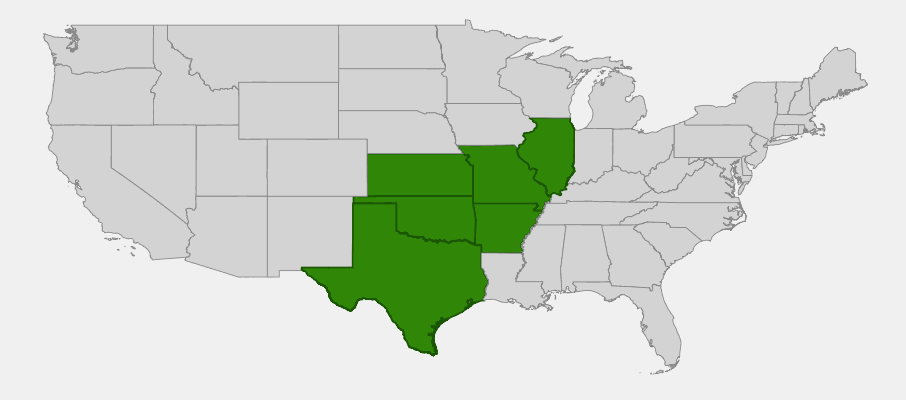
Hamamelis vernalis has one of the most restricted native ranges of any eastern witch-hazel, centered primarily on the Ozark Plateau of south-central Missouri and northern Arkansas, with extensions into adjacent parts of Kansas, Oklahoma, and Texas along the Ouachita Mountains. This concentrated distribution reflects the plant's origin in the ancient, botanically diverse Ozarks — a region that served as a refugium for many plant species during the Pleistocene ice ages.
Within the rpl-iailmo region, Ozark Witch-hazel is primarily a Missouri plant, occurring throughout the Ozarks in the southern half of the state. It is associated with rocky, moist stream banks, seeps, and ravines in the Ozark Plateau ecoregion. In Illinois and Iowa it is not native but has been successfully cultivated and is widely available from native plant nurseries as a non-native ornamental of regional ecological relevance.
In its native habitat, Ozark Witch-hazel typically grows along the rocky banks of clear Ozark streams, in the spray zones of waterfalls, and on moist, north-facing slopes. It often forms dense thickets along stream corridors, growing alongside Sycamore, River Birch, Wild Ginger, and various sedges and ferns in the sheltered ravines characteristic of the Ozark landscape.
📋 Regional plant lists featuring Ozark Witch-hazel: Iowa, Illinois & Missouri
Growing & Care Guide
Ozark Witch-hazel is an excellent garden shrub that rewards minimal care with extraordinary winter floral displays. Its cultural requirements are modest, and established plants are quite durable once properly sited.
Light
Ozark Witch-hazel thrives in full sun to part shade. In the wild it often grows in the dappled light of stream corridors beneath an open canopy, and this lighting condition is ideal in the garden. In full sun it blooms most profusely; in part shade it flowers somewhat less abundantly but remains healthy. Deep shade reduces flowering significantly.
Soil & Water
This witch-hazel is notably more drought tolerant than its relative Common Witch-hazel (Hamamelis virginiana), though it performs best in consistently moist, well-drained soil. It thrives in loamy soils enriched with organic matter, tolerating slightly acidic to neutral soil pH (5.5–7.0). While drought tolerant once established, young plants should be watered regularly during the first two growing seasons. A 3-inch layer of organic mulch helps retain moisture.
Planting Tips
Plant in fall or spring, choosing a location with good air circulation. Space plants 6 to 8 feet apart for a natural hedge or grouping. For best flower color, select specific cultivars (‘Red Imp’, ‘Carnea’, or ‘Spring Grove’) at nurseries that have evaluated their color performance, as seedling plants are highly variable from pale yellow to deep red.
Pruning & Maintenance
Ozark Witch-hazel requires minimal pruning. If shaping is needed, do it immediately after bloom in spring to avoid removing next winter's flower buds. Remove dead or crossing branches as needed. The plant naturally develops an attractive rounded form without heavy pruning. Suckers from the root zone can be removed or left to develop into a broader colony.
Landscape Uses
The winter bloom of Ozark Witch-hazel makes it uniquely valuable in the garden calendar:
- Winter garden focal point — virtually nothing else blooms in January–February in the Midwest
- Foundation planting — graceful multi-stemmed form looks excellent near buildings
- Woodland garden — excellent in dappled shade beneath deciduous trees
- Stream & rain garden margins — thrives near water features with good drainage
- Wildlife planting — early-season nectar for overwintering and early-migrating insects
- Mixed native shrub border — extends bloom season earlier than any other native shrub
- Cut flowers — branches forced indoors in a vase of water open fragrant flowers, perfuming a room
Wildlife & Ecological Value
Ozark Witch-hazel's winter bloom makes it uniquely valuable in the native plant ecosystem, providing critical early-season resources when few other plants are active.
For Birds
The winter flowers provide nectar for early-returning or overwintering hummingbirds. The dense, multi-stemmed form provides excellent nesting cover and winter shelter for sparrows, juncos, thrashers, and other woodland birds. The twiggy structure provides good nest sites for Gray Catbirds and Brown Thrashers in summer. The seeds are consumed by Bobwhite Quail, Ruffed Grouse, and various woodland birds.
For Mammals
White-tailed Deer generally leave witch-hazels alone, making Ozark Witch-hazel a good choice for deer-browsed landscapes. Rabbits may occasionally browse tender new growth in winter. The seeds are consumed by squirrels and small rodents. Dense thickets created by suckering plants provide excellent cover for rabbits, foxes, and small mammals.
For Pollinators
The winter flowers provide crucial early-season resources for pollinators. During warm winter days, queen bumblebees emerging from overwintering sites are among the first visitors. Native mining bees and other solitary bee species that overwinter as adults are also documented visitors. By providing nectar and pollen in January through April, Ozark Witch-hazel bridges the critical gap between fall and spring for insect pollinators.
Ecosystem Role
Witch-hazels occupy a unique ecological niche as winter-blooming shrubs in the understory, providing resources at times when no other woody plants are flowering. The explosive seed dispersal mechanism — ejecting seeds up to 30 feet — helps Hamamelis colonize new areas along stream corridors. The dense root system provides excellent erosion control along streambanks and moist slopes.
Cultural & Historical Uses
Witch-hazel holds a prominent place in North American botanical medicine. Ozark Witch-hazel was used similarly to Common Witch-hazel by Indigenous peoples of the Ozarks. Multiple Native American nations, including the Osage who inhabited the Ozark region, used various Hamamelis preparations for treating inflammation, skin conditions, and as astringents for wounds and bruises. The tannin-rich bark and leaves provided an effective astringent medicine that remains in use today.
The commercial witch-hazel distillate sold today as a skin toner and astringent is primarily derived from Hamamelis virginiana, but H. vernalis contains the same bioactive compounds — principally tannins (hamamelitannin) and flavonoids — with similar properties. Witch-hazel extract has been used for centuries to treat minor skin irritations, reduce inflammation, and soothe sunburn. It remains one of the few plant-derived medicines that has passed FDA scrutiny and is sold as an over-the-counter topical treatment.
The common name “witch-hazel” has various proposed etymologies. One suggestion is that the flexible branches were used as dowsing rods (witch sticks) for finding water — “witch” being derived from an Old English term for “bend” or “flex.” Another theory connects the name to the resemblance of the leaves to hazel (Corylus), though the two plants are unrelated. Whatever its name origins, witch-hazel has been an important part of North American folk medicine and cosmetic tradition for hundreds of years.
Frequently Asked Questions
When exactly does Ozark Witch-hazel bloom?
In Missouri, Ozark Witch-hazel typically begins flowering in late January or February and may continue through April. Bloom timing varies by year depending on winter temperatures — warm spells trigger blooming, while cold snaps cause the petals to curl up temporarily without damage. In the northern part of its cultivated range (Iowa), it typically blooms February through April.
How does Ozark Witch-hazel differ from Common Witch-hazel?
Common Witch-hazel (Hamamelis virginiana) blooms in fall (October–December) with yellow flowers, while Ozark Witch-hazel blooms in winter–spring (January–April) with yellow, orange, or red flowers. H. vernalis is generally slightly smaller and more compact, and the flowers tend to have a stronger, spicier fragrance. Both are excellent native shrubs, but their different bloom times make them ecologically complementary.
Are there named cultivars with specific flower colors?
Yes — nurseries offer cultivars selected for specific colors including ‘Red Imp’ (deep red), ‘Carnea’ (copper-pink), and ‘Spring Grove’ (orange). Since wild seedlings are highly variable in color, purchasing a named cultivar ensures you get the color you want.
Does Ozark Witch-hazel need a partner for fruit production?
Ozark Witch-hazel is generally self-incompatible, requiring cross-pollination between genetically distinct individuals for good seed set. Plant at least two individuals from different seed sources for reliable fruit production. However, since the plant also spreads vegetatively via root suckers, a single plant will slowly expand into a multi-stemmed colony.
Is Ozark Witch-hazel deer resistant?
Yes — white-tailed deer generally leave witch-hazels alone, making this an excellent choice for heavily deer-browsed landscapes. The somewhat bitter, astringent foliage is unpalatable to deer.