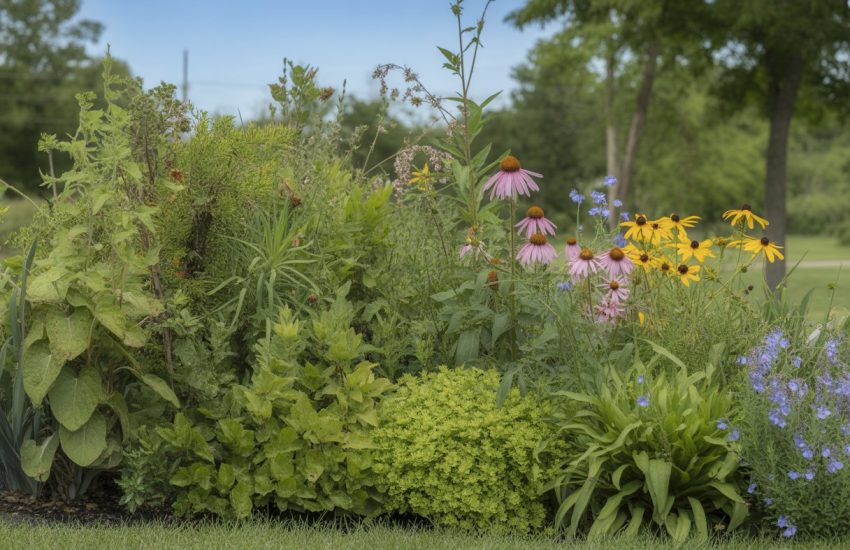
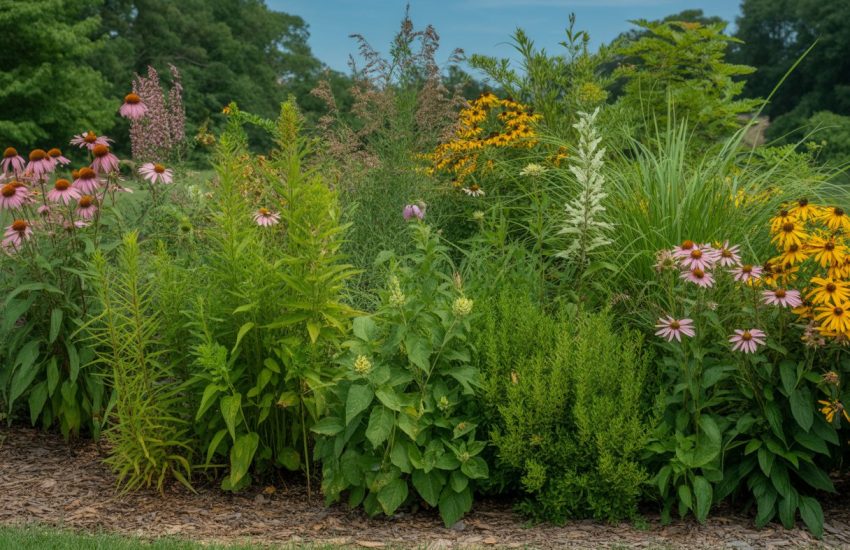
Prairie Wild Rose (Rosa arkansana)
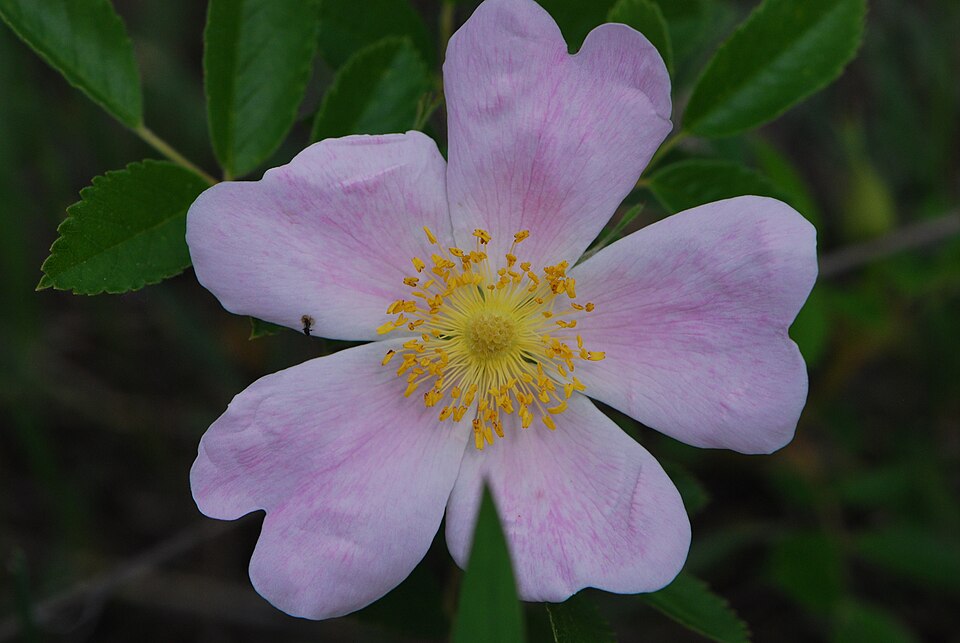
Rosa arkansana, commonly known as Prairie Wild Rose, Arkansas Rose, or Sunshine Rose, is a low-growing, tough, and remarkably beautiful native rose of the central Great Plains and Midwest. Unlike the tall, arching stems of many wild roses, Prairie Wild Rose maintains a compact, almost herbaceous character — typically reaching only 1 to 3 feet tall — spreading into loose colonies via underground rhizomes and providing bright splashes of pink color across open prairies, roadsides, and meadows from late spring through midsummer.
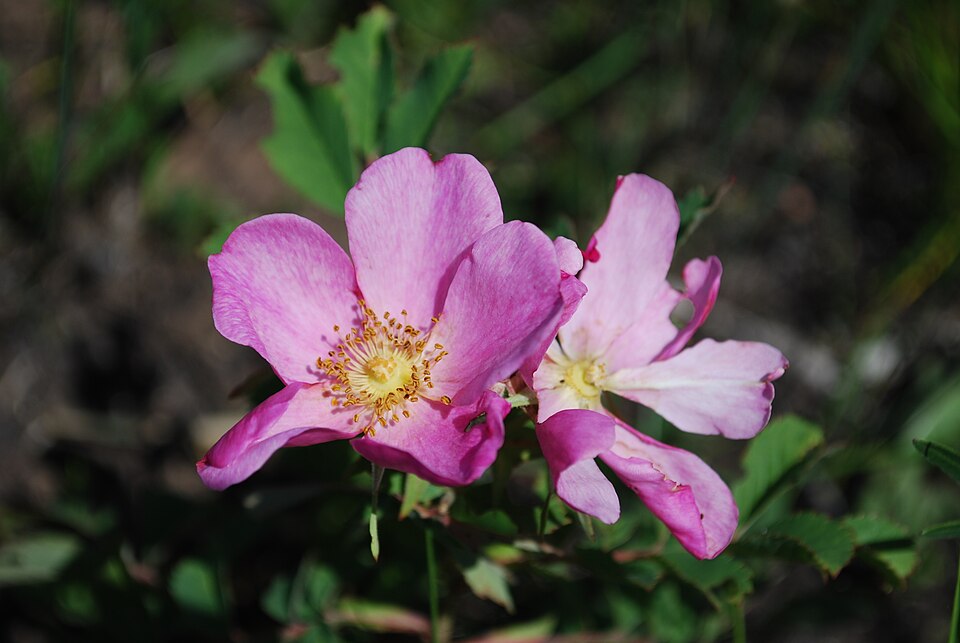
A member of the Rosaceae (rose) family, Prairie Wild Rose produces the quintessential rose flower in miniature: delicate, five-petaled blossoms in clear pink to rose-pink with a prominent boss of golden-yellow stamens at the center. These beautifully fragrant flowers appear from May through July, dotting the prairie landscape and filling the air with classic rose perfume. The flowers are followed by rounded red rose hips that persist through winter, providing valuable food for wildlife during the coldest months.
Prairie Wild Rose is one of the most widely distributed and ecologically significant native roses of the central United States, playing an important role in prairie ecosystems as a colonizer, erosion control plant, and wildlife food source. Its ability to thrive in poor, dry soils, full sun, and severe winters makes it invaluable for tough sites where more refined plants fail. For prairie gardens, roadside plantings, erosion control, and wildlife habitat, Prairie Wild Rose is a beautiful, native, and ecologically sound choice.
Identification
Prairie Wild Rose is a low, thicket-forming shrub typically 1 to 3 feet tall, arising from a spreading rhizomatous root system that creates loose colonies over time. The stems die back partially to fully in severe winters, giving the plant a somewhat herbaceous character in northern parts of its range.
Bark & Stems
The stems are densely armed with numerous, slender, straight to slightly curved prickles — more needle-like than the strongly hooked prickles of some other rose species. Young stems are greenish to reddish-green, turning brownish with age. The stems typically die back to the woody base or ground level in severe winters but resprout vigorously each spring. A key identification character: the prickles are present on both main stems and on the petioles of compound leaves.
Leaves
The leaves are pinnately compound with 5 to 9 leaflets (typically 7), each leaflet ovate to elliptic, ¾ to 1½ inches long, with sharply serrated margins, a dark green upper surface, and a slightly paler underside. Stipules at the base of the leaf stalk are present and glandular-serrated along their margins. In autumn, the leaves turn shades of yellow-orange to red before dropping.
Flowers & Fruit
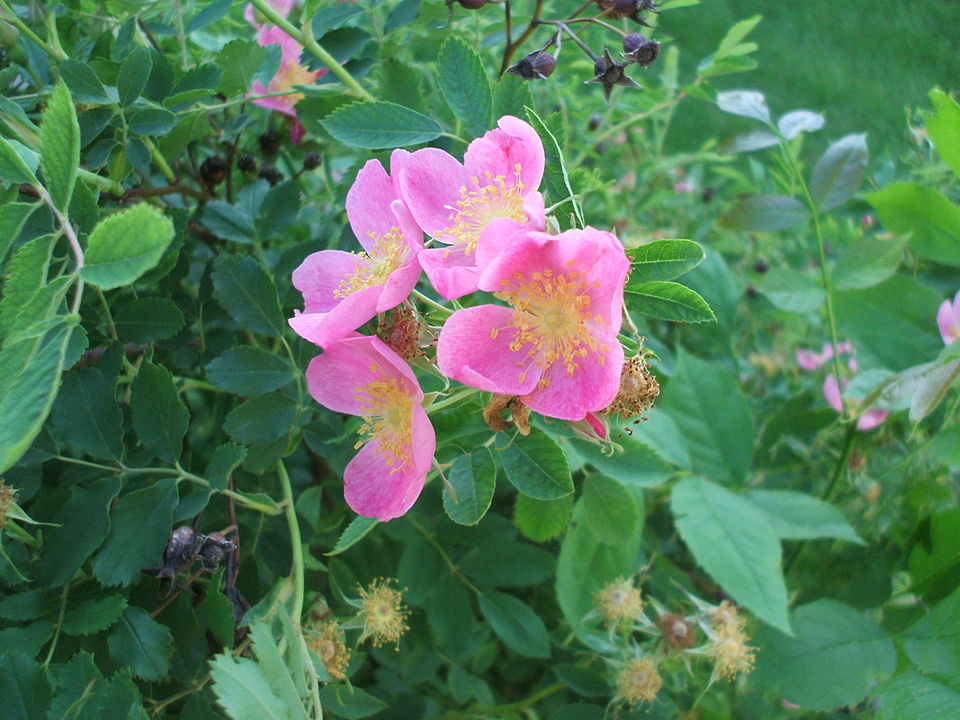
The flowers are produced singly or in small clusters of 2 to 4 at branch tips, each blossom 1½ to 2 inches (3.5–5 cm) across with 5 broadly ovate pink petals surrounding a golden center of numerous stamens. The color ranges from clear pink to deep rose-pink. Flowers are fragrant with the classic rose scent. Bloom extends from late May through July.
The fruits (rose hips) are small, rounded to slightly elongated, bright red drupes about ½ inch (12 mm) in diameter, maturing in late August through September and persisting through winter. Each hip contains numerous small, hairy achene seeds. The hips are high in Vitamin C and are eaten by numerous bird and mammal species through fall and winter.
Quick Facts
| Scientific Name | Rosa arkansana |
| Family | Rosaceae (Rose) |
| Plant Type | Deciduous Shrub (often semi-herbaceous) |
| Mature Height | 1–3 ft |
| Sun Exposure | Full Sun to Part Shade |
| Water Needs | Moderate to Low (Drought Tolerant) |
| Bloom Time | May – July |
| Flower Color | Pink to rose-pink |
| USDA Hardiness Zones | 4–8 |
Native Range
Rosa arkansana is native to a broad swath of central North America, from Manitoba and Saskatchewan south through the Great Plains to Texas and New Mexico, and east through the Midwest to Indiana. Its range encompasses the heart of North American tallgrass and mixed-grass prairie regions. The species is most abundant in the Great Plains states of Kansas, Nebraska, South Dakota, and North Dakota.
In Iowa, Illinois, and Missouri — the rpl-iailmo core region — Prairie Wild Rose occurs throughout in native prairie remnants, prairie restorations, and roadside embankments. In Iowa it is one of the more commonly encountered wild roses in prairie habitats. In Illinois it is found primarily in the northern and central portions of the state in prairie and savanna remnants. In Missouri it occurs in grassland and open woodland habitats throughout the state. The species has declined significantly with the loss of native prairie but thrives in restoration plantings.
Prairie Wild Rose typically grows in well-drained to dry soils, on gentle to moderately steep slopes, in full sun to very light shade. It is characteristic of upland prairie, prairie margins, roadsides, disturbed grasslands, and open woodland edges. It is highly tolerant of poor soils, drought, and extreme temperature fluctuations.
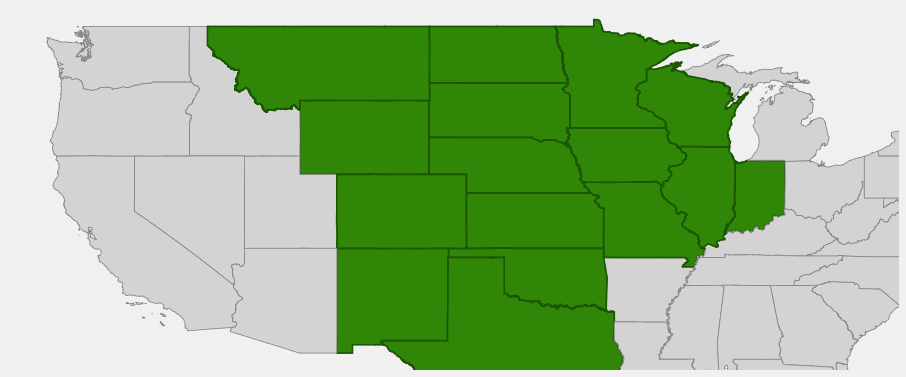
📋 Regional plant lists featuring Prairie Wild Rose: Iowa, Illinois & Missouri
Growing & Care Guide
Prairie Wild Rose is among the toughest and most adaptable of all native shrubs, thriving where other roses struggle or fail. Its requirements are simple: full sun, well-drained soil, and patience as it establishes.
Light
Prairie Wild Rose demands full sun for best performance. It blooms most prolifically, grows most compactly, and develops the best fall color in full sun with at least 6 hours of direct light per day. Part shade (4–6 hours sun) is tolerable but reduces blooming significantly. Deep shade is not suitable.
Soil & Water
Prairie Wild Rose is exceptionally well-suited to poor, dry, well-drained soils. It thrives in sandy, gravelly, or rocky soils where more moisture-demanding roses would languish. It tolerates clay soils if drainage is adequate. Rich, fertile soils encourage excessive vegetative growth at the expense of flowers. The plant is genuinely drought tolerant once established — a characteristic reflecting its prairie origins. Avoid overwatering, which is the most common cause of failure with this species.
Planting Tips
Plant bare-root stock in early spring or fall; container-grown plants can be planted any time during the growing season with adequate water during establishment. Choose a well-drained site in full sun. Do not amend the soil with excessive organic matter or fertilizer — Prairie Wild Rose thrives on “benign neglect.” Space plants 3 to 4 feet apart for a mass planting. The plant will spread by underground rhizomes to fill gaps over time.
Pruning & Maintenance
Prairie Wild Rose requires very little pruning. In the northern parts of its range (Iowa, northern Illinois), the stems often die back to the ground in severe winters — simply remove dead stems in early spring. Do not prune after midsummer, as this removes developing rose hips and next year's flower buds. Wear heavy gloves whenever working with this plant. The plant can be rejuvenated by cutting it back hard to the base in late winter every few years.
Landscape Uses
Prairie Wild Rose is highly versatile in the landscape:
- Prairie and meadow plantings — a natural companion to native grasses and wildflowers
- Slope and erosion control — spreading rhizomes stabilize banks and slopes effectively
- Roadside plantings — tolerates road salt, compacted soils, and mowing disturbance
- Wildlife gardens — hips provide winter food for birds and mammals
- Butterfly and pollinator gardens — flowers attract native bees and butterflies
- Naturalized hedges and barriers — prickly stems deter deer and unwanted foot traffic
- Dry-site gardens — one of the best native shrubs for dry, sunny, nutrient-poor conditions
Wildlife & Ecological Value
Prairie Wild Rose is an ecological workhorse on the prairie, supporting birds, pollinators, and mammals across multiple seasons with its flowers, hips, foliage, and thorny structure.
For Birds
The persistent red hips of Prairie Wild Rose are a critical winter food source for numerous bird species. American Robins, Cedar Waxwings, Gray Catbirds, Brown Thrashers, American Tree Sparrows, White-throated Sparrows, Fox Sparrows, and many other species depend on rose hips when other food is scarce in winter. Rose thickets are also particularly favored nesting sites for Gray Catbirds, Yellow Warblers, Common Yellowthroats, and Song Sparrows in the Midwest.
For Mammals
Prairie Wild Rose hips are eaten by White-tailed Deer, foxes, skunks, coyotes, and small rodents. The dense, thorny thickets provide excellent escape cover and denning habitat for rabbits, foxes, skunks, and other mammals. The rhizomatous spreading habit creates dense colonies that serve as effective wildlife refuge areas.
For Pollinators
The open, bowl-shaped flowers of Prairie Wild Rose are highly accessible to a wide diversity of pollinators. Native bees — including bumblebees, sweat bees, leafcutter bees, and mining bees — are primary pollinators and pollen harvesters. The pollen-rich flowers also attract honeybees, flower beetles, and various butterflies including skippers, swallowtails, and fritillaries. Rose chafer beetles are common visitors.
Ecosystem Role
On the prairie, Rosa arkansana plays a key role as a colonizing shrub in the transition between open grassland and woodland. Its spreading rhizomatous colonies help stabilize soils and reduce erosion. The plant is a host for numerous native insects including specialist bees and many species of native moths and butterflies whose larvae feed on Rosa foliage.
Cultural & Historical Uses
Prairie Wild Rose was used extensively by Indigenous peoples throughout the Great Plains and Midwest. The Lakota, Dakota, and other Plains nations used the rose hips — known as “cantepe” in Lakota — as an important food source. Hips were eaten fresh, dried for winter use, or cooked into soups and stews. As one of the highest plant sources of Vitamin C (containing significantly more than oranges by weight), rose hips were a nutritionally important food, particularly in winter. The Cheyenne used rose hip tea to treat colds and flu.
Various nations used different parts of the Prairie Wild Rose medicinally. The Blackfoot used root bark preparations for eye infections; the Cree used rose hip tea for treating colds; the Potawatomi used root infusions for stomach ailments. The petals were used to make a mild astringent wash for sore eyes and skin irritations. Rose petal jam and rose hip jelly were luxury treats made by pioneer families who encountered the abundant prairie roses.
Iowa designated a closely related rose (Rosa pratincola, now considered a variety of R. arkansana) as the state flower in 1897, reflecting the cultural significance of these low-growing prairie roses to Midwestern identity. Today, Prairie Wild Rose is regaining recognition as an outstanding native plant for restoration, wildlife habitat, and low-maintenance landscaping throughout its native range.
Frequently Asked Questions
Will Prairie Wild Rose take over my garden?
Prairie Wild Rose spreads by underground rhizomes and can form dense colonies over time. In a naturalized area or prairie planting, this spreading is desirable and creates habitat value. In a formal garden setting, spreading can be managed by mowing around the perimeter or removing unwanted shoots.
Can I eat Prairie Wild Rose hips?
Yes! Rose hips from all wild roses (including Prairie Wild Rose) are edible and nutritious. They are excellent made into jelly, syrup, tea, or eaten fresh after removing the seeds and the fuzzy interior hairs. Hips are best harvested after the first frost when they have softened slightly and sweetened. They are extraordinarily high in Vitamin C.
Is Prairie Wild Rose a true perennial or shrub?
Prairie Wild Rose occupies an interesting middle ground. In the northern parts of its range, the stems often die back to the woody base or ground level in severe winters, then resprout each spring. In warmer climates it maintains persistent woody stems. Botanically it is a shrub, but its die-back habit gives it a semi-herbaceous character in cold climates.
How does Prairie Wild Rose compare to other native roses?
Prairie Wild Rose is lower growing and more drought tolerant than most other native roses. Pasture Rose (Rosa carolina) is a close relative and similar in habit. Swamp Rose (Rosa palustris) grows in wet soils and reaches 6 feet. For dry, sunny, prairie-style plantings, Rosa arkansana is the best choice.
Does Prairie Wild Rose attract deer?
White-tailed Deer do browse Prairie Wild Rose, particularly in early spring. However, the prickly stems of established plants deter heavy browsing, and the plant recovers quickly from deer pressure.