
ʻIhi (Portulaca molokiniensis)
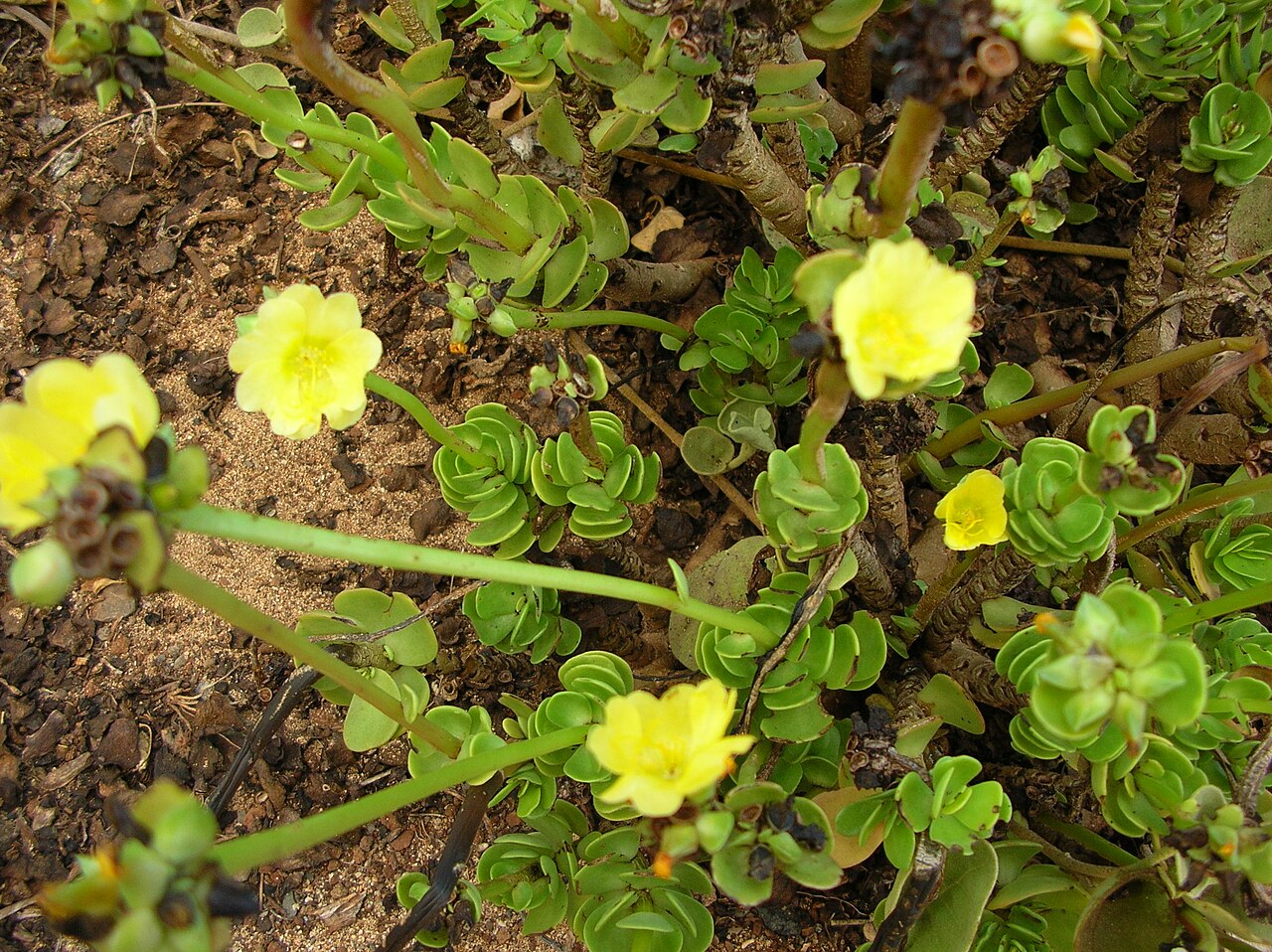
Portulaca molokiniensis, known in Hawaiian as ʻIhi (also Molokini ʻihi or Molokini purslane), is a rare succulent found in the wild only in the Hawaiian Islands. It grows in clumps of thick, upright stems about 6 to 18 inches tall, lined with round, fleshy, gray-green leaves stacked closely one over the other. Clusters of bright yellow, five-petaled flowers open at the tips of the stems, and in a warm, sunny place it can flower in almost any month.
It is a member of the purslane family (Portulacaceae) and is endemic to a few dry, windswept sites off the coast of Maui: the islet of Molokini, which gives it its name, and Puʻukoaʻe Islet and the Kamōhio Bay area of Kahoʻolawe. There it grows in loose volcanic tuff and scree on steep slopes and at the bases of sea cliffs, in some of the driest places in Hawaiʻi. It is not on the federal endangered species list, but NatureServe ranks it as globally critically imperiled (G1) because it is known from only these few small sites.
In cultivation it is a different story. ʻIhi is easy to grow, salt- and drought-tolerant, and is widely planted in coastal landscapes on Maui, and it has recently become a popular succulent in the U.S. nursery trade. You can grow it outdoors in frost-free gardens (USDA zones 10–12) and in pots anywhere, brought indoors in winter. Buy nursery-propagated plants; wild plants grow in protected areas and must never be collected. This guide covers identification, native habitat, and how to grow it in the garden and in containers.
Identification
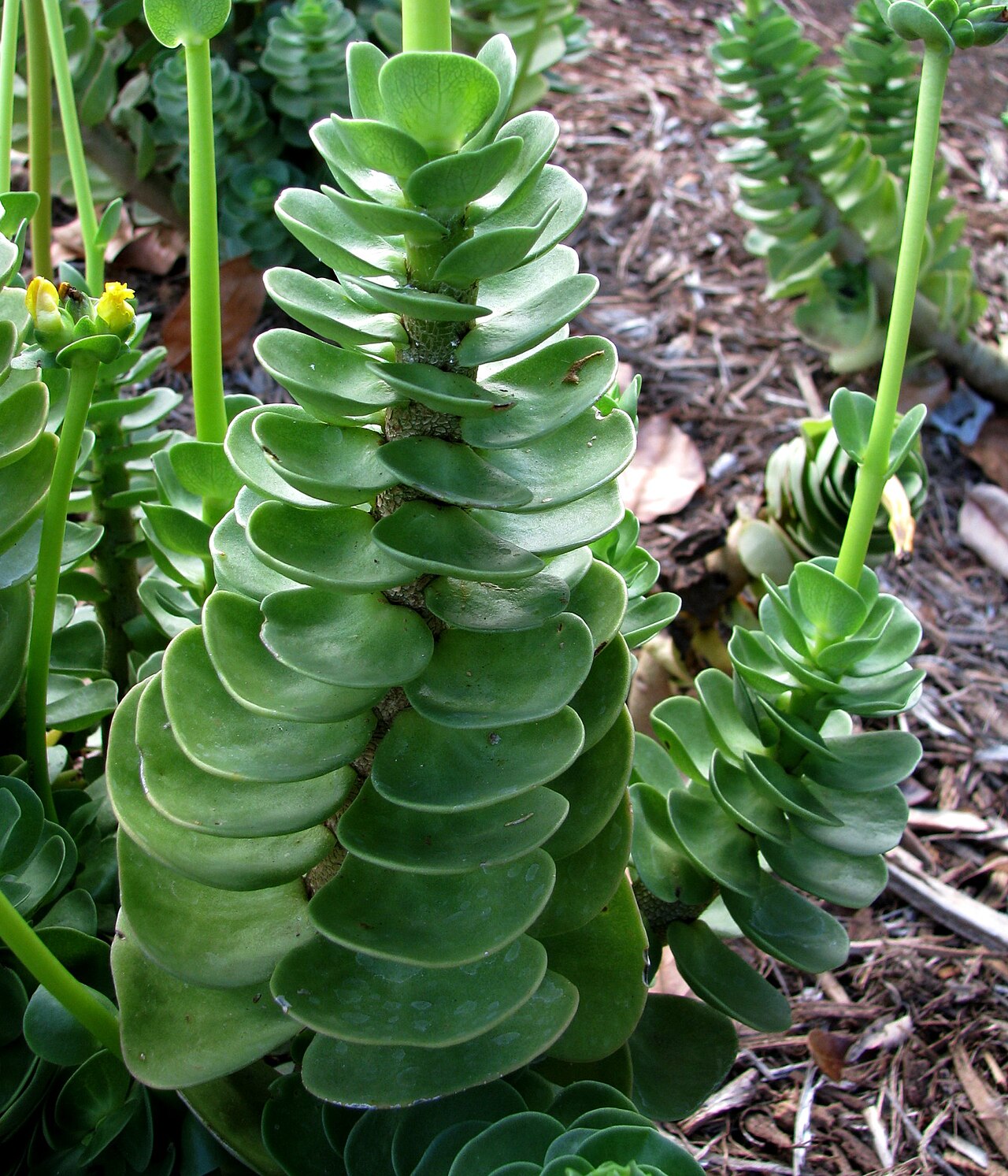
ʻIhi is easy to recognize once you have seen it: thick, upright succulent stems with round, overlapping, gray-green leaves, topped by bright yellow flowers.
Stems & Growth Habit
ʻIhi is a perennial succulent that forms a clump of thick, fleshy stems, usually 6 to 18 inches tall. Young stems are upright; older ones become woody at the base and may sprawl or lean, especially in the wild. Plants grown from seed often develop a swollen, tuber-like base (caudex), which growers like to expose in pots.
Leaves
The leaves are thick and succulent, round to broadly egg-shaped, about 1 to 1½ inches across, and gray-green to blue-green. They are crowded and overlap along the stems, often cupped slightly upward, so a stem looks like a stack of green coins. In strong sun and drought the leaves may take on a reddish edge.
Flowers
The flowers are bright lemon-yellow, about 1 inch across, with five petals and many yellow stamens. They are borne in clusters at the tips of the stems, open in sun and close in the afternoon or in cloudy weather. In Hawaiʻi it can flower in any month of the year.
Fruit & Seeds
The fruit is a small capsule that splits around the middle, and the top comes off like a lid to release many tiny, dark seeds. Plants often self-sow in garden beds and pots.
Look-alikes
Several other Portulaca species are native to Hawaiʻi and are also called ʻihi. Portulaca lutea, a widespread coastal ʻihi of Pacific islands, also has yellow flowers but is lower and more sprawling, with smaller leaves. The federally endangered P. villosa and P. sclerocarpa have white to pink flowers and narrow leaves. Mainland relatives such as Shaggy Portulaca and Wingpod Purslane are small and low-growing, with much narrower or smaller leaves.
Safety
Purslanes contain oxalates. The ASPCA lists common purslane (Portulaca oleracea) as toxic to cats and dogs, so keep pets from chewing on potted ʻihi. ʻIhi has no spines and is safe to handle.
Quick Facts
| Scientific Name | Portulaca molokiniensis Hobdy |
| Family | Portulacaceae (purslane family) |
| Plant Type | Perennial succulent; endemic to Hawaiʻi |
| Mature Height | 6–18 in |
| Mature Spread | 12–24 in |
| Growth Rate | Moderate |
| Sun Exposure | Full sun to light shade |
| Water Needs | Low; very drought tolerant |
| Soil Type | Fast-draining sandy, gravelly or cinder soil |
| Soil pH | Slightly acidic to alkaline |
| Bloom Time | Year-round in warm weather |
| Flower Color | Bright yellow |
| Fall Color | None; evergreen succulent |
| Fruit | Small lidded capsule with many tiny dark seeds |
| Deer Resistant | Unknown; often grown where deer are absent |
| USDA Hardiness Zones | 10–12 (frost-free); containers elsewhere |
Native Range
ʻIhi is endemic to the Hawaiian Islands, and USDA PLANTS lists it as native only to Hawaiʻi. Its wild populations are limited to a few coastal sites in the Maui Nui island group: Molokini islet, between Maui and Kahoʻolawe, and Puʻukoaʻe Islet and the Kamōhio Bay area of Kahoʻolawe.
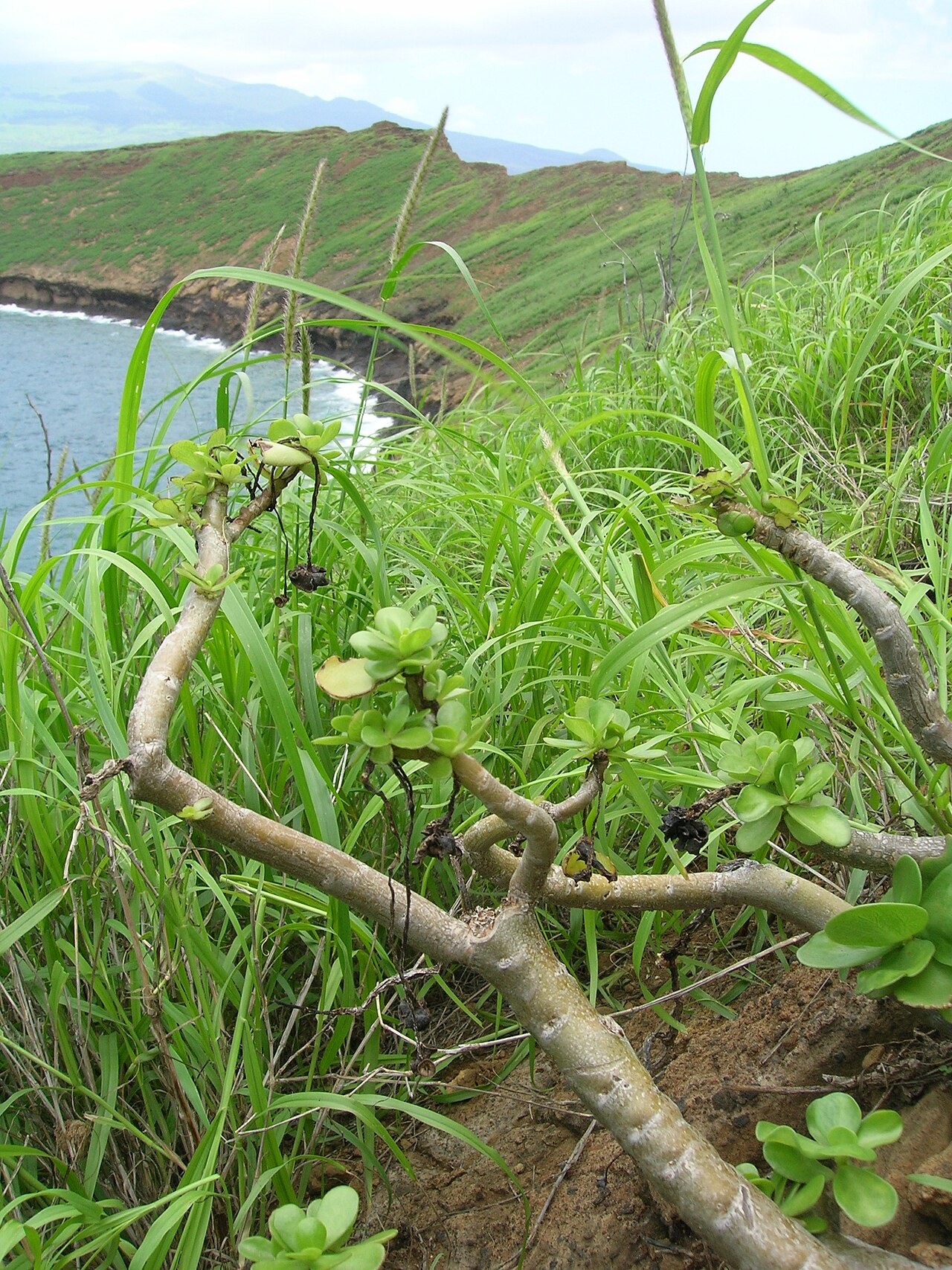
These places lie in the rain shadow of Haleakalā and are some of the driest spots in Hawaiʻi. ʻIhi grows in volcanic tuff, loose scree and rocky debris at the bases of sea cliffs and on steep, rocky slopes, from about 30 to 375 feet above sea level, exposed to strong sun, wind and salt spray. The first specimens were collected on Molokini by Charles N. Forbes in 1913 but were identified as Portulaca lutea. The plant was recognized as a separate species and described by the Maui forester Robert Hobdy in 1987.
Because it is known from so few sites, NatureServe ranks Portulaca molokiniensis as globally critically imperiled (G1), and the U.S. Fish and Wildlife Service has listed it as a species of concern. It is not listed under the federal Endangered Species Act. Its wild habitats are protected: Molokini is a state seabird sanctuary and Kahoʻolawe is a restricted island reserve, so the wild plants are not open to visitors. Fortunately, the plant is widely grown in nurseries, gardens and public landscapes.
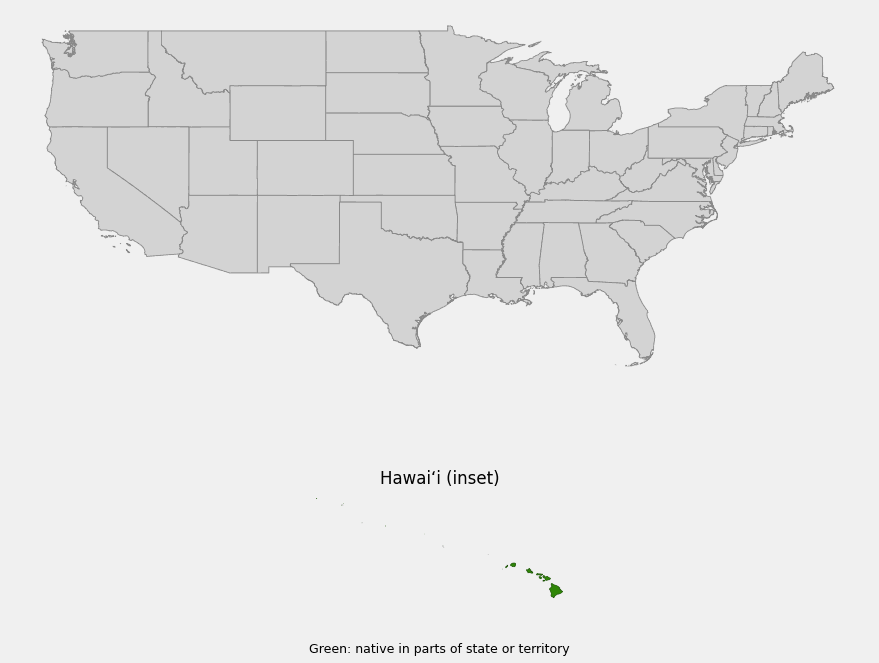
📋 Regional plant lists featuring ʻIhi: Hawaii
Growing & Care Guide
ʻIhi is one of the easiest Hawaiian natives to grow. It needs sun, fast drainage and not much water, and it flowers for much of the year. Grow it in the ground in frost-free climates, or in pots that can come indoors in winter. Buy only nursery-propagated plants.
Light
Give it full sun outdoors for compact stems and the most flowers; it tolerates light shade. Indoors, place it in the sunniest window you have, preferably south- or west-facing, or under a strong grow light. In low light the stems stretch, the leaves spread apart and it stops flowering. Acclimate plants gradually when moving them outdoors in spring to avoid sunburn.
Soil & Water
Use a very fast-draining soil or mix: sandy or cinder soil in the ground, or a gritty cactus mix with extra pumice or perlite in pots. Water deeply, then let the soil dry out before watering again. In the heat of summer that may mean weekly watering in pots; in cool or cloudy weather and indoors in winter, water only every few weeks. Soggy soil causes stem and root rot. It tolerates salt spray and is ideal for seaside gardens.
Planting Tips
Outdoors, grow it in USDA zones 10–12. Plant it in rock gardens, coastal beds, on slopes or in raised planters, spaced about 1 to 2 feet apart. Elsewhere, grow it in a container with a drainage hole; unglazed clay pots dry out quickly and help prevent rot. Move it indoors or into a frost-free greenhouse before nights fall below about 40 °F, because it cannot take frost. Raising seedlings in pots lets the caudex develop, and you can lift it slightly above the soil line at repotting for a bonsai-like look.
Pruning & Maintenance
Pinch or cut back leggy stems to keep plants compact; the cut ends branch and the cuttings can be rooted. Remove old flower clusters if you do not want seedlings. Watch for mealybugs and aphids, especially indoors, and wipe them off or treat with insecticidal soap. Feed lightly with a diluted cactus fertilizer in spring and summer.
Propagation
ʻIhi is very easy to propagate. Take stem cuttings 3 to 4 inches long, let the cut ends dry for a few days, then set them in dry gritty mix and water lightly after a week; they root quickly in warm weather. Seed also germinates readily when surface-sown on a moist, gritty mix in warmth and bright light. Seedlings are the way to get plants with a thick caudex.
Landscape Uses
- Coastal and xeriscape gardens in Hawaiʻi: salt-, wind- and drought-tolerant groundcover accent
- Containers and patios: a compact, flowering succulent for sunny spots
- Houseplant in bright windows: winter indoors in cold climates
- Rock gardens and green roofs: thrives in shallow, fast-draining soil
- Conservation plantings: keeps a rare Hawaiian endemic in cultivation
Wildlife & Ecological Value
ʻIhi is part of the small native plant community of Hawaiʻi’s dry offshore islets, where plants and seabirds share the same steep slopes.
For Pollinators
The open yellow flowers offer pollen and nectar to native bees and other insects, and in gardens they are visited by bees, flies and other small insects.
For Birds
Molokini and the islets off Kahoʻolawe are important seabird nesting sites. The low, succulent plants grow among the burrows and help hold the loose soil on the slopes where shearwaters and other seabirds nest.
For Mammals
Hawaiʻi has very few native land mammals. Feral goats once stripped much of the vegetation on Kahoʻolawe; their removal in the 1990s has helped the island’s surviving native plants, including ʻihi, to persist.
Ecosystem Role
As one of the few plants that can live on loose, dry volcanic scree near the sea, ʻihi helps stabilize slopes and provides some cover on otherwise bare ground. Its succulent leaves store water through long dry seasons.
Cultural & Historical Uses
ʻIhi is a Hawaiian name used for several native purslanes. The species name molokiniensis means “from Molokini,” the small, crescent-shaped volcanic crater off the south coast of Maui, best known today as a snorkeling and diving destination.
Although the plant was first collected in 1913, it was not formally described until 1987, when Robert Hobdy, a forester with the Hawaiʻi Division of Forestry and Wildlife on Maui, named it. That makes it one of the more recently recognized flowering plants of Hawaiʻi.
Since then, nurseries in Hawaiʻi have propagated ʻihi widely for native landscaping, and in the 2020s it became a sought-after succulent in mainland U.S. garden centers. Growing nursery-raised plants helps keep this rare species safe in cultivation, without any pressure on the few wild populations.
Frequently Asked Questions
Is Portulaca molokiniensis endangered?
It is not listed under the federal Endangered Species Act, but it is very rare in the wild. NatureServe ranks it as globally critically imperiled (G1) because it grows naturally only on Molokini and a few sites on and near Kahoʻolawe. It is common in cultivation.
Can I grow ʻihi as a houseplant?
Yes. Grow it in a gritty cactus mix in a pot with a drainage hole, in your sunniest window or under a grow light. Let the soil dry between waterings, and water sparingly in winter. Plants can spend the summer outdoors.
How cold hardy is ʻihi?
It is not frost tolerant. Grow it outdoors year-round only in USDA zones 10–12, and bring potted plants indoors before nights drop below about 40 °F.
How do you propagate Portulaca molokiniensis?
Stem cuttings root easily after the cut ends dry for a few days. It also grows readily from seed, and seedlings develop a thick, swollen base (caudex).
Is ʻihi toxic to pets?
Purslanes contain oxalates, and the ASPCA lists common purslane as toxic to cats and dogs. Keep pets from chewing on ʻihi to be safe.

Looking for a nursery that carries ʻIhi?
Browse our native plant nursery directory: Hawaii

