
Wingpod Purslane (Portulaca umbraticola)
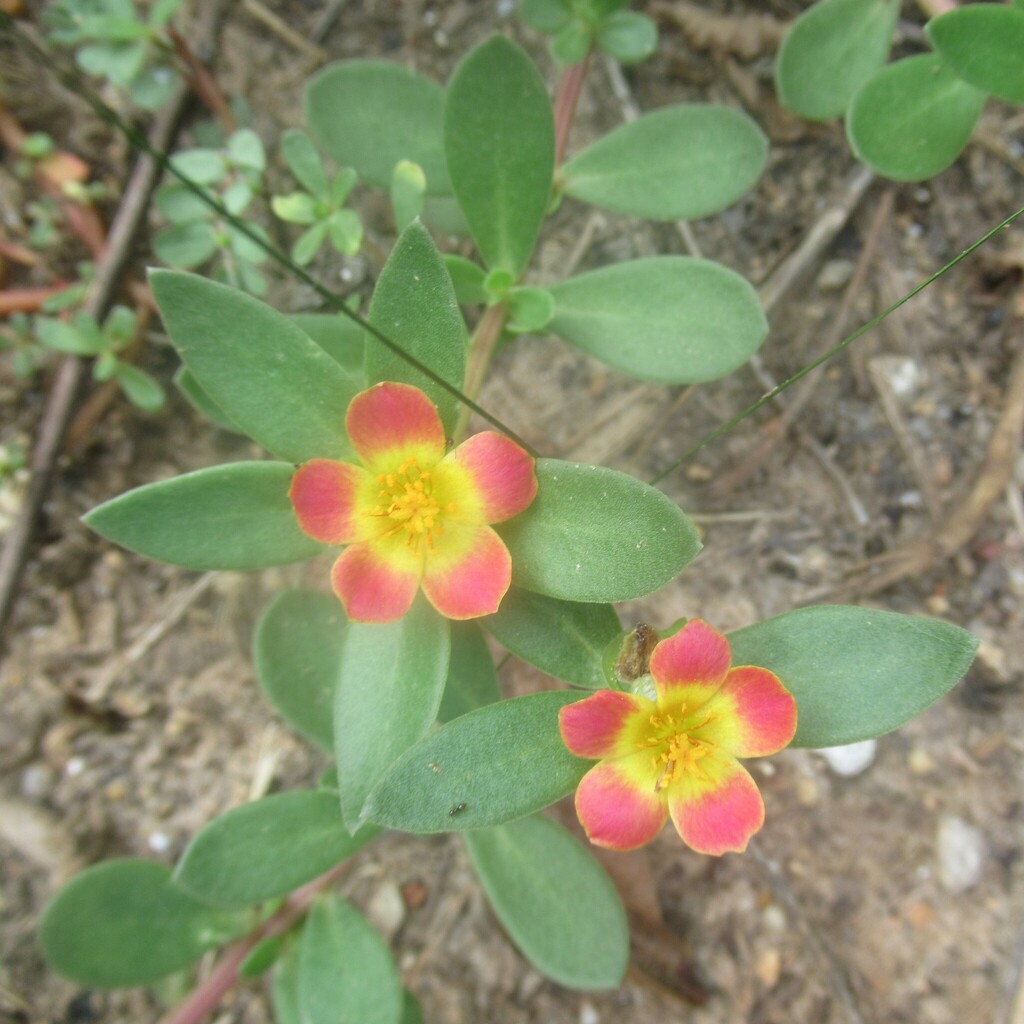
Portulaca umbraticola, the Wingpod Purslane, is a small, fleshy-leaved annual of the purslane family (Portulacaceae) native to the Americas. Its sprawling, reddish stems reach about 4 to 8 inches long and carry flat, paddle-shaped succulent leaves and cup-shaped flowers in yellow, orange, copper, red, pink or purple. In the United States it grows wild from Arizona and New Mexico across Texas and Oklahoma to Arkansas, Mississippi, Georgia and South Carolina.
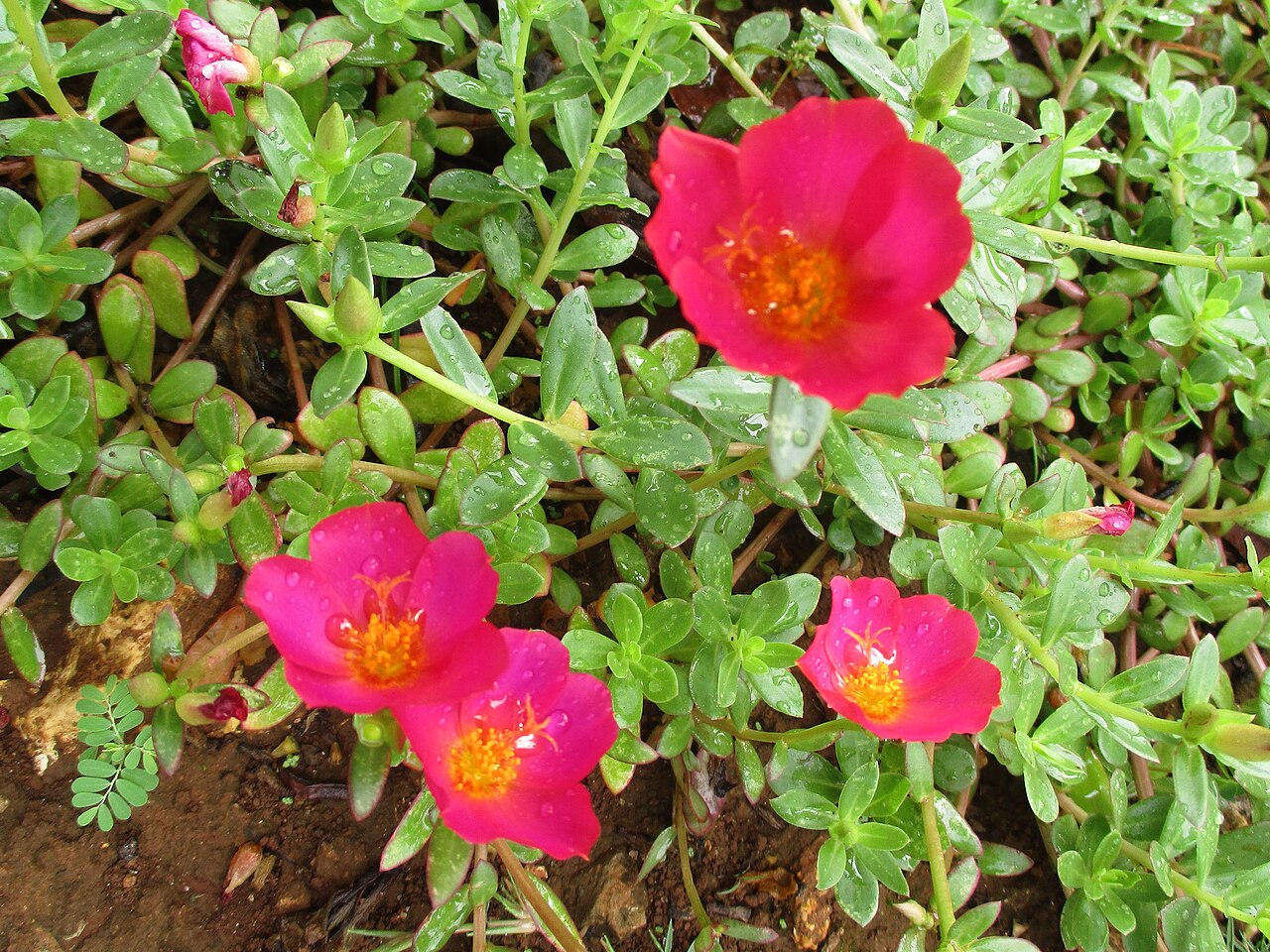
Gardeners may know it without realizing it. Many of the large-flowered “purslanes” sold for summer pots, hanging baskets and hot, dry beds are selections or hybrids of wingpod purslane, and others are forms of common purslane (Portulaca oleracea). Nursery labels are often inconsistent. Wild plants are smaller-flowered than the garden forms, but just as tough. They bloom from late spring until frost in heat and drought that would wilt most flowers.
The name refers to the fruit. Each small seed capsule has a thin, papery wing running around its middle, a feature that separates it from common purslane and moss rose. This guide covers how to identify wingpod purslane, where it grows wild, and how to grow the wild species and its garden relatives as low-water annuals.
Identification
Wingpod purslane looks a lot like common purslane, and the two often grow near each other in disturbed ground. Check the leaves, the flower color and especially the seed capsules.
Stems & Habit
A low annual (rarely a short-lived perennial in frost-free places) with smooth, fleshy stems that lie flat or curve upward, usually 4 to 8 inches long and often reddish. Unlike moss rose (P. grandiflora) and shaggy portulaca (P. pilosa), it has few or no hairs in the leaf axils.
Leaves
The leaves are alternate, flat and succulent, spoon-shaped to obovate or lance-shaped, about ⅓ to 1 inch long, and often crowded beneath the flowers at the stem tips. They are flatter and often narrower than the thick, glossy leaves of common purslane and lack the cylindrical shape of moss rose leaves.
Flowers
The flowers sit at the tips of the stems, singly or in small clusters surrounded by leaves. Wild plants have flowers about ½ inch across with five petals. They may be all yellow, or yellow at the center with red, pink, orange or copper tips. Each flower opens for only part of a day, usually in sun, and plants keep producing new flowers from late spring until frost. Garden forms have flowers 1 to 2 inches across in many bright colors, sometimes doubled.
Fruit & Seeds
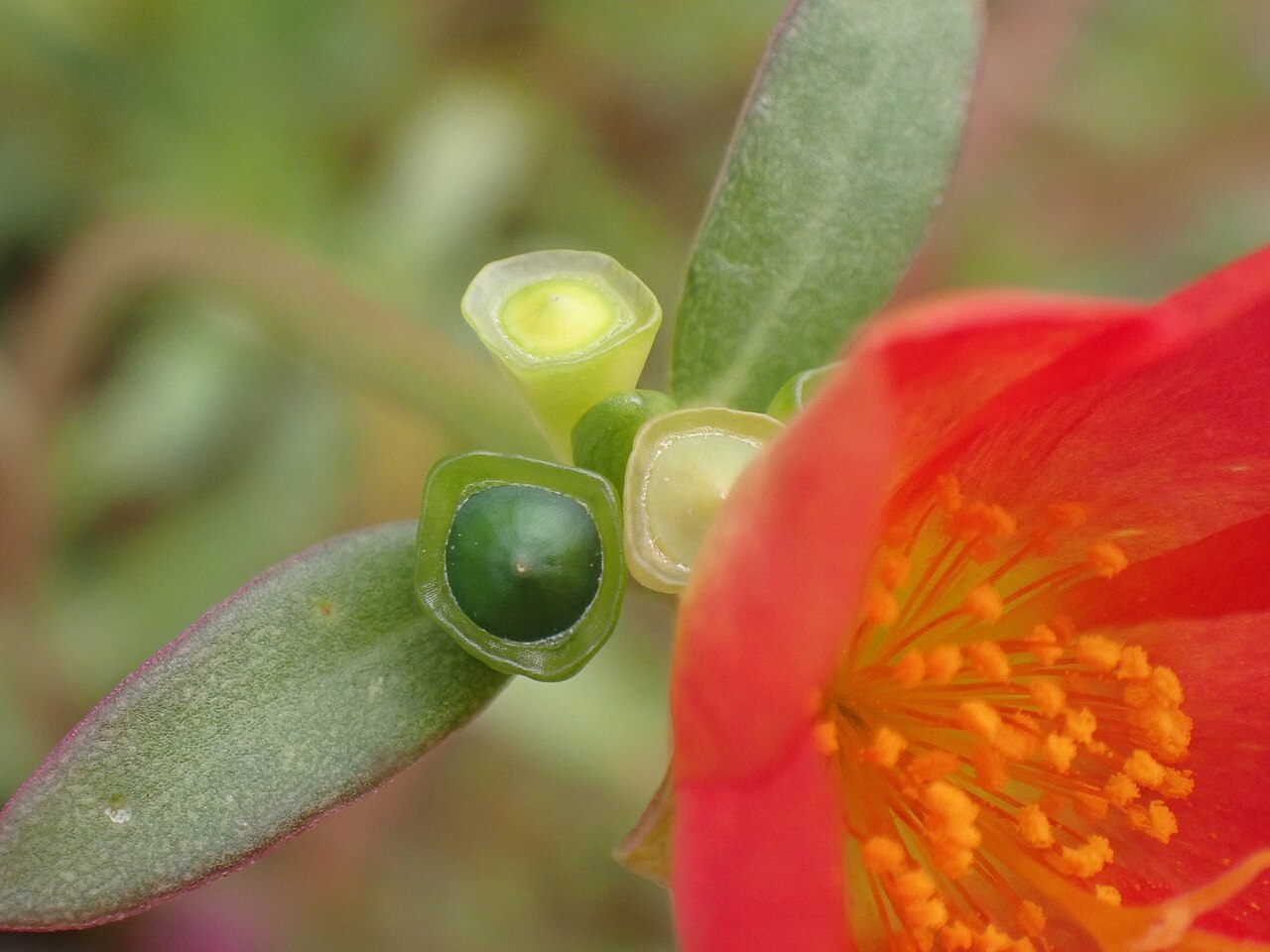
The fruit is a small capsule that opens by a lid, like a tiny lidded pot. In wingpod purslane, a thin, membranous wing or collar runs around the capsule at the line where the lid separates. That wing is the most reliable way to tell it from common purslane, whose capsule has no wing. Inside are many tiny, dark seeds.
Three subspecies are recognized. Subsp. lanceolata is the widespread form in the Southwest and south-central states. Subsp. coronata grows in Georgia and South Carolina. The typical subsp. umbraticola grows mainly in Mexico, Central America and South America.
Quick Facts
| Scientific Name | Portulaca umbraticola (subsp. lanceolata, coronata and umbraticola; syn. P. lanceolata, P. coronata) |
| Family | Portulacaceae (purslane family) |
| Plant Type | Succulent annual herb (short-lived perennial in frost-free climates) |
| Mature Height | 2–6 in tall; stems 4–8 in long |
| Mature Spread | 6–12 in |
| Growth Rate | Fast |
| Sun Exposure | Full sun |
| Water Needs | Low; very drought tolerant once established |
| Soil Type | Sandy, gravelly or rocky soil; thin soil over rock; disturbed ground |
| Soil pH | About 5.5–8.0 |
| Bloom Time | May–September (until frost in gardens) |
| Flower Color | Yellow, orange, copper, red, pink or purple; often bicolored |
| Fall Color | None; plants die at frost |
| Fruit | Small lidded capsule with a membranous wing around its middle |
| Deer Resistant | Mostly; rabbits sometimes nibble it |
| USDA Hardiness Zones | Grown as a warm-season annual in all zones |
Native Range
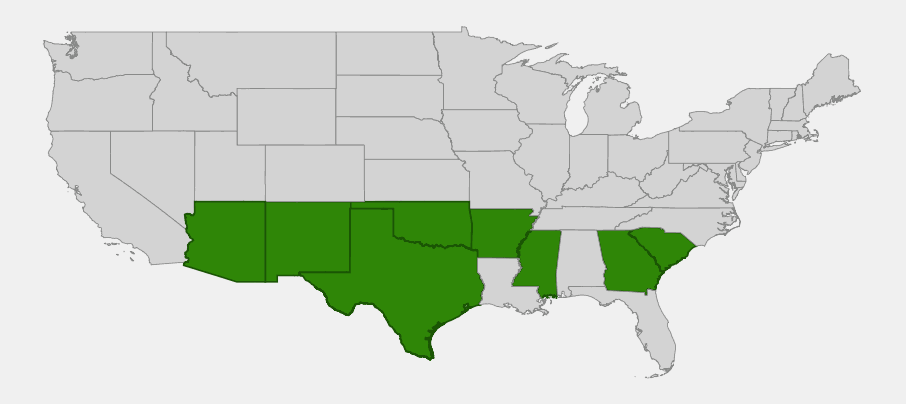
Wingpod purslane is native from the southern United States through Mexico, Central America and the Caribbean to South America. USDA PLANTS records it as native in Arizona, New Mexico, Texas, Oklahoma, Arkansas, Mississippi, Georgia and South Carolina. It is widespread in Texas, where it grows in sandy and gravelly openings, along roadsides and on rocky ground. In southern Arizona and New Mexico it often appears in grasslands and desert edges after summer rains.
USDA also lists North Carolina, but NatureServe treats the species as introduced there, so it is left off the map on this page. The species has also spread as a garden escape in other warm parts of the world, where the garden forms are grown.
The southeastern subspecies, subsp. coronata, is the rarest. NatureServe ranks it as imperiled (S2) in Georgia and critically imperiled (S1) in South Carolina, where it grows in thin soil on and around rock outcrops. NatureServe also ranks the widespread subsp. lanceolata as critically imperiled (S1) in Arkansas, at the eastern edge of its range.
📋 Regional plant lists featuring Wingpod Purslane: Arizona & New Mexico · South & West Texas · Arkansas, Louisiana, Eastern Oklahoma & Eastern Texas · Alabama, Georgia & Mississippi · North & South Carolina
Growing & Care Guide
Wingpod purslane is one of the easiest flowers for hot, dry, sunny places, whether you grow the small-flowered wild species or one of the big-flowered garden forms. It is grown like any warm-season annual: plant after frost, give it sun and sharp drainage, and water sparingly.
Light
Full sun all day. The flowers open in bright light and stay closed or only half open on cloudy days and in shade, and shaded plants grow lanky with few blooms.
Soil & Water
Any well-drained soil works, from sand and gravel to thin soil over rock. Rich, wet soil leads to stem rot. Water new plantings until they root, then only during long dry spells. The succulent leaves and stems store water, so plants tolerate drought, heat and reflected heat from pavement. In containers, use a gritty mix and let it dry between waterings.
Planting Tips
Sow seed on the soil surface after the soil warms in late spring, pressing it in lightly. It needs warmth and light to germinate. Or set out nursery plants 8 to 12 inches apart after the last frost. It is good for the front of a dry border, between stepping stones, in rock gardens, on gravel and in hanging baskets and window boxes.
Pruning & Maintenance
Little care is needed. Pinch back leggy stems in midsummer to encourage branching. Do not fertilize heavily, since lean soil gives more flowers. Wild-type plants self-sow freely in open gravel or sandy soil, while many garden forms are sterile or do not come true from seed.
Propagation
The wild species is grown from seed, which is tiny and should not be covered deeply. Garden selections are propagated from stem cuttings, which root within days in moist sand or potting mix. Like other portulacas, they are easy to root and to overwinter on a sunny windowsill.
Landscape Uses
- Xeriscapes and rock gardens: low summer color in gravel and thin, dry soils
- Containers and hanging baskets: garden forms bloom all summer with little water
- Hell strips and paving cracks: tolerates heat reflected from sidewalks and driveways
- Pollinator gardens: open flowers for small bees in the hottest months
- Native desert and Texas gardens: the wild form for naturalistic plantings within its native range
Wildlife & Ecological Value
Wingpod purslane is small but useful in hot, open habitats. It flowers through the summer heat, when many other wildflowers have gone dormant.
For Pollinators
The open, bowl-shaped flowers give easy access to pollen and nectar for small native bees, including sweat bees, and for flies and other insects. In Texas and the desert Southwest it blooms through midsummer and into fall, adding food during the hottest, driest part of the year.
For Birds
The tiny seeds are eaten by doves, quail, sparrows and other ground-feeding birds, as are the seeds of other purslanes.
For Mammals
Rabbits and rodents may nibble the succulent stems. The plant is too small to be a significant browse plant for deer.
Ecosystem Role
As a fast-growing annual of bare, sunny ground, wingpod purslane is among the first plants to cover openings after disturbance, summer rains or drought. Its succulent leaves and stems store water, and like other purslanes it uses a heat-efficient form of photosynthesis (C4), which helps it grow on hot rock and sand. On southeastern rock outcrops it belongs to a specialized community of thin-soil plants found almost nowhere else.
Cultural & Historical Uses
The German naturalist Carl Sigismund Kunth described Portulaca umbraticola in 1823 from plants collected in South America during Alexander von Humboldt’s expedition. The species name means “growing in shade,” a puzzling choice for a plant that loves full sun.
Purslanes have a long history as food. Common purslane (P. oleracea) has been eaten as a vegetable since ancient times. Wingpod purslane is also reported to be edible, with a similar mild, slightly sour taste. If you want to try it, harvest only plants you have identified with certainty and that grow away from roadsides, sprays and polluted soil, and eat it in moderation, since purslanes contain oxalates.
In the 20th century, plant breeders selected large-flowered forms of wingpod purslane and crossed them with related species to create many of the colorful “purslanes” now sold as bedding plants. Seed-grown mixes and cutting-grown series in many colors are planted around the world and have escaped in some warm regions. The wild American plant, with its small yellow and red flowers, remains a modest, tough annual of sunny, rocky ground.
Frequently Asked Questions
Is wingpod purslane the same as garden purslane?
Partly. Many large-flowered garden “purslanes” sold for baskets and pots are selections or hybrids of wingpod purslane, while others are forms of common purslane (P. oleracea). The wild native plant has smaller flowers, often yellow with red or pink tips.
How do I tell wingpod purslane from common purslane?
Look at the seed capsule. Wingpod purslane has a thin, papery wing around the middle of the capsule, and common purslane does not. Wingpod purslane also tends to have flatter, narrower leaves and more colorful flowers.
Is wingpod purslane edible?
It is reported to be edible, like common purslane. Eat only plants you have identified with certainty that grow in clean soil, and eat them in moderation because purslanes contain oxalates.
Does wingpod purslane come back every year?
It is an annual in most of the United States. Wild plants often reseed themselves in sunny, gravelly ground, and garden forms can be kept over winter indoors from cuttings.
Where is wingpod purslane native?
In the United States it is native from Arizona and New Mexico across Texas and Oklahoma to Arkansas, Mississippi, Georgia and South Carolina. It also grows wild through Mexico and Central and South America.

Looking for a nursery that carries Wingpod Purslane?
Browse our native plant nursery directory: Arizona & Arkansas · Georgia · Mississippi · New Mexico & Oklahoma · South Carolina & Texas

