
Popping Pod (Ruellia tuberosa)
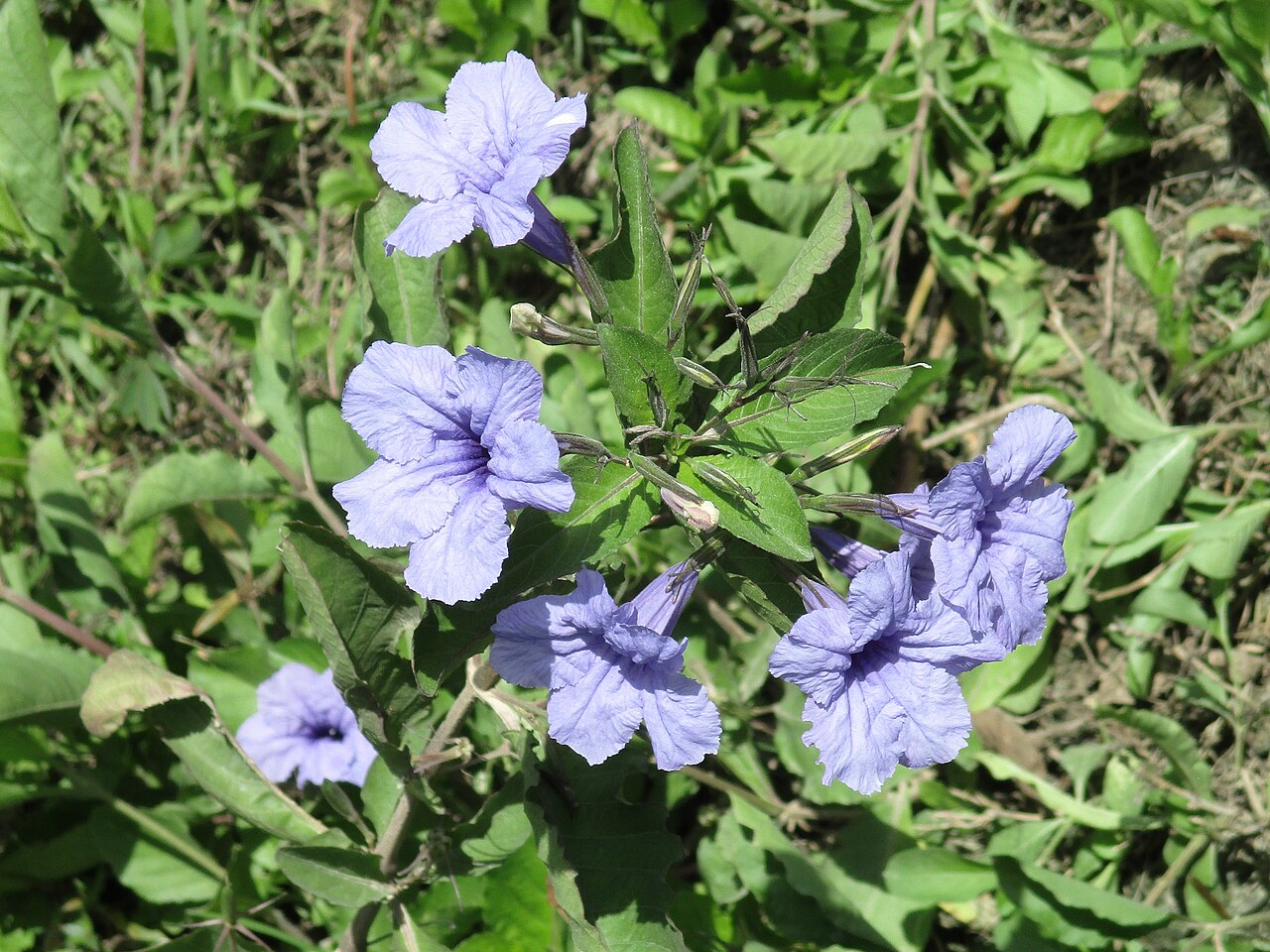
Ruellia tuberosa, known as Popping Pod, minnieroot, fever root, snapdragon root, cracker plant or duppy gun, is a low, tough perennial in the acanthus family (Acanthaceae) with violet-blue, petunia-like flowers. It grows 8 to 24 inches tall from a cluster of thick, spindle-shaped tuberous roots, which explain the species name tuberosa. In the United States it is native to Puerto Rico and the U.S. Virgin Islands, part of a range that covers the Caribbean, Central America and northern South America.
Its best-known trick is in the name. The slender seed pods split open violently when they get wet, scattering seeds with an audible snap. Generations of Caribbean children have played with the pods, dropping them in water or touching them with a wet finger to make them pop, which is the source of names like “duppy gun” and “cracker plant.”
Popping pod is a sun-loving, drought-tolerant plant of grassy roadsides, pastures, open dry woods and disturbed ground, and it is easy to grow in a tropical garden. This guide covers how to identify it, where it grows wild, how to grow it outdoors in frost-free areas or in a pot, and how it differs from the invasive Mexican petunia that is so common in Florida gardens.
Identification
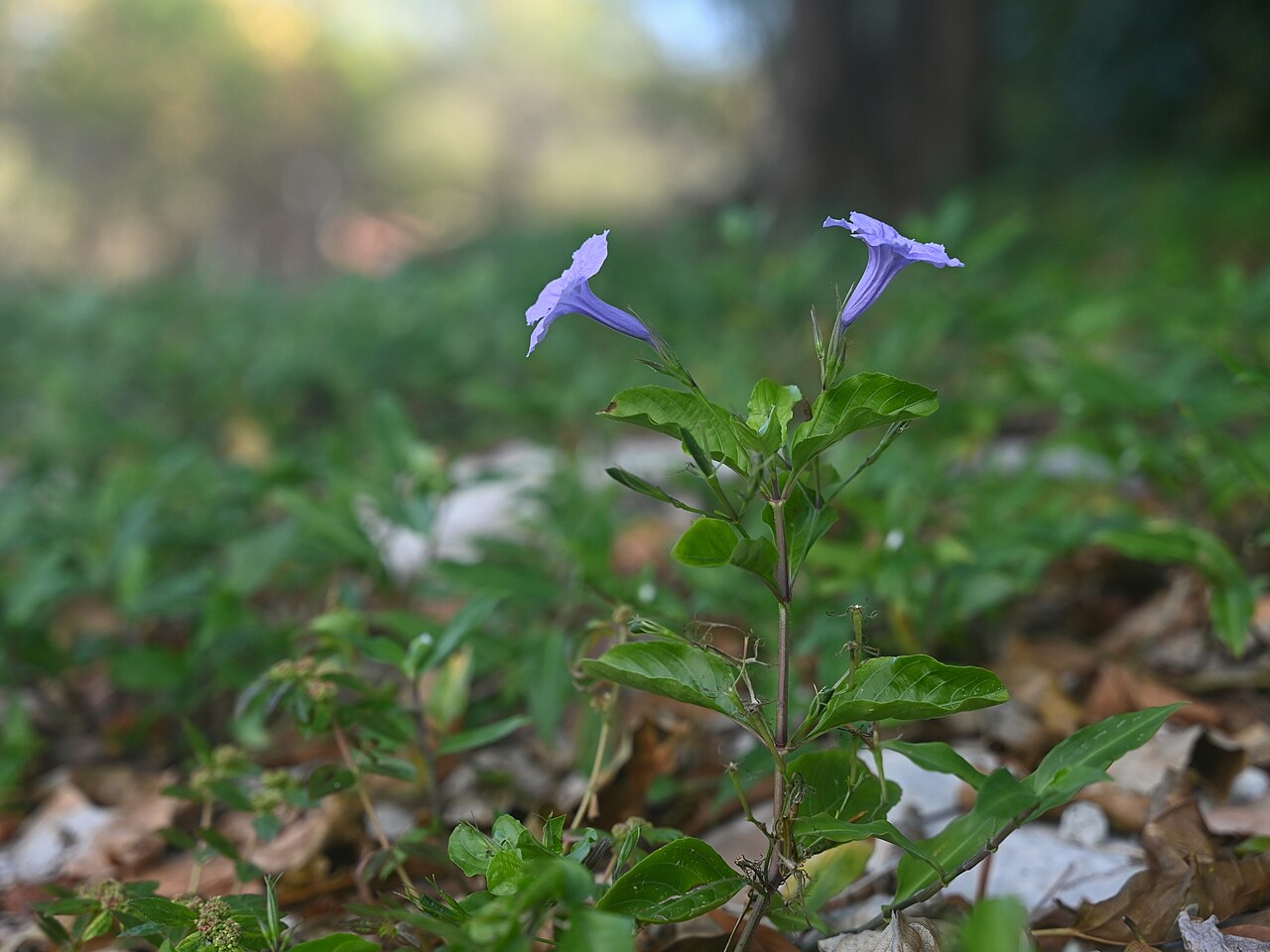
Popping pod is a typical wild petunia, with opposite leaves and short-lived funnel-shaped flowers. Its compact size, broad leaves, tuberous roots, and the explosive pods that follow the flowers help separate it from the other Ruellia species grown in the Caribbean.
Roots & Stems
Beneath the soil the plant has a cluster of thick, fleshy, spindle-shaped tuberous roots, each roughly 1 to 3 inches long. They store water and food and let the plant resprout after drought, mowing or fire. The stems are upright to spreading, four-angled when young, and usually 8 to 24 inches tall, branching little.
Leaves
Leaves are opposite, elliptic to oblong-obovate, about 2 to 5 inches long, dark green, with slightly wavy edges and a narrowed base that tapers into a short stalk. They are smooth to sparsely hairy, and often crowded toward the base of the stem. Like many acanthus-family plants, the leaves contain tiny elongated crystals (cystoliths) that show as faint streaks under a hand lens.
Flowers
The flowers are funnel-shaped, about 1½ to 2 inches long and wide, with five broad, slightly crinkled lobes. They are violet-blue to lavender with darker veins in the throat. They open in the morning and usually drop by late afternoon, so the ground beneath a plant is often dotted with fallen flowers. Blooming happens mostly in the warm, rainy season but can occur most of the year in the tropics.
Fruit & Seeds
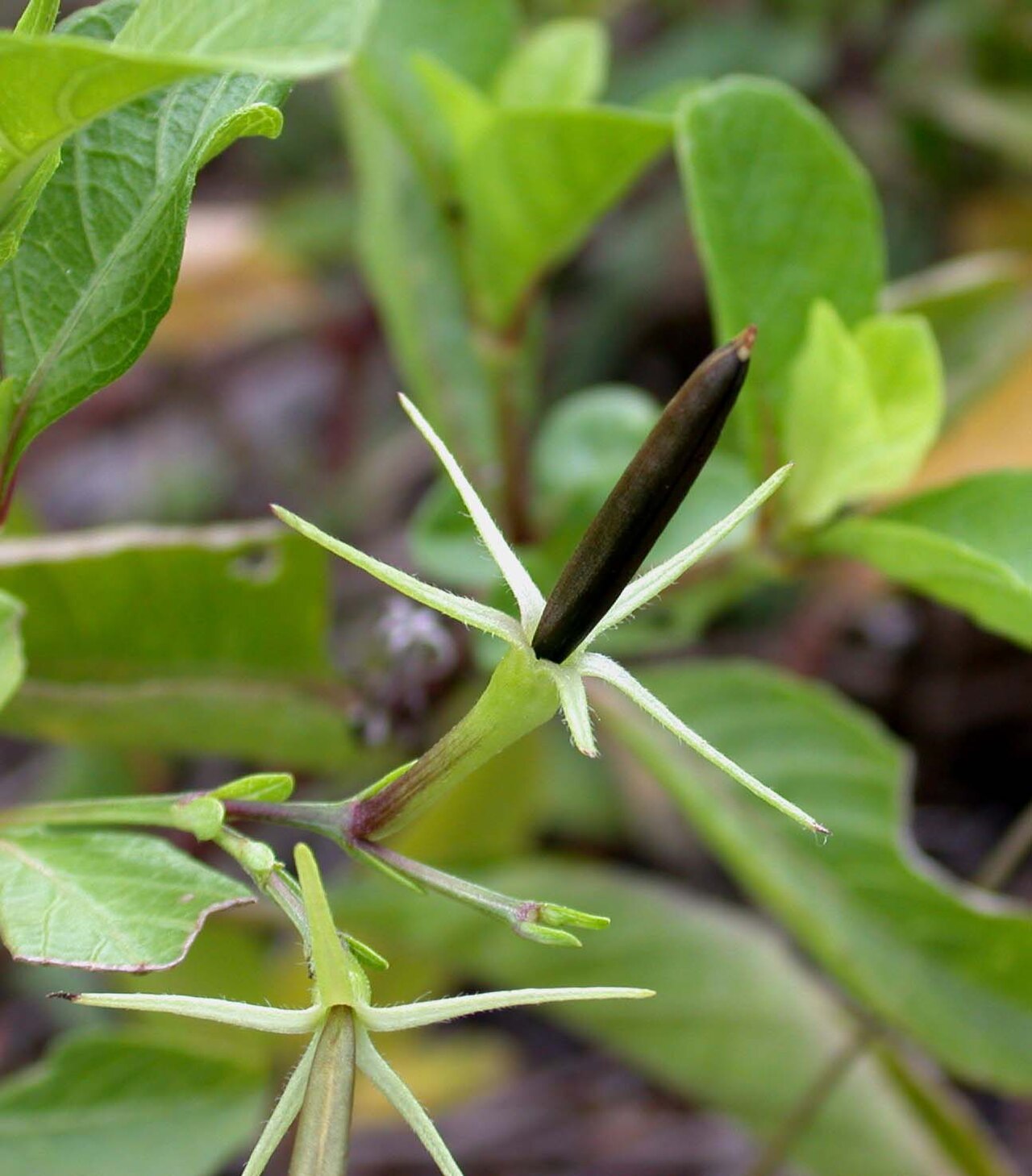
The fruit is a narrow, club-shaped capsule about ¾ to 1 inch long, green ripening to dark brown, surrounded at the base by narrow sepals. Each pod holds around 20 flat seeds. The seed coats are covered with hairs that swell and turn sticky when moistened. When rain or dew wets a dry pod, the walls split and twist suddenly, throwing the seeds several feet away from the plant.
Quick Facts
| Scientific Name | Ruellia tuberosa L. |
| Family | Acanthaceae (acanthus family) |
| Plant Type | Herbaceous perennial with tuberous roots |
| Mature Height | 8–24 in |
| Mature Spread | 8–18 in |
| Growth Rate | Moderate to fast |
| Sun Exposure | Full sun to part shade |
| Water Needs | Low to moderate; drought tolerant |
| Soil Type | Sandy, rocky, clay or loamy soils that drain well |
| Soil pH | About 6.0–8.0 |
| Bloom Time | Mainly the warm, rainy season; year-round in mild tropical weather |
| Flower Color | Violet-blue to lavender |
| Fall Color | None |
| Fruit | Narrow brown capsule that splits explosively when wet |
| Deer Resistant | Not applicable in Puerto Rico; seldom grazed by livestock |
| USDA Hardiness Zones | 10–13 outdoors; containers elsewhere |
Native Range
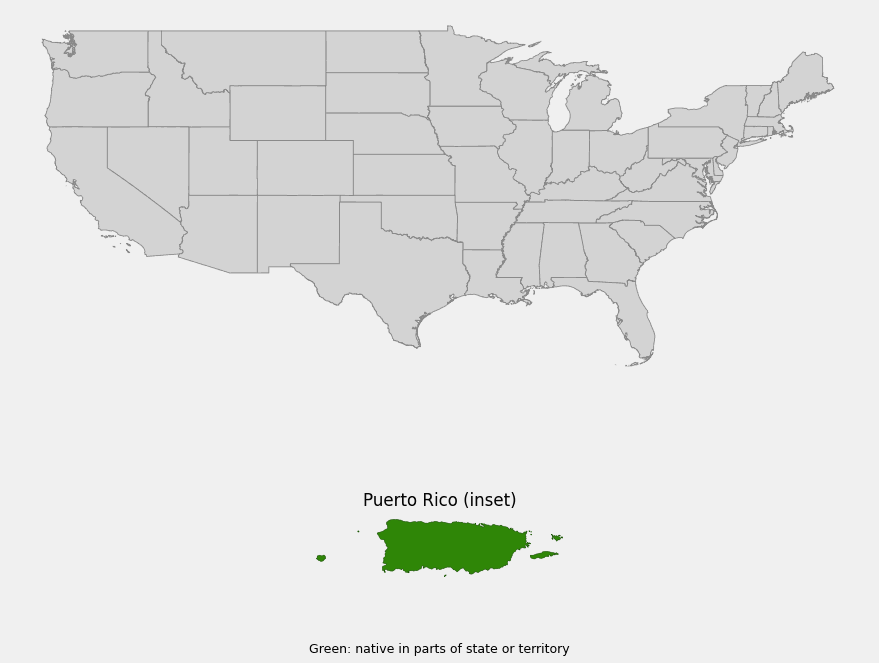
USDA PLANTS lists popping pod as native to Puerto Rico and the U.S. Virgin Islands, and it is not recorded as native in the 50 states. Its wider native range includes the Caribbean islands, Central America, and northern South America. It has been carried to tropical Asia, Africa and Pacific islands, where it is widely naturalized and often treated as a weed of roadsides and fields.
In Puerto Rico it is a plant of open, sunny places in the lowlands, especially in the drier south and west: grassy roadsides, pastures, vacant lots, field edges, coastal scrub and the edges of dry forest. It is also common in towns, sprouting between paving stones and along fences. The tuberous roots let it survive the long dry season, and it flowers again after rain.
Popping pod is occasionally grown in gardens outside its native range. It is not the same as the invasive Mexican petunia (Ruellia simplex), which is a much taller plant with narrow leaves.
📋 Regional plant lists featuring Popping Pod: Puerto Rico
Growing & Care Guide
Popping pod is an easy plant for a sunny tropical garden or a large pot. It handles heat, drought and poor soil, and it is rarely bothered by pests. In zones 10 to 13, including Puerto Rico and south Florida, it can stay in the ground year-round. In cooler areas grow it in a container and bring it indoors before frost.
Light
Full sun gives the most flowers and the most compact plants. It tolerates part shade, but plants in deep shade grow lanky and flower sparsely. Indoors, it needs a sunny south- or west-facing window or a bright grow light; with less light it may survive but rarely blooms.
Soil & Water
Any soil that drains reasonably well is fine, from sand and limestone rubble to clay loam. Avoid places where water stands after rain, because the tuberous roots can rot. Water regularly while plants establish, then only during long dry spells. In pots, use a general potting mix with added perlite or coarse sand, and let the top inch or two dry out between waterings. Reduce watering in the cool season.
Planting Tips
Set plants about 12 inches apart in a sunny bed, rock garden, or along a path where the flowers can be seen in the morning. Because flowers last only a day, plant several together for a steady show. It combines well with native grasses and other low wildflowers in a dry meadow-style planting. In containers, choose a pot at least 8 inches deep to give the tuberous roots room.
Pruning & Maintenance
Little care is needed. Pinch or cut back leggy stems to encourage branching. Popping pod reseeds readily, and seedlings may appear in nearby beds and lawns; remove unwanted ones while they are small, before the tuberous roots develop. If you want to limit spread, pick ripening pods before they turn brown, ideally before rain.
Propagation
Seed is easiest. Collect dry pods in a paper bag (they will pop inside it when you add a few drops of water), and sow seeds on the surface of moist mix in warm conditions; seedlings appear in one to two weeks. Older plants can also be divided, keeping a few tuberous roots with each piece, and stem cuttings root readily in moist sand.
Landscape Uses
- Native gardens in Puerto Rico: a tough, low-growing wildflower for sunny, dry beds and meadow plantings
- Butterfly gardens: a larval food plant for buckeye butterflies
- Containers: compact plants for sunny patios and windowsills
- Children’s and school gardens: the exploding pods are a memorable way to teach seed dispersal
- Roadside and lawn edges: persists in mown grassy areas thanks to its tuberous roots
Wildlife & Ecological Value
Popping pod is a modest plant, but its daily flowers, leaves and seeds play a role in open, sunny tropical habitats.
For Pollinators
The tubular flowers are visited by bees, including carpenter bees and smaller native bees that crawl into the throat for nectar and pollen, and by butterflies. Because flowers open early in the day, they are busiest in the morning.
For Birds
Seed-eating birds such as grassquits and ground doves forage on open ground where popping pod grows and may eat the seeds that the pods throw onto the soil. The plants also shelter insects that birds eat.
For Mammals
Livestock seldom graze it heavily. The tuberous roots may be eaten by rodents, and the plant regrows from them after grazing or mowing.
Ecosystem Role
Ruellia species are larval host plants for buckeye butterflies (Junonia), and the mangrove buckeye has been recorded feeding on popping pod. The plant’s explosive seed dispersal and storage roots let it colonize bare, disturbed ground quickly and persist through drought.
Cultural & Historical Uses
Linnaeus described Ruellia tuberosa in 1753. The genus honors Jean Ruel (Joannes Ruellius), a French physician and herbalist of the early 1500s who translated the classical Greek herbal of Dioscorides. In English, the species has gathered many local names, including minnieroot, fever root, snapdragon root, sheep potato, popping pod, cracker plant and duppy gun (“duppy” is a Caribbean word for a ghost).
In Caribbean, Latin American and Asian folk medicine, the roots and leaves have been used to treat fevers, as a diuretic and for other complaints, and the plant has been studied in the laboratory for antioxidant and blood-sugar effects. Those studies are early-stage and do not establish safe medicinal use. In parts of Southeast Asia the plant is also used as a natural textile dye.
Safety note: popping pod is not known to be highly toxic, but its medicinal effects are not well studied in people. Do not use the roots or leaves as medicine without advice from a health professional, especially during pregnancy or alongside diabetes or blood-pressure medication. Keep pets and young children from eating the plant.
Frequently Asked Questions
Why is it called popping pod?
Its dry seed pods split open explosively when they get wet, scattering seeds with a small pop. Children in the Caribbean have long played with the pods by dropping them in water.
Is Ruellia tuberosa native to the United States?
It is native to Puerto Rico and the U.S. Virgin Islands, which are part of its Caribbean range. It is not native to the 50 states.
Is popping pod the same as Mexican petunia?
No. Mexican petunia (Ruellia simplex) is a taller plant, 3 to 5 feet, with long narrow leaves, and it is invasive in Florida and other southern states. Popping pod is usually under 2 feet tall, with broad leaves and thick tuberous roots.
Can I grow popping pod indoors?
Yes, in a pot in a very sunny window or under a grow light. Use a well-drained mix, water when the top of the soil dries, and give it a summer outdoors if possible to encourage flowering.
Is popping pod weedy?
It reseeds and can pop up in lawns and beds. In Puerto Rico it is a native wildflower, so a little spread is natural. Removing pods before they ripen keeps it in check.

Looking for a nursery that carries Popping Pod?
Our nursery directory does not yet include Puerto Rico. Browse the native plant nursery directory by state: Alabama–Arkansas · California · Colorado–Hawaii · Idaho–Kansas · Kentucky–Montana · Nebraska–Oklahoma · Oregon · Pennsylvania–Virginia · Washington · West Virginia–Wyoming

