
Caparosa (Callicarpa ampla)
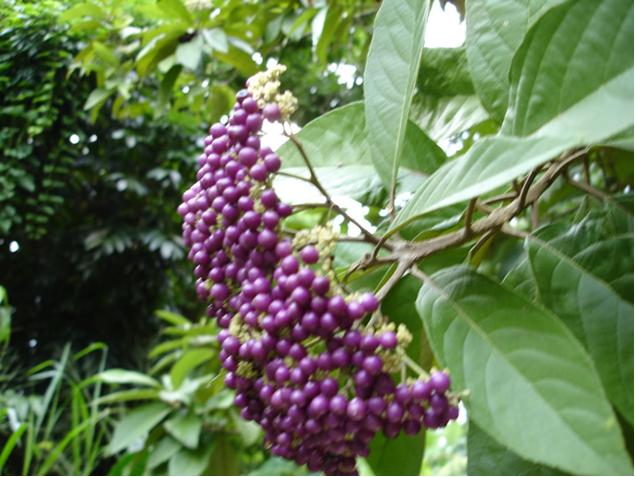
Callicarpa ampla, known in Puerto Rico as caparosa or capá rosa, and also as péndula cimarrona, is a rare shrub or small tree found only in Puerto Rico. It is a tropical relative of the American beautyberry, with large, glossy, opposite leaves, broad flat clusters of tiny white flowers, and heavy hanging bunches of small fruit that ripen to pink and purple.
Caparosa is listed as Endangered under the U.S. Endangered Species Act, and the IUCN Red List rates it Critically Endangered. The U.S. Fish and Wildlife Service listed it in 1992, together with four other rare trees of Puerto Rico’s mountains. Today it is known only from the Luquillo Mountains in El Yunque National Forest, where an estimated few dozen plants grow in a handful of scattered locations.
This page is meant to help people recognize and value caparosa, not to collect it. Never dig, cut or take seed or cuttings from wild plants, and plant it only if it is nursery-propagated through authorized conservation programs. Collecting is a recognized threat to the species, and removing or damaging listed plants on federal land such as El Yunque is illegal.
Identification
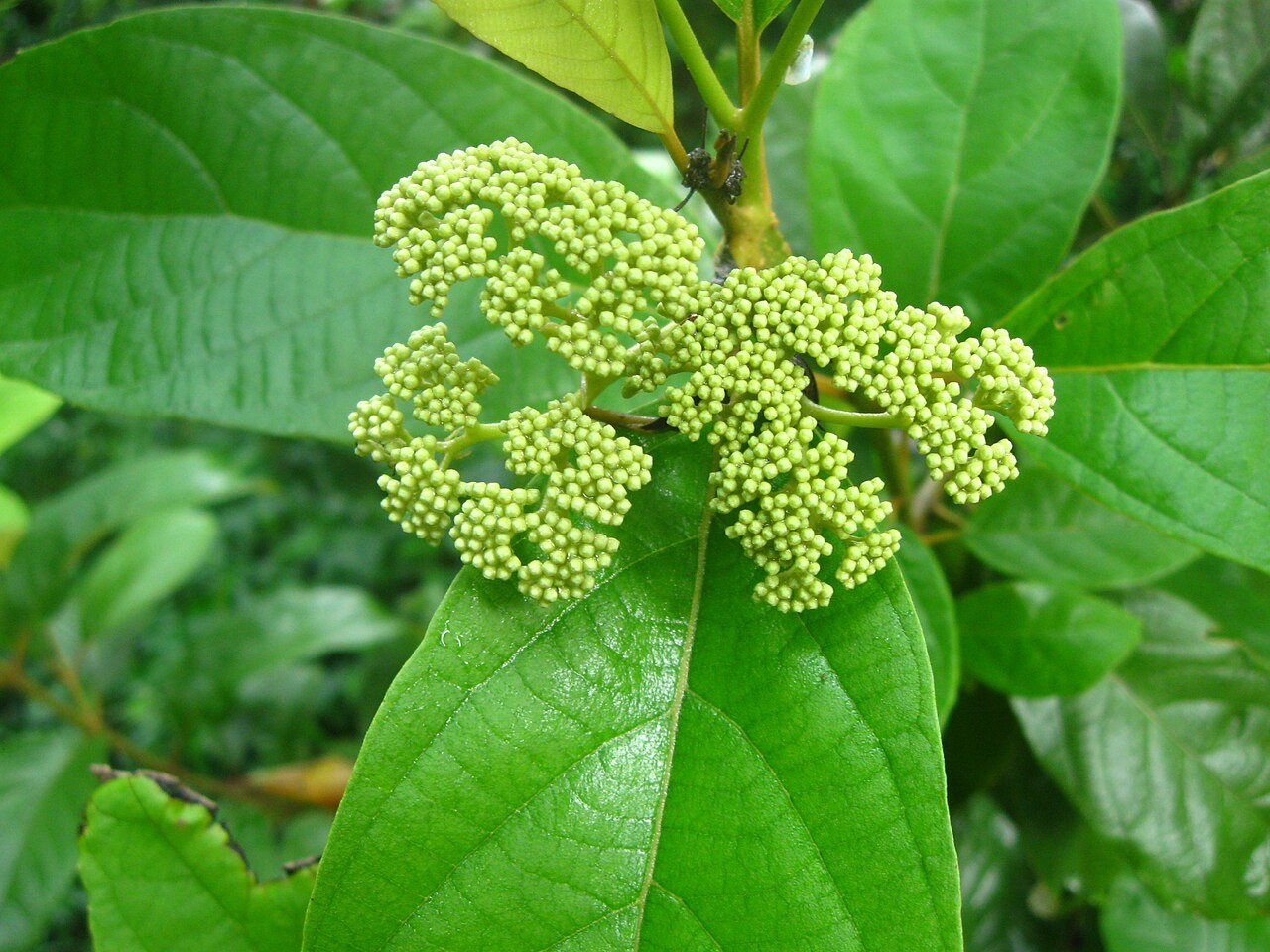
Caparosa is rare and easily overlooked among the many trees of El Yunque. Its opposite leaves, whitish-coated twigs and big clusters of tiny flowers and fruit are the main clues.
Form & Bark
It is an evergreen shrub or small tree with a narrow, columnar crown, typically about 20 to 50 feet (6 to 15 m) tall. The bark is light brown, and the young twigs, leaf undersides and flower-cluster branches are covered with a whitish, scurfy coating.
Leaves
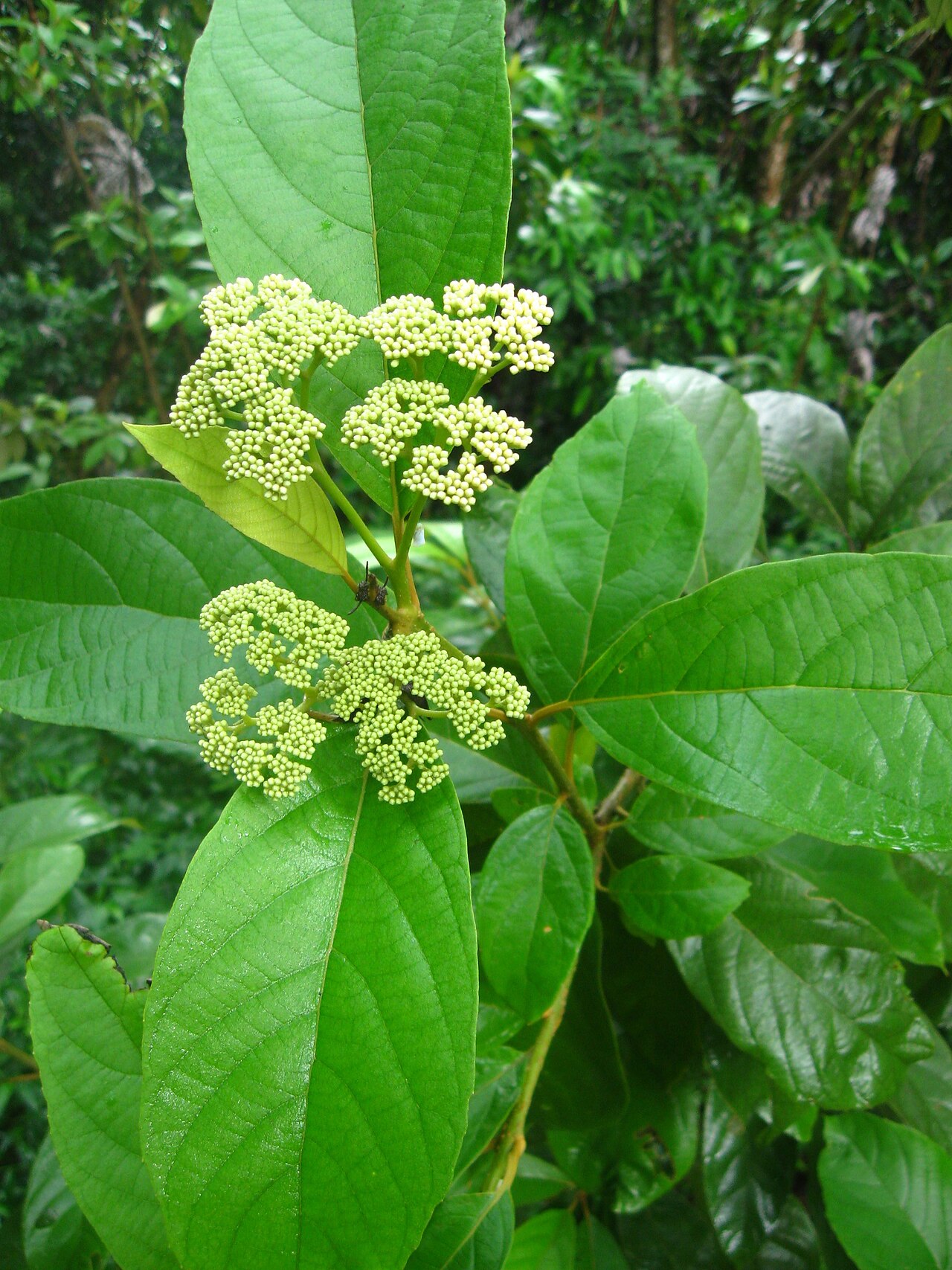
The leaves are opposite, elliptic to oblong-elliptic and about 4 to 10 inches (10 to 25 cm) long. They are glossy green above, with raised veins on the paler underside.
Flowers
The flowers are tiny, about one-eighth inch (3 mm) long, white and four-lobed. They are packed into large, broad, flat-topped clusters that grow in pairs from the leaf axils.
Fruit & Seeds
The fruit is a small, round drupe about a quarter inch (6 mm) across, white at first and turning red, pink or pale purple. Fruit is produced from fall onward in heavy, drooping clusters much like those of the mainland beautyberry.
Quick Facts
| Scientific Name | Callicarpa ampla Schauer |
| Family | Lamiaceae (mint family) |
| Plant Type | Evergreen shrub or small tree; federally Endangered |
| Mature Height | 20–50 ft (6–15 m) |
| Mature Spread | 8–15 ft; narrow, columnar crown |
| Growth Rate | Moderate |
| Sun Exposure | Partial shade; forest gaps and slopes |
| Water Needs | High; rain forest with year-round rainfall |
| Soil Type | Moist, well-drained mountain forest soils |
| Soil pH | Acidic |
| Bloom Time | Variable; fruit from fall onward |
| Flower Color | White |
| Fall Color | None; evergreen |
| Fruit | Small drupes in drooping clusters, white turning pink to purple |
| Deer Resistant | Not a concern in Puerto Rico, which has no native deer |
| USDA Hardiness Zones | 11–12; frost-sensitive |
Native Range
Caparosa is endemic to Puerto Rico. USDA PLANTS lists it as native in Puerto Rico, and the Smithsonian’s Flora of the West Indies records it as a Puerto Rican endemic. A single old specimen was reported from St. Thomas in the Virgin Islands, but the plant has never been found there again, and it is uncertain whether it ever grew there.
It was first collected in Puerto Rico in 1827 and described by Johannes Conrad Schauer in 1847. Historically it was more widespread on the island, but it now survives only in the Luquillo Mountains of El Yunque National Forest, in the palo colorado forest zone above about 2,000 feet (600 m), where rain falls most of the year and humidity is almost constant. Known populations are near Río Blanco in Naguabo and in the Mameyes and Jiménez areas of Río Grande.
Some of the remaining plants grow on steep slopes where landslides could destroy them. Hurricanes, forest clearing, trail and road work, and collection for its ornamental value have all contributed to its decline, and its low numbers and poor natural reproduction make each plant important.
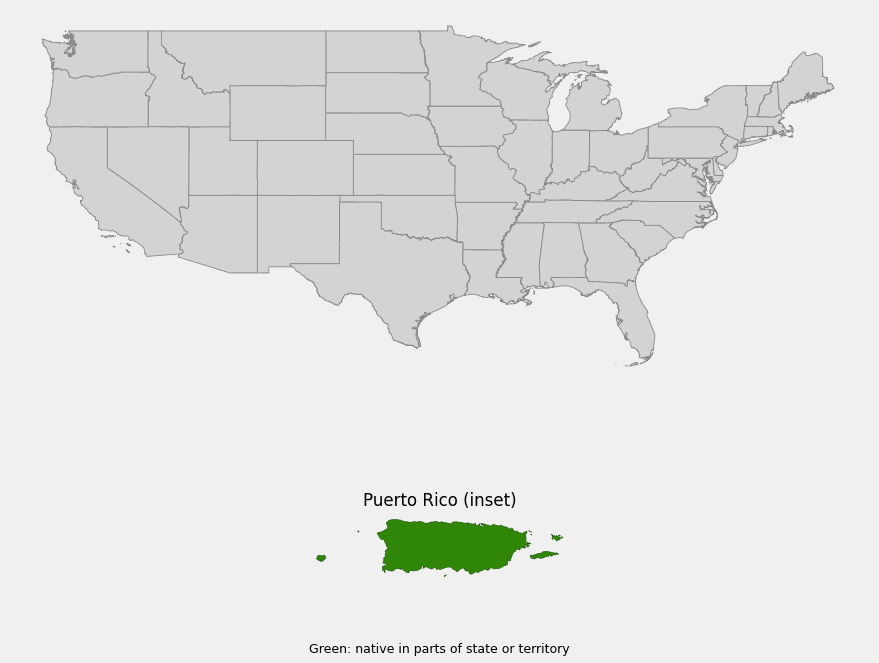
📋 Regional plant lists featuring Caparosa: Puerto Rico
Growing & Care Guide
Caparosa is not available in the nursery trade, and gardeners should never try to obtain it from the wild. The notes below describe its needs for conservation plantings made with authorized, nursery-propagated material.
Light
In the wild it grows on sheltered mountain slopes in the forest, in partial shade and in gaps where more light reaches the understory.
Soil & Water
It needs constantly moist but well-drained, acidic forest soil and high humidity, conditions found in Puerto Rico’s montane rain forest. It is not suited to dry or exposed lowland sites.
Planting Tips
Plant only nursery-propagated material from authorized conservation programs, within its native range in the Luquillo Mountains or similar protected montane forest, and in coordination with the U.S. Fish and Wildlife Service, the USDA Forest Service and the Puerto Rico Department of Natural and Environmental Resources. Choose sheltered sites away from landslide-prone slopes.
Pruning & Maintenance
Restoration plantings need little pruning. Protect young plants from competing vegetation, trampling and accidental clearing along trails and roads, and monitor them after hurricanes.
Propagation
Propagation is done by conservation nurseries under permit. Never collect seed, cuttings or plants from wild caparosa: with so few plants left, every seed matters for natural regeneration.
Landscape Uses
- Recovery plantings: reintroduction and augmentation of wild populations under the federal recovery plan
- Botanical garden collections: ex situ conservation of its genetic diversity
- Montane forest restoration: authorized plantings in protected palo colorado forest
- Education: a flagship for the rare endemic plants of El Yunque
- Research: studies of its reproduction and habitat needs
Wildlife & Ecological Value
Caparosa’s interactions with wildlife have not been studied in detail, but its flowers and fruit suggest roles similar to those of its mainland relatives.
For Pollinators
Its many tiny flowers, packed into broad clusters, are the kind visited by small bees and other insects, as are the flowers of other Callicarpa species.
For Birds
The juicy, colorful fruits in heavy clusters are typical of bird-dispersed plants. Beautyberry fruit is eaten by many birds on the mainland, and birds of El Yunque likely feed on caparosa fruit as well.
For Mammals
No important mammal interactions are documented.
Ecosystem Role
Caparosa is one of several rare trees and shrubs that make El Yunque’s montane forests among the richest in endemic species in the Caribbean. Its survival depends on protecting the Luquillo Mountains from clearing and helping the forest recover after hurricanes.
Cultural & Historical Uses
The genus name Callicarpa means “beautiful fruit” in Greek, a fitting name for a group whose best-known member is the American Beautyberry (Callicarpa americana) of the southeastern United States. The species name ampla means large or ample, likely a reference to its big leaves and flower clusters.
Caparosa was first collected in 1827 by the Swiss botanist Heinrich Wydler and described by Johannes Conrad Schauer in 1847. For more than a century after that, only a handful of specimens were collected, which shows how rare it has long been.
The U.S. Fish and Wildlife Service listed caparosa as Endangered in 1992 and issued a recovery plan in 1995 covering it along with other rare trees of the Luquillo Mountains. Critical habitat was not designated, because publishing maps of its locations could increase the risk of collection.
Frequently Asked Questions
Is caparosa endangered?
Yes. It is listed as Endangered under the U.S. Endangered Species Act and rated Critically Endangered on the IUCN Red List. It is known only from a few dozen plants in El Yunque National Forest.
Where does caparosa grow?
Only in Puerto Rico, in the palo colorado forest of the Luquillo Mountains in El Yunque National Forest, above about 2,000 feet elevation.
Is caparosa related to beautyberry?
Yes. It belongs to the same genus as the American beautyberry, and like it, produces clusters of small pink to purple fruit.
Can I grow caparosa in my garden?
It is not available in the nursery trade. Only nursery-propagated plants from authorized conservation programs should ever be planted, and never collect plants, seed or cuttings from the wild.
How can I help protect caparosa?
Stay on trails in El Yunque, never collect plants, support the protection of the national forest, and report suspected plants to the USDA Forest Service or the U.S. Fish and Wildlife Service Caribbean Ecological Services Field Office.

Looking for a nursery that carries Caparosa?
Our nursery directory does not yet include Puerto Rico. Browse the native plant nursery directory by state: Alabama–Arkansas · California · Colorado–Hawaii · Idaho–Kansas · Kentucky–Montana · Nebraska–Oklahoma · Oregon · Pennsylvania–Virginia · Washington · West Virginia–Wyoming