
Pinguin (Bromelia pinguin)
Bromelia pinguin, known as Pinguin, is a large, fiercely spiny ground bromeliad related to the pineapple. It forms big rosettes of long, narrow leaves edged with hooked spines, and it spreads into dense colonies that few animals or people will push through. In Puerto Rico the Smithsonian’s Flora of the West Indies records the local name maya, and across Spanish-speaking tropical America it is widely called piñuela, “little pineapple,” for its clusters of small, tart fruits.
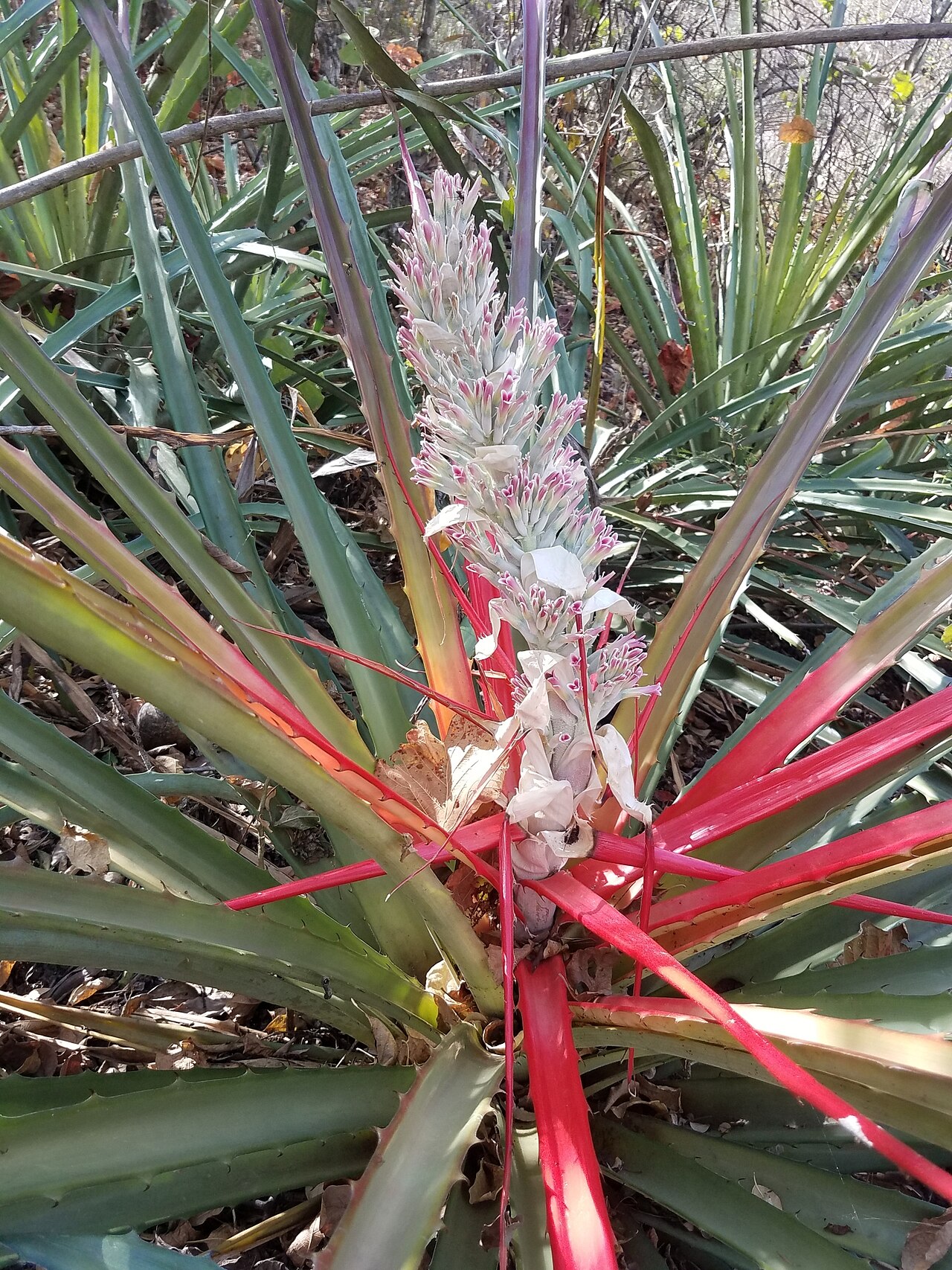
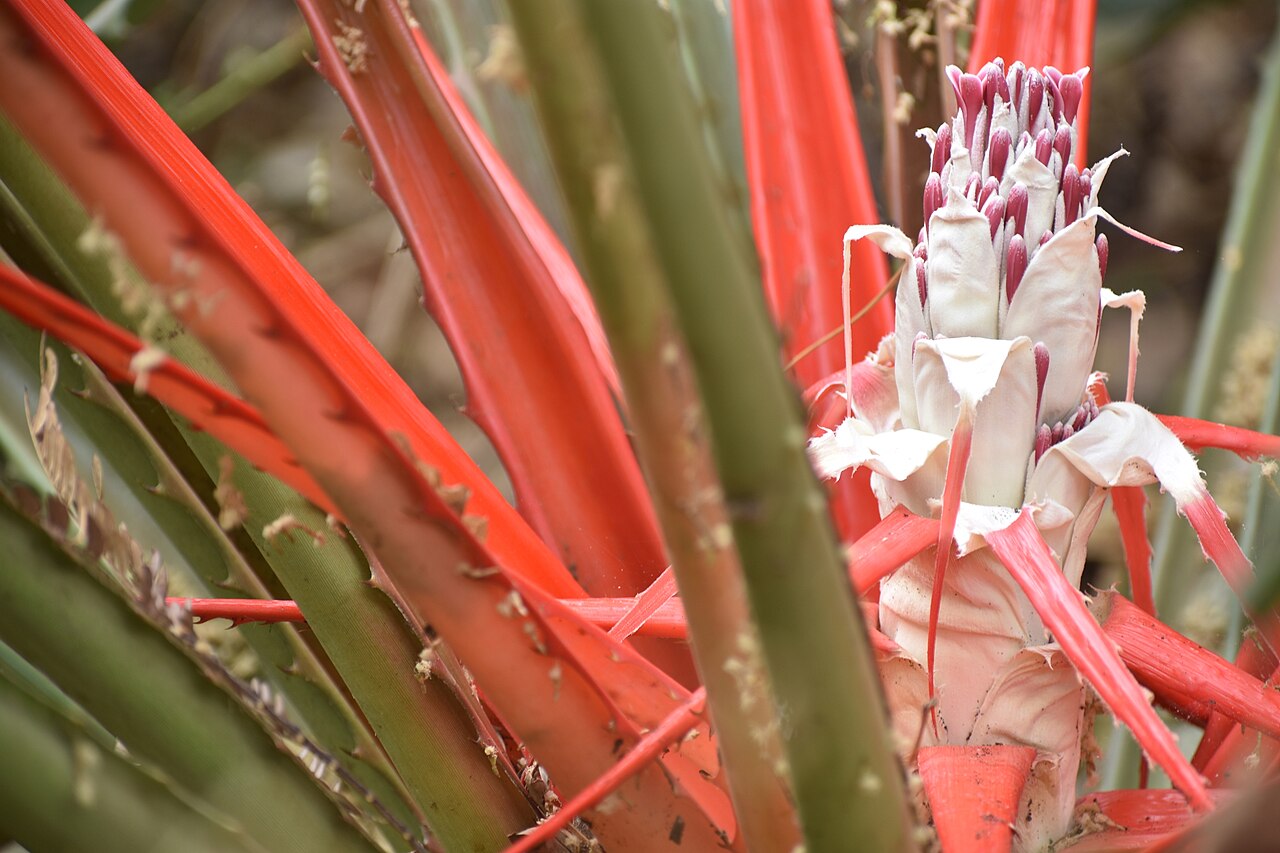
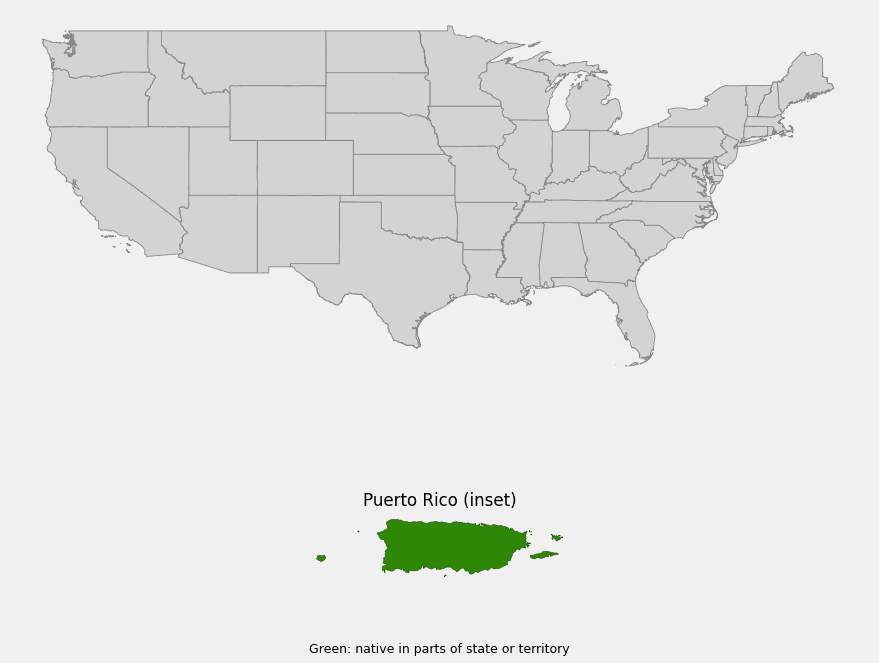
When a rosette is ready to flower, its inner leaves turn brilliant scarlet and a dense, woolly spike of pink-and-white flowers rises from the center. The flowers ripen into bunches of yellow to orange, egg-shaped fruits. USDA PLANTS lists pinguin as native in Puerto Rico; it is introduced in Florida and in the U.S. Virgin Islands. The Institute for Regional Conservation (IRC) records it from the dry forest of Guánica to the karst of Río Abajo and the serpentine forests of Maricao and Susúa.
For centuries pinguin has been planted as a living fence across the Caribbean and Central America, and its fruits and fibers have been used for food and thread. This guide covers how to recognize it, where it grows in Puerto Rico, and how to use it in dry, sunny gardens, where it makes a nearly impenetrable barrier and a striking flowering plant.
Identification
Pinguin looks like an oversized, wild pineapple plant without the central pineapple. Its very long, spine-edged leaves, the scarlet center at flowering time and its habit of forming large colonies make it easy to recognize.
Rosette & Leaves
Each plant is a stemless rosette of stiff, arching leaves that the Spanish Wikipedia describes as 1 to 2 m (about 3 to 6½ ft) long and 2.8 to 4 cm (about 1 to 1½ in) wide. They are linear to long-triangular, green above and finely pale-scaly beneath, with broad, scaly bases. The margins are lined with sharp, hooked spines that catch skin and clothing. In full sun the leaves are often tinged reddish or coppery.
Flowers
A mature rosette sends up a stout stalk up to about 2 ft (60 cm) long, wrapped in leafy bracts. As the plant prepares to bloom, the inner leaves turn bright red, a signal visible from a distance. The flower cluster is branched and densely covered in pale, felt-like scales, with five to a dozen flowers on each branch. The petals are pink, fading to white at the base and edges. As in other bromeliads, each rosette flowers only once, and the plant continues through new offsets.
Fruit
The flowers ripen into egg-shaped berries about 1.5 to 1.7 cm (⅝ in) long, yellow to orange when ripe and packed tightly on the stalk. They are tart and fragrant, with many small seeds. Like pineapple, unripe fruit can be harsh in the mouth, and ripe fruits are usually cooked before eating.
Similar Species
Pineapple (Ananas comosus) is a cultivated plant with a single large fruit topped by a leafy crown. Wild Bromelia species such as pinguin have many small, separate fruits. Native airplants such as the Spreading Airplant and West Indian Tufted Airplant are smaller bromeliads that grow on trees and lack spines.
Quick Facts
| Scientific Name | Bromelia pinguin L.; USDA common name: pinguin |
| Family | Bromeliaceae (bromeliad family) |
| Plant Type | Terrestrial bromeliad; spiny, clump-forming evergreen perennial |
| Mature Height | 3–6 ft (leaves 1–2 m long); flower stalk up to about 2 ft |
| Mature Spread | 3–6 ft per rosette; colonies spread much wider |
| Growth Rate | Moderate |
| Sun Exposure | Full sun to partial shade |
| Water Needs | Low once established; tolerates long dry seasons |
| Soil Type | Well-drained limestone, sandy, clay and serpentine soils |
| Soil pH | Slightly acidic to alkaline |
| Bloom Time | Variable; each rosette blooms once when mature |
| Flower Color | Pink, fading to white; inner leaves turn scarlet at flowering |
| Fall Color | None; evergreen (leaves may redden in full sun) |
| Fruit | Clusters of yellow to orange, egg-shaped berries about ⅝ in long |
| Deer Resistant | Not applicable in Puerto Rico; the spines deter browsing animals |
| USDA Hardiness Zones | 10–13 (frost-tender) |
Native Range
Pinguin is native to the West Indies, Mexico, Central America and northern South America, according to Wikipedia. The Smithsonian’s Flora of the West Indies lists it as native in the Greater Antilles, including Jamaica, Cuba, Hispaniola and Puerto Rico (with Vieques), and in many of the Lesser Antilles. Within the area PlantNative covers, USDA PLANTS lists it as native in Puerto Rico only. In Florida and the U.S. Virgin Islands USDA treats it as introduced, the result of its long history as a hedge plant.
In Puerto Rico, IRC records pinguin in six conservation areas: Guánica State Forest in the southwestern coastal dry forest; Punta Guaniquilla Natural Reserve on the Cabo Rojo coast; Piñones State Forest on the north coast east of San Juan; Río Abajo State Forest in the northern karst (mogote) region; and Maricao and Susúa state forests on the serpentine hills of the west. Its sites range from near sea level at Piñones and Guánica to the middle elevations (500 to 1,000 m, about 1,600 to 3,300 ft) that IRC lists for the species.
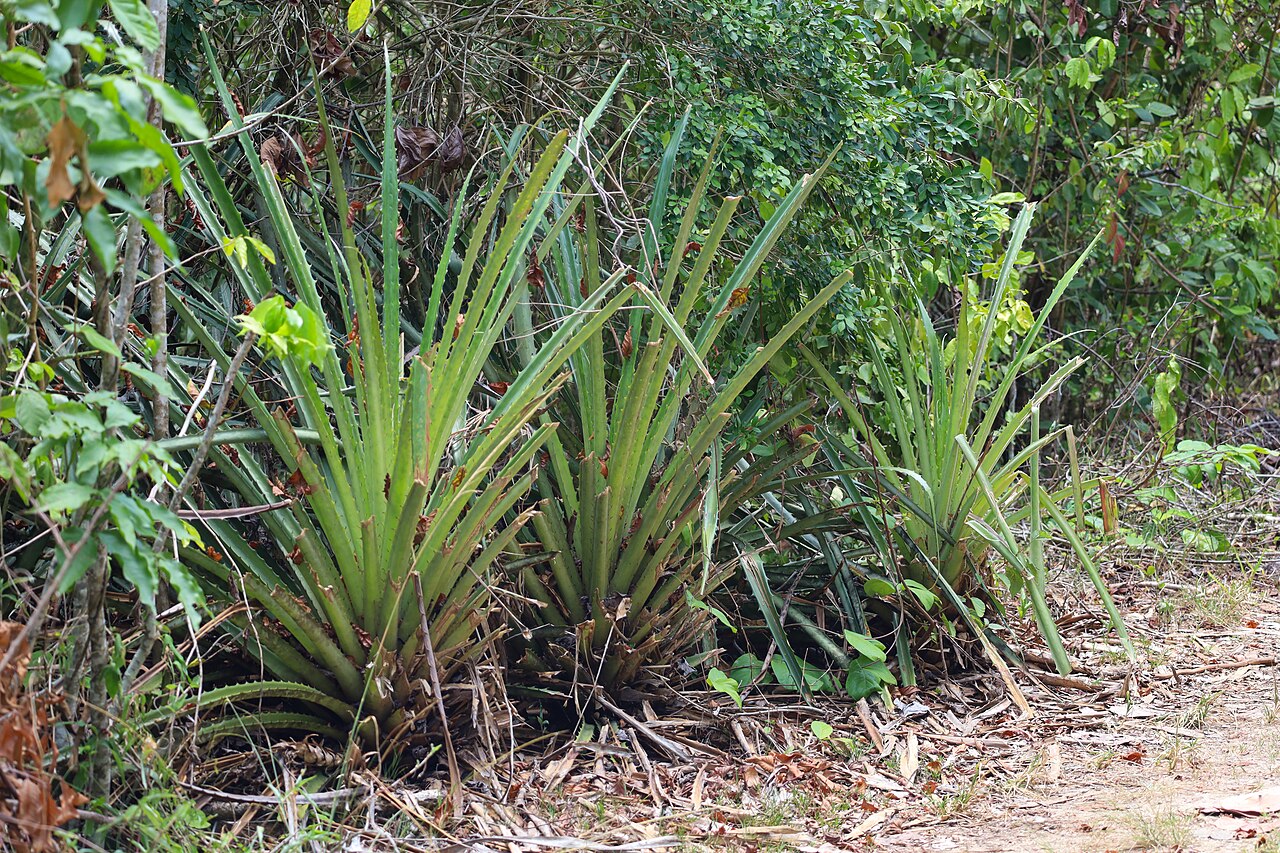
It grows in open dry forest and thickets, coastal scrub, limestone hills and forest edges, often forming large colonies in sunny or lightly shaded spots. It has also been planted around farms and pastures, so some colonies near houses and old fences may have started as hedges.
📋 Regional plant lists featuring Pinguin: Puerto Rico
Growing & Care Guide
Pinguin is tough, drought-tolerant and easy to grow in Puerto Rico’s lowlands, but it is not a plant for small yards or children’s play areas. Its hooked spines are painful, and a single plant becomes a spreading colony. Use it where you want a living barrier, a security hedge or a wild, low-maintenance planting for dry, sunny ground.
Light
Full sun gives the most compact rosettes, the reddest leaves and the best flowering. It also grows in the light shade of dry forest, where the rosettes become greener and more open.
Soil & Water
Pinguin needs good drainage and tolerates poor soils, including limestone, sand and the rocky serpentine soils of western Puerto Rico. Once established it rarely needs watering, even through the long dry season of the south coast. Avoid constantly wet soil, which can rot the base of the rosette.
Planting Tips
Plant offsets or young plants at the start of the rainy season and water them until they root. For a barrier hedge, space plants about 3 feet apart; they fill in as offsets develop. Leave at least 3 feet between the plants and any path, and wear thick gloves, long sleeves and eye protection when planting.
Pruning & Maintenance
Little care is needed. Remove dead rosettes after they have flowered and fruited, using long-handled loppers. To keep a colony in bounds, dig out spreading offsets at the edges once or twice a year. The leaves are tough, so compost them separately or bag them, and never leave spiny trimmings where people walk barefoot.
Propagation
The easiest method is to separate offsets (pups) from the base of an established clump and replant them. Plants can also be raised from seed taken from ripe fruit: wash the seeds clean and sow them on the surface of a well-drained mix kept moist and warm. Seedlings take several years to reach flowering size.
Landscape Uses
- Living fence and security hedge: planted for centuries to keep livestock in and intruders out
- Dry and coastal gardens: thrives in sun, heat and poor, rocky soil with little water
- Wildlife cover: dense, spiny colonies shelter lizards, birds and other small animals
- Edible fruit: tart, fragrant fruits used for cooked drinks and syrups
- Dry forest restoration: a native groundcover for open, sunny restoration sites
Wildlife & Ecological Value
Pinguin colonies are hard for people to enter, which is exactly what makes them valuable to wildlife. The tangle of spiny rosettes gives safe shelter and feeding places for many small animals in Puerto Rico’s dry forests and coastal thickets.
For Pollinators
The pink flowers are packed into dense clusters, and the flaming red inner leaves make a flowering plant visible from a long way off, a display typical of bromeliads that attract hummingbirds and insects. Detailed pollination studies for Puerto Rico’s pinguin are lacking.
For Birds
Birds forage for insects among the rosettes and use the spiny colonies as protected cover. Ripe fruits that fall or split open are likely eaten by birds and other animals, which would help disperse the seeds.
For Mammals
Puerto Rico has no native land mammals other than bats. Elsewhere in its range, small mammals use pinguin thickets as shelter, and the spines keep out larger grazing animals.
Ecosystem Role
The bases of the rosettes collect leaf litter and moisture, creating cool, shaded pockets in dry forest that are used by lizards, frogs, insects and other invertebrates. Large colonies also hold soil on slopes and roadsides.
Cultural & Historical Uses
Linnaeus named the species Bromelia pinguin in 1753. The genus honors the Swedish physician and botanist Olof Bromelius, and the whole bromeliad family, including the pineapple, takes its name from the genus. Older names for the species include Bromelia fastuosa, under which John Lindley illustrated it in 1821.
Across the Caribbean, pinguin has a long history as a fence plant. Wikipedia notes that in Jamaica it has been planted around pastures for its prickly leaves, a use already recorded in the 18th-century diaries of the planter Thomas Thistlewood, and that the leaves can be stripped, soaked and beaten to yield fiber for thread. The Spanish Wikipedia notes that in Nicaragua it is planted as a living fence and that its leaves were once used to wrap eggs for long journeys on horseback.
The fruits are eaten in many countries. In El Salvador they are the base of atol de piñuela, a traditional hot drink, and in Mexico the fruit is cooked into a syrup with raw sugar. Pinguin has also been used in folk medicine in parts of its range. Its name and uses have traveled widely, but in Puerto Rico it remains above all a native plant of dry forests, coastal thickets and old fence lines.
Frequently Asked Questions
Is pinguin native to Puerto Rico?
Yes. USDA PLANTS lists Bromelia pinguin as native in Puerto Rico, and IRC records it in Guánica, Maricao, Piñones, Río Abajo and Susúa state forests and Punta Guaniquilla Natural Reserve. In Florida and the U.S. Virgin Islands it is introduced.
What is pinguin called in Spanish?
In Puerto Rico the Flora of the West Indies records the name maya. Across Spanish-speaking tropical America it is widely called piñuela, and its fruit has other local names such as caraguatá.
Is the fruit edible?
Yes, the fruits are eaten in many countries, usually cooked into drinks, syrups or desserts. They are tart, and unripe fruit can irritate the mouth, so eat only fully ripe fruit and try a small amount first.
Is pinguin good for a hedge?
It is one of the most effective living barriers in the tropics, which is why it has been planted around pastures for centuries. Keep in mind that it spreads by offsets and its hooked spines are painful, so plant it well away from paths and play areas.
Does the plant die after flowering?
Each rosette flowers only once and then slowly dies after the fruit ripens, but by then it has produced offsets around its base. A pinguin colony keeps going for many years as new rosettes replace old ones.

Looking for a nursery that carries Pinguin?
Our nursery directory does not yet include Puerto Rico. Browse the native plant nursery directory by state: Alabama–Arkansas · California · Colorado–Hawaii · Idaho–Kansas · Kentucky–Montana · Nebraska–Oklahoma · Oregon · Pennsylvania–Virginia · Washington · West Virginia–Wyoming