
West Indian Tree Fern (Cyathea arborea)
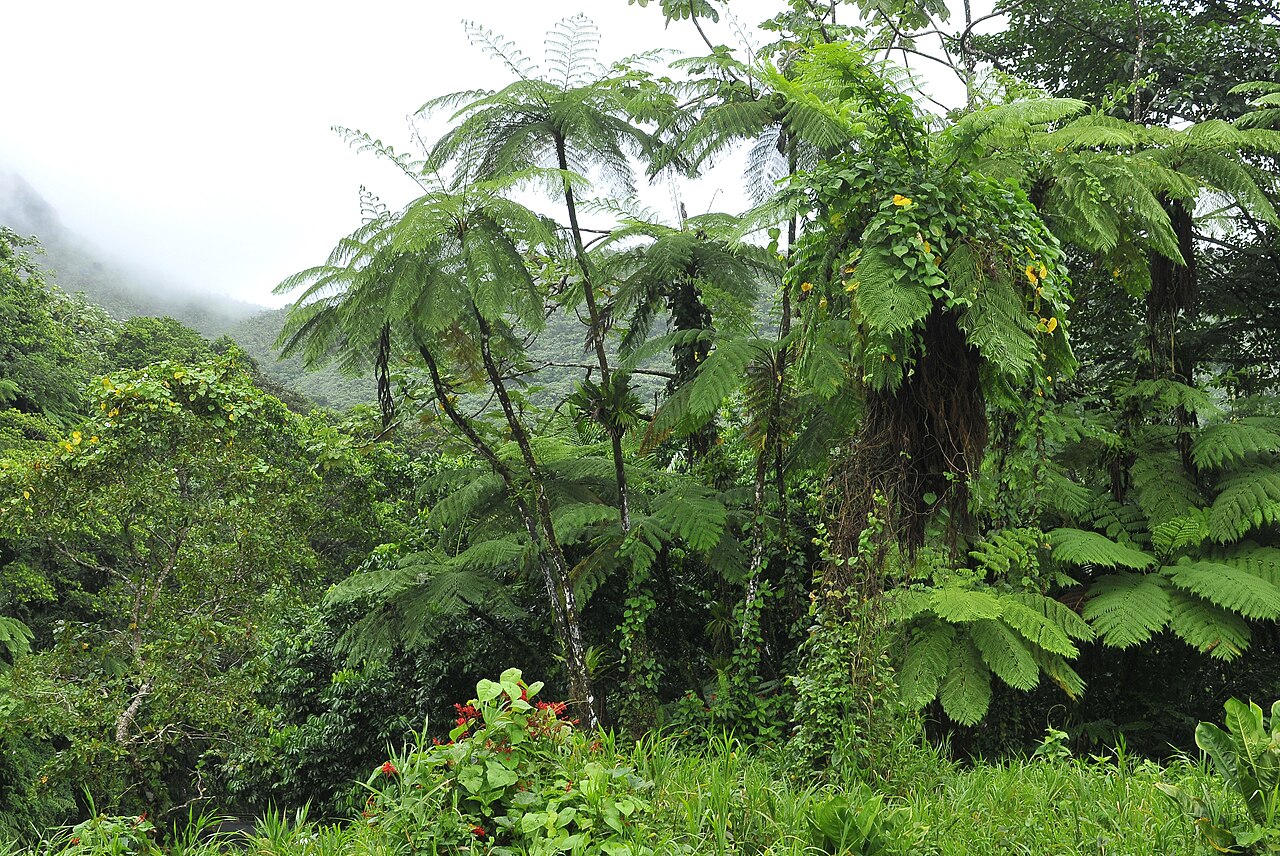
Cyathea arborea, the West Indian Tree Fern, known in Puerto Rico as helecho gigante, helecho arbóreo or camarón, is the tall, palm-like fern that gives the island’s mountain forests their prehistoric look. A single slender trunk rises up to about 27 feet and carries a crown of huge, lacy fronds that spread like an umbrella. Along roads and trails in El Yunque it is one of the most photographed plants on the island.
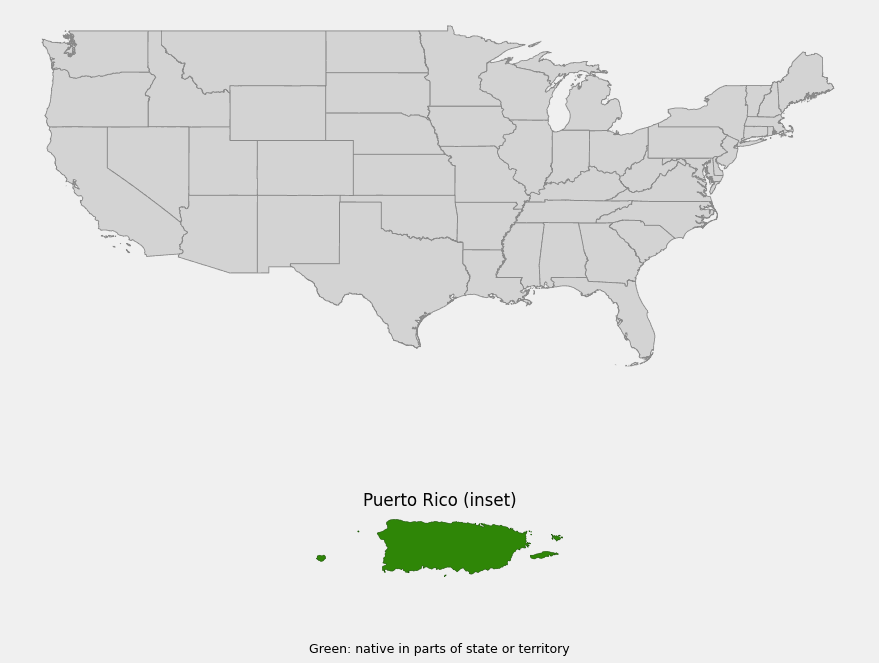
USDA PLANTS lists the West Indian tree fern as native in Puerto Rico and the U.S. Virgin Islands. The Institute for Regional Conservation (IRC) describes it as a tree of low to high elevations in Puerto Rico, recorded from El Yunque National Forest and Carite, Guilarte, Maricao, Río Abajo and Toro Negro state forests, from the northern limestone hills to the Cordillera Central. It is a pioneer of sunny gaps, quickly colonizing landslides, roadcuts and openings left by hurricanes.
This guide covers how to recognize the helecho gigante, where it grows, and how Puerto Rico gardeners can grow it in humid, sheltered gardens. It is not native to Florida or anywhere else in the 50 states.
Identification
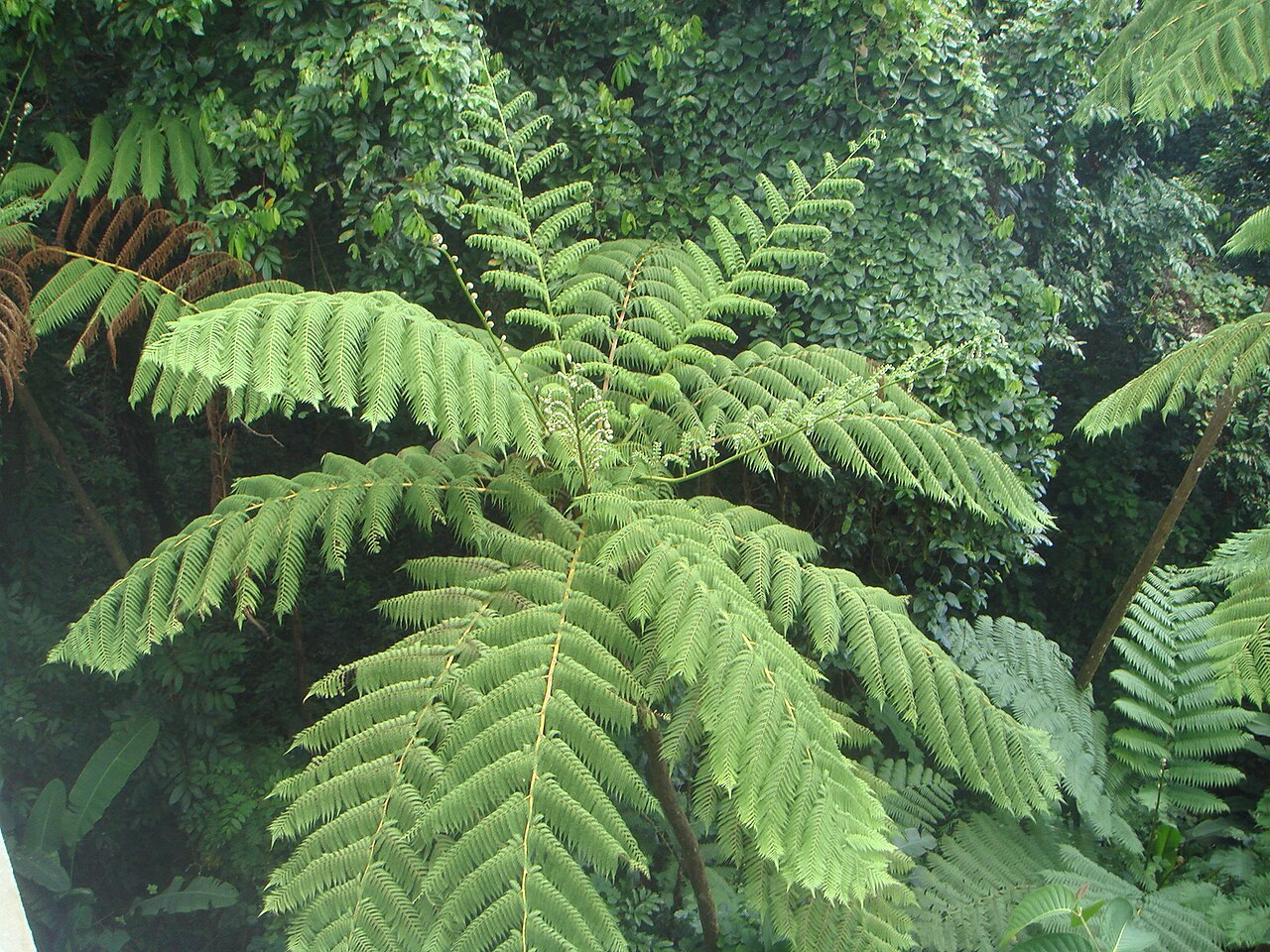
Tree ferns are unmistakable: a single unbranched trunk topped with a crown of large, divided fronds and no flowers. The West Indian tree fern is one of the most familiar of Puerto Rico’s several tree ferns, and is recognized by its slender trunk and smooth, dark frond stalks.
Trunk
The trunk is slender, usually only 3 to 5 inches across according to Wikipedia, straight and unbranched, and can reach about 27 feet tall. It has no spines. The surface is hard and marked with the scars of fallen fronds, while the inside has a soft, white core. Older trunks are often covered in climbing plants, mosses and small epiphytes.
Fronds
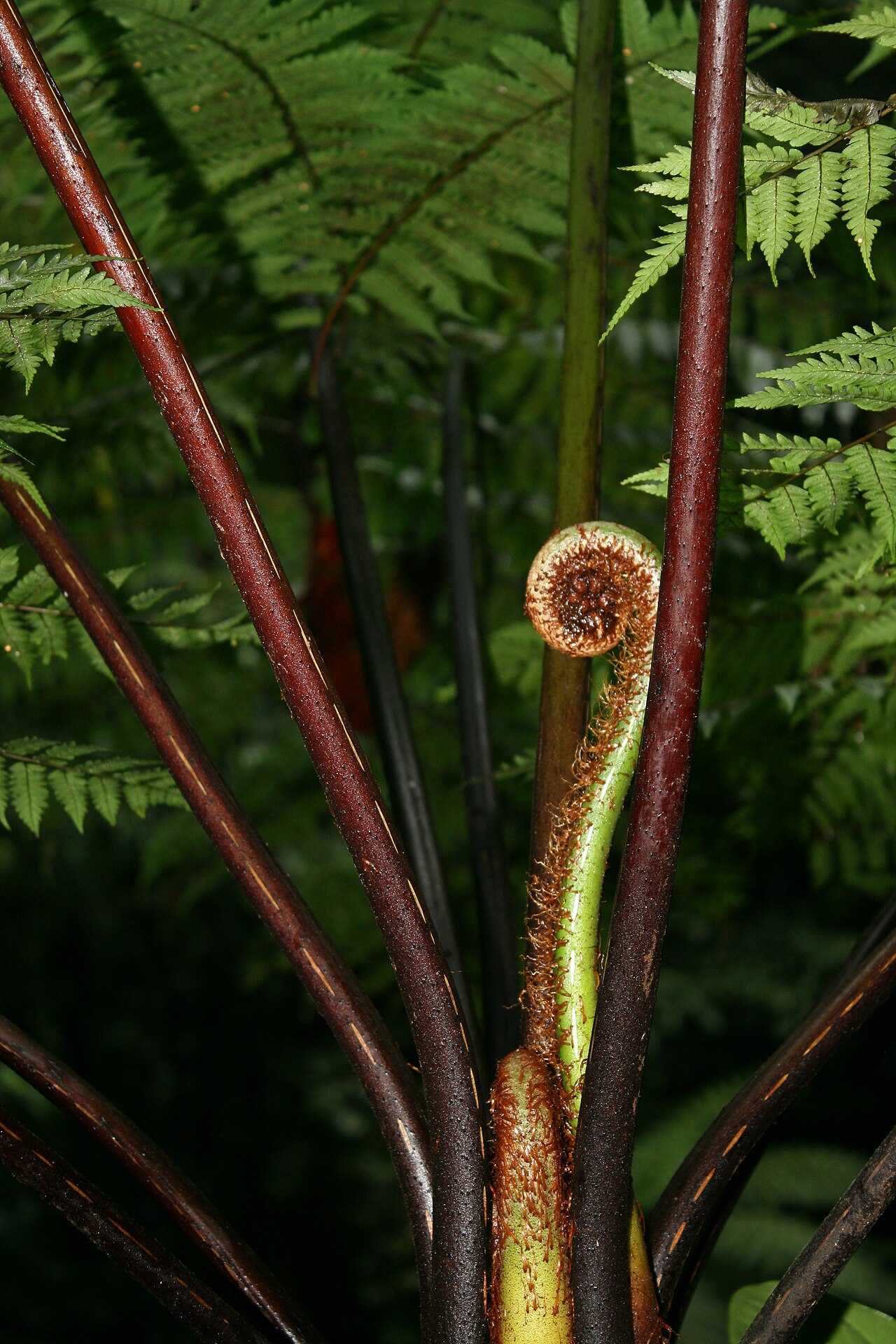
The crown carries 10 or more very large, finely divided (bipinnate to tripinnate) fronds that spread outward in a fan or umbrella shape, light to bright green above. The frond stalks are smooth and dark reddish brown to nearly black. New fronds emerge as fiddleheads covered in brown scales and unroll until they reach a horizontal position. Old fronds wither and drop, leaving a clean trunk.
Spores
As with all ferns, the West Indian tree fern has no flowers or seeds. It reproduces from spores produced in small sporangia clustered on the undersides of the frond segments.
Similar Species
Puerto Rico has other tree ferns, including species of Alsophila and other Cyathea, some with spiny trunks or stalks. The West Indian tree fern’s smooth, spineless trunk, dark smooth stalks and its abundance in open, disturbed sites help distinguish it.
Quick Facts
| Scientific Name | Cyathea arborea (L.) Sm.; USDA common name: West Indian treefern |
| Family | Cyatheaceae (tree fern family) |
| Plant Type | Evergreen tree fern with a single trunk |
| Mature Height | Up to about 27 ft |
| Mature Spread | 10–20 ft crown |
| Growth Rate | Fast for a fern, especially in open, moist sites |
| Sun Exposure | Partial shade to full sun with constant moisture |
| Water Needs | High; needs moist soil and high humidity |
| Soil Type | Moist, well-drained, humus-rich soil; volcanic, clay and limestone-derived soils in the wild |
| Soil pH | Acidic to neutral |
| Bloom Time | Does not flower; produces spores |
| Flower Color | None (fern) |
| Fall Color | None; evergreen |
| Fruit | None; reproduces by spores |
| Deer Resistant | Not applicable in Puerto Rico; no deer browse |
| USDA Hardiness Zones | 10b–12; frost-tender |
Native Range
The West Indian tree fern is a Caribbean species. Wikipedia lists it from Cuba, Jamaica, Hispaniola, Puerto Rico and the Lesser Antilles from the Virgin Islands to Tobago. IRC calls it possibly endemic to the West Indies, though it has also been reported from Central and South America. Within the area PlantNative covers, USDA PLANTS lists it as native in Puerto Rico and the U.S. Virgin Islands. It does not grow wild in Florida or elsewhere on the U.S. mainland.
In Puerto Rico IRC describes it as a tree from low to high elevations, from below 1,600 feet (500 m) to above 3,300 feet (1,000 m). It records the species in six conservation areas: El Yunque National Forest in the Luquillo Mountains; Carite State Forest in the Sierra de Cayey; Guilarte, Maricao and Toro Negro state forests along the Cordillera Central; and Río Abajo State Forest in the northern karst. Following Axelrod (2011), IRC also lists it from the northern limestone hills near Quebradillas, the eastern coast (Cuchilla de Panduras), the Caguas Valley at Las Piedras and the eastern Cordillera at La Torrecilla.
Wikipedia notes that tree ferns are mostly found in wet tropical forest and that natural disturbances such as landslides and hurricanes open the canopy and allow this species to regenerate. In El Yunque it is especially conspicuous on landslide scars, roadsides and forest edges, where dense stands of tree ferns form a distinctive habitat of their own.
📋 Regional plant lists featuring West Indian Tree Fern: Puerto Rico
Growing & Care Guide
The helecho gigante can be grown in Puerto Rico gardens that are humid and sheltered, especially in the cooler, wetter interior and the mountains. In the hot, dry southern lowlands it struggles. Buy plants raised from spores by native plant nurseries; do not dig tree ferns from the forest, where removing plants from state and national forests is not allowed without a permit, and transplanted trunks rarely survive.
Light
In the wild it grows best in gaps and forest edges with plenty of light, as long as the air stays humid and the soil moist. In gardens give it bright, filtered light or morning sun with afternoon shade. In the lowlands, more shade helps prevent the fronds from drying and browning.
Soil & Water
Plant it in deep, moist, well-drained soil rich in organic matter. Never let it dry out. During dry spells, water the soil and also wet the trunk, which takes up water through its mass of roots. Mulch heavily with leaf litter to keep the roots cool and moist.
Planting Tips
Choose a site sheltered from strong winds, which tear the large fronds, and from salt spray. Allow room for a crown 10 feet or more across. Young plants establish more easily than large trunks, which often fail when moved.
Pruning & Maintenance
Remove dead or storm-damaged fronds by cutting them close to the trunk. Never cut the top of the trunk: the crown is the only growing point, and the plant cannot branch or resprout from below. A light feeding with compost or a dilute fertilizer during the wet season keeps fronds lush.
Propagation
It is propagated from spores. Collect a frond segment with ripe (brown) sporangia, let it drop its spores onto paper, and sow them on sterile, moist potting mix under a clear cover. Tiny green prothalli form first, followed weeks later by the first small fronds. Seedlings take several years to form a trunk.
Landscape Uses
- Shade and rain gardens: a dramatic, palm-like focal point
- Mountain gardens: suited to the cool, humid interior
- Stream banks: moist, sheltered sites along quebradas
- Erosion control: a natural pioneer on slopes and cuts
- Forest restoration: fast cover in gaps and landslides
Wildlife & Ecological Value
The West Indian tree fern is an important pioneer in Puerto Rico’s wet forests, colonizing gaps and landslides and providing structure for other plants and animals.
For Pollinators
Ferns have no flowers, so they offer nothing to pollinators directly. The trunks and fronds do shelter many insects and spiders.
For Birds
Birds perch in the crowns and forage for insects among the fronds and on the trunks.
For Mammals
The tree fern has no notable value as food for Puerto Rico’s mammals, which are mostly bats.
Ecosystem Role
Wikipedia notes that landslides and hurricanes open gaps that allow this species to regenerate. By colonizing those open, unstable sites, tree ferns shade the soil, add organic matter and help hold slopes together while slower-growing forest trees return. Their trunks host mosses, small ferns and other epiphytes.
Cultural & Historical Uses
Linnaeus first described this plant in 1753 as Polypodium arboreum, “the tree polypody,” and the English botanist James Edward Smith later moved it to the new genus Cyathea, named from the Greek for “cup” for the cup-shaped covering around the spore clusters of many species. It is the type species of the genus.
Puerto Ricans have many names for it. IRC records helecho gigante (“giant fern”), helecho arbóreo (“tree fern”), camarón and camaroncillo; Wikipedia also lists palo camarón.
For visitors, tree ferns are an emblem of El Yunque, the only tropical rain forest in the U.S. National Forest System. Groves of helechos gigantes along the forest’s roads and trails are among the first plants many people notice, and they appear in countless photos of Puerto Rico’s mountains.
Frequently Asked Questions
Is the West Indian tree fern native to Puerto Rico?
Yes. USDA PLANTS lists Cyathea arborea as native in Puerto Rico and the U.S. Virgin Islands, and IRC records it in El Yunque and several state forests from the northern karst to the Cordillera Central.
What is it called in Spanish?
Helecho gigante is the most common name. IRC also lists helecho arbóreo, camarón and camaroncillo.
How tall does it grow?
Up to about 27 feet, with a slender trunk only 3 to 5 inches thick and a crown of large, spreading fronds.
Can I grow it in Florida?
It is not native to Florida and needs constant warmth and humidity. It is rarely grown on the mainland. Florida gardeners who want a native fern for shady, moist spots can try Hammock Fern.
Can I cut back the top if it gets too tall?
No. A tree fern grows only from the crown at the top of its single trunk. Cutting the top kills the plant. Choose a site with room for its full height.

Looking for a nursery that carries West Indian Tree Fern?
Our nursery directory does not yet include Puerto Rico. Browse the native plant nursery directory by state: Alabama–Arkansas · California · Colorado–Hawaii · Idaho–Kansas · Kentucky–Montana · Nebraska–Oklahoma · Oregon · Pennsylvania–Virginia · Washington · West Virginia–Wyoming