
Hog Plum (Spondias mombin)
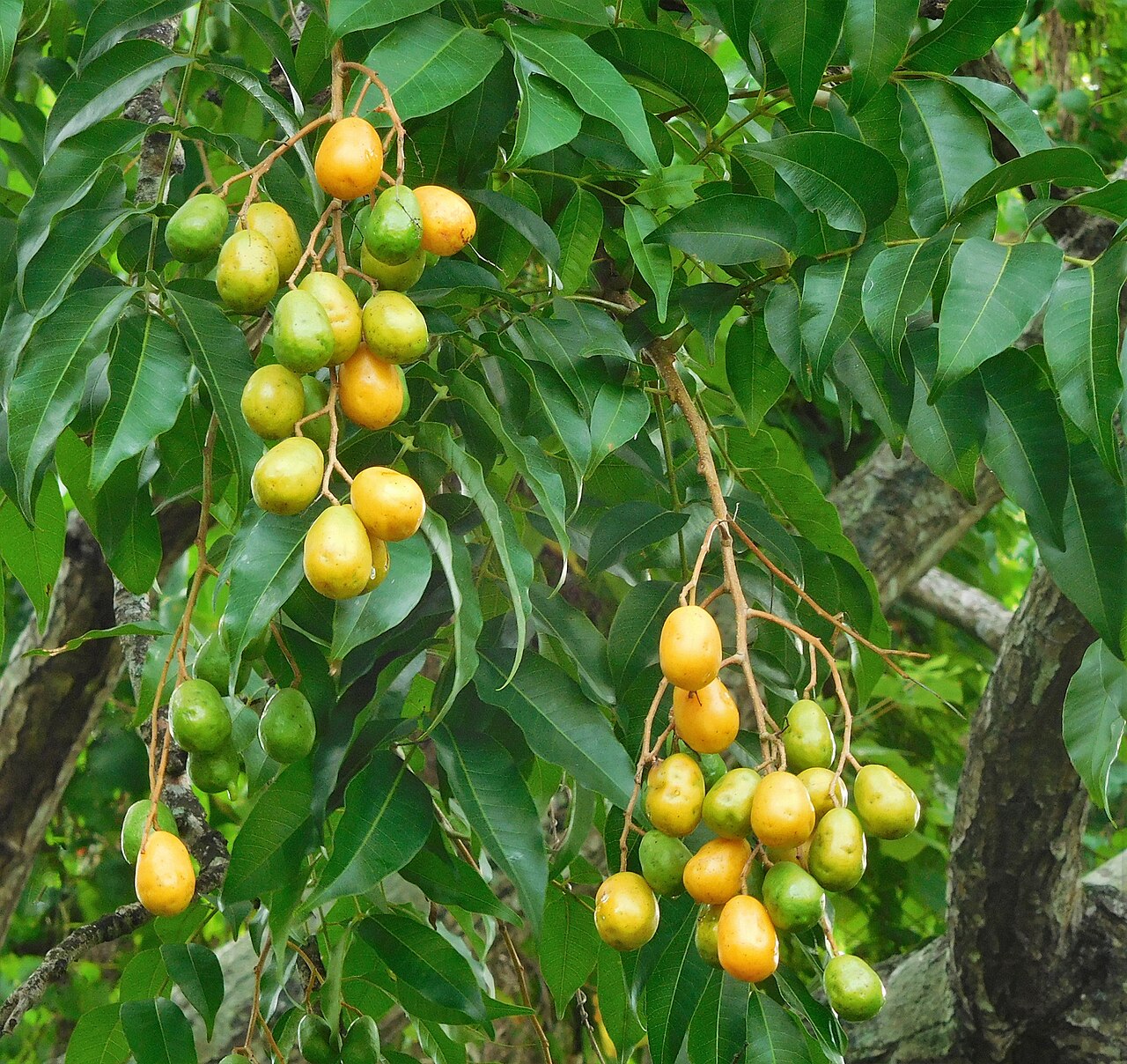
Spondias mombin, called jobo or jobo de perro in Puerto Rico, hog plum in much of the English-speaking Caribbean, and yellow mombin by USDA PLANTS, is a tall, fast-growing, deciduous tree of the cashew family with pinnate leaves, deeply corky bark, sprays of tiny fragrant white flowers, and abundant crops of small, tart, golden-yellow fruit. Older references sometimes call it Spondias lutea.
Jobo is one of the most familiar trees of the Puerto Rican countryside. It grows in moist lowland forest and secondary woods, along streams and roads, and above all in fence lines, because thick branch cuttings stuck in the ground take root and grow into living fence posts. Its fruit is edible and has long been eaten fresh, made into drinks and sweets, or left for livestock and wildlife — the reason for the name “hog plum”.
USDA PLANTS lists it as native in Puerto Rico and, with some question, in the U.S. Virgin Islands. For Puerto Rican gardeners and landowners it is a quick, low-cost way to establish shade, wildlife food and living fences on farm or rural property, and a good tree for restoring lowland forest.
Identification
Hog plum is easy to recognize by its pale, thick, corky and deeply ridged bark, its pinnately compound leaves with opposite leaflets, its large sprays of tiny white flowers, and its clusters of oval yellow fruit about an inch and a half long. It drops its leaves in the dry season, and a crushed leaf has a faint resinous smell typical of its family.
Form & Bark
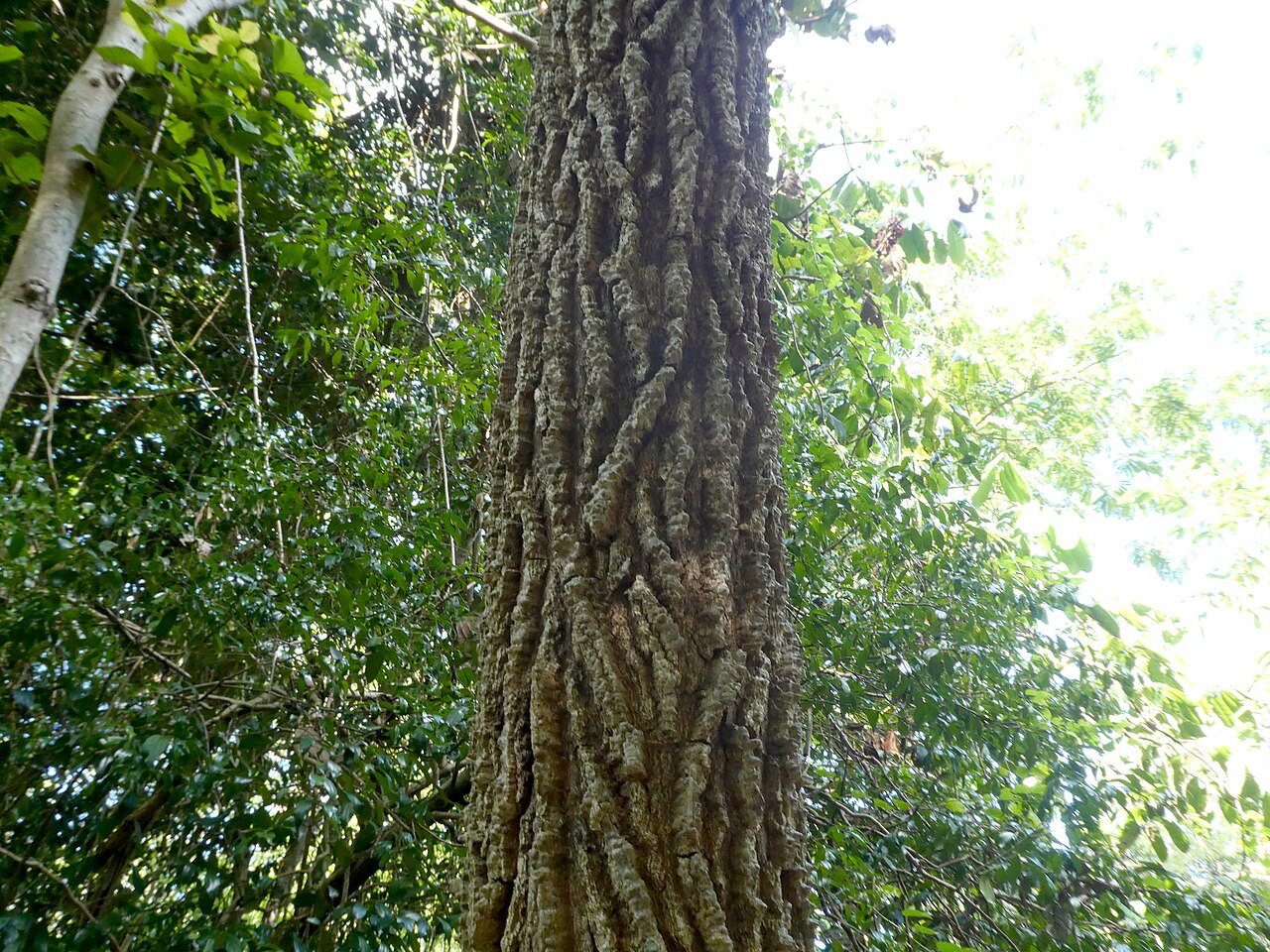
A deciduous tree up to about 66 feet (20 m) tall, with a trunk that can become thick and moderately buttressed and a spreading, rather open crown. The bark is the standout feature: gray-brown, thick, corky and deeply fissured into knobby ridges. When cut, the inner bark is pale pink and darkens quickly.
Leaves
Leaves are alternate and pinnately compound, with about 5 to 8 pairs of opposite leaflets plus one at the tip. Leaflets are oblong to lance-shaped, roughly 2 to 4 inches long, smooth, with a pointed tip and an uneven base. The tree is leafless for part of the dry season, and leaves may turn yellow before they drop.
Flowers
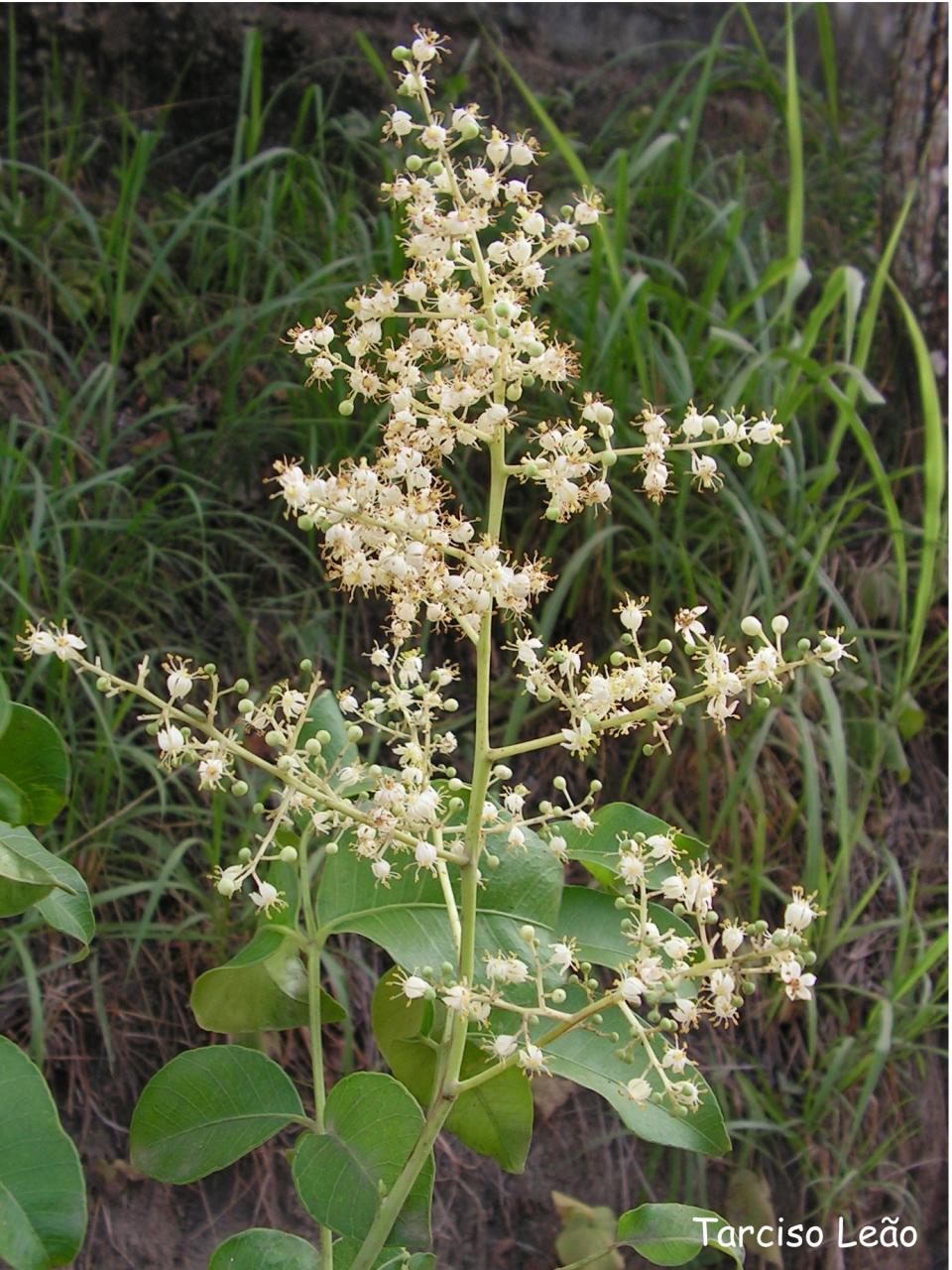
The flowers are tiny, creamy-white, sweet-scented and carried in large, loose, much-branched clusters (panicles) at the ends of the branches, often while the tree is leafless or just coming into new leaf. Flowering is generally in the dry season and spring.
Fruit & Seeds
The fruit is an oval, plum-like drupe about 1 to 1½ inches long, ripening from green to golden yellow or orange, with a thin, leathery skin and a thin layer of juicy, sharply tart pulp around a large, fibrous, knobby stone. Fruits ripen over several weeks and drop in quantity under the tree.
Similar Species
Jobo can be confused with other Spondias grown in Puerto Rico, such as the introduced ciruela (Spondias purpurea), which has red to purple fruits, and with gumbo limbo (Bursera simaruba), which also makes living fence posts but has smooth, peeling, copper-red bark.
Quick Facts
| Scientific Name | Spondias mombin L. |
| Family | Anacardiaceae (cashew or sumac family) |
| Plant Type | Deciduous tree |
| Mature Height | 30–66 ft |
| Mature Spread | 25–40 ft; open, spreading crown |
| Growth Rate | Fast |
| Sun Exposure | Full sun |
| Water Needs | Moderate; tolerates seasonal drought (sheds leaves in the dry season) |
| Soil Type | Adaptable; loams, clays and limestone soils with reasonable drainage |
| Soil pH | Slightly acidic to alkaline |
| Bloom Time | Dry season into spring |
| Flower Color | Creamy white |
| Fall Color | Leaves may yellow before dry-season drop |
| Fruit | Oval yellow drupe 1–1½ in; edible but tart |
| Deer Resistant | Not applicable in Puerto Rico; no native deer on the island |
| USDA Hardiness Zones | 10–13; frost-sensitive |
| Other Common Names | Jobo, jobo de perro (Puerto Rico); yellow mombin (USDA PLANTS); hog plum, Spanish plum, gully plum, cajá |
Native Range
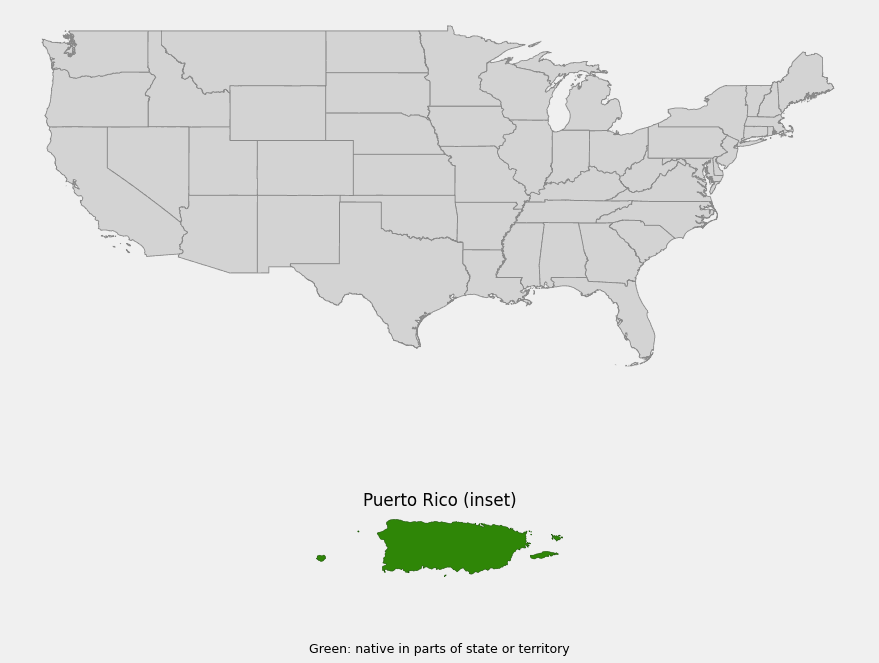
USDA PLANTS lists Spondias mombin as native in Puerto Rico and as probably native in the U.S. Virgin Islands; it is not native anywhere in the continental United States. In the wider world it is native to the tropical Americas, from Mexico through Central America and the West Indies to tropical South America. It has been carried to and naturalized in West Africa, South and Southeast Asia and the Pacific, and USDA PLANTS lists it as introduced on the Pacific islands of Guam and Palau.
In Puerto Rico jobo is widespread in the moist lowlands and foothills: in secondary forest, pastures, stream banks, roadsides and above all in fence rows, where planted cuttings have grown into lines of mature trees. It is a characteristic tree of the rural landscape and comes up readily from seed in abandoned farmland.
Because the species is so widely planted, distinguishing old natural populations from planted trees is often impossible. The map above shades Puerto Rico only; the U.S. Virgin Islands are not shown on the map.
📋 Regional plant lists featuring Hog Plum: Puerto Rico
Growing & Care Guide
Jobo is one of the easiest native trees to establish in Puerto Rico. It grows fast, roots from large cuttings, tolerates a wide range of soils and seasonal drought, and needs almost no care once it is growing.
Light
Plant in full sun. Jobo is a fast-growing tree of open ground and forest gaps and becomes thin and weak in shade.
Soil & Water
It grows in most soils, from loams and clays to limestone, as long as water does not stand for long periods. Water new plantings until they leaf out well. Established trees handle the dry season by dropping their leaves and need no irrigation in most of Puerto Rico.
Planting Tips
Allow plenty of room: 25 to 40 feet from buildings, and away from patios, cars and walkways, since the fruit crop drops heavily and can be messy and attract insects. As a member of the cashew family, the sap can irritate sensitive skin, so wear gloves when cutting branches.
Pruning & Maintenance
Prune young trees to a single trunk if you want a shade tree. Living fence trees are traditionally pollarded or cut back periodically, and they resprout vigorously. The wood is fairly soft and brittle, so remove weak or damaged limbs and check trees after storms.
Propagation
Jobo is famous for growing from large cuttings: thick branch sections several feet long, cut and planted during the rainy season, root readily and can be used directly as fence posts. It also grows easily from seed; clean the pulp from ripe fruit and sow the stones fresh. Seedlings grow quickly.
Landscape Uses
- Living fences: branch cuttings root easily and grow into durable fence posts
- Edible landscaping: tart fruit for eating fresh, juices, ice cream and preserves
- Wildlife food: heavy fruit crops for bats, birds and other animals
- Lowland forest restoration: fast cover on old pasture and disturbed ground
- Shade for farms and pastures: fast-growing shade for livestock and rural properties
Wildlife & Ecological Value
Jobo’s heavy fruit crops and early-season flowers make it a valuable food tree in the Puerto Rican landscape, especially in farm country, where fence-row trees provide food and travel corridors through open land.
For Pollinators
The small, sweet-scented flowers produce nectar and pollen in large quantities and are visited by bees, including honey bees and native bees, as well as wasps, flies and other small insects. Because the tree often flowers in the dry season, it supplies food at a time when fewer plants are in bloom.
For Birds
Ripe fruits are eaten by a variety of birds, and the trees are used for perching and foraging. Fence-row jobo trees provide cover and food for birds moving through open farmland.
For Mammals
Fruit bats, Puerto Rico’s only native land mammals, take ripe fruits and help disperse the seeds. Fallen fruit is also eaten by livestock and other animals, the origin of the name “hog plum”.
Ecosystem Role
As a fast-growing pioneer that seeds itself into pastures and disturbed ground, jobo helps start the recovery of lowland forest. Its living fence lines connect forest patches across agricultural landscapes, acting as corridors for birds and bats.
Cultural & Historical Uses
The name jobo, used across the Spanish-speaking Caribbean and Central America, is derived from the Carib language. The fruit has been eaten in the region since pre-Columbian times and is still eaten fresh or made into juices, ice creams and preserves in many countries. In northeastern Brazil, where it is called cajá, the pulp is widely used for juices and ice cream.
In Puerto Rico and throughout tropical America, jobo is perhaps best known as a living fence tree. Farmers cut thick branches, set them in the ground as posts, and string wire between them; the posts root and grow into a line of trees that lasts for decades. This practice explains why so many rural roads and pasture boundaries on the island are lined with old jobo trees.
Linnaeus described the species in 1753, and it has also been known as Spondias lutea, a name found in many older Caribbean floras. In traditional medicine, various parts of the tree have been used in teas and preparations. As a member of the cashew family, related to poison ivy and mango, its sap can cause skin reactions in sensitive people.
Frequently Asked Questions
Is hog plum native to Puerto Rico?
Yes. USDA PLANTS lists Spondias mombin as native in Puerto Rico and as probably native in the U.S. Virgin Islands. Known locally as jobo, it is widespread in lowland forests, pastures and fence rows across the island.
Is the fruit edible?
Yes. The ripe yellow fruit is edible, with a thin layer of juicy, sharply tart pulp around a large stone. It is eaten fresh or made into juices, ice cream and preserves. Some people with sensitivity to the cashew family may react to the sap.
Can I grow jobo from a cutting?
Yes, and that is the traditional method. Thick branch sections planted during the rainy season root readily and are commonly used to establish living fences. It also grows easily from fresh seed.
Why does it lose its leaves?
Jobo is deciduous and drops its leaves for part of the dry season to conserve water. It often flowers while bare or just coming into leaf, then fruits later in the year.
Is hog plum native to Florida?
No. USDA PLANTS does not list it as native anywhere in the continental United States; in U.S. territory it is native only in Puerto Rico and probably the U.S. Virgin Islands.

Looking for a nursery that carries Hog Plum?
Our nursery directory does not yet include Puerto Rico. Browse the native plant nursery directory by state: Alabama–Arkansas · California · Colorado–Hawaii · Idaho–Kansas · Kentucky–Montana · Nebraska–Oklahoma · Oregon · Pennsylvania–Virginia · Washington · West Virginia–Wyoming