Incense Cedar (Calocedrus decurrens)
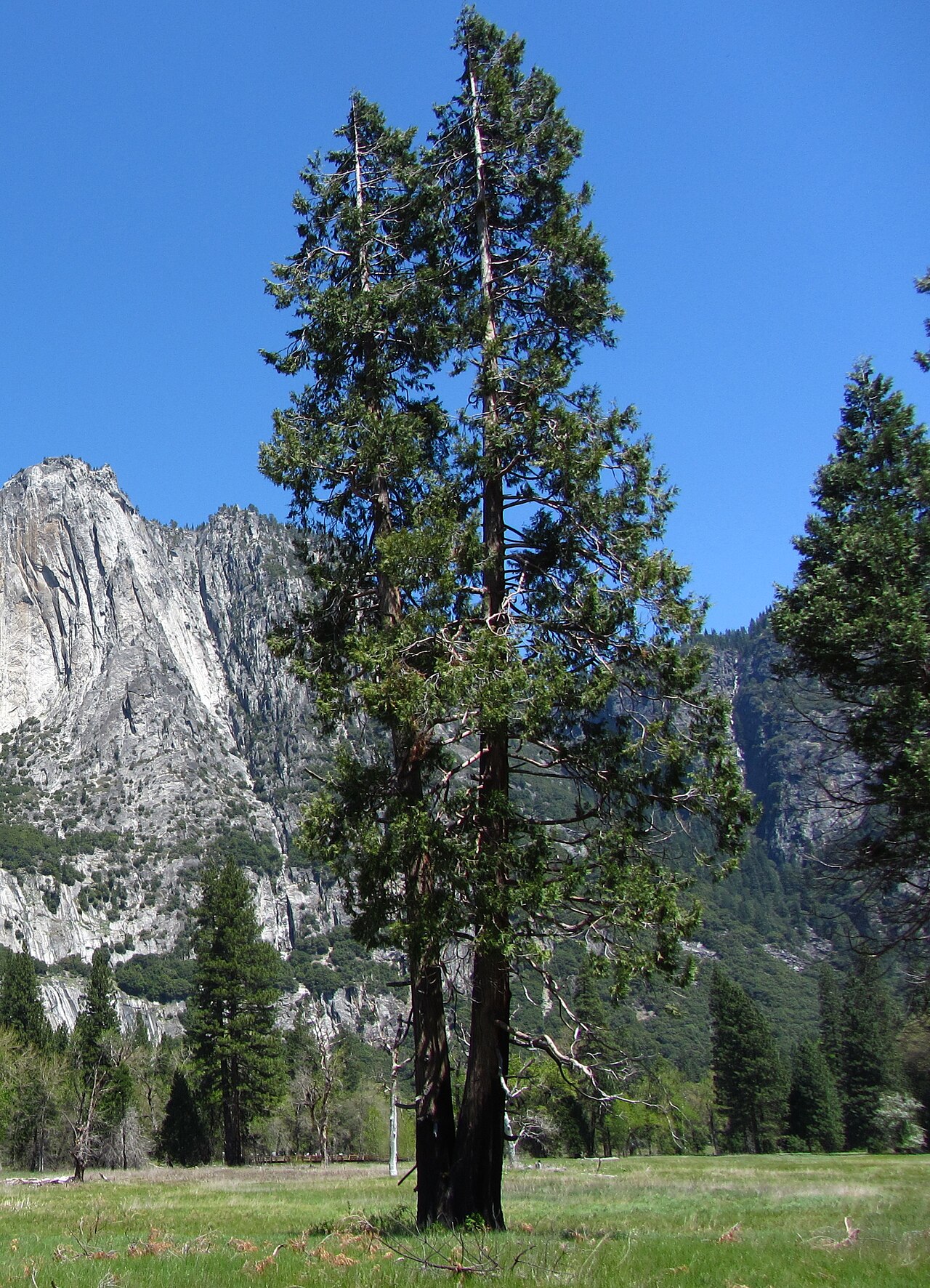
Calocedrus decurrens, commonly known as Incense Cedar, is a stately evergreen conifer of the mountains of the Pacific states, prized for its fragrant, aromatic wood, fibrous reddish-brown bark, and distinctive flat sprays of scale-like foliage. Despite the common name, it is not a true cedar (genus Cedrus) at all, but a member of the cypress family (Cupressaceae), more closely related to the cypresses and junipers than to the cedars of Lebanon or the Himalayas. Its warm, spicy fragrance — released whenever the foliage or wood is cut or crushed — is where the common name comes from, and it is unmistakable to anyone who has walked beneath a stand of these trees on a warm day.
Incense cedar grows as a long-lived, slow-growing forest tree, typically reaching 80 to 150 feet in height under garden and forestry conditions, though wild trees in favorable Sierra Nevada habitat can top 180 feet, and historic old-growth specimens in giant sequoia groves were recorded at well over 200 feet. Young trees have a dense, narrow, symmetrical pyramid shape with branches reaching nearly to the ground, while old trees develop a swollen, buttressed base, a rapidly tapering trunk, and an open, irregular crown — a silhouette familiar to anyone who has hiked through the mixed-conifer forests of the Sierra Nevada or the Cascade Range.
In the wild, incense cedar is a classic component of mixed-conifer forests, growing alongside ponderosa pine, Jeffrey pine, Douglas-fir, white fir, and California black oak across a wide elevation range. It tolerates poor, rocky, and even serpentine soils better than most of its forest associates, which lets it persist on sites too lean for faster-growing competitors. Its soft, straight-grained, decay-resistant wood has made it the standard timber for wooden pencils worldwide for well over a century, and its aromatic heartwood is also prized for cedar chests, closet lining, and outdoor construction.
Identification
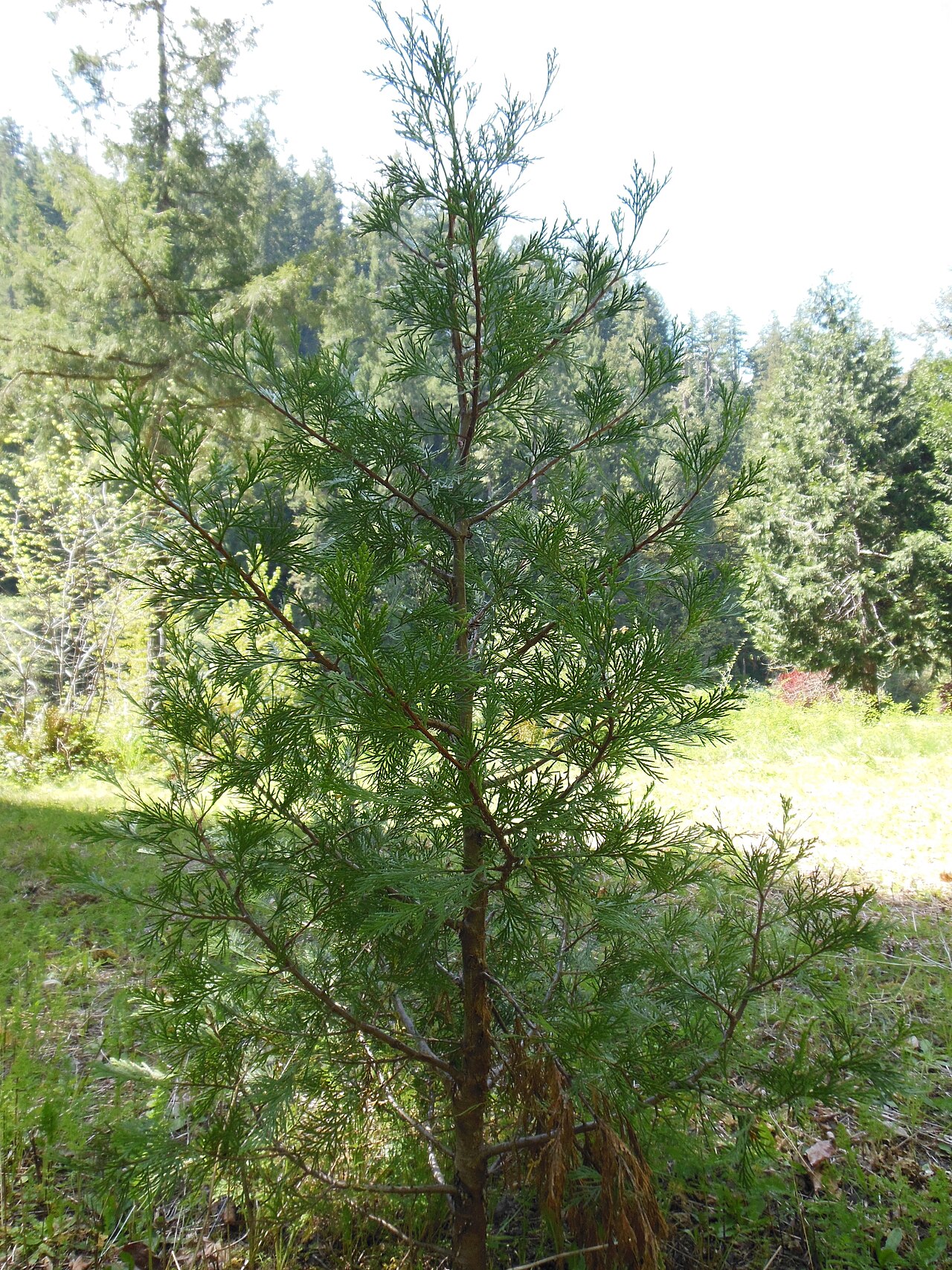
Incense cedar is identified by its narrow pyramidal form when young, aromatic foliage in flattened sprays, fibrous shredding bark, and small, distinctively shaped seed cones that some compare to a duck’s bill when open.
Bark & Form
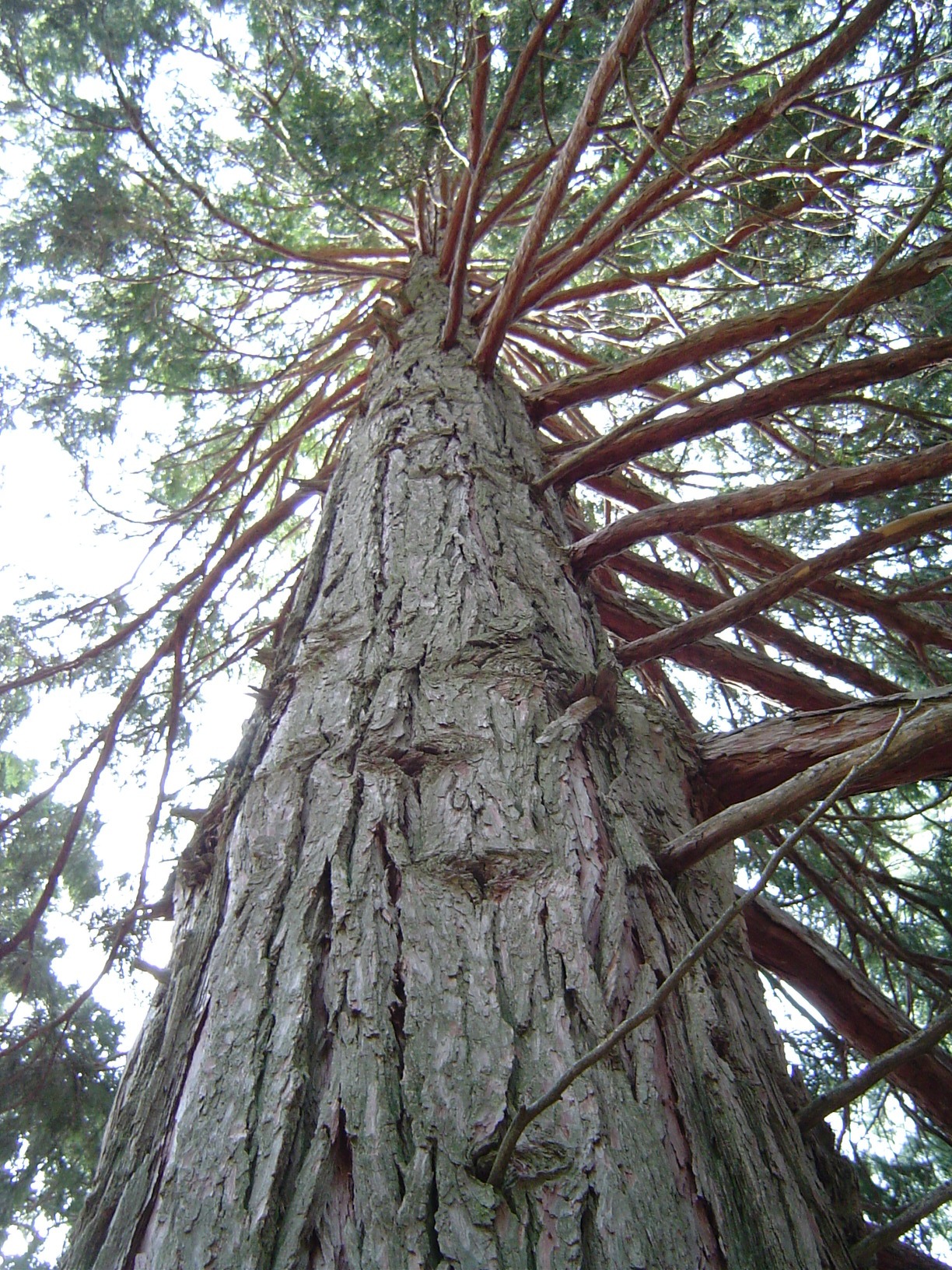
The bark is thick — typically 2 to 3 inches, occasionally up to 6 to 8 inches on old trees — reddish-brown to cinnamon colored, and deeply furrowed and ridged, exfoliating into long fibrous shreds with age. Young trees are densely pyramidal with branches sweeping nearly to the ground; mature trees develop a swollen, buttressed trunk base, a rapid taper, and an increasingly open, irregular crown, often with a dead or broken top on very old individuals. Trees are long-lived, commonly reaching several hundred years and occasionally exceeding 500 years old.
Leaves
Foliage consists of tiny, scale-like leaves, each about ⅛ to just over ½ inch long, closely pressed against flattened, fan-like sprays of foliage rather than held as individual needles. The sprays have a glossy, bright to dark green color and release a strong, spicy incense-like fragrance when crushed, which is the single most reliable field character for separating this species from superficially similar junipers and arborvitaes.
Cones & Seeds
Incense cedar is monoecious, with small, yellow-brown male (pollen) cones at branch tips in late winter and early spring, and separate female seed cones that mature the same year. The seed cones are small — about ½ to 1½ inches — and open into a distinctive shape resembling a duck’s bill or a pair of wings, each containing a small number of winged seeds that are dispersed by wind in late summer and fall.
Quick Facts
| Scientific Name | Calocedrus decurrens (syn. Libocedrus decurrens) |
| Family | Cupressaceae (Cypress) |
| Plant Type | Evergreen Coniferous Tree |
| Mature Height | 80–150 ft in cultivation (wild trees to 180+ ft) |
| Mature Spread | 15–25 ft |
| Growth Rate | Slow |
| Sun Exposure | Full Sun to Part Shade |
| Water Needs | Low to Moderate once established |
| Soil Type | Adaptable; tolerates rocky, shallow, and serpentine soils |
| Soil pH | Adaptable, slightly acidic to alkaline |
| Bloom Time | Late winter – early spring (pollen cones) |
| Flower Color | Yellow-brown (pollen cones, not showy) |
| Fruit | Small, duck-bill-shaped seed cones with winged seeds |
| Deer Resistant | Yes (mature trees; seedlings may be browsed) |
| USDA Hardiness Zones | 5–8 |
Native Range
Incense cedar is native to the mountains of the Pacific states, ranging from the southeastern slopes of Mt. Hood in Oregon south through the Cascade Range into central and western Oregon, then through nearly all the major mountain ranges of California — the Klamath, Siskiyou, North Coast, Cascade, Sierra Nevada, South Coast, Transverse, and Peninsular ranges, plus the Modoc Plateau — and east into the extreme western edge of Nevada. The range continues south into the mountains of northern Baja California, Mexico, beyond the U.S. border.
It is a defining component of mixed-conifer forests throughout this range, often growing alongside ponderosa pine, Jeffrey pine, Douglas-fir, white fir, sugar pine, and California black oak, and it is also found in giant sequoia groves of the Sierra Nevada, where it can account for roughly half the stems in some stands. It rarely forms pure stands on its own. The species tolerates a wide range of soils, including the thin, mineral-poor serpentine soils that exclude many other conifers, which helps explain its broad elevational and geographic distribution across the region’s mountains.
Incense cedar is planted ornamentally well outside its native range, including in the eastern United States and parts of Europe, where it grows successfully in cultivation. Gardeners outside the Pacific states who plant it should recognize it as a widely adaptable introduced ornamental there, not a regional native.
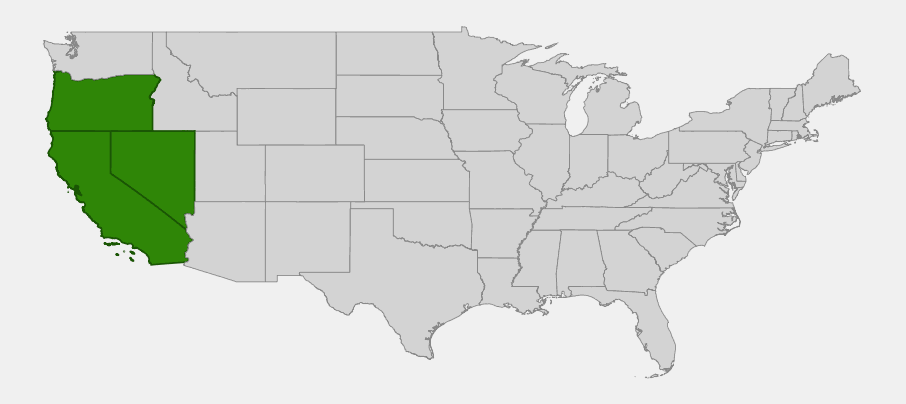
📋 Regional plant lists featuring Incense Cedar: Western Oregon & Western Washington
Growing & Care Guide
Incense cedar is a low-maintenance, long-lived conifer once established, valued in cultivation for its narrow form, fragrance, and tolerance of lean, rocky soils that stump many other large trees.
Light
Full sun produces the densest, most symmetrical growth, though young trees tolerate and even prefer some part shade, especially where summer heat is intense; in the forest, seedlings commonly establish in the dappled shade of larger conifers before growing up into full sun.
Soil & Water
This species is remarkably adaptable to soil type, tolerating rocky, shallow, and even serpentine soils that exclude many other conifers, though it also grows well in ordinary garden loam with good drainage. Water young trees regularly during their first few years to establish a deep root system; established trees are drought tolerant, but seedlings and young plants are vulnerable to drought stress and need consistent moisture until well rooted.
Planting Tips
Plant container-grown stock in fall or early spring, choosing a site with enough room for the tree’s eventual height and a narrow but real footprint — mature specimens commonly reach 15 to 25 feet wide. Because incense cedar grows slowly, especially in its early years, gardeners should plant it with its long-term role as a specimen or screening tree in mind rather than for quick results. It transplants well as a young container tree but resents being moved once well established.
Pruning & Maintenance
Little pruning is needed beyond removing dead or damaged branches; the tree’s natural form is attractive without shaping. Watch for heart rot, rust diseases (including incense cedar rust, which forms yellow-orange gall-like swellings called witches’ brooms), and occasional cutworm damage on young trees, though mature trees are generally low-maintenance and long-lived with few serious problems.
Landscape Uses
Incense cedar’s narrow form and year-round structure give it a place in several garden settings:
- Specimen tree where its narrow, pyramidal form and fragrance can be appreciated
- Windbreaks and screens thanks to its dense, columnar growth habit
- Mixed-conifer woodland gardens alongside pine, fir, and oak
- Difficult, rocky, or thin-soil sites where many other large conifers struggle
- Wildlife plantings for cover and nesting structure
- Erosion control on dry mountain slopes within its native range
Wildlife & Ecological Value
As a long-lived, structurally important member of Pacific mixed-conifer forests, incense cedar provides habitat value across many seasons and forest layers.
For Birds
The dense foliage and furrowed bark provide nesting sites and cover for forest birds, while cavity-nesting species use the soft, decay-prone heartwood of old or damaged trees for excavating nest holes. Seed-eating birds forage on the small winged seeds released from the cones in late summer and fall.
For Mammals
Douglas squirrels and other tree squirrels feed on incense cedar seeds and use mature trees for cover, while deer generally avoid browsing the aromatic foliage of established trees, though seedlings are more vulnerable to browsing damage, which is one of the factors limiting natural regeneration in some areas.
Ecosystem Role
Incense cedar’s thick, fibrous bark gives mature trees meaningful resistance to low- to moderate-intensity fire, helping the species persist through the fire regimes that have long shaped Sierra Nevada and Cascade mixed-conifer forests. Its tolerance for poor, rocky, and serpentine soils allows it to occupy niches other conifers cannot, adding structural and species diversity to the forests where it grows, and its long lifespan — sometimes exceeding 500 years — makes old trees important long-term habitat features.
Cultural & Historical Uses
Incense cedar’s most significant historical use is as the standard wood for wooden pencils: its soft, straight-grained, splinter-resistant wood sharpens cleanly and evenly, which made it the preferred pencil wood in the United States by the late 1800s, a role it continues to play today in pencils manufactured around the world. The same soft, aromatic, decay-resistant wood has also long been used for cedar chests, closet lining, shingles, fence posts, and outdoor construction, since it resists decay even where exposed to moisture.
Indigenous peoples throughout its range, including groups in the Sierra Nevada and southern Cascades, used incense cedar wood and bark for a variety of practical purposes, including construction material, basketry components, and kindling, valuing its workability and pleasant scent much as modern woodworkers do. The strong, spicy fragrance that gives the tree its common name has also made it popular for decorative sprays and natural air fresheners.
Today incense cedar remains an economically important timber species within its native range, harvested on a sustainable basis for pencil slats, lumber, and specialty wood products, while also serving as a widely planted ornamental tree valued for its narrow form and year-round fragrance.
Frequently Asked Questions
Is incense cedar a true cedar?
No. Despite the common name, incense cedar belongs to the cypress family (Cupressaceae) and is not closely related to true cedars in the genus Cedrus, such as Lebanon cedar or deodar cedar. “Incense cedar” is simply the traditional common name, reflecting its strong, pleasant fragrance.
Why are incense cedars used to make pencils?
The wood is soft, straight-grained, and resistant to splintering, which lets it be sharpened cleanly and evenly with a knife or pencil sharpener. These properties, combined with reliable supply from managed forests in California and Oregon, made it the dominant pencil wood in the United States by the early 20th century, and it remains widely used for that purpose today.
How fast does incense cedar grow?
It is a slow-growing tree, especially in its early years, typically adding well under a foot per year as a young tree in the wild. Cultivated trees with good moisture and care may grow somewhat faster, but gardeners should still expect it to take many years to reach significant size.
Is incense cedar drought tolerant?
Established, mature trees are reasonably drought tolerant and are a good choice for naturally dry mountain and foothill sites within their native range. Young seedlings and newly planted trees, however, are much more vulnerable to drought stress and need consistent watering during their first several years.
Does incense cedar attract wildlife?
Yes. Tree squirrels feed on the seeds, birds use the dense foliage and old trees’ soft wood for nesting and cover, and mature trees are generally left alone by deer, making incense cedar a reasonably wildlife-friendly large conifer for native plant landscaping within its range.

Looking for a nursery that carries Incense Cedar?
Browse our native plant nursery directory: Oregon · California · Nevada