
Joe-Pye-Weed (Eupatorium spp.)
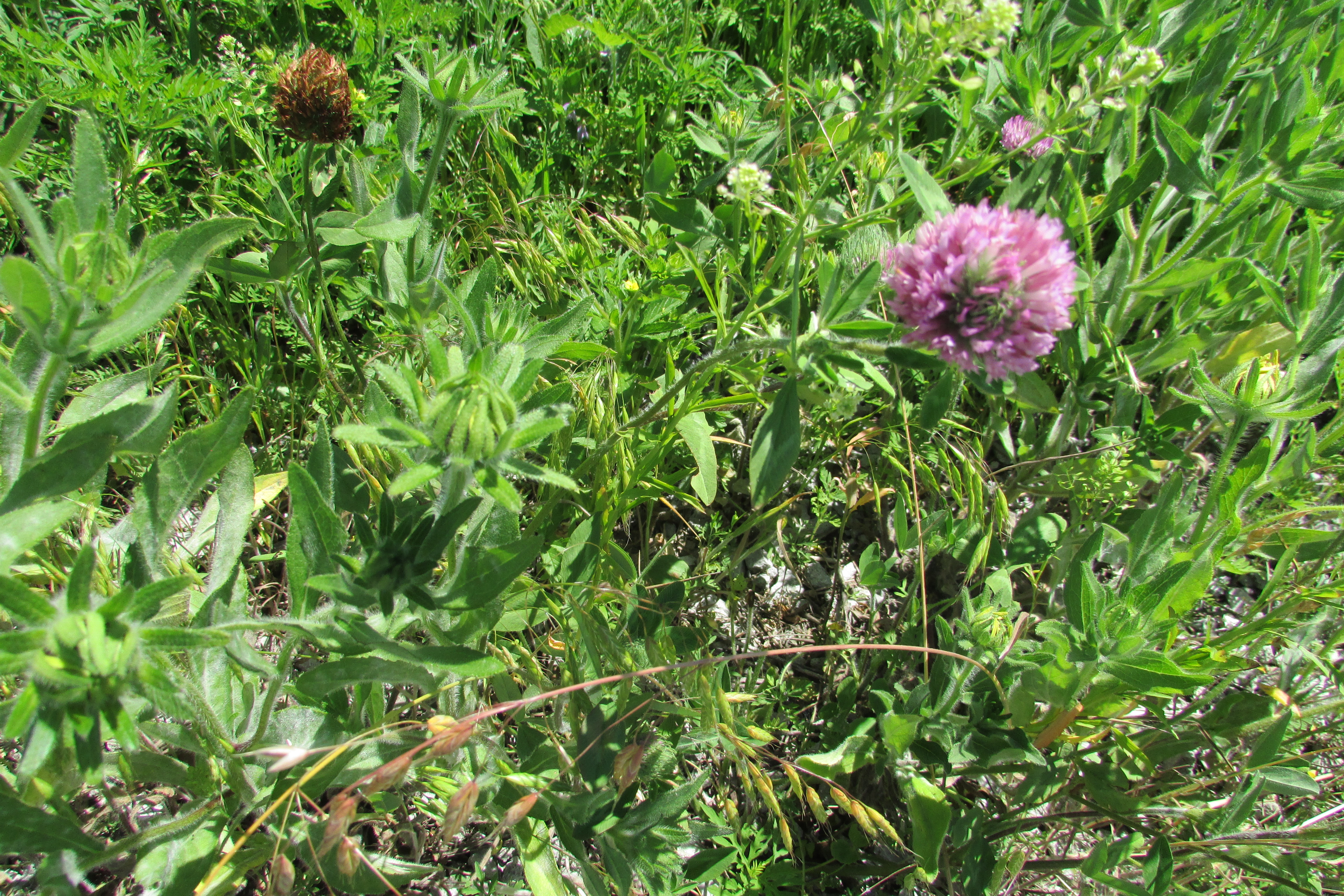
Eupatorium spp. (including closely related species now reclassified to Eutrochium), commonly known as Joe-Pye-Weed, represents a group of tall, native herbaceous perennials that command attention in the late-summer garden with their imposing height, large domed clusters of dusty rose-to-purple flowers, and extraordinary value for wildlife. Members of the Asteraceae (Aster/Daisy) family, Joe-Pye-Weeds are among the most ecologically important native perennials of the eastern United States, providing critical late-season nectar for migrating butterflies, native bees, and other pollinators at a time when most spring-blooming plants have long finished flowering.
The Joe-Pye-Weeds most commonly cultivated include Eutrochium purpureum (Sweet Joe-Pye-Weed), Eutrochium maculatum (Spotted Joe-Pye-Weed), and Eutrochium fistulosum (Hollow Joe-Pye-Weed) — all formerly placed in Eupatorium. All share the characteristic tall stature (5–9 feet), whorled leaves, and large, flat-topped or domed clusters of small, tubular, dusty rose-to-pink-purple flowers that bloom from July through September. The common name honors a legendary New England Native American healer named Joe Pye (Jopi), said to have used the plant to cure typhoid fever and other illnesses among early European settlers.
In the landscape, Joe-Pye-Weed makes a bold statement at the back of a border or in a naturalistic meadow planting. Its height, which can reach 9 feet in rich, moist soil, gives it a commanding presence. But its true value lies in what it offers wildlife: few native plants attract as many butterfly species as Joe-Pye-Weed in late summer, and it is considered one of the top ten butterfly-attracting native plants of the eastern United States. For anyone who wants to create a monarch waystation, a butterfly garden, or a late-season pollinator meadow, Joe-Pye-Weed is an essential component.
Identification
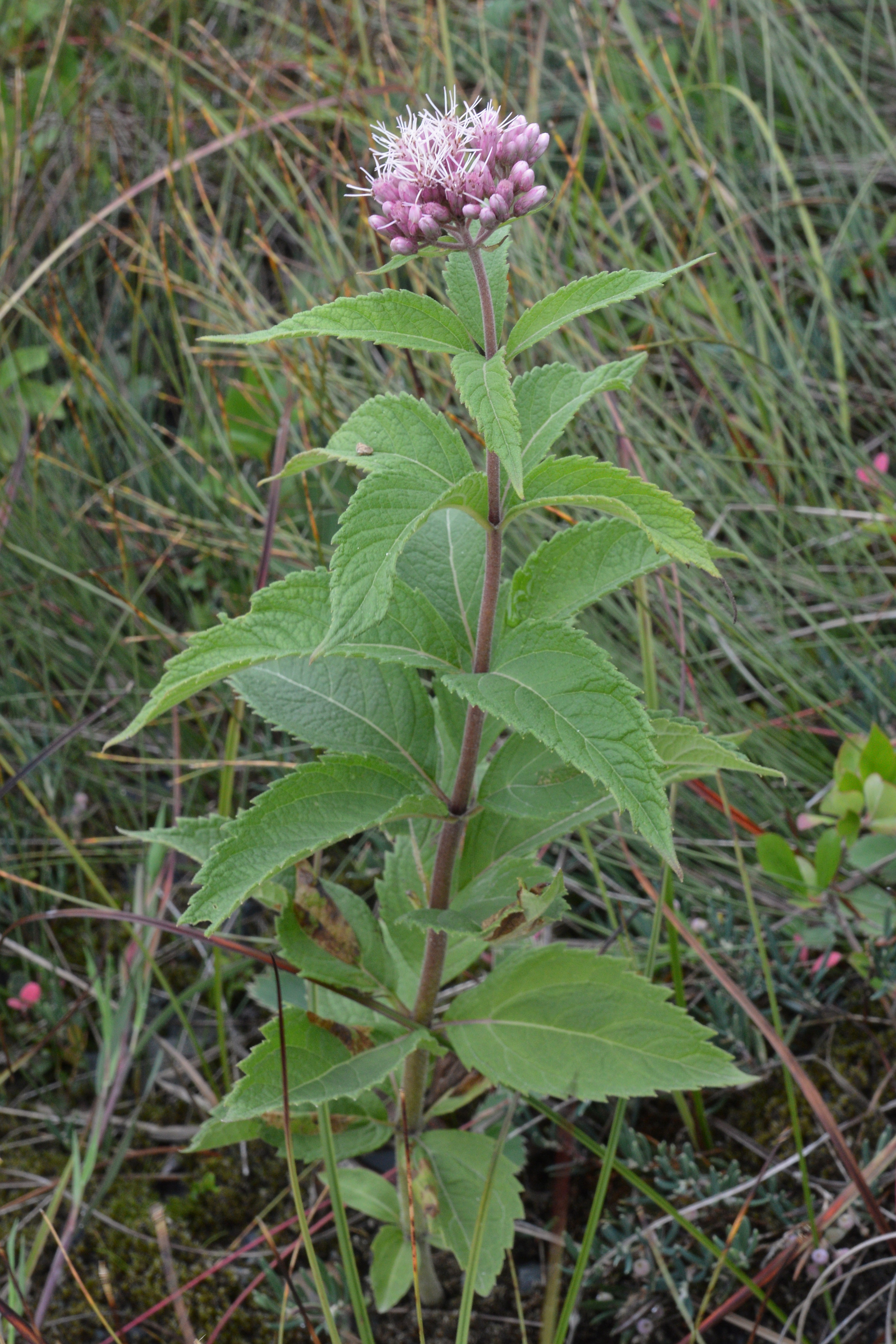
Joe-Pye-Weed species are tall, coarse herbaceous perennials reaching 5 to 9 feet (1.5–2.7 m) at maturity, with thick, sturdy, unbranched stems. The different species can be distinguished by stem color and texture, leaf arrangement, and flower cluster shape. All species form multi-stemmed clumps that expand slowly over the years, becoming impressive structural elements in the garden.
Stems
The stems are one of the key identification features. Eutrochium maculatum (Spotted Joe-Pye-Weed) has stems distinctly spotted or blotched with purple, particularly at the nodes — a feature that gives it its common name. Eutrochium fistulosum (Hollow Joe-Pye-Weed) has smooth, hollow stems with a glaucous (waxy-white) coating that gives them a slightly bluish tint. Eutrochium purpureum (Sweet Joe-Pye-Weed) has solid stems that are purple only at the nodes. All stems are sturdy enough to remain standing through winter without staking, providing seed heads that feed birds in fall and winter.
Leaves
The leaves are lance-shaped to elliptic, coarsely toothed, and arranged in whorls of 3–5 around the stem. They are 4 to 10 inches (10–25 cm) long, with a rough, slightly scratchy texture on the upper surface. The leaves of E. purpureum (Sweet Joe-Pye-Weed) have a vanilla-like scent when crushed — the source of its common name. Leaf size decreases toward the top of the stem, and the whorled leaf arrangement (unlike most perennials with opposite or alternate leaves) is a distinctive identification feature visible from a distance.
Flowers
The flowers are small, tubular, and arranged in large, domed to flat-topped compound clusters (corymbs) at the tops of the stems, typically 6 to 18 inches across. Individual flower heads are composed of 5–22 tiny disk florets — there are no ray florets (“petals”) in the traditional sense. The color ranges from dusty rose to mauve-purple, sometimes approaching a deeper rose-purple. Blooming begins in late July and continues through September, peaking in August — a critical time in the pollinator calendar when many other flowering plants have finished for the season. The flowers have a light, sweet fragrance that is detectable from several feet away.
Quick Facts
| Scientific Name | Eupatorium spp. (incl. Eutrochium purpureum, E. maculatum, E. fistulosum) |
| Family | Asteraceae (Aster / Daisy) |
| Plant Type | Herbaceous Perennial |
| Mature Height | 5–9 ft |
| Sun Exposure | Full Sun |
| Water Needs | Moderate |
| Bloom Time | July – September |
| Flower Color | Dusty rose to mauve-purple |
| USDA Hardiness Zones | 3–9 |
Native Range
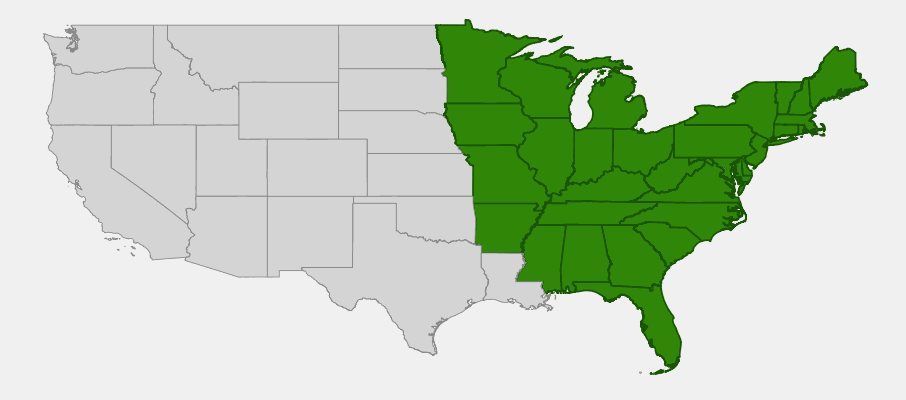
The Joe-Pye-Weed complex (Eupatorium / Eutrochium spp.) is native to much of eastern and central North America, from southern Canada south through the eastern United States to the Gulf Coast and as far west as the Great Plains. Different species have somewhat different ranges: Eutrochium fistulosum is primarily southeastern; E. maculatum extends further north and west; and E. purpureum occupies a broad central-eastern range. Collectively, Joe-Pye-Weeds are present in virtually every state from Maine to Florida and west to the Mississippi Valley and beyond.
Throughout their range, Joe-Pye-Weeds are characteristic plants of moist habitats: bottomland meadows, wet prairies, stream margins, the edges of marshes and wetlands, and moist open woodlands. They are particularly abundant along disturbed roadsides and in old fields with adequate moisture. In the northeastern United States — including New York, Pennsylvania, and New Jersey — they grow in moist meadows, along stream banks, in damp thickets, and at the margins of freshwater wetlands. They are often encountered growing alongside Swamp Milkweed (Asclepias incarnata), Ironweed (Vernonia spp.), Tall Goldenrod (Solidago altissima), and various asters.
Joe-Pye-Weeds typically grow from near sea level to approximately 4,000 feet elevation, and are most abundant in the humid eastern deciduous forest biome. They are light-demanding plants that thrive in full sun at the edges of habitats — at the borders between meadow and woodland, along roadsides with adequate moisture, and in disturbed areas that receive full sunlight with moist soils nearby. Their clonal spreading habit allows them to form impressive colonies over time.
📋 Regional plant lists featuring Joe-Pye-Weed: New York, Pennsylvania & New Jersey
Growing & Care Guide
Joe-Pye-Weed is a robust, long-lived perennial that is easy to grow in most garden settings with adequate moisture and sun. Once established, it forms an impressive multi-stemmed clump that expands slowly over years, requiring little maintenance beyond occasional division to keep it vigorous.
Light
Joe-Pye-Weed performs best in full sun, where it produces the most flowers and maintains a sturdier, more upright habit. It tolerates part shade but tends to grow taller and somewhat floppy with reduced flowering in significant shade. In full sun, the plants typically require no staking even at their full 7–9 foot height, as the thick stems are self-supporting. In partial shade, taller varieties may lean or flop and benefit from staking or the support of neighboring plants.
Soil & Water
Joe-Pye-Weed prefers consistently moist, fertile soil — it does best in conditions that mimic its natural bottomland meadow habitat. It grows well in average garden soil that receives regular moisture, but truly thrives in rich, moist loam with good water retention. It tolerates occasional wet feet and performs well in rain gardens and low areas that stay moist. While established plants can tolerate brief drought, prolonged dry conditions cause premature leaf drop and reduced flowering. Mulching the root zone helps maintain soil moisture through summer heat.
Planting Tips
Plant Joe-Pye-Weed in spring or fall in a site with full sun and adequate moisture. Space plants 3–4 feet apart — they will fill in over 2–3 years to form a dense stand. Plant at the back of a border, along a fence line, or at the edge of a wet area or stream bank. Joe-Pye-Weed pairs beautifully with other tall native perennials including Tall Goldenrod (Solidago altissima), New England Aster (Symphyotrichum novae-angliae), and Wild Bergamot (Monarda fistulosa). For smaller spaces, select compact cultivars like ‘Little Joe’ (3–4 ft) or ‘Baby Joe’ (2–3 ft).
Pruning & Maintenance
Joe-Pye-Weed is largely maintenance-free. Divide established clumps every 4–5 years in early spring to maintain vigor. Cut plants back to 1–2 feet in late winter before new growth emerges. Alternatively, leave the stems standing through winter — they provide important bird habitat and seed food, and the dried brown flower heads add winter structure to the garden. The plants are self-sowing in favorable conditions; deadhead after bloom if you prefer to prevent seedling spread. Few pests or diseases affect Joe-Pye-Weed in well-sited plantings.
Landscape Uses
The dramatic height and wildlife value of Joe-Pye-Weed make it a standout element in:
- Back-of-border plantings — as a tall structural element with spectacular late-summer color
- Native meadow gardens — combine with grasses, goldenrods, and asters for a dynamic late-season display
- Butterfly gardens — one of the premier butterfly-attracting plants of the eastern United States
- Monarch waystations — a key late-season nectar source for migrating monarchs
- Rain gardens — tolerates periodic flooding
- Naturalized areas and stream bank plantings
- Screening — the tall summer stems create a seasonal visual screen
Wildlife & Ecological Value
Joe-Pye-Weed is one of the most ecologically important native perennials of the late-summer garden. Its value to pollinators is almost unparalleled among native herbaceous plants, and its structural contribution to meadow and edge habitats extends across all seasons.
For Birds
After the flowers fade, the persistent seed heads are consumed by American Goldfinches, Purple Finches, and numerous sparrow species through fall and winter. The dense stem structure provides important overwintering habitat for beneficial insects, which in turn serve as a food source for insectivorous birds. Leaving the stems standing through winter — rather than cutting them down in fall — significantly increases the garden’s value for birds and beneficial insects.
For Mammals
White-tailed Deer browse Joe-Pye-Weed in some areas, though it is not a preferred food and established plants recover quickly from browsing. The dense summer growth provides cover for small mammals including rabbits, mice, and voles, while the seed heads are consumed by squirrels and chipmunks in fall.
For Pollinators
Joe-Pye-Weed’s late-summer bloom period coincides with a critical window in the pollinator calendar — the period when adult monarchs are building fat reserves for their long migration to Mexico, and when many specialist native bees are completing their reproductive cycles. Eastern Tiger Swallowtails, Spicebush Swallowtails, Black Swallowtails, Great Spangled Fritillaries, Monarchs, Pearl Crescents, and many other butterfly species visit the flowers intensively. Native bees — particularly bumble bees (Bombus spp.) and various sweat bees — are constant visitors. The sweet fragrance of the flowers enhances their attractiveness to pollinators from considerable distances.
Ecosystem Role
In moist meadow and bottomland edge habitats, Joe-Pye-Weed serves as a structural anchor species — its tall, robust stems remain standing through winter, providing physical habitat framework for many other organisms. The hollow stems of Eutrochium fistulosum are used as nesting sites by small solitary bees. The dense summer growth shades the soil, moderating temperature extremes and reducing weed competition. As a clonal spreading species, Joe-Pye-Weed gradually colonizes open moist areas, initiating the successional transition from disturbed ground to diverse native meadow communities.
Cultural & Historical Uses
The common name “Joe-Pye-Weed” honors a legendary figure from early New England history — a Native American healer variously identified as “Joe Pye” or “Jopi,” who reportedly used the plant to treat typhoid fever among European settlers in the 1700s. While the historical details are disputed and somewhat embellished over time, the name reflects the plant’s genuine historical importance as a medicinal herb in Indigenous North American traditions.
Numerous Native American groups used various Eupatorium and Eutrochium species medicinally. The Iroquois used the plant to treat fever, urinary problems, and kidney stones. The Cherokee used it as a diuretic and to treat gout and rheumatism. The Ojibwe used the root to break fevers. The Meskwaki used it to treat kidney and urinary ailments. These uses reflect a consistent theme: Joe-Pye-Weed was widely employed as a diuretic (promoting urination) and to treat conditions involving the kidneys and urinary tract, a use that aligns with its traditional folk medicine reputation as a treatment for kidney stones.
The plant contains several medically active compounds including euparin, euparitin, and various sesquiterpene lactones that have demonstrated anti-inflammatory and diuretic properties in laboratory studies. While Joe-Pye-Weed is still sold as an herbal supplement for kidney and urinary support, clinical evidence is limited and the plant should not be used medicinally without professional guidance. Today, Joe-Pye-Weed is primarily celebrated as one of the finest native garden perennials for late-season color and its extraordinary value to butterflies and pollinators — a legacy that has far exceeded its medicinal fame.
Frequently Asked Questions
Who is Joe Pye?
The common name honors a legendary New England Native American healer named Joe Pye (or Jopi) who reportedly used the plant to treat typhoid fever among European settlers in Massachusetts during the 1700s. While the historical details are disputed, the name reflects the plant’s genuine importance in Indigenous North American medicinal traditions. Joe-Pye-Weed remains one of the most recognizable common plant names in North America.
Is Joe-Pye-Weed the same as Eupatorium?
Historically, Joe-Pye-Weeds were classified in the genus Eupatorium. Molecular studies in the 1990s–2000s led taxonomists to separate them into the genus Eutrochium. Most nurseries still list them under Eupatorium for familiarity, and many gardeners use both names interchangeably. The “true” Eupatorium genus now refers to plants like Boneset (E. perfoliatum) and White Snakeroot (E. rugosum), which are related but distinct plants.
How do I keep Joe-Pye-Weed from flopping?
Choose a full-sun location — shade is the primary cause of floppy stems. Alternatively, pinch the stem tips back by one-third in late May or early June; this reduces final height and promotes a bushier, sturdier plant that blooms slightly later. Several compact cultivars have been selected specifically for shorter, sturdier habits: ‘Little Joe’ grows to just 3–4 feet, while ‘Baby Joe’ stays under 3 feet — excellent choices for smaller gardens.
When does Joe-Pye-Weed bloom?
Joe-Pye-Weed blooms July through September, with peak bloom typically in August. This late-summer bloom period is one of its greatest assets — it fills the “August gap” when many other garden perennials have finished flowering. The flowers remain attractive for 4–6 weeks, and the persistent seed heads extend ornamental interest well into fall and winter.
Does Joe-Pye-Weed spread?
Joe-Pye-Weed spreads in two ways: by slow rhizome expansion at the base of established clumps, and by self-seeding. Clump expansion is gradual and manageable — divide every 4–5 years in early spring. Self-seeding can be significant in favorable conditions; deadhead after bloom if seedling spread is undesirable. In naturalistic or meadow plantings, allowing self-seeding creates a more dynamic, naturalistic stand that shifts and evolves over time.

Looking for a nursery that carries Joe-Pye-Weed?
Browse our native plant nursery directory: New York · Pennsylvania