
Dutchman’s Breeches (Dicentra cucullaria)
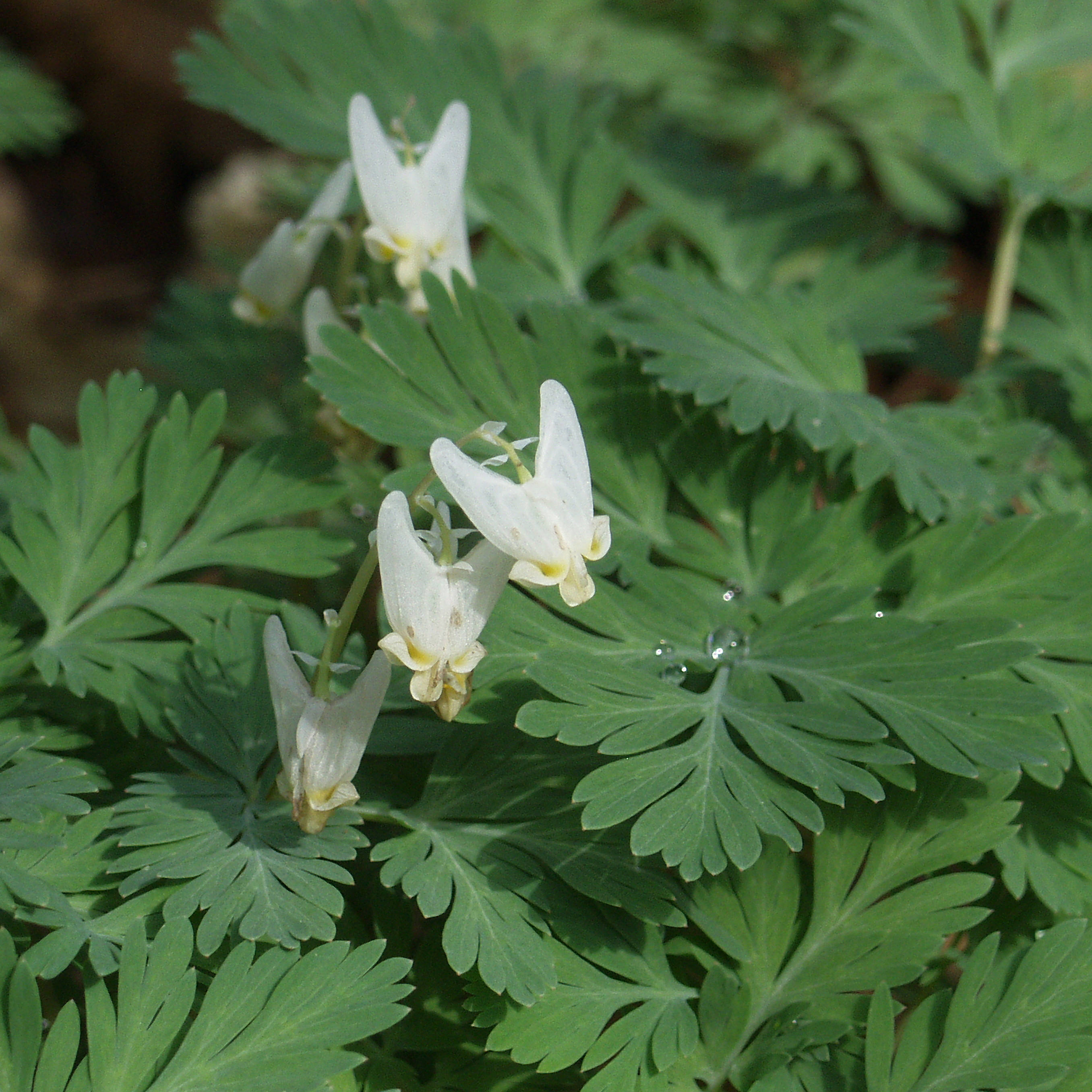
Dicentra cucullaria, commonly called Dutchman’s Breeches, is one of the most beloved wildflowers of the eastern North American woodland floor. Named for its remarkable flowers — a pair of white, spurred petals hanging upside-down like a tiny pair of old-fashioned Dutch pantaloons — this delicate spring ephemeral is among the earliest harbingers of spring in moist deciduous forests. Each April and May, colonial patches of this diminutive herb carpet the ground beneath leafless trees, turning the forest floor into a patchwork of lacy blue-green foliage and dangling white and yellow flowers.
As a spring ephemeral, Dutchman’s Breeches is perfectly timed to take advantage of the brief window of full sunlight that reaches the forest floor before trees leaf out. It emerges in early spring, flowers rapidly, sets seed, and then retreats entirely underground by late spring or early summer — leaving no trace above ground until the following year. This entire life cycle above ground spans just 6 to 8 weeks, making it a master of temporal efficiency. Underground, the plant persists as a cluster of small, pink to white bulb-like corms that store energy through the dormant summer, fall, and winter months.
Beyond its aesthetic charm, Dutchman’s Breeches plays a fascinating ecological role: its flowers are structurally adapted to long-tongued bumblebee queens — one of the few insects with a tongue long enough to reach nectar in the deeply spurred petals. The seeds bear special oily appendages called elaiosomes that attract ants, which carry the seeds underground and disperse them through the forest — a process called myrmecochory that many spring ephemerals depend on. This intimate weaving of the plant into early-spring forest ecology makes it a meaningful addition to any woodland garden.
Identification
Dutchman’s Breeches is a small, delicate herbaceous perennial that rises 6 to 12 inches (15–30 cm) from a cluster of small pink corms. The plant has two distinct parts — the ferny foliage and the arching flowering stem — both of which emerge simultaneously in early spring.
Foliage
The leaves are basal (arising from the base of the plant), deeply divided 2 to 3 times into narrow segments, creating a very delicate, ferny appearance. Each leaf is 3 to 6 inches (8–15 cm) long, pale to medium blue-green, and soft in texture. The delicate, finely divided nature of the foliage is one of the best identification features, along with the plant’s small size and early spring emergence. By late spring or early summer, all foliage dies back completely and disappears — a hallmark of spring ephemerals.
Flowers
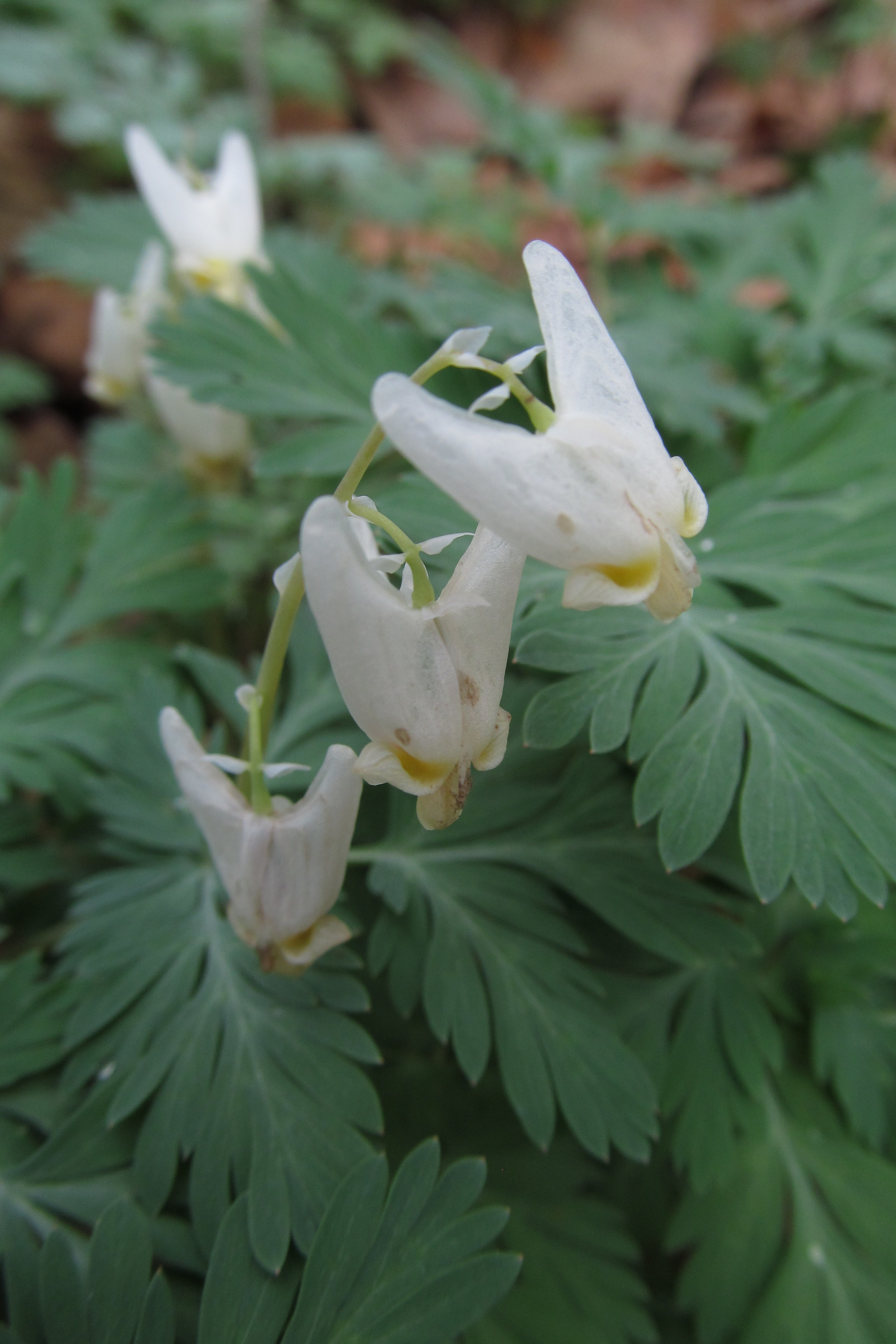
The flowers are extraordinary and instantly recognizable. Each individual flower is about ¾ inch (2 cm) long and shaped like an inverted pair of pants or pantaloons: two outer petals that form hollow, diverging, upward-pointing spurs (the “legs” of the breeches), and two inner petals fused into a small, protruding tip (the “waistband”). The overall effect is of a tiny garment hanging from the stem. Flowers are white to pale cream, with a bright yellow tip at the center. They are arranged in arching racemes (clusters) of 4 to 14 flowers on a slender, leafless stem. The bloom period is brief — typically just 2 to 3 weeks in April to May depending on latitude.
Roots & Corms
Below ground, the plant consists of a cluster of small, irregular, pink to white corms — scale-covered storage organs similar in function to bulbs. These corms are the plant’s means of vegetative reproduction and winter survival. New corms form from the original plant each season, allowing colonies to expand gradually over many years. The entire root system is shallow and fragile — never dig Dutchman’s Breeches from the wild.
Quick Facts
| Scientific Name | Dicentra cucullaria |
| Family | Papaveraceae (Poppy) |
| Plant Type | Spring Ephemeral Perennial Herb |
| Mature Height | 1 ft |
| Sun Exposure | Full Shade |
| Water Needs | Moderate |
| Bloom Time | April – May |
| Flower Color | White with yellow tip |
| Foliage | Blue-green, finely divided (dies back by summer) |
| Underground Storage | Pink/white corms |
| Toxicity | Toxic to humans and livestock if ingested |
| USDA Hardiness Zones | 3–7 |
Native Range
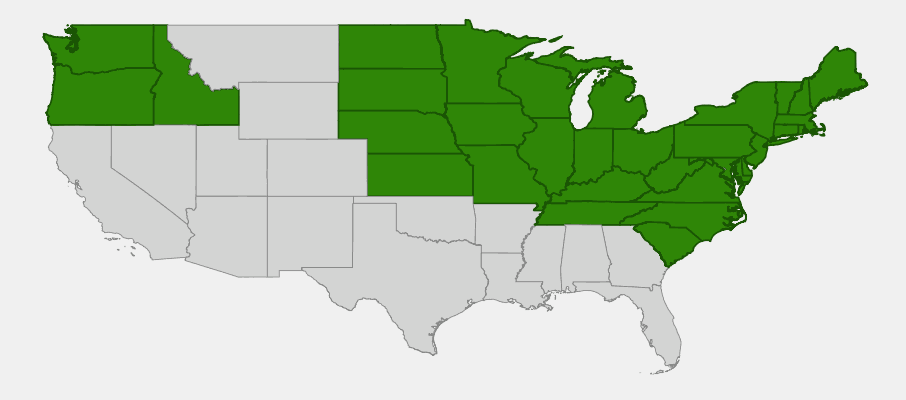
Dutchman’s Breeches is native to moist, rich deciduous forests across much of eastern North America, from Nova Scotia and New Brunswick south through New England, the mid-Atlantic states, and the Appalachian Mountains to Georgia and Alabama, and westward across the Midwest to Kansas and Nebraska. There is also a disjunct population in the Pacific Northwest (northeastern Oregon, Washington, and Idaho), thought to represent a glacial relict population isolated from the main range since the last ice age.
Within the Northeast and mid-Atlantic, Dutchman’s Breeches is most abundant on the slopes of rich, moist, north- and east-facing ravines where the soil is deep, loamy, and high in organic matter. It favors the same habitat as other spring ephemerals — particularly Trout Lily (Erythronium americanum), Spring Beauty (Claytonia virginica), and Wild Ginger (Asarum canadense) — in the forest communities ecologists call “mesic mixed hardwood forests.” It is a reliable indicator species for high-quality, undisturbed forest soil.
Like most spring ephemerals, Dutchman’s Breeches is sensitive to forest disturbance, soil compaction, and deer overbrowsing. In regions with high deer populations, colonies may decline over time as deer selectively browse the emerging foliage before it can complete its brief growing season. Protection from deer and maintenance of healthy forest cover are key to sustaining populations of this woodland gem.
📋 Regional plant lists featuring Dutchman’s Breeches: New York, Pennsylvania & New Jersey
Growing & Care Guide
Dutchman’s Breeches is a rewarding but somewhat specialized garden plant. It thrives in the woodland garden and shaded border, disappearing by midsummer after completing its ephemeral cycle. Understanding its spring ephemeral nature is key to gardening with it successfully.
Light
Dutchman’s Breeches requires full shade to dappled shade — it naturally grows in the deeply shaded understory of mature deciduous forests. It will not tolerate full sun; direct sun scorches the delicate foliage and shortens the already brief growing season. Ideal conditions are dappled to full shade, such as beneath large deciduous trees, in north-facing shaded borders, or along shaded stream banks. The brief spring window when deciduous trees are leafless provides adequate light for the plant to complete its lifecycle even under dense summer canopy.
Soil & Water
Deep, rich, moist, well-drained loam is ideal — the kind of woodland soil with abundant leaf mold and organic matter. Dutchman’s Breeches does not tolerate compacted soils or standing water. It prefers moderate, consistent moisture during its brief active season but tolerates summer drought when dormant. Amend planting beds generously with compost or leaf mold before planting. Soil pH should be slightly acidic to neutral (5.5–7.0). Avoid sandy or clay-heavy soils.
Planting Tips
Plant corms in fall, about 2 inches deep and 6 inches apart. Corms are small and pink, resembling tiny, irregular kernels. Alternatively, transplant in spring immediately after flowering while foliage is still visible — once dormant, the small corms are nearly impossible to locate. Plant in drifts of 15 to 25+ corms for a naturalistic, colony-like effect. Interplant with ferns, Wild Ginger, or other shade-tolerant perennials to fill the bare space after Dutchman’s Breeches goes dormant.
Pruning & Maintenance
No pruning is needed. Allow foliage to die back naturally — do not cut it prematurely, as the plant needs the leaves to photosynthesize and recharge its corms for next year. Mark the location of colonies so you don’t accidentally disturb them while dormant. Do not mulch heavily over the planting site, as thick mulch can interfere with emergence. Light, shredded leaf mulch is appropriate. In mast years, allow seeds to ripen and fall naturally to encourage colony spread.
Landscape Uses
- Shaded woodland garden as a spring ephemeral groundcover
- Native plant garden beneath large deciduous trees
- Naturalized woodland floor in combination with other ephemerals
- Rain garden edges with appropriate shade and moisture
- Shaded border combined with summer perennials that fill dormant gaps
Wildlife & Ecological Value
Despite its small size and brief season, Dutchman’s Breeches plays an outsized ecological role in the early-spring forest community. Its specialized flower structure and seed dispersal system make it an ecologically fascinating species.
For Pollinators
Dutchman’s Breeches flowers are structurally adapted for long-tongued bumblebee queens — specifically queen bumblebees of species such as Bombus pensylvanicus, B. griseocollis, and B. auricomus. These large early-season bees are among the few insects with tongues long enough to reach the deeply hidden nectar in the hollow spurs. This relationship makes Dutchman’s Breeches a critical early food source for queen bumblebees emerging from winter dormancy. In areas where this plant is abundant, it may meaningfully support bumblebee colony establishment in spring — an important contribution given that bumblebee populations are declining across North America.
Seed Dispersal by Ants
The seeds of Dutchman’s Breeches bear a fatty, nutrient-rich appendage called an elaiosome that is highly attractive to ants. Ants carry the seeds back to their nests to consume the elaiosome, then discard the seeds in underground chambers or waste deposits — effectively planting them. This process, myrmecochory, is the primary dispersal mechanism for Dutchman’s Breeches and many other spring ephemerals. Over decades, ant activity can slowly expand colonies across a forest floor in patterns that reflect historical ant foraging territories.
For Birds & Mammals
The foliage and corms of Dutchman’s Breeches are not a significant food source for birds or large mammals due to the plant’s toxicity (the alkaloids it contains are mildly toxic). However, deer occasionally browse the emerging foliage, which can harm colonies in areas with high deer pressure. The plant’s primary ecological relationships are with its bumblebee pollinators and ant seed dispersers.
Ecosystem Role
As a spring ephemeral, Dutchman’s Breeches is a key component of the “vernal dam” effect: spring ephemerals collectively capture and cycle nutrients that would otherwise leach from the forest floor during the early growing season before tree canopies close. Their brief but intense activity — photosynthesizing, flowering, and seeding in 6 to 8 weeks — makes spring ephemerals disproportionately important contributors to forest ecosystem productivity.
Cultural & Historical Uses
Dutchman’s Breeches was known to several Indigenous nations of eastern North America, though its uses were limited by its toxicity. Among the Cherokee, the plant was reportedly used in small amounts in love charms and rituals, and the roots were sometimes incorporated in preparations used to treat skin conditions. The Menominee of the upper Midwest used the plant medicinally in formulations for trembling and palsy, though with great caution due to its alkaloid content.
The plant contains isoquinoline alkaloids, including protopine and cularicine, which are toxic to humans and livestock. Cattle that graze on Dutchman’s Breeches in early spring (before other forage is available) can develop a condition called “staggering” — characterized by trembling, staggering gait, and in severe cases convulsions and death. This toxicity is well-documented and was noted in agricultural literature of the 19th century, when the plant growing in pastures was identified as a livestock hazard in some areas.
Historically, botanists and naturalists were captivated by Dutchman’s Breeches from the earliest days of systematic botany in North America. John Bartram, the famous Pennsylvania botanist, cultivated it in his garden along the Schuylkill River in the 18th century, and it became one of the earliest native American wildflowers to be grown in European botanical gardens. Today it is widely cultivated in native plant gardens and is consistently one of the most popular spring wildflowers available from specialty nurseries.
Frequently Asked Questions
Is Dutchman’s Breeches toxic?
Yes — all parts of the plant contain isoquinoline alkaloids that are toxic to humans and livestock. The plant should not be ingested. Handle with care if you have sensitive skin, as some people experience mild skin irritation from contact with the sap. Keep it away from children and pets who might chew on plants. Despite its toxicity, it is not invasive — it grows slowly and benefits local ecosystems.
Why does Dutchman’s Breeches disappear in summer?
Dutchman’s Breeches is a spring ephemeral — adapted to complete its entire life cycle above ground in just 6 to 8 weeks each spring. After flowering and setting seed, the plant withdraws all energy into its underground corms and becomes completely dormant. This strategy allows it to avoid summer drought and competition with larger plants by simply not being present during those months. The corms are alive underground; the plant will return next spring.
How do I plant Dutchman’s Breeches corms?
Plant corms in fall, 2 inches deep and 6 inches apart in rich, moist, well-drained shade. They are small and irregular — plant them with the pointed side up if identifiable. You can also transplant actively-growing plants in spring, immediately after flowering while the foliage is still green. Plant in groups of 10 or more for best visual effect. Be patient — colonies establish slowly but expand steadily over years through corm division and ant-dispersed seed.
What grows well with Dutchman’s Breeches?
Ideal companions are other shade-tolerant native woodland plants that will fill the space after Dutchman’s Breeches goes dormant: Wild Ginger (Asarum canadense), Christmas Fern (Polystichum acrostichoides), Solomon’s Seal (Polygonatum biflorum), Jack-in-the-Pulpit (Arisaema triphyllum), Trilliums, and Ostrich Fern (Matteuccia struthiopteris). These summer-active plants fill the void left by dormant ephemerals and create a fully-stocked woodland floor year-round.
Can I grow Dutchman’s Breeches in a container?
It is possible but challenging. Use a deep container with well-draining, humus-rich potting mix. Keep it moist and shaded in spring; allow the pot to go dry and keep it cool or cold in summer when the plant is dormant. Container growing mimics the plant’s natural cycle less well than in-ground planting. For best results, plant in the ground in a shaded woodland garden rather than containers.

Looking for a nursery that carries Dutchman’s Breeches?
Browse our native plant nursery directory: New York · Pennsylvania