
Joe-Pye Weed (Eupatorium fistulosum)
Eupatorium fistulosum, commonly known as Joe-Pye Weed, Hollow-stemmed Joe-Pye Weed, or Trumpetweed, is a magnificent native perennial wildflower that transforms late summer landscapes across much of eastern North America with its towering presence and spectacular display of dusty rose-pink flower clusters. This member of the Asteraceae (aster) family reaches impressive heights of 5 to 7 feet, creating dramatic vertical structure in wetland margins, meadows, and native plant gardens while serving as one of nature’s most important late-season nectar sources.
Named after a legendary Native American healer known as Joe Pye, who reportedly used related species medicinally, this robust perennial forms dense colonies through underground rhizomes, making it an excellent choice for naturalizing large areas or creating impressive mass plantings. The plant’s hollow, wine-purple stems give it one of its common names and help distinguish it from its close relatives in the Eutrochium genus (formerly Eupatorium). Each stem is crowned with enormous, flat-topped flower heads that can span 8 to 12 inches across, composed of hundreds of tiny pink to purple tubular flowers that create a landing platform for butterflies and other pollinators.
What sets Joe-Pye Weed apart is its exceptional value to wildlife — particularly during the critical late summer and early fall period when many other native plants have finished blooming. The massive flower clusters are magnets for monarch butterflies during their fall migration, while the seeds provide food for goldfinches and other birds well into winter. This combination of striking beauty, impressive stature, and exceptional ecological value makes Joe-Pye Weed an indispensable component of any native plant garden, pollinator habitat, or wetland restoration project throughout its extensive range.
Identification
Joe-Pye Weed is one of the most distinctive and recognizable native perennials in eastern North America, with several key characteristics that make identification straightforward even from a distance. The plant typically grows 5 to 7 feet tall, though exceptional specimens can reach up to 9 feet in ideal conditions, creating an impressive presence in the landscape that’s visible across entire meadows and wetlands.
Stems
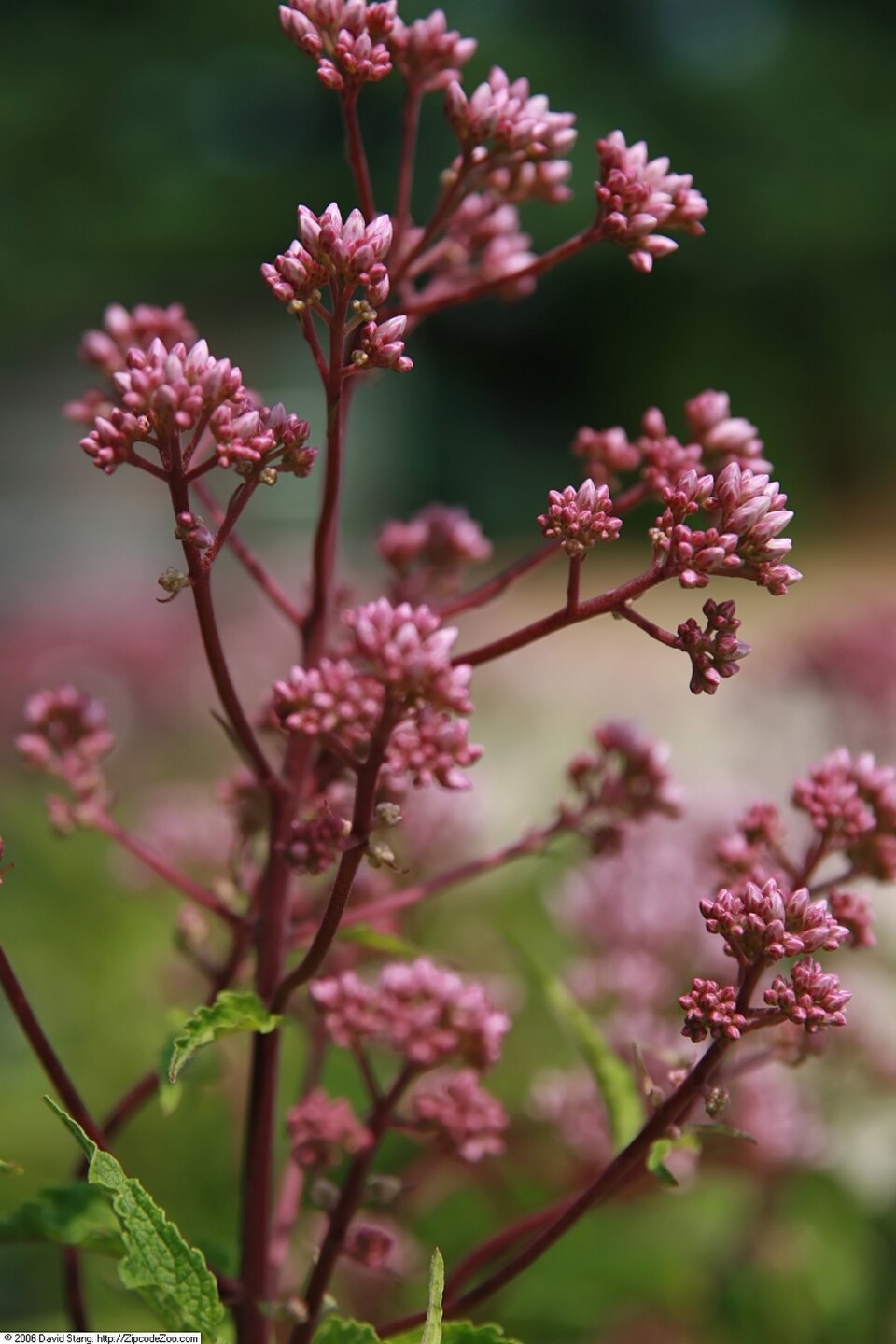
The stems are perhaps the most diagnostic feature, being notably hollow throughout their length — hence one of its common names, Hollow-stemmed Joe-Pye Weed. These sturdy stems are typically wine-purple to reddish-purple in color, especially toward the base, and can reach up to 1 inch in diameter at the base. The hollow nature can be easily confirmed by cutting a stem cross-section, which will show a complete central cavity. Stems are generally unbranched except at the very top where the flower clusters form.
Leaves
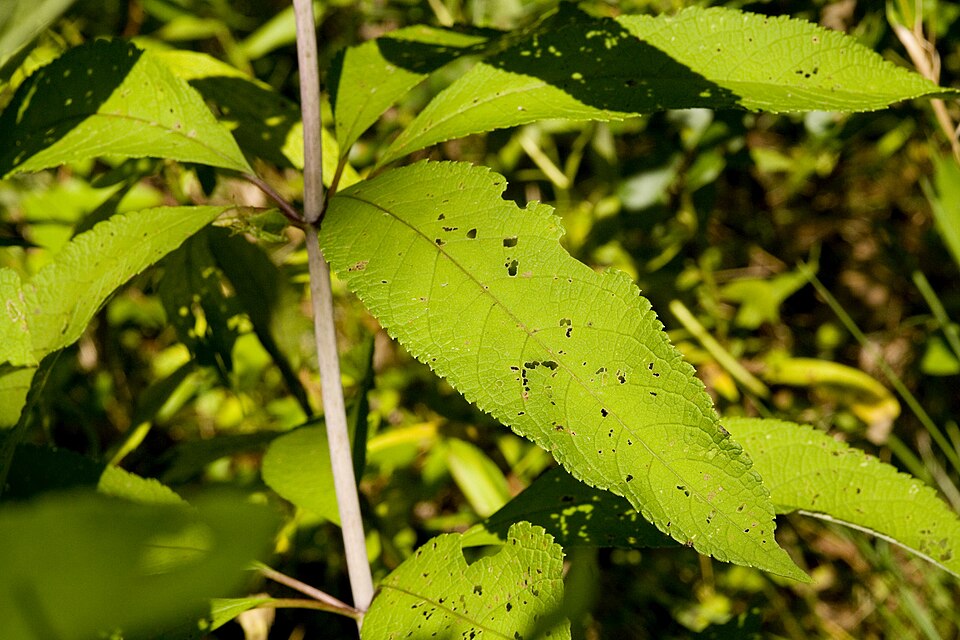
The leaves are arranged in whorls of 3 to 6 around the stem, typically 4 to 6 inches long and 1 to 2 inches wide. Each leaf is lance-shaped with a pointed tip and serrated edges, and they have a somewhat rough texture on both surfaces. The leaves are sessile or nearly so (lacking distinct petioles), with the base often somewhat clasping the stem. The leaf color is medium to dark green, often with purplish veins that complement the purple-tinged stems. In fall, the foliage turns yellow-bronze before dying back to the ground.
Flowers
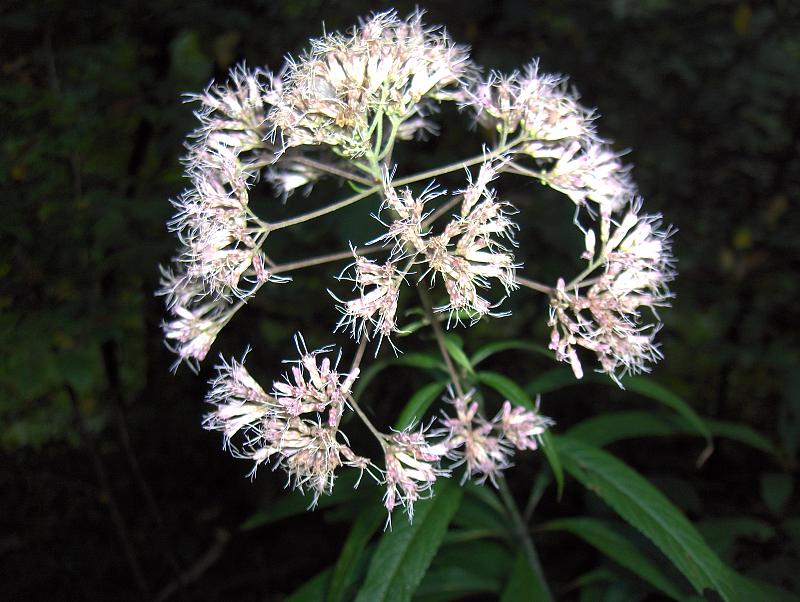
The flower heads are truly spectacular — massive, flat-topped clusters (corymbs) that can measure 8 to 12 inches across at the top of each stem. Each individual flower head is composed of 5 to 8 small disc flowers that are dusty rose-pink to pale purple in color. The overall effect is of enormous pink “tables” floating above the landscape. The flowers bloom from mid-summer through early fall (July to September), with peak bloom typically occurring in August. Each tiny flower has protruding stamens that give the entire cluster a fuzzy, textured appearance.
Seeds & Fruit
After flowering, Joe-Pye Weed produces abundant small, dark brown seeds (achenes) topped with fluffy white bristles (pappus) that aid in wind dispersal. The seeds are about 1/8 inch long and are highly sought after by goldfinches and other seed-eating birds. The dried seed heads persist well into winter, providing both wildlife food and attractive winter interest in the garden with their bronze-colored, architectural forms.
Quick Facts
| Scientific Name | Eupatorium fistulosum (syn. Eutrochium fistulosum) |
| Family | Asteraceae (Aster) |
| Plant Type | Perennial Wildflower |
| Mature Height | 5–7 ft |
| Sun Exposure | Full Sun to Part Shade |
| Water Needs | Moderate to High |
| Bloom Time | Mid-summer to Early Fall (July–September) |
| Flower Color | Dusty Rose-Pink to Pale Purple |
| USDA Hardiness Zones | 3–9 |
Native Range
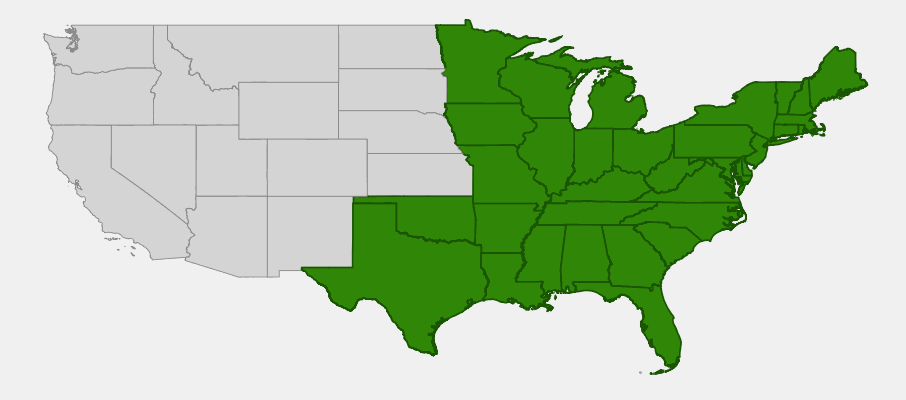
Joe-Pye Weed has one of the most extensive native ranges of any North American wildflower, stretching from southern Canada south to Florida and from the Atlantic coast west to the Great Plains. This remarkable distribution reflects the plant’s adaptability to diverse climatic conditions and its important ecological role across multiple bioregions. The species is particularly abundant throughout the eastern deciduous forest region, where it forms spectacular displays in wetland margins, meadows, and forest clearings.
Within its native range, Joe-Pye Weed typically inhabits moist to wet soils along streams, ponds, marshes, wet meadows, and swamp edges. It thrives in areas with seasonal flooding or consistent moisture, though established plants can tolerate periodic drought. The species shows remarkable adaptability to different soil types, from clay to loam to sandy soils, as long as adequate moisture is present during the growing season. Elevation ranges from sea level to approximately 3,000 feet in the southern Appalachians.
Historically, Joe-Pye Weed was likely even more widespread before European settlement, as it depends on the type of open, sunny wetland habitats that were maintained by natural disturbances like fire and flooding. Today, while still common in many areas, populations have declined in regions where wetlands have been drained or where natural disturbance regimes have been altered. Conservation efforts focusing on wetland restoration and native meadow management have helped maintain and restore populations in many areas.
📋 Regional plant lists featuring Joe-Pye Weed: North Carolina & South Carolina
Growing & Care Guide
Joe-Pye Weed is one of the most rewarding and low-maintenance native perennials you can grow, especially if you can provide the moist conditions it prefers. Once established, this robust plant requires minimal care while providing maximum impact and wildlife value year after year. Its natural tendency to form spreading colonies makes it perfect for naturalizing large areas or creating impressive mass plantings that return reliably each season.
Light
Joe-Pye Weed performs best in full sun, where it will produce the tallest stems, most robust growth, and heaviest flower production. However, it’s quite tolerant of partial shade and will still bloom well with as little as 4 to 6 hours of direct sunlight daily. In shadier locations, plants may grow slightly shorter and have a more open growth habit, but flower production typically remains good. The plant’s flexibility regarding light conditions makes it valuable for challenging sites where many other tall perennials might struggle.
Soil & Water
Moisture is the key to success with Joe-Pye Weed — it naturally occurs in wet to moist soils and thrives with consistent water availability throughout the growing season. The plant performs best in loamy or clay soils that retain moisture but drain well enough to prevent stagnation. It can adapt to sandy soils if adequate moisture is maintained through irrigation or natural sources. Soil pH is quite flexible, with the plant tolerating anything from slightly acidic to slightly alkaline conditions (pH 5.5–7.5).
Established plants can tolerate brief drought periods, but prolonged dry conditions will result in shorter growth, reduced flowering, and early senescence. For garden settings, regular deep watering during dry spells will keep plants vigorous and blooming well into fall. Mulching around plants helps conserve soil moisture and suppress competing weeds.
Planting Tips
Plant Joe-Pye Weed in spring after the last frost date, or in early fall at least 6 weeks before the first expected frost. Space plants 3 to 4 feet apart — they will gradually fill in the gaps as they establish and spread. Choose a location where the tall growth won’t shade out shorter plants, and consider the mature size when planning your garden design. The plant looks spectacular when mass-planted or used as a backdrop for shorter wildflowers and grasses.
Joe-Pye Weed can be grown from seed sown in fall or early spring, though it may take 2 to 3 years to reach full flowering size from seed. For faster establishment, plant nursery-grown seedlings or divisions from established plants. Seeds require cold stratification to germinate, which occurs naturally when sown outdoors in fall.
Pruning & Maintenance
Joe-Pye Weed requires minimal maintenance once established. In early spring, cut stems back to 4 to 6 inches above ground level before new growth begins. The dried seed heads provide excellent winter interest and food for birds, so many gardeners prefer to leave them standing until late winter or early spring. If you want to reduce the plant’s ultimate height or encourage bushier growth, you can pinch or cut back stems by one-third in late May or early June — this technique, called the “Chelsea chop,” will result in shorter, sturdier plants with more flower heads, though individual heads may be smaller.
Deadheading spent flowers will prevent self-seeding if that’s a concern, but many gardeners appreciate the plant’s ability to naturalize. Plants may need dividing every 4 to 6 years if they outgrow their space or if the center of clumps begins to decline. Division is best done in early spring or fall.
Landscape Uses
Joe-Pye Weed’s impressive size and spectacular flowers make it valuable in many landscape settings:
- Rain gardens and bioswales — excellent for managing stormwater runoff
- Pollinator gardens — critical late-season nectar source for butterflies and bees
- Wetland borders and pond edges for naturalizing and erosion control
- Prairie restorations and native meadow plantings
- Back borders of perennial gardens for height and drama
- Wildlife habitat areas — seeds feed birds, plants shelter beneficial insects
- Cut flower gardens — excellent fresh or dried flowers for arrangements
- Screening and privacy plantings during growing season
Wildlife & Ecological Value
Few native plants match Joe-Pye Weed’s exceptional value to wildlife, particularly during the critical late summer and early fall period when many other native flowers have finished blooming. The massive flower clusters serve as veritable “refueling stations” for migrating butterflies and other pollinators, while the abundant seeds provide crucial fall and winter food for numerous bird species. This plant’s ecological impact extends far beyond its impressive visual presence in the landscape.
For Pollinators
Joe-Pye Weed is absolutely essential for late-season pollinators, with its enormous flower clusters providing concentrated sources of nectar when many other plants are dormant. Monarch butterflies are perhaps the most famous visitors, using the flowers as fuel stops during their incredible fall migration to Mexico. The flat-topped flower clusters create perfect landing platforms for butterflies, making feeding easy and efficient.
The plant also attracts a remarkable diversity of native bees, including bumblebees, sweat bees, and long-horned bees, as well as beneficial wasps, hoverflies, and other native pollinators. Studies have documented over 40 species of butterflies and moths that visit Joe-Pye Weed flowers, including Great Spangled Fritillary, Pearl Crescent, and various skippers. The extended blooming period — often lasting 6 to 8 weeks — provides consistent resources when they’re most needed.
For Birds
American Goldfinches are the primary seed consumers, often creating spectacular feeding frenzies on the seed heads from late summer through winter. Other finches, including House Finches and Pine Siskins, also feast on the abundant small seeds. The seeds are particularly important during fall and winter months when insect protein is less available. Tree Swallows and other aerial insectivores also benefit from the clouds of small insects that the flowers attract.
The tall, sturdy stems provide nesting support for various bird species, while the dense colonies offer shelter and protection for ground-nesting birds and small mammals. In winter, the persistent dried stems create valuable structure in the landscape that many birds use for roosting and shelter during harsh weather.
For Beneficial Insects
Beyond pollinators, Joe-Pye Weed supports an impressive array of beneficial insects. The flowers attract numerous parasitic wasps and flies that help control garden pests, while the plant hosts several species of moth caterpillars, including the Eupatorium Borer Moth and various inchworm species. These larvae provide crucial protein for nesting birds feeding their young.
The plant’s hollow stems provide overwintering sites for beneficial insects, including native bees and predatory beetles. Leaving the stems standing through winter creates valuable habitat that supports these helpful creatures through the coldest months.
Ecosystem Role
Joe-Pye Weed plays a crucial role in wetland and meadow ecosystems by helping to stabilize soil along waterways and in wet areas through its extensive root system. The plant’s ability to form dense colonies helps prevent erosion while creating habitat complexity that benefits numerous wildlife species. Its presence often indicates healthy wetland ecosystems, as it requires the clean water and natural hydrology that many other wetland species also depend on.
The plant also contributes significantly to the soil ecosystem through its substantial root system and annual die-back, which adds organic matter and helps build soil structure over time. This makes it valuable for restoration projects aimed at rebuilding degraded wetland soils and improving overall ecosystem health.
Cultural & Historical Uses
Joe-Pye Weed carries a rich cultural and medicinal history that spans centuries and reflects the deep knowledge of North America’s Indigenous peoples. The plant’s common name honors a legendary Native American healer known as Joe Pye (also spelled “Jopi”), who was said to live in New England during the colonial period and was renowned for his skill in treating typhoid fever and other ailments using plants in the Eupatorium genus. While the historical details of Joe Pye’s life remain somewhat mysterious, his legacy lives on in the common names of several related species.
Multiple Native American tribes throughout the plant’s range utilized various Eupatorium species medicinally, though specific uses varied among different cultures and regions. The Cherokee, Haudenosaunee (Iroquois), and other tribal nations traditionally used different parts of Joe-Pye Weed and its relatives to treat kidney ailments, urinary tract problems, fevers, and rheumatic conditions. The root was typically the part used medicinally, often prepared as teas or poultices. The plant’s alternative name, “Gravel Root,” reflects its traditional use for kidney stones and urinary difficulties.
European American settlers quickly adopted many of these traditional uses, and various Eupatorium species became important components of 19th-century folk medicine and early pharmaceutical preparations. The plants were widely used in patent medicines and home remedies, particularly for kidney and bladder ailments. However, modern research has revealed that some compounds in these plants can be potentially harmful, and internal use is no longer recommended without professional medical guidance.
Beyond its medicinal applications, Joe-Pye Weed has played important cultural roles in various communities. Some Native American traditions associated the plant with strength and endurance, perhaps reflecting its robust growth and ability to thrive in challenging wetland conditions. The plant’s impressive stature and spectacular late-summer blooms made it a natural choice for ceremonial and decorative purposes in some cultures.
In contemporary times, Joe-Pye Weed has become an symbol of native plant conservation and ecological restoration efforts. Its exceptional value to pollinators, particularly during monarch butterfly migration, has made it a flagship species for pollinator gardens and habitat restoration projects. The plant frequently appears in educational materials about native plants and sustainable gardening, representing the broader movement toward using indigenous species in landscape design.
Today, while no longer used medicinally by most people, Joe-Pye Weed continues to serve important cultural functions as an educational tool for teaching about plant identification, ecological relationships, and the rich ethnobotanical heritage of North America. Its presence in botanical gardens, nature centers, and restored prairie sites helps connect modern visitors with the natural world that sustained indigenous communities for millennia.
Frequently Asked Questions
How do I tell Joe-Pye Weed apart from other similar plants?
The key identifying features are the hollow stems (which you can check by cutting a cross-section), the whorled leaves (arranged in circles around the stem), and the massive, flat-topped pink flower clusters. The wine-purple stem color and 5-7 foot height are also distinctive. If you’re unsure, the hollow stems are the most reliable diagnostic feature.
Will Joe-Pye Weed take over my garden?
Joe-Pye Weed does spread through underground rhizomes and will gradually form colonies, but it’s not aggressively invasive in most garden settings. It spreads more slowly than many aggressive perennials, and colonies can be easily managed by dividing clumps every few years or by pulling unwanted shoots in spring. The spreading habit is actually beneficial for erosion control and wildlife habitat.
Can I grow Joe-Pye Weed in dry conditions?
While Joe-Pye Weed strongly prefers moist conditions and performs best with consistent water, established plants can tolerate periods of drought. However, in persistently dry conditions, plants will be shorter, may bloom less profusely, and could go dormant early in severe drought. For best results, choose a different native plant if your site is consistently dry, or plan to provide supplemental irrigation.
When should I cut back Joe-Pye Weed?
Most gardeners cut the stems back in late winter or early spring (February-March) before new growth begins. However, leaving the dried stems standing through winter provides food for seed-eating birds and shelter for beneficial insects. If you prefer a tidier winter garden, you can cut stems back in late fall, but you’ll sacrifice some wildlife value.
Is Joe-Pye Weed deer resistant?
Joe-Pye Weed is generally not preferred by deer, though they may occasionally browse young shoots in early spring if other food is scarce. The mature plants are typically left alone, making this a good choice for areas with deer pressure. The plant’s bitter compounds, which were used medicinally, likely contribute to its deer resistance.

Looking for a nursery that carries Joe-Pye Weed?
Browse our native plant nursery directory: North Carolina · South Carolina