Kalm’s St. John’s Wort (Hypericum kalmianum)
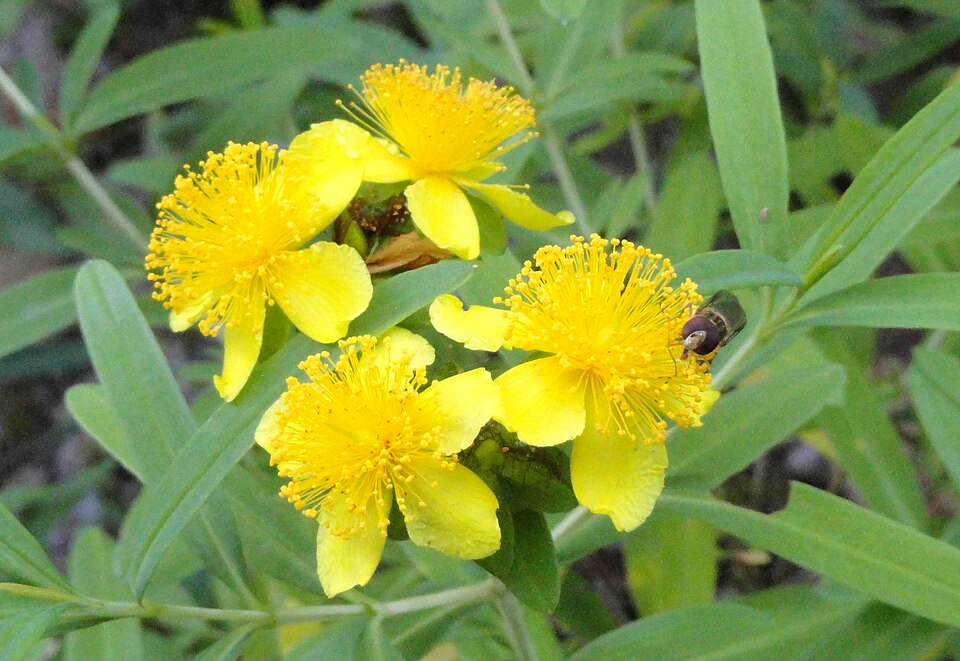
Hypericum kalmianum, commonly known as Kalm’s St. John’s Wort, is a compact, semi-evergreen native shrub of the Great Lakes region that produces an abundance of bright golden-yellow flowers from July through September — a remarkably long bloom period that makes it one of the most valuable late-summer flowering native shrubs available for midwestern gardens. Named for the Finnish-Swedish botanist and naturalist Pehr Kalm, who documented it during his 18th-century travels to North America, this species has earned a devoted following among native plant gardeners for its neat, tidy form, drought tolerance once established, and exceptional pollinator value.
Unlike many shrubs in the Hypericum genus, Kalm’s St. John’s Wort has one significant quirk to know before planting: it does not respond well to heavy pruning. The species is best planted in a location where its natural 2 to 3 foot height fits the landscape without requiring major cutting back — heavy pruning can cause dieback or kill the plant entirely. This characteristic actually makes it an ideal low-maintenance shrub for appropriate-sized spaces, rock gardens, slopes, and naturalistic borders where its neat, mounded habit can be appreciated without intervention.
Hardy throughout the Great Lakes region and adjacent states, Kalm’s St. John’s Wort is particularly valuable because it blooms in summer when few other native shrubs are flowering. Its five-petaled yellow flowers with prominent golden stamens attract specialist native bees and other pollinators, bridging the gap between the spring-blooming shrubs and the fall-blooming asters and goldenrods. Its narrowly native distribution — centered on the Great Lakes shoreline — makes it a particularly appropriate choice for ecological plantings in Michigan, Wisconsin, and Illinois.
Identification
Kalm’s St. John’s Wort is a deciduous to semi-evergreen shrub growing 2 to 3 feet (60–90 cm) tall and wide, forming a dense, rounded mound. It has an orderly, compact habit that rarely requires pruning and maintains good form without intervention. The multiple stems are slender and slightly angled, with attractive reddish-brown or gray bark that peels in thin strips on older wood.
Leaves
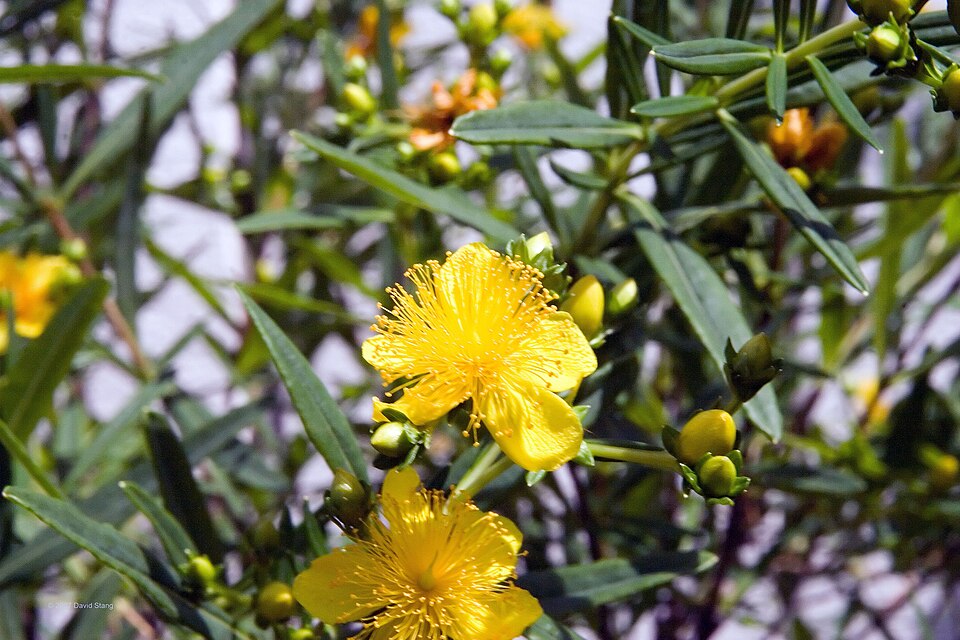
The leaves are narrowly elliptic to linear (lance-shaped), 1 to 2 inches (2.5–5 cm) long and only ¼ to ½ inch wide, with a distinctive bluish-green to gray-green color that gives the shrub a soft, fine-textured appearance. Leaves are opposite, sessile (stalkless), and slightly waxy. Held close to the stems, they create a dense, feathery-looking foliage mass. Tiny translucent dots visible when leaves are held to light are characteristic of the genus. In mild winters, some foliage may persist through the season, lending a semi-evergreen quality.
Flowers
The flowers are the showpiece — bright, clear yellow, about ¾ to 1 inch (2–2.5 cm) in diameter, with five rounded petals surrounding a prominent central cluster of numerous long yellow stamens (20–60+) that give the flower a cheerful, starburst appearance. They are borne in small clusters at the tips of branches (cymes), with multiple flowers opening sequentially over a period of 6–8 weeks from July through September. This extended bloom season is one of the plant’s most valuable characteristics. The flowers have a faint, pleasant fragrance.
Fruit & Seeds
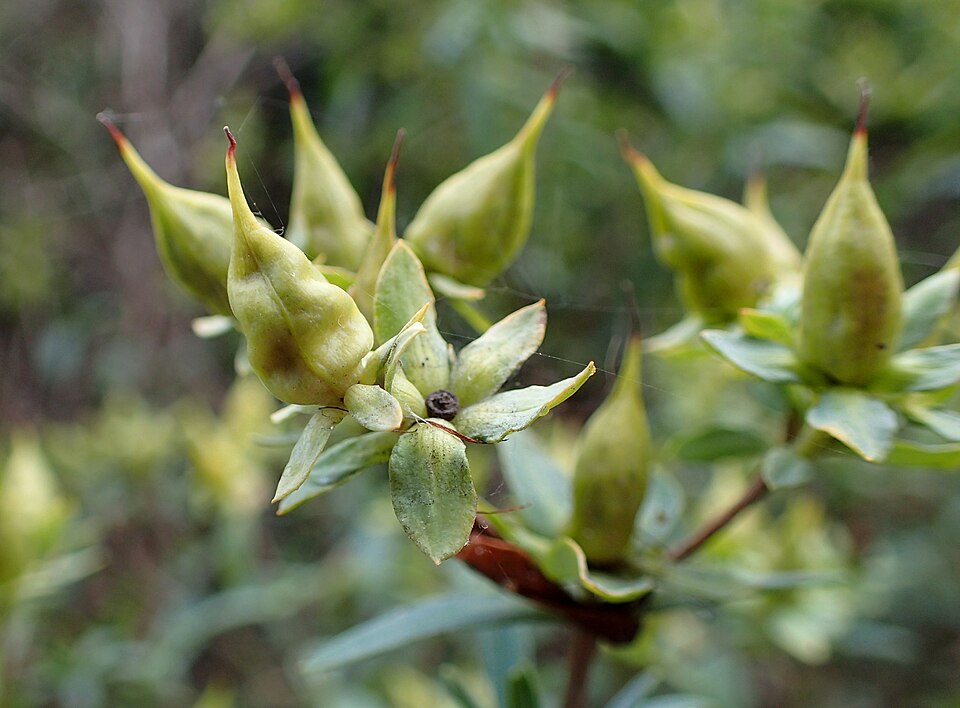
Following pollination, the plant produces small, 3-celled seed capsules about ¼ inch long that split open at maturity in fall, releasing tiny, reddish-brown seeds. The capsules are not particularly ornamental but provide some winter interest. The plant does self-seed moderately under favorable conditions, though it is not aggressive.
Quick Facts
| Scientific Name | Hypericum kalmianum |
| Family | Hypericaceae (St. John’s Wort) |
| Plant Type | Deciduous to Semi-Evergreen Shrub |
| Mature Height | 2–3 ft |
| Sun Exposure | Full Sun |
| Water Needs | Low to Moderate |
| Bloom Time | July – September |
| Flower Color | Bright golden yellow |
| Pruning | Does NOT respond well to heavy pruning |
| Deer Resistant | Yes |
| USDA Hardiness Zones | 4–7 |
Native Range
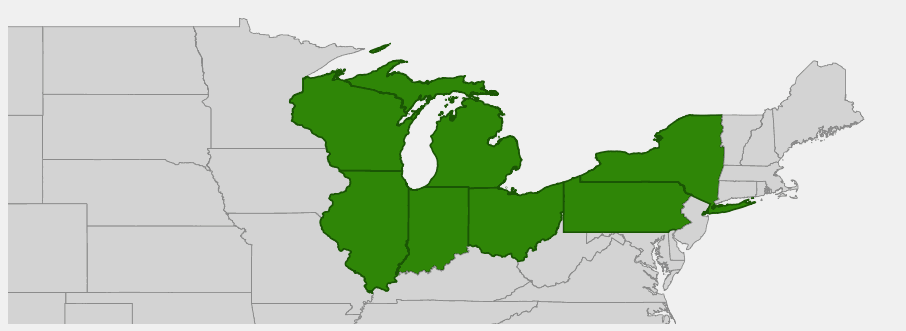
Kalm’s St. John’s Wort has one of the most restricted native ranges of any Great Lakes shrub, occurring naturally primarily around the shores of Lakes Michigan, Huron, and Lake Erie, with concentrations in Michigan, Wisconsin, Illinois, Indiana, Ohio, and western New York and Pennsylvania. This distribution closely tracks the calcareous (limestone-influenced) rocky shores, alvar pavements, and sandy bluffs of the Great Lakes shoreline — the plant’s primary natural habitat. It is relatively rare throughout its native range and is listed as threatened or of conservation concern in several states including New York and Pennsylvania.
Within Michigan, Kalm’s St. John’s Wort occurs along the rocky shores of the northern Lower Peninsula and Upper Peninsula, where it grows in open, exposed, rocky habitats with thin soils over limestone or dolomite bedrock. In Wisconsin, it is found in similar rocky shoreline habitats and on sand plains. In Illinois, it is associated with limestone bluffs and gravel barrens along the Illinois River and Chicago region shorelines. These calcareous alvar habitats are among the rarest ecosystem types in North America, and H. kalmianum is an important indicator species for their conservation.
Despite its restricted natural range, Kalm’s St. John’s Wort is widely cultivated well beyond its native distribution and has proven adaptable to garden conditions throughout much of the Great Lakes and upper Midwest region. Its cultural requirements — full sun, good drainage, and tolerance of alkaline to neutral soils — mirror the conditions of its native limestone habitats, making it well-suited to many midwestern garden situations.
📋 Regional plant lists featuring Kalm’s St. John’s Wort: Michigan, Minnesota & Wisconsin
Growing & Care Guide
Kalm’s St. John’s Wort is a rewarding, low-maintenance shrub when planted in the right location. The key to success is matching the plant’s need for full sun and good drainage — once established, it is remarkably self-sufficient and drought-tolerant.
Light
Full sun (6+ hours of direct sunlight) is essential for best performance. In less than full sun, plants produce fewer flowers and have a looser, more open habit. In shadier conditions, they may be more susceptible to disease and decline. Unlike many native plants, Kalm’s St. John’s Wort does not offer a shade-tolerant compromise — it genuinely needs full sun to thrive.
Soil & Water
This species is adapted to well-drained, rocky, and often calcareous (limestone-derived, alkaline to neutral pH) soils — the thin, gritty, fast-draining soils of Great Lakes shorelines. It performs poorly in heavy clay or waterlogged soils. Average to lean soil fertility is preferred over rich, amended garden soils, which can cause excessive leafy growth and reduced flowering. Once established (2–3 years), it is highly drought-tolerant and requires little or no supplemental irrigation. Soil pH of 6.0–8.0 is tolerated; slightly alkaline soils are acceptable and may even be preferred.
Planting Tips
Plant in spring or fall. Choose a site with excellent drainage — if your soil is heavy clay, amend with grit or plant in a raised bed. Space plants 2–3 feet apart. Unlike many native shrubs that can be cut back hard after planting to encourage bushy growth, do not cut back Kalm’s St. John’s Wort — it does not respond well to pruning. Plant it at the right scale from the start in a spot where its 2–3 ft mature size fits without needing reduction. Mulch lightly to suppress weeds but avoid piling mulch against the stems.
Pruning & Maintenance
This is the most critical management consideration: Kalm’s St. John’s Wort does not respond well to heavy pruning and may die if cut back hard. Unlike non-native Hypericum cultivars (such as ‘Hidcote’ or ‘Sunburst’) that tolerate aggressive annual cutting, H. kalmianum should be left largely unpruned. If tidying is needed, remove only dead stem tips in early spring before new growth begins. Deadheading spent flowers in midsummer may promote additional late-season bloom. Remove dead or diseased stems at their base as needed.
Landscape Uses
- Rock gardens — ideal in well-drained rocky or gravelly settings
- Low borders and edging — compact size fits at the front of shrub borders
- Slopes and banks — drought tolerance and ground-covering habit suit slopes
- Native plant gardens — bridges the gap between spring and fall bloomers
- Pollinator gardens — long-blooming summer flowers for bees
- Erosion control — dense root system stabilizes soil on slopes
- Foundation plantings — compact, non-invasive, and tidy without pruning
Wildlife & Ecological Value
Kalm’s St. John’s Wort is a specialist plant for native bees, with its flower structure particularly suited to short-tongued bees that collect pollen rather than nectar from the abundant stamens.
For Pollinators
The flowers are pollen-rich, attracting a wide variety of native bees including bumblebees (Bombus spp.), sweat bees (Halictidae), and mining bees (Andrena spp.). Specialist bees in the genus Andrena that are specific to Hypericum species are particularly attracted to the plant. The long bloom period — July through September — makes it an important nectar and pollen source during the summer “dearth” period when many other shrubs have finished flowering. Butterflies and hoverflies also visit the flowers.
For Birds
The small seeds provide modest food value for seed-eating birds in fall and winter. The dense branching habit provides excellent nesting and roosting cover for small songbirds. Because H. kalmianum tends to grow in clumps and thickets in the landscape, it creates layered habitat structure that supports a variety of wildlife.
For Mammals
Kalm’s St. John’s Wort is generally avoided by deer — its foliage contains hypericin, the same compound responsible for the medicinal properties of St. John’s Wort. This makes it a good choice for deer-impacted landscapes. Rabbits may occasionally browse young stems, but established plants are rarely significantly damaged.
Ecosystem Role
As a characteristic species of Great Lakes alvar habitats — among the rarest ecosystems in North America — H. kalmianum serves as an ecological indicator of intact calcareous shoreline communities. In garden and restoration contexts, its compact size and excellent pollinator value help create structurally diverse native plant communities that support the full food web.
Cultural & Historical Uses
Hypericum kalmianum was formally described to science in 1753 by Carl Linnaeus in his Species Plantarum, based on specimens collected by Pehr Kalm during his 1748–1751 expedition to North America — the first systematic botanical survey of the Great Lakes region. Kalm documented the plant growing on the rocky shores of Lake Ontario and the Niagara escarpment, and his collections formed the basis for Linnaeus’s description of a number of Great Lakes species. The plant’s specific epithet kalmianum permanently commemorates his contributions to North American botany.
Among Indigenous peoples of the Great Lakes region, related Hypericum species were used medicinally in various ways — as treatments for wounds, skin conditions, and internal complaints. The Ojibwe and other Algonquian peoples used St. John’s Wort preparations for kidney and bladder complaints, and the plant was incorporated into compound medicines for various purposes. The medicinal properties now attributed to Hypericum perforatum (Common St. John’s Wort) — principally hypericin and hyperforin, which have antidepressant and antiviral properties — are present to varying degrees in native Hypericum species as well.
In modern horticulture, Kalm’s St. John’s Wort has gained considerable popularity as a native alternative to the widely planted but non-native Hypericum cultivars commonly used in commercial landscaping. Its availability from native plant nurseries has increased significantly over the past two decades, and it is now commonly specified in native plant restoration and ecological landscaping projects throughout the Great Lakes region. Conservation botanists recommend prioritizing locally sourced seed when purchasing H. kalmianum, as the plant has a restricted native range and regional genetic diversity should be preserved.
Frequently Asked Questions
Can I prune Kalm’s St. John’s Wort like other shrubs?
No — this is the most important care note for this plant. Unlike many landscape shrubs that benefit from annual pruning, Hypericum kalmianum does not respond well to heavy pruning and may die if cut back severely. Choose your planting location knowing the plant will reach 2–3 feet tall and wide without requiring reduction. Minimal deadheading and removal of dead branch tips is acceptable, but avoid hard pruning.
Is Kalm’s St. John’s Wort native to my area?
Kalm’s St. John’s Wort has a very restricted native range centered on the Great Lakes shoreline — primarily Michigan, Wisconsin, Illinois, Indiana, Ohio, and parts of New York and Pennsylvania. If you are in this region, it is natively appropriate. If you are outside this range, it is still an excellent native plant choice with high ecological value, but it is not technically “locally native.”
How is it different from Common St. John’s Wort?
Common St. John’s Wort (Hypericum perforatum) is a European species that has become invasive throughout North America. Hypericum kalmianum is a true North American native with a much more compact size, narrower leaves, and similar yellow flowers. It does not spread aggressively and is not considered invasive. Always select the native H. kalmianum rather than the invasive H. perforatum for ecological planting.
When does Kalm’s St. John’s Wort bloom?
Bloom period is typically July through September — an exceptionally long flowering season for a native shrub. Individual flowers last only a day or two, but the plant continuously produces new buds over the 6–8 week season. This extended bloom is one of its most valuable landscape characteristics, providing color in the summer garden when many other shrubs have finished flowering.
Is Kalm’s St. John’s Wort deer-resistant?
Yes — like most Hypericum species, Kalm’s St. John’s Wort is generally avoided by deer due to the bitter hypericin compounds in its foliage. It is considered a good choice for landscapes with significant deer pressure. Rabbits may occasionally nibble young growth, but the plant is rarely seriously damaged.