Large Fothergilla (Fothergilla major)
Fothergilla major, commonly known as Large Fothergilla or Mountain Witch-Alder, is one of the most spectacular native flowering shrubs of the southeastern United States. This member of the Hamamelidaceae (witch-hazel) family creates a stunning dual-season display — producing fragrant, honey-scented white bottle-brush flowers before the leaves emerge in spring, then transforming into a blaze of yellow, orange, and red autumn colors that rival any maple. Endemic to the Appalachian Mountains, this deciduous shrub is prized by gardeners for its compact rounded form, exceptional fall foliage, and sweet spring fragrance that attracts butterflies and native bees.
Growing naturally in the understory of mixed hardwood forests and along mountain stream banks, Large Fothergilla typically reaches 6 to 10 feet in height with an equal spread. Its distinctive flowers appear as fluffy white cylindrical clusters — lacking petals but densely packed with stamens that create the characteristic bottle-brush appearance. The oval leaves have prominent veining and toothed margins, turning brilliant shades of yellow, orange, and scarlet red in fall. This slow-growing, long-lived shrub forms dense colonies through root suckers, making it valuable for naturalized plantings and erosion control on slopes.
Despite being somewhat uncommon in cultivation, Large Fothergilla is exceptionally garden-worthy and deserves wider recognition among native plant enthusiasts. Its tolerance for both sun and partial shade, adaptability to various soil conditions, and resistance to pests and diseases make it an ideal choice for woodland gardens, mixed borders, and foundation plantings. The combination of spring flowers, excellent foliage texture, and incomparable fall color creates year-round interest that few other native shrubs can match.
Identification
Large Fothergilla is easily distinguished from other native shrubs by its unique combination of bottlebrush flowers, distinctive leaf shape and venation pattern, and exceptional fall coloration. The shrub typically forms a dense, rounded crown with multiple stems arising from the base.
Flowers
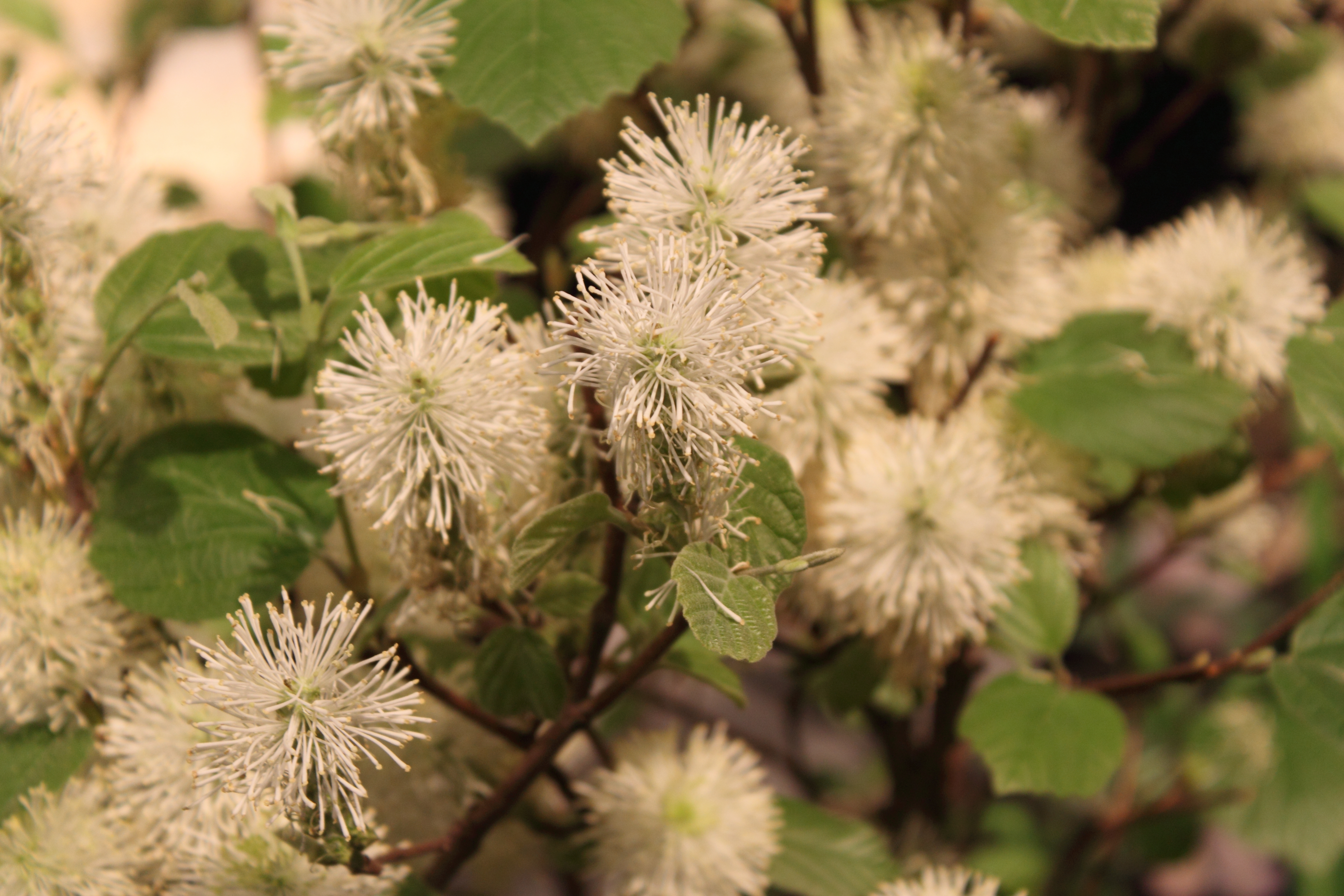
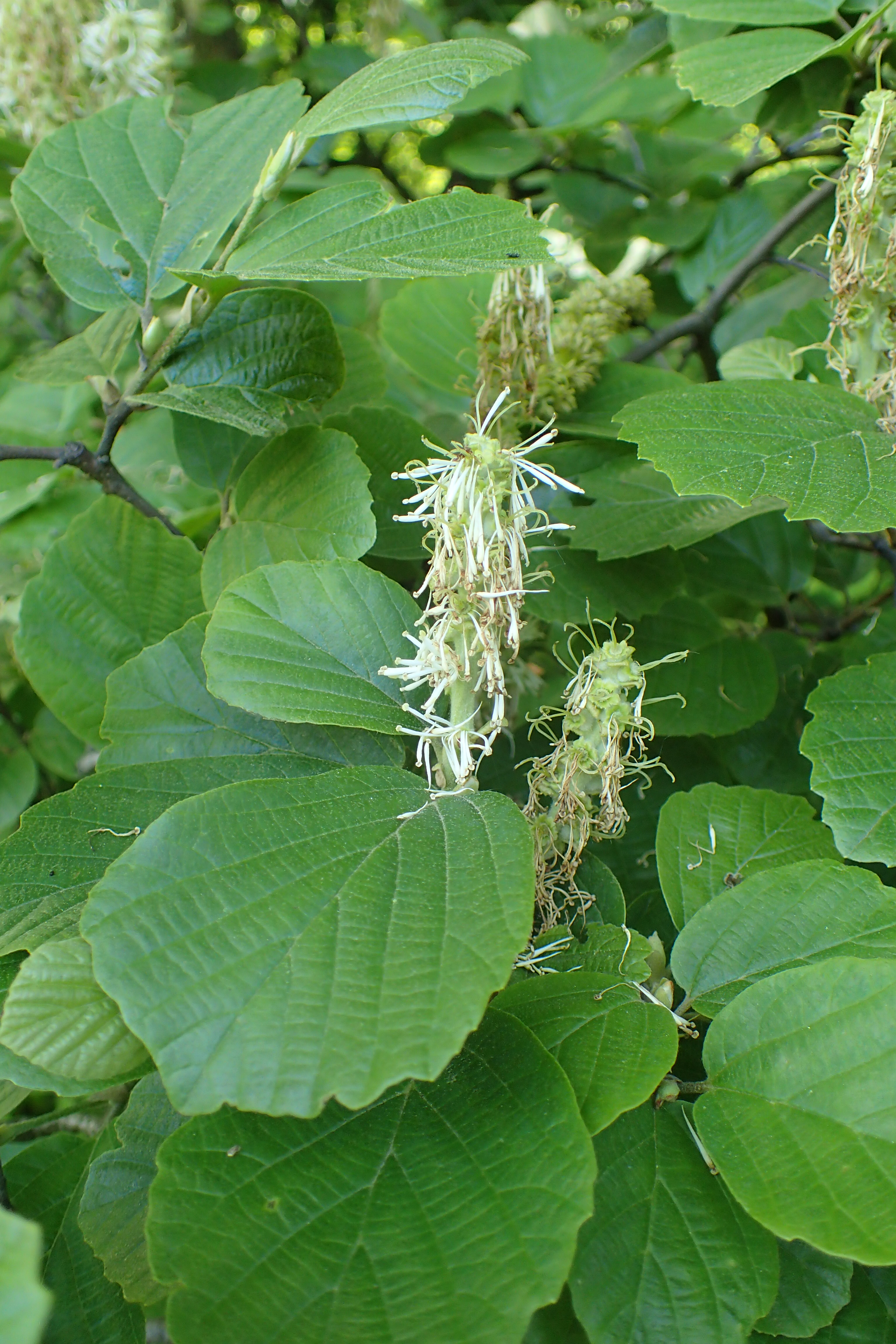
The most distinctive feature is the striking spring flowers that appear before the leaves in April and May. Each flower cluster is a dense, cylindrical raceme 1 to 2.5 inches long, resembling a white bottle brush. The individual flowers lack petals but are composed of numerous white stamens with yellow anthers, giving the clusters a fluffy, fragrant appearance. The honey-like fragrance is particularly strong on warm spring days and attracts a variety of pollinators including native bees, butterflies, and beneficial insects.
Leaves
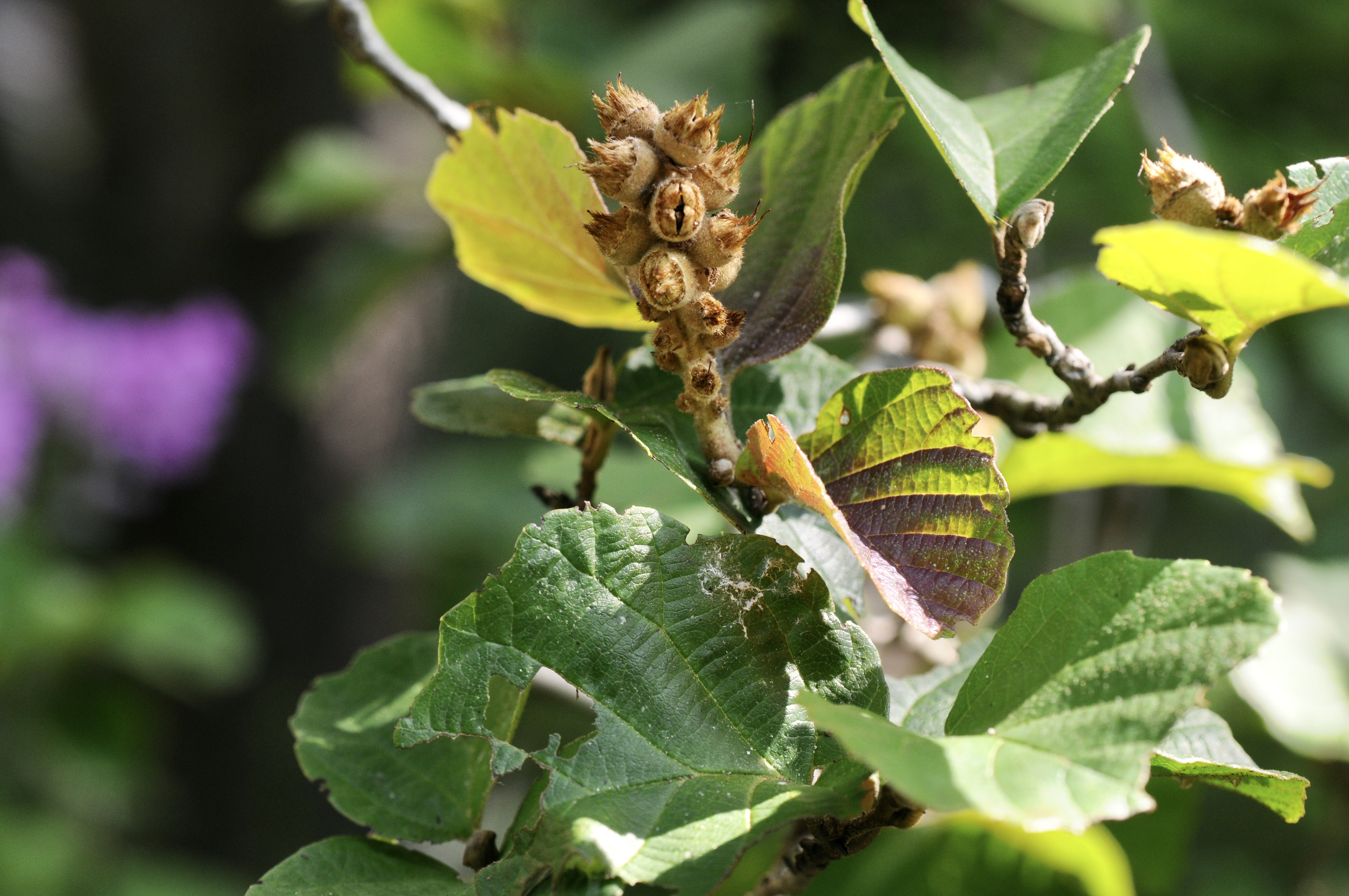
The leaves are simple, alternate, and oval to obovate, measuring 2 to 5 inches long and 1.5 to 3.5 inches wide. They have a distinctive coarsely-toothed margin in the upper half, while the lower half is typically entire (smooth-edged). The leaf surface is dark green and slightly rough to the touch, with prominent pinnate venation creating a ribbed texture. Seven to nine pairs of lateral veins extend from the midrib to the leaf margins, giving the foliage a distinctly textured appearance that catches light beautifully.
Bark & Form
Large Fothergilla develops multiple stems from the base, creating a naturally rounded, dense shrub form. The bark is gray-brown and smooth when young, developing shallow furrows with age. The overall growth habit is compact and tidy, rarely requiring pruning to maintain an attractive shape. In optimal conditions, mature plants can reach 8 to 10 feet tall with an equal spread.
Quick Facts
| Scientific Name | Fothergilla major |
| Family | Hamamelidaceae (Witch-hazel) |
| Plant Type | Deciduous Flowering Shrub |
| Mature Height | 6–10 ft |
| Sun Exposure | Full Sun to Part Shade |
| Water Needs | Moderate |
| Bloom Time | April – May |
| Flower Color | Creamy white |
| USDA Hardiness Zones | 4–8 |
Native Range
Large Fothergilla is endemic to the Appalachian Mountain region of southeastern North America, with a natural range extending from Maryland and Virginia south through the Carolinas, Tennessee, northern Georgia, and Alabama. The species occurs primarily in the mountain and Piedmont regions, typically found at elevations between 1,000 and 4,000 feet. Unlike its smaller relative Fothergilla gardenii, which is found in Coastal Plain habitats, Large Fothergilla is strictly a mountain species.
In its native habitat, Large Fothergilla grows in the understory of mixed deciduous forests dominated by oaks, hickories, and maples. It is commonly found along mountain streams, in moist coves, and on north-facing slopes where soils remain consistently moist but well-drained. The species often occurs with other Appalachian understory shrubs including Mountain Laurel (Kalmia latifolia), Rhododendrons, and various Viburnum species. These forest communities typically receive 40 to 60 inches of annual precipitation, with cool, moist summers and moderate winters.
The restricted range and specific habitat requirements of Large Fothergilla make it somewhat uncommon in the wild, though it is not currently considered threatened. Climate change and habitat fragmentation pose potential long-term challenges for wild populations, making cultivation of this species increasingly important for conservation purposes.
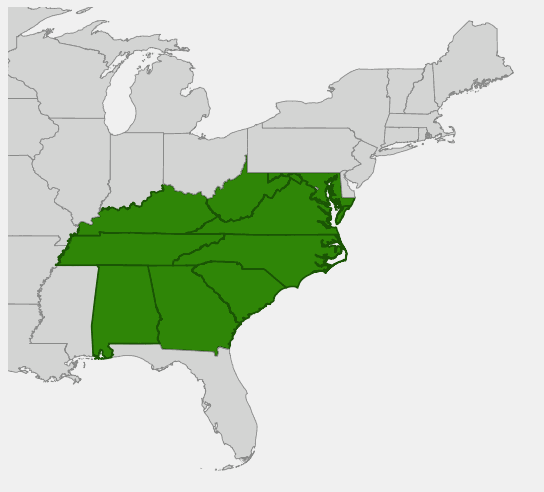
📋 Regional plant lists featuring Large Fothergilla: North Carolina & South Carolina
Growing & Care Guide
Large Fothergilla is remarkably adaptable and low-maintenance once established, making it an excellent choice for gardeners seeking a native shrub with exceptional seasonal interest. Success comes from understanding its natural habitat preferences and providing appropriate growing conditions.
Light
Large Fothergilla performs well in both full sun and partial shade conditions, though flowering and fall color are typically best with at least 4-6 hours of direct sunlight daily. In deeper shade, the shrub will still grow well but may produce fewer flower clusters and more muted autumn colors. Morning sun with afternoon shade is ideal in hot climates, protecting the foliage from excessive heat stress while ensuring adequate light for flowering.
Soil & Water
This shrub prefers moist, well-drained, acidic soil with a pH between 4.5 and 6.5, reflecting its natural mountain forest habitat. It thrives in humus-rich soils with good organic matter content. While somewhat drought tolerant once established, Large Fothergilla performs best with consistent moisture, especially during the growing season. Avoid wet, poorly-drained soils which can lead to root problems. Mulching with 2-3 inches of organic material helps retain soil moisture and suppress weeds.
Planting Tips
Plant Large Fothergilla in spring or fall for best establishment. Choose a location protected from strong winds, which can damage the delicate spring flowers. Space plants 6-8 feet apart if creating a naturalized grouping, or plant as a specimen with adequate space to display its natural rounded form. The shrub transplants well from container-grown stock but may take 2-3 years to become fully established.
Pruning & Maintenance
Large Fothergilla requires minimal pruning and is best left to develop its natural form. If pruning is needed, do so immediately after flowering to avoid removing next year’s flower buds. Remove any dead, damaged, or crossing branches, and thin older stems to encourage new growth from the base. The shrub naturally forms colonies through root suckers, which can be removed if a single-stemmed specimen is preferred or left to create a naturalistic drift.
Landscape Uses
Large Fothergilla excels in various garden applications:
- Woodland gardens — perfect for naturalizing under tall trees
- Mixed shrub borders — provides spring flowers and fall color
- Foundation plantings — compact size works well near buildings
- Mass plantings — creates stunning seasonal displays
- Specimen planting — showcases unique form and flowers
- Erosion control — root system helps stabilize slopes
- Wildlife gardens — attracts pollinators and provides cover
Wildlife & Ecological Value
Large Fothergilla provides significant ecological value as both a pollinator magnet and wildlife habitat, making it an excellent choice for gardeners interested in supporting native biodiversity.
For Pollinators
The fragrant spring flowers are particularly valuable for early-season pollinators, blooming when few other nectar sources are available. Native bees, including mining bees, sweat bees, and bumblebees, are frequent visitors to the flower clusters. The abundant stamens provide both nectar and pollen, supporting bee populations during a critical period in their life cycle. Butterflies, including early spring species like Spring Azures and Mourning Cloaks, also visit the flowers for nectar.
For Birds
While Large Fothergilla doesn’t produce berries, its dense branching structure provides excellent nesting sites for small songbirds including Cardinals, Catbirds, and various warblers. The thick foliage offers protection from predators and weather, while the insects attracted to the flowers provide additional food resources for insectivorous birds during the breeding season.
For Other Wildlife
The leaves serve as host plants for several native moth species, including the Imperial Moth and various sphinx moths. These caterpillars, in turn, provide important food sources for birds during the nesting season. Small mammals may use the dense shrubs for cover and protection, while the root system helps support soil microorganisms and mycorrhizal fungi that benefit the broader forest ecosystem.
Ecosystem Role
As part of the Appalachian forest understory community, Large Fothergilla plays an important role in forest succession and ecosystem stability. Its deep root system helps prevent soil erosion, while the seasonal leaf drop contributes organic matter that supports soil health and nutrient cycling. The shrub’s ability to form colonies through root suckers helps it establish and maintain populations in suitable habitat, contributing to forest resilience.
Cultural & Historical Uses
Large Fothergilla has a rich history of both Indigenous and European-American use, though it has been less extensively documented than some other native plants due to its relatively limited natural range. The common name “Mountain Witch-Alder” reflects early European settlers’ recognition of its relationship to the witch-hazel family, plants long valued for their medicinal properties.
Indigenous peoples of the Appalachian region, including Cherokee and other southeastern tribes, traditionally used various parts of Large Fothergilla for medicinal purposes. The bark and leaves were prepared as teas and poultices for treating wounds, skin conditions, and digestive ailments. The astringent properties of the plant, similar to those found in its relative witch hazel, made it useful for treating inflammation and minor injuries. However, specific traditional uses are less well-documented than those of more widespread native plants.
European settlers and early American botanists recognized Large Fothergilla’s garden potential relatively early, with the species being cultivated in American gardens by the mid-1700s. The plant was named after Dr. John Fothergill, an English physician and botanist who maintained an extensive garden of American plants in London during the 18th century. Despite this early recognition, Large Fothergilla remained primarily a specialty plant for enthusiasts rather than entering mainstream horticulture.
In modern times, Large Fothergilla has gained recognition as an exceptional native alternative to non-native flowering shrubs. Contemporary landscape designers value it for its compact size, outstanding fall color, and reliable performance, leading to increased availability in native plant nurseries and specialty garden centers. The species has also become important in ecological restoration projects throughout its native range, helping to reestablish authentic Appalachian forest communities.
Frequently Asked Questions
How does Large Fothergilla differ from Dwarf Fothergilla?
Large Fothergilla (F. major) is taller (6-10 feet vs 2-4 feet), has larger leaves and flower clusters, and is native to mountain regions rather than coastal areas. Large Fothergilla also has more intense fall colors and a more upright growth habit compared to the more compact, spreading form of Dwarf Fothergilla.
Why aren’t my Fothergilla flowers very fragrant?
Flower fragrance is strongest on warm, still days when temperatures are in the 70s-80s°F. Cool, windy, or rainy weather can diminish the scent. Also, plants growing in heavy shade may produce less fragrant flowers than those in sunnier locations.
Can Large Fothergilla be grown outside its native range?
Yes, Large Fothergilla adapts well to cultivation throughout USDA zones 4-8, including areas well outside its native Appalachian range. It’s successfully grown in the Northeast, Midwest, and even parts of the Pacific Northwest, as long as soil and moisture conditions are appropriate.
How long does it take for Large Fothergilla to reach mature size?
This is a slow-growing shrub that typically adds 6-12 inches per year. It may take 8-12 years to reach its full mature size of 6-10 feet. However, plants begin flowering when quite young, often within 2-3 years of planting.
Is Large Fothergilla deer resistant?
Large Fothergilla is generally considered deer resistant, though no plant is completely deer-proof. The somewhat rough texture of the leaves and the plant’s overall form make it less appealing to deer than many other shrubs. However, in areas with high deer pressure, some browsing may occur, especially on young plants.

Looking for a nursery that carries Large Fothergilla?
Browse our native plant nursery directory: North Carolina · South Carolina