Manono (Kadua affinis)
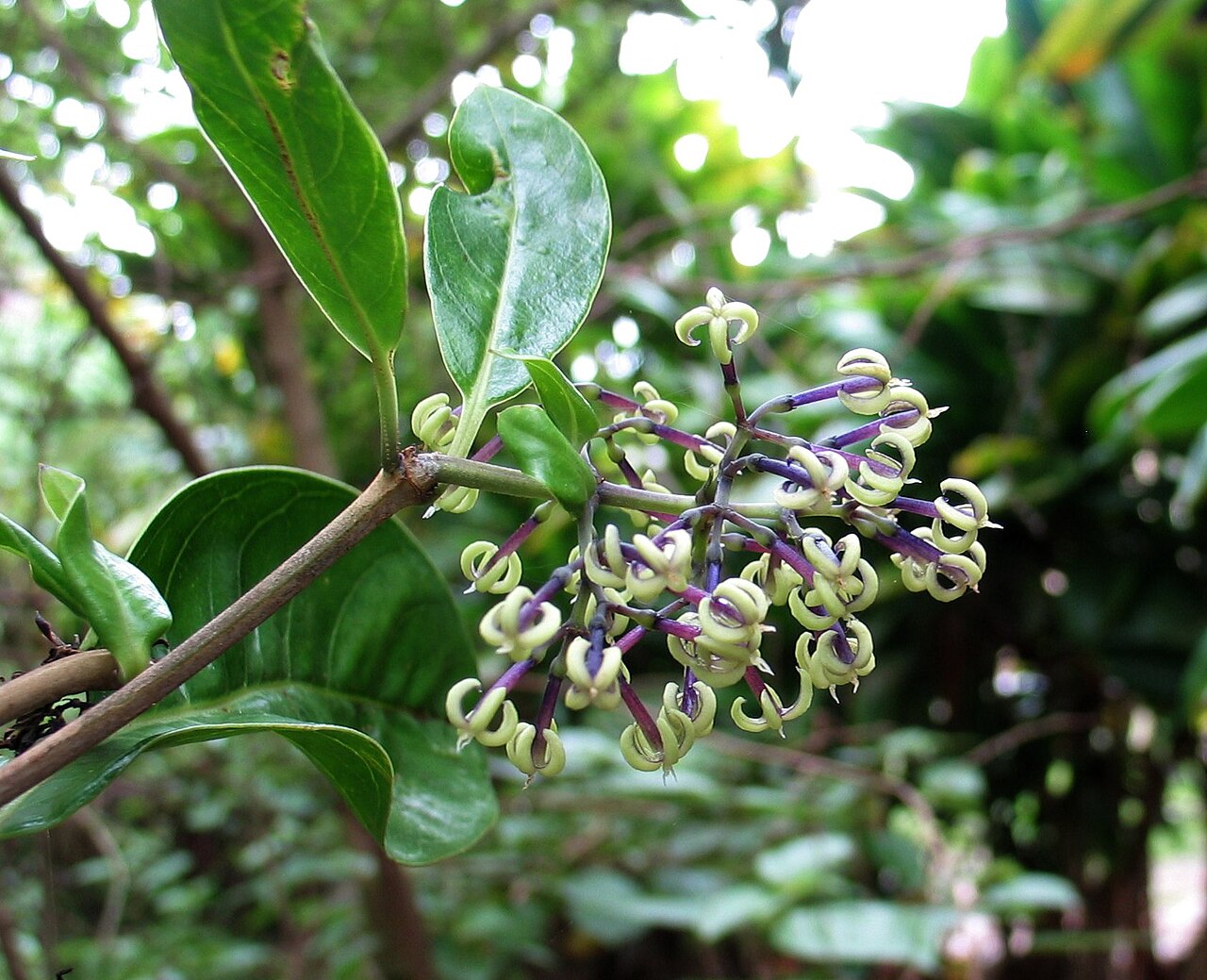
Manono (Kadua affinis) is an exceptionally variable Hawaiian native. Depending on the source, it may be a shrub, a scrambling plant, or a small tree. Leaves can differ dramatically in size, and the form that succeeds in one garden may not resemble a plant carrying the same name elsewhere. This diversity is its central horticultural story: choose the actual plant and its provenance, not just the name on a list.
The species is endemic to Hawaiʻi and belongs to Rubiaceae, the coffee family. Older references often call it Hedyotis terminalis or place it in Gouldia. These names account for some apparent disagreements between plant databases. They do not turn manono into several separate garden species, and they should not lead to duplicate plantings purchased under different labels without checking identity.
For a tree-form manono, a partly sunny, moist, well-drained garden can be a promising setting. Before buying, ask the nursery whether its stock is upright, shrubby, or scrambling; how large the source plants become; and what conditions they grow in. Those questions are more useful than treating the regional list’s small-tree height as a fixed description of every manono.
Quick Facts
| Scientific Name | Kadua affinis |
| Family | Rubiaceae |
| Plant Type | Evergreen native tree or variable shrub/tree |
| Mature Height | 10–25 ft for tree forms; shrubs and scrambling forms may be smaller |
| Mature Spread | Variable; larger forms can exceed 10 ft |
| Growth Rate | Variable by form and source |
| Sun Exposure | Partial sun |
| Water Needs | Average to moist; source-dependent and well drained |
| Soil Type | Well-drained soil matched to native habitat and nursery provenance |
| Soil pH | Assess local soil and nursery performance before amending |
| Bloom Time | Variable with source and conditions; observe local seasonality |
| Flower Color | Yellow-green to purple-tinged flowers |
| Fall Color | Evergreen; seasonal new growth may contrast with older foliage |
| Fruit | Small dark fruits |
| Deer Resistant | Not a browse-proof planting; protect young trees where needed |
| USDA Hardiness Zones | Use Hawaiian island, elevation, and exposure guidance for site selection |
Identification: A Species Without One Standard Shape
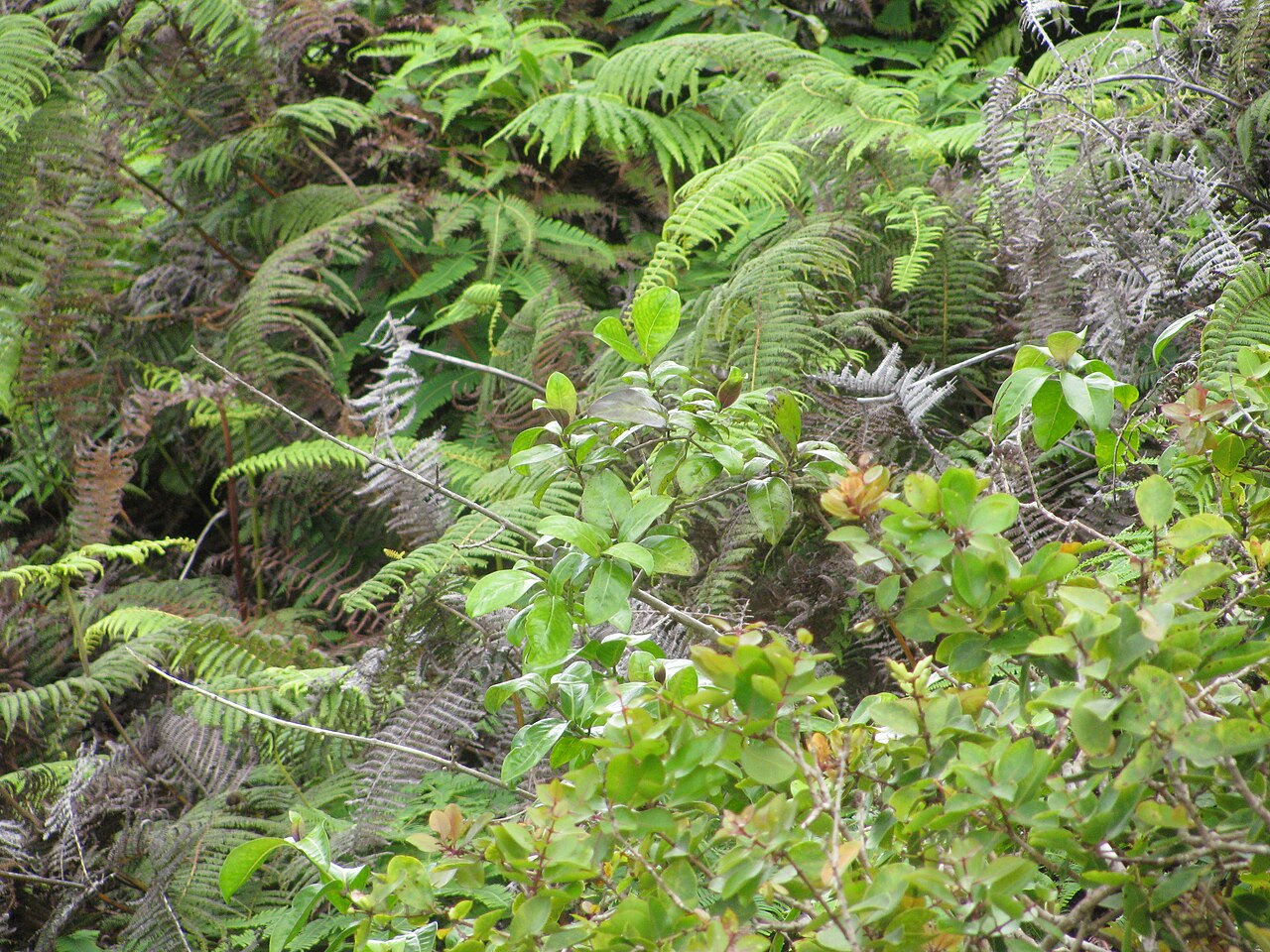
The University of Hawaiʻi profile emphasizes the extraordinary variation within Kadua affinis. It includes low shrubs, lianas, and small trees, with leaves ranging from less than an inch to more than nine inches long. A compact, fine-textured specimen and a broad-leaved tree can therefore belong to the same species. The size of one leaf is not a reliable shortcut to predicting the mature garden form.
Use the combination of foliage, branching, flowers, fruit, and documented source when identifying a plant. The long history of botanical names reflects genuine variation as well as changing taxonomic interpretations. A knowledgeable nursery can often provide more useful practical information about its particular stock than a general illustration that happens to show a different island form.
Flowers and Small Dark Fruits
The flowers are yellowish green, sometimes with a purple tinge, and are not classed as showy in the University of Hawaiʻi account. Their interest is best appreciated at close range. They suit a garden where subtle native features are welcome rather than one designed around a continuous mass of bright bloom.
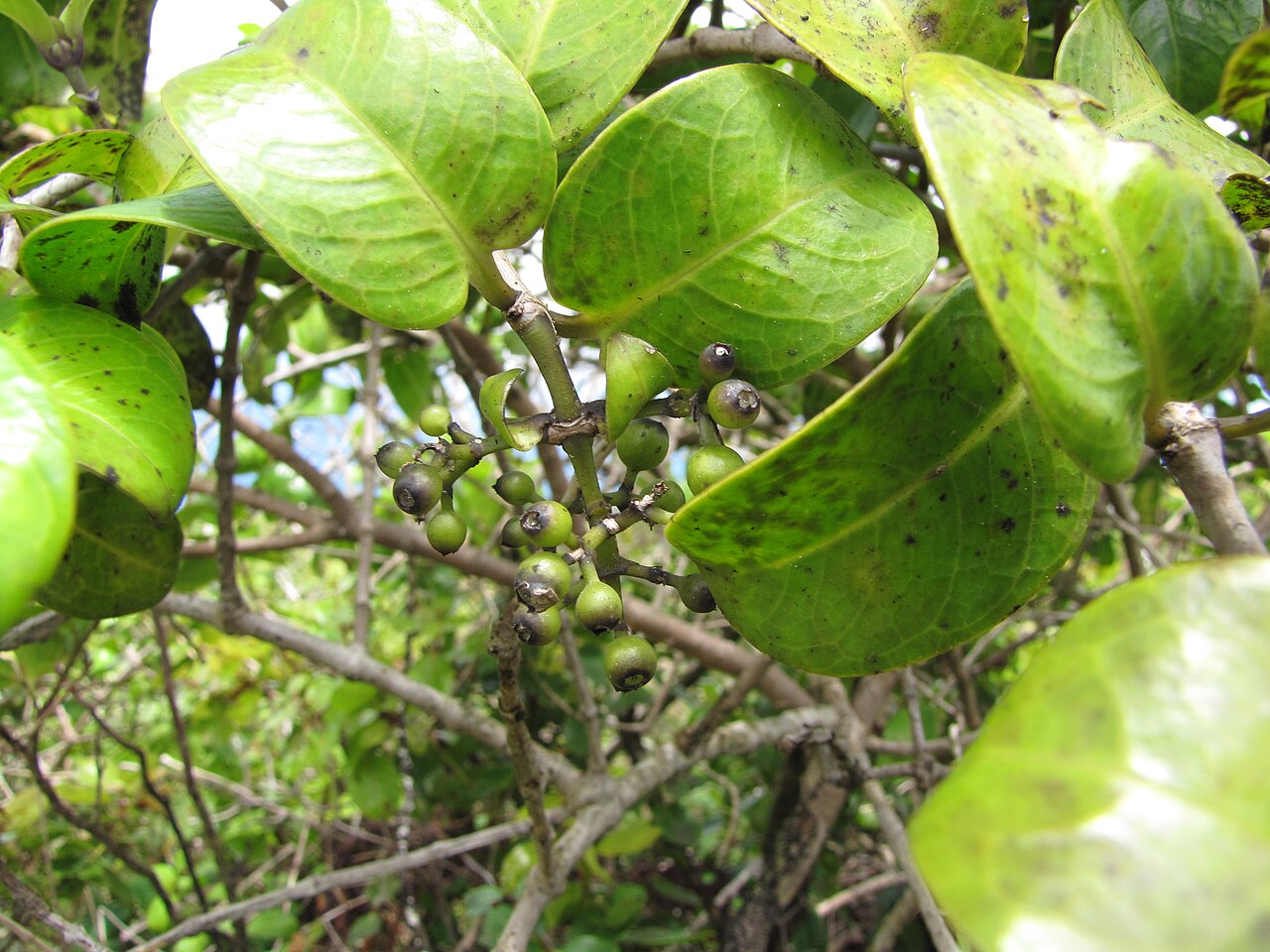
Small dark fruits are another identifying feature. Do not assume that every member of this large plant family has the same fruit structure or the same garden use. Likewise, membership in the coffee family does not establish edibility. Here the flowers and fruits are treated as botanical and ecological features, not as an invitation to harvest a food crop.
Native Range and Habitat
Manono is endemic to the Hawaiian Islands. The University of Hawaiʻi profile lists Kauaʻi, Oʻahu, Molokaʻi, Lānaʻi, Maui, and Hawaiʻi. It describes the plant as a frequent component of mesic to wet forest, with occurrence also in bogs or mesic shrubland. Reported elevations extend from roughly 850 to more than 6,690 feet.
That broad habitat description explains why the origin of a nursery plant matters. A form from a wetter setting may not respond to a garden in the same way as one from a relatively drier forest. Elevation alone cannot capture rainfall, cloud exposure, wind, slope, and soil conditions. Match the source and observed nursery performance to the planting site as closely as practical.
Native Range
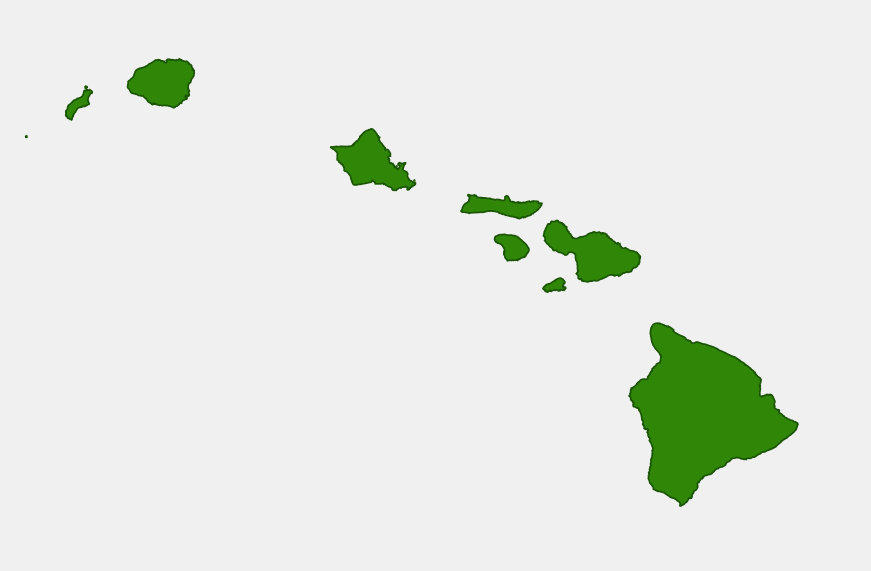
| U.S. States | Hawaii |
| Hawaiian Islands | Kauaʻi, Oʻahu, Molokaʻi, Lānaʻi, Maui, Hawaiʻi |
| Mexico / Canadian Provinces | Not included in the verified native range used here |
| Ecoregion | Hawaiian tropical forest and woodland |
| Elevation Range | About 850–6,690 ft or more |
| Habitat | Mesic to wet forest, sometimes bog margins or mesic shrubland |
| Common Associates | Site-appropriate native forest canopy and understory |
USDA PLANTS profile (HETE21). Species identity verified; this link is not a guarantee of county-level distribution data.
The map is a state-level overview of the U.S. native range, not a map of individual populations. For restoration, consult local records and follow the project’s provenance requirements. For a home landscape, the island and habitat information are still valuable: they help distinguish an appropriate native planting from a plant that happens to be native somewhere in the state but poorly suited to the intended site.
Choosing the Right Form
Small Tree, Shrub, or Scrambling Plant?
A tree-form manono can serve as a specimen or a component of a layered native planting. A shrubby form may be more useful near an edge or as an informal mass. A scrambling form needs a different spatial plan. These are not interchangeable roles, and pruning cannot always transform one inherited growth habit into another without constant maintenance.
Ask to see mature stock plants or photographs of the same nursery line if available. Find out whether the young plant is naturally branching low, whether it needs support, and how the source plant behaves when grown without repeated cutting. A nursery pot can conceal future scale, especially when a plant has been pruned for transport or display.
The University of Hawaiʻi profile lists container use, hedges, accents, and specimen planting among possible landscape uses. Those possibilities reflect the species’ diversity, not a promise that every form performs equally well in all four roles. Select a form suited to the intended use and keep enough flexibility in the design to accommodate its actual growth.
Allow Useful Space
Larger forms can spread more than ten feet. Do not place a tree-form manono in a narrow strip simply because it looks modest when purchased. Give the crown clearance from walls and neighboring plants, and leave access for inspection and maintenance. Space also helps preserve the plant’s natural outline and reduces the need to remove flowers and fruit through frequent shaping.
Light, Moisture, and Soil
Partial sun is the published light recommendation. In practice, consider both the duration and intensity of exposure. Morning sun or filtered canopy light differs from several hours of reflected afternoon heat beside paving. A location described as “part shade” can still be stressful if wind and hot surfaces dry the foliage and root zone.
Water needs vary with the plant’s origin. The University of Hawaiʻi guidance identifies moist conditions while explicitly noting source-dependent differences. Begin with the nursery’s information, assess the actual root-zone moisture, and adjust as the plant establishes. Do not convert a broad moisture category into an identical irrigation schedule for every island form.
Good drainage remains important. A plant associated with wet forest does not necessarily tolerate stagnant water in a compacted planting hole. Observe how rain moves through the site, especially where construction has altered the soil. If water remains trapped, address the location or drainage before installing a valuable specimen.
Planting and Establishment
Prepare the planting area before removing the plant from its container. Keep the root ball moist and shaded during the work, handle it carefully, and set the plant at the appropriate original soil level. Avoid burying the stem base under backfill. Water after planting to settle the surrounding soil, then check that the plant has not sunk below the intended level.
Use mulch to help moderate moisture and reduce competition, keeping it away from the stem. During the first months, inspect both the nursery root ball and the soil beside it. Their water-holding properties may differ enough that one is wet while the other is dry. Surface appearance alone is a poor guide to the conditions around newly establishing roots.
As the root system expands, widen the area that receives irrigation. Aim for a useful volume of moist soil rather than a continually wet spot against the trunk. Adjust for rainfall and weather changes, and retain easy access to the plant so that developing problems are noticed before they become severe.
Feeding and Diagnosing Yellow Leaves
The University of Hawaiʻi profile includes fertilizer guidance, but a fixed feeding recipe should not replace assessment of the actual garden soil and plant. Yellow leaves can have several causes, including water stress, poor root function, unsuitable soil chemistry, or nutrient shortage. Examine drainage, moisture, and recent changes before deciding that more fertilizer is the answer.
Where nutrition is a concern, use local soil testing or advice from a nursery familiar with the same form. Avoid repeatedly changing several conditions at once; doing so makes it difficult to learn what helped or harmed the plant. Record the date and purpose of any amendment and compare subsequent growth with the plant’s previous condition.
Pests and Pruning
Ants, scale insects, mealybugs, and aphids are listed as problems to watch for. Inspect new growth, leaf undersides, and branch junctions. Ant activity can be a useful signal to look more closely for sap-feeding insects, but it is not by itself a complete diagnosis. Identify the organism and the extent of damage before choosing a response.
Maintain access and reasonable air movement without stripping the plant of its characteristic foliage. For a specimen tree, prune with a clear structural purpose. For an informal hedge, select a naturally suitable shrubby form rather than forcing a scrambling or tree form into a role that requires continual severe cutting.
Allow some branches to flower and fruit if those features are part of the planting’s purpose. Repeated shearing can make very different native plants look alike while removing the traits that make them worth observing. A little design flexibility often produces a more interesting and less demanding garden.
Names, History, and Cultural Context
Manono has accumulated an unusually long list of scientific synonyms. The University of Hawaiʻi account notes more than two hundred names in its taxonomic history and explains the modern use of Kadua for the Hawaiian plants formerly treated in Hedyotis. Older labels remain useful for finding literature, but the current name should anchor a garden record.
The USDA profile linked above retains Hedyotis terminalis, a verified synonym of Kadua affinis. That difference is nomenclatural, not evidence that the link describes an unrelated species. When comparing sources, check synonymy before deciding that one database is referring to a different plant.
The University of Hawaiʻi account records occasional historical use of manono in canoe trimming and rigging while noting the limitations of wood that can warp and crack. This is a specific cultural record, not a general recommendation to harvest garden or wild plants for structural use. A living specimen can instead provide a place to learn about the diversity of Hawaiian plants and the care involved in understanding their names and histories.
Common Questions
Why does my manono look unlike a photograph? Variation is a defining feature of the species. Check the plant’s identity and provenance, but do not assume that a difference in leaf size or habit automatically means the label is wrong.
Will it become a 25-foot tree? Some forms are small trees; others remain shrubs or scramble. The tree height in the regional list is relevant to tree forms, not a universal prediction. Ask about the nursery stock’s mature habit.
Can it be grown in a pot? Container use is documented as a possibility, especially where the selected form and long-term maintenance are suitable. A large tree form will still require root space and eventual decisions about permanent placement.
How much water does it need? Enough to maintain the moisture appropriate to its origin while allowing drainage. Source information and direct soil checks are more dependable than a single schedule applied to every manono.
A Native Plant Chosen Individually
Manono rewards gardeners who look beyond a species name. Select a documented form, give it the light and moisture suited to its source, and plan for its real growth habit. Whether it becomes a small tree or a broad shrub, its value lies in the living variation of a Hawaiian endemic and the opportunity to let that variation shape an informed garden design.
Sources & Further Reading
- University of Hawaiʻi, Native Plants Hawaiʻi species profile
- ITIS: Kadua affinis and the synonym Hedyotis terminalis
- Smithsonian Hawaiian vascular plant taxonomic updates
Botanical range, identification, and cultural information are based on these sources. Garden-management advice should be adapted to local soil, exposure, and nursery provenance.
Find Native Plants Near You
Look for correctly identified, nursery-propagated plants with documented Hawaiian provenance. Visit our Hawaii native plant nursery directory and ask about stock suited to your island, elevation, and rainfall. Compare other trees in our Hawaii native plant list.