
Maple-leaf Viburnum (Viburnum acerifolium)
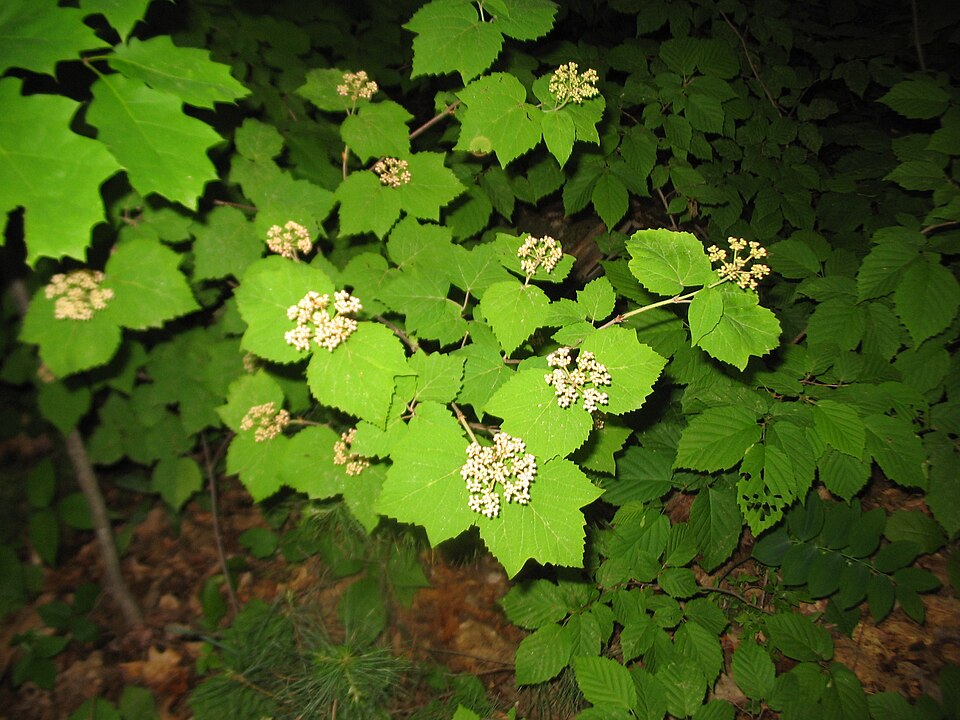
Viburnum acerifolium, commonly known as Maple-leaf Viburnum, Dockmackie, or Possum Haw, is a distinctive native deciduous shrub of eastern North America. This member of the Adoxaceae family (formerly Caprifoliaceae) is easily recognized by its characteristic three-lobed leaves that resemble those of maple trees, hence its common name. The shrub’s graceful, spreading form and exceptional shade tolerance make it a valuable understory species in native forest ecosystems.
Growing naturally in the understory of deciduous and mixed forests from southern Canada to northern Georgia and west to Minnesota and eastern Kansas, Maple-leaf Viburnum typically reaches 3 to 6 feet tall and equally wide. In late spring, it produces distinctive flat-topped clusters of small, creamy-white flowers that give way to clusters of berries that change from white to pink to blue-black as they ripen, often displaying multiple colors simultaneously on the same plant.
Beyond its ornamental value, Maple-leaf Viburnum provides exceptional ecological benefits. The berries are consumed by over 35 species of birds, while the flowers attract native bees, butterflies, and other pollinators. Its brilliant fall color — ranging from yellow and orange to deep pink and burgundy — rivals that of any native shrub. Combined with its drought tolerance once established and ability to thrive in challenging shaded sites, this makes it an outstanding choice for native plant gardens, naturalized landscapes, and woodland restoration projects throughout its range.
Identification
Maple-leaf Viburnum is a deciduous shrub typically growing 3 to 6 feet tall and 4 to 6 feet wide, with an open, spreading habit. The stems are slender and tend to arch gracefully, creating an informal, naturalistic appearance. The plant often forms colonies through underground rhizomes, creating loose thickets in favorable habitats.
Leaves
The leaves are the plant’s most distinctive feature — simple, opposite, and characteristically three-lobed (occasionally with additional smaller lobes), closely resembling maple leaves. Each leaf is 2 to 5 inches long and nearly as wide, with serrated margins and prominent veins. The upper surface is dark green and somewhat glossy, while the underside is paler and may have fine hairs along the veins. The petioles (leaf stalks) are relatively short, typically ½ to 1 inch long.
Flowers
The flowers appear in late spring to early summer in distinctive flat-topped, terminal clusters (cymes) 2 to 3 inches across. Each individual flower is small — about ¼ inch across — with five creamy-white petals and prominent yellow stamens. The flower clusters have a pie-like or plate-like appearance that distinguishes them from the more rounded flower heads of other viburnums. The flowers are mildly fragrant and attract a wide variety of pollinators.
Fruit
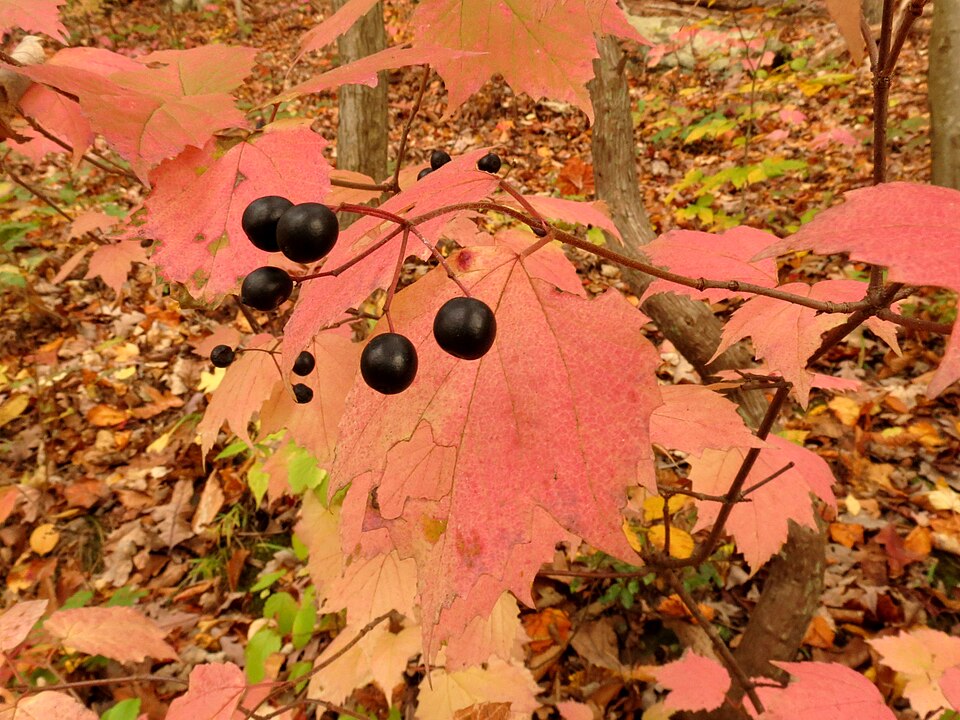
The fruit develops in late summer as clusters of small drupes, initially white, then changing through pink to deep blue-black when fully ripe. One of the most attractive features of this species is that berries often display multiple colors simultaneously — white, pink, and blue — on the same cluster as they ripen at different rates. Each berry contains a single large seed. The colorful fruit clusters are highly ornamental and persist into early fall.
Quick Facts
| Scientific Name | Viburnum acerifolium |
| Family | Adoxaceae (Moschatel) |
| Plant Type | Deciduous Shrub |
| Mature Height | 6 ft |
| Sun Exposure | Full Sun to Part Shade |
| Water Needs | Moderate to Low (Drought Tolerant) |
| Bloom Time | May – July |
| Flower Color | Creamy white |
| USDA Hardiness Zones | 4–8 |
Native Range
Maple-leaf Viburnum has a broad distribution across eastern North America, ranging from Nova Scotia and southern Quebec west to southern Ontario and Minnesota, and south to northern Georgia and eastern Kansas. This extensive range reflects the species’ adaptability to various forest types and climatic conditions, from the boreal forests of Canada to the deciduous forests of the southeastern United States.
Throughout its range, Maple-leaf Viburnum is typically found in the understory of mature deciduous and mixed forests, showing a particular affinity for oak-hickory, maple-beech, and oak-chestnut forest communities. It often grows on slopes and ridges with well-drained, acidic soils, though it can also be found in richer valley soils. The species demonstrates remarkable shade tolerance, thriving beneath dense forest canopies where many other shrubs struggle.
In the southeastern portion of its range, including North Carolina and South Carolina, Maple-leaf Viburnum is most common in the mountains and upper Piedmont regions, where it grows in association with mountain laurel, rhododendrons, and other acid-loving understory species. It’s particularly abundant in the Appalachian Mountains, where it forms an important component of the diverse understory shrub layer.
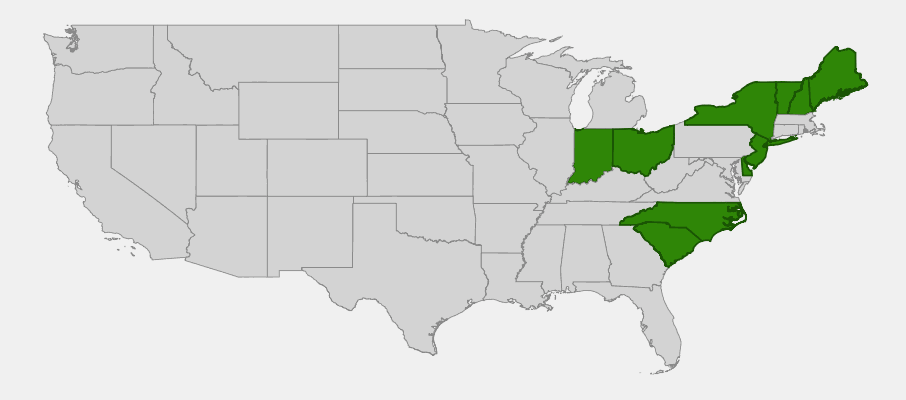
📋 Regional plant lists featuring Maple-leaf Viburnum: North Carolina & South Carolina
Growing & Care Guide
Maple-leaf Viburnum is one of the most adaptable and low-maintenance native shrubs, combining excellent shade tolerance with good drought resistance once established. Its naturalistic growth habit and spectacular fall color make it ideal for woodland gardens and naturalized landscapes.
Light
This species demonstrates exceptional shade tolerance — among the best of any native shrub. It thrives in everything from full sun to deep shade, though flowering and fruiting are most abundant in partial shade to full sun conditions. In deep shade, the plant remains healthy but may produce fewer flowers and have a more open growth habit. In full sun, ensure adequate moisture to prevent stress.
Soil & Water
Maple-leaf Viburnum is quite adaptable to soil conditions but performs best in well-drained, acidic soils (pH 5.0–6.5) rich in organic matter. It tolerates clay, loam, or sandy soils and shows good drought tolerance once established, typically after the second growing season. However, consistent moisture during the first year after planting is important for establishment. The plant is sensitive to soil compaction and performs poorly in waterlogged conditions.
Planting Tips
Plant in fall or early spring using container-grown or balled-and-burlapped specimens. Space plants 4–6 feet apart for mass plantings or screening, or allow more room for specimen use. When planting, dig a hole twice as wide as the root ball but no deeper, and backfill with native soil. Mulch with 2–3 inches of organic material to retain moisture and suppress weeds, keeping mulch away from the stem.
Pruning & Maintenance
Minimal pruning is required. Remove dead, damaged, or crossing branches in late winter or early spring. If desired, thin older stems to maintain an open structure and encourage new growth. The plant naturally suckers from the base, which can be removed if a single-stemmed form is preferred, or left to create a naturalistic colony. Maple-leaf Viburnum is generally pest- and disease-free, making it extremely low-maintenance.
Landscape Uses
This versatile shrub works well in many landscape applications:
- Woodland gardens and naturalized forest edges
- Shade gardens where few other flowering shrubs thrive
- Wildlife gardens — exceptional value for birds and pollinators
- Erosion control on shaded slopes
- Native plant gardens and restoration projects
- Foundation plantings on the north side of buildings
- Mixed shrub borders for seasonal interest
Wildlife & Ecological Value
Maple-leaf Viburnum provides outstanding ecological value, supporting a wide range of wildlife species throughout the growing season and into winter.
For Birds
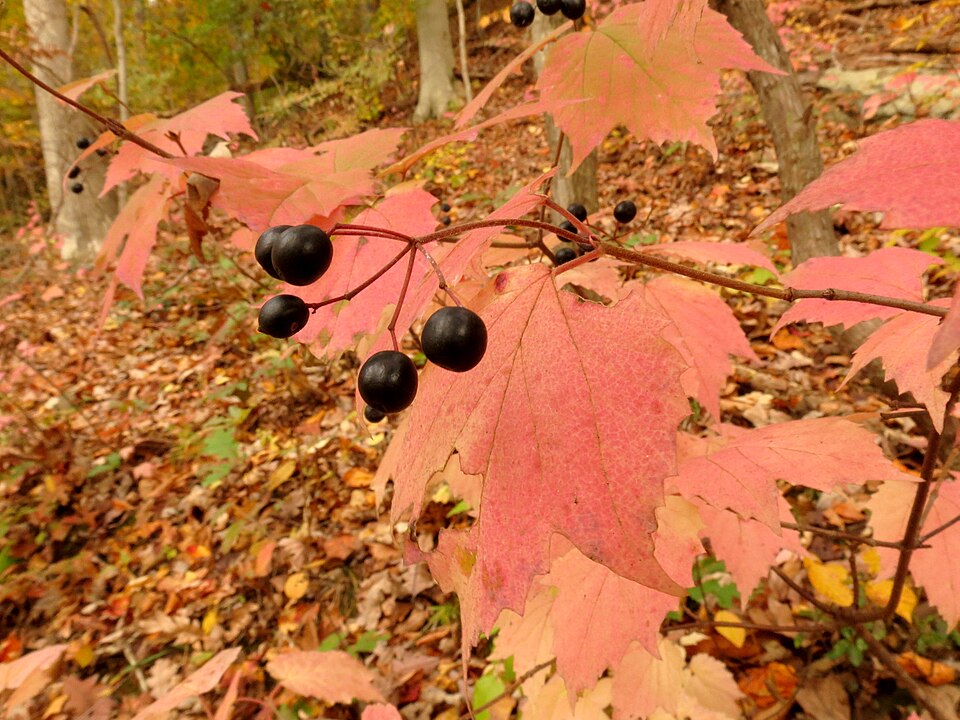
The colorful berries are consumed by over 35 species of birds, including American Robin, Gray Catbird, Northern Cardinal, Cedar Waxwing, Eastern Bluebird, and various thrushes, vireos, and warblers. The berries are high in fat content, making them particularly valuable for migrating birds in fall. The dense, branching structure provides excellent nesting sites for small songbirds, while the plant’s tendency to form colonies creates ideal cover habitat.
For Mammals
Small mammals including chipmunks, squirrels, and mice consume the berries and cache them for winter food. White-tailed deer browse the foliage, particularly young shoots, though the plant shows good recovery from moderate browsing. Black bears occasionally consume the berries in areas where the ranges overlap, and the dense growth provides cover for small mammals year-round.
For Pollinators
The flat-topped flower clusters are particularly attractive to native bees, including sweat bees, mining bees, and small carpenter bees. The flowers also attract butterflies, beneficial wasps, hover flies, and other pollinating insects. The long bloom period (often 4–6 weeks) provides consistent nectar and pollen resources during early to mid-summer when many other native shrubs have finished flowering.
Ecosystem Role
As an understory shrub, Maple-leaf Viburnum contributes to forest structural complexity and provides a crucial mid-story layer that supports diverse wildlife communities. Its ability to thrive in deep shade makes it an important component of mature forest ecosystems, where it helps stabilize soil and provides organic matter through leaf litter. The plant’s rhizomatous growth habit helps prevent erosion on slopes while creating microhabitats for insects and other small organisms.
Cultural & Historical Uses
Maple-leaf Viburnum has a rich history of use by Indigenous peoples throughout its range. Various Native American tribes utilized different parts of the plant for medicinal purposes, though it was generally considered less potent than other viburnums like Nannyberry or Black Haw. The Cherokee used preparations of the bark to treat various ailments, including stomach problems and as a general tonic.
The berries, while not poisonous, are generally considered unpalatable to humans due to their somewhat bitter taste and large seeds relative to the small amount of flesh. However, some sources indicate that Indigenous peoples occasionally consumed them, likely as an emergency food or processed them to remove the bitterness. The berries were more commonly left for wildlife, as Native peoples recognized their importance to birds and other forest animals.
Early European settlers learned of the plant’s wildlife value and sometimes called it “Dockmackie,” a name of uncertain origin that may derive from a Native American word. The species was not widely used commercially, as its small size and preference for shaded forest locations made it less economically valuable than larger trees. However, it was occasionally harvested along with other forest understory species for folk medicine preparations.
In modern times, Maple-leaf Viburnum has gained recognition primarily for its ecological and ornamental value rather than utilitarian uses. It has become increasingly popular in native plant gardening and restoration work, particularly for challenging shaded sites where few other flowering shrubs will thrive. Conservation organizations often recommend it for woodland restoration projects due to its excellent wildlife value and ability to establish in disturbed forest understory conditions.
Frequently Asked Questions
Why are the leaves shaped like maple leaves?
The three-lobed leaf shape is a convergent evolutionary trait — both maples and this viburnum developed similar leaf shapes independently, likely as an adaptation to similar environmental conditions. The lobed shape may help with light capture and air circulation in forest understory conditions.
Are the berries safe for humans to eat?
The berries are not toxic but are generally considered unpalatable due to their bitter taste and large seeds. They’re much better left for the wildlife that depends on them. If you’re curious, a small taste won’t hurt, but they’re not considered a desirable wild edible.
How can I tell Maple-leaf Viburnum apart from other viburnums?
The three-lobed, maple-like leaves are distinctive — no other viburnum has this leaf shape. The flat-topped flower clusters and multi-colored berry clusters (white, pink, and blue-black simultaneously) are also characteristic of this species.
Will this shrub spread and take over my garden?
Maple-leaf Viburnum spreads slowly by underground rhizomes and typically forms loose, naturalistic colonies rather than aggressive spreading. The spread is gradual and easily managed by removing unwanted suckers. In most garden settings, this spreading tendency is considered beneficial for creating natural-looking plantings.
Can I grow this in full sun?
Yes, though it’s one of the few native shrubs that actually prefers some shade. In full sun, ensure consistent moisture and consider providing some afternoon shade in hot climates. The plant will be more compact in full sun and may produce more flowers and fruit, but it’s equally happy in partial to deep shade.

Looking for a nursery that carries Maple-leaf Viburnum?
Browse our native plant nursery directory: North Carolina · South Carolina