Mountain Misery (Chamaebatia foliolosa)
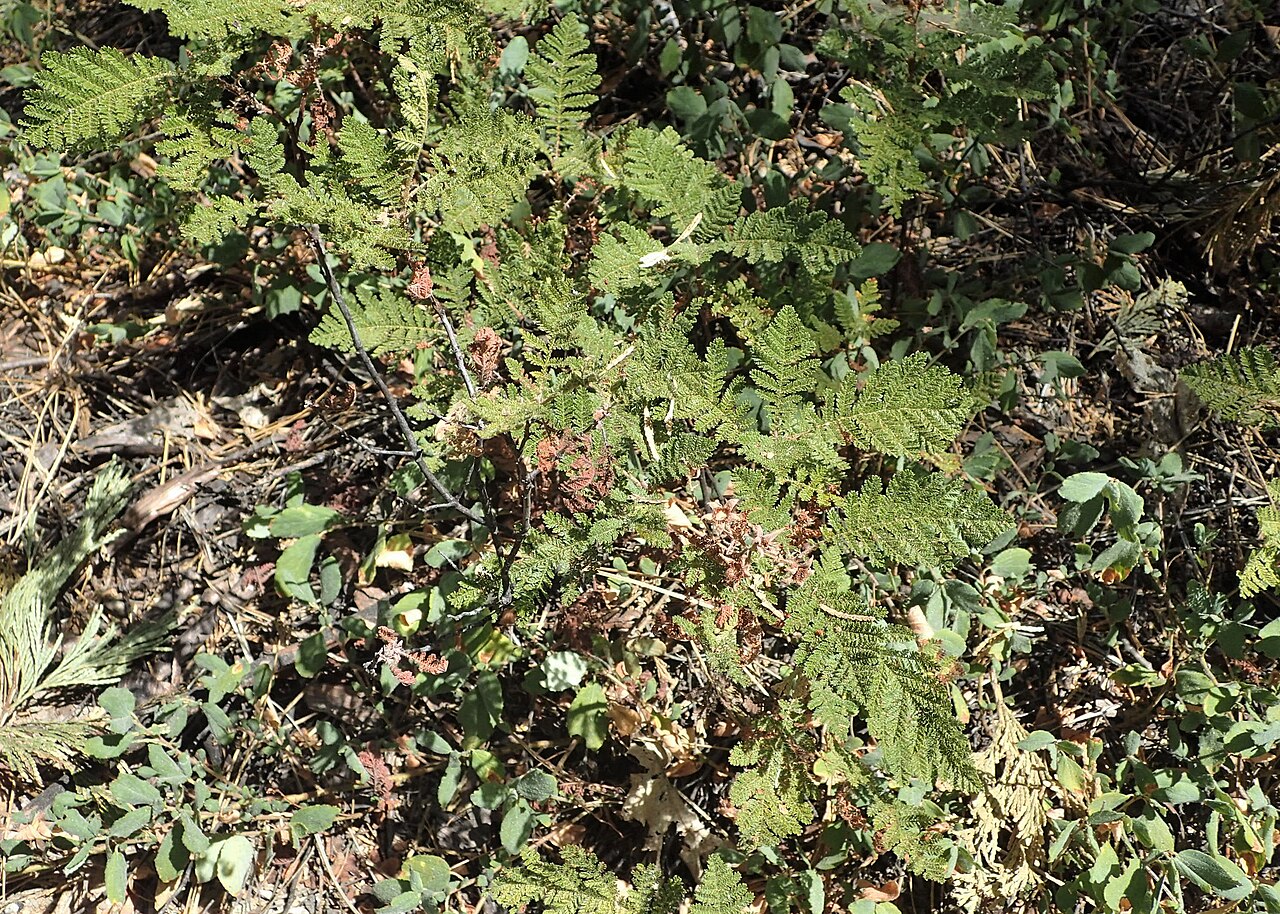
Chamaebatia foliolosa, widely known as Mountain Misery and also called bearclover or kit-kit-dizze (from the Miwok name), is a low, sticky, aromatic evergreen shrub endemic to the mountains of California. It carpets vast stretches of the Sierra Nevada’s mixed-conifer forest floor with dense, fernlike foliage, often forming a nearly continuous groundcover beneath ponderosa pine, Jeffrey pine, and white fir from roughly 2,000 to 7,000 feet in elevation.
The plant’s unusual common name has a famous origin story: California gold rush-era miners and pioneers, pushing through dense thickets of the low, resinous shrub, found their boots and trouser legs coated in a dark, sticky, strong-smelling gum, and the resulting discomfort — along with the frequent stumbles caused by the tangled stems — earned the plant its memorable name. The resin that caused all that misery is also what makes the plant so flammable, a trait well known to anyone who has hiked through a stand of it on a hot Sierra afternoon.
Despite the name, mountain misery is a genuinely useful and attractive native groundcover for California gardens within its climate range. Its fine, deep-green, fern-textured foliage stays attractive year-round, it tolerates the dry shade beneath established trees where few other plants thrive, and its small white, rose-like spring flowers add a modest but welcome seasonal highlight to a woodland or native plant garden.
Identification
Mountain misery is a low, spreading, mat-forming evergreen shrub, typically growing just 8 to 18 inches tall but spreading widely by rhizomes to form large, continuous colonies many feet across. The whole plant is sticky to the touch and strongly aromatic, releasing a resinous, somewhat medicinal scent when brushed or crushed.
Stems
Stems are slender, reddish-brown, and woody at the base, covered in fine glandular hairs that produce the sticky resin responsible for the plant’s common name. New growth is especially resinous and fragrant.
Leaves
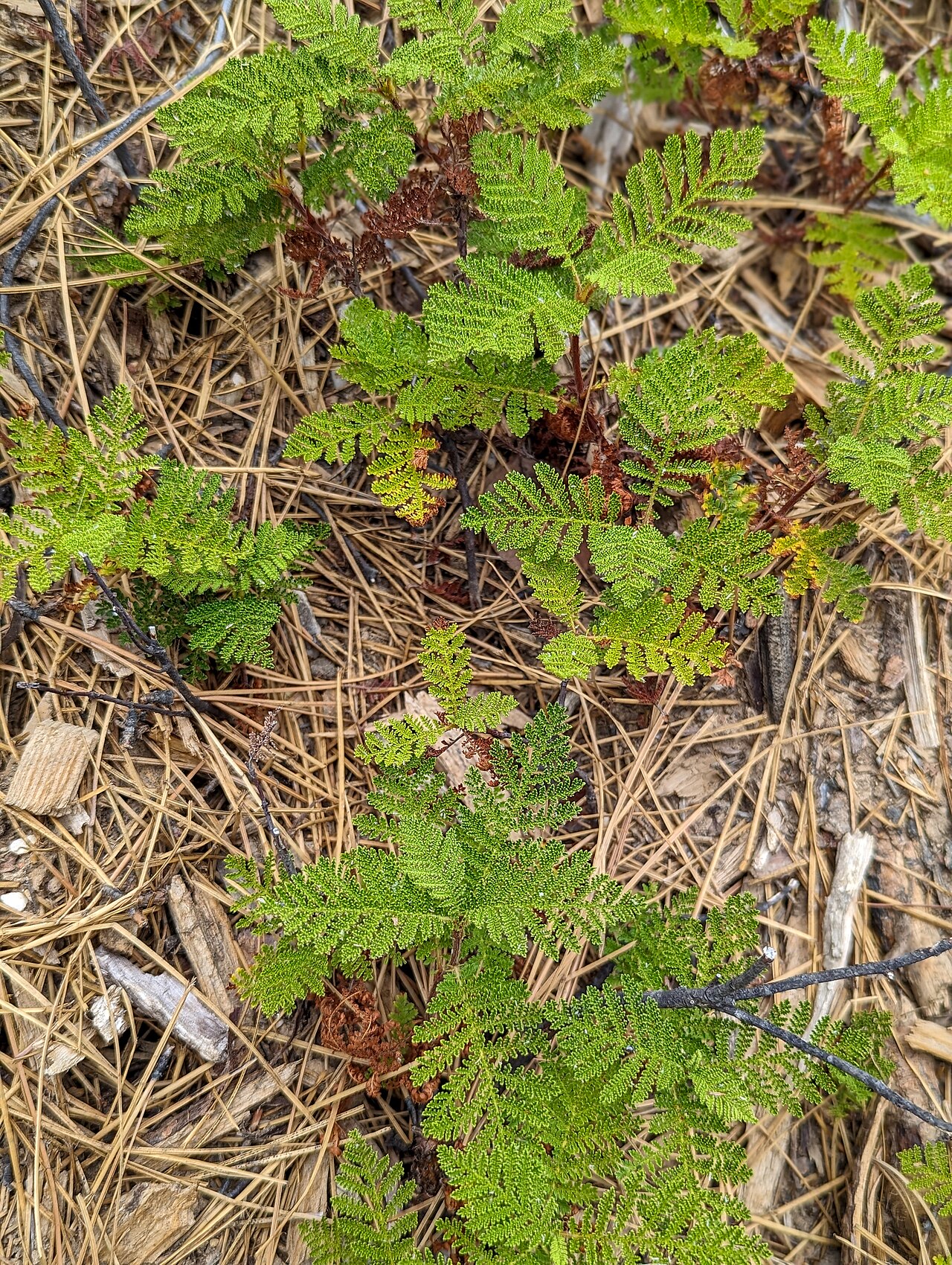
The leaves are the plant’s most distinctive feature: finely divided, fern-like pinnate leaves up to about four inches long, made up of 8 to 17 main leaflets that are themselves further divided into small segments, giving the whole leaf a lacy, almost parsley-like texture. The foliage is dotted with sticky glands and stays a rich green year-round, which is part of why the plant reads as “fernlike” even though it is not a fern at all.
Flowers
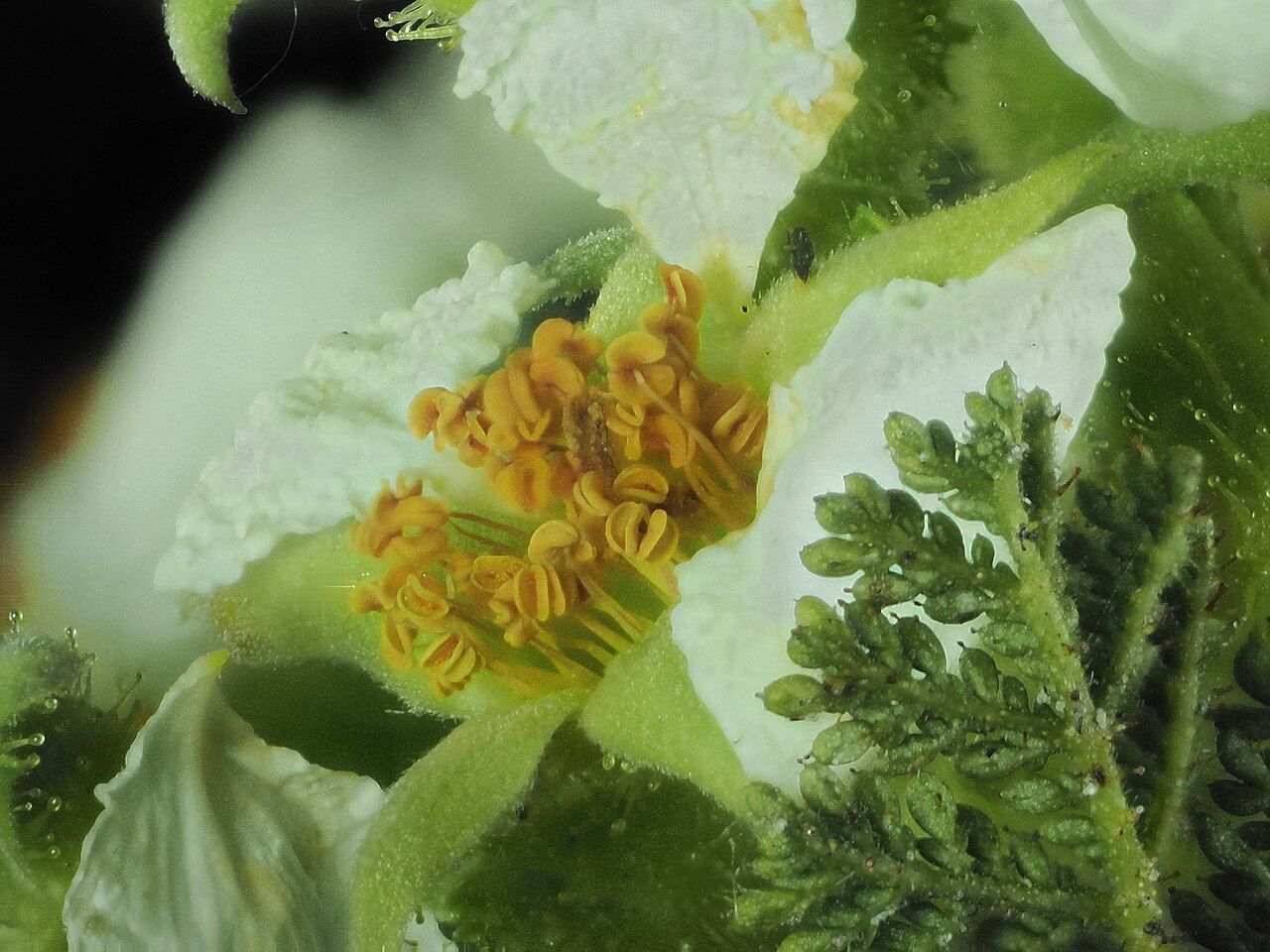
Flowers appear in late spring, borne in small clusters at the branch tips. Each blossom has five rounded white petals surrounding a bright yellow center ring of numerous stamens, giving it the look of a miniature wild rose — a family resemblance that makes sense, since mountain misery belongs to the rose family (Rosaceae).
Fruit & Seeds
The flowers give way to small, brownish-black achenes. Seed production is modest, and in the wild the plant relies heavily on its spreading rhizomes, rather than seedlings, to expand and maintain its extensive forest-floor colonies.
Quick Facts
| Scientific Name | Chamaebatia foliolosa |
| Family | Rosaceae (Rose) |
| Plant Type | Evergreen mat-forming groundcover shrub |
| Mature Height | 8–18 in |
| Mature Spread | Spreads indefinitely by rhizomes to form large mats |
| Growth Rate | Slow to moderate |
| Sun Exposure | Part shade to full shade; tolerates filtered sun |
| Water Needs | Low; drought tolerant once established |
| Soil Type | Well-drained forest soils, sandy or gravelly loam |
| Soil pH | Slightly acidic |
| Bloom Time | Late spring |
| Flower Color | White with yellow center |
| Fall Color | None; evergreen |
| Fruit | Small brownish-black achenes |
| Deer Resistant | Yes; the sticky, resinous foliage deters browsing |
| USDA Hardiness Zones | 6–9 |
Native Range
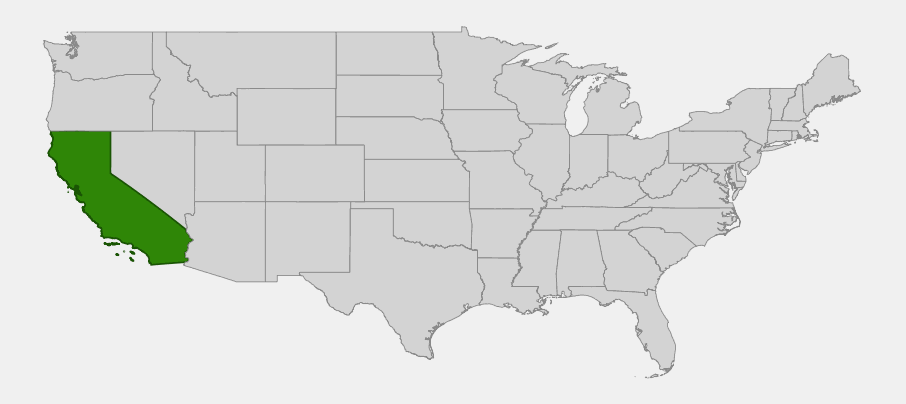
Mountain misery is endemic to California, found nowhere else in the wild. Its range runs the length of the Sierra Nevada, from the southern Cascade Range foothills near Shasta south through the Sierra Nevada’s western slope to around Kern County, with additional scattered populations in the northern Coast Ranges.
Within this range it is one of the signature groundcovers of the mixed-conifer forest belt, typically found between about 2,000 and 7,000 feet in elevation under a canopy of ponderosa pine, Jeffrey pine, white fir, incense cedar, and black oak. It often forms dense, nearly pure stands covering acres of forest floor, particularly on drier slopes and flats where the open, parklike character of historic Sierra forests allowed it to spread widely.
Mountain misery is classified as vulnerable by NatureServe, reflecting ongoing concerns about habitat change across the Sierra Nevada, even though it remains locally abundant in many protected areas, including Yosemite and Sequoia National Parks.
📋 Regional plant lists featuring Mountain Misery: Not currently covered by a Plant Native regional list; see our full native plant directory for related California species.
Growing & Care Guide
Mountain misery is a specialist groundcover for California gardens that mimic its natural dry, shaded forest-floor conditions. It is not a plant for formal beds or heavy irrigation, but it is outstanding where little else will grow.
Light
This shrub is adapted to the dappled or filtered light beneath a conifer canopy and performs best in part shade to full shade. It tolerates some direct morning sun in cooler coastal-influenced gardens but struggles in hot, exposed, all-day sun, especially away from its cool mountain habitat.
Soil & Water
Plant it in well-drained, slightly acidic soil similar to the sandy or gravelly loam found under Sierra conifers. Once established, mountain misery needs very little supplemental water and is genuinely drought tolerant, reflecting its adaptation to the dry summers typical of the Sierra Nevada’s mixed-conifer belt. Avoid heavy clay soils and locations that stay wet, which can lead to root problems.
Planting Tips
Set out container plants in fall or early spring so roots can establish before summer dry heat arrives. Space plants 2 to 3 feet apart if you want a filled-in mat within a few seasons, since the rhizomes will gradually knit neighboring plants together. It is best suited to gardens that already have some tree canopy, mimicking the open conifer forest where it grows naturally.
Pruning & Maintenance
Little maintenance is required beyond an occasional light shearing to keep the mat tidy or contain its spread at a bed edge. Because the resinous foliage is highly flammable, keep plantings well away from structures in fire-prone areas and consider clearing or thinning dense stands as part of defensible-space planning.
Propagation
Mountain misery is most reliably propagated by division of rooted rhizome sections or from rooted cuttings, since seed production is light and germination can be slow and inconsistent. Divisions taken in fall or early spring transplant with reasonable success.
Landscape Uses
Mountain misery fills a particular niche in California native gardens:
- Dry shade groundcover beneath established oaks, pines, or other shade trees
- Woodland garden understory that mimics Sierra Nevada mixed-conifer forest
- Erosion control on shaded slopes within its native elevation range
- Low-water, low-maintenance groundcover for naturalistic mountain or foothill gardens
- Deer-resistant plantings, since the sticky, aromatic foliage discourages browsing
Wildlife & Ecological Value
As one of the dominant groundcovers of the Sierra Nevada’s mixed-conifer understory, mountain misery plays an important role in the ecology of that forest type, even though its sticky, resinous chemistry keeps most large herbivores away.
For Pollinators
The small white spring flowers attract native bees and other insects at a time of year when understory bloom in the conifer forest is otherwise limited, making the plant a modest but valuable early-season nectar source in its habitat.
For Birds
The dense, low mats provide ground-level cover for small birds and other wildlife moving through the forest understory, though the plant is not a major food source for birds.
For Mammals
Deer and most other large mammalian herbivores generally avoid browsing mountain misery because of its sticky resin and strong aromatic compounds, which is why it is considered reliably deer resistant — an unusual trait among native Sierra understory plants.
Ecosystem Role
Mountain misery is notable among plants in the rose family for its ability to fix atmospheric nitrogen, an unusual trait documented in research on the species that helps enrich the often nutrient-poor granitic and volcanic soils of the Sierra Nevada forest floor. Its dense rhizomatous mats also help stabilize soil on slopes and suppress competing vegetation, giving it significant influence over the structure of the forest understory wherever it dominates. The resinous foliage is highly flammable and historically contributed to fire behavior in the Sierra’s mixed-conifer forests, linking the plant closely to the fire ecology of its habitat.
Cultural & Historical Uses
The Miwok people, who gave the plant its name kit-kit-dizze, used mountain misery as an herbal remedy within their traditional medicine for a range of ailments including colds, coughs, and skin conditions associated with diseases introduced during the colonial era. This traditional use reflects a long history of Indigenous knowledge of the plant’s resinous, aromatic properties, though it is presented here as documented ethnobotanical history rather than a current health recommendation.
The plant’s English common name, mountain misery, dates to the California gold rush era, when miners and other newcomers pushing through dense stands of the sticky, resinous shrub found the experience thoroughly unpleasant — hence the name, alongside the related nickname bearclover. The dark, gummy resin that coated clothing and boots left a lasting impression on nineteenth-century accounts of travel through the Sierra Nevada foothills and mountains.
Today, mountain misery is primarily significant as a defining component of Sierra Nevada forest ecology and as a distinctive, fragrant feature of hikes through the range’s mixed-conifer belt, rather than as a plant with ongoing commercial or medicinal use.
Frequently Asked Questions
Why is it called mountain misery?
The name comes from gold rush-era accounts of pioneers and miners who found hiking through dense thickets of the sticky, resinous shrub unpleasant — their boots and clothing became coated in dark, strong-smelling gum, and the tangled stems caused frequent stumbles.
Is mountain misery the same as bearclover?
Yes. Bearclover, kit-kit-dizze, and mountain misery are all common names for the same species, Chamaebatia foliolosa.
Is mountain misery safe to touch?
Handling the plant is generally not hazardous, but its foliage is covered in sticky, aromatic resin that some people find irritating to skin on repeated contact, and the resin is difficult to wash off clothing and gear.
Can I grow mountain misery outside California?
It can be grown in other climates with cool, dry summers and well-drained, slightly acidic soil, but it is best suited to conditions similar to its native Sierra Nevada habitat and is not reliably hardy or vigorous in humid or very hot climates.
Is mountain misery a fire hazard in the garden?
Its resinous foliage is highly flammable, as it is in the wild, so it should be kept well away from structures and incorporated thoughtfully into defensible-space landscaping in fire-prone areas.

Looking for a nursery that carries Mountain Misery?
Browse our native plant nursery directory: California