
Nannyberry (Viburnum lentago)
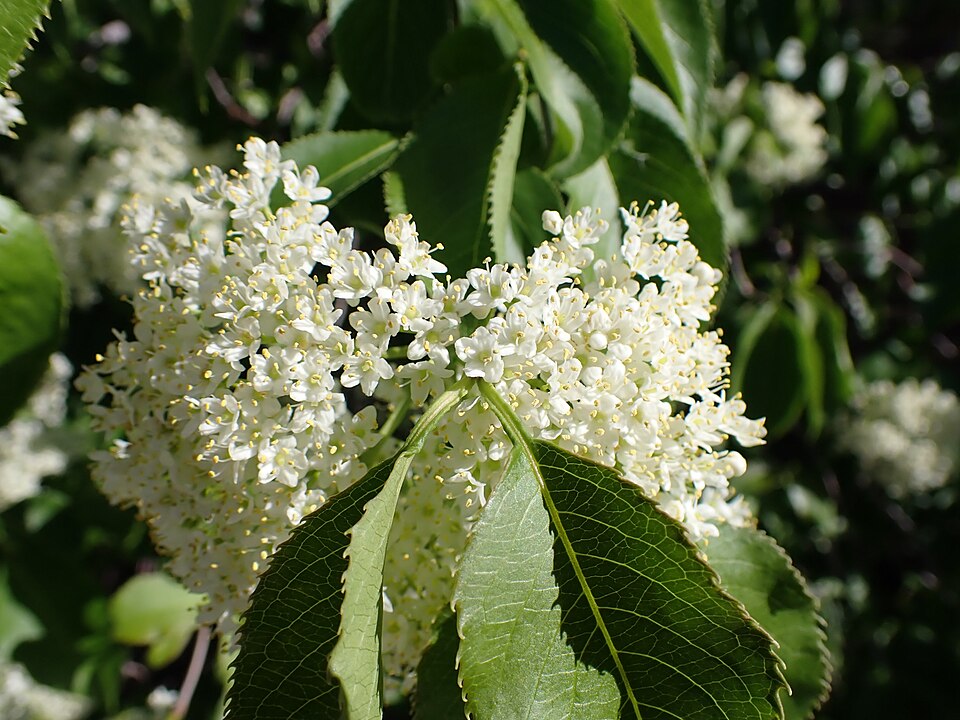
Viburnum lentago, commonly known as Nannyberry, Wild Raisin, or Sheepberry, is a hardy and versatile native shrub that serves as one of the most valuable wildlife plants in northern North America. This large deciduous shrub or small tree belongs to the honeysuckle family (Adoxaceae) and is prized for its adaptability, four-season interest, and exceptional ecological value. The unusual common name “nannyberry” likely derives from the fact that children and rural families historically ate the sweet, dark berries — much like a nanny might provide nutritious snacks for children.
Growing naturally in the understory of northern forests, wetland edges, and prairie borders, Nannyberry demonstrates remarkable tolerance for diverse growing conditions, from full sun to partial shade and from moist to moderately dry soils. Its creamy white flower clusters appear in late spring, followed by clusters of blue-black berries that provide critical food for wildlife throughout the fall and winter months. The glossy, dark green leaves turn beautiful shades of yellow, orange, and red in autumn, adding spectacular color to the landscape when many other plants are fading.
For modern landscapes, Nannyberry offers an ideal combination of beauty, toughness, and ecological function. It serves excellently as a naturalized hedge, wildlife border, or specimen plant, requiring minimal care once established while supporting dozens of bird species, beneficial insects, and small mammals. Its ability to thrive in challenging conditions — including urban pollution, road salt, and variable moisture — makes it particularly valuable for sustainable landscaping and habitat restoration projects throughout the northern United States and southern Canada.
Identification
Nannyberry typically grows as a large, multi-stemmed shrub reaching 15 to 20 feet tall, though it can occasionally develop into a small tree up to 30 feet in height under ideal conditions. The growth form is upright and somewhat spreading, creating a rounded to oval crown with a mature spread of 6 to 12 feet. The plant develops a strong, well-branched structure that provides excellent screening and habitat value while maintaining an attractive, naturalistic appearance.
Bark & Stems
The bark on mature stems is grayish-brown with shallow furrows and a slightly scaly texture. Young twigs are smooth and reddish-brown to gray, often with prominent lenticels (breathing pores) that appear as small, raised dots. One distinguishing feature is the distinctly flattened, winged petioles (leaf stems) that help identify this species from other viburnums. Winter buds are elongated, pointed, and covered with overlapping scales.
Leaves
The simple leaves are arranged oppositely on the branches, measuring 2 to 4 inches long and 1½ to 2½ inches wide. Each leaf is oval to elliptical with a pointed tip and finely serrated edges. The upper surface is dark green and glossy, while the underside is paler and may have fine hairs along the veins. The leaves have prominent parallel veining and the characteristic winged petioles. In autumn, the foliage transforms into brilliant displays of yellow, orange, and reddish-purple, often with multiple colors present on a single shrub.
Flowers
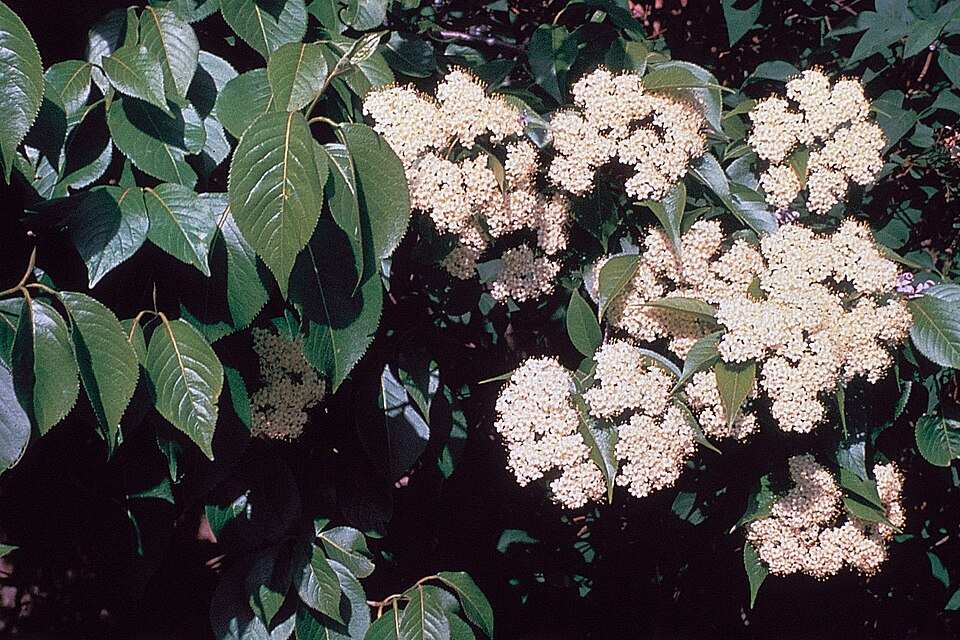
Nannyberry produces showy, flat-topped clusters (cymes) of small, creamy white flowers in late spring to early summer. Each flower cluster measures 2 to 4 inches across and contains dozens of individual five-petaled flowers, each about ¼ inch in diameter. The flowers are perfect (containing both male and female parts) and have a sweet, pleasant fragrance that attracts numerous pollinators. The timing of bloom typically occurs after the leaves have fully emerged, creating an attractive contrast between the white flowers and dark green foliage.
Fruit
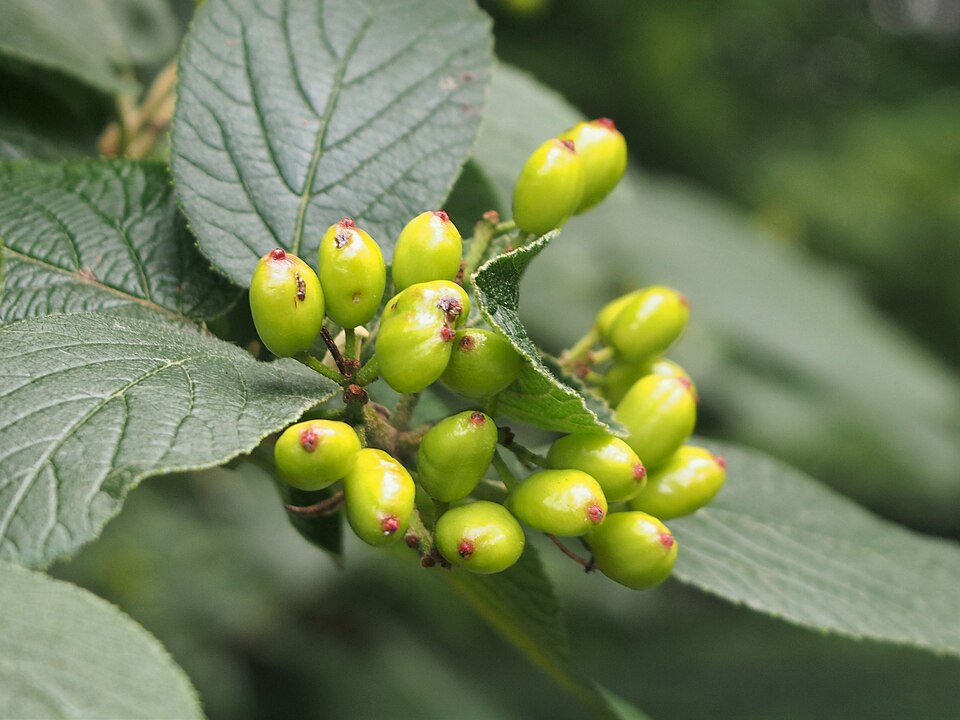
The berries develop in late summer to early fall, initially appearing green, then turning red, and finally maturing to a dark blue-black color. Each berry is oval-shaped, about ⅜ to ½ inch long, and contains a single large, flattened seed. The berries hang in drooping clusters and have a sweet, raisin-like flavor when fully ripe — hence the alternate name “wild raisin.” They persist on the shrub well into winter, providing critical food for wildlife during the lean months.
Quick Facts
| Scientific Name | Viburnum lentago |
| Family | Adoxaceae (Honeysuckle) |
| Plant Type | Deciduous Large Shrub / Small Tree |
| Mature Height | 15 ft |
| Sun Exposure | Full Sun to Part Shade |
| Water Needs | Moderate |
| Bloom Time | May – June |
| Flower Color | Creamy white |
| USDA Hardiness Zones | 2–7 |
Native Range
Nannyberry has a broad native distribution across much of northern and eastern North America, ranging from southeastern Canada south to the northern United States and extending into some mountainous regions of the mid-Atlantic and upper Midwest. The species thrives in the cool, moist climates of the Great Lakes region, northern New England, and the prairie-forest transition zone, where it plays an important role in forest edge and wetland border communities.
In its natural habitat, Nannyberry is commonly found along stream banks, wetland edges, forest clearings, and the borders between prairie and woodland. It tolerates a wide range of soil types but shows a preference for rich, moist, well-drained soils with adequate organic matter. The species is particularly well-adapted to areas with cold winters and moderate summers, though it shows surprising tolerance for heat and drought once established.
The shrub’s natural range has made it an important component of northern forest ecosystems, where it serves as a bridge species between different habitat types. Its ability to grow in both full sun and partial shade allows it to colonize forest openings and edges, while its tolerance for seasonal flooding makes it valuable in riparian and wetland restoration projects throughout its range.
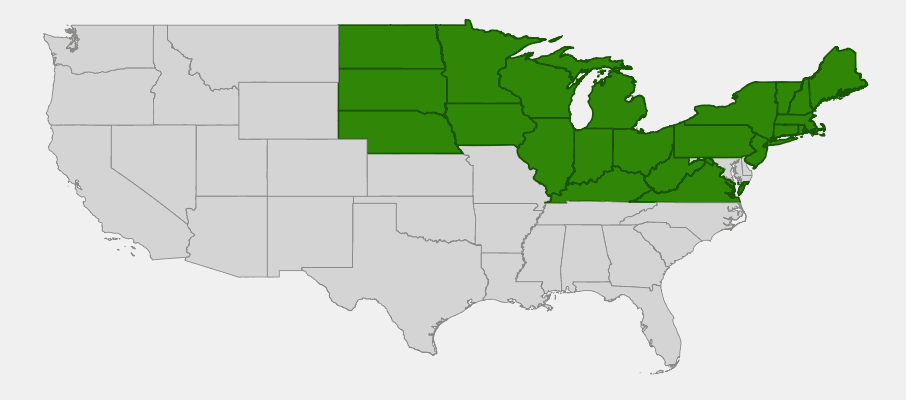
📋 Regional plant lists featuring Nannyberry: North Dakota, South Dakota & Western Minnesota
Growing & Care Guide
Nannyberry is an exceptionally adaptable and low-maintenance native shrub that thrives with minimal care once established. Its tolerance for a wide range of growing conditions, combined with its natural pest and disease resistance, makes it an excellent choice for sustainable landscaping, wildlife gardens, and naturalized plantings throughout northern regions.
Light
Nannyberry performs well in full sun to partial shade, with the best flowering and fruit production occurring in full to partial sun. In full sun, the shrub develops a more compact, dense form with abundant flowers and berries. In partial shade, it tends to grow taller and more open but still flowers and fruits well. The species’ shade tolerance makes it valuable for understory plantings and transitional areas between sun and shade gardens.
Soil & Water
While Nannyberry prefers rich, moist, well-drained soils, it demonstrates remarkable adaptability to various soil conditions. It tolerates clay soils, sandy soils, and even temporarily wet conditions, though it performs best with consistent moisture during the growing season. The shrub is notably tolerant of urban conditions, including air pollution and road salt, making it suitable for challenging city environments. Once established, mature plants show good drought tolerance, though extended dry periods may reduce fruit production.
Planting Tips
Plant Nannyberry in spring or fall when temperatures are moderate and rainfall is typically more abundant. Choose a location with morning sun and afternoon shade for optimal performance, or provide full sun if adequate moisture is available. Space multiple plants 8-12 feet apart for a naturalized hedge or screen, or give single specimens 12-15 feet of space to develop their full form. The shrub transplants easily and establishes quickly with proper care.
Pruning & Maintenance
Nannyberry requires minimal pruning and maintenance. Remove dead, damaged, or crossing branches in late winter or early spring before new growth begins. Light pruning to shape the plant or control size can be done immediately after flowering. Avoid heavy pruning, as this can reduce the next year’s flower and fruit production. The shrub naturally develops an attractive form with minimal intervention. Fertilizing is generally unnecessary in average soils, though a light application of compost in spring can benefit plants in poor soils.
Landscape Uses
Nannyberry’s versatility makes it valuable in numerous landscape applications:
- Wildlife borders and habitat gardens — exceptional value for birds and pollinators
- Naturalized hedges and screens — provides year-round privacy with seasonal interest
- Rain gardens and bioswales — tolerates seasonal wetness and flooding
- Specimen planting — attractive four-season interest as a focal point
- Erosion control — deep roots stabilize slopes and stream banks
- Urban landscaping — tolerates pollution, salt, and challenging conditions
- Woodland edge plantings — bridges the transition between forest and open areas
- Restoration projects — helps reestablish native plant communities
Wildlife & Ecological Value
Nannyberry ranks among the most valuable wildlife plants in northern North America, providing critical resources for numerous species throughout the year. Its combination of abundant berries, dense branching structure, and extended fruiting season makes it indispensable for wildlife habitat and ecological restoration projects.
For Birds
At least 40 species of birds feed on Nannyberry fruits, including American Robins, Cedar Waxwings, Northern Cardinals, Blue Jays, Various thrushes, and numerous finches and sparrows. The berries ripen in late summer and persist well into winter, providing crucial food when other resources become scarce. The dense branching structure offers excellent nesting sites for songbirds, while the shrub’s height provides elevated perches for territory defense and singing. Game birds including Ruffed Grouse and Sharp-tailed Grouse also consume the berries and use the shrub for cover.
For Mammals
Small mammals including chipmunks, squirrels, and mice feed extensively on Nannyberry fruits, often caching them for winter consumption and inadvertently dispersing seeds to new locations. White-tailed deer browse the foliage and twigs, particularly in winter when other browse is scarce. Black bears consume the berries when available, while various small mammals use the dense branching structure for shelter and nesting sites. The shrub’s ability to form thickets provides important thermal cover for wildlife during harsh weather.
For Pollinators
The abundant white flower clusters attract numerous native pollinators, including native bees, honeybees, beneficial wasps, and various flies. The flowers bloom at a time when many early-season pollinators need nectar sources, making Nannyberry particularly valuable in supporting pollinator communities. Butterflies occasionally visit the flowers, and several moth species use viburnum species as larval host plants. The extended blooming period ensures pollinator support over several weeks.
Ecosystem Role
Nannyberry serves as a keystone species in many northern ecosystems, providing structural diversity in forest edge and wetland border communities. Its ability to colonize disturbed sites helps stabilize soil and initiate ecological succession, while its tolerance for flooding makes it valuable in riparian restoration. The shrub’s extensive root system helps prevent erosion along stream banks and wetland edges. As a native plant, it supports numerous specialized insects and other invertebrates that in turn support larger wildlife communities, creating complex food web relationships essential to ecosystem health.
Cultural & Historical Uses
Nannyberry has been valued by indigenous peoples across its native range for thousands of years, serving both nutritional and medicinal purposes in traditional cultures. Various Native American tribes, including the Ojibwe, Potawatomi, and other Great Lakes region tribes, regularly harvested the ripe berries as a food source. The sweet, raisin-like berries were eaten fresh, dried for winter storage, or cooked into sauces and preserves. The high sugar content and pleasant flavor made them particularly popular with children, contributing to the plant’s common name.
Beyond food uses, indigenous peoples employed various parts of the Nannyberry shrub medicinally. The inner bark was used to prepare teas and poultices for treating various ailments, while the roots were sometimes used in traditional remedies. Some tribes used the flexible branches for basket making and other craft applications. The plant’s reliability as a food source made it an important component of traditional seasonal rounds, with families returning to known productive shrubs year after year.
European settlers and early American pioneers quickly adopted the use of Nannyberry berries, often calling them “wild raisins” due to their sweet flavor and wrinkled appearance when dried. Rural families collected the berries for jams, jellies, and pies, while the shrub itself became valued as an ornamental plant in farmstead landscapes. The plant’s hardiness and attractive appearance led to its cultivation in northern gardens, where it served both decorative and practical purposes.
In modern times, Nannyberry has gained recognition as an important plant for ecological landscaping and habitat restoration. Its exceptional wildlife value has made it a cornerstone species in native plant gardening, while its tolerance for challenging conditions has led to its use in urban forestry and stormwater management projects. The berries continue to be enjoyed by foragers and wildlife enthusiasts, though most contemporary use focuses on the plant’s ecological rather than culinary value. Research into the berries’ nutritional content has revealed high levels of antioxidants and other beneficial compounds, though the fruit remains primarily important as wildlife food rather than human consumption.
Frequently Asked Questions
Are Nannyberry fruits safe for humans to eat?
Yes, the ripe berries are safe and edible, with a sweet, raisin-like flavor. However, they should only be eaten when fully ripe (dark blue-black) and are best used sparingly as they can have a mild laxative effect if consumed in large quantities. Many people prefer to leave them for wildlife.
How can I tell Nannyberry apart from other viburnums?
Nannyberry is distinguished by its flattened, winged leaf stems (petioles), its large size (15+ feet), and its dark blue-black berries. Most other viburnums have round petioles and different colored fruits. The combination of size, winged petioles, and berry color makes identification relatively straightforward.
Why isn’t my Nannyberry producing berries?
Young plants may take 3-5 years to begin flowering and fruiting. Lack of berries can also result from insufficient sunlight, late spring frosts that damage flowers, or lack of cross-pollination. While Nannyberry is self-fertile, berry production is often better when multiple plants are grown together.
Is Nannyberry invasive or aggressive in the garden?
No, Nannyberry is well-behaved in garden settings. While it can form colonies through root suckers under ideal conditions, this growth is typically slow and manageable. The plant is native throughout its range and plays important ecological roles rather than disrupting local ecosystems.
Can Nannyberry tolerate road salt and urban pollution?
Yes, Nannyberry shows excellent tolerance for road salt, air pollution, and other urban stresses, making it valuable for city landscaping and roadside plantings. This tolerance, combined with its wildlife value, makes it particularly useful for urban habitat restoration projects.

Looking for a nursery that carries Nannyberry?
Browse our native plant nursery directory: North Dakota · South Dakota · Minnesota