
Nehe (Lipochaeta integrifolia)
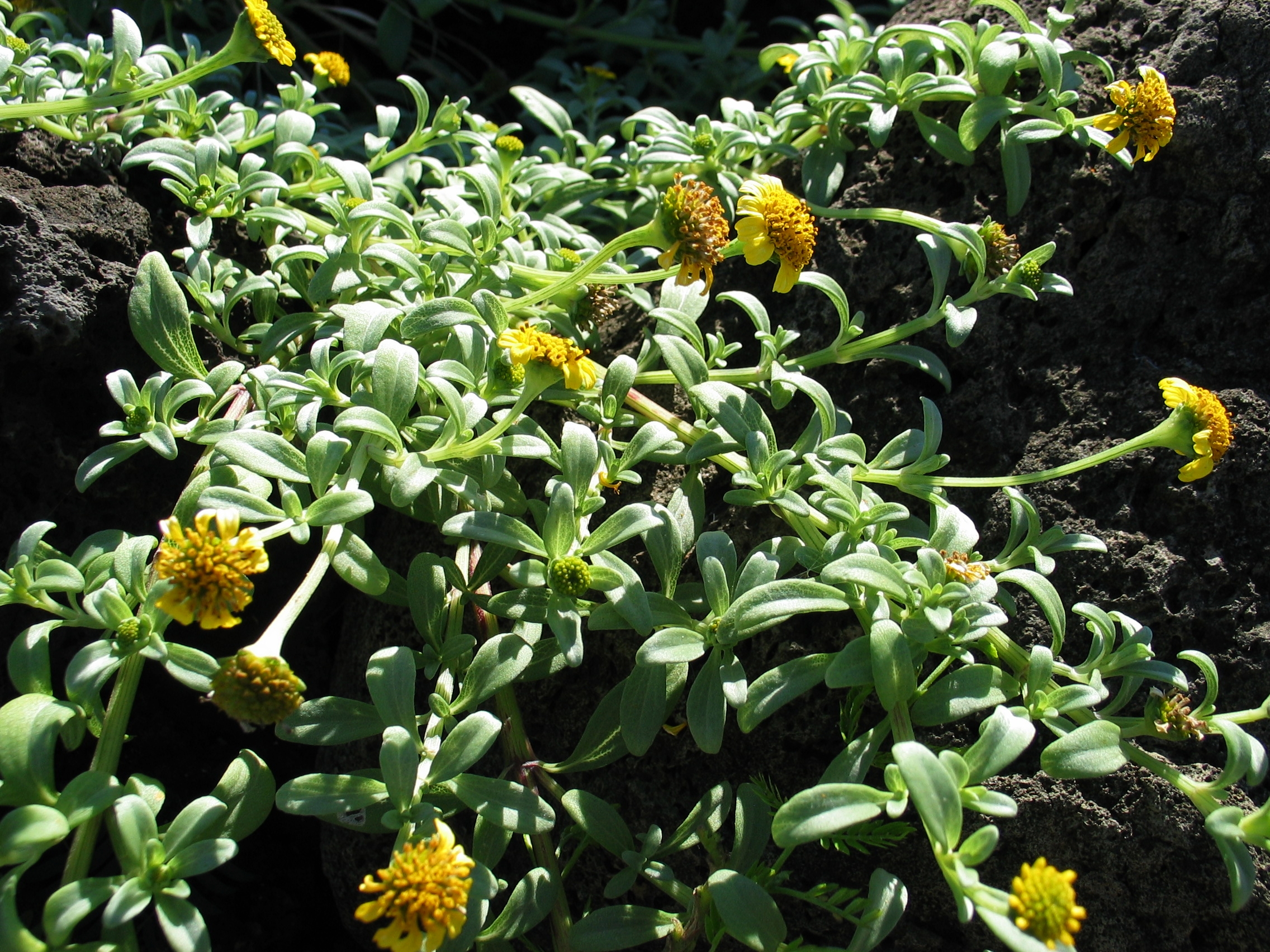
Lipochaeta integrifolia (also known as Melanthera integrifolia), commonly known as Nehe, is a small, sprawling native Hawaiian plant in the Asteraceae (daisy) family that produces a cheerful display of small, bright yellow daisy-like flowers on low-growing, mat-forming stems. Native to coastal and lowland habitats of the Hawaiian Islands, Nehe is one of several species in the genus Lipochaeta that are endemic to Hawaii — a remarkable radiation of closely related species that have evolved to fill different ecological niches across the islands’ diverse habitats.
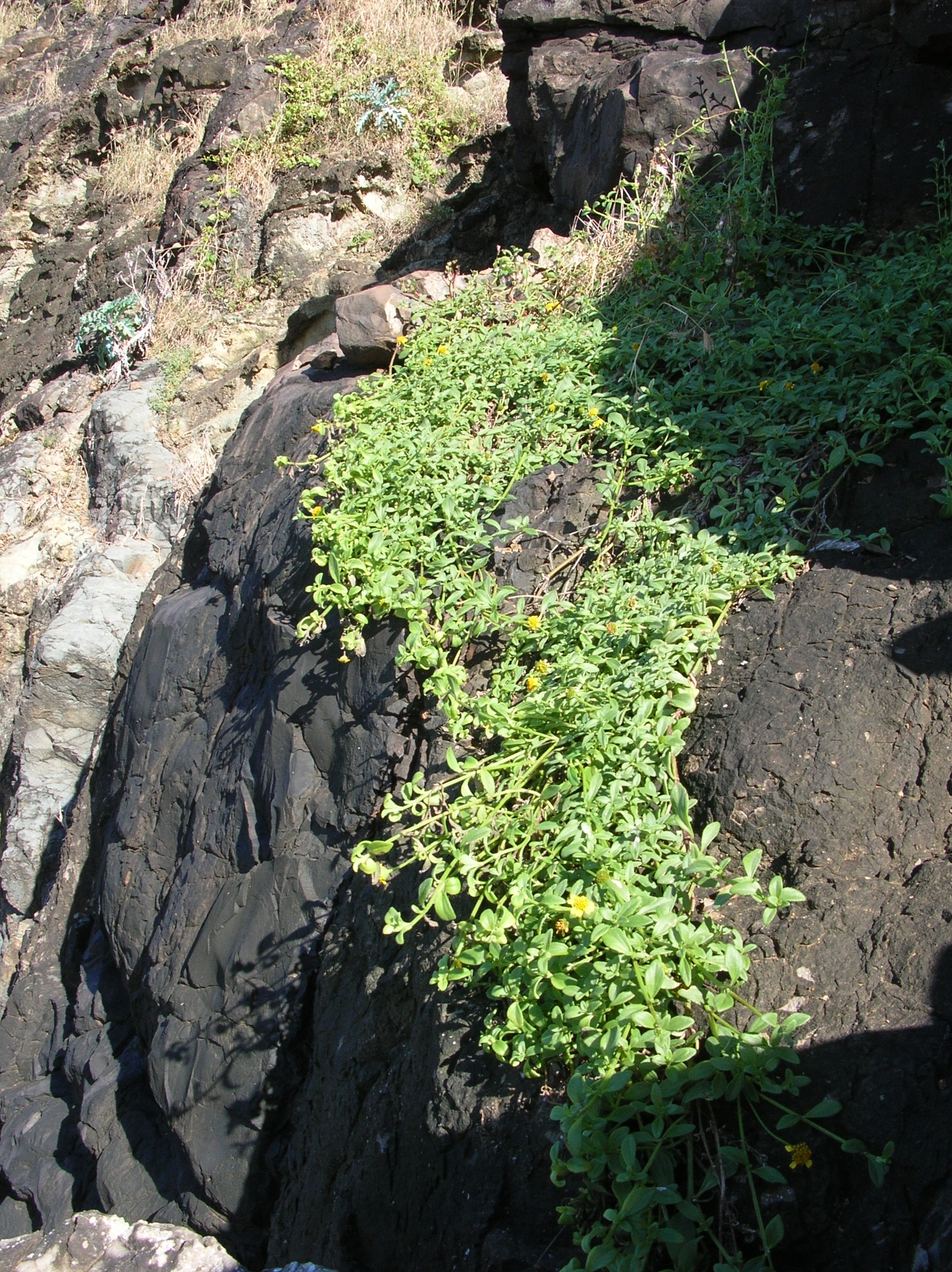
Nehe typically grows as a low, sprawling subshrub, spreading outward across the ground in open, sunny coastal areas, rocky lava fields, and dry, disturbed margins. Its cheerful yellow flowers, produced continuously throughout much of the year, brighten these often austere coastal landscapes. The plant’s tolerance of salt spray, wind, and dry rocky soils makes it an important component of Hawaiian coastal plant communities that are among the most threatened plant assemblages in the United States.
The genus Lipochaeta is fascinating from an evolutionary standpoint — it is entirely endemic to Hawaii, with all 25 or so species having evolved from a single ancestral colonist of the islands, adaptating over millions of years into a diverse array of growth forms and ecological strategies across different island habitats. Lipochaeta integrifolia represents the coastal, low-elevation adaptation of this radiation, occupying the harsh, sunny, dry coastal niche. Its conservation reflects the broader conservation story of Hawaiian endemic plants, many of which are threatened by habitat loss, invasive species, and the loss of the native ecosystem processes on which they depend.
Identification
Nehe grows as a low, spreading subshrub or herbaceous perennial, typically 1 to 2 feet tall and spreading 2 to 4 feet wide. The overall impression is of a low, mat-forming plant with numerous small yellow flowers held on short stems above the foliage. The plant has a sprawling, somewhat trailing habit that allows it to spread across open ground and cascade over rocks and edges.
Stems & Leaves
The stems are slender, somewhat woody at the base, and covered with fine hairs that give them a grayish-green color. Leaves are opposite, ovate to oblong, 1 to 2 inches long, with entire (smooth) or slightly toothed margins — the species name “integrifolia” refers specifically to the entire leaf margins that distinguish this species from others in the genus with more toothed leaves. The leaf surfaces are covered with short, stiff hairs that give them a slightly rough texture and a dull green appearance. Leaves are thick and slightly succulent, helping the plant conserve water in its dry coastal habitat.
Flowers
The flowers are small, daisy-like composites about ½ to ¾ inch (12–20 mm) across, with 8 to 13 bright yellow ray florets surrounding a central disk of smaller yellow disk florets. Individual flower heads are held on short, slender stalks above the foliage. Flowering is essentially continuous in Hawaiian conditions, with peak production in spring and summer. The flowers close in the evening and reopen in the morning. The seed is a small, dark achene with no pappus (feathery bristles) — an unusual characteristic for the daisy family, which most commonly disperses by wind using pappus-equipped seeds.
Quick Facts
| Scientific Name | Lipochaeta integrifolia (syn. Melanthera integrifolia) |
| Family | Asteraceae (Daisy / Composite) |
| Plant Type | Perennial Subshrub / Ground Cover |
| Mature Height | 1–2 ft (spreading 2–4 ft wide) |
| Sun Exposure | Full Sun |
| Water Needs | Low to Moderate |
| Bloom Time | Year-round (peak spring – summer) |
| Flower Color | Bright yellow |
| USDA Hardiness Zones | 10–12 |
Native Range
Nehe (Lipochaeta integrifolia) is endemic to the Hawaiian Islands, occurring on most of the main islands including Oahu, Maui, Molokai, and Hawaii Island. Like many Hawaiian coastal plants, it grows primarily at low elevations near the coast, typically within a few hundred feet of the shoreline and below 500 feet (150 m) elevation. It is associated with the coastal strand and lowland dry shrubland communities that are most severely impacted by development and invasive species in Hawaii.
Within its coastal habitat, Nehe grows on rocky lava benches and fields, sandy coastal areas, cliff faces, and the disturbed edges of coastal communities. It tolerates the harsh conditions of Hawaiian coastal environments — intense sun, salt spray, periodic drought, and thin, nutrient-poor soils — that filter out many less-adapted plants. It is most commonly found on the drier, leeward sides of the Hawaiian Islands, where these coastal strand communities are most extensive.
The broader genus Lipochaeta occurs throughout the Hawaiian Island chain, from the main high islands to the Northwestern Hawaiian Islands. Different species within the genus occupy different habitats — from coastal lowlands to high-elevation bogs — but all are endemic to Hawaii and represent one of the most fascinating examples of plant evolution and diversification in the world. L. integrifolia is the coastal representative of this genus and is one of the more widely distributed and frequently encountered Nehe species in coastal Hawaiian habitats.
📋 Regional plant lists featuring Nehe: Hawaii
Growing & Care Guide
Nehe is an excellent low-maintenance native ground cover for Hawaiian coastal gardens, sunny slopes, and rock gardens. Its cheerful, continuous yellow flowers and low, spreading habit make it both attractive and ecologically valuable, while its drought-tolerance and salt resistance make it easy to grow in challenging coastal conditions.
Light
Nehe requires full sun — it grows naturally in the most exposed, sun-drenched coastal habitats in Hawaii and will not perform well in shade. Choose the sunniest spot in your garden. Insufficient light results in sparse growth, reduced flowering, and a more open, leggy habit.
Soil & Water
Nehe thrives in well-drained, even poor and rocky soils — conditions typical of Hawaiian coastal lava fields. It is highly drought-tolerant once established and requires very little supplemental irrigation in coastal Hawaiian gardens. In hotter, inland settings, occasional deep watering during dry spells will help maintain the plant’s appearance and flowering. Avoid heavy or waterlogged soils entirely — excellent drainage is essential for this species. Salt spray is well-tolerated.
Planting Tips
Plant Nehe in spring or early summer. Container plants from Hawaiian native plant nurseries are the appropriate source — do not collect wild plants. Space plants 24 to 36 inches apart for a ground cover planting — they will spread over time to fill the space. Minimal soil amendment is needed; a little compost mixed into the planting hole is sufficient. Mulching lightly between plants helps control weeds while the Nehe spreads to cover the area. Water regularly for the first 3 to 6 months until established.
Pruning & Maintenance
Nehe benefits from occasional light trimming to maintain a compact, bushy form and encourage repeat flowering. Cut back the sprawling stems by one-third after major flowering flushes, which stimulates fresh new growth and additional flower production. The plant is generally pest- and disease-resistant in appropriate conditions. Remove any dead or yellowing stems as needed.
Landscape Uses
- Native ground cover for sunny slopes, coastal gardens, and rock gardens
- Coastal erosion control on exposed, sunny slopes and embankments
- Pollinator garden — continuous flowers for native bees and butterflies
- Xeriscape planting in dry, sunny Hawaiian conditions
- Rock garden accent — spreads beautifully among and over rocks
- Border edging along sunny pathways and driveways
Wildlife & Ecological Value
Nehe’s continuous flowering makes it one of the most valuable native plants for Hawaiian pollinators, particularly in coastal habitats where native flowering plants have been severely reduced.
For Pollinators
Nehe’s daisy-like flowers are a rich source of both nectar and pollen, and are actively visited by native Hawaiian yellow-faced bees (Hylaeus species) — the Islands’ endemic pollinators that are federally listed as threatened. The plant’s extended blooming season (essentially year-round in warm coastal Hawaiian conditions) means it provides pollinator resources throughout the year, which is particularly important given the declining availability of native flowering plants in coastal Hawaiian habitats. Introduced honeybees and various butterfly species also visit the flowers.
For Birds
While Nehe’s small seeds are not a major bird food source, the dense ground cover created by sprawling Nehe plants provides nesting and foraging habitat for ground-associated birds. The small insects and invertebrates attracted to the flowers form an important food source for insectivorous native Hawaiian birds including the Hawaii ‘Elepaio and other small endemic birds that forage in low vegetation.
Ecosystem Role
As a low-growing coastal ground cover, Nehe plays an important role in stabilizing thin coastal soils and reducing erosion. Its spreading growth habit helps suppress invasive weeds in coastal areas, and its organic matter contributions build soil quality over time. In restoration planting contexts, Nehe is particularly useful as an early-establishing native ground cover that can outcompete invasive grasses and forbs in full-sun coastal areas, creating favorable conditions for other native plants to establish alongside it.
Cultural & Historical Uses
The Nehe plants (members of the genus Lipochaeta) held a place in traditional Hawaiian plant knowledge, though they were not among the most prominently featured plants in major cultural practices. The name “Nehe” is applied to several related species within this endemic Hawaiian genus, and traditional knowledge recognized the diversity of Nehe types growing in different habitats across the islands. Hawaiian plant practitioners (kahuna lā’au lapa’au) were well versed in distinguishing between species that modern botanists classify as separate, and would have recognized the coastal Nehe (L. integrifolia) as distinct from wetland and upland Nehe species.
Various Nehe species were used in traditional Hawaiian medicine, primarily in preparations for treating skin conditions, as the plant contains compounds with antimicrobial properties. The leaves of coastal Nehe species were also used in poultices for minor wounds and skin irritations. Like many coastal Hawaiian plants, Nehe was part of the broader traditional knowledge system that recognized the therapeutic properties of native plants growing in different ecological zones — coastal, lowland, and upland species were recognized as having different medicinal properties that complemented each other in compound herbal preparations.
Today, Nehe is valued primarily as part of coastal native plant restoration efforts in Hawaii. The loss of coastal strand plant communities — which once extended along hundreds of miles of Hawaiian shoreline — has severely reduced the habitat available for coastal specialist species like Nehe. Restoration projects led by organizations such as the Nature Conservancy of Hawaii, the National Tropical Botanical Garden, and various state and county agencies use Nehe as part of coastal restoration palettes, recognizing it as a resilient, fast-establishing native plant that can help reclaim degraded coastal areas for native biodiversity.
Frequently Asked Questions
What is the difference between Nehe and other yellow-flowered Hawaiian native plants?
Several native Hawaiian plants produce yellow flowers in coastal habitats. Nehe (Lipochaeta integrifolia) is distinguished by its small daisy-like composite flowers, entire (unlobed) leaves, and low sprawling growth habit. ‘Ilima (Sida fallax) has similar yellow flowers but with five distinctly separate petals (not daisy-like composites) and a more upright growth form. Puakala (Argemone glauca) has much larger yellow flowers with a different leaf form. Once you’ve seen Nehe in bloom, its distinctive daisy-flower clusters are easy to recognize.
How quickly does Nehe spread?
In full sun with adequate moisture and good drainage, Nehe spreads at a moderate rate — typically expanding 12 to 18 inches per year from the planting point. It will fill in a ground cover area within 2 to 3 years from planting at appropriate spacing. In drier conditions, spread is slower; in more mesic conditions, it spreads more quickly.
Can Nehe be grown in containers?
Yes, Nehe grows well in containers with good drainage. Use a well-draining potting mix and a container with drainage holes. Hanging baskets work beautifully, allowing the sprawling stems to cascade over the edges. Container plants need more frequent watering than in-ground plants but still require the soil to dry slightly between waterings.
Is Nehe the same as the Nehe found in the mountains?
No — several species of Lipochaeta are called Nehe in Hawaiian, and they occupy different habitats. Lipochaeta integrifolia (also known as Melanthera integrifolia) is the coastal species. Other Nehe species grow in upland, mesic, and bog habitats and are different plants, though they share the common name. When purchasing Nehe for coastal garden restoration, ensure you have the correct species for your habitat.
How do I start Nehe from seed?
Nehe seeds can be sown directly on the soil surface of moist, well-draining seed-starting mix, as they need light to germinate. Keep the medium consistently moist but not waterlogged, and provide full sun or bright light. Germination occurs within 1 to 3 weeks. Stem cuttings are also an effective propagation method — 4-inch softwood cuttings root readily in moist propagation medium in a warm, bright location.

Looking for a nursery that carries Nehe?
Browse our native plant nursery directory: Hawaii