Pacific Pea (Lathyrus vestitus)
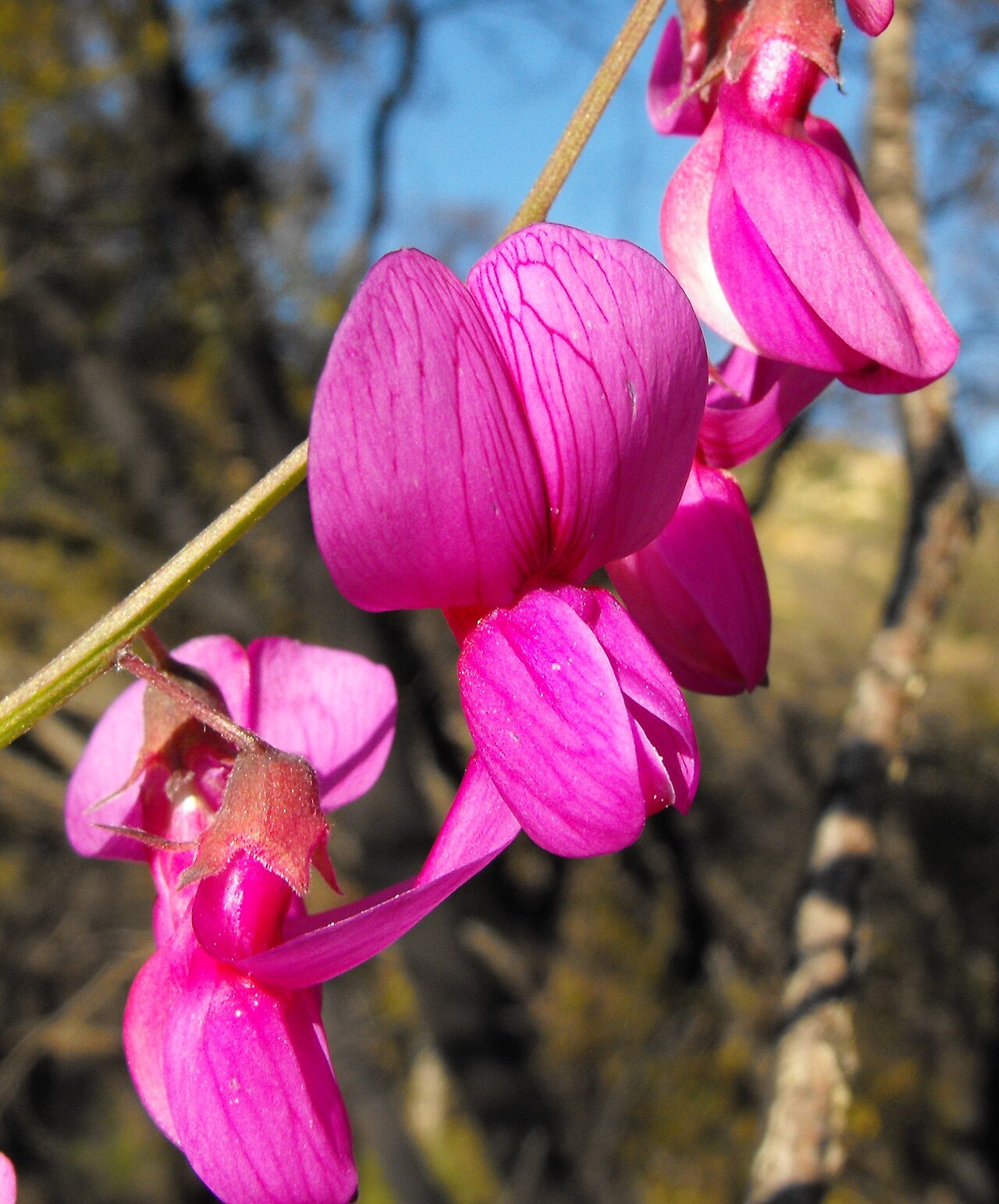
Lathyrus vestitus, known as Pacific pea or Pacific peavine, is a scrambling, tendril-climbing perennial vine native to the woodlands and chaparral edges of California, with its range extending into southwestern Oregon. A member of the legume family (Fabaceae), it produces clusters of vivid pea-shaped flowers — ranging from pale lavender-pink to deep magenta depending on the subspecies and population — that light up shaded woodland understories and brushy slopes each spring.
Pacific pea grows from a woody, perennial base, sending up slender, climbing stems each season that use branched tendrils to scramble over shrubs, grasses, and brush rather than twining tightly like a true vine. The compound leaves, divided into several pairs of narrow, pointed leaflets, give the plant a delicate, ferny texture even before it flowers. In the wild it is most often found draped loosely over Ceanothus, manzanita, or oak understory shrubs, using its neighbors for support while contributing its own burst of spring color.
Because it tolerates the dry-summer, wet-winter rhythm of California’s Mediterranean climate and asks for almost nothing once established, Pacific pea is a useful and underused choice for native gardens that want informal, climbing structure without the aggressiveness of non-native vines. It is especially effective scrambling through open shrub borders or along split-rail fencing in dappled shade.
Identification
Pacific pea is a herbaceous-stemmed perennial vine that dies back to a woody rootstock in summer dormancy in some populations, while persisting longer in cooler, moister sites. Climbing stems typically reach 2 to 6 feet, occasionally more when well supported, and the whole plant has a lax, sprawling habit rather than a self-supporting one.
Stems
Stems are slender, angled or winged, and climb by means of branched tendrils at the tips of the compound leaves. They are typically smooth to lightly hairy and green to reddish, dying back to the perennial base after seed set in drier sites.
Leaves
Leaves are pinnately compound, with 4 to 8 pairs of narrow, lance-shaped to elliptic leaflets 1 to 2 inches long, each leaf ending in a branched, coiling tendril used for climbing. The leaflets are gray-green to dull green and give the foliage a feathery, refined look distinct from weedier non-native vetches.
Flowers
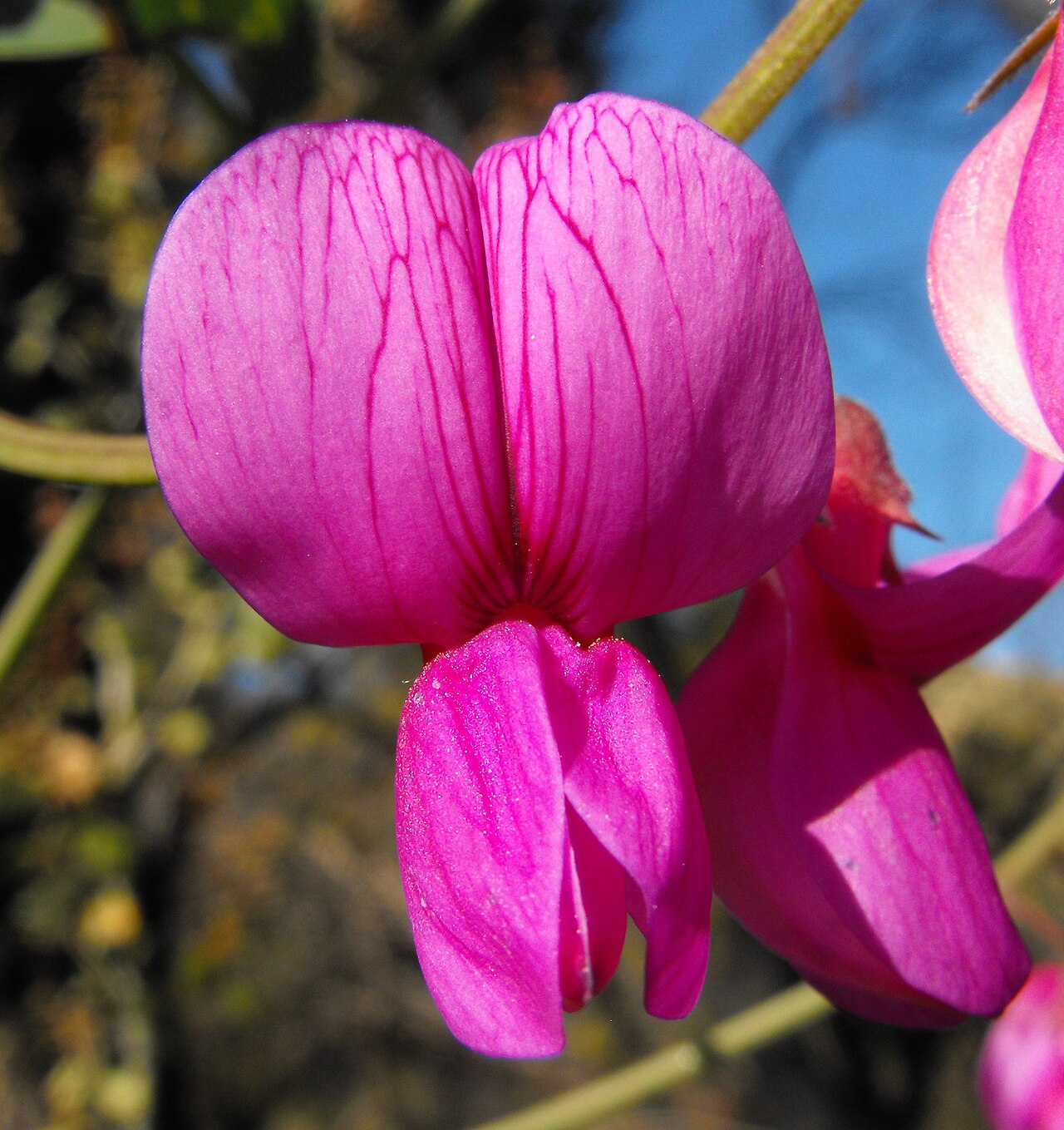
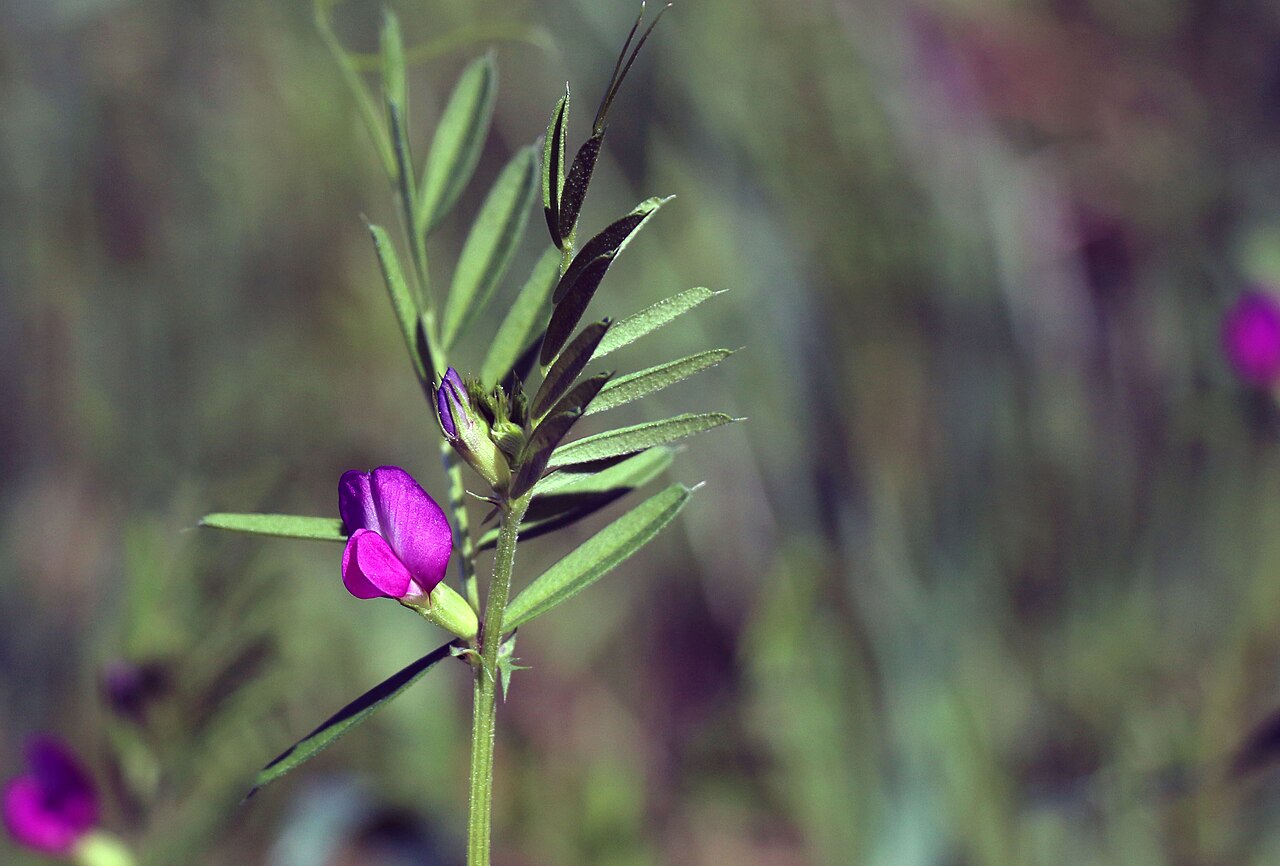
Flowers are classic pea-shaped blooms, ¾ to 1 inch long, with a broad upright banner petal, two side wing petals, and a curved keel, held in loose clusters of 4 to 10 on stalks rising above the foliage. Color ranges from soft lavender-pink in some populations to the vivid magenta-purple typical of coastal and southern California forms, often aging to bluer tones. Bloom runs from March through June depending on elevation and latitude.
Fruit & Seeds
The fruit is a flattened, elongated pea pod (legume) 1½ to 2½ inches long, green ripening to brown, splitting open to release several rounded seeds. Pods are typically smooth or finely hairy and hang from the spent flower clusters through early summer.
Quick Facts
| Scientific Name | Lathyrus vestitus |
| Family | Fabaceae (Pea/Legume) |
| Plant Type | Perennial Climbing Vine |
| Mature Height | 2–6 ft (climbing/sprawling) |
| Mature Spread | 3–5 ft |
| Growth Rate | Moderate to Fast |
| Sun Exposure | Part Shade to Full Sun |
| Water Needs | Low to Moderate |
| Soil Type | Well-drained loam or clay-loam |
| Soil pH | 6.0–7.5 (neutral) |
| Bloom Time | March – June |
| Flower Color | Lavender-pink to magenta-purple |
| Fall Color | None (dies back to roots) |
| Fruit | Flattened brown seed pod (legume) |
| Deer Resistant | No (browsed by deer) |
| USDA Hardiness Zones | 7–10 |
Native Range
Pacific pea is native to California, where county-level records document it from the north Coast Ranges and Klamath region south through the Central Coast, Sierra Nevada foothills, Transverse and Peninsular Ranges to San Diego County. Its range extends north into southwestern Oregon, where it occurs west of the Cascade crest, and south into northern Baja California, Mexico.
Within this range it grows chiefly in open woodlands, oak and mixed-evergreen forest edges, chaparral, and brushy slopes, from near sea level to roughly 5,000 feet elevation. It favors the dappled light of woodland margins and the partial cover offered by shrub associates, which also give it something to climb.
Pacific pea is a variable species, with several recognized subspecies and varieties (including var. alefeldii, sometimes called San Diego pea) differing in flower color and leaflet shape across its range from the Klamath Mountains to the Peninsular Ranges. It remains common and widespread within suitable habitat and is not considered rare, though like many understory natives it can be crowded out where chaparral is converted to annual grassland or development.
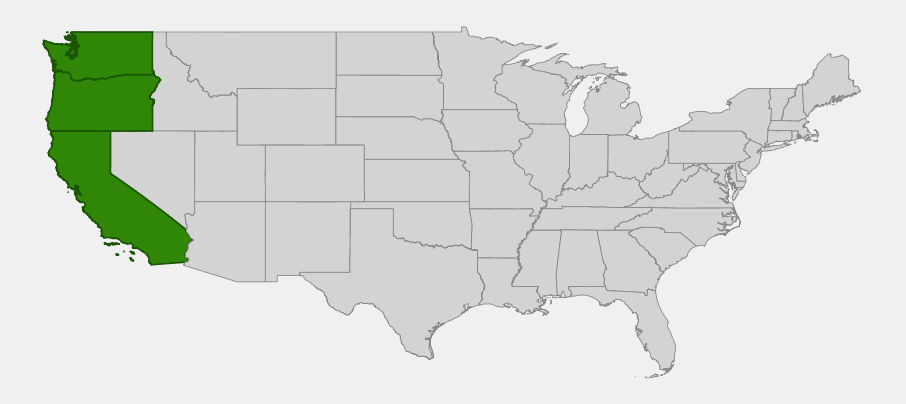
📋 Regional plant lists featuring Pacific Pea: California & Nevada, Western Oregon & Western Washington
Growing & Care Guide
Pacific pea is an easygoing climber for native gardens that mimic its natural woodland-edge and chaparral habitat. It asks for support to scramble on, a bit of shade from harsh afternoon sun inland, and very little else once its roots are established.
Light
Part shade to dappled sun suits Pacific pea best, especially in hot interior gardens, though it tolerates full sun along the cooler coast. In deep shade it will grow but flower sparsely; some sun is needed for a good bloom display.
Soil & Water
Well-drained loam or clay-loam soils are ideal. Established plants are drought-tolerant and need little to no summer water in coastal California gardens, following the natural wet-winter, dry-summer rainfall pattern. Occasional deep watering during extended dry spells keeps foliage fresher but is not required for survival.
Planting Tips
Plant from containers in fall so roots establish with winter rains. Site it near a shrub, trellis, low fence, or arbor it can climb through — Pacific pea does not cling tightly like a tendrilled vine with adhesive pads, so it benefits from an open, twiggy structure rather than a smooth surface. Space plants 2 to 3 feet from their support.
Pruning & Maintenance
Cut back spent top growth after it dies down in summer in drier gardens; the perennial rootstock will resprout with fall rains. In milder, moister coastal gardens where it stays semi-evergreen, light tidying after bloom is usually enough. The plant needs no fertilizer and is rarely bothered by pests.
Propagation
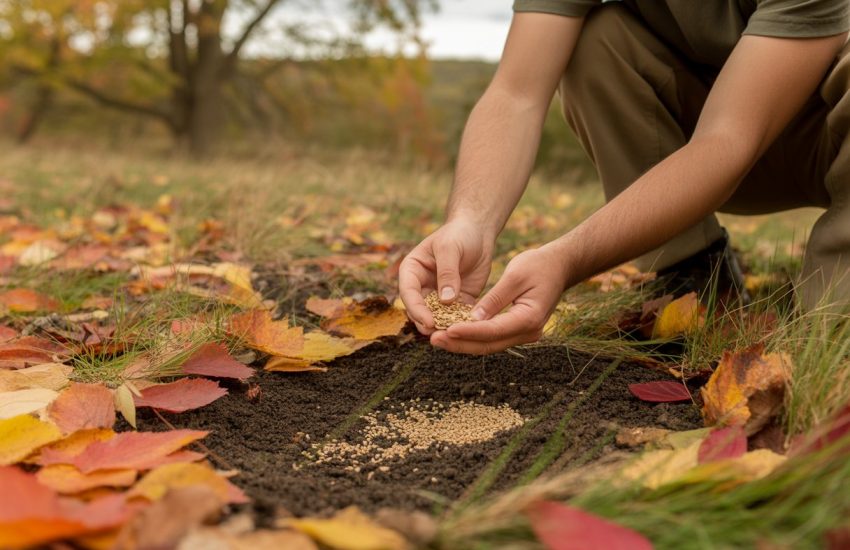
Propagate from seed, scarified lightly and soaked before sowing in fall, or by dividing established rootstocks in the dormant season. Fresh seed germinates most reliably.
Landscape Uses
Pacific pea fits naturally into several native-garden roles:
- Informal climbing accent on split-rail fences, arbors, or shrub borders
- Woodland-edge gardens threading through oaks and Ceanothus
- Chaparral restoration plantings and habitat gardens
- Pollinator gardens for native bees and butterflies
- Dry-shade groundcover sprawling loosely among other natives
Wildlife & Ecological Value
As one of California’s showier native legumes, Pacific pea supports a range of pollinators and contributes nitrogen-fixing benefits typical of pea-family plants to the woodland soils it grows in.
For Pollinators
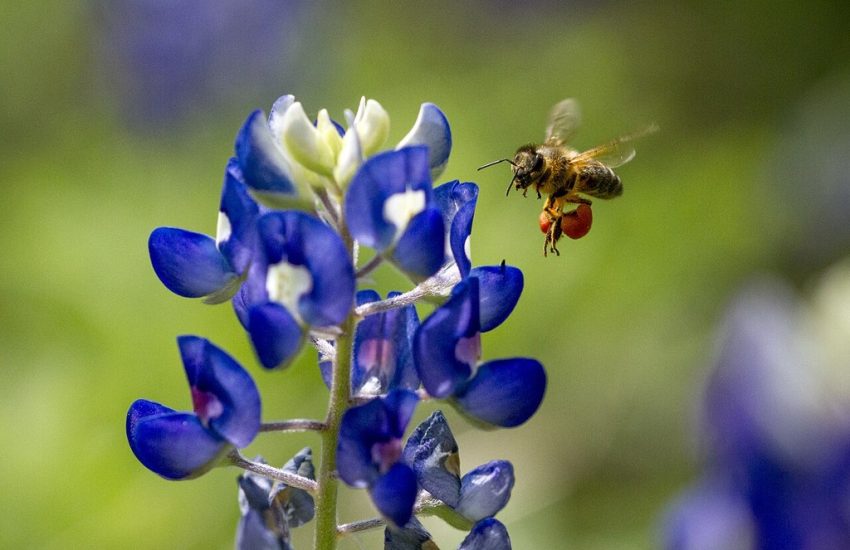
The flowers are visited and effectively pollinated by native bumblebees and other large-bodied bees capable of tripping the keel-shaped bloom, as well as occasional butterflies. The spring bloom timing provides an important nectar source in woodland understories before many summer-blooming natives are active.
For Birds
Seed-eating birds forage on the ripened pods in early summer, and the tangled climbing growth offers cover for small birds moving through shrub understories.
For Mammals
Deer and other browsers eat the foliage and stems, which can limit the plant’s spread in areas with heavy deer pressure; this palatability also makes it a minor forage component in oak-woodland ecosystems.
Ecosystem Role
Like other legumes, Pacific pea hosts nitrogen-fixing bacteria in its root nodules, contributing a small but real nutrient benefit to the chaparral and oak-woodland soils it inhabits. Its climbing habit also adds structural complexity to shrub understories, creating additional cover and foraging surface for insects and small wildlife.
Cultural & Historical Uses
Pacific pea does not have a prominent documented history of use among California’s Indigenous peoples comparable to food or fiber staples, but as a conspicuous spring-blooming understory plant in oak woodlands and chaparral, it would have been a familiar part of the seasonal landscape to tribes throughout its range, including Chumash, Kumeyaay, and Miwok communities whose territories overlap its distribution.
In more recent horticultural history, Pacific pea and its varieties have been noted by California botanists and native-plant enthusiasts for their striking flower color, with the San Diego-area variety alefeldii sometimes singled out for its particularly vivid magenta blooms. It remains more a plant of botanical and ecological interest than a widely cultivated ornamental, though native-plant gardeners increasingly seek it out as an alternative to non-native climbing vetches.
The genus name Lathyrus comes from the ancient Greek name for a type of pea or pulse, while vestitus is Latin for “clothed” or “covered,” likely referring to the fine hairs found on stems and pods in some forms of the species.
Frequently Asked Questions
Is Pacific pea edible like garden peas?
No. Pacific pea is a wild relative of cultivated peas grown strictly as an ornamental and habitat plant; like many wild Lathyrus species, it is not grown or recommended for food, and some relatives in the genus are known to be toxic if consumed in quantity. Enjoy it for its flowers, not its pods.
Does Pacific pea need a trellis?
It benefits from something to climb on — a shrub, split-rail fence, or loose trellis — since it climbs by tendrils rather than twining tightly or clinging with adhesive pads. Without support it will sprawl attractively along the ground instead.
Why do the flower colors vary so much in photos?
Pacific pea is a variable species with several subspecies across its range, from pale lavender-pink forms in the north to the vivid magenta-purple typical of southern California and San Diego-area populations (sometimes called San Diego pea).
Is Pacific pea deer-resistant?
No — deer readily browse the foliage and stems, which can limit its presence in gardens with high deer pressure. Protective caging may be needed while plants establish in deer-heavy areas.
Does Pacific pea go dormant in summer?
In drier interior and southern California gardens, top growth often dies back after seed set in early summer, resprouting from the perennial rootstock with fall rains. In cooler, moister coastal gardens it may stay semi-evergreen longer.

Looking for a nursery that carries Pacific Pea?
Browse our native plant nursery directory: California · Oregon