
Pink Azalea (Rhododendron periclymenoides)
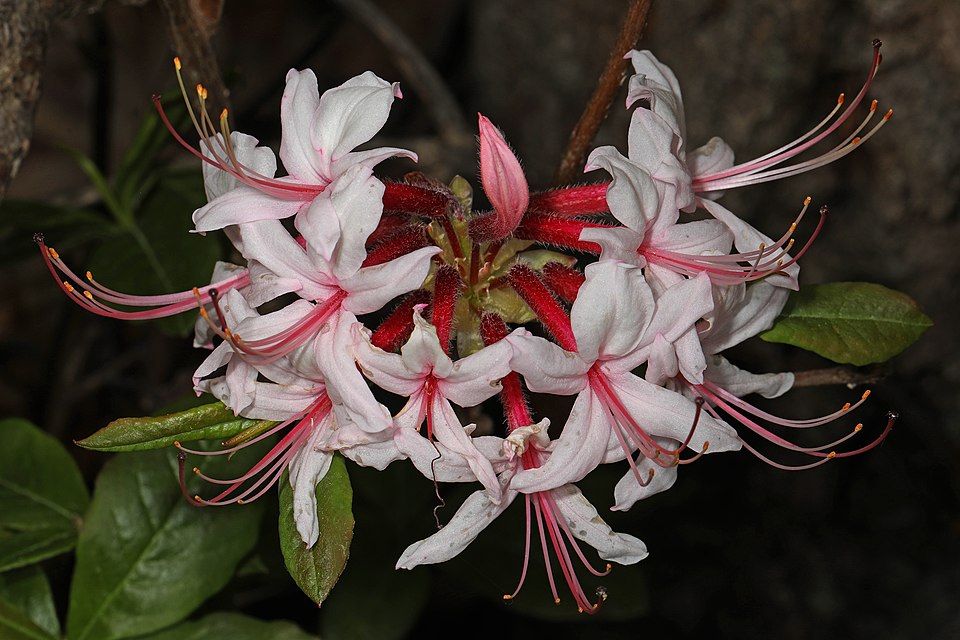
Rhododendron periclymenoides, commonly known as Pink Azalea, Pinxter-flower, or Wild Azalea, is a beautiful native deciduous shrub that heralds the arrival of spring throughout much of the eastern United States. This member of the Ericaceae (heath) family is renowned for its spectacular early spring display of fragrant, tubular flowers that appear before the leaves unfurl, creating a stunning show of pink, white, or occasionally lavender blooms against bare branches.
Native to acidic soils and woodland edges from New Hampshire south to South Carolina and west to Tennessee and Ohio, Pink Azalea typically grows 4 to 10 feet tall in an open, irregularly branched form. The species is particularly valued for its adaptability to a range of light conditions and its exceptional wildlife value — the flowers provide crucial early nectar for emerging pollinators, while the plant serves as a host for several butterfly species including the beautiful Azalea Sphinx Moth.
Beyond its ecological importance, Pink Azalea offers gardeners a truly native alternative to non-native azaleas, bringing the same spectacular spring color but with far greater environmental benefits. Its drought tolerance once established, resistance to most pests and diseases, and ability to thrive in the dappled light of woodland gardens make it an outstanding choice for naturalistic landscapes, native plant gardens, and restoration projects throughout its range.
Identification
Pink Azalea is a deciduous shrub that typically grows 4 to 10 feet tall and equally wide, with an open, irregular branching pattern that gives it a naturalistic, woodland appearance. The plant often develops multiple stems from the base and may form colonies through root suckers in favorable conditions. Young plants tend to be more compact, while mature specimens develop a graceful, open structure.
Stems & Bark
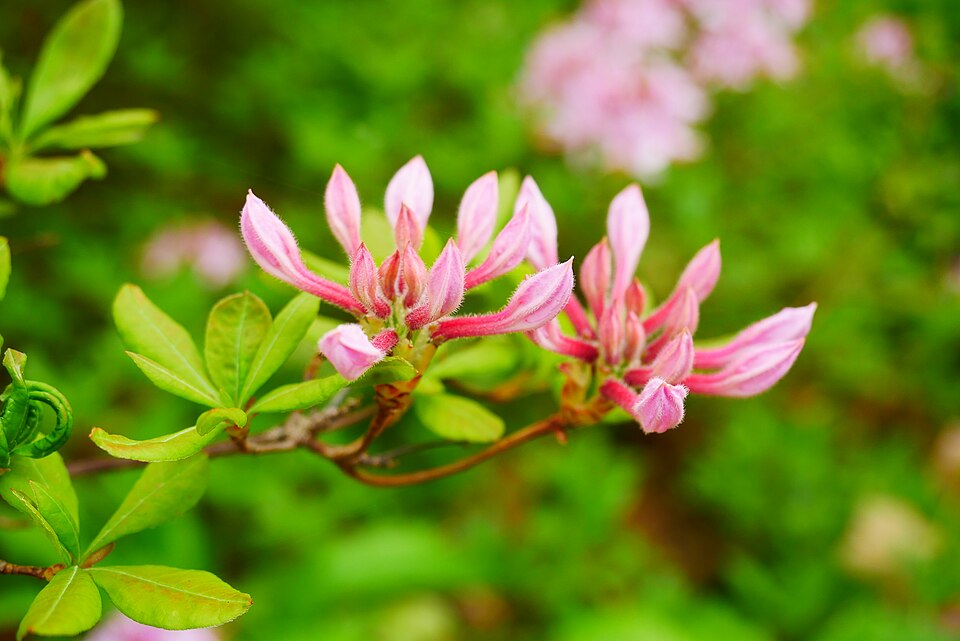
The branches are slender and somewhat brittle, with smooth gray-brown bark that may become slightly furrowed with age. Young twigs are often reddish-brown and may have fine hairs. The wood is hard but brittle, and the plant bleeds a clear, sticky sap when cut. Winter buds are small, pointed, and covered with overlapping scales.
Leaves
The leaves are simple, alternate, and deciduous, appearing after the flowers in late spring. They are elliptical to obovate, 2 to 4 inches long and 1 to 2 inches wide, with entire margins and a prominent midrib. The upper surface is medium green and may be slightly glossy, while the underside is paler and often has fine hairs along the veins. The leaves are arranged in clusters near the ends of branches, creating a somewhat whorled appearance. Fall color is typically yellow to orange-red.
Flowers
The flowers are the plant’s most distinctive and attractive feature. They appear in clusters of 2 to 6 at the ends of branches in early to mid-spring, before or just as the leaves begin to emerge. Each flower is tubular, 1 to 2 inches long, with five spreading petals that may be pink, white, or occasionally lavender. The flowers have five long, prominent stamens that extend well beyond the petals, and a single long pistil. The blooms are fragrant, especially in the evening, and the fragrance is sweet and slightly spicy.
Fruit
The fruit is a dry, woody capsule about ½ inch long that splits open in fall to release numerous small, lightweight seeds. The capsules are not particularly ornamental but may persist into winter. Seeds are dispersed by wind and may germinate readily in suitable conditions.
Quick Facts
| Scientific Name | Rhododendron periclymenoides |
| Family | Ericaceae (Heath) |
| Plant Type | Deciduous Shrub |
| Mature Height | 6–10 ft |
| Sun Exposure | Full Sun to Part Shade |
| Water Needs | Moderate |
| Bloom Time | April – May |
| Flower Color | Pink, white, occasionally lavender |
| USDA Hardiness Zones | 4–8 |
Native Range
Pink Azalea has a native distribution that extends across much of the eastern United States, from southern New Hampshire and southern Maine south to South Carolina and northern Georgia, and west to southern Ohio, eastern Kentucky, and eastern Tennessee. This range encompasses a variety of forest types and climatic conditions, reflecting the species’ considerable adaptability.
Throughout its range, Pink Azalea is most commonly found in acidic, well-drained soils in open woodlands, forest edges, and clearings. It shows a particular affinity for oak-pine forests, mixed hardwood forests, and areas that have experienced some degree of disturbance that creates openings in the canopy. The species often grows in association with other acid-loving plants such as mountain laurel, blueberries, and other native azaleas.
In the southern portion of its range, including North Carolina and South Carolina, Pink Azalea is most abundant in the Piedmont and mountain regions, where it can be found growing naturally in oak-hickory forests, pine-oak woodlands, and along woodland edges and roadsides. It tends to be less common in the Coastal Plain, where soil conditions and climate may be less favorable.
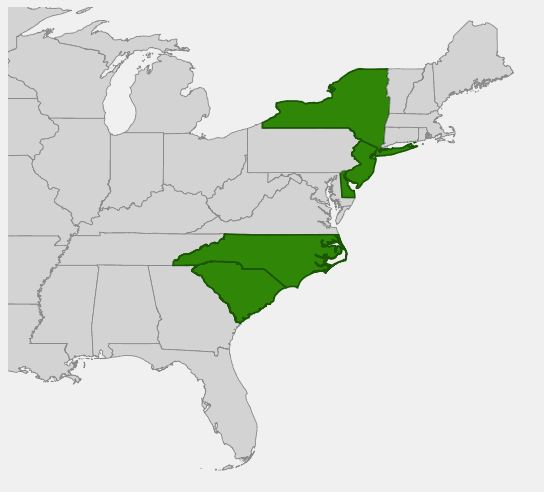
📋 Regional plant lists featuring Pink Azalea: North Carolina & South Carolina
Growing & Care Guide
Pink Azalea is surprisingly adaptable and easier to grow than many people assume, especially when compared to non-native azaleas. Once established, it’s quite drought-tolerant and generally trouble-free, making it an excellent choice for naturalistic gardens and low-maintenance landscapes.
Light
Pink Azalea performs well in a range of light conditions, from full sun to partial shade. In its natural habitat, it’s often found in dappled sunlight at woodland edges or in clearings. Full sun produces the most abundant flowering, but the plant appreciates some afternoon shade in hot southern climates. Too much shade results in fewer flowers and a more open growth habit, though the plant remains healthy.
Soil & Water
This species requires acidic, well-drained soil with a pH between 4.5 and 6.0. It performs best in sandy or loamy soils rich in organic matter but can adapt to clay soils if drainage is adequate. Avoid alkaline soils and areas with standing water. Pink Azalea shows good drought tolerance once established, typically after the second growing season, but benefits from consistent moisture during dry spells, especially during bud formation in summer.
Planting Tips
Plant in fall or early spring using container-grown or balled-and-burlapped specimens. Choose a site with morning sun and some afternoon shade for best results. Plant at the same depth as in the container and backfill with native soil — avoid soil amendments unless your soil is extremely poor. Mulch with 2–3 inches of organic matter such as pine needles, shredded oak leaves, or bark chips to retain moisture and maintain soil acidity.
Pruning & Maintenance
Pink Azalea requires minimal pruning. Remove dead, damaged, or crossing branches immediately after flowering to avoid removing next year’s flower buds, which form in summer. The plant naturally develops an attractive, open form, so structural pruning is rarely needed. Avoid heavy fertilization, as this can promote excessive vegetative growth at the expense of flowering. Light applications of acid-forming fertilizer in early spring may benefit plants in poor soils.
Landscape Uses
Pink Azalea’s versatility makes it valuable in many garden situations:
- Woodland gardens and naturalized forest edges
- Native plant gardens for early spring color
- Wildlife gardens — excellent for early pollinators
- Slopes and banks for erosion control
- Mixed shrub borders for seasonal interest
- Rain gardens in well-drained areas
- Restoration projects in disturbed woodland areas
Wildlife & Ecological Value
Pink Azalea provides exceptional ecological value, particularly as an early-season nectar source and as a host plant for several specialized moth and butterfly species.
For Birds
While the nectar-rich flowers attract hummingbirds, the plant’s primary value for birds comes through its support of insect populations. The leaves serve as host plants for several moth species, and the resulting caterpillars provide protein-rich food for nesting songbirds. The dense, twiggy growth habit provides nesting sites for small birds, particularly when planted in groups or mixed with other native shrubs.
For Mammals
White-tailed deer occasionally browse the foliage, though Pink Azalea is not a preferred food source and shows good recovery from moderate browsing. Small mammals may use the dense growth for cover, particularly when the plants are established in naturalistic groupings. The early flowering provides an important nectar source for emerging bats in some regions.
For Pollinators
This is where Pink Azalea truly excels. The flowers bloom at a critical time when few other nectar sources are available, making them exceptionally valuable for early-emerging native bees, including bumblebees, mason bees, and various solitary bee species. The tubular flowers are particularly attractive to butterflies and moths with longer proboscises, and the plant serves as a host for the Azalea Sphinx Moth (Darapsa choerilus) and several other sphinx moth species. Hummingbirds also visit the flowers, though they may need to work harder to access nectar than with some other flowers.
Ecosystem Role
As one of the earliest blooming woody plants in many forest ecosystems, Pink Azalea plays a crucial role in supporting pollinator populations as they emerge from winter dormancy. The plant often colonizes disturbed areas and forest edges, helping to stabilize soil and provide stepping-stone habitat for forest species. Its ability to thrive in acidic soils makes it an important component of pine and oak forest understory communities.
Cultural & Historical Uses
Pink Azalea has a rich history of use and appreciation by both Indigenous peoples and European settlers. Native American tribes throughout the plant’s range recognized both its beauty and its potential dangers — like all members of the Rhododendron genus, Pink Azalea contains grayanotoxins that can be poisonous if consumed. The Cherokee and other southeastern tribes used small amounts of the plant medicinally, but always with great caution due to its toxicity.
Early European colonists were enchanted by the spectacular spring displays of native azaleas, and many writings from the colonial period describe the beauty of “wild honeysuckle” (as they often called it) blooming in the forests. The famous botanist William Bartram wrote extensively about encountering Pink Azalea during his travels through the American Southeast in the 1770s, describing vast natural stands that created breathtaking displays.
The common name “Pinxter-flower” comes from the Dutch word “Pinkster,” referring to Pentecost or Whitsunday, when the flowers typically bloom in the Mid-Atlantic region. This name reflects the plant’s importance to early Dutch settlers in New York and New Jersey, who used the blooming time as a seasonal marker and celebrated its beauty in their new homeland.
During the 19th and early 20th centuries, Pink Azalea was sometimes collected from the wild for cultivation in gardens, though it proved more challenging to grow than many of the non-native azaleas being introduced from Asia. This led to a decline in its garden use, but also helped preserve wild populations that might otherwise have been over-collected.
In modern times, Pink Azalea has experienced renewed appreciation as part of the native plant gardening movement. Gardeners and landscapers increasingly recognize its value as a truly native alternative to non-native azaleas, offering comparable beauty with far greater ecological benefits and better adaptation to local conditions.
Frequently Asked Questions
Is Pink Azalea the same as the azaleas I see in most gardens?
No — most garden azaleas are non-native species from Asia (like Rhododendron japonicum or various evergreen azaleas). Pink Azalea is a native North American species that offers similar beauty but with much greater ecological value and better adaptation to local conditions.
Are the flowers always pink?
No — despite the common name, flower color varies from white to deep pink, with some plants producing lavender or nearly red flowers. Even individual plants may vary in color from year to year depending on weather conditions and soil chemistry.
Is this plant poisonous?
Yes — like all rhododendrons, Pink Azalea contains grayanotoxins that are poisonous to humans and animals if consumed. However, the plant poses little risk in normal landscape use, as the toxins are not released unless plant parts are eaten. Keep away from children and pets who might chew on the leaves or flowers.
Why doesn’t my Pink Azalea flower well?
Poor flowering is usually due to too much shade, alkaline soil, or pruning at the wrong time (flower buds form in summer for next year’s display). Ensure the plant gets morning sun, maintain acidic soil, and only prune immediately after flowering if necessary.
Can I grow this if I don’t have acidic soil?
Pink Azalea really requires acidic soil to thrive. If your soil is alkaline, you can amend it with sulfur or organic matter like pine needles, but this requires ongoing maintenance. It may be better to choose other native plants better suited to your soil conditions.

Looking for a nursery that carries Pink Azalea?
Browse our native plant nursery directory: North Carolina · South Carolina