
Prairie Cordgrass (Spartina pectinata)
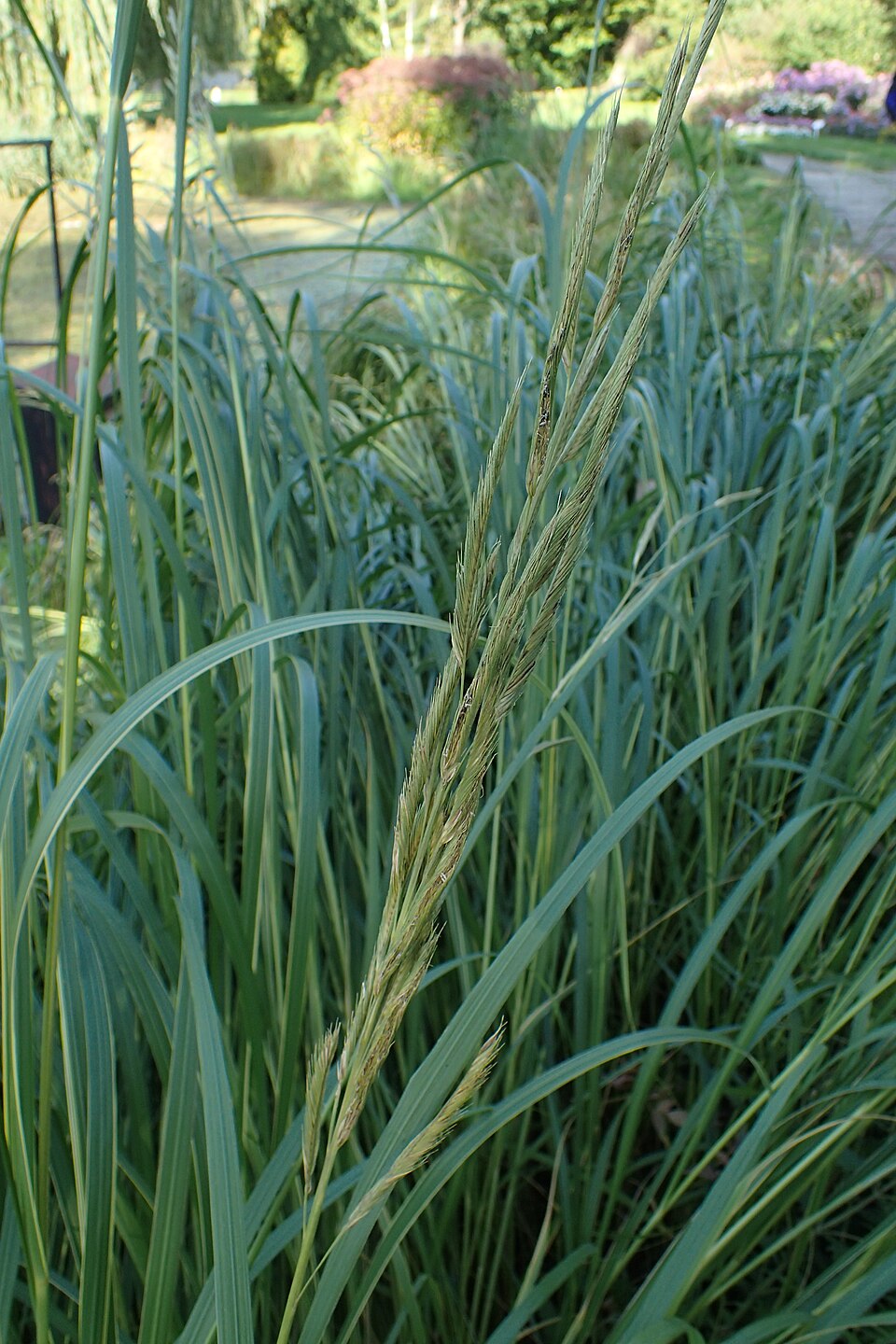
Spartina pectinata, commonly known as Prairie Cordgrass, Freshwater Cordgrass, or Slough Grass, is one of the tallest and most impressive native grasses of North America’s wet prairies and marshlands. This robust perennial grass creates dramatic stands 5 to 6 feet tall, with distinctive comb-like seed heads that catch the light and provide exceptional texture in the landscape. As a keystone species of prairie wetlands, Prairie Cordgrass plays critical ecological roles while offering outstanding ornamental value for rain gardens and naturalistic plantings.
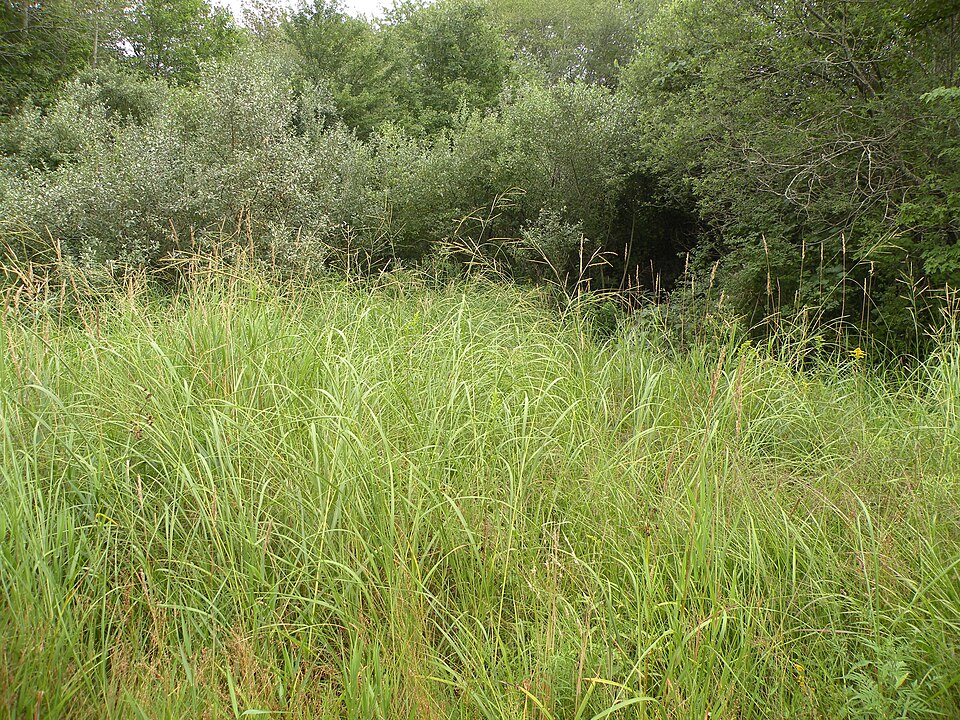
Native to the Great Plains and extending throughout much of central and eastern North America, Prairie Cordgrass is renowned for its remarkable adaptability to both wet and moderately dry conditions. In its natural habitat, the grass forms extensive colonies along streambanks, in prairie potholes, and at the edges of wetlands, where its deep, spreading rhizome system helps prevent erosion while providing vital habitat structure for countless wildlife species. The plant’s ability to thrive in seasonally flooded areas makes it particularly valuable in our modern context of climate adaptation and stormwater management.
The grass’s distinctive architectural form and late-season interest make it increasingly popular in sustainable landscape design. Its tall, fountain-like growth habit provides excellent vertical structure in mixed plantings, while the golden fall color and persistent seed heads extend ornamental interest well into winter. For gardeners seeking to create authentic prairie landscapes or tackle challenging wet sites, Prairie Cordgrass offers both beauty and exceptional ecological benefits.
Identification
Prairie Cordgrass is unmistakable among native grasses due to its impressive height, robust growth habit, and distinctive inflorescences. The grass typically grows 4 to 6 feet tall, though it can reach 8 feet in ideal conditions, making it one of the tallest native grasses in its range.
Growth Form & Stems
Prairie Cordgrass forms dense, upright clumps that spread gradually by thick, fleshy rhizomes to create substantial colonies over time. The culms (stems) are robust and solid, typically ½ to ¾ inch thick at the base, and are smooth except near the nodes. The stems are distinctly flattened on one side, a characteristic that helps distinguish this species from other tall prairie grasses. Each culm typically produces 8 to 12 leaves before terminating in the flower head.
Leaves
The leaves are among the most distinctive features of Prairie Cordgrass. They are long and narrow, typically 12 to 24 inches long and ¼ to ¾ inch wide, with a distinctive blue-green to gray-green color during the growing season. The leaf margins are notably rough and can easily cut skin if handled carelessly—hence the name “cordgrass.” The leaf blades have a prominent midrib and are flat or slightly folded, tapering to sharp points. The leaf sheaths are smooth and wrap tightly around the stem.
Inflorescence
The flower heads (inflorescences) are the most recognizable feature of Prairie Cordgrass. They appear in late summer as distinctive spike-like racemes arranged along the upper portion of the culm. Typically 6 to 12 individual spikes emerge alternately along a 6- to 12-inch section of stem, creating a distinctive “comb” or “bottlebrush” appearance. Each spike is 2 to 4 inches long and contains numerous small flowers. The spikes initially stand erect but may spread slightly as they mature.
Seeds
The seeds are small, about ¼ inch long, and are tightly enclosed in the flower bracts (glumes). They ripen from late summer into fall, turning from green to golden-brown. The seeds are an important food source for waterfowl and other wildlife, and the persistent seed heads provide winter interest in the landscape. The seeds have no awns (bristle-like appendages) and are designed for wind and water dispersal.
Root System
Prairie Cordgrass has an extensive root system consisting of both deep fibrous roots that can extend 6 feet or more into the soil, and thick, fleshy rhizomes that spread horizontally 12 to 18 inches below ground. This dual root system allows the grass to access deep water sources while also spreading to form colonies. The rhizomes can be several feet long and are crucial for the plant’s ability to stabilize soil and survive periodic flooding.
Quick Facts
| Scientific Name | Spartina pectinata |
| Family | Poaceae (Grass) |
| Plant Type | Perennial Grass |
| Mature Height | 5–6 ft |
| Sun Exposure | Full Sun |
| Water Needs | Moderate to High |
| Bloom Time | August – September |
| Seed Head Color | Golden-brown |
| USDA Hardiness Zones | 4 – 8 |
Native Range
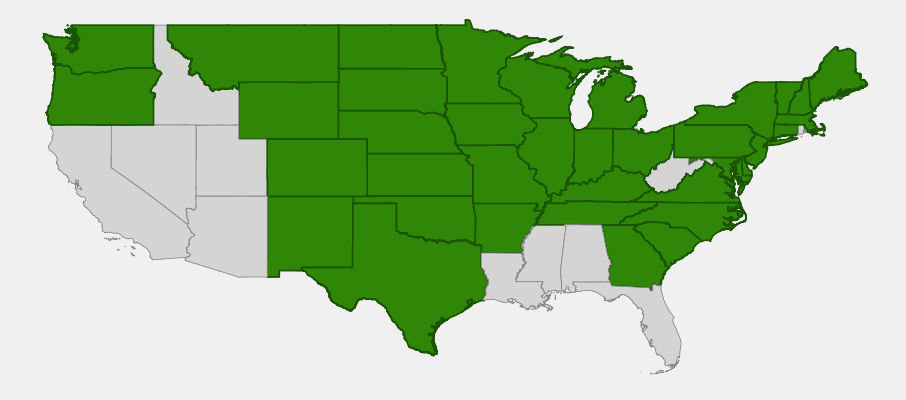
Prairie Cordgrass has one of the most extensive native ranges of any North American grass, stretching from the Great Plains eastward to the Atlantic Coast and from southern Canada south to the Gulf of Mexico. The species is most abundant in the Great Plains and upper Midwest, where it serves as a dominant component of wet prairie and marsh ecosystems. Its range extends westward into Montana, Wyoming, Colorado, and New Mexico, and eastward through the Great Lakes states to New England and the southeastern coastal plain.
In its natural habitat, Prairie Cordgrass is typically found in wet prairies, along streambanks, around prairie potholes, in shallow marshes, and at the margins of lakes and ponds. The grass thrives in areas with fluctuating water levels, tolerating both seasonal flooding and periods of drought. It commonly grows in association with other wet prairie species such as Blue Flag Iris, Swamp Milkweed, and various sedges, helping to create the complex plant communities that define North America’s grassland ecosystems.
The extensive historical range of Prairie Cordgrass reflects its importance as a keystone species in pre-settlement landscapes. Unfortunately, much of the original wet prairie habitat has been lost to agricultural conversion and development, making the conservation and restoration of remaining populations increasingly important for maintaining biodiversity and ecosystem services in grassland regions.
📋 Regional plant lists featuring Prairie Cordgrass: North Dakota, South Dakota & Western Minnesota
Growing & Care Guide
Prairie Cordgrass is an exceptional choice for challenging wet sites and sustainable landscape design, offering impressive ornamental value with minimal maintenance requirements once established. Its adaptability to various moisture conditions makes it valuable for both traditional rain gardens and large-scale naturalistic plantings.
Light
Prairie Cordgrass performs best in full sun, requiring at least 6 hours of direct sunlight daily for optimal growth and flowering. In full sun conditions, the grass develops its most robust growth habit and produces the most impressive seed heads. While the plant can tolerate light shade, particularly in hot climates, reduced light typically results in weaker stems, fewer flowers, and increased susceptibility to falling over.
Soil & Water
Prairie Cordgrass is remarkably adaptable to different soil types and moisture conditions, though it performs best in rich, organic soils with consistent moisture. The grass thrives in areas with seasonal flooding and can tolerate standing water for extended periods, making it ideal for rain gardens, bioswales, and wetland restoration projects. Once established, it can also tolerate moderate drought conditions, though growth may be reduced. Soil pH can range from slightly acidic to slightly alkaline (6.0–8.0).
Planting Tips
Plant Prairie Cordgrass in spring after the last frost or in early fall. Space plants 2 to 3 feet apart for mass plantings, keeping in mind that the grass will spread to form colonies over time. When establishing from seed, fall planting often provides better germination as the seeds benefit from cold stratification over winter. For immediate impact, container plants or divisions from established clumps provide faster establishment. Mulching around new plantings helps retain moisture during the critical establishment period.
Maintenance
Prairie Cordgrass is remarkably low-maintenance once established. Cut the grass back to 4–6 inches above ground in late winter or early spring before new growth begins. This annual “haircut” is the primary maintenance requirement. In garden settings, you may want to cut back earlier for a tidier appearance, but leaving the seed heads through winter provides important wildlife benefits. The grass may self-seed in suitable conditions, and excess seedlings can be transplanted or removed as desired.
Landscape Uses
Prairie Cordgrass’s impressive size and distinctive form make it valuable in numerous landscape applications:
- Rain gardens and bioretention areas — excellent tolerance for both flooding and drought
- Wetland restoration and naturalization — provides authentic prairie habitat
- Erosion control on slopes and streambanks — extensive root system stabilizes soil
- Wildlife habitat gardens — seeds feed waterfowl, structure provides nesting sites
- Privacy screening and windbreaks — tall growth creates natural barriers
- Large-scale prairie plantings — serves as an anchor species in mixed grass communities
- Seasonal interest gardens — provides late summer flowers and winter structure
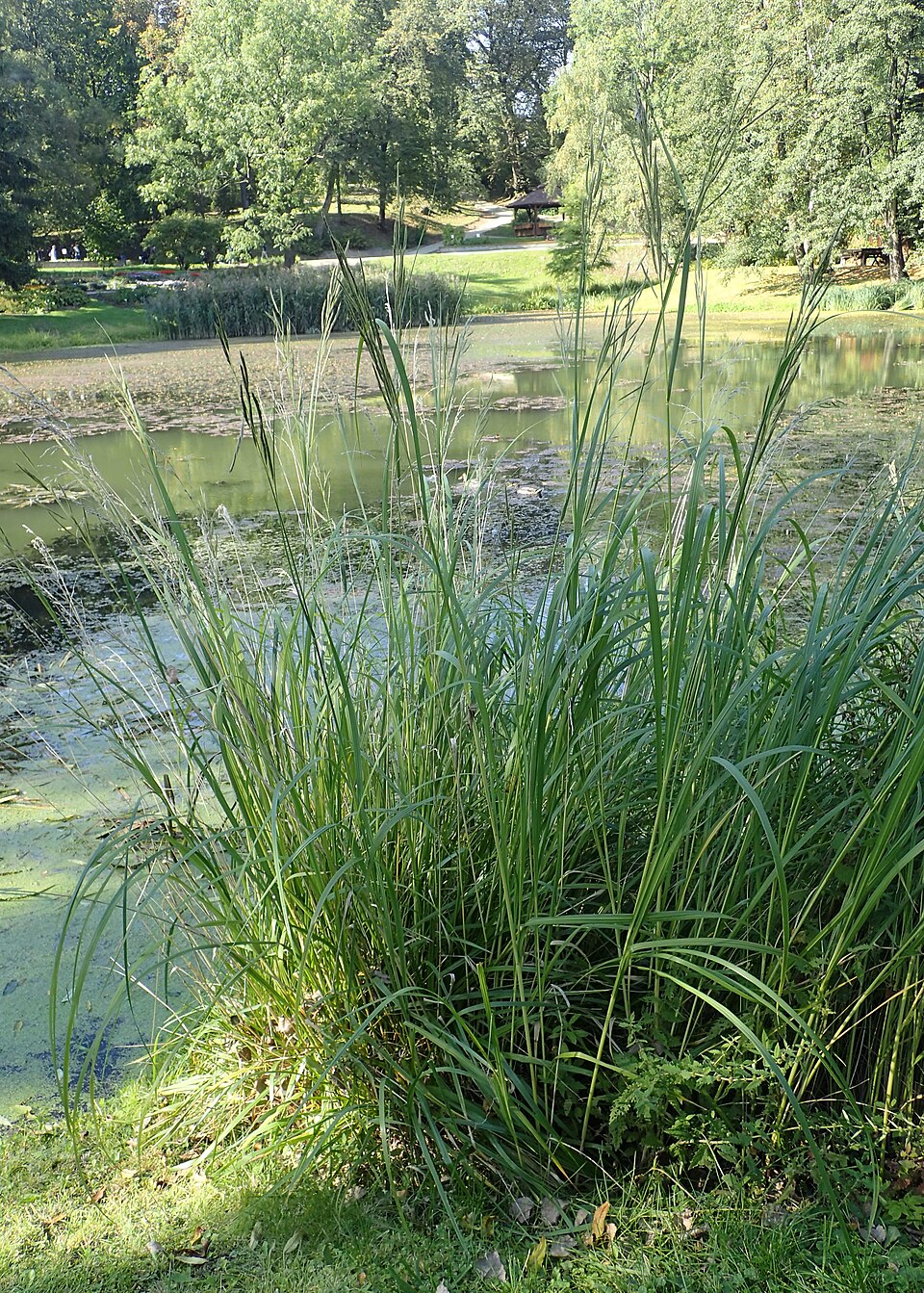
- Pond and water feature margins — thrives in consistently moist conditions
Wildlife & Ecological Value
Prairie Cordgrass is one of the most ecologically valuable grasses in North America, supporting a remarkable diversity of wildlife species while providing essential ecosystem services in wetland and prairie environments.
For Birds
The seeds of Prairie Cordgrass are a critical food source for waterfowl, particularly during fall migration when the seeds ripen. Mallards, Blue-winged Teal, Northern Pintail, and other ducks consume large quantities of the nutritious seeds. Red-winged Blackbirds, Bobolinks, and various sparrows also depend heavily on the seeds. Beyond food, the tall, dense growth provides essential nesting habitat for numerous bird species. Red-winged Blackbirds commonly weave their nests among the sturdy stems, while the grass colonies provide important brood cover for young waterfowl and protective roosting sites during harsh weather.
For Mammals
Muskrats use Prairie Cordgrass extensively, both eating the rhizomes and using the stems for lodge construction. Deer browse the young shoots and seeds, while smaller mammals like voles find shelter within the dense stands. The grass’s role in creating stable wetland edges provides critical habitat for numerous semi-aquatic mammals throughout its range.
For Insects & Other Invertebrates
Prairie Cordgrass supports a diverse community of insects, including several specialist species found nowhere else. The grass provides host habitat for various moths and butterflies, including some that are increasingly rare due to habitat loss. Numerous beneficial insects use the stems for overwintering, while the dense root system and organic matter production create rich habitat for soil invertebrates that form the base of many food webs.
Ecosystem Services
Beyond direct wildlife support, Prairie Cordgrass provides numerous ecosystem services that benefit both wildlife and human communities. The extensive root system is exceptional at filtering pollutants from water, making it valuable for natural water treatment systems. The grass excels at carbon sequestration, storing significant amounts of carbon both above and below ground. Its ability to stabilize soil prevents erosion and reduces sedimentation in waterways. The grass also plays a crucial role in flood control by slowing water flow and increasing water infiltration in wetland systems.
Cultural & Historical Uses
Prairie Cordgrass has played an important role in the cultural history of North America, particularly among Indigenous peoples of the Great Plains and surrounding regions. The grass was used extensively by various tribal nations for both practical and ceremonial purposes, with applications ranging from construction materials to traditional crafts.
The strong, flexible stems of Prairie Cordgrass were harvested for basketry, mat-making, and thatching materials. The grass’s durability and water resistance made it particularly valuable for creating waterproof coverings and containers. Some Indigenous groups used the tough leaves and stems to make cordage and binding materials, taking advantage of the plant’s fibrous nature. The seeds were occasionally harvested as a food source, though they were generally less important nutritionally than the seeds of other prairie grasses like wild rice or certain buffalo grasses.
European settlers quickly recognized the value of Prairie Cordgrass for livestock feed and thatching material. The grass was often called “slough hay” by settlers, who would harvest it from wet areas where other grasses couldn’t grow. The tough, fibrous nature of the grass made it useful for temporary roofing and insulation in frontier dwellings, particularly in regions where timber was scarce. However, the coarse texture and sharp edges of the leaves made it less desirable as animal feed compared to other prairie grasses.
In modern times, Prairie Cordgrass has found new applications in erosion control, wetland restoration, and sustainable landscape design. Its ability to thrive in challenging wet sites has made it increasingly valuable for green infrastructure projects, rain gardens, and constructed wetlands designed for water treatment. The grass is also being researched for potential biofuel applications, as its high biomass production and ability to grow on marginal lands make it an attractive renewable energy crop.
Frequently Asked Questions
How quickly does Prairie Cordgrass spread?
Prairie Cordgrass spreads gradually through underground rhizomes, typically expanding 6–12 inches per year under favorable conditions. It may take 3–5 years for a single plant to form a substantial clump, but once established, colonies can persist and expand for decades.
Is Prairie Cordgrass too aggressive for small gardens?
While Prairie Cordgrass does spread, it’s not aggressively invasive like some ornamental grasses. The spreading can be controlled by installing root barriers or by periodically dividing clumps. For small spaces, consider planting it in large containers or raised beds to contain the roots.
Can Prairie Cordgrass tolerate saltwater or road salt?
Yes, Prairie Cordgrass has good salt tolerance, which makes it related to the saltmarsh cordgrasses. This characteristic makes it useful for roadside plantings where winter salt spray is a concern, and for coastal areas with brackish water influence.
When should I cut back Prairie Cordgrass?
Cut back Prairie Cordgrass in late winter or early spring (February–March in most climates) before new growth begins. Leaving the stems standing through winter provides wildlife habitat and winter interest, but cutting too late can damage emerging shoots.
How wet can the soil be for Prairie Cordgrass?
Prairie Cordgrass can tolerate standing water for weeks or even months during the growing season. It’s one of the few grasses that can thrive in areas that are seasonally flooded, making it excellent for rain gardens and areas with poor drainage that would kill most other plants.

Looking for a nursery that carries Prairie Cordgrass?
Browse our native plant nursery directory: North Dakota · South Dakota · Minnesota