
Prairie Phlox (Phlox pilosa)
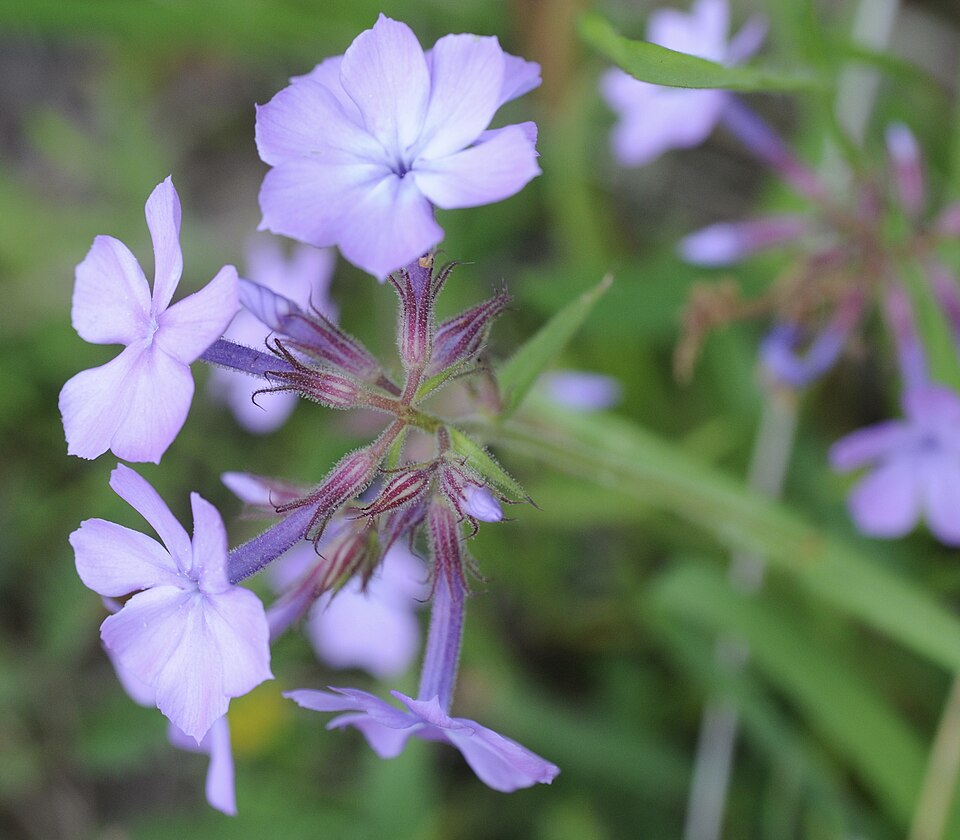
Phlox pilosa, commonly known as Prairie Phlox, Downy Phlox, or Fragrant Phlox, is one of the most beloved wildflowers of America’s prairies and open woodlands. This delicate perennial herb belongs to the phlox family (Polemoniaceae) and serves as a quintessential symbol of spring in grassland communities across much of central and eastern North America. The species name “pilosa” refers to the soft, downy hairs that cover the plant’s stems and leaves, giving it a distinctive fuzzy texture that helps distinguish it from other phlox species.
Growing naturally in prairies, glades, open woodlands, and roadside areas, Prairie Phlox creates spectacular displays of color from April through June, when its fragrant pink to lavender flowers carpet the landscape. Each five-petaled flower measures about ¾ inch across and is arranged in dense, terminal clusters that seem to glow against the emerging green of spring grasses. The sweet, honey-like fragrance of the blooms attracts numerous butterflies, bees, and other pollinators, making it a cornerstone species for pollinator conservation efforts.
For modern gardeners and land managers, Prairie Phlox offers exceptional value as both an ornamental wildflower and an ecological powerhouse. Its relatively compact size, long blooming period, and adaptability to various soil conditions make it ideal for native plant gardens, prairie restorations, and naturalized landscapes. The plant’s deep taproot and drought tolerance allow it to thrive in challenging conditions where many garden plants struggle, while its prolific seed production ensures natural regeneration and expansion of populations over time.
Identification
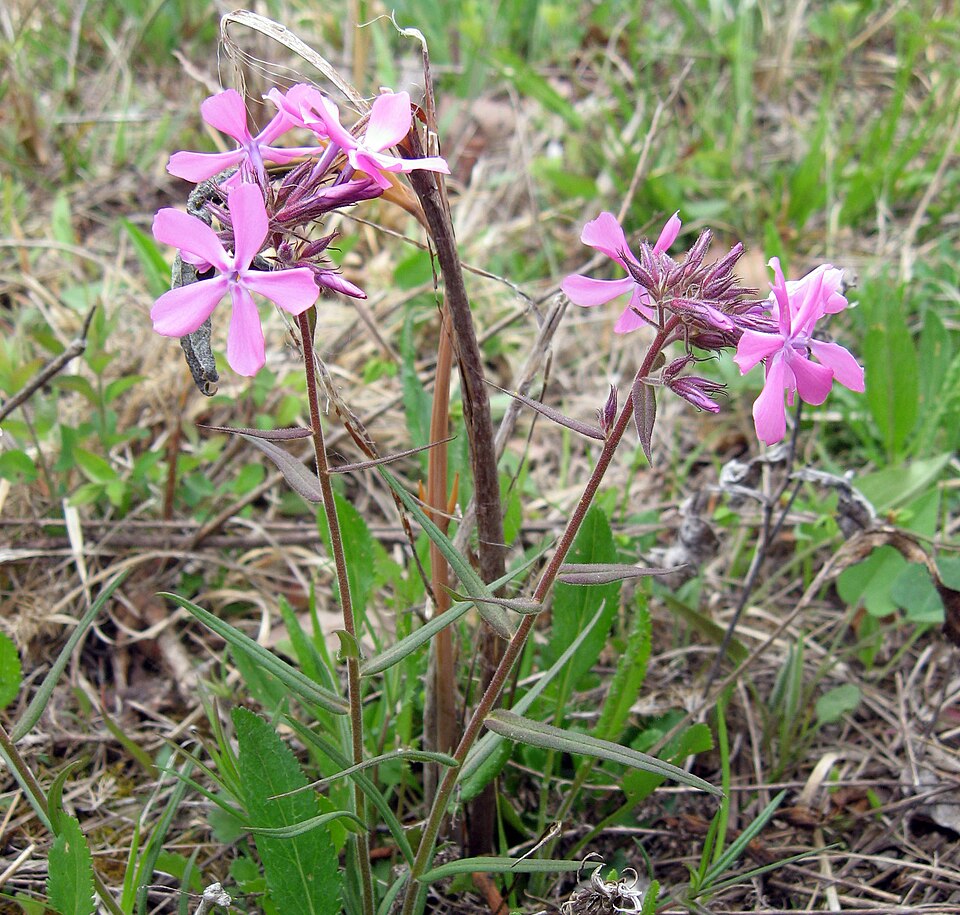
Prairie Phlox is a low-growing perennial that typically reaches 1 to 2 feet in height, forming loose colonies through both seed dispersal and short underground rhizomes. The plant has an upright, somewhat spreading growth habit with multiple stems arising from a central crown. Unlike some of its woodland relatives, Prairie Phlox thrives in full sun and open areas, developing a more compact, sturdy form in these conditions.
Stems & Leaves
The stems are erect, unbranched, and covered with soft, downy hairs (pubescence) that give the plant its species name and alternate common name “Downy Phlox.” The stems are typically green to reddish-brown and may have a slightly sticky feel due to the fine hairs. The simple leaves are arranged oppositely on the lower portion of the stem and alternately near the top, measuring 1 to 3 inches long and ⅜ to ¾ inch wide. Each leaf is narrow, linear to lance-shaped, with smooth margins and a prominent midvein. Like the stems, the leaves are covered with fine, soft hairs that give them a grayish-green appearance.
Flowers
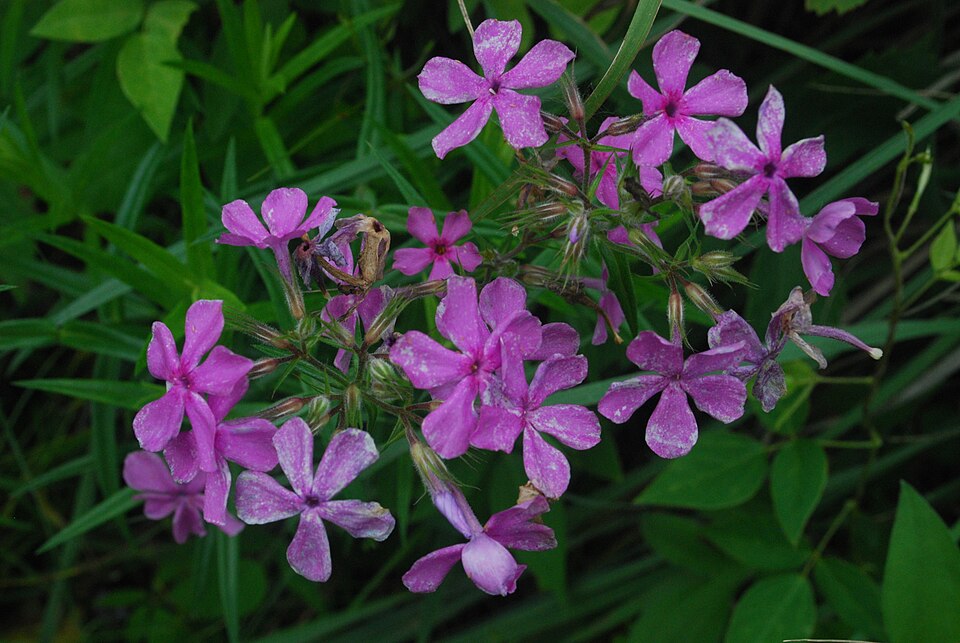
The flowers are Prairie Phlox’s most distinctive and attractive feature. They appear in dense, terminal clusters (cymes) containing 10 to 30 individual flowers. Each flower is perfectly symmetrical with five rounded petals that form a flat face about ¾ inch across. The petals range in color from pale pink to deep rose-pink, lavender, or occasionally white, often with slightly darker veining. The flower tube is long and narrow, extending about ½ inch below the petals. Five stamens and a three-lobed pistil are visible in the center of each flower. The blooms have a sweet, honey-like fragrance that is most noticeable in the evening and early morning.
Seeds & Fruit
After flowering, Prairie Phlox develops small, three-chambered capsules that split open when ripe to release 1 to 3 seeds per capsule. The seeds are small, dark brown, and somewhat sticky when wet — an adaptation that helps them adhere to soil particles and animal fur for dispersal. Seed production is typically abundant, and the plant readily self-sows under favorable conditions, often creating expanding colonies over several years.
Quick Facts
| Scientific Name | Phlox pilosa |
| Family | Polemoniaceae (Phlox) |
| Plant Type | Perennial Wildflower |
| Mature Height | 1–2 ft |
| Sun Exposure | Full Sun |
| Water Needs | Low to Moderate |
| Bloom Time | May – July |
| Flower Color | Pink-lavender, occasionally white |
| USDA Hardiness Zones | 4–9 |
Native Range
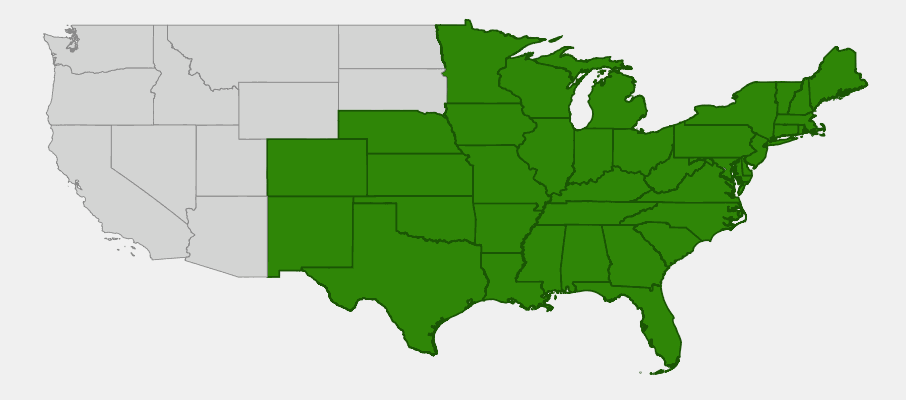
Prairie Phlox has an extensive native range that spans much of central and eastern North America, reflecting its remarkable adaptability to diverse climatic and soil conditions. The species ranges from southern Canada south to the Gulf of Mexico and from the Great Plains east to the Atlantic coast, making it one of the most widely distributed phlox species on the continent. This broad distribution has allowed Prairie Phlox to become an integral component of numerous plant communities, from tallgrass prairies to oak savannas, pine barrens to limestone glades.
The species reaches its greatest abundance in the prairie regions of the central United States, where it often forms spectacular spring displays alongside other iconic wildflowers such as Indian Paintbrush, Bluebonnets, and Wild Bergamot. In these grassland communities, Prairie Phlox serves as both an indicator species for healthy prairie ecosystems and a critical early-season nectar source for emerging butterfly and bee populations. The plant’s tolerance for periodic fire, grazing, and drought made it well-adapted to the historical disturbance patterns of the Great Plains.
Moving eastward, Prairie Phlox adapts to different ecological conditions, growing in open woodlands, forest edges, and limestone outcrops from the Ozark Mountains to the Appalachians. In these regions, it often occurs in areas with thin soils or rocky conditions where competition from woody plants is reduced. The species also extends into the southeastern coastal plain, where it inhabits sandy soils and pine savannas, demonstrating its remarkable ecological flexibility.
📋 Regional plant lists featuring Prairie Phlox: North Dakota, South Dakota & Western Minnesota
Growing & Care Guide
Prairie Phlox is an exceptionally easy-to-grow native wildflower that thrives with minimal care once established. Its natural adaptability to prairie conditions makes it drought tolerant, deer resistant, and virtually maintenance-free, while its compact size and long blooming period make it ideal for both formal garden settings and naturalized prairie plantings.
Light
Prairie Phlox performs best in full sun, where it develops its most compact form and produces the most abundant flowers. The plant can tolerate light partial shade, particularly in southern regions where afternoon shade may be beneficial, but flowering may be reduced in shadier conditions. In full sun, the plant develops a sturdy, upright habit and the most intense flower colors. The species’ adaptation to open prairie conditions makes it unsuitable for deep shade.
Soil & Water
One of Prairie Phlox’s greatest strengths is its tolerance for a wide range of soil conditions. It thrives in well-drained soils of almost any type, from sandy to clay, acidic to alkaline. The plant shows particular tolerance for thin, rocky soils and limestone-derived soils where many garden plants struggle. While it prefers moderate moisture during the growing season, established plants demonstrate excellent drought tolerance thanks to their deep taproot. However, consistent moisture during the flowering period will extend bloom time and increase flower production.
Planting Tips
Prairie Phlox can be grown from seed or transplants, with seeds being the more economical option for large plantings. Sow seeds in fall for natural stratification, or in early spring after stratifying in the refrigerator for 4-6 weeks. Seeds need light to germinate, so barely cover them with soil. For transplants, plant in spring or fall, spacing them 12-18 inches apart. The plant may not flower in its first year as it develops its root system, but will produce abundant blooms in subsequent years.
Pruning & Maintenance
Prairie Phlox requires virtually no maintenance once established. Deadheading spent flowers can prolong the blooming period and prevent excessive self-seeding if desired, though many gardeners prefer to let the plant set seed naturally for wildlife and natural regeneration. In late fall or early winter, cut stems back to ground level. The plant benefits from occasional division every 3-4 years to maintain vigor, and divisions can be replanted to expand your prairie phlox population.
Landscape Uses
Prairie Phlox’s versatility and beauty make it valuable in numerous landscape applications:
- Prairie and meadow gardens — essential component of authentic prairie reconstructions
- Rock gardens and xeriscapes — excellent for dry, sunny locations with poor soil
- Cottage gardens and perennial borders — provides spring color and fragrance
- Pollinator gardens — critical early-season nectar source
- Naturalized areas — self-sows to create expanding colonies
- Erosion control — deep roots help stabilize slopes and banks
- Cut flower gardens — fragrant flowers are excellent for bouquets
- Highway and roadside plantings — tolerates harsh conditions and provides color
Wildlife & Ecological Value
Prairie Phlox plays a crucial ecological role as one of the most important early-season nectar sources in prairie and grassland ecosystems. Its abundant, fragrant flowers appear at a critical time when many pollinators are emerging from winter dormancy or migrating through the region, making it a keystone species for supporting diverse pollinator communities.
For Birds
While Prairie Phlox doesn’t produce large seeds that appeal to granivorous birds, it supports avian species in other important ways. The plant’s flowers attract numerous insects, which provide essential protein for nesting songbirds and their young. Ruby-throated Hummingbirds occasionally visit the flowers for nectar, though the flowers are primarily adapted for butterfly and long-tongued bee pollination. The plant’s seeds are small enough to be consumed by some finches and sparrows, and the dense foliage provides cover for ground-nesting birds in prairie environments.
For Mammals
Small mammals such as rabbits and deer occasionally browse Prairie Phlox foliage, though the plant’s hairy texture makes it less palatable than many alternatives. The species shows good deer resistance in most situations, making it valuable for gardens in areas with high deer pressure. Ground-dwelling mammals like mice and voles may cache the small seeds, inadvertently helping with seed dispersal and plant establishment in new areas.
For Pollinators
Prairie Phlox is exceptionally valuable for pollinators, supporting over 20 species of butterflies and numerous native bees. Long-tongued butterflies including Monarchs, Swallowtails, Fritillaries, and Skippers are frequent visitors, while the flowers also attract hummingbird moths, bee flies, and other beneficial insects. Native bees, including mason bees and leafcutter bees, collect both nectar and pollen from the flowers. The sweet evening fragrance of the blooms makes them particularly attractive to night-flying moths, extending the plant’s pollinator support into evening hours.
Ecosystem Role
As a native component of prairie ecosystems, Prairie Phlox helps maintain the complex ecological relationships that define healthy grasslands. Its deep taproot contributes to soil stability and water infiltration, while its seasonal growth pattern complements the growth cycles of native grasses. The plant’s tolerance for fire and grazing helped it persist in the historical prairie landscape shaped by bison and periodic burning. In modern landscapes, Prairie Phlox serves as a genetic reservoir for native plant diversity and helps support the specialized insects and other invertebrates that form the base of prairie food webs.
Cultural & Historical Uses
Prairie Phlox holds a special place in the cultural heritage of North America’s prairie regions, where it has been cherished by indigenous peoples and settlers alike for its beauty and subtle practical uses. Various Native American tribes across the plant’s range recognized and utilized Prairie Phlox, though its uses were generally more cultural and medicinal rather than nutritional. Some Plains tribes incorporated the fragrant flowers into ceremonies and traditional medicines, while the plant’s reliable spring appearance made it an important phenological indicator for seasonal activities.
The Lakota and other Plains tribes used various phlox species, including Prairie Phlox, in traditional remedies for skin conditions and respiratory ailments, typically preparing teas or poultices from the leaves and flowers. The plant’s sweet fragrance also made it valuable for scenting clothing and dwellings, with dried flowers sometimes mixed with other aromatic plants to create natural perfumes and insect deterrents.
European settlers and pioneers quickly came to appreciate Prairie Phlox as one of the most beautiful and reliable spring wildflowers of the prairie landscape. Early botanists and naturalists wrote extensively about the spectacular displays of pink and lavender that covered vast areas of prairie in spring, with Prairie Phlox often mentioned as a dominant component of these floral spectacles. The plant’s resilience and beauty led to its early cultivation in frontier gardens, where it provided much-needed color and fragrance in often harsh landscapes.
In modern times, Prairie Phlox has become an icon of prairie restoration and native plant gardening movements. The species is widely used in highway beautification projects, particularly in Texas where mass plantings create stunning spring displays along roadsides. Its inclusion in pollinator habitat programs has made it increasingly important for conservation efforts, while its use in xeriscaping and sustainable landscaping reflects growing appreciation for native plants’ environmental benefits. The plant continues to serve as an ambassador species for prairie conservation, helping people connect with the beauty and ecological importance of grassland ecosystems.
Frequently Asked Questions
Is Prairie Phlox the same as Garden Phlox?
No, Prairie Phlox (Phlox pilosa) is much smaller and blooms earlier than Garden Phlox (Phlox paniculata). Prairie Phlox reaches only 1-2 feet tall with smaller flower clusters, while Garden Phlox can reach 4 feet with large, dense flower heads. Prairie Phlox is also more drought tolerant and better adapted to sunny, harsh conditions.
Why didn’t my Prairie Phlox bloom in its first year?
This is completely normal. Prairie Phlox often doesn’t flower in its first year, instead focusing energy on developing its deep root system. Most plants will bloom abundantly in their second year and thereafter. Be patient — the wait is definitely worth it!
Is Prairie Phlox invasive or aggressive?
Prairie Phlox is native throughout its range and is not invasive. While it can self-seed readily under ideal conditions, it forms loose colonies rather than dense monocultures and doesn’t outcompete other native plants. It’s generally well-behaved in garden settings and valuable for supporting native ecosystems.
Can Prairie Phlox grow in containers?
Yes, Prairie Phlox can be grown successfully in containers, though it performs best in the ground where its taproot can fully develop. Choose a deep container (at least 12 inches) and ensure excellent drainage. Container plants may need more frequent watering and may not be as drought tolerant as those planted in the ground.
How can I collect and save Prairie Phlox seeds?
Collect seeds in mid to late summer when the seed capsules have turned brown and begin to split open. Gather seeds on a dry day and clean them by removing plant debris. Store in a cool, dry place or plant immediately for next spring’s germination. Fresh seeds often have better germination rates than stored seeds.

Looking for a nursery that carries Prairie Phlox?
Browse our native plant nursery directory: North Dakota · South Dakota · Minnesota