
Queen-of-the-Prairie (Filipendula rubra)
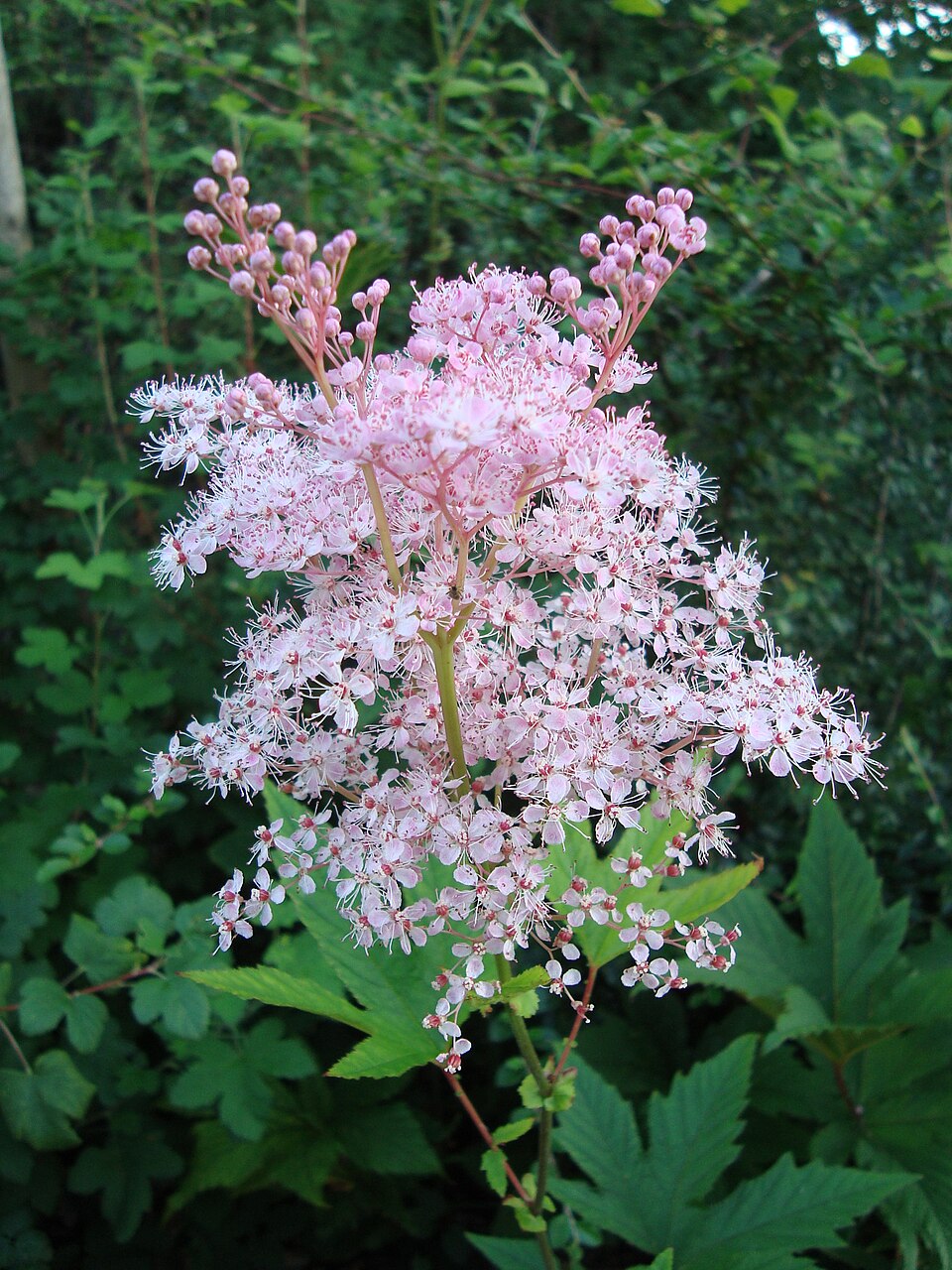
Filipendula rubra, the Queen-of-the-Prairie, is among the most dramatic and spectacular native wildflowers of the eastern North American prairie and prairie-edge landscape. True to its regal name, this native perennial commands attention wherever it grows: enormous, deeply divided leaves build to an imposing clump by midsummer, then explode into flower with enormous, fragrant, cotton-candy-pink plumes that tower above the foliage in June and July. There is nothing subtle about Queen-of-the-Prairie — it is a bold, extravagant plant for gardeners who want maximum impact from their native planting.
A member of the Rosaceae (rose family), Queen-of-the-Prairie is native to moist prairies, wet meadows, and streamside habitats across the interior of the eastern United States — particularly in Indiana, Ohio, and the neighboring Great Lakes states. In these habitats it often forms large colonies through underground rhizomes, creating expansive stands that bloom spectacularly in summer. The flowers are magenta-pink in the most vivid forms, fading to soft peach-pink as they age, and carry a sweet almond-like fragrance that attracts a wide diversity of pollinators.
Despite its imposing stature, Queen-of-the-Prairie is a surprisingly garden-adaptable plant that asks primarily for adequate moisture and full sun. Given those conditions, it will reward the gardener with a truly show-stopping floral display year after year, increasingly generous as established colonies spread and mature. The ‘Venusta’ cultivar, selected for its particularly intense and vivid flower color, is the form most commonly found in nurseries and is widely planted in contemporary native and prairie-style gardens throughout the Midwest.
Identification
Queen-of-the-Prairie is an upright, clump-forming herbaceous perennial that grows 4 to 6 feet tall in flower, occasionally reaching 8 feet in rich, moist soil. The plant has a distinctive, highly recognizable appearance in both leaf and flower — it is unlikely to be confused with any other native prairie wildflower once you know it.
Leaves
The basal and stem leaves are large, palmately lobed, and deeply divided — resembling an oversized grapevine leaf with 5 to 7 broad, toothed lobes, the terminal lobe being much larger than the lateral ones. Leaves can be 8 to 12 inches across at the base, becoming progressively smaller up the stem. The upper surface is smooth and deep green; the underside is paler, sometimes slightly hairy along the veins. The large, dramatic leaves provide exceptional bold texture in the garden even before flowering begins in late June.
Flowers
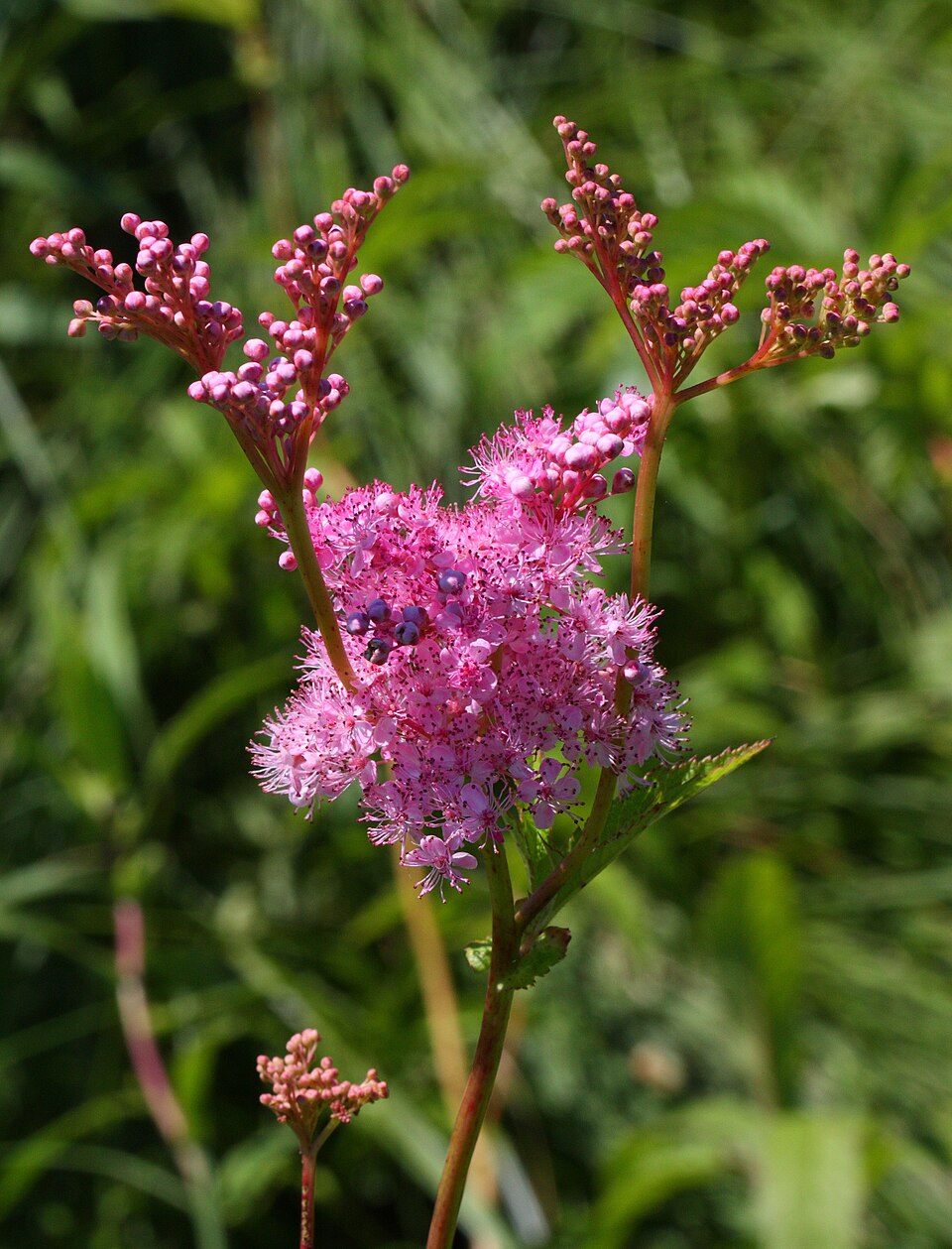
The flowers are the spectacle that makes this plant’s common name appropriate. They are borne in large, frothy, compound corymbs (flat-topped clusters) held on tall stems above the foliage — each individual flower is tiny (less than ¼ inch across), with five petals in shades of deep magenta-pink to peach-pink. But the sheer density and quantity of these tiny flowers in each cluster creates an effect of extraordinary visual impact, like a deep pink cloud or cotton candy. Each flower cluster can be 6 to 12 inches across. The fragrance is sweet and somewhat almond-like. Blooms appear in June through July and last 3 to 4 weeks.
Fruit
After flowering, the petals drop and the fruit heads develop — clusters of small, twisted achenes arranged in a spiral pattern that is itself decorative, providing a secondary ornamental interest in August and September. The dried seed heads persist into winter, adding texture to the winter garden and providing minor food value for birds.
Quick Facts
| Scientific Name | Filipendula rubra |
| Family | Rosaceae (Rose) |
| Plant Type | Herbaceous Perennial |
| Mature Height | 4–5 ft |
| Sun Exposure | Full Sun |
| Water Needs | Moderate |
| Bloom Time | June – July |
| Flower Color | Deep magenta-pink to peach-pink |
| Fragrance | Sweet, almond-like |
| Growth Habit | Colony-forming via rhizomes |
| Deer Resistant | Moderate (deer browse occasionally) |
| USDA Hardiness Zones | 3–9 |
Native Range
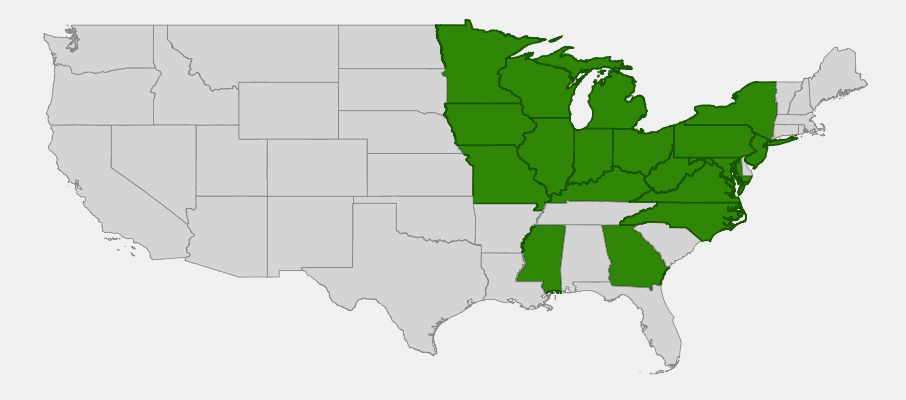
Queen-of-the-Prairie is native to the interior of eastern North America, with its core range in the tall-grass prairie and prairie-edge zones of the Midwest. Its primary native range includes Indiana, Ohio, Illinois, Iowa, Michigan, Wisconsin, Minnesota, Pennsylvania, and parts of the mid-Atlantic states south to Georgia. It is rare or absent east of the Appalachians, reflecting its origin in the mesic prairie and wet meadow habitats of the interior.
Within Indiana and Ohio, Queen-of-the-Prairie historically occurred in the moist prairie remnants, wet meadows, and floodplain forests that characterized the presettlement landscape of these states. Much of this habitat has been converted to agriculture, making remnant populations relatively uncommon in the wild today. It is most frequently found in low areas adjacent to streams and ponds where the soil remains consistently moist throughout the growing season, and in preserved prairie remnants with appropriate hydrology.
The plant spreads vegetatively by underground rhizomes and historically formed extensive colonies in suitable habitats. In the presettlement Midwest, large stands of Queen-of-the-Prairie in moist prairie settings must have been extraordinary sights — the acres-wide pink bloom described by early naturalists such as John James Audubon and Amos Eaton was a signature of the native tall-grass prairie landscape that has largely been lost to agriculture.
📋 Regional plant lists featuring Queen-of-the-Prairie: Indiana & Ohio
Growing & Care Guide
Queen-of-the-Prairie is straightforward to grow in the right conditions: full sun and consistently moist soil are the non-negotiables. Given these, it is a vigorous, long-lived perennial that requires minimal care and rewards generously. The main challenges are managing its spreading rhizomes and providing adequate moisture in drier summers.
Light
Full sun is essential for Queen-of-the-Prairie to perform its best. Six or more hours of direct sun daily produces the densest, tallest plants with the most prolific flowering. In part shade (3 to 5 hours of sun), plants may grow but will be taller and more lax, with reduced flowering. In full shade, the plant rarely blooms and will slowly decline. For the show-stopping display this plant is capable of, prioritize a full-sun location.
Soil & Water
Consistently moist to wet soil is the other key requirement. Queen-of-the-Prairie is not drought-tolerant — in dry summers, it will wilt dramatically and may develop brown leaf margins. It thrives in moist, rich soils along streams, pond edges, and rain garden margins. It tolerates clay soils with adequate moisture well. Poorly drained, seasonally flooded soils are acceptable — this is a plant that originated in wet prairies and flood-prone meadows. Incorporating generous organic matter at planting and maintaining a thick mulch layer around the crown will extend moisture retention significantly.
Planting Tips
Plant in spring from container stock. Choose a site where the plant can spread freely — it will colonize aggressively via rhizomes in favorable conditions, forming clumps 3 to 4 feet wide within a few years. This spreading habit is a feature in large naturalistic plantings but requires management in more formal settings. Space plants 3 to 4 feet apart in a naturalistic setting; for a formal border, plan to divide or constrain every 3 to 4 years. This plant does especially well at the back of a border, beside water features, or in rain garden designs where moisture is consistently available.
Pruning & Maintenance
Queen-of-the-Prairie requires minimal pruning. Cut stems back to ground level in late fall or early spring. The dramatic dried seed heads and skeletal structure can be left through winter for interest and wildlife value. Divide crowded clumps in spring or fall every 4 to 5 years to maintain vigor. If the plant spreads too aggressively, remove outer rhizome sections by spading around the colony’s perimeter in early spring before growth begins. Powdery mildew can be a cosmetic issue in hot, humid, dry conditions — ensure adequate moisture and good air circulation to reduce occurrence.
Landscape Uses
- Rain garden and bioswale feature — thrives in seasonal wet-dry cycles
- Pondside or streamside planting for maximum vigor and size
- Back of the border as a towering summer focal point
- Naturalistic prairie or meadow planting in full sun with adequate moisture
- Mass planting along moist roadsides or field edges
- Pollinator garden — significant nectar source for butterflies and bees
- Wildlife habitat — colony provides nesting and escape cover
Wildlife & Ecological Value
Queen-of-the-Prairie supports a rich diversity of wildlife, particularly pollinators, through its abundant early-summer flowers and the structural complexity of its large colony.
For Pollinators
The flowers are magnets for pollinators. The open, accessible structure of the tiny individual flowers makes the nectar and pollen available to a wide spectrum of insect pollinators: native bees (sweat bees, bumblebees, long-horned bees), honeybees, hoverflies, small beetles, and numerous butterfly species including Swallowtails, Skippers, and Fritillaries. The flowering period (June–July) coincides with peak pollinator activity in the Midwest, and the large flower clusters provide an efficient foraging resource that attracts extraordinary diversity to the garden.
For Birds
The seeds, though small, are consumed by seed-eating birds including American Goldfinch, Song Sparrow, and Field Sparrow. The tall, dense structure of established colonies provides nesting habitat for Yellow Warbler, Common Yellowthroat, and other shrubby-habitat nesters. In winter, the dried seed heads and standing stems provide roosting structure and limited food for overwintering birds.
For Mammals
White-tailed deer occasionally browse the foliage, though this is not a preferred species. The dense rhizome colonies create sheltered runways for meadow voles and other small mammals. Muskrats will use streamside stands for den structure materials where ranges overlap.
Ecosystem Role
Queen-of-the-Prairie is a signature species of the moist tall-grass prairie ecosystem — a community type that once covered millions of acres in the Midwest and is now among the most endangered in North America. Planting Queen-of-the-Prairie, particularly in combination with other moist-prairie natives, actively supports the restoration of this critically threatened ecosystem. Its large leaves create significant shade at ground level, suppressing weedy competition, while the rhizome network stabilizes moist and periodically flooded soils that are prone to erosion.
Cultural & Historical Uses
Queen-of-the-Prairie was used medicinally by several indigenous nations of the Great Lakes and Midwest. The Cherokee used preparations of the plant for treating heart problems and as a general tonic. The Iroquois and various Algonquian nations used Filipendula species for treating respiratory complaints and as an astringent. These traditional uses reflect the plant’s chemistry — like other members of the Rosaceae, Filipendula contains salicylate compounds related to the active ingredient of aspirin, which accounts for its historical use in pain relief and fever reduction.
In Europe, the related species Meadowsweet (Filipendula ulmaria) was one of the most important medicinal herbs of the medieval period. The salicylate compounds extracted from Meadowsweet were a key precursor in the research that eventually led to the synthesis of aspirin in 1899 — the first modern pharmaceutical drug. Queen-of-the-Prairie, while distinct from its European relative, shares enough chemistry that it was used similarly by North American indigenous healers as an anti-inflammatory and fever remedy.
In contemporary horticulture, Queen-of-the-Prairie has become a highly fashionable plant in prairie-style and naturalistic garden design. It was prominently featured in the “New American Garden” style pioneered by designers Wolfgang Oehme and James van Sweden in the 1980s and 1990s, which popularized bold, structural native planting in high-visibility urban landscapes. The cultivar ‘Venusta’ (selected for its intense magenta-pink flower color and robustness) is widely available in the nursery trade and frequently cited as one of the most spectacular of all native perennials for large-scale garden use. It is also valued in cut flower production for its distinctive, long-lasting plumes.
Frequently Asked Questions
Does Queen-of-the-Prairie need wet soil?
Consistently moist soil is strongly preferred, but it does not require standing water. Average garden soil with regular irrigation can work, but in hot, dry Indiana and Ohio summers, plants may wilt and look stressed without supplemental watering. For the most spectacular performance, plant near a water feature, in a low-lying area, or in a rain garden where moisture is reliably available. Drip irrigation or soaker hose systems are ideal if the natural site is drier.
Will Queen-of-the-Prairie take over my garden?
In favorable conditions, yes — it spreads vigorously by underground rhizomes and can colonize aggressively. This is a feature in large naturalistic plantings but can be a problem in smaller gardens or mixed perennial borders. To control spread, simply dig and remove outer rhizomes in spring before growth begins. The plant responds well to containment and can be kept within defined bounds with minimal annual effort.
What is the ‘Venusta’ cultivar?
‘Venusta’ is the most widely grown cultivar of Queen-of-the-Prairie, selected for its particularly intense, deep magenta-pink flower color (versus the paler pink of straight species) and its consistently robust performance in garden conditions. It is the form most commonly available in nurseries. From a wildlife standpoint, it is equivalent to the straight species.
Can I grow Queen-of-the-Prairie in a container?
Not recommended. This is a large, rhizome-spreading perennial that needs the root run of an open garden bed. Container growing will restrict its growth significantly and require very frequent watering. If you must use a container, choose the largest possible (at least 20 gallons), use a moisture-retentive mix, and expect smaller plants than you would achieve in the ground.
Is Queen-of-the-Prairie the same as Meadowsweet?
No. “Meadowsweet” is the common name for the European species Filipendula ulmaria, which is related but distinct. Queen-of-the-Prairie (Filipendula rubra) is the North American native and is the appropriate choice for midwestern native plant gardens. F. ulmaria is sometimes available in the nursery trade but is not native to North America.

Looking for a nursery that carries Queen-of-the-Prairie?
uploads/2022/07/favicon.png” alt=”Plant Native” style=”height:20px;width:auto;vertical-align:middle;margin-right:4px;”>
Looking for a nursery that carries Queen-of-the-Prairie?