Ragged Rock Flower (Crossosoma bigelovii)
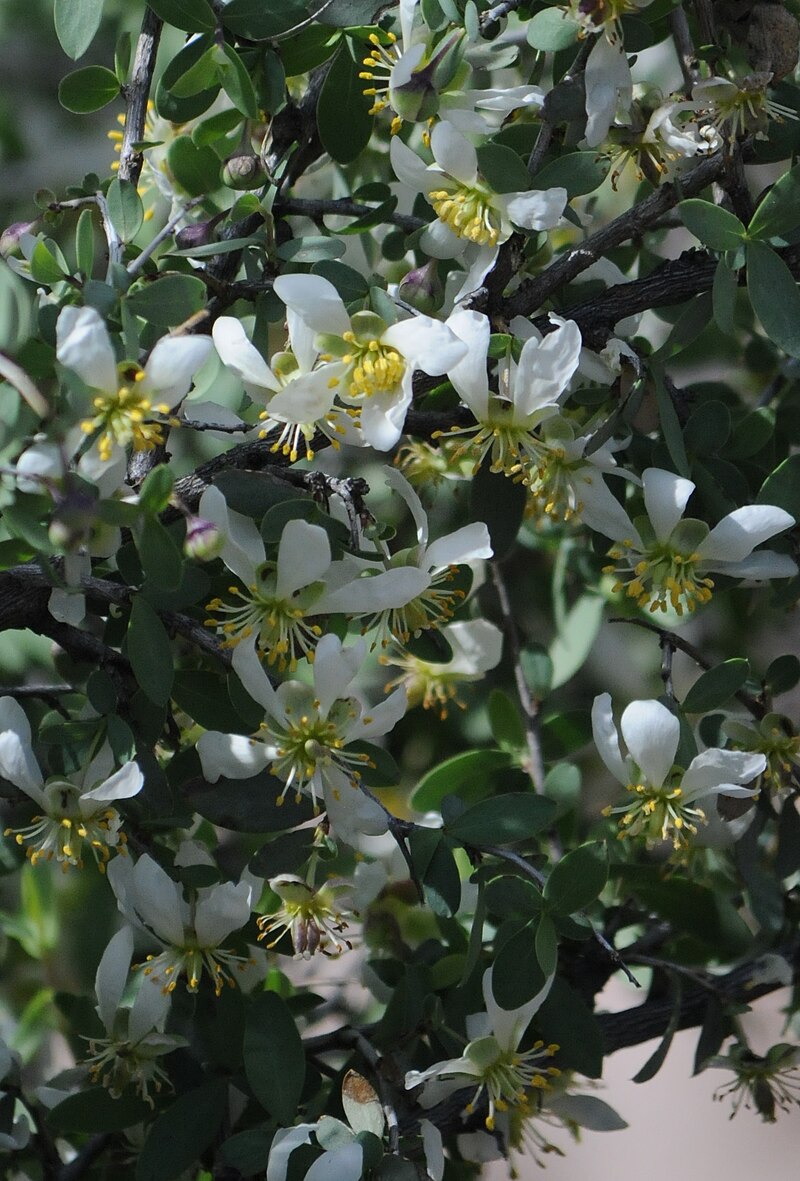
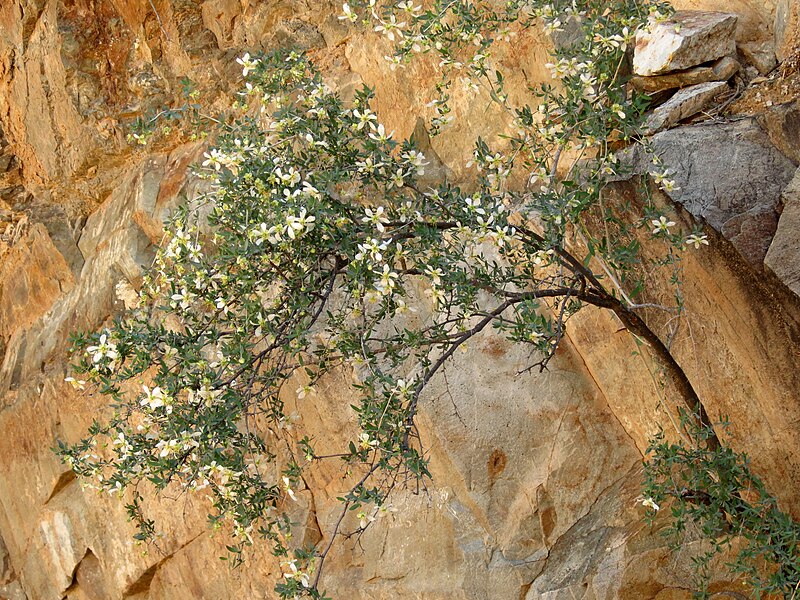
Crossosoma bigelovii, the Ragged Rock Flower or Bigelow’s Crossosoma, is one of the most intriguing and rarely cultivated native shrubs of the Sonoran Desert. A member of the small Crossosomataceae family (containing only a handful of genera), this deciduous shrub is found growing directly from rock faces, crevices, and canyon walls in some of the most forbidding terrain in the American Southwest and Baja California, Mexico. Its common name — Ragged Rock Flower — perfectly captures its wild nature: growing ragged and free from bare rock surfaces, producing fragrant, pristine white flowers in late winter and early spring before most desert plants have awakened from winter dormancy.
Growing to about 4 feet tall as a spreading, intricately branched shrub, Ragged Rock Flower is uniquely adapted to the extreme conditions of rocky desert canyon habitats — vertical cliffs, boulder fields, dry rocky washes — where competition is minimal and drainage is absolute. The white flowers, each with five crinkled, ragged-edged petals, appear from February through April on the naked branches before leaves emerge, creating a ghostly and beautiful winter-to-spring display. Their sweet, pleasant fragrance is an added sensory bonus to an already remarkable plant.
For native plant enthusiasts in Arizona, Ragged Rock Flower represents an opportunity to grow something genuinely rare and ecologically interesting — a specialist of vertical rock habitat that few gardeners are familiar with but that thrives with minimal water in a well-drained, rocky garden setting. It is a collector’s plant and a conversation starter, as distinctive and unusual as the canyon country it calls home.
Identification
Ragged Rock Flower is a deciduous shrub with an intricate, spreading branch structure that reflects its rock-face habitat. When leafless in winter, it appears as a tangle of gray-green thorny branches; in spring it transforms with white flowers, and in summer with small, blue-green leaves.
Stems & Thorns
The stems are slender, spreading to somewhat erect, with short branches that end in sharp spine-tips — a common adaptation among plants growing in rocky desert terrain. Bark is grayish-green to brownish-gray and smooth on young stems. The branching pattern is dense and intricate, creating a shrub that is difficult to penetrate and provides good nesting structure for small birds. The plant typically grows 2 to 4 feet tall and spreads 4 to 6 feet wide when growing in the open.
Leaves
The leaves are small, simple, alternate, oval to oblong, 0.5 to 1 inch long, with smooth or very slightly wavy margins. They are blue-green in color with a slightly glaucous (waxy) surface that reduces water loss in the intense desert heat. Leaves emerge after the flowers in late March to April and are dropped by late fall. The leaf texture is somewhat leathery, appropriate for a plant growing in dry, exposed conditions.
Flowers & Fruit
The flowers are the plant’s defining feature: white, 5-petaled, approximately 1 inch in diameter, with petals that have a distinctive crinkled or ragged-edged (crisped) appearance that gives the plant its common name. Each flower has numerous stamens, giving the center a fluffy, brushy appearance. Flowers are sweetly fragrant and appear from late February through April on bare branches before leaf-out. The fruit is a small, dry, pod-like follicle containing glossy black seeds with a white, fringed aril — a distinctive seed structure unique to the Crossosomataceae family.
Quick Facts
| Scientific Name | Crossosoma bigelovii |
| Family | Crossosomataceae |
| Plant Type | Deciduous Shrub |
| Mature Height | 4 ft |
| Sun Exposure | Full Sun |
| Water Needs | Low (Drought Tolerant) |
| Bloom Time | February – April |
| Flower Color | White (fragrant) |
| Notes | Fragrant flowers. Grows from rock crevices and canyon walls. Rare in cultivation. |
| USDA Hardiness Zones | 8–11 |
Native Range
Ragged Rock Flower has a restricted native range, occurring in southern California (primarily the Mojave Desert transitional areas and parts of the Peninsular Ranges), southern Nevada, and the Sonoran Desert of southern Arizona. It extends into Baja California and Sonora, Mexico, where it is more widely distributed. In Arizona, it occurs primarily in Maricopa, Pinal, Pima, and Yuma counties in the lower Sonoran Desert zone.
The plant is a strict specialist of rocky canyon and cliff habitats — it is almost exclusively found growing from crevices in granite, basalt, and limestone rock faces, canyon walls, and steep boulder fields. This extreme habitat specificity limits its range to areas where such geology occurs within the warm-desert climate zone. It does not grow in flat, sandy desert terrain, and it is absent from higher elevation woodlands and grasslands.
Because of its rocky cliff habitat and restricted range, Ragged Rock Flower is rarely encountered by casual desert visitors. Finding it in bloom in February or March — fragrant white flowers cascading from a vertical rock face in an otherwise leafless desert canyon — is one of the truly memorable wildflower experiences of the American Southwest.
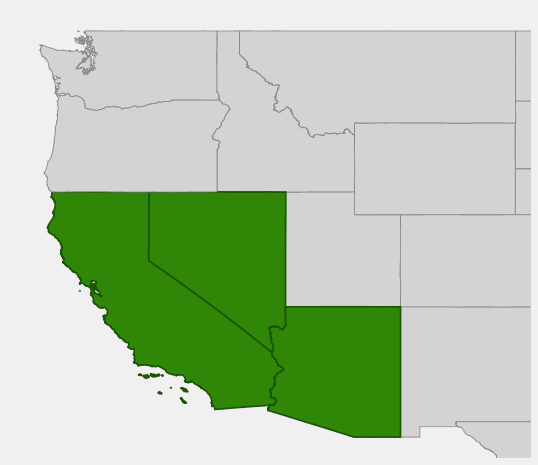
📋 Regional plant lists featuring Ragged Rock Flower: Arizona
Growing & Care Guide
Ragged Rock Flower is one of those plants that asks for very little beyond the right conditions — excellent drainage, full sun, and the patience of a gardener who can appreciate a plant that blooms in late winter and is relatively inconspicuous the rest of the year. In exchange, it offers fragrant early-season flowers, ecological interest, and a genuinely rare native plant for the serious collector.
Light
Full sun is ideal, though the plant tolerates light afternoon shade in the hottest desert environments. In its natural cliff habitat, it often grows in locations that receive full morning sun with some shade from the rock face in the afternoon. Avoid deep shade, which prevents flowering.
Soil & Water
Ragged Rock Flower demands perfect drainage above all else — it grows naturally from bare rock crevices where water drains in seconds. In the garden, plant it in the coarsest, most gravelly soil available, on a mound or slope for additional drainage. Heavy clay soil will kill this plant. Once established (typically after 1–2 seasons), Ragged Rock Flower needs virtually no supplemental water — it is extremely drought tolerant and adapted to surviving on infrequent desert rainfall.
Planting Tips
Plant Ragged Rock Flower in fall for best establishment. Choose a rocky slope, a mounded planting bed, or the gravelly soil around boulders in the garden. The natural context of boulders and rock helps retain soil heat and provides the sharp drainage conditions the plant needs. Space plants 4 to 6 feet apart, as the spreading root system needs room. Transplanting is somewhat tricky — plants resent root disturbance, so handle carefully and water the root zone well after planting.
Pruning & Maintenance
Ragged Rock Flower requires minimal pruning. Remove dead or broken branches at any time. The plant is naturally sparse and irregular — avoid trying to shape it into a formal hedge, as this removes the flowering tips. Light thinning in late spring after flowering improves air circulation. Leave the seed pods on the plant — they add ornamental interest and feed local wildlife.
Landscape Uses
- Rock garden and boulder planting — ideal companion for large landscape boulders
- Dry slope accent — naturally at home on well-drained slopes and hillsides
- Winter-bloom interest — fragrant white flowers appear when little else is blooming
- Native plant collector’s specimen — a rare and fascinating native shrub
- Canyon restoration — appropriate for rocky desert canyon revegetation
Wildlife & Ecological Value
Ragged Rock Flower’s early bloom season and rocky habitat niche make it ecologically important for wildlife that are active during the cool season in the Sonoran Desert.
For Birds
The dense, thorny structure of Ragged Rock Flower provides excellent nesting habitat for small birds seeking protected sites on steep rocky slopes. Phainopeplas, which are among the earliest breeding birds in the Sonoran Desert, may use the plant for nest placement in rocky canyon habitats. The seeds provide food for small finches and sparrows in late spring and summer.
For Mammals
The stout spines and dense branching of Ragged Rock Flower make it unattractive to browsing mammals, but the seeds are consumed by small desert rodents. The plant’s rocky cliff habitat supports a distinct community of lizards, snakes, and invertebrates that shelter among the boulders at the plant’s base.
For Pollinators
Ragged Rock Flower is one of the earliest-blooming native shrubs in the Sonoran Desert, and its fragrant white flowers provide nectar and pollen to native bees that are active during the mild late-winter and early-spring period. Mining bees (Andrena spp.) and early-flying bumblebees are frequent visitors to the flowers during their brief season. The fragrance suggests pollination by multiple generalist insect types in addition to bees.
Ecosystem Role
As a specialist of rocky cliff and canyon wall habitat, Ragged Rock Flower fills an ecological niche that few other native plants can occupy. Its ability to establish directly in rock crevices makes it a pioneer species for primary succession on bare rock surfaces, gradually building thin soil layers that allow other plants to follow. In canyon ecosystems, it contributes to the structural diversity of cliff faces and provides unique habitat for rock-dwelling invertebrates and reptiles.
Cultural & Historical Uses
Ragged Rock Flower has a relatively limited documented history of human use compared to more widespread Sonoran Desert plants, primarily because it grows in inaccessible cliff habitats far from human settlement centers. However, Indigenous peoples of the Sonoran Desert region who traveled through canyon country — including the Yavapai, the Kumeyaay of southern California, and various Baja California peoples — would have encountered this plant and likely used its fragrant flowers for ceremonial or aromatic purposes.
The plant was formally described to Western science by Asa Gray in 1853, based on specimens collected by John Milton Bigelow (1804–1878) during the Sitgreaves Expedition of 1851, which surveyed potential railroad routes through the American Southwest. Bigelow was a physician and botanist who collected specimens throughout Arizona and New Mexico during the survey, and several plant species from the region bear his name in recognition of his botanical contributions. The genus name Crossosoma refers to the fringed seed structure (Greek: krossos = fringe, soma = body).
In contemporary horticulture, Ragged Rock Flower remains almost entirely outside the mainstream native plant trade — even dedicated native plant nurseries rarely stock it. This obscurity is undeserved: it is a genuinely beautiful and ecologically valuable plant that performs reliably in rocky garden settings with minimal care. Botanic gardens in Arizona and California occasionally display it in their native plant collections, introducing visitors to one of the Southwest’s most singular and compelling native shrubs.
Frequently Asked Questions
Where can I find Ragged Rock Flower in the wild?
Look on steep, rocky canyon walls and cliff faces in the Sonoran Desert, particularly in Maricopa, Pinal, Pima, and Yuma counties in Arizona. The White Tank Mountains, Superstition Mountains, and canyons in the Tucson area are good places to search. The plant blooms in February–April before most other vegetation has leafed out, making it easier to spot on bare rock faces.
Why is Ragged Rock Flower so rare in nurseries?
Ragged Rock Flower is difficult to propagate reliably — seeds have specific germination requirements and seedlings are slow-growing. The plant also has a very specific niche habitat that limits its appeal to mainstream gardeners. However, it grows well in rocky garden settings and deserves wider cultivation as a unique and ecologically valuable native shrub.
Is Ragged Rock Flower the same as Cliffrose?
No. Cliffrose (Purshia stansburiana) is in the rose family (Rosaceae) and has larger, more fragrant yellow-white flowers. Ragged Rock Flower (Crossosoma bigelovii) is in the Crossosomataceae family, a much smaller and more unusual plant family. Both grow in rocky desert habitats but are quite distinct plants.
How do I propagate Ragged Rock Flower?
Seeds are the primary propagation method. Collect the small pods when they begin to turn brown and dry. The seeds have a white, fringed aril that should be removed before planting. Sow in a very well-drained, gravelly mix and maintain consistent but light moisture. Germination can be slow and irregular. Stem cuttings taken in early summer may also root with bottom heat.
What other plants are in the Crossosomataceae family?
The Crossosomataceae is a small family of 4–9 genera and about 12 species, all native to western North America and northern Mexico. Other members include Glossopetalon (Greasebush), Forsellesia, and Apacheria. All are woody desert shrubs with small, simple leaves and white flowers. The family is considered to represent a distinctive lineage of flowering plants with no close relatives among the more familiar plant families.

Looking for a nursery that carries Ragged Rock Flower?
Browse our native plant nursery directory: Arizona