Rocky Mountain Maple (Acer glabrum)
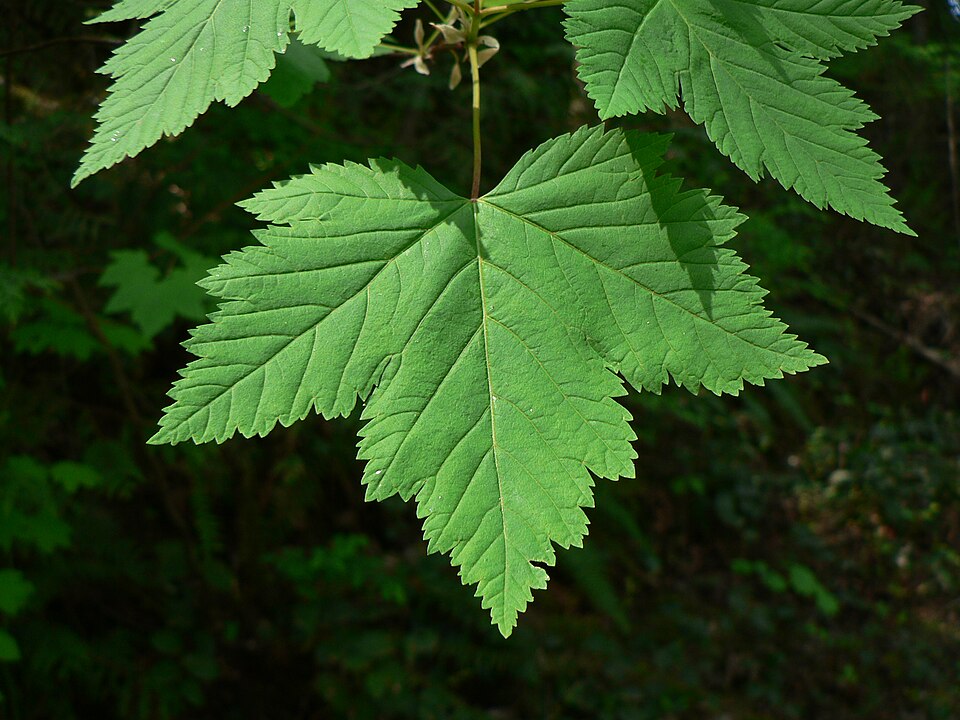
Acer glabrum, commonly known as Rocky Mountain Maple, Douglas Maple, or Smooth Maple, is a native deciduous shrub or small tree of western North America, ranging from southeastern Alaska and British Columbia south through the Rocky Mountains and Cascades to central Arizona and New Mexico. A member of the Sapindaceae (soapberry) family, Rocky Mountain Maple is the most widespread native maple in the western mountains, playing an important role in forest understory, riparian, and montane shrub communities across its vast range.
Growing 8 to 25 feet tall (occasionally to 30 feet), Rocky Mountain Maple develops as a large multi-stemmed shrub or small tree with smooth, gray-green to reddish-brown bark on young stems. Its palmate, three-to-five-lobed leaves (resembling a simplified version of the iconic sugar maple leaf) provide outstanding fall color — turning brilliant shades of red, orange, and yellow — that rivals many ornamental maples. In spring, small yellow-green flowers produce paired samaras (the familiar winged maple seeds) that twirl through the air, dispersed by wind. The plant’s adaptability to shade, steep slopes, streambanks, and a wide range of elevations makes it one of the most ecologically important and versatile native shrubs of the Intermountain West.
For gardeners and restoration practitioners, Rocky Mountain Maple offers exceptional wildlife value, fall color, adaptability to challenging sites, and naturalizing behavior through root sprouting. It is an excellent choice for streambank stabilization, wildlife habitat, mountain garden specimens, and naturalistic understory plantings where its graceful form and superb fall color provide multi-season interest.
Identification
Rocky Mountain Maple typically grows as a multi-stemmed large shrub or small tree, 8–25 feet tall. In open conditions it may develop a more tree-like single-trunk form; in shade or disturbed conditions it produces a thicket of stems from the base. The bark on young stems is smooth, greenish to reddish-brown; older stems and trunks become gray and slightly furrowed. The twigs are smooth (glabrous — hence glabrum) and often reddish in winter.
Leaves
The leaves are opposite, simple, and palmately lobed, typically with three main lobes (occasionally five on more vigorous growth), each with coarsely serrate margins. Leaves are 1.5–4 inches wide, dark green above and paler below, turning outstanding shades of red, orange, and yellow in autumn. The fall color display is one of the finest among western native shrubs, particularly noticeable in mountain canyons and along streams where large stands create sweeping autumn color effects. Petioles (leaf stalks) are reddish, adding ornamental interest.
Flowers & Fruit
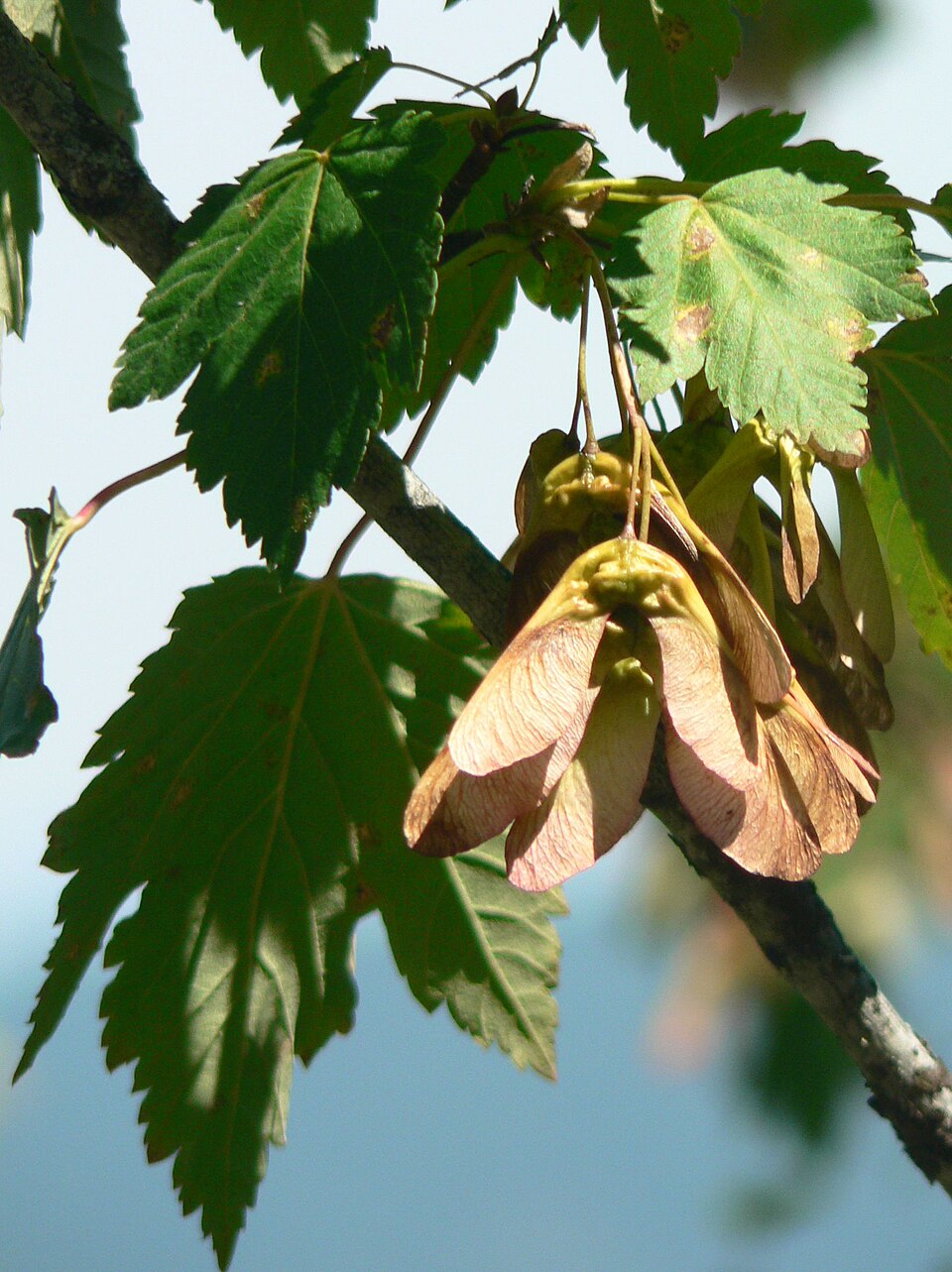
Flowers appear in spring (April–June, depending on elevation) in small, loose clusters. Individual flowers are tiny — about ¼ inch across — yellow-green, and inconspicuous, though collectively they produce a light fragrance. The plant is dioecious or sometimes monoecious (individual trees may be all-male, all-female, or mixed). The fruit is a paired samara (double key) with wings ¾ to 1 inch long, often reddish when young, ripening to tan in late summer. The wings allow the seeds to helicopter through the air, and Rocky Mountain Maple seeds prolifically, establishing readily in disturbed or open sites.
Quick Facts
| Scientific Name | Acer glabrum |
| Family | Sapindaceae (Soapberry / Maple) |
| Plant Type | Deciduous Shrub / Small Tree |
| Mature Height | 8–25 ft |
| Sun Exposure | Full Sun to Part Shade |
| Water Needs | Moderate to High |
| Bloom Time | April – June (varies by elevation) |
| Flower Color | Yellow-green (small, inconspicuous) |
| Fall Color | Red, orange, and yellow (outstanding) |
| Deer Resistant | No (browsed heavily by deer and elk) |
| USDA Hardiness Zones | 3–9 |
Native Range
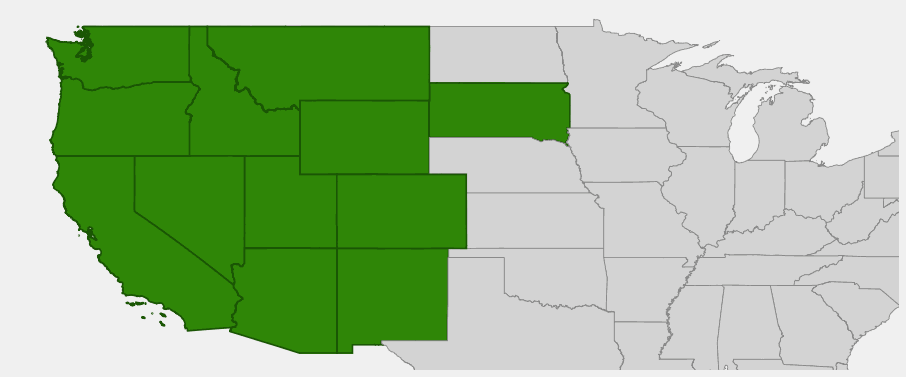
Rocky Mountain Maple has one of the broadest native ranges of any western maple, extending from southeastern Alaska and the Yukon south through British Columbia and Alberta, and continuing south through the Cascade Range and Rocky Mountains to the mountains of central Arizona and New Mexico. In the United States, it is native to Washington, Oregon, California, Idaho, Montana, Wyoming, Colorado, Utah, Nevada, Arizona, New Mexico, and South Dakota. It is the only native maple in most of the Intermountain West.
Within the Intermountain West and Rocky Mountains, Rocky Mountain Maple occupies a remarkably wide range of habitats: streambanks and riparian corridors, forest understory, mountain slopes, canyon walls, subalpine meadow margins, and dry rocky outcrops. It grows from near sea level (in coastal British Columbia) to above 10,000 feet elevation in the southern Rockies. At lower elevations, it is most commonly found in moist canyon bottoms and along streams; at higher elevations, it often forms dense shrub fields on rocky slopes and in subalpine meadow margins.
The species shows considerable variation across its range, and several varieties or subspecies have been recognized, including A. glabrum var. diffusum (Rocky Mountain Maple, a compact shrubby form of the interior West) and A. glabrum var. douglasii (Douglas Maple, a larger-leaved form of the Pacific Coast). These varieties grade into each other across the range, and most authorities now treat them all as a single highly variable species.
📋 Regional plant lists featuring Rocky Mountain Maple: Intermountain West
Growing & Care Guide
Rocky Mountain Maple is a rewarding native shrub or small tree for mountain and western garden settings. It is more adaptable and easier to establish than many larger maple species, and its exceptional fall color makes it one of the most sought-after native shrubs for autumn interest in Intermountain West and Rocky Mountain gardens.
Light
Rocky Mountain Maple grows well in full sun to part shade. In full sun with adequate moisture, it develops the most vivid fall color and produces the most seeds. In part shade — the conditions it experiences in its natural forest understory habitat — it grows more upright and open but still performs well. Avoid deep shade, which results in sparse, weak growth. In hot, dry climates, afternoon shade helps reduce heat stress.
Soil & Water
Rocky Mountain Maple prefers moist to moderately moist, well-drained soils. It thrives in loamy or rocky mountain soils and is more tolerant of rocky, fast-draining sites than many other maples, provided adequate moisture is available. It grows naturally along streams and in canyon bottoms, so it performs best with consistent moisture. Newly planted trees require regular watering for the first 1–2 seasons; established plants are considerably more drought-tolerant. This maple is not suited for hot, dry lowland sites without irrigation.
Planting Tips
Plant Rocky Mountain Maple in fall or early spring in a location with at least 4 hours of direct sun and good soil moisture. It transplants readily from container stock. If training as a single-trunk tree, select the strongest central leader and remove competing stems early in the plant’s life. For a naturalistic multi-stemmed shrub form — which provides maximum wildlife habitat — simply allow it to grow without pruning. Spacing of 8–12 feet allows full development of the natural form.
Pruning & Maintenance
Rocky Mountain Maple requires minimal maintenance. For a tree form, prune in late winter or early spring before bud break, removing lower branches gradually to reveal the attractive bark. For a shrub form, remove dead or damaged stems at the base annually. The plant suckers from the root crown and can form clumps or thickets over time — remove suckers as they appear if a more contained, tree-like form is preferred. Fall leaf cleanup is optional; the leaves decompose quickly and contribute to soil organic matter.
Landscape Uses
Rocky Mountain Maple is versatile in western native landscapes:
- Fall color specimen — outstanding red, orange, and yellow fall color
- Streambank planting — stabilizes banks and provides riparian wildlife habitat
- Understory tree — naturalizes beneath taller conifers and aspens
- Wildlife screen or hedge — dense multi-stemmed growth provides cover and food
- Mountain garden shrub — thrives in cool, moist mountain garden settings
- Canyon and rocky slope planting — adapted to steep, rocky terrain with some moisture
Wildlife & Ecological Value
Rocky Mountain Maple is a keystone species in the forest understory and riparian communities of the Intermountain West, providing food, cover, and structure for diverse wildlife.
For Birds
The paired samaras (winged seeds) are eaten by Evening Grosbeaks, Pine Grosbeaks, Purple Finches, and various sparrow and finch species. The dense multi-stemmed growth provides excellent nesting habitat and protective cover for songbirds. American Robins, Gray Catbirds, and various thrushes shelter in the foliage and forage for insects among the branches. The spring flowers attract insects that in turn attract insectivorous birds during the nesting season.
For Mammals
Rocky Mountain Maple is heavily browsed by Elk and Mule Deer, which consume the twigs, buds, and foliage — particularly in winter and early spring when other forage is scarce. This browsing pressure can significantly affect plant form in areas with high ungulate populations. Moose browse the larger stems in northern portions of the range. Beavers cut stems for food and dam construction in riparian areas. Black Bears eat the seeds in late summer. Chipmunks and squirrels store the seeds in caches for winter food.
For Pollinators
The small spring flowers of Rocky Mountain Maple, though inconspicuous, produce nectar that attracts native bees, flies, and wasps in early spring — an important early-season resource. Spring Azure butterflies (Celastrina ladon) and various skipper species use the plant as a larval host. The early flowering period makes it especially valuable when few other nectar sources are available.
Ecosystem Role
Rocky Mountain Maple is a critical understory species that contributes to forest structural diversity, soil health, and wildlife habitat across the Intermountain West. As one of the most widespread deciduous understory plants in the region’s coniferous forests, its leaf litter decomposes more rapidly than conifer needles, enriching soil organic matter and supporting invertebrate communities. It also plays a role in post-fire recovery — sprouting vigorously from the root crown after fire, providing rapid vegetation cover and wildlife food in burned areas.
Cultural & Historical Uses
Rocky Mountain Maple was used by numerous Indigenous nations across its vast range. The Nlaka’pamux (Thompson), Secwépemc (Shuswap), Lil’wat, and other Interior Salish peoples used the wood for making snowshoe frames, bows, arrow shafts, and handles for tools — the hard, dense wood was well-suited for these applications. The young shoots were sometimes eaten raw in spring, and the large leaves were used as food wraps for cooking in earth ovens. Bark from the stems was used medicinally in decoctions for treating coughs and colds.
The Blackfoot (Niitsitapi) used Rocky Mountain Maple stems for smoking pipes and for various woodworking applications. The Shoshone used the bark medicinally and the seeds as a minor food source. Throughout the plant’s range, the flexible young stems and branches were used in basket making and as binding material in construction.
In modern horticulture, Rocky Mountain Maple is increasingly recognized as a valuable native alternative to non-native maples in western gardens. Its exceptional cold hardiness (to USDA Zone 3), adaptability to rocky mountain soils, and extraordinary fall color make it one of the most desirable native shrubs for mountain communities from Idaho to Arizona. It is widely used in riparian restoration projects, highway revegetation, and habitat restoration across the Intermountain West, where its fast establishment and wildlife value make it a cost-effective choice for large-scale plantings.
Frequently Asked Questions
Is Rocky Mountain Maple a shrub or a tree?
Rocky Mountain Maple grows as either a large multi-stemmed shrub or a small single-trunked tree, depending on growing conditions and how it is managed. In open, sunny sites, it often develops a more tree-like form. In forest understory or disturbed sites, it tends to be a multi-stemmed shrub. Both forms are equally native and valuable. Pruning early in the plant’s life to a single leader produces the most tree-like form.
What is the fall color of Rocky Mountain Maple?
Rocky Mountain Maple is one of the most brilliantly colored of all western native shrubs in autumn, displaying vivid shades of red, orange, and golden yellow — often all three simultaneously on a single plant. The intensity of fall color varies with site conditions: plants in full sun with some moisture stress in late summer tend to have the most vivid colors. It is one of the main sources of fall color in Rocky Mountain and Intermountain West canyons.
How fast does Rocky Mountain Maple grow?
Rocky Mountain Maple grows at a moderate rate, typically 1–2 feet per year under good conditions. Growth is fastest in moist, partly sunny sites. In full shade or dry conditions, growth slows considerably. The plant typically reaches its mature height in 10–15 years.
Can Rocky Mountain Maple grow at high elevations?
Yes — Rocky Mountain Maple is one of the most cold-hardy and high-elevation-tolerant of the native western shrubs, growing naturally up to 10,000 feet or more in the southern Rockies. It is an excellent choice for mountain gardens at high elevations where many other trees and shrubs struggle.
Does Rocky Mountain Maple have good seeds for wildlife?
Yes. The paired samaras (winged seeds) produced in summer and fall are eaten by seed-eating birds including Evening Grosbeaks, Pine Siskins, and various finches. The seeds have a relatively high fat and protein content compared to many small seeds, making them a quality food resource. Trees that produce abundant seed are especially valuable wildlife plants in autumn and early winter.