
Rosebay Rhododendron (Rhododendron maximum)
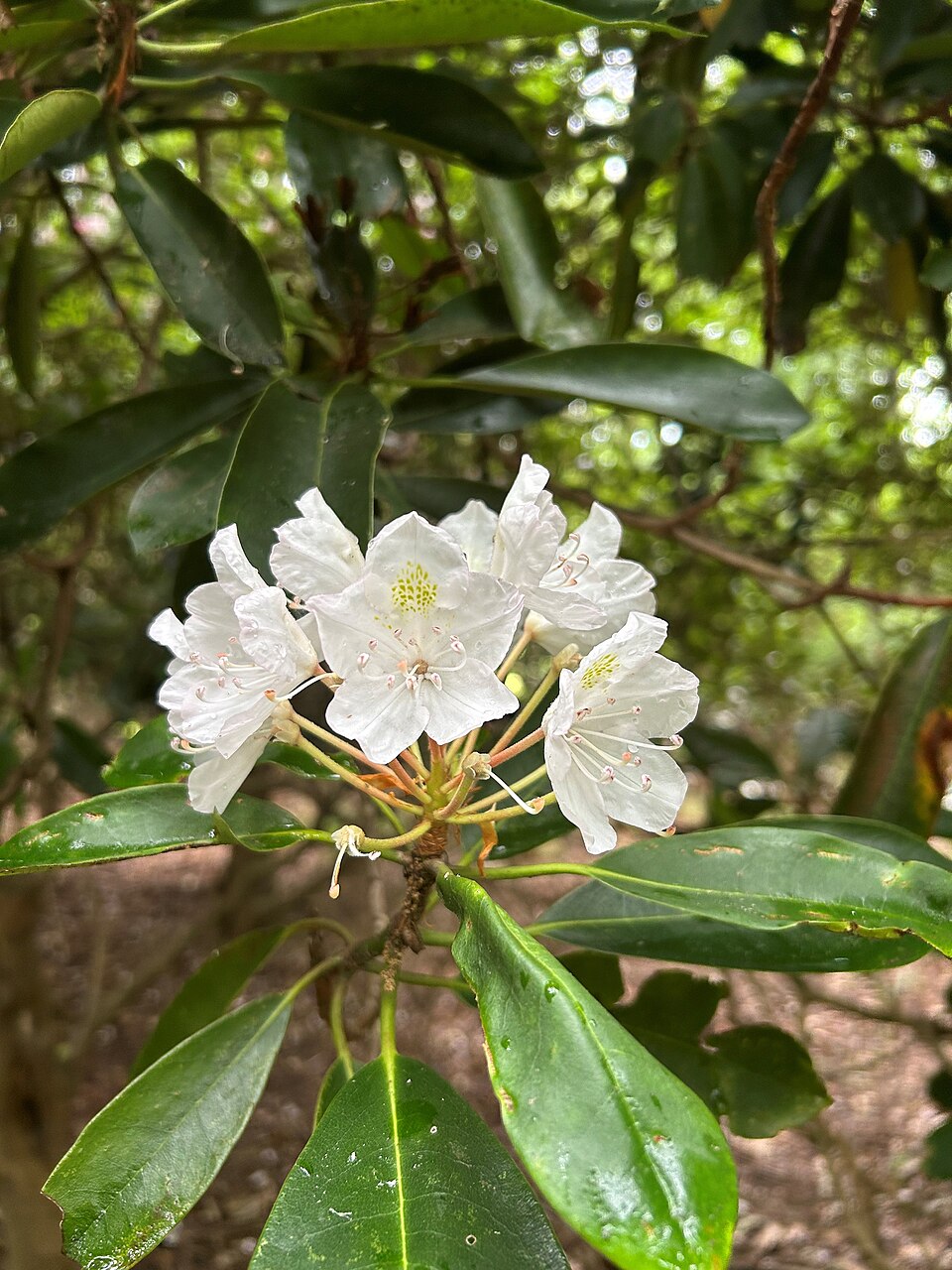
Rhododendron maximum, commonly known as Rosebay Rhododendron, Great Rhododendron, or simply Great Laurel, is the largest and most spectacular native rhododendron of eastern North America. This magnificent evergreen shrub, and sometimes small tree, is a defining species of the Appalachian Mountains, where it creates some of the most dramatic and impenetrable plant communities on the continent. The name “rhododendron” comes from the Greek words “rhodos” (rose) and “dendron” (tree), perfectly capturing the rose-like beauty of this remarkable plant.
Growing 15-40 feet tall in ideal conditions, Rosebay Rhododendron forms dense, nearly impenetrable thickets known as “rhododendron hells” or “laurel hells” — tangles so thick that early settlers and indigenous peoples alike developed special techniques to navigate through them. These evergreen fortresses provide critical habitat structure in Appalachian forests, creating microclimates that support unique communities of plants and animals found nowhere else.
The plant’s spectacular summer flower display — massive clusters of white to deep pink blooms with distinctive orange or yellow spots — transforms the forest understory into a breathtaking wonderland from June through July. Each flower cluster can contain 20-25 individual blossoms, and a mature shrub may produce hundreds of these clusters simultaneously. Combined with its glossy evergreen foliage that provides year-round structure, Rosebay Rhododendron represents one of North America’s finest native ornamental plants for shaded woodland gardens.
Identification
Rosebay Rhododendron is unmistakable when mature, forming large, dense evergreen shrubs with distinctive leathery leaves and spectacular flower clusters. Young plants may be more challenging to identify but can be recognized by their evergreen leaves with rusty-brown undersides and their preference for shaded, acidic conditions.
Leaves
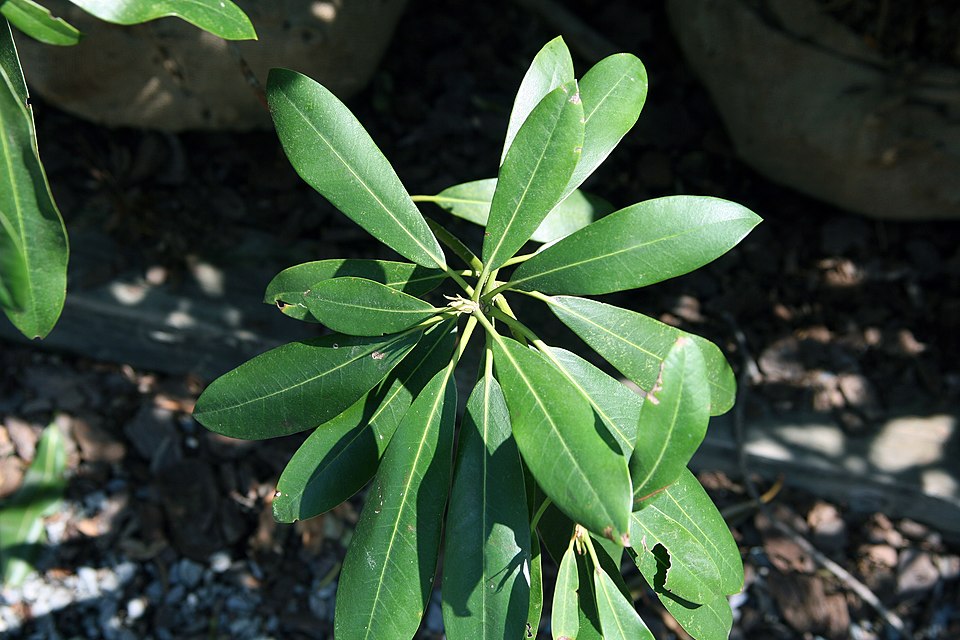
The leaves are Rosebay Rhododendron’s most distinctive vegetative feature — they are large, evergreen, and leathery, measuring 4-10 inches long and 1.5-3 inches wide. Each leaf is elliptical to oblong with a dark, glossy green upper surface and a characteristic rusty-brown, fuzzy underside. The leaf margins are entire (smooth-edged) and often slightly rolled under. The prominent midrib and parallel secondary veins give the leaves a distinctly ribbed appearance.
What makes these leaves particularly recognizable is their response to cold weather — during winter, they curl lengthwise and droop downward, creating a distinctive “wilted” appearance that protects them from desiccation and cold damage. This adaptation allows the plant to remain evergreen even in harsh mountain climates.
Flowers
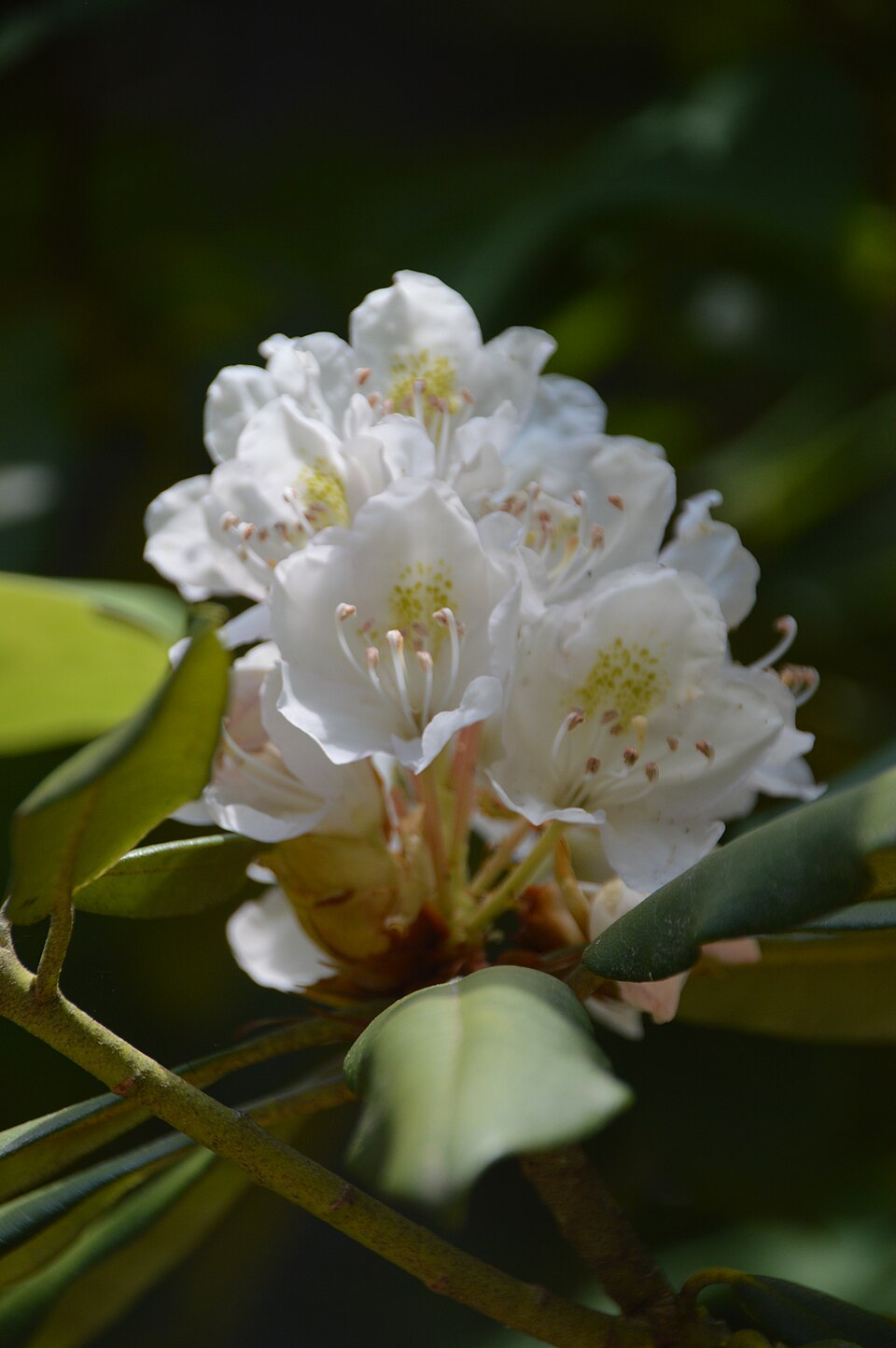
The flowers are arguably the most spectacular feature of any native North American shrub. They appear in large, dome-shaped clusters (technically called corymbs) at the branch tips from June through July, depending on elevation and latitude. Each cluster contains 15-25 individual flowers, and mature shrubs can produce dozens to hundreds of clusters simultaneously.
Individual flowers are bell-shaped to funnel-shaped, about 1.5 inches across, with five lobes that flare outward. The color varies from pure white through various shades of pink to deep rose, often with distinctive orange, yellow, or green spots on the upper petal. Each flower has 10 prominent stamens that extend beyond the petals, giving the flower clusters a distinctly fuzzy appearance.
Growth Form
Rosebay Rhododendron typically grows as a large, multi-stemmed evergreen shrub, though in ideal conditions it can develop into a small tree with a single trunk. The branching pattern is distinctive — branches tend to grow in regular whorls, creating a layered or tiered appearance. The smooth bark is reddish-brown on young stems, becoming gray and slightly furrowed with age.
Quick Facts
| Scientific Name | Rhododendron maximum |
| Family | Ericaceae (Heath) |
| Plant Type | Evergreen Shrub / Small Tree |
| Mature Height | 15–40 ft |
| Sun Exposure | Part Shade to Full Shade |
| Water Needs | Moderate to High |
| Bloom Time | June – July |
| Flower Color | White to deep pink with orange spots |
| USDA Hardiness Zones | 4–7 |
Native Range
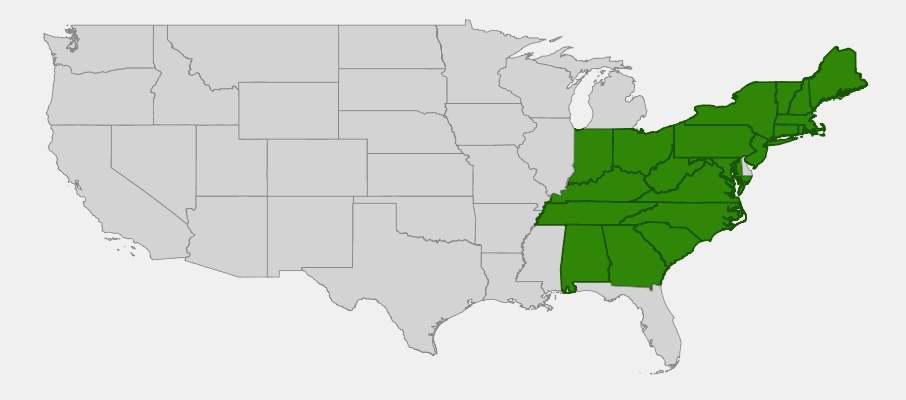
Rosebay Rhododendron is primarily native to the Appalachian Mountain region, with its range extending from southern Maine and New Hampshire south through the mountains to northern Georgia and Alabama. The species reaches its greatest abundance and largest size in the mountains of Virginia, West Virginia, North Carolina, and Tennessee, where it forms extensive understory communities in moist, acidic forest soils.
The plant shows a strong preference for higher elevations and cooler, moister conditions, typically growing at elevations from 1,000 to 6,000 feet in the southern Appalachians. In the northern part of its range, it can be found at sea level, but in the South, it’s largely restricted to mountain coves, north-facing slopes, and streamside areas where temperatures remain cooler and moisture is more consistent.
Rosebay Rhododendron is the dominant understory species in many Appalachian forest types, particularly in acidic oak-hickory forests, mixed mesophytic forests, and hemlock-hardwood forests. It creates some of the most distinctive and ecologically important plant communities in eastern North America — the dense rhododendron thickets that provide critical wildlife habitat and help define the character of Appalachian forests.
📋 Regional plant lists featuring Rosebay Rhododendron: North Carolina & South Carolina
Growing & Care Guide
Rosebay Rhododendron can be challenging to grow outside its native range, but with the right conditions, it becomes a spectacular and long-lived addition to woodland gardens. The key to success is replicating the cool, moist, acidic conditions of its mountain home.
Light
Unlike many flowering shrubs, Rosebay Rhododendron actually prefers partial to full shade. In its native habitat, it grows in the filtered light of the forest understory, where it receives dappled sunlight or bright indirect light. In full sun, especially in hot climates, the plant struggles with heat stress and requires significantly more water. Morning sun with afternoon shade is ideal in most garden situations.
Soil & Water
Soil conditions are critical for Rosebay Rhododendron success. The plant absolutely requires acidic soil with a pH between 4.5 and 6.0, rich in organic matter, and consistently moist but well-drained. Heavy clay soils or alkaline conditions will cause the plant to struggle or die. The ideal soil is similar to natural forest duff — deep, humus-rich, and naturally acidic.
Consistent moisture is essential, particularly during the growing season and flower bud development. However, waterlogged conditions will kill the plant quickly, as rhododendrons have shallow, fibrous root systems that require oxygen. Mulching with 2-3 inches of acidic organic matter (pine needles, shredded oak leaves, or pine bark) helps maintain proper moisture and soil chemistry.
Planting Tips
Plant Rosebay Rhododendron in early spring or fall, choosing a location with natural or created acidic soil conditions. If your soil is alkaline, consider creating raised beds with acidic soil amendments, or plant in large containers with acidic potting mix. The plant has shallow roots, so don’t plant too deeply — the root ball should sit at or slightly above the surrounding soil level.
Pruning & Maintenance
Rosebay Rhododendron rarely requires pruning and actually resents heavy cutting. Remove spent flower clusters immediately after blooming to prevent seed formation and promote bushier growth. Any structural pruning should be done immediately after flowering, as flower buds for the following year form in summer. Remove dead, damaged, or crossing branches as needed, but avoid major reshaping — the natural form is part of the plant’s appeal.
Landscape Uses
When successfully established, Rosebay Rhododendron offers unique landscape value:
- Woodland gardens — spectacular focal point for shaded areas
- Native plant gardens — authentic Appalachian forest understory
- Privacy screening — evergreen year-round structure
- Wildlife habitat — provides shelter and limited nectar for specialized pollinators
- Erosion control — excellent for slopes and challenging sites with proper conditions
- Foundation planting — works well on north sides of buildings in appropriate climates
Wildlife & Ecological Value
Rosebay Rhododendron plays a unique and critical role in Appalachian forest ecosystems, creating habitat structure and microclimates that support specialized plant and animal communities found nowhere else in North America.
For Birds
The dense evergreen canopy of rhododendron thickets provides essential thermal cover for birds during harsh mountain winters. Many species, including various warblers, thrushes, and wrens, build nests within the protected environment of rhododendron stands. The year-round shelter is particularly important for birds that remain in the mountains through winter, offering protection from wind, snow, and extreme temperatures.
For Mammals
Large rhododendron thickets create critical cover for mammals including White-tailed Deer, Black Bears, and Wild Turkeys. Bears often seek shelter in rhododendron “hells” during severe weather, and deer use the dense stands as secure bedding areas. Small mammals like mice, voles, and chipmunks find protection within the maze of stems and evergreen canopy.
For Pollinators
While Rosebay Rhododendron flowers are beautiful, they’re actually somewhat toxic to many insects, including honeybees. However, they do support specialized native pollinators that have evolved tolerance to the plant’s toxins, including certain bumblebees and native flies. The nectar is reportedly poisonous to most insects and can even make honey toxic if bees collect it in large quantities.
Ecosystem Role
Rosebay Rhododendron serves as a foundation species in many Appalachian forest ecosystems. The dense thickets create unique microclimates that are cooler and moister than the surrounding forest, supporting specialized plants that cannot survive in more open conditions. The evergreen canopy also provides critical habitat structure in deciduous forests, maintaining cover and shelter throughout the year when other plants are leafless.
Cultural & Historical Uses
Rosebay Rhododendron holds a complex place in Appalachian cultural history, simultaneously revered for its spectacular beauty and feared for its toxic properties and impenetrable growth habit. Indigenous peoples of the Appalachian region, including the Cherokee, recognized the plant’s toxic nature and generally avoided it, though some tribes used small amounts of the leaves medicinally for external applications despite the significant dangers involved.
Early European settlers quickly learned to both appreciate and curse rhododendron thickets. The term “rhododendron hell” or “laurel hell” emerged from the experience of travelers and hunters who became lost in the nearly impenetrable tangles of these evergreen shrubs. Stories abound of people becoming disoriented and trapped for days in rhododendron thickets, unable to see the sky or maintain direction through the maze of branches.
Despite the challenges they presented, rhododendron thickets became legendary hideouts during the Civil War. Confederate and Union forces alike used the dense stands as cover, and many stories tell of soldiers and partisans using their knowledge of rhododendron “hells” to evade capture. Local mountain people developed specialized techniques for navigating through these thickets, knowledge that was passed down through generations.
The plant’s spectacular floral display has made it a symbol of Appalachian natural beauty, appearing in countless photographs, paintings, and literary works celebrating the region. West Virginia designated Rosebay Rhododendron as its state flower in 1903, and the plant appears on the state quarter. Pennsylvania also adopted it as a state flower, reflecting the plant’s iconic status throughout its range.
Modern horticulture has embraced Rosebay Rhododendron as parent material for hybrid rhododendrons, contributing cold-hardiness genes to garden varieties. However, the pure native species remains challenging to cultivate outside its natural range, adding to its mystique and desirability among native plant enthusiasts.
Frequently Asked Questions
Is Rosebay Rhododendron really toxic?
Yes, all parts of the plant contain grayanotoxins that are poisonous to humans and most animals. The leaves, flowers, and even nectar can cause serious illness if consumed. However, the bitter taste usually deters casual consumption. Keep children and pets away from the plant, and never use it for food or medicine — the risks are too great.
Why won’t my Rosebay Rhododendron bloom?
Several factors can prevent blooming: insufficient light (needs at least bright filtered light), alkaline soil (requires acidic conditions), excessive fertilizer (promotes leaf growth at expense of flowers), or recent transplant stress. The plant may also take several years to establish before blooming begins. Ensure proper acidic soil conditions and be patient — mature specimens can take 7-10 years to begin reliable flowering.
Can I grow Rosebay Rhododendron outside its native range?
It’s challenging but possible in areas with similar climates — cool, moist conditions with acidic soil. The plant struggles in hot, dry climates or areas with alkaline soil. If you’re outside the native range, consider whether other rhododendron species or hybrids might be better adapted to your specific conditions.
How do I create the right soil conditions for Rosebay Rhododendron?
Start with a soil test to determine current pH. If alkaline, you’ll need to create acidic conditions by adding sulfur, peat moss, pine needles, or other acidifying organic matter. Building raised beds with acidic soil mix is often the most reliable approach. The soil should drain well but stay consistently moist, similar to natural forest conditions.
Why are my rhododendron leaves turning yellow?
Yellow leaves usually indicate either alkaline soil conditions (causing iron chlorosis) or overwatering. Check soil pH first — it should be between 4.5 and 6.0. If pH is correct, evaluate drainage and watering practices. The plant needs consistent moisture but not waterlogged conditions. Poor drainage kills rhododendrons more often than drought.

Looking for a nursery that carries Rosebay Rhododendron?
Browse our native plant nursery directory: North Carolina · South Carolina