Round-Headed Bush Clover (Lespedeza capitata)
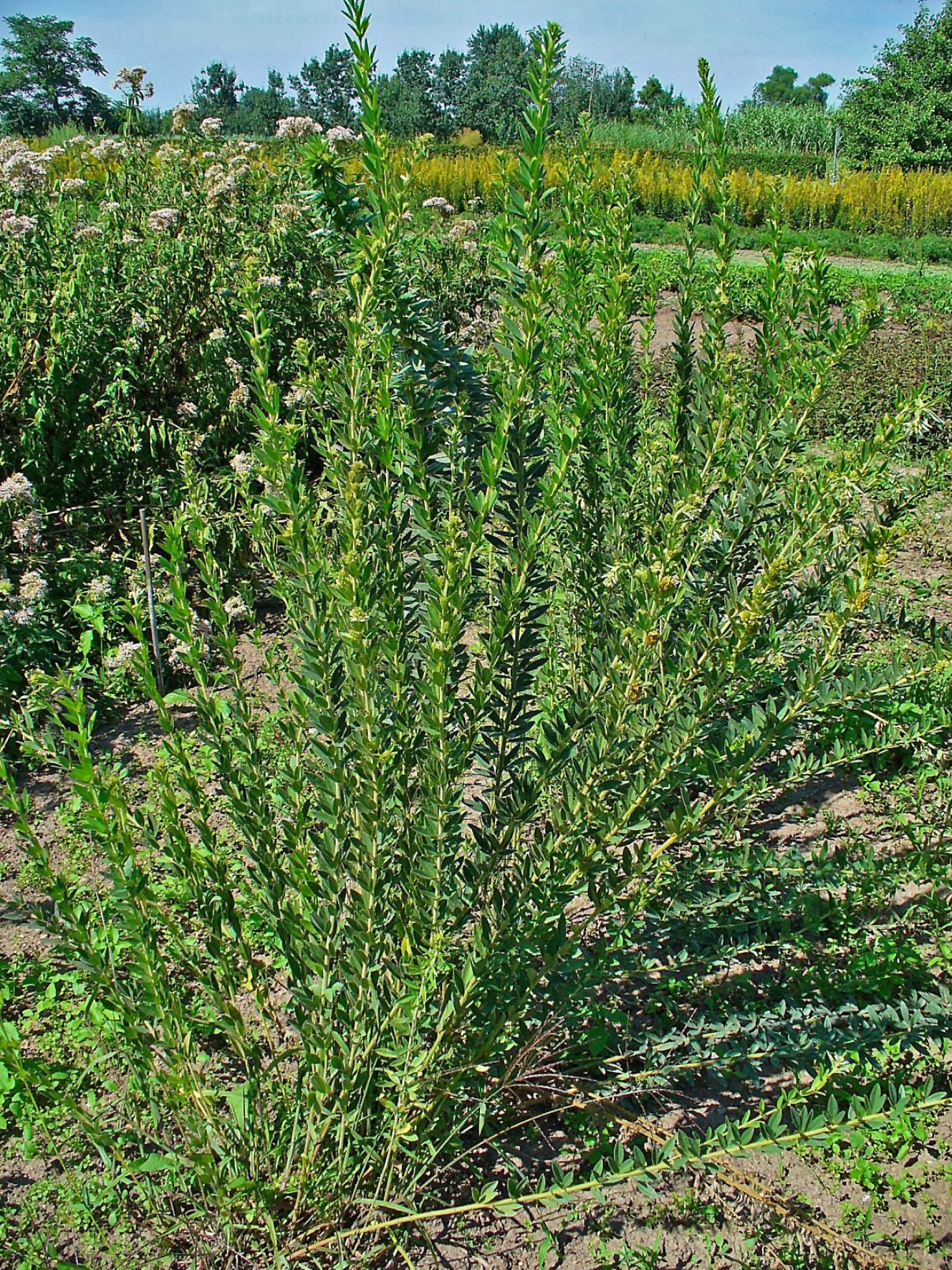
Lespedeza capitata, commonly known as Round-Headed Bush Clover or Roundhead Lespedeza, is a tall, stiff-stemmed native perennial of prairies and open woodlands that may not win a beauty contest during its summer blooming season, but more than compensates in autumn and winter when its persistent, densely clustered bronze-brown seed heads become some of the most important bird food sources in the landscape. The species name capitata means “having a head” — referring to the rounded clusters of small cream-white flowers and seed heads that are grouped along the upper portions of the stems. A member of the Fabaceae (legume) family, it is related to true clovers, vetches, and wild indigo.
Round-Headed Bush Clover is among the few prairie plants whose greatest wildlife value comes after the growing season has ended. By late summer, the small white flowers have matured into hairy, one-seeded pods that remain attached to the plant through winter. Upland game birds — particularly Northern Bobwhite and Ring-necked Pheasant — rely heavily on these persistent seed heads during winter months when other food is scarce and snow covers the ground. Songbirds from finches to sparrows join in, and the stiff, erect stems hold the seeds above snow where ground-feeding birds can access them. Ecologists have ranked Lespedeza capitata as one of the top wildlife food plants of eastern and central North America.
Growing 2 to 4 feet tall with strongly upright, silver-hairy stems, Round-Headed Bush Clover is a plant that looks more weed-like than ornamental in a conventional garden context. But in a native prairie planting, its stiff vertical structure contrasts beautifully with the arching grasses and billowing forbs around it, and its wildlife value more than justifies its presence. It thrives on dry, sandy, low-fertility soils — precisely the kind of marginal sites where it can be most useful — and once established, it is essentially maintenance-free and long-lived.
Identification
Round-Headed Bush Clover is an upright herbaceous perennial arising from a crown of woody rhizomes. It grows 2 to 4 feet tall, rarely more, with stems that are stiffly erect and only sparingly branched. The overall impression is of a slender, silver-hairy column topped by clusters of seed heads.
Stems & Leaves
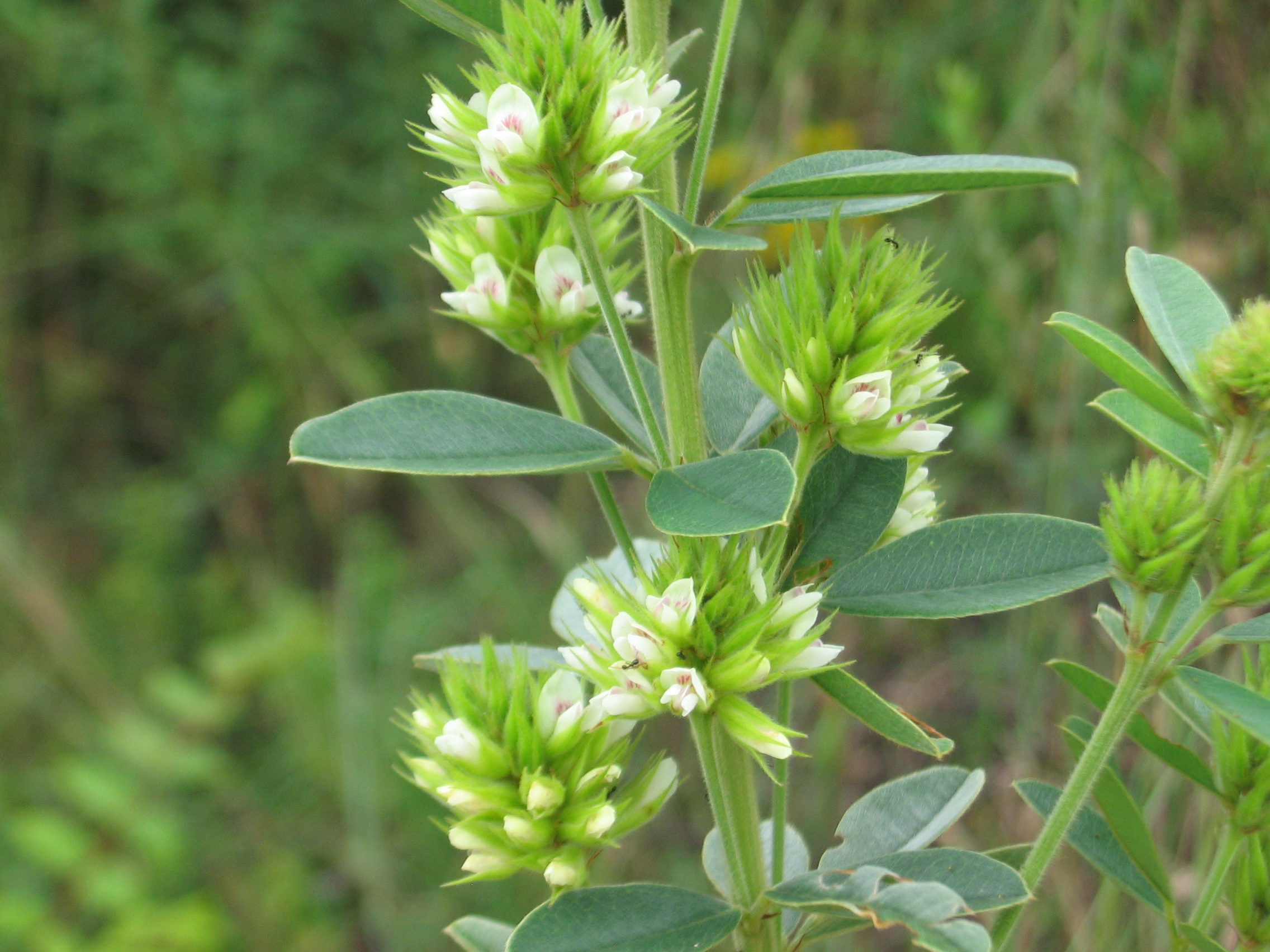
The stems are erect, stout for their diameter, and densely covered in spreading, silky-silver hairs that give the entire plant a distinctive silvery appearance, especially in sunlight. The leaves are alternate and trifoliate (three leaflets), as expected of a legume family member. Each leaflet is narrowly oval to oblong, ¾ to 1½ inches long, with a dense coating of silver hairs on the underside and scattered hairs on top. The leaf surface is dark green, providing a strong contrast with the silvery stem hairs. The trifoliate leaves are stalkless or very nearly so, and the leaflets have a distinctive parallel-veined texture.
Flowers
The flowers are small (¼ inch) and typical of the pea family: cream-white with a slight yellow or pinkish tinge, arranged in dense, rounded clusters (capitula) at the leaf axils along the upper portions of the stems. The clusters appear crowded together, almost whorled around the stem. Flowering occurs in July through September. The flowers are not individually showy, but the plant in bloom has a pleasant, compact appearance, and the flower clusters attract numerous small native bees and butterflies that visit for nectar and pollen.
Fruit & Seeds
The fruit is a small, hairy, oval pod (about ⅓ inch long) containing a single seed. These pods remain enclosed in the persistent calyx and bracts, so the “seed heads” that persist through winter appear as dense, bristly clusters of small hairy pods rather than open capsules. The pods are dark brown to bronze-black at maturity, and the persistent clusters of dozens of pods per node give the plant its characteristic winter appearance. The seeds are highly nutritious and are a preferred food of bobwhite, pheasant, and numerous other birds and small mammals.
Quick Facts
| Scientific Name | Lespedeza capitata |
| Family | Fabaceae (Legume / Pea) |
| Plant Type | Herbaceous Perennial / Subshrub |
| Mature Height | 2–4 ft |
| Sun Exposure | Full Sun |
| Water Needs | Moderate to Low (Drought Tolerant) |
| Bloom Time | July – September |
| Flower Color | Cream-white |
| USDA Hardiness Zones | 3–8 |
Native Range
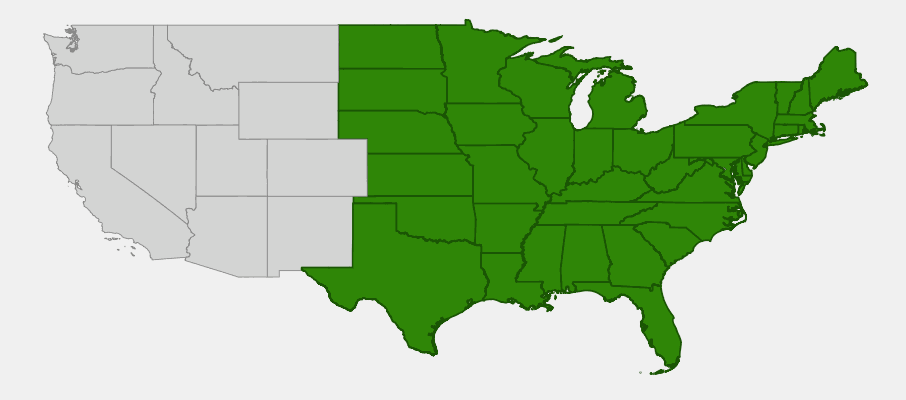
Round-Headed Bush Clover has one of the broadest native ranges of any prairie perennial in North America, extending from the Great Plains east to the Atlantic seaboard. In the West, it occurs in Nebraska, Kansas, South Dakota, North Dakota, Oklahoma, and Texas. Moving east, it is found throughout the entire Midwest — Iowa, Missouri, Arkansas, Illinois, Indiana, Wisconsin, Minnesota, Ohio, and Michigan — and continues through the Northeast into Pennsylvania, New York, New Jersey, Massachusetts, Connecticut, Rhode Island, Vermont, New Hampshire, and Maine. In the South, it ranges through Maryland, Delaware, Virginia, West Virginia, North Carolina, South Carolina, Georgia, Florida, Tennessee, Kentucky, Mississippi, Alabama, and Louisiana.
Despite this vast range, Round-Headed Bush Clover is almost always found in similar habitats: dry, open sites with well-drained, often sandy, rocky, or poor soils. Upland prairies, open oak savannas, sandy barrens, dry open roadsides, and the margins of open pine woods are its characteristic habitats. It is a reliable indicator of dry, fire-maintained, or otherwise disturbed open communities and is rarely found in dense forest, wetland, or rich, moist grassland settings.
In Nebraska and Kansas, Round-Headed Bush Clover is associated primarily with upland and sand prairies on well-drained, often sandy soils. It is sometimes found in the sandhills region of Nebraska, where it grows alongside other sand-adapted prairie species. Like most prairie legumes, it is most abundant in areas with a history of periodic fire, which prevents woody encroachment and maintains the open conditions it requires.
📋 Regional plant lists featuring Round-Headed Bush Clover: Nebraska & Kansas
Growing & Care Guide
Round-Headed Bush Clover is one of the toughest, most low-maintenance native perennials available for dry, sunny sites. Its ability to thrive in poor soils, combined with its exceptional wildlife value, makes it a practical and ecologically important addition to any prairie garden or wildlife habitat planting.
Light
Full sun is required. Round-Headed Bush Clover evolved on open prairies with unobstructed light. In shade, it grows weakly, produces few flowers, and is short-lived. Choose a site with 8 or more hours of direct sunlight daily for best performance.
Soil & Water
Poor, dry, well-drained soil is ideal — and actually preferred. Round-Headed Bush Clover thrives in sandy, rocky, or gravelly soils with low fertility, precisely the type of challenging sites where most garden plants struggle. Like all legumes, it fixes atmospheric nitrogen through root bacteria, allowing it to thrive where soil nitrogen is very low. Rich, moist, heavily amended garden soil produces excessive vegetative growth and short-lived plants. Once established, it is extremely drought tolerant and requires no supplemental irrigation. Avoid clay soils with poor drainage.
Planting Tips
Plant in spring or fall as container-grown plants or bare-root divisions. Seed germinates readily after scarification — nick the hard seed coat with sandpaper or file, or soak in warm water for 24 hours before planting. Space plants 18 to 24 inches apart. Round-Headed Bush Clover does not transplant well once established due to its extensive root system; choose the planting site thoughtfully. It is an excellent plant for naturalizing dry slopes, roadsides, and former lawn areas that are being converted to prairie.
Pruning & Maintenance
Leave standing through winter — this is critically important! The persistent seed heads are a major winter food source for birds, and cutting plants back in fall removes this resource. Cut back to the ground in late winter or early spring before new growth emerges. No fertilizing is needed or beneficial. Divide clumps every 4–5 years to maintain vigor, or allow to self-seed for naturalization.
Landscape Uses
- Prairie meadow plantings — structural component with exceptional bird value
- Wildlife habitat — essential for bobwhite, pheasant, and songbirds
- Dry sandy slopes and banks — excellent erosion control in poor soils
- Roadside naturalization — thrives in poor roadside soils
- Winter interest — persistent bronze seed heads add structure through snow season
- Butterfly gardens — flowers attract numerous small butterfly and bee species
Wildlife & Ecological Value
Round-Headed Bush Clover is widely recognized by wildlife managers and ornithologists as one of the most important food plants for game birds and songbirds in the eastern and central United States, particularly during winter. Its persistent seed heads are a resource that few other plants can match.
For Birds
Round-Headed Bush Clover seeds are consumed by at least 30 species of birds. Northern Bobwhite — a prairie bird in steep decline across its range — depends heavily on Lespedeza seeds through the cold months when other food sources are covered by snow or exhausted. Ring-necked Pheasant, Greater Prairie-Chicken, Wild Turkey, and Mourning Dove are other important consumers. Among songbirds, American Tree Sparrow, White-throated Sparrow, White-crowned Sparrow, Dark-eyed Junco, Purple Finch, and American Goldfinch all feed on the seeds. Wildlife managers in the Southeast have historically planted Lespedeza capitata as a game bird food plot plant.
For Mammals
Cottontail rabbits browse the tender shoots in spring and eat the seed heads in fall and winter. White-tailed deer occasionally browse the foliage, particularly young plants, but established plants are generally not heavily grazed. Ground squirrels and prairie dogs cache the seeds for winter stores. The root nodules support nitrogen-fixing bacteria, creating a soil improvement effect that benefits surrounding plants.
For Pollinators
Though individually small and not showy, the flowers of Round-Headed Bush Clover are rich in nectar and pollen and attract a wide variety of native bees, including bumblebees, sweat bees, and small mining bees. Several butterfly species — including Gray Hairstreaks, Eastern-tailed Blues, and Clouded Sulphurs — use Lespedeza species as larval host plants. The plant also hosts the caterpillars of several native moths.
Ecosystem Role
As a nitrogen-fixing legume, Round-Headed Bush Clover actively improves soil fertility, creating conditions that support higher plant diversity in its immediate vicinity. Its deep, woody root crown is virtually indestructible by fire, and plants resprout vigorously after burning — an important adaptation for a prairie species. The persistent winter structure created by its stiff stems provides both food and thermal cover for wildlife through the coldest months of the year.
Cultural & Historical Uses
Round-Headed Bush Clover was an important plant for many Indigenous peoples of eastern and central North America. The Potawatomi used a root decoction as a fever medicine and diuretic. The Meskwaki prepared an infusion of the whole plant for kidney and urinary conditions. The Cherokees and other southeastern nations used Lespedeza species medicinally for various complaints including fevers, diarrhea, and as a general tonic. The seeds were consumed as a food source by some peoples, although they are small and not abundant enough to be a dietary staple.
In the 19th and early 20th centuries, Japanese Bush Clover (Lespedeza thunbergii) and related exotic Lespedeza species were introduced to North America and heavily promoted by wildlife managers and soil conservationists as food plants for quail and pheasant. This promotion of exotic lespedezas led to their widespread planting across the Southeast and Midwest, where some have become invasive. The native Round-Headed Bush Clover provides equivalent or superior wildlife value without the invasiveness risk, and is now widely preferred by conservation organizations over exotic alternatives.
Modern plant ecologists have recognized Round-Headed Bush Clover as a foundation species of dry prairie and savanna ecosystems. Its nitrogen-fixing ability, drought tolerance, and multi-season wildlife value make it an essential component of prairie restoration seed mixes and wildlife habitat improvement projects. The U.S. Department of Agriculture’s Natural Resources Conservation Service (NRCS) has promoted its use in Conservation Reserve Program (CRP) plantings specifically for bobwhite quail habitat restoration across the Great Plains and eastern United States.
Frequently Asked Questions
What does “R.H.” stand for in “R.H. Bush Clover”?
“R.H.” stands for “Round-Headed” — referring to the rounded, ball-like clusters of flowers and seed pods that are a distinctive feature of this species. The full common name is Round-Headed Bush Clover. It is sometimes also called Roundhead Lespedeza or simply Bush Clover.
Is Round-Headed Bush Clover invasive?
No. The native Round-Headed Bush Clover (Lespedeza capitata) is not invasive. It is important to distinguish it from non-native Lespedeza species such as Sericea Lespedeza (L. cuneata) and Japanese Bush Clover (L. thunbergii), which ARE invasive in parts of North America. Always purchase plants from reputable native nurseries to ensure you’re getting the native species.
Why should I leave the seed heads standing in winter?
The persistent seed heads are one of the most important winter food sources for quail, pheasant, sparrows, and finches. Cutting plants down in fall removes this resource at exactly the time birds need it most. Leave standing until late winter, then cut back before new spring growth.
Can Round-Headed Bush Clover grow in poor soil?
It actually prefers poor soil! As a nitrogen-fixing legume, it captures its own nitrogen from the air and thrives in low-fertility sandy or rocky soils where most other plants struggle. Rich, over-amended soils produce lush but poorly-performing plants. This makes it perfect for marginal sites that are difficult to garden in other ways.
How quickly does it establish?
Container-grown plants establish relatively quickly and usually flower in their first year. Seed-grown plants take 2–3 years to reach flowering size. The deep, woody root crown develops over several years, after which the plant becomes essentially permanent and maintenance-free.